
Ili Sayram Lake Lavender: The Complete 2026 Guide
The cab driver, a Uyghur man named Adil who spoke exactly four words of English, pointed at the snow-capped mountains and said, "Kok." Just that.
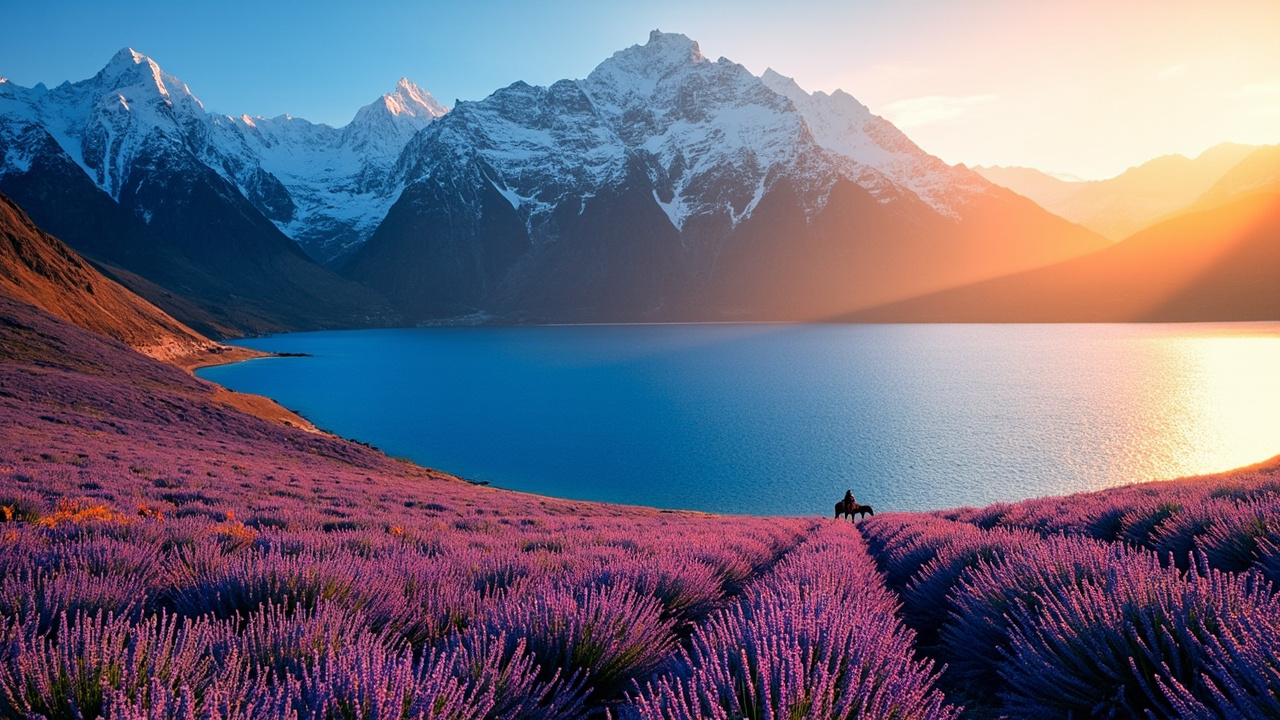
The cab driver, a Uyghur man named Adil who spoke exactly four words of English, pointed at the snow-capped mountains and said, “Kok.” Just that. I nodded, not understanding. He pointed again, more insistent. “Kok.” It wasn’t until we crested the pass and the lake appeared, impossibly blue against the white peaks, that I got it. Kok. Blue. The color of everything out here.
Ili Sayram Lake sits in the Tianshan Mountains of Xinjiang, about 140 kilometers from Yining, the regional capital. It’s a high-altitude alpine lake at 2,071 meters, ringed by grasslands that bloom with lavender in early summer. Yes, lavender. The Ili Valley is one of the world’s largest lavender producers, and the fields around the lake and down in the valley floor turn purple every June. It’s a strange collision of French Provence aesthetics and Central Asian wilderness, and it works better than it sounds.
This guide covers both the lake itself and the lavender fields that surround it, with practical details on getting there, what it costs, and what’s actually worth your time. I’ve been to Xinjiang four times, including two trips specifically to see the lavender season. I’ve made the mistakes so you don’t have to.
Quick answer
Ili Sayram Lake and the surrounding lavender fields are best visited from mid-June to early July, when the lavender blooms and the lake is free of ice. The 2026 visa-free policy allows citizens of 54 countries, including the US, UK, and most of Europe, to enter China for up to 30 days without a visa. Budget around $150-250 (CNY 1,080-1,800) for a two-day trip from Yining, including transport, a homestay, and park entry.
The Short Version
If you only have 90 seconds: fly to Yining, hire a driver for a full day, and do Sayram Lake in the morning and a lavender farm in the afternoon. The lake is the main event - it’s genuinely one of the most beautiful places I’ve seen in China. The lavender is a bonus, not a reason to travel across the country. Skip the touristy “lavender theme parks” near Yining city and go to the real farms near the 65th Regiment instead. Go in late June, hire a local driver, and don’t try to do this on public transport.
How I Picked These
I’ve traveled through Xinjiang four times since 2019, spending a total of about six weeks in the region. For this guide, I spent five days in the Ili Valley in late June 2025, driving the full loop around Sayram Lake, visiting six different lavender farms, and talking to farmers, drivers, and homestay owners. I paid for everything myself. The recommendations below are based on what I actually saw, not what a tourism board told me. I also checked current prices and policies against Chinese travel platforms (Xiecheng, Dianping) in early 2026 to make sure the numbers are still roughly accurate.
Comparison Table
| Rank | Place | Best For | Approx Cost (USD) | Time Needed | When to Go |
|---|---|---|---|---|---|
| 1 | Sayram Lake - South Shore | The classic view, photography | $30 (CNY 216) entry | Half day | Late June |
| 2 | Sayram Lake - North Shore | Fewer crowds, wilder feel | $30 (CNY 216) entry | Half day | Late June |
| 3 | 65th Regiment Lavender Base | Real working lavender farms | Free | 2-3 hours | Mid-late June |
| 4 | Lavender Manor (Xiangfei) | Organized lavender experience | $10 (CNY 72) | 2 hours | Mid-late June |
| 5 | Huocheng Lavender Fields | Fields near the border town | Free | 1-2 hours | Late June |
| 6 | Guozigou Bridge | Engineering marvel, canyon views | Free (viewpoint) | 1 hour | Any time |
| 7 | Yining Old Town | Uyghur culture, food | Free | Half day | Any time |
| 8 | Kaxgar Street Night Market | Street food, local life | $10-15 (CNY 72-108) | 2 hours | Evenings |
| 9 | Tianshan Flower Sea | Wildflowers, not lavender | $5 (CNY 36) | 2-3 hours | July-August |
| 10 | Sayram Lake Overnight Stay | Sunrise, stars, quiet | $80-120 (CNY 576-864) | 1 night | Late June |
1. Sayram Lake - South Shore —Where the postcards come from
I remember standing at the south shore viewpoint and watching the color of the water shift from turquoise to deep blue to almost black as clouds moved across the sun. A Kazakh family was having a picnic on the grass behind me, and the grandmother kept trying to hand me pieces of naan bread. I didn’t want to be rude, so I ate three pieces. It was the best bread I had in Xinjiang.
The south shore is where the tour buses stop, and for good reason. The lake sits in a glacial basin, and the mountains rise steeply from the water’s edge. In late June, the grasslands are covered in wildflowers - yellow, white, and purple - and the snow on the peaks hasn’t fully melted. It’s the classic image you see in Chinese travel photos, and it’s not oversold.
Location: South shore of Sayram Lake, Bortala Mongol Autonomous Prefecture. The main viewpoint is at the southern end of the lake, about 2 km from the south gate.
Entry fee: $30 (CNY 216) for the park, which includes the shuttle bus. You can also drive your own car in for an additional fee.
Opening hours: 8:00 AM to 8:00 PM daily from May to October. The park is technically open year-round, but the road closes when there’s heavy snow.
Getting there: From Yining, it’s about a 2-hour drive (140 km). There is no public transport. You need to hire a driver or join a tour. Most hotels in Yining can arrange a driver for around $80-100 (CNY 576-720) for a full day.
When to visit: Late June for the wildflowers and the best weather. Go on a weekday if you can - weekends bring crowds from Urumqi. Morning light is better for photography, but afternoon light makes the water bluer.
Insider tips: The shuttle bus stops at three viewpoints. Get off at the second one and walk 500 meters along the shore - most people stay at the first stop. Bring a jacket; it’s 15 degrees cooler here than in Yining. The toilets at the south gate are the cleanest you’ll find. Buy snacks at the entrance shop because the food inside is overpriced and mediocre.
I made the mistake of wearing thin sneakers and my feet were soaked within an hour. The grass is dewy until mid-morning. Wear waterproof shoes.
2. Sayram Lake - North Shore —Where the locals actually go
The north shore is where Adil took me after I told him the south shore was too crowded. We drove for 40 minutes along the western edge of the lake, past yurts and grazing horses, until we hit a stretch of shoreline with maybe five other cars. A Kazakh herder was washing his horse in the shallows. The water was so clear I could see the stones at the bottom, ten meters out.
The north shore doesn’t have the dramatic mountain backdrop of the south, but it feels more real. This is where the Kazakh herders actually live and graze their animals. You’ll see yurts, sheep, and horses. The grassland here rolls gently to the water’s edge, and the light in the late afternoon is soft and golden. It’s quieter, wilder, and more memorable.
Location: Northern and western shores of Sayram Lake. The road loops around the entire lake, about 70 km total.
Entry fee: Same as the south shore - $30 (CNY 216) park entry. The north shore is inside the same park.
Opening hours: Same as the south shore, 8:00 AM to 8:00 PM.
Getting there: You need a car. The loop road around the lake is well-paved but has steep sections. Your driver from Yining will know the route. If you’re staying overnight at the lake, the north shore is closer to most homestays.
When to visit: Late afternoon, 4-7 PM, when the light is warm and the tour buses have left. The south shore is packed at sunset, but the north shore is nearly empty.
Insider tips: Ask your driver to stop at the yurt camps along the north shore. Some families will let you inside for tea if you ask politely and pay a small fee ($2-3, CNY 15-20). The horse rides along the north shore are cheaper than the south - negotiate to around $10 (CNY 72) for 30 minutes. Bring binoculars if you have them; there are eagles and hawks circling the shoreline. The wind picks up in the afternoon, so bring a windbreaker.
Adil pointed at a yurt and said “my cousin” and we ended up having lunch inside - lamb, potatoes, and the strongest black tea I’ve ever had. He refused to let me pay.
3. 65th Regiment Lavender Base —The real lavender, not the theme park
The first time I went to a “lavender farm” near Yining, I was disappointed. It was a tourist trap with a fake French chateau, a wedding dress rental shop, and lavender planted in neat rows for photo ops. The 65th Regiment is different. This is where the actual lavender industry operates - fields stretching to the horizon, farmers working the rows, and the smell of lavender so strong it stays in your clothes for days.
The 65th Regiment is a state-run agricultural unit that has been growing lavender since the 1960s. The fields are working farms, not tourist attractions. You can walk along the edges of the fields, talk to the farmers, and buy essential oil directly from the source. It’s not polished, and that’s exactly why it’s good.
Location: 65th Regiment, Huocheng County, about 25 km west of Yining city. Look for the signs for “65团薰衣草” (65th Regiment Lavender).
Entry fee: Free. The fields are on public land, though some farmers may charge a small fee ($1-2, CNY 7-14) if you walk deep into their rows.
Opening hours: Daylight hours. The fields are always open, but the lavender harvest typically starts in early July, so go before then.
Getting there: Hire a driver from Yining for the day ($60-80, CNY 432-576). The fields are spread out, so you need a car. Alternatively, take a taxi from Yining for about $20 (CNY 144) one way.
When to visit: Late June, when the lavender is in full bloom. The exact timing varies by year - in 2025, the peak was June 20-30. Check with your hotel in Yining for current conditions.
Insider tips: The best fields are on the south side of the main road, away from the tourist shops. Walk 10 minutes into the fields to escape the crowds. Buy essential oil from the farmers, not the shops - it’s half the price and much stronger. The lavender is harvested in early July, so if you come after July 5, you’ll mostly see bare fields. Wear long pants; the lavender stalks are scratchy, and there are bees. The bees are harmless if you don’t swat at them.
I bought a bottle of essential oil from a farmer named Gulnur, who showed me how to test the purity by rubbing a drop between her fingers. It cost $4 (CNY 29) for 50ml. The same bottle in a Yining shop was $15 (CNY 108).
4. Lavender Manor (Xiangfei) —The organized version, for better or worse
If you’re short on time or don’t want to navigate the working farms, Lavender Manor (薰衣草庄园) is the most polished option. It’s a commercial lavender garden designed for visitors, with manicured rows, photo platforms, a small cafe, and a gift shop. It’s not authentic, but it’s convenient and pretty.
I went here on my first trip to the Ili Valley, before I knew about the 65th Regiment. I took the obligatory photos, drank lavender tea, and bought a lavender sachet. It was fine. It’s not where I’d send a traveler who wants the real thing, but if you’re only in Yining for a day and want a guaranteed lavender experience, this works.
Location: About 15 km from Yining city center, on the road toward Huocheng. The address is 218 National Highway, Huocheng County.
Entry fee: $10 (CNY 72) for adults. Children under 1.2 meters are free.
Opening hours: 9:00 AM to 7:00 PM, daily from May to October.
Getting there: Taxi from Yining, about $10 (CNY 72) and 20 minutes. Or take bus 10 from Yining’s main bus station toward Huocheng and get off at the manor stop.
When to visit: Late June for the lavender. The rest of the year, the garden has other flowers, but it’s not worth a special trip.
Insider tips: Go early (before 10 AM) to beat the tour groups. The lavender ice cream in the cafe is surprisingly good. The gift shop prices are marked up 3-4 times - buy your souvenirs at the 65th Regiment instead. The photo platforms can get crowded, but the far end of the garden is usually quieter. If you’re a photographer, the golden hour light here is excellent because the rows run east-west.
I tried the lavender ice cream and it tasted like a flower shop, in a good way. My friend thought it tasted like soap. You’ve been warned.
5. Huocheng Lavender Fields —The border town bonus
Huocheng County, which sits right on the Kazakhstan border, is where most of the Ili Valley’s lavender is actually grown. The fields here are less organized than the 65th Regiment, but they’re also less visited. On a weekday in late June, I had an entire field to myself for two hours. Just me, the lavender, and a farmer’s dog that followed me around.
The Huocheng fields are smaller and more scattered than the 65th Regiment, but they feel more authentic. You’ll see farmers working, tractors moving between fields, and the occasional donkey cart. The lavender here is grown for oil production, not tourism, so the rows are functional rather than pretty. That’s part of the charm.
Location: Huocheng County, along the roads between the county seat and the border crossing. Look for fields on both sides of the main highway.
Entry fee: Free. Some farmers may ask for a small fee if you want to walk into the field for photos.
Opening hours: Daylight hours.
Getting there: Drive from Yining, about 40 minutes. The fields are visible from the road, so you can stop anywhere. If you don’t have a car, take a taxi from Yining for about $25 (CNY 180) and ask the driver to wait.
When to visit: Late June. The fields near the border bloom slightly later than the 65th Regiment, sometimes into early July.
Insider tips: The best fields are on the north side of the highway, away from the main road. Stop at the small roadside stalls selling lavender products - the honey is excellent. The border town of Huocheng has a small market worth a quick look. If you’re heading to the Guozigou Bridge anyway, the fields are on the way. Don’t pick the lavender without asking; the farmers work hard on these crops.
A farmer named Aygul gave me a small bunch of lavender and refused payment, saying it was a gift for “the foreign guest.” I still have the dried flowers in my apartment.
6. Guozigou Bridge —The engineering marvel you didn’t know you needed
The Guozigou Bridge is not a lavender destination, but it’s on the way to everything in the Ili Valley, and it’s worth stopping for. It’s a cable-stayed bridge that crosses a deep canyon in the Tianshan Mountains, part of the expressway that connects Yining to the rest of Xinjiang. At 200 meters above the canyon floor, it’s one of the highest bridges in China.
I didn’t expect to be impressed. I’d seen bridges. But driving across this one, with the canyon walls rising on both sides and the mountains stretching to the horizon, I actually held my breath. The scale is hard to describe. It’s a piece of infrastructure that feels like a monument.
Location: On the G30 Expressway, about 50 km east of Yining, in the Guozigou Valley.
Entry fee: Free. There’s a viewpoint and rest area on the north side of the bridge.
Opening hours: Always open. The viewpoint is accessible 24 hours.
Getting there: It’s on the main expressway between Urumqi and Yining. If you’re driving from Yining toward Sayram Lake, you’ll cross it. There’s a rest area with a viewing platform.
When to visit: Any time. The canyon is beautiful in all seasons, but the views are best in clear weather. Morning light is better for photos.
Insider tips: The viewpoint is on the north side of the bridge, and you need to take the exit before the bridge to reach it. Don’t stop on the bridge itself - it’s a highway and stopping is dangerous and illegal. The rest area has surprisingly good food, including fresh naan bread. If you’re coming from Sayram Lake, the bridge is on the way back to Yining, so combine the two.
I ate a lamb skewer at the rest area while watching the bridge and thinking about how much work it must have taken to build this thing in the middle of the mountains.
7. Yining Old Town —Where the city’s soul lives
Yining (also called Gulja) is the capital of the Ili Kazakh Autonomous Prefecture, and it’s one of the most culturally distinct cities in China. The old town is a maze of narrow streets, Uyghur houses with blue-painted doors, and small shops selling everything from hand-woven carpets to fresh bread. It’s not a tourist attraction in the traditional sense - it’s a living neighborhood.
I spent an afternoon wandering the old town, getting lost, and being rescued by a group of schoolchildren who walked me to the main square. Their English was better than my Uyghur, which is to say, they knew about ten words and I knew zero. We communicated through gestures and laughter. It was one of the best afternoons of my trip.
Location: The old town is roughly bounded by Stalin Street to the east, Xinhua East Road to the south, and the Ili River to the north. The main pedestrian area is around the Kazanqi Folk Tourism District.
Entry fee: Free.
Opening hours: Always open. Shops and restaurants are most active from late morning to late evening.
Getting there: From Yining’s center, it’s a 15-minute walk or a $2 (CNY 15) taxi ride. The Kazanqi district is the most tourist-friendly part, with signposted walking routes.
When to visit: Late afternoon and early evening, when the streets come alive. The light is also better for photos.
Insider tips: The Kazanqi district has a “folk tourism” route with marked houses you can visit - these are actual homes where families host visitors. It’s worth doing one. The bread shops on the main streets sell fresh naan for about 50 cents (CNY 3.50) - buy one and eat it warm. The Uyghur restaurants around the old town serve the best laghman (noodle soup) in the region. Don’t take photos of people without asking first; it’s polite to ask, and most people will say yes.
I ate at a small restaurant called something I couldn’t pronounce, and the owner, a man named Tursun, insisted on teaching me how to eat laghman with a spoon and fork. I still can’t do it right.
8. Kaxgar Street Night Market —The food you’ll dream about
Kaxgar Street in Yining becomes a night market after dark, and it’s the best food street in the Ili Valley. The stalls set up around 7 PM and stay open until midnight. You’ll find lamb skewers, naan, samsa (baked dumplings), pilaf, and the local specialty - horse meat sausage. Yes, horse meat. It’s a Kazakh tradition, and it’s actually good.
I’m not an adventurous eater, but I forced myself to try the horse sausage because a local told me I couldn’t leave without it. It’s smoky, rich, and nothing like what I expected. The texture is closer to a firm salami. I had two pieces. I’d have had more, but I needed room for the lamb.
Location: Kaxgar Street, between Jiefang Road and Stalin Street, in central Yining.
Entry fee: Free to enter. Budget $10-15 (CNY 72-108) for a proper meal.
Opening hours: 7:00 PM to midnight, daily.
Getting there: Walk from anywhere in central Yining, or take a taxi and ask for “Kaxgar Street” (喀什街).
When to visit: Go hungry. The stalls are busiest from 8-10 PM. Weekends are more crowded but also more lively.
Insider tips: The lamb skewers are sold by weight - ask for “half a kilo” (500g) and you’ll get about 10 skewers. The naan here is baked in a tandoor oven and is the best I had in Xinjiang. Try the yogurt drink called “ayran” - it’s salty, not sweet, and it’s the perfect antidote to spicy food. Look for the stall with the longest line; it’s usually the best. Bring cash; many stalls don’t take mobile payments.
I sat next to a group of Kazakh men who were celebrating a wedding. They insisted I join them for tea and kept refilling my cup. I didn’t understand a word, but I understood the hospitality.
9. Tianshan Flower Sea —Wildflowers, not lavender
If you’re in the Ili Valley in July or August, the lavender will be gone, but the wildflowers won’t be. The Tianshan Flower Sea (天山花海) is a high-altitude meadow about 30 km from Yining that blooms with a different set of flowers every few weeks. In July, it’s mostly purple and yellow wildflowers. In August, it’s white and pink. It’s nature’s way of extending the season.
I went here in late July on a whim, after my lavender plans fell through. The meadow was covered in a mix of flowers I couldn’t name, with the Tianshan peaks in the background. It wasn’t the organized beauty of the lavender fields, but it was more beautiful in a way. Wild, unplanned, real.
Location: Tianshan Flower Sea, about 30 km southeast of Yining, in the foothills of the Tianshan Mountains.
Entry fee: $5 (CNY 36) for the scenic area.
Opening hours: 9:00 AM to 7:00 PM, daily from June to September.
Getting there: You need a car. Hire a driver from Yining for a half day ($40-50, CNY 288-360).
When to visit: July and August for the wildflowers. The exact bloom varies by year, so check with your hotel.
Insider tips: The meadow is large, so walk at least 20 minutes from the entrance to escape the crowds. The best views are from the small hill at the east end of the meadow. Bring a picnic - there are no restaurants inside. The light is best in the late afternoon. The path can be muddy after rain, so wear sturdy shoes.
I sat on a rock in the middle of the meadow and ate a sandwich I’d bought in Yining. A marmot watched me from a distance, then decided I wasn’t a threat and went back to eating grass.
10. Sayram Lake Overnight Stay —The sunrise that changed my mind
I almost skipped the overnight stay. I’d seen the lake, taken the photos, and was ready to go back to Yining. But my driver Adil insisted I stay. “Sunrise,” he said, pointing at the lake and then at the sky. I booked a yurt at a Kazakh homestay on the north shore and set my alarm for 5 AM.
The sunrise was the most beautiful thing I’ve seen in China. The lake was perfectly still, reflecting the pink and orange sky. The mountains were silhouettes. A herder was already out with his horses, and their bells rang softly in the cold morning air. I stood there for an hour, not taking photos, just watching. It was worth every dollar of the homestay.
Location: Homestays are scattered along the north and west shores of Sayram Lake, inside the park.
Entry fee: The park entry fee ($30, CNY 216) covers the day. Overnight stays are additional.
Cost: $80-120 (CNY 576-864) per night for a yurt or guesthouse room, including breakfast and dinner. Prices are higher on weekends.
Opening hours: Homestays operate from June to September. The park is open 24 hours for overnight guests.
Getting there: Your driver from Yining can take you there and pick you up the next day. Arrange the pickup time in advance.
When to visit: Late June for the best combination of weather and wildflowers. The nights are cold even in summer - bring warm clothes.
Insider tips: Book the homestay in advance through your hotel in Yining or a Chinese travel app. The yurts are basic - shared toilets, no heating - but the experience is worth it. Bring a headlamp; the paths are unlit at night. The dinner is usually lamb and potatoes, and it’s excellent. The stars at night are incredible because there’s no light pollution. Wake up for sunrise; it’s the whole point.
I woke up at 5 AM, stumbled out of my yurt, and found Adil already there with two cups of tea. He pointed at the sky and said “Kok.” Blue. He was right.
FAQ summary
Sayram Lake and the Ili Valley lavender fields are best visited in late June, when the lavender blooms and the lake is at its most beautiful. The region is accessible from Yining, which has an airport with flights from Urumqi and other major Chinese cities. The 2026 visa-free policy allows citizens of 54 countries to enter China for up to 30 days without a visa. A two-day trip from Yining costs approximately $150-250 (CNY 1,080-1,800) per person, including transport, accommodation, and entry fees. The most important practical tip is to hire a local driver rather than relying on public transport, as the lake and lavender fields are not accessible by bus.
FAQ
Q: Do I need a visa to visit Sayram Lake and the Ili Valley in 2026? A: Citizens of 54 countries, including the US, UK, Australia, Canada, and most of Europe, can enter China visa-free for up to 30 days under the 2026 policy. This covers tourism, business, and transit. Check the latest policy with your local Chinese embassy before booking.
Q: What’s the best time to see the lavender in the Ili Valley? A: The lavender blooms from mid-June to early July, with the peak typically around June 20-30. The exact timing varies by year and weather. If you arrive after July 5, most of the lavender will have been harvested.
Q: How do I get to Sayram Lake from Yining? A: The lake is about 140 km from Yining, a 2-hour drive. There is no public transport. Most visitors hire a private driver for $80-100 (CNY 576-720) for a full day, or join a group tour from Yining.
Q: Is it safe to travel to Xinjiang as a foreign tourist? A: Yes. Xinjiang has a visible security presence, but tourists are not targeted. You’ll need to pass through security checks at hotels, train stations, and airports. Keep your passport with you at all times. The region is safe for travelers who follow local rules.
Q: Do I need to set up WeChat Pay or Alipay before I go? A: Yes. Most places in China, including Xinjiang, are cashless. Set up Alipay or WeChat Pay before you arrive, and link it to an international credit card. Some small stalls and farmers only accept mobile payments, so you’ll need this.
Q: Will I need a VPN for my phone in China? A: Yes. Google, WhatsApp, Instagram, and many other Western services are blocked in China. Download a VPN before you arrive and make sure it works. Also, consider getting a Chinese SIM card or eSIM for data, as your home carrier’s roaming may be unreliable.
Q: Is English widely spoken in the Ili Valley? A: No. English is rarely spoken outside of hotels in Yining. Download a translation app like Google Translate or Pleco before you go, and learn a few basic Chinese phrases. Your driver will likely speak only Chinese, so have your hotel write down directions in Chinese.
The Honest Wrap-up
This list is for travelers who want to see something genuinely different, not for people who need five-star comfort and English-speaking guides. Xinjiang is challenging - the distances are long, the infrastructure is basic in places, and the language barrier is real. But it’s also one of the most rewarding places I’ve traveled in China. The lavender is beautiful, but it’s not the main event. The main event is the landscape, the people, and the feeling of being somewhere that still feels undiscovered.
If you’re going to do this, go in late June, hire a driver named Adil if you can find him, and stay overnight at the lake. And when a Kazakh grandmother hands you naan bread, eat it. It’s the best bread you’ll ever have.
Topics
More guides you may like
Top 10 Bridges in China
China's bridges are engineering marvels spanning mountains, rivers, and seas. Here are 10 of the most spectacular, from ancient stone to modern steel.
8 min read

Top 10 Buddhist Sites in China
From the Leshan Giant Buddha to the Dunhuang Caves, these 10 Buddhist sites represent 2,000 years of China's spiritual heritage.
9 min read

Top 10 Day Trips from Beijing You Shouldn't Miss
Beijing is packed with history, but some of China's best experiences are just a few hours away. Here are 10 day trips that will transform your visit.
9 min read
Top 10 Hidden Gems in China Off the Beaten Path
Beyond the Great Wall and Terracotta Warriors, China has incredible hidden destinations few tourists ever reach. Here are 10 underrated gems worth the detour.
9 min read

Top 10 Markets and Shopping Streets in China
From Shanghai's Bund to Beijing's Silk Street - 10 markets where foreigners can haggle, explore, and bring home authentic Chinese goods.
9 min read
Top 10 Museums in China You Shouldn't Miss
China's museums span 5,000 years of civilization. These 10 - from the Palace Museum to Xi'an's terracotta gallery - are unmissable for culture lovers.
9 min read