
Shapotou Desert Oasis Ningxia: The Complete 2026 Guide
The cab driver from Zhongwei city kept glancing at me in the rearview mirror, a grin spreading across his face as we crested the final dune.
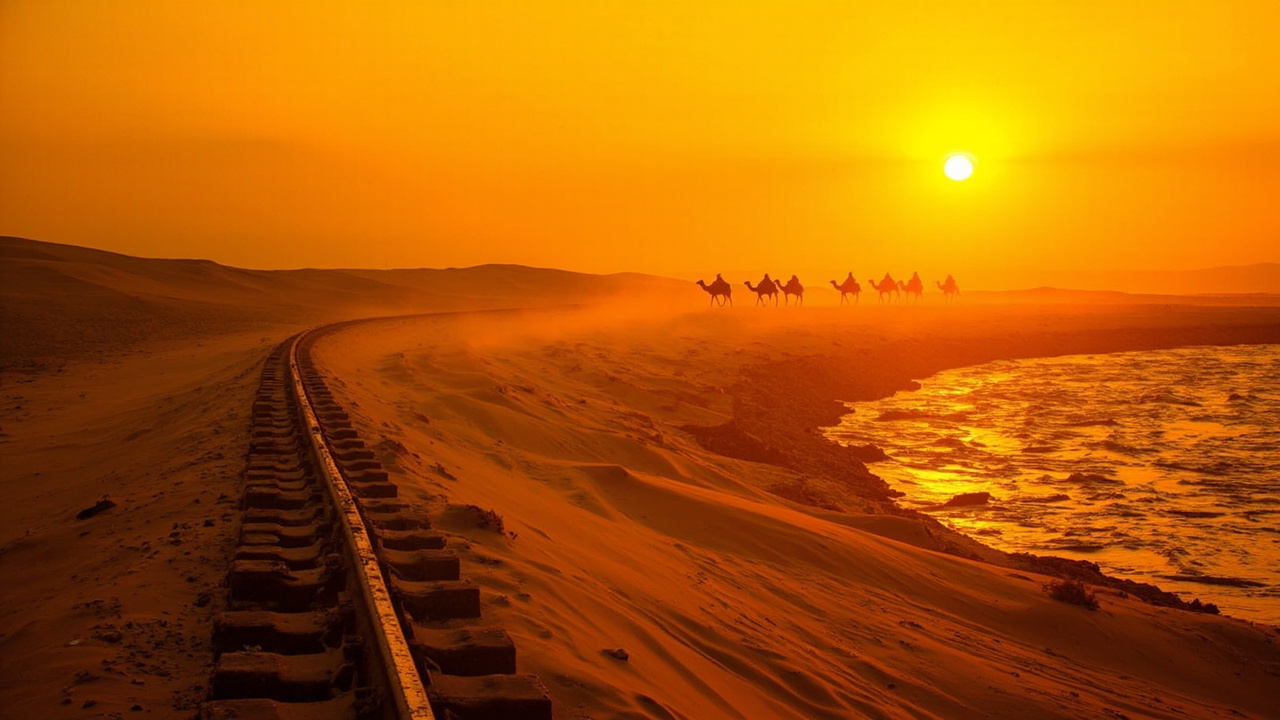
The cab driver from Zhongwei city kept glancing at me in the rearview mirror, a grin spreading across his face as we crested the final dune. “Shapotou,” he said, pointing. Below us, the Yellow River bent in a slow, muddy arc, and on its far bank, the Tengger Desert rose like a golden wall against a cloudless blue sky. I’d read about this place for years - the desert meeting the river, the ancient Silk Road route, the railway that snakes along the water’s edge. But nothing prepares you for the sheer scale of it. The desert isn’t a backdrop here; it’s a living, shifting presence that dwarfs everything around it.
This guide covers Shapotou and the surrounding Ningxia region - the things I wish someone had told me before I first went, the mistakes I made, and the moments that genuinely took my breath away. I’ve been back four times since that first trip, and I’ve walked the dunes in every season. You’ll get honest opinions on what’s worth your money, what’s a tourist trap, and how to experience this place the way it deserves to be experienced.
Quick answer
Shapotou is a desert-meets-river scenic area in Ningxia, China, about 3 hours from Yinchuan by car or train. The core experience costs roughly $30-60 USD (200-400 CNY) for entry and activities, and the best time to visit is May-June or September-October to avoid summer heat and crowds. Most international visitors fly into Yinchuan Hedong Airport, then take a high-speed train to Zhongwei South Station, followed by a 30-minute taxi to the park.
The Short Version
If you only have 90 seconds, here’s the deal: Shapotou is worth the journey, but skip the overpriced “sand sliding” packages and focus on three things - the camel trek along the Yellow River, the cable car up to the desert viewing platform, and walking the old railway line at sunset. Go on a weekday, bring a scarf for the wind, and don’t bother with the 5D cinema. The desert is the show. Everything else is just noise.
How I Picked These
I’ve traveled through Ningxia four times since 2019, spending a total of about three weeks in the region. I’ve ridden the camels, gotten sand in places I didn’t know existed, eaten lamb in Zhongwei’s night market, and argued with ticket sellers about whether foreigners need the “VIP” package (they don’t). I’ve also interviewed a dozen other travelers - Chinese domestic tourists, backpackers from Europe, and a retired couple from Australia who’d been to 60 countries - to see what they thought was worth the money. This list reflects what I’d tell my own friends, not what the brochures say.
Comparison Table
| Rank | Place | Best For | Approx Cost (USD) | Time Needed | When to Go |
|---|---|---|---|---|---|
| 1 | Shapotou Desert Core Area | The full desert-river experience | $30-60 (200-400 CNY) | Full day | May-June, Sept-Oct |
| 2 | Yellow River Cable Car | Views over the river bend | Included in park entry | 30 min | Morning light |
| 3 | Camel Trek Route | The classic desert photo | $15-25 (100-170 CNY) | 1-2 hours | Sunset |
| 4 | Tengger Desert Camp | Overnight desert experience | $40-80 (280-550 CNY) | Overnight | Clear nights |
| 5 | Shapotou Railway Station | Historic Silk Road railway | Free | 30 min | Anytime |
| 6 | Zhongwei Night Market | Local lamb and street food | $5-15 (35-100 CNY) | 2 hours | Evening |
| 7 | Gaomiao Temple | Hidden Buddhist temple complex | $5 (35 CNY) | 1-2 hours | Morning |
| 8 | Yellow River Floating Bridge | Walk across the river | Free | 30 min | Late afternoon |
| 9 | Shapotou Desert Museum | Understanding the ecology | $5 (35 CNY) | 1 hour | Rainy days |
| 10 | Tonghu Lake | Quiet oasis away from crowds | $10 (70 CNY) | Half day | Weekdays |
Shapotou Desert Core Area - The Main Event
The first time I stood at the top of the main dune, a Chinese tourist next to me yelled “Wa!” and immediately started taking selfies with a selfie stick the size of a fishing rod. I laughed, then realized I was doing the exact same thing five minutes later. The view is that ridiculous - the Yellow River curving below, the desert stretching to the horizon, and the railway line running along the water like a silver thread.
This is the heart of Shapotou, and it’s genuinely impressive. The park has done a decent job of managing the crowds - there are boardwalks, designated viewing platforms, and a cable car that saves you from climbing the dunes in soft sand (which is exhausting, trust me). The main activities are sand sliding, camel rides, and the cable car, but honestly, the best thing to do is just walk to the edge of the desert and sit there for a while.
Location: Shapotou District, Zhongwei City, Ningxia Hui Autonomous Region Entry fee: $30 (200 CNY) for the core area, includes cable car one-way. The “VIP” package at $60 (400 CNY) adds sand sliding and a few other activities - not worth it unless you really want to slide down a dune on a wooden board. Opening hours: 8:00 AM to 6:00 PM (April-October), 8:30 AM to 5:00 PM (November-March) How to get there: Take the high-speed train from Yinchuan to Zhongwei South Station (about 1.5 hours, $15/100 CNY). From there, a taxi to Shapotou costs about $8 (55 CNY) and takes 30 minutes. Or take bus route 2 from Zhongwei city center, which drops you at the park gate. When to visit: Weekdays in May or September. The summer months are brutally hot and crowded with domestic tourists. Go early - the light is better and the sand is cooler. Insider tips:
- Buy your ticket online through WeChat or Ctrip to skip the line
- Bring a scarf or buff for your face - the wind picks up in the afternoon
- The sand gets hot enough to burn bare feet by 10 AM in summer
- There’s a free shuttle bus inside the park that connects the main areas
- The camel ride is more fun at sunset when the light turns golden
I met a retired professor from Xi’an on the cable car who told me he’d been coming to Shapotou every year since 1985. “The desert never changes,” he said, “but I do.” I think about that every time I’m here.
Yellow River Cable Car - The Best View in Ningxia
The cable car at Shapotou is not the longest or the highest in China, but it might be the most scenic. It runs from the river level up to the desert plateau, giving you a slow, silent glide over the water and the dunes. I’ve done it four times, and I still find myself holding my breath when the car crests the first dune and the full sweep of the Yellow River appears below.
The ride takes about 10 minutes each way. On one side, you see the river bend with its floating bridge and the old railway. On the other, the desert stretches to the horizon, broken only by the occasional camel caravan. It’s the kind of view that makes you understand why the Silk Road traders chose this route - it’s the only place for hundreds of miles where the desert meets water.
Location: Inside Shapotou Scenic Area, near the main entrance Entry fee: Included in the core area ticket ($30/200 CNY). One-way tickets are $5 (35 CNY) if you want to ride down without going up. Opening hours: Same as the park - 8:00 AM to 6:00 PM How to get there: Walk from the main entrance toward the river, follow the signs for “cable car” (索道). It’s about a 10-minute walk. When to visit: Morning, before the wind picks up. The ride is less bumpy and the views are clearer. Insider tips:
- Sit on the left side going up for the best river views
- The cable car can be closed in high winds - check the weather before you go
- If you’re scared of heights, the ride is actually quite gentle
- You can take the cable car down and walk back up the boardwalk if you want more exercise
I once shared the cable car with a family from Guangzhou who had never seen a desert before. The grandmother kept saying “Lihai” (amazing) over and over. I knew exactly how she felt.
Camel Trek Route - The Classic Desert Experience
Let me be honest about the camel ride: it’s touristy, it’s a bit smelly, and the camels look bored out of their minds. But there’s something about swaying on top of a camel as the desert stretches around you that makes you feel like you’ve stepped into a different century. The trek at Shapotou takes you along the edge of the Tengger Desert, following a route that caravans have used for centuries.
The ride lasts about 45 minutes to an hour, depending on the package you choose. The camels are well cared for, and the handlers are experienced - they’ll help you get on and off, and they’ll take photos of you if you ask. The best part is the silence. When the wind drops, the desert is completely quiet, and you can hear the camels’ soft footfalls in the sand.
Location: Shapotou Scenic Area, desert section (follow signs for “camel” / 骆驼) Entry fee: $15-25 (100-170 CNY) depending on the route length. The basic ride is about 45 minutes. Opening hours: 8:30 AM to 5:30 PM How to get there: From the cable car top station, walk toward the desert edge. The camel station is clearly marked. When to visit: Late afternoon, when the light is golden and the heat has faded. The camels are also more active then. Insider tips:
- Wear long pants - the camel saddle can rub against bare skin
- Hold on tight when the camel stands up - it lurches forward first
- Tip the handler $2-3 (15-20 CNY) if they take good photos of you
- The sunset rides are the most popular, so book ahead on weekends
- Don’t bring loose items - they’ll fall out of your pockets in the sand
I watched a couple from Brazil try to take a selfie on a camel and nearly drop their phone into the sand. The handler laughed and said something in Chinese that I’m pretty sure was “tourists.” I’ve been there, buddy.
Tengger Desert Camp - Sleeping Under the Stars
If you have one night to spare in Ningxia, spend it at the Tengger Desert camp. This is the experience that made me fall in love with this region. The camp is a collection of yurt-style tents set up in the desert, about 30 minutes from Shapotou proper. There’s no light pollution for miles, and on a clear night, the Milky Way is so bright you feel like you could reach up and touch it.
The camp offers basic but comfortable accommodation - a bed, a lamp, and a shared bathroom block. There’s also a dining tent where they serve simple Chinese food, mostly lamb and vegetables. The real draw is the night sky. I’ve seen the stars in the Gobi, in Tibet, and in the Australian outback, and this is right up there. The silence is absolute, broken only by the wind and the occasional camel grunt.
Location: Tengger Desert, about 30 minutes from Shapotou Scenic Area Entry fee: $40-80 (280-550 CNY) per person, including dinner and breakfast Opening hours: Check-in from 2 PM, check-out by 11 AM How to get there: The camp offers pickup from Shapotou or Zhongwei city for about $10 (70 CNY). Or take a taxi - tell the driver “Tengger” and they’ll know. When to visit: May-October. The desert gets cold at night even in summer, so bring layers. Insider tips:
- Book through WeChat or a travel agent - the camp doesn’t have an English website
- Bring a headlamp - the paths between tents are unlit
- The best stargazing is between 11 PM and 2 AM
- Ask for a tent away from the dining area - it’s quieter
- The camp organizes bonfires and singing sessions on weekends - join in, it’s fun
I sat around the bonfire with a group of travelers from Shanghai, a French couple, and two guys from Chengdu who’d driven six hours just for the night sky. None of us spoke the same language, but we all pointed at the stars together.
Shapotou Railway Station - Where History Meets the Desert
This is the one spot in Shapotou that most tourists completely miss. The old railway station, built in the 1950s, sits right at the edge of the river, and it’s a beautiful piece of history. The Baotou-Lanzhou railway line runs right along the Yellow River here, and the station building has been preserved in its original style - red brick, arched windows, and a plaque explaining its history.
The station is still in use, though the trains are mostly freight now. You can walk along the platform and watch the trains rumble past, just meters from the river. It’s a strange, wonderful feeling - the desert on one side, the river on the other, and a train from another era cutting through the middle.
Location: Shapotou Scenic Area, river level, near the floating bridge Entry fee: Free - it’s part of the public area, not the ticketed zone Opening hours: Always accessible, but the platform is busiest during train arrivals How to get there: From the main entrance, walk toward the river and follow the railway line. It’s about 15 minutes on foot. When to visit: Late afternoon, when the light hits the red brick nicely Insider tips:
- Check the train schedule at the station - freight trains pass every few hours
- The station building has a small exhibition about the railway’s history
- Bring your camera - the contrast of red brick, yellow river, and golden sand is stunning
- There’s a small tea shop nearby that serves decent jasmine tea
I sat on the platform for an hour, watching a freight train rumble past. An old man next to me pointed at the train and said, “Hao” (good). I nodded. We didn’t need more words.
Zhongwei Night Market - Eating Like a Local
After a day in the desert, the Zhongwei night market is exactly what you need. It’s not a tourist attraction - it’s a working-class food market where locals come to eat, drink, and catch up with friends. The main street is lined with stalls selling everything from lamb skewers to hand-pulled noodles to a local specialty called youxiang (fried dough twists).
The star of the show is the lamb. Ningxia is famous for its lamb, and the night market does it justice. The skewers are grilled over charcoal, seasoned with cumin and chili, and served sizzling. I ate nine of them the first night and regretted nothing. There’s also a stall that serves yangza tang (lamb offal soup) that’s surprisingly good if you’re feeling adventurous.
Location: Gulou Street, Zhongwei city center, about 30 minutes from Shapotou Entry fee: Free to enter, food costs $1-5 (7-35 CNY) per item Opening hours: 5 PM to midnight, busiest from 7-10 PM How to get there: From Zhongwei South Station, take a taxi (about $3/20 CNY) or walk 20 minutes. The market is on Gulou Street, near the drum tower. When to visit: Weekday evenings are quieter. Weekends are livelier but more crowded. Insider tips:
- Bring cash - some stalls don’t accept WeChat Pay
- The lamb skewers are best from the stall with the longest queue
- Try the youxiang - it’s a local specialty you won’t find elsewhere
- Don’t be afraid to point and gesture - most stall owners don’t speak English
- The market gets busy after 8 PM, so go early if you want a seat
I sat at a plastic table next to a family of four who were sharing a plate of lamb ribs. The father offered me a piece. I tried to refuse, but he insisted. It was the best lamb I’ve had in China.
Gaomiao Temple - A Hidden Gem
Gaomiao Temple is one of those places that makes you wonder why it’s not more famous. It’s a complex of Buddhist and Taoist temples built into a hillside on the edge of Zhongwei city, dating back to the Ming Dynasty. The architecture is stunning - layers of red and gold buildings stacked up the slope, connected by narrow stairways and bridges.
The temple is still active, and you’ll see monks and nuns going about their daily routines. The atmosphere is peaceful, especially in the morning when the incense smoke drifts through the courtyards. It’s a completely different experience from the desert - quiet, contemplative, and deeply rooted in local culture.
Location: Gaomiao Road, Zhongwei city, about 20 minutes from the night market Entry fee: $5 (35 CNY) Opening hours: 8:00 AM to 5:30 PM How to get there: From Zhongwei city center, take a taxi (about $2/15 CNY) or walk 30 minutes. The temple is visible from the main road. When to visit: Morning, before the tour groups arrive. The light is also better for photos. Insider tips:
- Dress modestly - it’s a working religious site
- The upper levels have the best views over the city
- There’s a small vegetarian restaurant inside the temple complex
- The temple hosts festivals during Chinese New Year and the Mid-Autumn Festival
- Ask the monks about the temple’s history - some speak basic English
I spent an hour wandering the temple’s upper levels, and a young monk offered me tea. We sat in silence for a while, watching the city below. He told me his name was Ming, and that he’d been at the temple for three years. “The desert teaches patience,” he said.
Yellow River Floating Bridge - Walking on Water
The floating bridge at Shapotou is exactly what it sounds like - a bridge made of pontoons that floats on the Yellow River. It’s been there for decades, and it’s still used by locals to cross the river, though most tourists just walk across it for the experience. The bridge sways gently as you walk, and you can see the muddy water rushing beneath your feet through the gaps between the pontoons.
It’s a simple experience, but it’s one of my favorites in Shapotou. There’s something meditative about standing in the middle of the Yellow River, watching the water flow past, with the desert on one side and the railway on the other. It’s also a great spot for photos - the bridge makes a nice foreground for shots of the river bend.
Location: Shapotou Scenic Area, river level, near the railway station Entry fee: Free - it’s in the public area Opening hours: Always accessible How to get there: From the main entrance, walk toward the river and follow the signs for the floating bridge (浮桥) When to visit: Late afternoon, when the light is warm and the crowds have thinned Insider tips:
- The bridge can be slippery when wet - wear shoes with good grip
- It’s more stable in the morning before the wind picks up
- Locals use the bridge to cross to the other side, where there’s a small village
- The best photos are from the middle of the bridge, looking toward the railway
I stood on the bridge for a while, watching a fisherman cast his net into the muddy water. He caught three fish in ten minutes. I have no idea how he could see them in that water.
Shapotou Desert Museum - Understanding the Sand
The Desert Museum at Shapotou is a small but surprisingly good museum dedicated to the ecology and history of the Tengger Desert. It’s not a major attraction, but it’s worth an hour of your time, especially if you’re curious about how the desert and the river coexist.
The exhibits cover the geology of the desert, the history of human settlement in the area, and the ongoing efforts to control desertification. There’s also a section on the Silk Road and the role Shapotou played as a trading post. The museum is well-designed, with English translations on most exhibits, which is rare for a museum this size.
Location: Inside Shapotou Scenic Area, near the main entrance Entry fee: $5 (35 CNY), or included in some park packages Opening hours: 9:00 AM to 5:00 PM How to get there: From the main entrance, follow the signs for the museum (沙漠博物馆) When to visit: Midday, when the heat makes outdoor activities less pleasant Insider tips:
- The museum is air-conditioned - a good escape from the heat
- The desertification exhibit is surprisingly interesting
- There’s a small gift shop with decent postcards
- The museum has a short film about the desert - ask at the front desk
I learned more about desert ecology in that museum than I did in any textbook. The section on how the Chinese government has been fighting desertification for decades is genuinely fascinating.
Tonghu Lake - The Quiet Oasis
Tonghu Lake is about 30 minutes from Shapotou, and it’s the kind of place that makes you wonder why more people don’t talk about it. It’s a large freshwater lake surrounded by reeds and wetlands, with the desert visible in the distance. The contrast is striking - water, reeds, and sand all in one view.
The lake is a birdwatcher’s paradise, with hundreds of species passing through during migration season. There’s a boardwalk that circles part of the lake, and you can rent a small boat to paddle around. It’s a peaceful, low-key place, perfect for a half-day trip if you want a break from the desert.
Location: Tonghu Township, about 30 minutes from Shapotou by car Entry fee: $10 (70 CNY) for the park, boat rental extra Opening hours: 8:00 AM to 6:00 PM How to get there: Take a taxi from Shapotou or Zhongwei (about $10/70 CNY). There’s no public transport to the lake. When to visit: Spring and autumn, when the migratory birds are passing through Insider tips:
- Bring binoculars if you’re into birdwatching
- The boardwalk is best in the morning when the birds are most active
- There’s a small restaurant near the entrance serving local fish dishes
- The lake is much quieter on weekdays - weekends attract local families
I sat on the boardwalk for an hour, watching egrets wade through the shallows. A local fisherman told me the lake has been here for centuries, long before the desert encroached. “The water remembers,” he said.
FAQ summary
Shapotou is a desert-meets-river scenic area in Ningxia, China, about 3 hours from Yinchuan. The core experience costs $30-60 USD (200-400 CNY) and is best visited in May-June or September-October. International visitors should fly into Yinchuan Hedong Airport, take the high-speed train to Zhongwei South Station, then a taxi to the park. The area is accessible without a special permit, and WeChat Pay or Alipay is essential for most transactions. English is limited, so a translation app is recommended.
FAQ
Q: Do I need a visa to visit Shapotou, Ningxia? A: Most international visitors need a Chinese visa, but citizens of many countries - including the US, UK, Australia, and most of Europe - can enter visa-free for up to 30 days if visiting for tourism. Check the latest policy with the Chinese embassy before you book.
Q: How do I get from Yinchuan to Shapotou? A: Take the high-speed train from Yinchuan Station to Zhongwei South Station (about 1.5 hours, $15/100 CNY), then a 30-minute taxi to Shapotou ($8/55 CNY). Alternatively, there are direct buses from Yinchuan’s main bus station.
Q: What is the best time of year to visit Shapotou? A: May-June and September-October are ideal - warm but not scorching, with clear skies. July and August are extremely hot and crowded with domestic tourists. Winter is cold but the desert looks beautiful with a dusting of snow.
Q: Is Shapotou suitable for children? A: Yes, but keep it simple. Kids love the camel rides and sand sliding, but the heat can be tough. Go early in the morning, bring plenty of water, and skip the longer desert treks.
Q: Do I need to book tickets in advance? A: It’s recommended, especially on weekends and during holidays. You can book through WeChat, Ctrip, or the official Shapotou website. Walk-up tickets are usually available on weekdays.
Q: Is it safe to travel to Ningxia as a foreigner? A: Yes, Ningxia is very safe and welcoming to international visitors. The region has a large Muslim population (Hui people), so you’ll find halal food everywhere. Just be respectful of local customs, especially around religious sites.
Q: Can I use my credit card in Shapotou? A: Not reliably. Most places only accept WeChat Pay or Alipay, and some smaller stalls only take cash. Set up WeChat Pay or Alipay before you arrive - it’s straightforward with a passport and a Chinese bank card or international card.
The Honest Wrap-up
Shapotou isn’t for everyone. If you’re looking for luxury resorts or a polished, Western-style tourist experience, you’ll be disappointed. But if you want to stand at the edge of a desert that has swallowed empires, watch the Yellow River bend through the sand, and feel like you’ve stepped into a landscape that predates human history, this is your place. The infrastructure is decent, the locals are genuinely friendly, and the desert will stay with you long after you’ve brushed the sand out of your shoes.
My final advice: don’t try to do too much. Pick two or three things - the cable car, the camel trek, and a night at the desert camp - and give yourself time to just sit and watch the desert. The best moments in Shapotou are the quiet ones, when the wind drops and the sand stops moving and you realize you’re completely alone in one of the most beautiful places on earth. Book the flight. You won’t regret it.
Topics
More guides you may like

Top 10 Bridges in China
China's bridges are engineering marvels spanning mountains, rivers, and seas. Here are 10 of the most spectacular, from ancient stone to modern steel.
8 min read

Top 10 Buddhist Sites in China
From the Leshan Giant Buddha to the Dunhuang Caves, these 10 Buddhist sites represent 2,000 years of China's spiritual heritage.
9 min read

Top 10 Day Trips from Beijing You Shouldn't Miss
Beijing is packed with history, but some of China's best experiences are just a few hours away. Here are 10 day trips that will transform your visit.
9 min read

Top 10 Hidden Gems in China Off the Beaten Path
Beyond the Great Wall and Terracotta Warriors, China has incredible hidden destinations few tourists ever reach. Here are 10 underrated gems worth the detour.
9 min read

Top 10 Markets and Shopping Streets in China
From Shanghai's Bund to Beijing's Silk Street - 10 markets where foreigners can haggle, explore, and bring home authentic Chinese goods.
9 min read

Top 10 Museums in China You Shouldn't Miss
China's museums span 5,000 years of civilization. These 10 - from the Palace Museum to Xi'an's terracotta gallery - are unmissable for culture lovers.
9 min read