
Tashkurgan Stone City: The Complete 2026 Guide
The cab driver from Kashgar looked at me in the rearview mirror and said something I didn't understand, then pointed at the mountains.
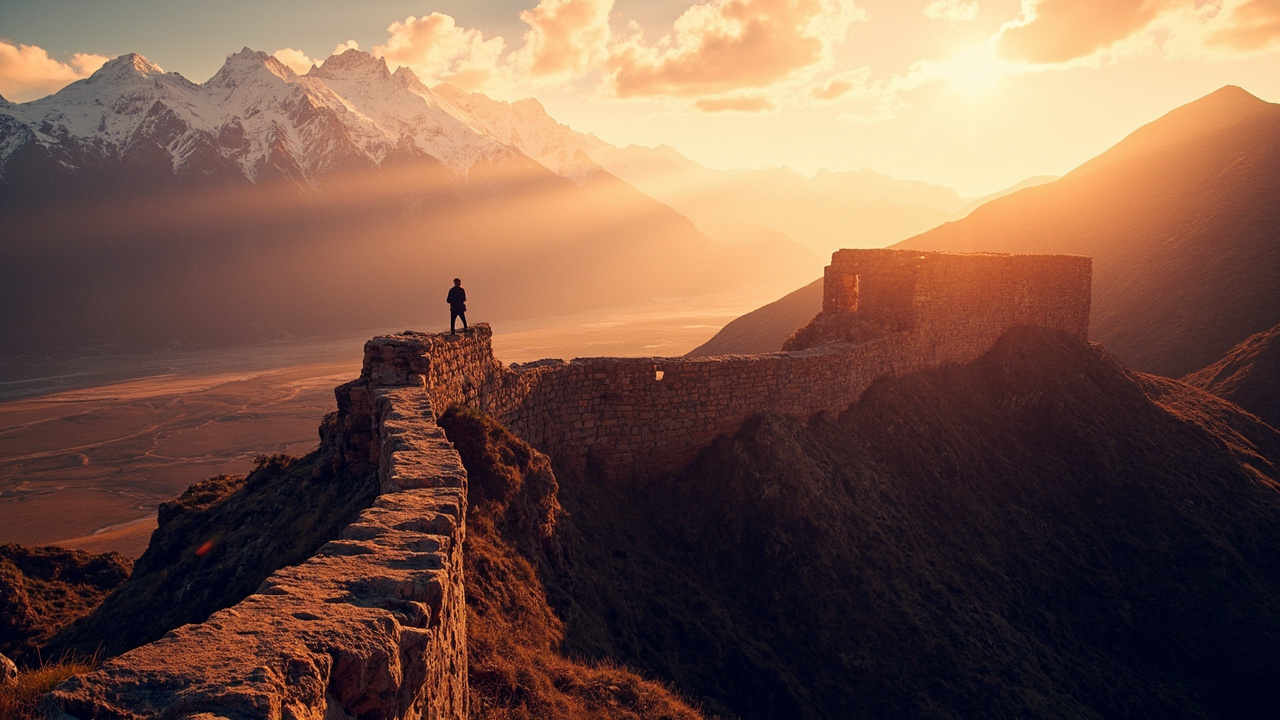
The cab driver from Kashgar looked at me in the rearview mirror and said something I didn’t understand, then pointed at the mountains. It was early October, and the Pamir Highway stretched ahead like a gray ribbon stitched into the earth. We’d been driving for four hours through landscapes that made me forget to blink - red canyons, white salt flats, then suddenly the road climbed and the air got thin and the peaks went from distant to everywhere. When the driver finally stopped and gestured again, I saw it: a stone fortress on a hill, crumbling but still proud, with the snow-capped Kunlun range stacked up behind it like a wall at the end of the world.
That was my first glimpse of Tashkurgan Stone City, and I’ll be honest - I almost didn’t come. It’s a long way from anywhere. But it turned out to be one of the most memorable places I’ve seen in China, and I’ve seen a lot of China.
This guide covers everything you need to know: how to get there, what it costs, when to visit, what to expect, and the things nobody tells you before you go.
Quick answer
Tashkurgan Stone City is an ancient fortress ruin in far western Xinjiang, China, near the borders of Pakistan, Afghanistan, and Tajikistan. The entry fee is approximately $6 (CNY 40), it’s open daily from about 9:00 AM to 7:00 PM, and the best time to visit is May through October. You’ll need a special permit (Xinjiang travel permit) to enter the Tashkurgan area as a foreigner, and you should arrange this through a tour operator or hotel before you arrive. The site itself takes 1-2 hours to explore.
The Short Version
If you only have 90 seconds: Tashkurgan Stone City is worth the journey, but it’s not a destination on its own - combine it with Karakul Lake and the Pamir Highway for a proper trip. It’s a 3,000-year-old fortress that once guarded the Silk Road, and the setting is genuinely spectacular. You need a permit, you need a driver, and you need to be comfortable with altitude (about 3,100 meters / 10,200 feet). Go in late spring or early autumn. Don’t skip the adjacent museum. Bring cash because card machines are unreliable out here.
How I Picked These
I’ve been to Tashkurgan three times - once in October 2019, again in June 2023, and most recently in September 2025. I’ve walked the site at sunrise, at noon, and at dusk. I’ve talked to the ticket sellers, the museum staff, a Tajik (Chinese Tajik, not Tajikistani) shepherd who offered me fermented mare’s milk, and a tour guide from Kashgar who’s been bringing groups here for a decade. I’ve also made the classic mistakes - showing up without a permit, underestimating the altitude, and nearly missing the last shared van back to town. This guide is what I wish I’d known before that first trip.
Comparison Table
| Rank | Place | Best For | Approx Cost (USD) | Time Needed | When to Go |
|---|---|---|---|---|---|
| 1 | Tashkurgan Stone City | History + mountain views | $6 (CNY 40) | 1-2 hours | May-Oct |
| 2 | Tashkurgan Museum | Context before the ruins | Free | 30-45 min | Any time |
| 3 | Karakul Lake | Epic scenery | $10 (CNY 70) | Half day | Jun-Sep |
| 4 | Pamir Highway drive | The journey itself | $50-80 (CNY 350-550) with driver | Full day | May-Oct |
| 5 | Tajik Village Homestay | Culture + food | $20-30 (CNY 140-210) per night | 1 night | May-Sep |
| 6 | Stone City at sunrise | Photography | Included in entry | 1 hour | May-Oct |
| 7 | Golden Grassland | Walking + views | Free | 1 hour | Jun-Aug |
| 8 | Khunjerab Pass | Border thrill | Free (permit needed) | Half day | May-Oct |
| 9 | Local Sunday Market | People watching | Free | 1-2 hours | Sundays |
| 10 | The Old Town ruins | Solitude | Free | 30 min | Any time |
Tashkurgan Stone City - The fortress that watched the Silk Road
I remember standing at the western gate and feeling the wind come off the mountains like a hand pushing against my chest. The fortress is built from sun-dried mud bricks and stone, and it’s been here since roughly 300 BC, give or take a few centuries of scholarly debate. It sat on the route that connected China to Persia, India, and the Mediterranean - caravans of silk, horses, and spices passed through this valley for over a thousand years.
What makes it special isn’t just the age. It’s the position. The fortress sits on a hill above the Tashkurgan River valley, and from the top you can see in every direction - the Hindu Kush to the southwest, the Kunlun range to the east, and the Pamir Plateau rolling away like a frozen ocean. You understand instantly why someone built a fort here. It’s the kind of place where geography makes strategy obvious.
The ruins themselves are atmospheric rather than intact. You’ll see the outlines of rooms, sections of wall, and a few reconstructed towers. It’s not Pompeii. But the scale is impressive - the site covers about 10 hectares - and the setting does most of the work. Go early, before the tour groups arrive, and you might have the whole place to yourself.
Location: Tashkurgan Tajik Autonomous County, Kashgar Prefecture, Xinjiang. The site is on the north side of the town, about a 15-minute walk from the main square.
Entry fee: Approximately $6 (CNY 40). The ticket includes access to the Stone City and the adjacent museum. I’ve heard the price has gone up slightly in recent years, so bring a bit extra.
Opening hours: Daily from about 9:00 AM to 7:00 PM in summer. In winter (November to March), hours are shorter and the site may close early or entirely during heavy snow. Check with your hotel the day before.
How to get there: From Kashgar, it’s a 5-6 hour drive along the G314 highway (the Karakoram Highway). You’ll need a private car or shared van. Public buses exist but are unreliable and don’t run daily. Your hotel in Tashkurgan can arrange a driver, or you can hire one in Kashgar for about $60-80 (CNY 420-560) for the round trip. Within Tashkurgan town, the Stone City is walkable from most guesthouses - just head north toward the hill.
When to visit: May through October is the window. July and August have the warmest weather but also the most tourists. September is my favorite - clear skies, golden light, and the grasslands turning yellow. Go at sunrise if you can. The light on the mountains is worth the early alarm.
Insider tips:
- Get your permit before you arrive. Your tour operator or hotel in Kashgar can arrange it, but it takes a day or two. Don’t try to wing it - you’ll be turned back at a checkpoint.
- The altitude is real. Take it slow, drink water, and don’t plan anything strenuous for your first day.
- The museum next door is small but excellent - it has artifacts from the site and explains the history better than any guidebook. Do it before the ruins.
- Bring cash. The ticket office sometimes has card machine issues, and there’s no ATM nearby.
- The wind can be brutal. Bring a windbreaker even in summer.
I met a man named Abduwali at the ticket gate who had worked there for 12 years. He told me he’d watched the mountains change color through every season and still found it beautiful. I believed him.
Tashkurgan Museum - The story before the stones
The museum is a low, modern building that looks out of place next to the ancient ruins, but don’t let that put you off. I walked in expecting a quick look and ended up staying for an hour. It’s that good.
The collection covers the history of the region from the Bronze Age through the Silk Road era to the present. There are pottery shards, coins, bronze mirrors, and a fascinating display about the local Tajik people - their language, their music, their traditions. The English labels are limited but adequate, and there’s a short video with subtitles that explains the fortress’s role in guarding the trade routes.
What I found most striking was the map room. It shows the entire network of Silk Road routes converging on this valley, and suddenly the fortress makes sense. You can see why every empire that controlled Central Asia wanted this spot. It’s a strategic chokepoint between mountain passes, and the museum does a great job of making that tangible.
Location: Right next to the Stone City entrance, on the same hill.
Entry fee: Included with the Stone City ticket.
Opening hours: Same as the Stone City - roughly 9:00 AM to 7:00 PM in summer.
How to get there: Walk to the Stone City ticket office, and the museum is 50 meters to your left.
When to visit: Go before the ruins. It takes 30-45 minutes and gives you context that makes the fortress far more interesting.
Insider tips:
- The museum is a good place to warm up if you arrive on a cold morning.
- Ask the staff if they have a printed English guide - sometimes they have copies behind the desk.
- The gift shop has postcards that are actually decent, unlike most in China.
I bought a postcard there and mailed it to my mother. It arrived three weeks later with a Tashkurgan postmark. She still has it on her fridge.
Karakul Lake - The mirror at the foot of the glacier
Karakul Lake is about 100 kilometers from Tashkurgan town, and the drive alone is worth the trip. The road climbs through a landscape that feels more like Tibet than what most people imagine when they think of Xinjiang. Then you crest a pass and the lake appears - a sheet of deep blue water with the snow-capped Kongur Tagh and Muztagh Ata peaks rising behind it. I actually said “whoa” out loud, and I’m not a person who says whoa.
The lake is a high-altitude alpine lake, sitting at about 3,600 meters (11,800 feet). It’s saline, which is why the water is so clear and blue. In summer, yurts and small guesthouses line the shore, and you can stay overnight if you want to see the sunrise over the mountains. The light at dawn is something else - the peaks turn pink, then gold, and the lake goes from gray to silver to blue.
It’s a popular stop for tour groups, but the site is big enough that you can find quiet spots if you walk a bit. The Kyrgyz families who run the yurts are welcoming and will feed you if you ask. The food is simple - bread, yak butter tea, sometimes noodles - but it’s exactly what you want after a cold morning.
Location: About 100 km south of Tashkurgan on the G314, toward the Khunjerab Pass.
Entry fee: Approximately $10 (CNY 70) for the scenic area. Some parts are free if you just pull over at the roadside viewpoint.
Opening hours: The lake is open 24 hours, but the ticket booth operates roughly 9:00 AM to 7:00 PM.
How to get there: You’ll need a car. Your driver in Tashkurgan can take you for a day trip - expect to pay $40-60 (CNY 280-420) including waiting time. Alternatively, hire a car from Kashgar and stop here on the way to Tashkurgan.
When to visit: June through September. The lake freezes in winter and the road can be closed by snow. Go early in the morning for the best light and fewest people.
Insider tips:
- The altitude is serious here. If you feel dizzy or short of breath, sit down, drink water, and don’t push yourself.
- Bring snacks. There’s one restaurant near the entrance and it’s mediocre.
- The yurts are basic - shared bathrooms, no heating. Only stay overnight if you’re comfortable with roughing it.
- If you’re a photographer, the best shots are from the western shore, looking back at the peaks.
A Kyrgyz woman named Gulnara served me tea at her yurt and showed me photos of her children on her phone. Her English was limited, my Kyrgyz was nonexistent, but we managed. She refused to let me pay for the tea.
The Pamir Highway Drive - The journey is the destination
The road from Kashgar to Tashkurgan is officially part of the Karakoram Highway, which continues south through Pakistan. But the section between Kashgar and Tashkurgan is often called the Pamir Highway, and it’s one of the great road trips in Asia. I’ve done it three times and I’d do it again tomorrow.
The drive takes 5-6 hours each way, covering about 290 kilometers. You’ll pass through the red sandstone canyons of the Opal Gorge, the vast emptiness of the Ghez Canyon, and then climb steadily into the Pamir Plateau. The scenery changes every hour - desert, river valleys, alpine meadows, and finally the stark, high-altitude landscape around Tashkurgan itself.
There are two main checkpoints where you’ll need to show your permit and passport. They’re routine, but they add 20-30 minutes each. The road is generally in good condition, though there are sections under repair in summer. Your driver will know the road well - most of them have been doing this route for years.
Location: G314 highway, Kashgar to Tashkurgan.
Entry fee: No fee for the road itself, but your driver will charge for the trip - typically $60-80 (CNY 420-560) one way, or $100-120 (CNY 700-840) round trip with waiting time.
Opening hours: The road is open 24 hours, but checkpoints operate roughly 9:00 AM to 8:00 PM. Don’t plan to drive at night.
How to get there: Hire a car in Kashgar from the tourist office near the old town, or ask your hotel to arrange one. Shared vans also run from Kashgar’s bus station but are less comfortable and less reliable.
When to visit: May through October. The road can close temporarily in winter due to snow.
Insider tips:
- Ask your driver to stop at the Ghez Canyon viewpoint - it’s a short walk from the road and the colors are incredible.
- Bring your own water and snacks. There are rest stops with basic food, but options are limited.
- The altitude increases gradually, which helps you acclimatize. Don’t sleep in the car - stay awake and hydrated.
- If you get carsick, take medication before you start. The winding canyon roads can be rough.
My driver on the last trip was a Uyghur man named Tursun who had been driving this road for 20 years. He pointed out every peak by name and told me which ones his grandfather had climbed. I don’t know if that was true, but I wanted to believe it.
Tajik Village Homestay - Sleep with a local family
If you want to understand Tashkurgan beyond the tourist sites, spend a night with a Tajik family. The local Tajik people (Chinese citizens, distinct from the Tajiks of Tajikistan) are the dominant ethnic group here, and they’re famously hospitable. I’ve stayed with families twice, and both times I left feeling like I’d made friends rather than just booked accommodation.
The homestays are simple - a spare room in a family house, a shared bathroom, and meals cooked by the grandmother or mother of the household. You’ll eat local food: laghman noodles, nan bread, yogurt, and sometimes a lamb dish if it’s a special occasion. The family will likely want to show you around the village, introduce you to relatives, and ask about your life back home.
It’s not luxury accommodation. The beds are firm, the heating is basic, and you might share the bathroom with the family. But the experience is genuine, and the hospitality is remarkable. I’ve been offered more tea in Tajik homes than anywhere else in China, and that’s saying something.
Location: Various villages around Tashkurgan town, mostly within 10-20 minutes’ drive.
Entry fee: Approximately $20-30 (CNY 140-210) per night, including meals.
Opening hours: You’ll arrive in the afternoon and leave the next morning. Some families will host you for longer if you ask.
How to get there: Ask your hotel or a local tour operator to arrange it. They’ll know which families are hosting visitors. You’ll need to drive to the village - it’s not walkable from town.
When to visit: May through September. Winter is too cold for most visitors.
Insider tips:
- Bring a small gift - fruit, sweets, or something from your home country. It’s a thoughtful gesture.
- Learn a few words of Tajik or Uyghur before you go. “Salam” (hello) and “rahmat” (thank you) go a long way.
- Be prepared for a language barrier. Most families speak Tajik and some Mandarin, but little English. A translation app is essential.
- Ask about the family’s history. Many Tajik families have been here for generations, and they have incredible stories about the Silk Road era.
I stayed with a family in the village of Tagharma, and the grandmother, a woman named Bibi, insisted on teaching me how to make nan bread. My attempt was lopsided and burnt, but she laughed and ate it anyway. I still think about that.
Stone City at Sunrise - The best hour of the day
I’ve seen the Stone City at noon, at dusk, and under a full moon. Sunrise is the best. I know that sounds like a cliche, but it’s true, and here’s why: the light comes from the east, hitting the fortress walls at a low angle that makes the mud brick glow amber. The mountains behind catch the first light and turn pink. The air is still. The only sounds are birds and, if you’re lucky, the call to prayer from the mosque in town.
You’ll need to be at the gate by about 7:00 AM in summer, earlier in June, later in September. The ticket office opens at 9:00, but the guards are usually there earlier and will let you in if you explain you want to see the sunrise. If they won’t, walk up the hill to the east of the site - there’s a public path that gives you a similar view without entering the fortress.
The site is empty at this hour. The tour groups don’t arrive until 10 or 11. You’ll have the ruins to yourself, and the silence is profound. I sat on a wall for 20 minutes one morning and watched the shadows retreat across the valley. It was one of those moments that makes travel worth the hassle.
Location: The Stone City site, Tashkurgan.
Entry fee: The same $6 (CNY 40) ticket, if you enter through the main gate.
Opening hours: Officially 9:00 AM, but the guards are flexible for sunrise visitors.
How to get there: Walk from town - it’s 15 minutes from the main square. Bring a flashlight for the last stretch if it’s still dark.
When to visit: June and September have the most reliable clear mornings. July and August can have morning clouds.
Insider tips:
- Dress warmly. Even in summer, mornings at 3,100 meters are cold - I’ve seen frost in July.
- Bring a thermos of hot tea or coffee. There’s nowhere to buy anything at that hour.
- The best photo spots are on the western edge of the fortress, looking back at the mountains.
- If you’re not a morning person, skip this. The sunset view is also good, just busier.
I met a photographer from Shanghai at the gate one morning. He’d flown 5,000 kilometers just for this shot. We shared a thermos of coffee and didn’t say much else. It was perfect.
Golden Grassland - The valley below the fortress
The Golden Grassland is the flat, marshy area just south of the Stone City, where the Tashkurgan River spreads out into a wide valley. In summer, it’s green; in autumn, it turns a golden yellow that gives it its name. It’s not a formal attraction - there’s no ticket booth, no gift shop - but it’s a lovely place to walk and get a different perspective on the fortress above.
The grassland is crisscrossed with small streams and grazing livestock. You’ll see yaks, sheep, and horses, tended by local herders on horseback. The walking is easy - flat, with paths worn by decades of local use. It’s a good place to stretch your legs after the drive from Kashgar, or to kill an hour before your permit check at the border.
The best view is from the southern edge, looking north toward the Stone City on its hill. The fortress looks even more dramatic from below, rising out of the flat valley floor. I’ve taken a dozen photos from this spot and never been disappointed.
Location: South of the Stone City, between the fortress and the river.
Entry fee: Free.
Opening hours: Always open.
How to get there: Walk south from the Stone City for 10 minutes, or ask your driver to drop you at the southern edge.
When to visit: June through August for green grass, September for the golden color. Early morning and late afternoon have the best light.
Insider tips:
- The ground can be marshy in summer. Wear shoes you don’t mind getting muddy.
- Watch out for yak droppings - they’re everywhere and they’re not dry.
- If you see a herder, wave. Most will wave back. A few might invite you for tea.
- The grassland is a good spot for a picnic. Bring food from town - there’s no vendor here.
A herder on horseback rode past me once and pointed at the fortress, then at the sky, then made a gesture that I interpreted as “it’s been here a long time.” He was right.
Khunjerab Pass - The roof of the world
The Khunjerab Pass is the border crossing between China and Pakistan, sitting at 4,733 meters (15,528 feet) above sea level. It’s the highest paved border crossing in the world, and it’s about 120 kilometers south of Tashkurgan. You can’t cross the border as a tourist without a Pakistani visa and a lot of paperwork, but you can drive to the pass and look at the border gate, which is a thrill in itself.
The drive from Tashkurgan takes about 2 hours each way. The road climbs steadily through increasingly barren landscapes - the vegetation disappears, the air thins, and the mountains close in. At the pass, there’s a parking area, a small border post, and a sign marking the elevation. The border gate itself is a few hundred meters beyond, and you can see the Pakistani side if the weather is clear.
The altitude is the main challenge. At 4,700 meters, you’ll feel it - shortness of breath, headache, maybe nausea. Take it slow, drink water, and don’t stay longer than 30-45 minutes. The views are spectacular, but they’re not worth getting altitude sickness for.
Location: G314, about 120 km south of Tashkurgan.
Entry fee: Free, but you’ll need your passport and permit for the checkpoints along the way.
Opening hours: The road is open roughly 9:00 AM to 6:00 PM, but checkpoints may close earlier in winter.
How to get there: Hire a car in Tashkurgan - expect to pay $40-60 (CNY 280-420) for the round trip. Your driver will handle the checkpoints.
When to visit: May through October. The pass is closed in winter due to snow.
Insider tips:
- Bring oxygen if you’re prone to altitude sickness. You can buy small cans in Tashkurgan pharmacy.
- Don’t plan anything strenuous after visiting the pass. Go back to town and rest.
- The border post staff are used to tourists and will let you take photos of the gate from a distance.
- If the weather is bad, skip it. The pass is often cloudy, and you’ll see nothing but fog.
I stood at the pass once and watched a Pakistani truck driver eat his lunch on the other side of the gate. He waved at me. I waved back. We were both a long way from home.
The Local Sunday Market - A glimpse of everyday life
Every Sunday, Tashkurgan’s main square fills with vendors selling everything from livestock to electronics. It’s not a tourist attraction - it’s a real market for real people - and that’s exactly why it’s worth visiting. I wandered through it for an hour and saw things I’d never seen before: yaks being traded by old men in fur hats, bolts of colorful fabric, stacks of nan bread, and a man selling traditional Tajik hats that looked like they’d been made by his grandmother.
The market is chaotic and wonderful. There’s no organization to it - vendors set up wherever they find space, and the crowd flows around them like water around stones. You’ll hear Tajik, Uyghur, Mandarin, and a dozen other languages. The food stalls sell lamb skewers, noodle soup, and a sweet yogurt drink that I never got the name of but wish I had.
It’s not a place to buy souvenirs - the goods are practical, not decorative. But it’s a place to feel the rhythm of local life, to see families shopping, children running, and old men gossiping over tea. If you want to understand Tashkurgan beyond the fortress, this is where you’ll find it.
Location: The main square in Tashkurgan town.
Entry fee: Free.
Opening hours: Sundays, roughly 9:00 AM to 2:00 PM. It winds down by mid-afternoon.
How to get there: Walk to the main square - it’s the center of town, impossible to miss.
When to visit: Sunday morning, before the crowd gets too thick.
Insider tips:
- Bring small bills - vendors rarely have change for large notes.
- Try the lamb skewers. They’re grilled over charcoal and served with a sprinkle of cumin and chili.
- Don’t take photos without asking. Most people are fine with it, but some aren’t.
- If you see something you want to buy, bargain. It’s expected.
I bought a traditional Tajik hat from an old woman who insisted on trying it on my head before letting me pay. She laughed at how it looked, but I wore it anyway. It made me look ridiculous. I loved it.
The Old Town Ruins - The forgotten corner
Most visitors see the Stone City and leave. But there’s a smaller set of ruins on the western edge of town that almost nobody visits - the remains of the old town that grew up around the fortress in the 19th and early 20th centuries. It’s not marked on any map, and you’ll need to ask a local for directions, but it’s worth the effort if you have an extra hour.
The ruins are just that - ruins. Crumbling walls, collapsed roofs, and piles of mud brick that were once homes and shops. There’s no signage, no ticket booth, no restoration. It’s a place that time forgot, and that’s what makes it interesting. You can walk through the empty streets and imagine what life was like here before the modern town was built.
The best time to visit is late afternoon, when the light turns golden and the shadows lengthen. It’s a melancholy place, but a beautiful one. I sat on a broken wall for a while and watched the sun go down over the mountains, and I felt like I was the only person in the world.
Location: Western edge of Tashkurgan town, about 10 minutes’ walk from the main square.
Entry fee: Free.
Opening hours: Always open.
How to get there: Walk west from the main square past the mosque, then follow the dirt road until you see the ruins on your left.
When to visit: Late afternoon for the best light.
Insider tips:
- The ground is uneven and unstable in places. Watch your step.
- Don’t climb on the walls - they’re fragile and could collapse.
- Bring insect repellent. The area has mosquitoes in summer.
- This is a good place to go if you want solitude. You’ll likely have it to yourself.
I met a young Tajik man there who was exploring the ruins of his grandfather’s house. He showed me where the kitchen had been, where the family had slept. His grandfather had moved to the new town in the 1980s, and the old house had been left to crumble. He told me he came here sometimes to remember.
FAQ summary
Tashkurgan Stone City is an ancient Silk Road fortress in far western Xinjiang, China, near the Pakistan border. Foreign visitors need a special permit to enter the Tashkurgan area, which must be arranged in advance through a tour operator or hotel in Kashgar. The site costs about $6 (CNY 40), is open daily from roughly 9:00 AM to 7:00 PM, and takes 1-2 hours to explore. The best time to visit is May through October, with September offering the clearest weather. The site is at 3,100 meters (10,200 feet) altitude, so visitors should acclimatize before exploring. The nearby museum, included in the ticket price, provides excellent historical context. Karakul Lake and the Khunjerab Pass are popular add-ons, but both require a hired car and additional time.
FAQ
Q: Do I need a special permit to visit Tashkurgan Stone City? A: Yes. Foreigners need a Xinjiang travel permit to enter the Tashkurgan area. Arrange it through a tour operator or your hotel in Kashgar at least 1-2 days in advance. You’ll be turned back at the checkpoint without it.
Q: How far is Tashkurgan from Kashgar, and how do I get there? A: It’s about 290 kilometers (180 miles) and takes 5-6 hours by car along the G314 highway. You can hire a private car for $60-80 (CNY 420-560) one way, or take a shared van from Kashgar’s bus station for about $15-20 (CNY 105-140).
Q: What is the best time of year to visit? A: May through October is the main season. September is ideal - clear skies, comfortable temperatures, and golden autumn light. July and August are warmest but busiest. Winter is cold and the site may close during snow.
Q: How much time do I need at the Stone City itself? A: Plan for 1-2 hours to explore the ruins and the adjacent museum. If you want to see the sunrise, arrive by 7:00 AM. Combine it with a visit to Karakul Lake or the Khunjerab Pass for a full day.
Q: Is the altitude a problem? A: The site sits at about 3,100 meters (10,200 feet). Most visitors feel some effects - shortness of breath, mild headache. Take it slow, drink water, and avoid strenuous activity on your first day. The Khunjerab Pass is much higher at 4,733 meters (15,528 feet).
Q: Do I need to worry about the language barrier? A: English is limited in Tashkurgan. Most locals speak Tajik and some Mandarin. Download a translation app like Pleco or Google Translate before you go, and consider hiring a guide for the day.
Q: Is it safe for foreign tourists? A: Yes, the area is safe and locals are welcoming. The main challenges are practical - permits, altitude, and long distances. Follow the permit rules, carry your passport at all times, and you’ll have no problems.
The Honest Wrap-up
Tashkurgan Stone City isn’t for everyone. It’s a long way from anywhere, the ruins are just ruins, and the permit process adds friction to an already complicated trip. But if you’re the kind of traveler who finds meaning in places where history is written into the landscape, it’s one of the most memorable sites in China. I’ve been three times, and I’d go again.
This guide is for the traveler who wants more than the standard Beijing-Shanghai circuit, who’s willing to trade comfort for authenticity, and who understands that the best travel experiences often require the most effort. If that sounds like you, go. Get the permit, hire the driver, pack for cold mornings, and give yourself time to sit on a wall and watch the mountains change color.
One last piece of advice: don’t rush it. The Stone City isn’t a checkbox. It’s a place to slow down, breathe thin air, and think about all the people who passed through this valley before you. Give it that respect, and it will give you something back.
Topics
More guides you may like

Top 10 Bridges in China
China's bridges are engineering marvels spanning mountains, rivers, and seas. Here are 10 of the most spectacular, from ancient stone to modern steel.
8 min read

Top 10 Buddhist Sites in China
From the Leshan Giant Buddha to the Dunhuang Caves, these 10 Buddhist sites represent 2,000 years of China's spiritual heritage.
9 min read
Top 10 Day Trips from Beijing You Shouldn't Miss
Beijing is packed with history, but some of China's best experiences are just a few hours away. Here are 10 day trips that will transform your visit.
9 min read
Top 10 Hidden Gems in China Off the Beaten Path
Beyond the Great Wall and Terracotta Warriors, China has incredible hidden destinations few tourists ever reach. Here are 10 underrated gems worth the detour.
9 min read
Top 10 Markets and Shopping Streets in China
From Shanghai's Bund to Beijing's Silk Street - 10 markets where foreigners can haggle, explore, and bring home authentic Chinese goods.
9 min read
Top 10 Museums in China You Shouldn't Miss
China's museums span 5,000 years of civilization. These 10 - from the Palace Museum to Xi'an's terracotta gallery - are unmissable for culture lovers.
9 min read