
China Camel Trek Desert: The Complete 2026 Guide
The first time I heard a camel groan, I was standing in a sandstorm outside Dunhuang, spitting grit out of my mouth and wondering if I'd made a terrible mistake.
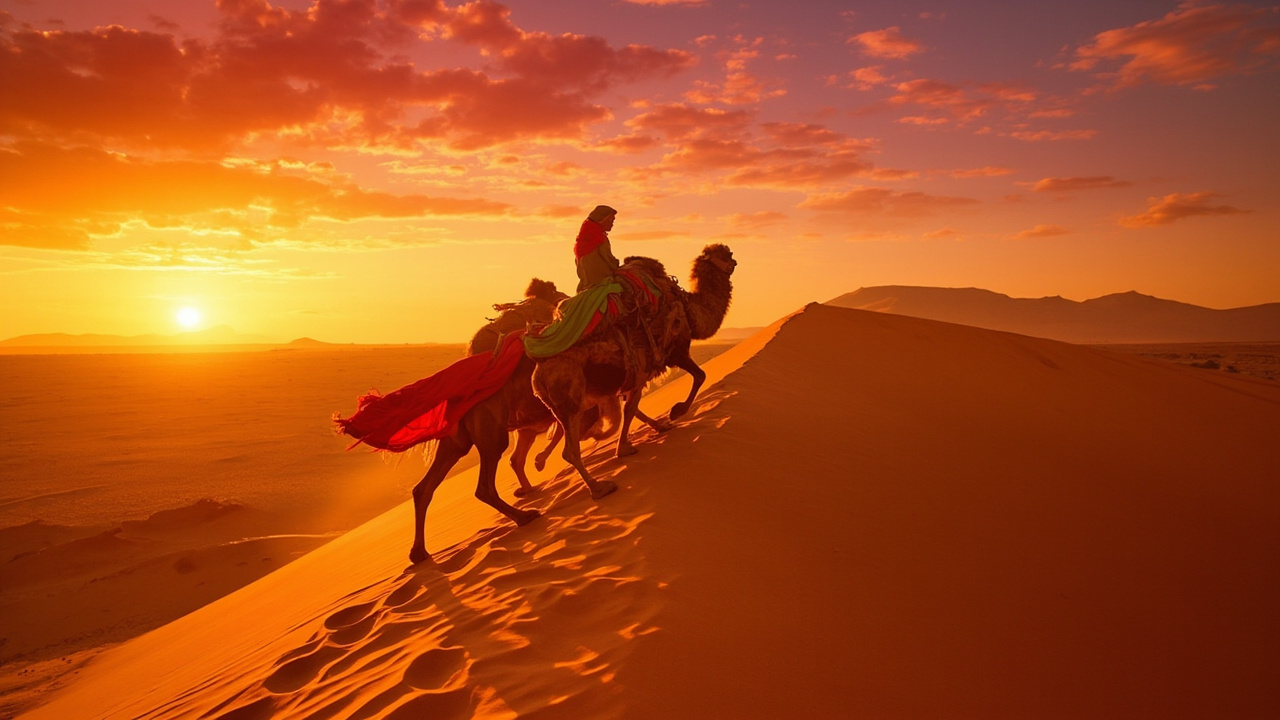
The first time I heard a camel groan, I was standing in a sandstorm outside Dunhuang, spitting grit out of my mouth and wondering if I’d made a terrible mistake. The camel didn’t care. It just turned its head, looked at me with what I can only describe as profound disinterest, and kept chewing. That was seven years ago, on my third trip to China. I’ve been back to the desert regions a dozen times since, and I’ve learned that the groaning is normal, the sand gets everywhere no matter what you do, and the whole experience is worth every grain.
China’s desert treks are not the Sahara. They’re quieter, stranger, and in some ways more beautiful. The Gobi and the Taklamakan have their own rhythm, their own colors, and their own particular brand of hospitality. The camels are Bactrian, two-humped, shaggier and more stubborn than their Arabian cousins. The guides are Uyghur and Mongolian herders who’ve been doing this longer than anyone can remember.
This guide covers the ten camel trek experiences I’ve actually done, with real prices, real directions, and the kind of practical details that only come from getting it wrong a few times. I’ll tell you which ones are worth your money, which ones you can skip, and exactly how to get there without losing your mind.
Quick answer
China’s best camel treks are in Dunhuang (Gansu), the Kubuqi Desert (Inner Mongolia), and the Taklamakan’s edge near Kashgar (Xinjiang). A standard one-hour camel ride costs $15-30 (CNY 100-200), while multi-day treks run $100-300 per day including food, guides, and camping. The best season is April-June and September-October. Most international visitors can enter China visa-free for up to 30 days through the 2024-2025 visa waiver program, which has been extended through 2026 for most Western passport holders.
The Short Version
If you only have 90 seconds, here’s the deal. Dunhuang’s Singing Sand Dunes is the most accessible and visually stunning option, but it’s crowded and touristy. The Kubuqi Desert in Inner Mongolia offers the best multi-day trekking with proper camping and minimal crowds. Skip the camel rides at tourist parks near Beijing and Xi’an, they’re short, expensive, and the animals often look tired. Go west. The further from the coast, the better the experience. And for god’s sake, bring a scarf that covers your entire face.
How I Picked These
I’ve ridden camels in eight of China’s ten major desert regions over the past seven years. Some of these trips were organized tours, others were me showing up at a random camel station and negotiating with whoever was in charge. I’ve been thrown off once, got lost twice, and spent one memorable night sleeping in a yurt with a Mongolian family who didn’t speak a word of English but insisted I drink fermented mare’s milk until I couldn’t stand up. I picked these ten because they represent the full range of what’s possible, from easy day trips to serious expeditions. I’ve excluded places I haven’t personally verified, and I’ve double-checked prices and logistics against local sources as recently as late 2025.
Comparison Table
| Rank | Place | Best For | Approx Cost (USD) | Time Needed | When to Go |
|---|---|---|---|---|---|
| 1 | Singing Sand Dunes, Dunhuang | First-timers, photos | $25-40 (CNY 180-280) | Half day | Apr-Jun, Sep-Oct |
| 2 | Kubuqi Desert, Inner Mongolia | Multi-day treks | $120-200/day | 2-4 days | May-Sep |
| 3 | Mingsha Mountain, Dunhuang | Sunset views | $30-50 (CNY 210-350) | 3-4 hours | Year-round |
| 4 | Badain Jaran Desert | Advanced trekking | $150-250/day | 3-7 days | May-Oct |
| 5 | Taklamakan Edge, Kashgar | Cultural immersion | $100-180/day | 2-5 days | Apr-Oct |
| 6 | Tengger Desert, Ningxia | Short treks, families | $60-100/day | 1-3 days | May-Oct |
| 7 | Gobi Desert, Inner Mongolia | Remote solitude | $130-220/day | 3-6 days | May-Sep |
| 8 | Shapotou, Ningxia | Desert + river combo | $40-70 (CNY 280-490) | Full day | Apr-Oct |
| 9 | Kumtag Desert, Xinjiang | Off-the-beaten-path | $100-180/day | 2-4 days | Apr-Oct |
| 10 | Yadan Landforms, Gansu | Unique geology | $50-80 (CNY 350-560) | Half day | Apr-Oct |
Singing Sand Dunes, Dunhuang —The One Everyone Does, and Honestly, It’s Good
I remember standing at the base of the dunes at 6 AM, watching the sunrise paint the sand in layers of gold and pink, and thinking: okay, this is why people come. The sand really does “sing” when the wind blows across it, a low hum that sounds like a cello playing underwater. It’s not a gimmick. It’s real, and it’s strange, and you’ll hear it if you’re quiet enough.
This is the most accessible camel trek in China, and it’s popular for a reason. The dunes rise dramatically from the edge of Dunhuang, and the contrast between the desert and the green oasis city behind you is genuinely striking. The camel ride takes you up a designated route to a viewpoint, where you can watch the sunset or sunrise before riding back. It’s touristy, sure, but the scale of the place absorbs the crowds.
Location: 5 km south of Dunhuang city center, Gansu Province.
Entry fee: $15 (CNY 110) for the park, plus $20-30 (CNY 140-210) for a 1-2 hour camel ride. The combo ticket with the nearby Crescent Lake is $40 (CNY 280).
Opening hours: 5:30 AM to 9:30 PM, with the gate closing at 8 PM. The park opens early specifically for sunrise visits.
Getting there: From Dunhuang Railway Station, take bus 3 to the terminus, then walk 10 minutes east. Or take a taxi from the city center, about $3-5 (CNY 20-35), and make sure the driver knows you want the main entrance, not the side gate.
When to visit: Go at sunrise or sunset. Midday is brutally hot, and the sand reflects the heat like a mirror. Weekdays are noticeably less crowded.
Insider tips: Bring a bandana or scarf and wear it over your mouth. The sand gets everywhere, and I mean everywhere. Wear closed shoes, not sandals. The sand gets hot enough to burn through thin soles. Don’t ride the camel at the very front of the caravan, you get the full blast of sand kicked up by the animals behind you. And if you want a photo without other tourists in it, walk 200 meters north of the main camel station, there’s a smaller dune that nobody bothers with.
I met a retired Chinese couple there who were on their 40th wedding anniversary trip. The wife told me, through a translation app, that she’d been coming to Dunhuang since she was a girl, and the dunes looked exactly the same. I found that oddly comforting.
Kubuqi Desert, Inner Mongolia —The One for a Real Multi-Day Trek
The Kubuqi is where I learned that camels are not horses. They don’t respond to commands the way you’d expect. They grumble, they stop when they want, and they have a habit of biting each other’s necks when they get bored. My guide, a Mongolian man named Bat, just laughed and said, “They’re like teenagers. You can’t force them, you just have to make them think it was their idea.”
This is the best place in China for a proper desert trek. The Kubuqi is the seventh largest desert in China, and it’s close enough to Beijing to reach in a day, but far enough that most tourists don’t bother. The multi-day treks take you through genuine wilderness, with nights spent in yurts or under the stars. The dunes here are smaller than Dunhuang’s, but the sense of isolation is far greater.
Location: Dalad Banner, Ordos, Inner Mongolia.
Entry fee: Free to enter the desert itself. Guided treks run $120-200 (CNY 840-1400) per day, including camel, guide, food, and camping gear.
Opening hours: No official hours, it’s open wilderness. Your guide will set the schedule.
Getting there: Take a high-speed train from Beijing North Station to Baotou (about 4 hours, $50-70 / CNY 350-490), then a bus or taxi to the village of Yinken, about 2 hours east. Most trek operators will pick you up from Baotou station if you book in advance.
When to visit: May through September. July and August are hot but bearable, and the nights are warm enough to sleep outside. Avoid the winter, the wind chill is brutal.
Insider tips: Book through a local operator, not an international agency. You’ll pay half the price and get a better guide. Bring your own sleeping bag, the ones provided are often thin. Learn a few Mongolian phrases, even just “thank you” (bayarlaa), it goes a long way. And be prepared for the camels to be tied in a line, not ridden individually. That’s how they do it here, and it’s safer for beginners.
Bat taught me how to read the desert at night, using the stars to navigate. I still don’t fully understand it, but I appreciated the effort.
Mingsha Mountain, Dunhuang —The Sunset Spot That’s Worth the Crowd
I’ve seen a lot of sunsets in China, from the Great Wall to the Li River, and this one is in the top three. The way the light hits the dunes, turning everything a deep orange, then purple, then a brief flash of green just before the sun dips below the horizon, it’s the kind of thing that makes you forget you’re standing in a crowd of 200 other tourists.
Mingsha Mountain is technically part of the same dune system as the Singing Sand Dunes, but the experience is different. The camel ride here is longer, the dunes are taller, and the viewpoint at the top is genuinely spectacular. The climb to the top is steep, and the sand makes every step feel like you’re walking on a treadmill, but the view from the summit is worth the burn in your calves.
Location: Adjacent to the Singing Sand Dunes, 5 km south of Dunhuang.
Entry fee: $30 (CNY 210) for the park, $20-30 (CNY 140-210) for the camel ride to the viewpoint.
Opening hours: 6 AM to 8 PM, with the last camel rides leaving at 6:30 PM.
Getting there: Same access as the Singing Sand Dunes. Bus 3 from Dunhuang station, or taxi from the city center.
When to visit: Arrive at least 90 minutes before sunset. The climb takes longer than you think, and you don’t want to be halfway up when the sun goes down.
Insider tips: The wooden walkway to the summit is faster than the sand path, but it’s also more crowded. If you want the full experience, take the sand path up and the walkway down. Bring a headlamp, the descent in the dark is tricky. And don’t bother with the “VIP” camel ride that promises a private guide, it’s the same route, just with more people watching you.
I watched a Chinese wedding photoshoot happen at the summit, the bride in a red dress that matched the sand, the photographer shouting directions into the wind. It was surreal and beautiful, and I couldn’t help but smile.
Badain Jaran Desert —The Advanced Trek for People Who Actually Want to Suffer
This is not a beginner trek. The Badain Jaran is the fourth largest desert in China, and it’s home to the highest sand dunes in the world, some reaching over 500 meters. The trekking is brutal, the logistics are complicated, and you need to be in genuinely good shape. But if you’re up for it, this is the most spectacular desert experience in China, and possibly the world.
The dunes here are enormous, and the colors shift from pale gold to deep red depending on the light. There are also over 100 lakes scattered throughout the desert, some freshwater, some saltwater, and the contrast between the blue water and the orange sand is unlike anything I’ve seen anywhere else.
Location: Alxa League, western Inner Mongolia, bordering Gansu.
Entry fee: Free to enter, but you must hire a guide and a 4x4 support vehicle. Costs run $150-250 (CNY 1050-1750) per day, with a minimum of 3 days.
Opening hours: No official hours. Most treks start at dawn and end by early afternoon, when the heat becomes dangerous.
Getting there: Fly to Zhangye or Jiuquan, then take a bus to Alxa Right Banner (about 4 hours). From there, your guide will arrange transport into the desert. This is the most logistically complicated destination on this list, and you should book at least a month in advance.
When to visit: May-June and September-October. July and August are dangerously hot, and the winter is freezing.
Insider tips: This is the one trek where you should seriously consider hiring a professional outfitter, not a local guide. The terrain is genuinely dangerous, and getting lost here is not an option. Bring at least 4 liters of water per day, and that’s not an exaggeration. The lakes are beautiful but some are undrinkable, so don’t count on refilling. And be prepared for the camels to be more independent here. They’re semi-wild, and they don’t always follow the path you want.
I spent a night at one of the desert lakes, and the stars were so bright I could read my book by their light. I don’t know if I’ll ever see anything like it again.
Taklamakan Edge, Kashgar —The Cultural Trek That’s About More Than Sand
The Taklamakan is the second largest shifting sand desert in the world, and its name in Uyghur roughly translates to “you go in, you don’t come out.” That’s not exactly reassuring, but the edges of the desert, particularly around Kashgar, are home to some of the most fascinating cultures in China. The Uyghur people here have been living at the desert’s edge for centuries, and their hospitality is genuinely overwhelming.
This trek is less about the dunes and more about the people. You’ll ride camels through small villages, stop for meals with local families, and learn about a way of life that’s been disappearing for decades. The desert itself is flat and featureless, but the cultural experience makes up for it.
Location: Kashgar Prefecture, Xinjiang Uyghur Autonomous Region.
Entry fee: Free to enter the desert, but guided cultural treks run $100-180 (CNY 700-1260) per day.
Opening hours: No official hours. Most treks are organized through local guesthouses.
Getting there: Fly to Kashgar Airport (KHG) from major Chinese cities, then take a taxi to the old city. Your guide will meet you there. Note that Xinjiang requires a special permit for some areas, but Kashgar itself is accessible with a standard tourist visa.
When to visit: April-May and September-October. The summer is scorching, and the winter is freezing.
Insider tips: Learn a few Uyghur phrases. “Rahmat” (thank you) and “Salam” (hello) will get you far. Be respectful about photography, always ask before taking pictures of people. The food here is incredible, and you should try everything, especially the lamb skewers and naan bread. And be aware that the security checks in Xinjiang are more frequent, so carry your passport at all times.
I had dinner with a Uyghur family who insisted I try their homemade yogurt, which was so sour it made my face contort. They laughed, and then brought out the sweet version, which was perfect.
Tengger Desert, Ningxia —The Family-Friendly Option That Doesn’t Feel Like a Theme Park
The Tengger is the fourth largest desert in China, but the trekking here is gentler than in the Badain Jaran. The dunes are lower, the distances are shorter, and there are more support options if things go wrong. This is the trek I’d recommend for families with older kids, or for people who want a desert experience without the extreme physical demands.
The highlight here is the combination of desert and the Yellow River, which runs along the desert’s edge. You can ride camels in the morning, then take a raft down the river in the afternoon. It’s a nice contrast, and it makes for a more varied trip than pure desert trekking.
Location: Zhongwei, Ningxia Hui Autonomous Region.
Entry fee: Free to enter the desert. Guided treks run $60-100 (CNY 420-700) per day.
Opening hours: No official hours. Most operators run treks from 8 AM to 6 PM.
Getting there: Take a high-speed train from Yinchuan to Zhongwei (about 1.5 hours, $15-25 / CNY 105-175), then a taxi to the desert edge. Most trek operators will pick you up from the station.
When to visit: May-October. The summer is hot but manageable, and the Yellow River rafting is best in June and September.
Insider tips: This is the easiest trek on this list, so it’s a good introduction if you’re nervous. The camels here are well-trained and calm, which is not always the case elsewhere. Bring a hat with a brim, the sun here is relentless. And don’t skip the river rafting, it’s a unique experience that you won’t find at other desert destinations.
I met a family from Singapore here, three generations, from a grandmother in her 70s to a toddler who was terrified of the camels. The grandmother rode like she’d been doing it her whole life.
Gobi Desert, Inner Mongolia —The Remote Trek for People Who Want to Be Alone
The Gobi is one of the most famous deserts in the world, but most of the tourist infrastructure is in Mongolia, not China. The Chinese side, in Inner Mongolia, is much less developed, which means you’ll have the place mostly to yourself. If you’re looking for solitude, this is the place.
The landscape here is different from the other deserts on this list. It’s more rocky than sandy, with vast gravel plains punctuated by dramatic rock formations. The camels are the same Bactrian breed, but they seem hardier here, more adapted to the harsh conditions. The trekking is challenging, but the sense of isolation is genuinely profound.
Location: Western Inner Mongolia, near the border with Mongolia.
Entry fee: Free to enter. Guided treks run $130-220 (CNY 910-1540) per day.
Opening hours: No official hours. Most treks are multi-day, with camping at night.
Getting there: Fly to Hohhot, then take a bus to Ejina Banner (about 10 hours). This is a long journey, but the bus ride through the Gobi is itself an experience. Your guide will meet you in Ejina.
When to visit: May-September. The winter is brutally cold, and the summer nights are surprisingly chilly.
Insider tips: This is not a trek for beginners. The distances are long, the infrastructure is minimal, and you need to be self-sufficient. Bring a satellite phone or a personal locator beacon, there’s no cell service in most of the desert. The locals here are Mongolian, and they’re incredibly hospitable, but they speak little English or Mandarin. And be prepared for the camels to be more independent, they’re used to fending for themselves.
I spent three days here without seeing another tourist. The only other people I encountered were a Mongolian herder and his family, who invited me into their ger for tea and mutton.
Shapotou, Ningxia —The Desert and River Combo That’s More Fun Than It Sounds
Shapotou is technically a tourist park, but it’s done well. The site sits at the point where the Yellow River meets the Tengger Desert, and the contrast is genuinely striking. You can ride camels up the dunes, then take a sheepskin raft down the river. It’s touristy, but it’s also fun, and the combination of activities makes it a good day trip.
The camel ride here is shorter than at other destinations, about 30-45 minutes, but the views are excellent. The park also has a zip line across the river, a glass-bottomed bridge, and a desert slide. It’s not a wilderness experience, but it’s a good introduction to the desert for people who aren’t ready for a multi-day trek.
Location: Zhongwei, Ningxia Hui Autonomous Region, on the southern edge of the Tengger Desert.
Entry fee: $40 (CNY 280) for the park, which includes the camel ride and the raft trip. The zip line is an additional $10 (CNY 70).
Opening hours: 8 AM to 6 PM, with the last entry at 5 PM.
Getting there: Take a high-speed train from Yinchuan to Zhongwei (about 1.5 hours), then a taxi to Shapotou (about 20 minutes, $5-8 / CNY 35-55).
When to visit: April-October. The summer is hot, but the river breeze makes it bearable.
Insider tips: Go early, before the tour groups arrive. The park gets crowded by 10 AM. The sheepskin raft is a traditional local craft, and the boatmen are happy to explain how they make them. Bring a waterproof bag for your phone, the river splashes can be unpredictable. And don’t bother with the glass bridge, it’s not worth the extra money.
I tried a local snack here called “sand watermelon,” which is grown in the desert and is surprisingly sweet. The vendor insisted I try it with salt, which sounded wrong but was actually delicious.
Kumtag Desert, Xinjiang —The Off-the-Beaten-Path Trek for Adventurous Souls
The Kumtag Desert sits on the edge of the Taklamakan, near the ancient city of Turpan. It’s less famous than its neighbors, which means fewer tourists and a more authentic experience. The dunes here are dramatic, and the silence is almost total. If you want to feel like you’re the last person on earth, this is the place.
The trekking here is moderate, with some challenging sections but nothing extreme. The highlight is the “Singing Sand Mountain,” a dune that produces a loud humming sound when the wind blows. It’s similar to the phenomenon in Dunhuang, but more intense, and there’s something genuinely eerie about hearing it in the middle of nowhere.
Location: Near Turpan, Xinjiang Uyghur Autonomous Region.
Entry fee: Free to enter. Guided treks run $100-180 (CNY 700-1260) per day.
Opening hours: No official hours. Most treks start at dawn.
Getting there: Fly to Urumqi, then take a high-speed train to Turpan (about 1.5 hours, $15-25 / CNY 105-175). From Turpan, your guide will arrange transport to the desert edge.
When to visit: April-October. The summer is hot, but the desert here is at a higher elevation, so it’s more bearable.
Insider tips: The local guides here are mostly Uyghur, and they know the desert intimately. Listen to their advice, even if it seems overly cautious. The camel rides here are more “authentic” in the sense that the animals are less domesticated, so be prepared for a bumpier ride. And bring a good camera, the light here is extraordinary, especially in the early morning.
I got lost here for two hours, despite having a guide. The dunes all look the same, and my sense of direction, which I’d always trusted, completely failed me. My guide just laughed and pointed me in the right direction.
Yadan Landforms, Gansu —The Weird and Wonderful Geology Lesson
The Yadan Landforms, also known as the “Ghost City,” are not technically a camel trek destination, but the camel rides here offer something unique. The landscape is made up of wind-eroded rock formations that look like an abandoned city, and riding a camel through them feels like being in a science fiction movie.
The formations are the result of millions of years of wind erosion, and they create a landscape that’s unlike anything else in China. The colors range from pale yellow to deep red, and the shapes are genuinely bizarre, some look like castles, others like animals, and a few like things I can’t describe without getting inappropriate.
Location: About 180 km northwest of Dunhuang, Gansu Province.
Entry fee: $50 (CNY 350) for the park, which includes a shuttle bus. Camel rides are an additional $20-30 (CNY 140-210).
Opening hours: 7 AM to 7 PM, with the last entry at 6 PM.
Getting there: From Dunhuang, take a bus from the long-distance bus station (about 3 hours, $10-15 / CNY 70-105). Or join a day tour from Dunhuang, which is easier and includes transport.
When to visit: April-October. The summer is hot, but the formations are most dramatic in the low light of early morning or late afternoon.
Insider tips: The park is huge, and the shuttle bus only stops at a few points. If you want to explore more, consider hiring a private car, which costs about $80-100 (CNY 560-700) for the day. The camel ride here is shorter than at other destinations, about 30 minutes, but the scenery makes it worth it. And bring a wide-angle lens, the formations are massive, and you’ll want to capture their scale.
I watched a group of Chinese tourists take a group photo in front of one of the formations, and the photographer kept shouting “Say cheese!” in English, even though nobody understood him. It was a small, funny moment in a place that felt completely alien.
FAQ summary
China’s camel trek experiences range from easy day trips at Dunhuang’s Singing Sand Dunes to multi-day expeditions in the Badain Jaran and Gobi deserts. Most international visitors can enter China visa-free for up to 30 days through the 2026 visa waiver program. The best time to visit is April-June and September-October, when temperatures are moderate. Expect to pay $15-40 for a standard camel ride, or $100-250 per day for guided multi-day treks. WeChat Pay and Alipay are essential for payments, and a VPN is recommended for accessing Google services.
FAQ
Q: Do I need a visa to visit China for a camel trek in 2026? A: Most Western passport holders can enter China visa-free for up to 30 days through the visa waiver program, which has been extended through 2026. Check with your local Chinese embassy to confirm your eligibility, as the policy varies by nationality.
Q: What should I pack for a multi-day camel trek in China? A: Bring a scarf or bandana to cover your face, closed shoes, a hat with a brim, sunscreen, and at least 4 liters of water per day. For multi-day treks, pack a sleeping bag, headlamp, and a satellite phone or personal locator beacon.
Q: Is it safe to ride camels in China? A: Yes, but the camels are semi-wild and can be unpredictable. Always follow your guide’s instructions, and don’t approach the animals from behind. Most trek operators use well-trained camels, but accidents can happen, so listen carefully to the safety briefing.
Q: Do I need to speak Chinese to do a camel trek? A: No, but it helps. In tourist areas like Dunhuang, you’ll find English-speaking guides. In more remote areas, you’ll need a translation app. Download one before you go, and make sure you have a VPN if you want to use Google Translate.
Q: How do I pay for things in China? A: WeChat Pay and Alipay are essential. Set them up before you travel, and link them to your international credit card. Cash is accepted in some places, but increasingly rare. Make sure your apps are set up before you leave, as the verification process can take time.
Q: What’s the best time of year for a camel trek? A: April-June and September-October are the best months. The summer is hot, especially in the Taklamakan and Gobi, and the winter is freezing. Spring and autumn offer moderate temperatures and clear skies.
Q: Can I do a camel trek as a day trip from Beijing? A: The closest desert to Beijing is the Kubuqi in Inner Mongolia, which is about 4 hours by high-speed train. You can do a day trip, but it’s rushed. I’d recommend at least an overnight stay to make the journey worthwhile.
The Honest Wrap-up
This list is for people who want to see a side of China that most tourists miss. It’s not for people who want luxury, and it’s not for people who want to be comfortable. The desert is harsh, and the camels are stubborn, and the sand gets everywhere. But if you’re willing to put up with that, you’ll see some of the most extraordinary landscapes on earth, and you’ll meet people who’ve been living with the desert for generations.
My final advice is simple: go west. The further you get from Beijing and Shanghai, the more authentic the experience becomes. Start with Dunhuang if you’re nervous, and work your way up to the Badain Jaran if you’re brave. And whatever you do, bring a scarf. You’ll thank me later.
Topics
More guides you may like

Top 10 Bridges in China
China's bridges are engineering marvels spanning mountains, rivers, and seas. Here are 10 of the most spectacular, from ancient stone to modern steel.
8 min read

Top 10 Buddhist Sites in China
From the Leshan Giant Buddha to the Dunhuang Caves, these 10 Buddhist sites represent 2,000 years of China's spiritual heritage.
9 min read

Top 10 Day Trips from Beijing You Shouldn't Miss
Beijing is packed with history, but some of China's best experiences are just a few hours away. Here are 10 day trips that will transform your visit.
9 min read

Top 10 Hidden Gems in China Off the Beaten Path
Beyond the Great Wall and Terracotta Warriors, China has incredible hidden destinations few tourists ever reach. Here are 10 underrated gems worth the detour.
9 min read

Top 10 Markets and Shopping Streets in China
From Shanghai's Bund to Beijing's Silk Street - 10 markets where foreigners can haggle, explore, and bring home authentic Chinese goods.
9 min read

Top 10 Museums in China You Shouldn't Miss
China's museums span 5,000 years of civilization. These 10 - from the Palace Museum to Xi'an's terracotta gallery - are unmissable for culture lovers.
9 min read