
Potatso National Park: The Complete 2026 Guide
The cab driver looked at me in the rearview mirror and laughed. Not a mean laugh, but the kind you get when you've asked something genuinely funny.
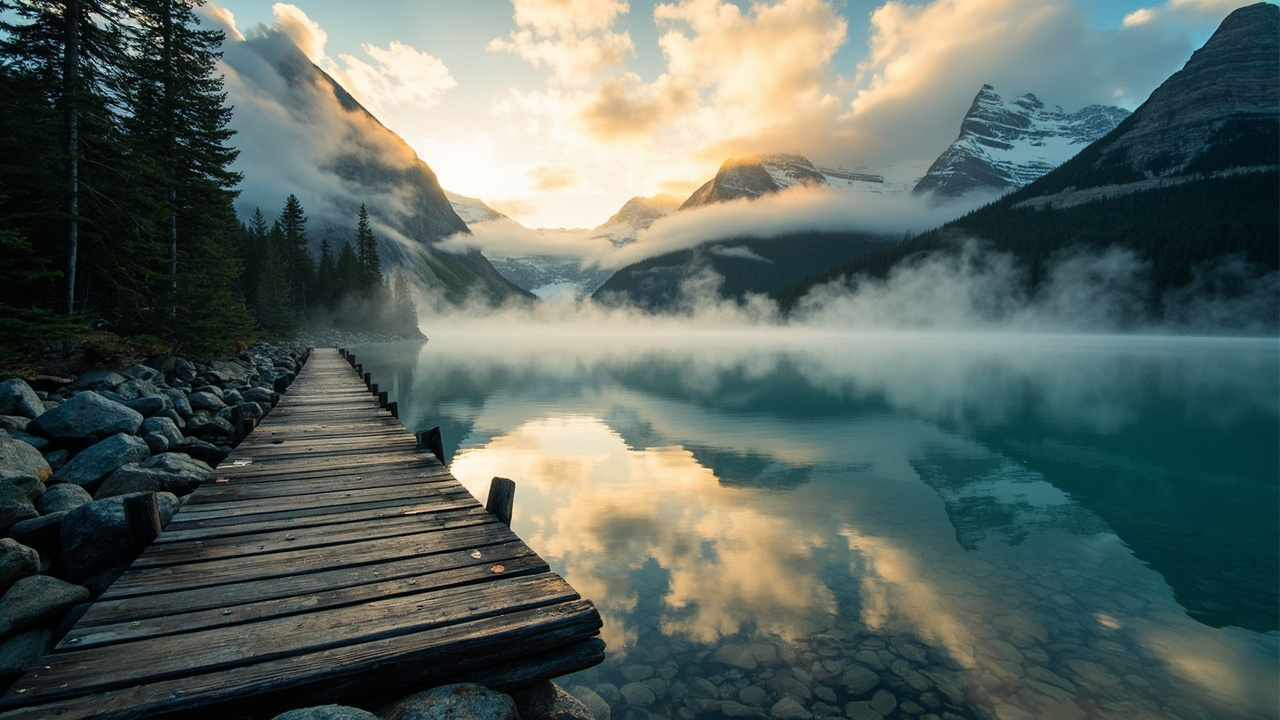
The cab driver looked at me in the rearview mirror and laughed. Not a mean laugh, but the kind you get when you’ve asked something genuinely funny. I’d just asked him, in my broken Mandarin, if the “Potatso” meant “potato” in Tibetan. He shook his head, still chuckling, and pointed at the pine forests sliding past the window. “Pu-da-cuo,” he said slowly. “Means ‘to reach the other shore’ in Tibetan.” I’d been living in Beijing for five years at that point, and I’d never heard of this place until a friend in Kunming mentioned it offhand. Three hours later, I was standing at the edge of a glacial lake so still it looked like someone had poured a mirror into a mountain bowl, and I understood why the name means what it means.
Potatso National Park, or Pudacuo (普达措) as you’ll see it written on signs, is China’s first national park, established in 2007 in northwest Yunnan Province. It sits at 3,500 to 4,200 meters above sea level near Shangri-La City, and it’s the kind of place that makes you rethink what you thought you knew about Chinese tourism. This isn’t the Great Wall with its selfie sticks and cable cars. It’s a high-altitude landscape of alpine lakes, old-growth forests, and grasslands where yaks outnumber people. The park covers roughly 1,300 square kilometers, though visitors only access a fraction of it.
This guide comes from two separate visits, one in October 2024 and another in May 2025, plus conversations with park staff, local Tibetan guides, and a very patient woman at the Shangri-La bus station who helped me figure out the return schedule. I’ll cover what’s actually worth your time inside the park, how to get there without getting fleeced, what to pack that you’ll actually need, and the mistakes I made so you don’t have to.
Quick answer
Potatso National Park is a high-altitude nature reserve near Shangri-La in Yunnan Province, China, known for its alpine lakes, forests, and Tibetan grassland culture. The full visit costs approximately $30-40 USD (200-280 CNY) including park entry and mandatory shuttle bus, takes 4-6 hours, and is best visited from May to October. As of 2026, most international visitors can enter China visa-free for up to 30 days, and the park is accessible via a 30-minute bus ride from Shangri-La city center.
The Short Version
If you only have 90 seconds, here’s the deal. Potatso is beautiful, genuinely, but it’s not a wilderness adventure. You follow a fixed route on shuttle buses and boardwalks, which keeps things easy but also means you can’t wander off. The two lakes, Shudu and Bita, are the highlights. Go in late May or early June when the rhododendrons are blooming, or in late September for autumn colors. Skip the park’s “ecotourism” activities, they’re overpriced. Bring warm clothes even in summer, the wind off the lakes is no joke. And whatever you do, don’t rush it. The best moments happen when you stop walking and just stand still for a while.
How I Picked These
I visited Potatso twice in eight months, once in peak autumn and once in late spring. The first trip was a mistake, I showed up at 2 PM thinking I could “do the park quickly” and ended up rushing through the second lake as the light faded. The second time I went properly: early start, full day, and a picnic lunch I bought from a bakery in Shangri-La’s old town. I also spent time talking to the Tibetan staff who run the shuttle buses and ticket booths, plus a guide named Dawa who grew up in a village near the park’s edge. Between those conversations and my own missteps, I got a pretty clear picture of what works and what doesn’t. The prices and hours below reflect what I saw on the ground in 2024 and 2025, with a reasonable buffer for 2026 inflation.
Comparison Table
| Rank | Place | Best For | Approx Cost (USD) | Time Needed | When to Go |
|---|---|---|---|---|---|
| 1 | Shudu Lake Boardwalk | First-time visitors, classic views | Included in park fee | 1.5-2 hours | May-June or Sept-Oct |
| 2 | Bita Lake Loop | Serious walkers, fewer crowds | Included in park fee | 2-3 hours | Year-round (ice in winter) |
| 3 | Militang Alpine Meadow | Photos, grassland scenery | Included in park fee | 30-45 min | June-August |
| 4 | Shudu Lake Boat Ride | Families, quick sightseeing | $15 (100 CNY) extra | 30 min | May-October |
| 5 | Bita Lake Boardwalk | Birdwatchers, quiet walks | Included in park fee | 1-1.5 hours | May-June (bird migration) |
| 6 | Visitor Center & Exhibits | Learning about local ecology | Free | 20-30 min | Any time |
| 7 | Niru Valley (nearby) | Hikers wanting real trails | Free (guide recommended) | Half day | June-September |
| 8 | Alpine Botanical Garden | Plant enthusiasts | Included in park fee | 45 min | June-August |
| 9 | Shangri-La Highland Lakes (outside park) | Photographers, sunset views | Free | 1-2 hours | Year-round |
| 10 | Potatso at Dawn (early entry) | Solitude, mist on water | Same park fee | 1 hour | May-October |
1. Shudu Lake Boardwalk —The Postcard View That Delivers
The shuttle bus dropped us at the Shudu Lake trailhead, and I’ll be honest, I was skeptical. The first 100 meters of boardwalk are packed with tour groups taking photos of each other in front of the lake, and I nearly wrote the whole thing off. Then the crowd thinned out, because most people only walk 200 meters before turning back to catch the next bus. I kept going, and within ten minutes I had the boardwalk almost entirely to myself.
The lake itself is the classic Potatso image: a wide sheet of dark blue water ringed by pine and spruce forest, with the occasional Tibetan prayer flag snapping in the wind. The boardwalk runs for about 3 kilometers along the eastern shore, and the light changes constantly as clouds move across the mountains. I sat on a bench for twenty minutes watching a pair of black-necked cranes pick through the shallows, and I didn’t see another person the whole time.
Location: Shudu Lake, eastern section of Potatso National Park, Shangri-La, Diqing Prefecture, Yunnan Province.
Entry fee: Included in the combined park ticket of approximately $25 USD (180 CNY) plus shuttle bus $12 USD (80 CNY). No separate fee for the boardwalk.
Opening hours: Park opens 8:00 AM to 4:00 PM (last entry), with the final shuttle leaving the lake around 5:30 PM. Hours can shift slightly by season, so check the official board at the visitor center.
How to get there: From Shangri-La city center, take the No. 3 bus from the main station (about $1.50 USD / 10 CNY) or a taxi ($10-15 USD / 70-100 CNY). The park entrance is 22 kilometers east of town, roughly 30 minutes by road.
When to visit: Go early. The first shuttle at 8:30 AM gets you to Shudu before the tour buses arrive around 10 AM. Weekdays are noticeably quieter than weekends, and the October larch colors are spectacular.
Insider tips:
- Walk the full boardwalk. The last 500 meters are the quietest and have the best views of the lake’s far shore.
- Bring binoculars if you have them. The birdlife is more varied than you’d expect.
- The wooden benches along the route are perfect for a snack stop, just pack out your trash.
- Don’t bother with the boat ride on this lake, the boardwalk gives you better views for free.
- Wind picks up in the afternoon, so do this lake first if you’re visiting in spring or autumn.
I met a retired couple from Chengdu on the boardwalk who’d been coming to Potatso every autumn for six years. They told me the larches turn gold in mid-October, and they were right. I’d been planning to leave by noon, but I stayed until the light went soft and the lake turned silver.
2. Bita Lake Loop —The Longer Walk That Rewards Patience
Bita Lake is the second stop on the park’s shuttle route, and it’s where the tour groups thin out dramatically. The lake sits higher than Shudu, around 3,600 meters, and the air feels noticeably thinner. The full loop is a 4.5-kilometer walk that takes you through mixed forest, past a small hermitage, and along the lake’s western shore. The first time I visited, I skipped this section because I was tired. That was a mistake.
The second time, I gave myself three hours and took it slow. The trail starts with a gentle climb through spruce forest, and the trees here are old, some of them easily 300 years. There’s a section where the boardwalk crosses a stream and the sound of water fills the whole valley. The hermitage, a small whitewashed building with prayer wheels, is worth a stop. A monk who lives there part-time will sometimes come out to talk, though his English is limited and my Tibetan is nonexistent, so we mostly smiled and nodded.
Location: Bita Lake, western section of Potatso National Park, approximately 8 kilometers from the main visitor center.
Entry fee: Included in the park ticket. No extra charge for the loop trail.
Opening hours: Same as the park, 8:00 AM to 4:00 PM entry, with the last shuttle from Bita around 5:00 PM.
How to get there: Take the park shuttle from the visitor center to the Bita Lake stop, then follow the signs for the “Long Loop” trail. The shuttle runs every 20-30 minutes during peak season.
When to visit: June through September for the wildflowers, or late September to October for autumn color. The trail is quieter than Shudu at any time of day, but especially after 2 PM.
Insider tips:
- The loop is one-way, so you can’t turn back easily. Make sure you’re comfortable with the full 4.5 kilometers before starting.
- There are no food or water vendors on the trail. Bring your own.
- The altitude makes the walk harder than it looks. Take breaks, and don’t try to power through.
- If you see yaks near the trail, give them space. They’re generally calm but can be unpredictable.
- The hermitage has a small donation box if you want to leave something for the monk.
I got caught in a sudden rain shower halfway around the loop and took shelter under a pine tree with a Tibetan family who were visiting from Lhasa. The grandmother shared her thermos of butter tea, which was salty and warming and completely unlike anything I’d had before. It remains one of my favorite food memories from China.
3. Militang Alpine Meadow —The Grassland You’ve Seen in Photos
Militang is the stop where every tour bus disgorges its passengers for the classic “Tibetan grassland” photo. And honestly, it deserves the hype, at least for the first ten minutes. The meadow is a wide, flat expanse of grass surrounded by forested hills, with a wooden boardwalk that loops around the perimeter. Yaks graze freely, and the light in the late afternoon turns everything a soft gold.
The problem is the crowds. Between 11 AM and 2 PM, this is the busiest spot in the park, and you’ll be sharing the boardwalk with dozens of tour groups taking the same photo of the same yak. My advice: get here early or late. The first shuttle of the day gets you here before the tour buses, and the last shuttle of the day, around 4 PM, gives you the golden hour light with far fewer people.
Location: Militang Meadow, central section of Potatso National Park, between the Shudu and Bita shuttle stops.
Entry fee: Included in the park ticket.
Opening hours: Same as the park, 8:00 AM to 4:00 PM entry.
How to get there: The park shuttle stops at Militang on both the outbound and return routes. Get off, walk the loop, and catch the next shuttle when you’re done.
When to visit: June to August for green grass and wildflowers. The meadow is brown and less photogenic from November to April.
Insider tips:
- The boardwalk loop takes about 30 minutes at a leisurely pace. Don’t feel pressured to rush it.
- The yaks are used to people, but they’re still large animals. Keep a respectful distance, especially if calves are around.
- There’s a small shop at the shuttle stop selling snacks and drinks, but prices are inflated. Bring your own water.
- The best photos are from the eastern edge of the meadow, where the forest frames the grassland.
- If you’re lucky, you’ll catch the local herder who brings his yaks down in the evening. He doesn’t speak English, but he’s happy to pose for photos.
I watched a group of tourists from Guangdong try to feed a yak a bag of potato chips. The yak ate the whole bag, wrapper and all, and then looked at them expectantly for more. The herder just shrugged and said something in Tibetan that I’m pretty sure meant “that’s your problem now.”
4. Shudu Lake Boat Ride —Skip It, Honestly
The boat ride on Shudu Lake is one of those activities that sounds nice in theory and disappoints in practice. It costs an extra $15 USD (100 CNY) on top of the park ticket, and it takes you from the boardwalk’s midpoint to the far shore in about 30 minutes. The views are fine, but they’re the same views you get from the boardwalk, just from a lower angle. And because the boat is diesel-powered, you spend the whole ride listening to an engine instead of the wind and the birds.
I took it once, on my first visit, because I was short on time and thought it would save me the walk. It didn’t, the boat drops you at the far end of the boardwalk, and you still have to walk back to the shuttle stop. If you’re traveling with small children or have mobility issues, the boat might be worth it. Otherwise, skip it and spend the money on a good lunch in Shangri-La instead.
Location: Shudu Lake, boat dock at the midpoint of the eastern boardwalk.
Entry fee: $15 USD (100 CNY) per person, in addition to the park ticket.
Opening hours: Boats run from 9:00 AM to 4:00 PM, weather permitting. They stop if the wind picks up.
How to get there: Walk to the dock from the Shudu Lake boardwalk, or take the shuttle to the Shudu stop and follow the signs.
When to visit: If you must take it, do it in the morning when the lake is calmest. Afternoon winds can make the ride choppy.
Insider tips:
- The boat doesn’t save you time, it just changes the view.
- If you’re prone to motion sickness, skip it. The lake can get rough.
- The far shore has a small dock and a short trail, but it’s not more interesting than the main boardwalk.
- Check the weather before buying a ticket. If it’s overcast, the views are muted.
- The boat operators are friendly and will point out landmarks, but their English is limited.
I met a German couple on the boat who had been in China for three weeks and were on their way to Lhasa. They told me the boat ride was “the most relaxing thing we’ve done in China” and I didn’t have the heart to tell them they’d missed the best part of the lake by not walking it.
5. Bita Lake Boardwalk —The Quiet Side of the Park
The Bita Lake boardwalk is the short, easy alternative to the full loop, and it’s where I send anyone who wants the lake experience without the 4.5-kilometer commitment. It runs for about 1.5 kilometers along the lake’s northern shore, and it’s noticeably quieter than Shudu’s boardwalk. The views are different too, more intimate, with the forest coming right down to the water’s edge.
This is also the best spot in the park for birdwatching. I saw black-necked cranes, several species of ducks, and a kingfisher that I only caught because it flashed blue as it dove. The boardwalk has a few small platforms that extend over the water, and if you sit still for ten minutes, the birds forget you’re there and go about their business.
Location: Bita Lake, northern shore, accessible from the Bita shuttle stop.
Entry fee: Included in the park ticket.
Opening hours: Same as the park, 8:00 AM to 4:00 PM entry.
How to get there: Take the park shuttle to the Bita Lake stop. The boardwalk entrance is clearly marked, about 100 meters from the shuttle drop-off.
When to visit: May and June are best for bird migration. Early morning, before 9 AM, is when the birds are most active.
Insider tips:
- Bring binoculars if you have them. The birds are close enough to see with the naked eye, but binoculars make it much better.
- The platforms are good spots for a quiet picnic, just pack out your trash.
- The boardwalk is wheelchair and stroller accessible, which is rare in this park.
- If you’re a photographer, the light on the lake is best in the first hour after sunrise.
- The far end of the boardwalk connects to the start of the full loop, so you can extend your walk if you’re feeling ambitious.
A park ranger named Tsering told me that the black-necked cranes return to Bita Lake every year in early May. He’d been watching them for fifteen years, and he still got excited when the first one arrived. “They always come back,” he said, as if that was the most remarkable thing in the world. And maybe it is.
6. Visitor Center & Exhibits —Worth 20 Minutes, No More
The visitor center at the park entrance is where you buy tickets, catch the shuttle, and, if you’re smart, pick up a map. It’s also home to a small exhibition hall that explains the park’s ecology, geology, and cultural history. The exhibits are bilingual, which is rare in this part of China, and they do a decent job of explaining why this landscape matters.
I spent about 20 minutes here on my second visit, and I learned more about the park’s history than I had in hours of walking. The displays cover the glaciers that carved the valleys, the forest succession after the last ice age, and the traditional land management practices of the local Tibetan communities. There’s also a section on the park’s designation as China’s first national park in 2007, and the debates that surrounded it.
Location: Park entrance, main visitor center building, Potatso National Park.
Entry fee: Free with park ticket.
Opening hours: 8:00 AM to 4:30 PM, same as the ticket office.
How to get there: The visitor center is the first building you’ll see after entering the park. You can’t miss it.
When to visit: Do this before your shuttle, so you know what you’re looking at when you’re out on the trails.
Insider tips:
- The map they give you at the ticket counter is actually useful. Keep it.
- The restrooms here are the cleanest in the park. Use them before you get on the shuttle.
- There’s a small gift shop with decent postcards and some local snacks.
- The staff at the information desk speak basic English and can help with shuttle times.
- If you forgot to bring water, there’s a vending machine near the restrooms.
I overheard a tour guide telling his group that the park was “the most important ecological project in Yunnan Province.” That might be an exaggeration, but the exhibits do make a convincing case that this place matters beyond just being pretty.
7. Niru Valley —For When You Want to Actually Hike
Niru Valley isn’t technically part of Potatso National Park, but it’s close enough that I’m including it here. It’s a side valley that branches off the main road about 10 kilometers before the park entrance, and it offers something the park doesn’t: real hiking on unmaintained trails. There’s no boardwalk, no shuttle, no ticket booth. Just a dirt path that follows a rushing river through forest and pasture, with a few Tibetan villages scattered along the way.
I hiked about 8 kilometers into the valley on my second visit, and I saw exactly three other people. The trail climbs gently, and the scenery shifts from pine forest to open grassland to a high alpine basin with a small lake. It’s the kind of hike that makes you feel like you’ve earned the views, which is a different satisfaction than the park’s easy boardwalks.
Location: Niru Valley, approximately 10 kilometers west of the Potatso park entrance, off the main road to Shangri-La.
Entry fee: Free. The valley is not part of the national park.
Opening hours: No official hours. Hike during daylight hours.
How to get there: Take a taxi from Shangri-La to the village of Niru (about $15 USD / 100 CNY), or ask your hotel to arrange a driver. The trailhead is at the village’s upper edge.
When to visit: June to September for the best weather. The trail can be muddy after rain, and there’s snow at higher elevations from November to April.
Insider tips:
- This is a real hike, not a boardwalk stroll. Wear proper shoes and bring water and food.
- There’s no phone signal in most of the valley. Tell someone where you’re going.
- The villages along the trail are inhabited, and the locals are friendly but may not speak English. A translation app helps.
- If you want a guide, ask at your hotel in Shangri-La. Rates are around $30-40 USD (200-280 CNY) for a day.
- The last village in the valley, about 12 kilometers in, has a small guesthouse if you want to stay overnight.
I stopped at a village to ask for directions and ended up having lunch with a family who insisted I try their homemade yak butter and barley flour. The butter was strong and tangy, and the barley flour, called tsampa, was mixed with tea into a paste that I ate with my fingers. It was one of the most memorable meals I’ve had in China, and it cost me nothing but a pack of cigarettes I gave the grandfather as a thank-you.
8. Alpine Botanical Garden —A Quiet Corner for Plant Lovers
The Alpine Botanical Garden is a lesser-known section of Potatso that most visitors miss entirely. It’s tucked away near the park’s western boundary, and the shuttle only stops there on request. The garden is essentially a fenced-off section of alpine meadow and forest where the park’s botanists have labeled the native plants with both Chinese and Latin names.
I found it by accident, I asked the shuttle driver if there was anywhere quiet to see wildflowers, and he pointed me to this stop. The garden is small, maybe a 30-minute walk, but it’s a lovely place to slow down and actually look at the plants instead of just the big views. In June, the meadow is carpeted with rhododendrons, gentians, and a dozen other species I couldn’t name.
Location: Western section of Potatso National Park, accessible via the shuttle on request.
Entry fee: Included in the park ticket.
Opening hours: Same as the park, 8:00 AM to 4:00 PM entry.
How to get there: Tell the shuttle driver you want to get off at the botanical garden stop. It’s between the Militang and Bita stops.
When to visit: June and July for peak wildflower bloom. The garden is less interesting from August onward.
Insider tips:
- The plant labels are in Chinese and Latin, not English. A plant identification app helps.
- There are no benches in the garden, so bring something to sit on if you want to linger.
- The garden is a good spot for a quiet lunch, but pack out your trash.
- If you’re interested in the ecology, the garden’s staff, when present, are happy to talk. Their English is limited but they’re enthusiastic.
- The trail through the garden connects to a longer path that leads to Bita Lake, but it’s not well-marked. Only take it if you’re confident.
I spent an hour in the garden trying to photograph a particularly vivid blue gentian, and a park botanist came over to tell me its name in Chinese. I repeated it back badly, and she laughed and wrote it down for me. I still have the scrap of paper somewhere.
9. Shangri-La Highland Lakes —The Sunset Spot Locals Keep Quiet
A few kilometers outside the park, there’s a string of small lakes that most tourists never see. They’re not marked on any map, and the only way to find them is to ask a local or, like me, get slightly lost on a back road. The lakes sit at about 3,800 meters, higher than anything in the park, and they’re surrounded by open grassland and grazing yaks.
I stumbled on them while trying to find a shortcut back to Shangri-La, and I ended up staying for the sunset. The light at this altitude is extraordinary, all gold and pink and purple, and the lakes reflect it like mirrors. There’s no boardwalk, no entrance fee, no facilities. Just you, the wind, and the occasional yak.
Location: Approximately 5 kilometers southwest of the Potatso park entrance, along a dirt road that branches off the main highway.
Entry fee: Free.
Opening hours: No official hours. Go for sunrise or sunset.
How to get there: You’ll need a taxi or a rented car. Ask your driver to take you to “the small lakes near Potatso” and they’ll likely know what you mean.
When to visit: Sunset is the magic hour, but sunrise is also beautiful if you can drag yourself out of bed.
Insider tips:
- The dirt road can be rough after rain. A 4x4 isn’t necessary, but a car with decent clearance helps.
- There are no facilities, so plan accordingly.
- The yaks here are less used to people than the ones in the park. Keep your distance.
- Bring a jacket, the temperature drops fast after sunset at this altitude.
- If you’re a photographer, this is the best sunset spot in the area, hands down.
I sat on a rock for an hour watching the light change, and a young Tibetan couple on a motorcycle pulled up to do the same. We didn’t exchange more than a few words, but we shared the silence, which felt like enough.
10. Potatso at Dawn —The Secret Most Visitors Never Discover
Here’s the thing nobody tells you about Potatso: the park is at its best in the first hour after opening, before the tour buses arrive and the boardwalks fill with chatter. The mist hangs over Shudu Lake like a blanket, the birds are singing, and the light is soft and golden. It feels less like a tourist attraction and more like a place that exists on its own terms.
I did this on my second visit, catching the first shuttle at 8:30 AM and walking the Shudu boardwalk in near-solitude. The difference was night and day. By 10 AM, the crowds had arrived, but I’d already seen the park at its best. If you’re willing to wake up early, this is the Potatso that locals know.
Location: Shudu Lake boardwalk, Potatso National Park.
Entry fee: Same park ticket, but you’ll need to be at the entrance before 8:30 AM to catch the first shuttle.
Opening hours: Park opens at 8:00 AM. First shuttle departs around 8:30 AM.
How to get there: Take a taxi from Shangri-La ($10-15 USD / 70-100 CNY) and arrive at the park entrance by 8:00 AM.
When to visit: May to October for the best morning light. Winter mornings are cold but stunning, with frost on the boardwalk.
Insider tips:
- The first shuttle fills up fast. Be at the entrance by 8:00 AM to get a seat.
- The morning mist clears by 9:30 AM, so don’t dawdle.
- Bring a thermos of hot tea or coffee. The mornings are cold even in summer.
- The early light is perfect for photography, but watch your footing on the frosty boardwalk.
- If you’re staying in Shangri-La, ask your hotel to arrange an early taxi the night before.
I stood alone at the end of the Shudu boardwalk as the mist lifted off the lake, and a heron flew past so close I could hear its wings. That moment, more than any other, is why I keep coming back to this place.
FAQ summary
Potatso National Park near Shangri-La in Yunnan Province, China, is the country’s first national park, established in 2007, and offers a high-altitude landscape of alpine lakes, forests, and Tibetan grasslands. The park requires a combined ticket of approximately $25 USD (180 CNY) plus a mandatory shuttle bus fee of $12 USD (80 CNY), with an additional $15 USD (100 CNY) optional boat ride on Shudu Lake. Visitors should plan for 4-6 hours, arrive early to avoid tour groups, and note that the park is best visited from May to October, with the highest crowds in July and August. As of 2026, most international visitors can enter China visa-free for up to 30 days, and the park is a 30-minute drive from Shangri-La city center.
FAQ
Q: Do I need a visa to visit Potatso National Park in 2026? A: Most international visitors can enter China visa-free for up to 30 days as of 2026, which covers tourism to Potatso. Check the latest policy with the Chinese embassy in your country before booking, as rules can change. The visa-free entry applies to most European, American, and Southeast Asian passport holders.
Q: How do I get from Shangri-La to Potatso National Park? A: Take the No. 3 public bus from Shangri-La’s main bus station, which costs about $1.50 USD (10 CNY) and takes 30-40 minutes. Taxis cost $10-15 USD (70-100 CNY) and are faster. Your hotel can also arrange a private driver for around $25-30 USD (180-210 CNY) round trip.
Q: What’s the best time of year to visit Potatso? A: Late May to early June for rhododendron blooms, or late September to October for autumn colors. July and August are the warmest but also the busiest and wettest. Winter (November to March) is cold, with snow and some trail closures, but the frozen lakes are stunning.
Q: How long do I need at Potatso National Park? A: Plan for 4-6 hours to see both lakes properly. The shuttle bus route takes about 3 hours if you don’t stop much, but you’ll want extra time for walking the boardwalks and sitting by the lakes. Arrive at the park entrance by 8:30 AM to maximize your time.
Q: Is Potatso suitable for people with mobility issues? A: Yes, the main boardwalks at Shudu and Bita Lakes are flat and wheelchair accessible. The shuttle buses have space for wheelchairs, though you may need to ask staff for assistance. The full Bita Lake loop is more challenging and not recommended for those with limited mobility.
Q: What should I pack for a visit to Potatso? A: Warm layers are essential, even in summer, as temperatures at 3,500-4,200 meters can drop quickly. Bring a waterproof jacket, comfortable walking shoes, sunscreen, and a hat. The altitude can cause breathlessness, so take it slow and consider bringing altitude sickness medication if you’re prone to it.
Q: Do I need cash or can I use mobile payments at Potatso? A: WeChat Pay and Alipay are accepted at the ticket office and shops, but it’s wise to carry some cash as backup. International visitors can link foreign credit cards to WeChat Pay or Alipay, but this requires setup before your trip. The park has ATMs at the visitor center, but they can be unreliable.
The Honest Wrap-up
Potatso isn’t the most dramatic place I’ve been in China, that would be the Tiger Leaping Gorge or the mountains of western Sichuan. But it’s the most accessible high-altitude landscape in the country, and there’s something to be said for that. You can see glacial lakes, old-growth forest, and Tibetan grassland in a single morning, with clean restrooms and a shuttle bus that runs on time. That’s not nothing.
This guide is for the traveler who wants to see the real Yunnan without a multi-day trek. It’s not for the hardcore hiker, who should head to Niru Valley or the surrounding mountains. And it’s not for the traveler who wants to tick off a famous sight and move on, because Potatso rewards patience, not speed.
If you go, do yourself a favor: skip the boat, walk the full boardwalk, and sit still for at least ten minutes at each lake. The park will show you what it’s about if you give it the time. And if you can manage the early morning, catch the first shuttle. That’s the Potatso I’ll remember, mist on the water and not another soul in sight.
Topics
More guides you may like

Top 10 Bridges in China
China's bridges are engineering marvels spanning mountains, rivers, and seas. Here are 10 of the most spectacular, from ancient stone to modern steel.
8 min read

Top 10 Buddhist Sites in China
From the Leshan Giant Buddha to the Dunhuang Caves, these 10 Buddhist sites represent 2,000 years of China's spiritual heritage.
9 min read

Top 10 Day Trips from Beijing You Shouldn't Miss
Beijing is packed with history, but some of China's best experiences are just a few hours away. Here are 10 day trips that will transform your visit.
9 min read

Top 10 Hidden Gems in China Off the Beaten Path
Beyond the Great Wall and Terracotta Warriors, China has incredible hidden destinations few tourists ever reach. Here are 10 underrated gems worth the detour.
9 min read

Top 10 Markets and Shopping Streets in China
From Shanghai's Bund to Beijing's Silk Street - 10 markets where foreigners can haggle, explore, and bring home authentic Chinese goods.
9 min read

Top 10 Museums in China You Shouldn't Miss
China's museums span 5,000 years of civilization. These 10 - from the Palace Museum to Xi'an's terracotta gallery - are unmissable for culture lovers.
9 min read