
China Solo Male Travel Tips: The Complete 2026 Guide
The cab driver in Shanghai looked at me in the rearview mirror, squinted, and said something I only half-understood.
The cab driver in Shanghai looked at me in the rearview mirror, squinted, and said something I only half-understood. My translation app had died an hour earlier. I was 24 hours into my first trip to China, jet-lagged, and I had just shown him the address of a hostel I wasn’t even sure existed anymore. He laughed, waved his hand like I was worrying about nothing, and drove. Twenty minutes later, he pulled up to the exact right door, refused to take a tip, and pointed me toward a noodle shop across the street. “Hao chi,” he said. Good eat. I was hooked before I even checked in.
That was seven years and forty-something trips ago. I’ve been back to China more times than I can count, and I still get a small thrill every time I land. This guide is for the solo male traveler who’s never been, who’s a little nervous about the language barrier, the payment apps, the sheer scale of the place. I’ll tell you what works, what’s overhyped, what to skip, and how to not look like a complete tourist within your first 48 hours.
Quick answer
China is easier than you think for a solo male traveler in 2026. Most nationalities get 30 days visa-free through December 31, 2026, the high-speed rail network is world-class, and you can get by with a translation app and very little Mandarin. Budget $60-100 per day for comfortable travel, and set up Alipay before you fly - it’s the single most important thing you can do.
The Short Version
If you have 90 seconds, here’s the deal. China is safe, the food is incredible, and the infrastructure is better than most of Europe. Download Alipay and link your foreign card before you arrive. Get a VPN on your phone if you want Google Maps, WhatsApp, or Instagram to work. The high-speed trains are your best friend - book tickets on Trip.com or the official 12306 app. Learn to say “bu yao” (no thanks) and “duo shao qian” (how much). And whatever you do, don’t skip the smaller cities. Beijing and Shanghai are great, but they’re not the whole story.
How I Picked These
I didn’t pull this list from a press release or a tourism board website. Every place here is somewhere I’ve actually been, usually multiple times, often on my own dime. I’ve gotten lost in Chengdu’s back alleys, been shouted at by a noodle vendor in Xi’an who thought I was ordering wrong, and spent a week in Yunnan that changed how I think about travel. I’ve also made plenty of mistakes - paid double for a taxi in Guangzhou, missed a train in Hangzhou, eaten something in a night market that I still can’t identify. The advice below comes from those trips, plus conversations with locals and expats who’ve been here longer than I have.
Comparison Table
| Rank | Place | Best For | Approx Cost (USD) | Time Needed | When to Go |
|---|---|---|---|---|---|
| 1 | Xi’an | History and food | $50-70/day | 2-3 days | Mar-May, Sep-Nov |
| 2 | Chengdu | Food, pandas, relaxed vibe | $50-70/day | 3-4 days | Mar-Jun, Sep-Nov |
| 3 | Beijing | Iconic sights, culture | $70-100/day | 4-5 days | Apr-May, Sep-Oct |
| 4 | Shanghai | Modern China, nightlife | $80-120/day | 3-4 days | Mar-May, Oct-Nov |
| 5 | Zhangjiajie | Hiking, unreal landscapes | $60-90/day | 3-4 days | Apr-Jun, Sep-Oct |
| 6 | Guilin/Yangshuo | Scenery, cycling, chill | $50-70/day | 3-4 days | Apr-Oct |
| 7 | Hangzhou | Lakeside beauty, tea | $60-90/day | 2-3 days | Mar-May, Sep-Nov |
| 8 | Lijiang/Dali | Old towns, mountains | $50-70/day | 4-5 days | Mar-May, Sep-Nov |
| 9 | Hong Kong | City energy, food, harbor | $100-150/day | 3-4 days | Oct-Dec |
| 10 | Tibet (Lhasa) | Bucket-list, altitude, culture | $100-150/day | 5-7 days | Apr-Oct |
1. Xi’an - The Ancient Capital That Feels Alive
The first time I saw the Terracotta Warriors, I was not prepared. I’d seen photos a hundred times, but standing in that hangar-sized pit, looking at thousands of faces that were each individually carved, I got a little choked up. It’s one of those rare sights that actually beats the pictures. The warriors are just the beginning though. Xi’an is the old capital, the eastern end of the Silk Road, and it’s got a food scene that I genuinely think rivals anywhere in China.
The city wall is the other must-do. Rent a bike on top and ride the full 14 kilometers - it takes about two hours with stops. You’ll see the old city from above, watch the sun set over the drum tower, and feel like you’re in a movie. The Muslim Quarter nearby is chaotic, loud, and absolutely essential. Go hungry.
- Location: Xi’an, Shaanxi Province. The wall encircles the old city center.
- Entry fee: Terracotta Warriors: about $22 (CNY 150). City wall: $8 (CNY 54), bike rental extra.
- Opening hours: Warriors: 8:30am-5:30pm (shorter in winter). Wall: 8am-10pm.
- How to get there: Fly or take the high-speed train from Beijing (about 4.5 hours, $60/CNY 400). To the warriors, take bus 306 from Xi’an Railway Station, about 1 hour. To the wall, take Metro Line 2 to Yongningmen Station, Exit D - you’ll be right at the South Gate.
- When to visit: Spring and autumn are perfect. Summer is brutal - hot and crowded. Go to the warriors first thing in the morning, right when they open.
- Insider tips: The Muslim Quarter is best at night. Try the roujiamo (Chinese hamburger) and biangbiang noodles. Don’t pay for a guide at the warriors - the audio guide is enough. Bargain hard at the market stalls. And the “one-day tour” touts near the bus stop will overcharge you - just get on the public bus.
- I once watched a noodle chef in the Muslim Quarter stretch a single piece of dough into noodles so long they wrapped around his entire body. The crowd cheered. He didn’t even look up.
2. Chengdu - The City That Taught Me to Slow Down
Chengdu is the first place in China where I actually relaxed. There’s something about the pace here - people sit in tea houses for hours, playing mahjong, drinking jasmine tea, and absolutely refusing to rush. The city is famous for pandas, and yes, the panda base is worth it, but the real magic is in the everyday. The food is the best in China, and I’ll fight anyone who disagrees.
The panda base is genuinely special. Go early - the pandas are most active in the morning before it gets hot. You’ll see them eating bamboo, climbing, and occasionally rolling around like furry boulders. It’s not a zoo in the sad sense; the enclosures are huge and the pandas seem genuinely happy.
But the real Chengdu experience is the tea house. Find one in People’s Park, order a cup of jasmine tea for about $2 (CNY 15), and just sit. Watch the old men play mahjong. Get your ears cleaned by a guy with a terrifying array of metal tools. It’s weird, it’s wonderful, and it’s the most local thing you’ll do all trip.
- Location: Chengdu, Sichuan Province.
- Entry fee: Panda Base: $7 (CNY 55). Tea houses: $2-5 (CNY 15-35) for tea.
- Opening hours: Panda Base: 7:30am-6pm (get there by 8am). Tea houses: roughly 8am-9pm.
- How to get there: Fly into Chengdu Shuangliu or Tianfu Airport. Metro Line 3 goes to the Panda Base (Panda Avenue Station). The city center is easy to navigate on the metro.
- When to visit: Spring and autumn. Summer is hot and humid. Weekdays are much better for the pandas.
- Insider tips: The hotpot here is legendary - order the “ma la” (numbing spicy) broth and don’t be a coward about it. The “face-changing” opera performance at Shufeng Yayun Teahouse is touristy but genuinely impressive. Try the dan dan noodles and mapo tofu. And if you want to experience the real Chengdu, skip the fancy restaurants and eat at a random hole-in-the-wall with plastic stools.
- I sat in a tea house for three hours one afternoon, and an old man at the next table taught me to play mahjong using hand gestures and a lot of patience. I lost every game. He bought me tea anyway.
3. Beijing - The Big One, and It Delivers
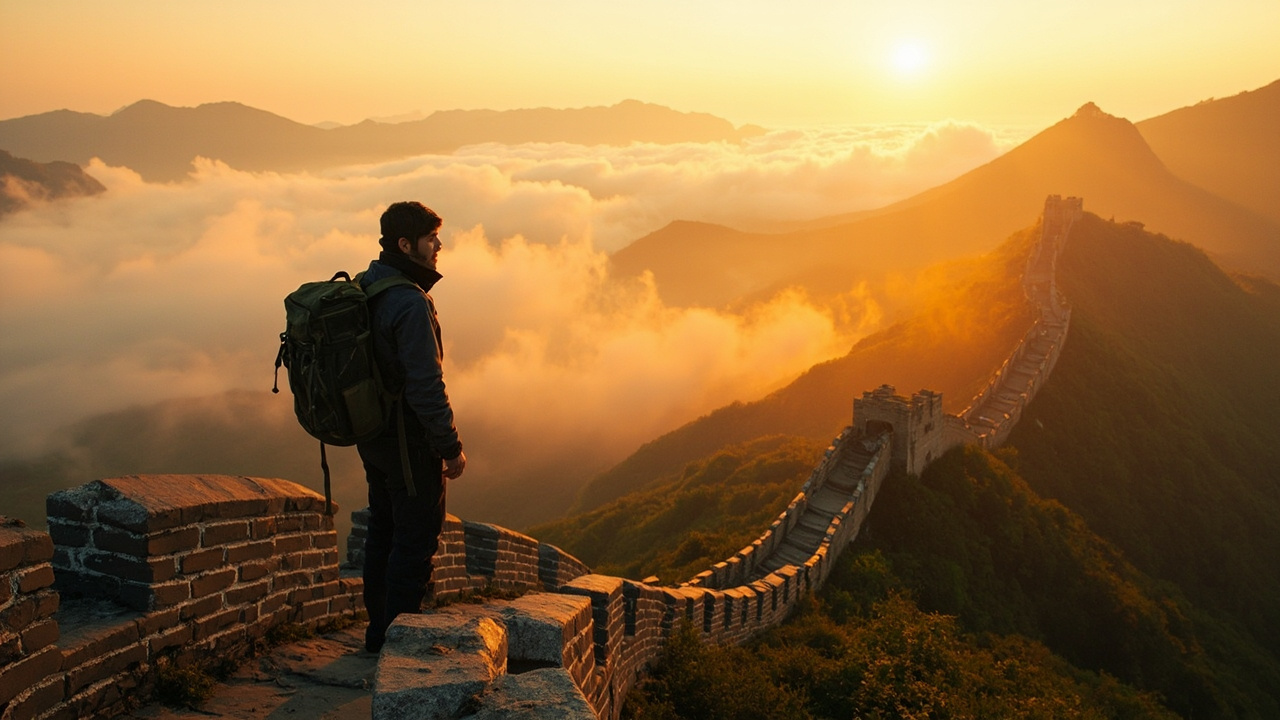
Beijing is overwhelming. It’s huge, it’s crowded, and it’s got more history than most countries. But it’s also the city that made me fall in love with China. The Forbidden City is as impressive as everyone says - walk through the Meridian Gate and you’ll understand why emperors thought they were gods. The Great Wall at Mutianyu is the best section for first-timers - less crowded than Badaling, with a cable car and a toboggan ride down that’s absurdly fun.
The hutongs are where Beijing’s soul lives. These narrow alleyways are disappearing, but you can still find pockets of old Beijing - courtyard homes, street vendors, old men playing chess. Rent a bike and get lost. You’ll find something interesting within ten minutes.
The food is a whole other story. Peking duck at Siji Minfu is a must - the crispy skin, the pancakes, the whole ritual. It’s about $15 (CNY 100) for a full duck, which is a steal. And the night markets, especially Wangfujing, are a sensory overload of scorpions on sticks and stinky tofu. Try the stinky tofu. Trust me.
- Location: Beijing, with major sites spread across the city.
- Entry fee: Forbidden City: $9 (CNY 60) in peak season, $6 (CNY 40) off-peak. Great Wall at Mutianyu: $6 (CNY 45) plus cable car.
- Opening hours: Forbidden City: 8:30am-5pm (closed Mondays). Mutianyu: 7:30am-6pm.
- How to get there: Forbidden City: Metro Line 1 to Tiananmen East or West Station. Mutianyu: take a bus from Dongzhimen or book a private driver (about $60/CNY 400 round trip).
- When to visit: April-May and September-October are perfect. Avoid the October 1-7 National Day holiday at all costs - it’s a human flood.
- Insider tips: Book Forbidden City tickets online at least a week in advance - they sell out. The Mutianyu toboggan ride down the Great Wall is worth every yuan. Learn to use the metro - it’s cheap, fast, and signs are in English. And don’t bother with the “Great Wall one-day tours” from your hostel - they’ll take you to the worst section and rush you through.
- I got lost in the hutongs near Shichahai and stumbled into a courtyard where an old woman was making jianbing (savory crepes). She waved me over, made me one, and refused to take money. Best breakfast I had in China.
4. Shanghai - The Future, With a Side of History
Shanghai hits different. It’s China’s most international city, the skyline looks like a sci-fi movie, and the energy is electric. But it’s also a city of layers - the colonial-era buildings on the Bund, the art deco apartments in the French Concession, the narrow lanes of the old city. You can spend a week here and barely scratch the surface.
The Bund at night is the obvious move - the skyline across the river is one of the most iconic views in the world. But my favorite Shanghai moment was walking through the French Concession at dusk, when the plane trees filter the light and the old villas glow. It feels like a different country.
The food scene is incredible, from street stalls to Michelin-starred restaurants. The xiaolongbao (soup dumplings) at Din Tai Fung are famous for a reason, but the best ones I had were at a tiny shop in the old city where the dumplings were so hot they burned my tongue. Worth it.
- Location: Shanghai, centered around the Bund, People’s Square, and the French Concession.
- Entry fee: The Bund is free. Shanghai Tower observation deck: $25 (CNY 180). Yu Garden: $6 (CNY 40).
- Opening hours: Most attractions are open 9am-5pm. The Bund is best at night.
- How to get there: Fly into Pudong or Hongqiao Airport. Metro Line 2 connects both to the city center. The Bund is at East Nanjing Road Station, Exit 1.
- When to visit: Spring and autumn. Summer is humid and miserable. The city is beautiful in October.
- Insider tips: The “Bund Sightseeing Tunnel” is a tourist trap - skip it. Take the ferry across the river instead, it’s about 30 cents. The French Concession is best explored on foot or by bike. And the best views of the skyline are from the bar at the top of the Hyatt on the Bund - buy a drink, not a ticket.
- I was walking through the old city when a shopkeeper selling tea pulled me aside and insisted I try his oolong. He spent twenty minutes explaining the difference between harvest seasons, and I bought a bag I didn’t need. Worth every yuan.
5. Zhangjiajie - The Mountains That Inspired Avatar
Zhangjiajie is the place that makes people say “no way that’s real.” The sandstone pillars rise hundreds of meters straight up, covered in mist, looking like something from a fantasy movie. That’s because it is - James Cameron used these mountains as inspiration for the floating peaks in Avatar. They’re that surreal.
The national park is massive, and you’ll need at least two days to see the highlights. The Bailong Elevator is a glass elevator built into the side of a cliff - it’s touristy, but the view from the top is worth it. The glass-bottomed bridge at Zhangjiajie Grand Canyon is terrifying and amazing in equal measure. And the hiking trails through the pillars are some of the best I’ve done anywhere.
The park is crowded, especially on weekends. Go on a weekday, start early, and take the less-popular trails. The “Golden Whip Stream” trail is a great walk that most tour groups skip.
- Location: Zhangjiajie National Forest Park, Hunan Province.
- Entry fee: Park entrance: $35 (CNY 245), valid for 4 days. Glass bridge: $20 (CNY 138).
- Opening hours: 7am-6pm (varies by season).
- How to get there: Fly into Zhangjiajie Hehua Airport or take the high-speed train from Changsha (about 3 hours). From the city, take a bus or taxi to the park entrance.
- When to visit: April-June and September-October. The mist is part of the magic, so don’t be disappointed by clouds.
- Insider tips: The park is huge - take the shuttle buses between sections, they’re free. The cable car up to Tianzi Mountain is worth the extra money. Bring rain gear - the weather changes fast. And the “Avatar Hallelujah Mountain” is just a renamed pillar - don’t expect a theme park.
- I was hiking the Golden Whip Stream trail when it started raining, and a group of Chinese hikers shared their umbrella and their snacks with me. We didn’t speak the same language, but we laughed the whole way.
6. Guilin and Yangshuo - The Postcard Version of China
The karst mountains around Guilin and Yangshuo look like they were painted by a landscape artist. The Li River winds through limestone peaks that rise out of rice paddies, and the whole area is absurdly beautiful. It’s the China you see in paintings, except it’s real.
Yangshuo is the base for most travelers - a small town that’s become a backpacker hub. Rent a bike or a scooter and explore the countryside. The Yulong River is perfect for bamboo rafting - it’s calm, peaceful, and you’ll float past water buffalo and farmers in conical hats.
The night show “Impression Liu Sanjie” is a spectacle - hundreds of performers on the river, lit by spotlights, with the mountains as a backdrop. It’s touristy, but it’s also genuinely impressive. Go.
- Location: Guilin and Yangshuo, Guangxi Province.
- Entry fee: Li River cruise: $50-80 (CNY 350-550). Bamboo rafting: $20-40 (CNY 140-280).
- Opening hours: Varies by activity. The Li River cruise runs 9am-noon.
- How to get there: Fly into Guilin Liangjiang Airport or take the high-speed train from Guangzhou (about 2.5 hours). From Guilin, take a bus or train to Yangshuo (about 1 hour).
- When to visit: April-October. The rice paddies are greenest in summer, and the weather is best in spring and autumn.
- Insider tips: Skip the Li River cruise and take the bus to Xingping instead - you’ll see the same scenery for a fraction of the price. The “20 yuan note viewpoint” is a photo spot that’s actually worth seeing. And the food in Yangshuo is surprisingly good - try the beer fish, a local specialty.
- I rented a scooter in Yangshuo and got hopelessly lost in the countryside. A farmer waved me over, pointed at a path, and mimed that it would take me back to town. I followed his directions and ended up at the most beautiful viewpoint I’ve ever seen.
7. Hangzhou - The Lake That Inspired Poets
Hangzhou is where the Chinese elite have been vacationing for a thousand years. West Lake is the centerpiece - a calm, beautiful lake surrounded by willow trees, pagodas, and walking paths. It’s the kind of place where you understand why poets wrote about it.
The best way to experience West Lake is to walk or bike around it. The full loop is about 15 kilometers, and it’s flat and easy. Stop at the tea houses, watch the locals do tai chi in the morning, and take a boat ride to the islands in the middle of the lake.
The Longjing tea fields are just outside the city, and they’re worth a visit. The hills are covered in neat rows of tea bushes, and you can visit a tea farm, watch the leaves being processed, and drink a cup of the freshest Longjing you’ll ever have.
- Location: Hangzhou, Zhejiang Province, about 1 hour from Shanghai by high-speed train.
- Entry fee: West Lake is free. Boat rides: $10-20 (CNY 70-140). Tea farm visits: free, but you’ll probably buy tea.
- Opening hours: West Lake is always open. Tea farms are open during daylight hours.
- How to get there: High-speed train from Shanghai (about 1 hour, $18/CNY 120). From Hangzhou East Station, take Metro Line 1 to Longxiangqiao Station for West Lake.
- When to visit: March-May for the spring flowers, September-November for the autumn colors. Avoid summer weekends - it’s packed.
- Insider tips: The “Impression West Lake” show is a nighttime spectacle on the water - worth seeing. Rent a bike from one of the many rental stations. And the “Lingyin Temple” nearby is one of the most important Buddhist temples in China - go early to avoid crowds.
- I was walking around West Lake at sunrise and saw an old man practicing calligraphy with a giant brush and water on the stone path. He wrote characters that disappeared as the water evaporated. I watched for twenty minutes.
8. Lijiang and Dali - Old Towns and Snow Mountains
The old towns of Yunnan are a step back in time. Lijiang is a UNESCO World Heritage site with cobblestone streets, canals, and traditional Naxi architecture. It’s beautiful, but it’s also become a tourist circus - the main streets are wall-to-wall souvenir shops and bars. The magic is in the side alleys, where you can still find quiet courtyards and old women selling fruit.
Dali is more laid-back. The old town is smaller and less polished, and the surrounding countryside is stunning - rice paddies, the Cangshan Mountains, and Erhai Lake. Rent a bike and ride around the lake. It’s one of the best cycling routes I’ve done anywhere.
The real highlight of the region is the Jade Dragon Snow Mountain, just outside Lijiang. The cable car takes you up to 4,500 meters, and the views are spectacular. Bring warm clothes - it’s cold up there even in summer.
- Location: Lijiang and Dali, Yunnan Province.
- Entry fee: Lijiang old town: $7 (CNY 50) “maintenance fee” (sometimes not enforced). Jade Dragon Snow Mountain: $20 (CNY 130) plus cable car.
- Opening hours: Old towns are always open. The mountain cable car runs 8am-4pm.
- How to get there: Fly into Lijiang Sanyi Airport or take the high-speed train from Kunming (about 3 hours). Dali is another hour by train.
- When to visit: March-May and September-November. The mountain is best in winter when it’s snow-capped.
- Insider tips: Stay in a guesthouse outside the old town walls - it’s cheaper and quieter. The “impression Lijiang” show at the base of the mountain is surprisingly good. And the local Bai and Naxi food is worth trying - the “rushi” (fried cheese) is a local specialty.
- I got altitude sickness on the Jade Dragon Snow Mountain and had to sit down for an hour. A local tour guide gave me a bottle of oxygen and told me to slow down. He was right.
9. Hong Kong - The City That Never Sleeps (and Never Stops)
Hong Kong is technically not mainland China, but it’s part of the same trip for most travelers. And honestly, it’s a perfect contrast. The city is a vertical jungle of skyscrapers, the food is incredible, and the energy is unmatched. It’s also easier for first-timers - English is widely spoken, and it’s a great place to ease into the region.
The best view of Hong Kong is from Victoria Peak. Take the tram up, watch the sunset, and see the city light up below you. The harbor at night is also spectacular - the “A Symphony of Lights” show is cheesy but fun.
The food is the real reason to come. Dim sum at a traditional tea house, roast goose at a Michelin-starred restaurant, and street food in Mong Kok. Hong Kong is a food city, and you’ll eat well.
- Location: Hong Kong SAR.
- Entry fee: Victoria Peak Tram: $8 (CNY 55) one way, $13 (CNY 90) round trip.
- Opening hours: Most attractions are open 10am-10pm. The Peak is best at sunset.
- How to get there: Fly into Hong Kong International Airport. The Airport Express train gets you to the city center in 24 minutes. The Peak Tram is at Garden Road, near Central Station.
- When to visit: October-December is the best weather. Summer is hot, humid, and typhoon season.
- Insider tips: The Octopus Card is essential for public transport - get one at the airport. The “ding ding” trams on Hong Kong Island are a cheap and fun way to see the city. And the night markets in Temple Street are great for souvenirs - bargain hard.
- I got lost in Mong Kok at 2am and ended up at a dai pai dong (street food stall) where the owner cooked me the best beef brisket noodles I’ve ever had. He didn’t speak English, I didn’t speak Cantonese, but we communicated just fine.
10. Tibet (Lhasa) - The Roof of the World
Tibet is not like anywhere else on Earth. The altitude alone is a shock - Lhasa sits at 3,650 meters, and you’ll feel it. The Potala Palace is one of the most impressive buildings I’ve ever seen, a massive white and red fortress that dominates the city. The Jokhang Temple is the spiritual heart of Tibetan Buddhism, and the Barkhor Street circuit around it is a pilgrimage route you can join.
Tibet requires special permits, and you can’t travel independently - you’ll need a tour guide. It’s more expensive and more complicated than the rest of China, but it’s also the most rewarding. The landscape is otherworldly, the culture is fascinating, and the people are incredibly warm.
The best way to see Tibet is to take the train from Xining or Chengdu - the Qinghai-Tibet Railway is an engineering marvel, and the views are incredible. It’s a long ride, but it’s part of the experience.
- Location: Lhasa, Tibet Autonomous Region.
- Entry fee: Potala Palace: $15 (CNY 100) in peak season, $8 (CNY 55) off-peak. Jokhang Temple: $12 (CNY 85).
- Opening hours: Potala Palace: 9am-4pm (closed some days). Jokhang Temple: 8am-6pm.
- How to get there: Fly into Lhasa Gonggar Airport or take the train from Xining (about 22 hours). You’ll need a Tibet Travel Permit, arranged through a tour agency.
- When to visit: April-October. Winter is cold and many facilities close.
- Insider tips: Acclimatize in Lhasa for at least a day before doing anything strenuous. Drink plenty of water and avoid alcohol. The “Tibetan tea” (butter tea) is an acquired taste - try it, but don’t feel bad if you don’t finish it. And the views from the rooftop of the Jokhang Temple are some of the best in the city.
- I was walking around Barkhor Street when a Tibetan monk motioned for me to join him in a circuit of the temple. We walked in silence for twenty minutes, and I’ve never felt more peaceful.
FAQ summary
China is safe, efficient, and easier for solo travelers than most people expect. The most important steps are setting up Alipay with a foreign card before you arrive, downloading a VPN if you need Google services, and booking high-speed rail tickets in advance. Most nationalities can enter visa-free for 30 days through December 2026. Budget $60-100 per day for comfortable travel, and learn a few basic Mandarin phrases - they’ll go a long way.
FAQ
Q: Do I need a visa to visit China in 2026? A: Most nationalities, including Americans, Europeans, and Southeast Asians, can enter visa-free for up to 30 days through December 31, 2026. Check the latest policy with your local Chinese embassy before booking, as rules can change.
Q: Is China safe for solo male travelers? A: Yes, extremely safe. China has a very low crime rate, and violent crime against tourists is almost unheard of. The biggest risks are petty scams and pickpocketing in crowded tourist areas, so keep your wallet in your front pocket and be wary of overly friendly strangers offering “tea” or “art” deals.
Q: Do I need a VPN for my phone in China? A: Yes, if you want to use Google Maps, WhatsApp, Instagram, or Facebook. China blocks these services. Download a VPN app before you arrive, or buy a SIM card with a built-in VPN. Your hotel Wi-Fi may also have a VPN option.
Q: How do I pay for things in China? A: Cash is rarely accepted anymore. Set up Alipay or WeChat Pay before you arrive and link your foreign credit or debit card. Both apps work with foreign cards now. You’ll use QR codes for everything, from street food to train tickets.
Q: Is English widely spoken in China? A: No. English is common in tourist areas and major hotels, but most locals don’t speak it. Download a translation app like Google Translate (which works offline with downloaded language packs) or Pleco. You’ll get by with gestures and patience.
Q: How do I book high-speed train tickets? A: Use Trip.com or the official 12306 app. Both have English interfaces and accept foreign cards. Book at least a few days in advance for popular routes. You’ll need your passport number to book, and you’ll collect physical tickets at the station (or use your passport to scan through the gates).
Q: What should I pack for a trip to China? A: Comfortable walking shoes, a power adapter (China uses Type A/C plugs, 220V), a portable charger, and a reusable water bottle (hot water is often available for free). Pack light - you can buy anything you need in China, and the high-speed trains have luggage racks.
The Honest Wrap-up
This list is for the traveler who wants to see the real China, not just the version in the brochures. It’s for the guy who’s willing to get lost, try weird food, and fumble through a conversation with a shopkeeper who doesn’t speak English. If that sounds like you, you’re going to have the time of your life.
If you want a sanitized, all-inclusive, English-speaking experience, China can do that too. But you’d be missing the point. The best moments in China are the unexpected ones - the shared umbrella in the rain, the tea house conversation, the noodle chef who makes you his best dish just because you showed up.
One final piece of advice: don’t overplan. Book your first few nights and your major transport, then leave room for spontaneity. China rewards the curious. And when you’re standing on the Great Wall or floating down the Li River, you’ll understand why I keep coming back.
Topics
More guides you may like

Top 10 Bridges in China
China's bridges are engineering marvels spanning mountains, rivers, and seas. Here are 10 of the most spectacular, from ancient stone to modern steel.
8 min read

Top 10 Buddhist Sites in China
From the Leshan Giant Buddha to the Dunhuang Caves, these 10 Buddhist sites represent 2,000 years of China's spiritual heritage.
9 min read

Top 10 Day Trips from Beijing You Shouldn't Miss
Beijing is packed with history, but some of China's best experiences are just a few hours away. Here are 10 day trips that will transform your visit.
9 min read

Top 10 Hidden Gems in China Off the Beaten Path
Beyond the Great Wall and Terracotta Warriors, China has incredible hidden destinations few tourists ever reach. Here are 10 underrated gems worth the detour.
9 min read

Top 10 Markets and Shopping Streets in China
From Shanghai's Bund to Beijing's Silk Street - 10 markets where foreigners can haggle, explore, and bring home authentic Chinese goods.
9 min read

Top 10 Museums in China You Shouldn't Miss
China's museums span 5,000 years of civilization. These 10 - from the Palace Museum to Xi'an's terracotta gallery - are unmissable for culture lovers.
9 min read