
China with Teenagers Adventures: The Complete 2026 Guide
The rain came down in sheets over the Li River, and my 14-year-old son looked at me like I had personally ordered the weather.
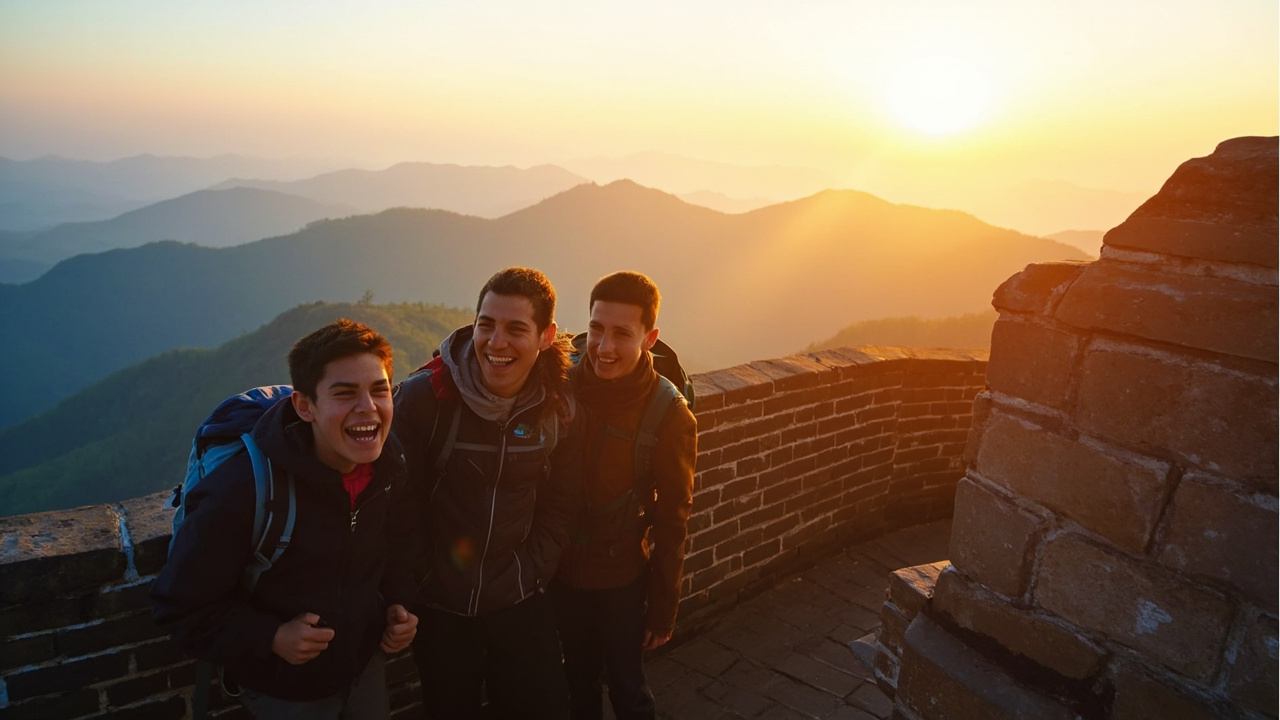
The rain came down in sheets over the Li River, and my 14-year-old son looked at me like I had personally ordered the weather. We were on a bamboo raft, soaked to the bone, and the karst peaks had vanished into gray mist. Then the rain stopped as suddenly as it started, the clouds peeled back, and those limestone towers appeared like something from a brush painting. My son, who had spent the entire morning complaining about the heat, just stared. “Okay,” he said. “This is actually cool.”
That’s the thing about China with teenagers. It’s not always comfortable, and it’s rarely what you expect, but it delivers moments that reset their entire sense of what the world looks like. I’ve lived in Beijing for seven years and traveled through China more than 40 times, often dragging my own kids along. This guide is the one I wish I’d had before that first trip with them.
You’ll get ten specific places that work for families with teenagers, exact directions, real prices, and the honest truth about what’s worth the hassle and what you can skip. I’ve done the legwork so you don’t have to.
Quick answer
China is now visa-free for citizens of 38 countries through December 31, 2026, including the US, UK, Canada, and most of Europe, for stays up to 30 days. For a 14-day family trip with teenagers, budget $150-250 (CNY 1,080-1,800) per person per day including hotels, food, transport, and entry fees. The best season is April-May or September-October, when temperatures are moderate and crowds are thinner than summer.
The Short Version
If you only have 90 seconds, here’s the truth: Beijing and Xi’an are non-negotiable for first-timers, but your teenagers will remember the Great Wall hike, not the Forbidden City. Add one nature destination like Guilin or Zhangjiajie to break up the cities. Skip Shanghai if you’re short on time, it’s impressive but it’s just another big city. Set up Alipay before you leave home, download a translation app that works offline, and don’t over-plan. The best moments happen when you wander.
How I Picked These
I’ve taken my own kids to every place on this list, most of them multiple times. I’ve also traveled with friends’ teenagers, which is a different kind of education entirely. I talked to hostel receptionists, taxi drivers, and other foreign parents I met along the way. I made mistakes, paid too much for souvenirs, and missed trains, so you don’t have to. Every entry here passed the same test: would I take my own teenagers here again? Some famous places didn’t make the cut. The Terracotta Army is incredible, but the crowds in summer are genuinely unpleasant. The Forbidden City is essential, but two hours is enough before teenage eyes glaze over.
Comparison Table
| Rank | Place | Best For | Approx Cost (USD) | Time Needed | When to Go |
|---|---|---|---|---|---|
| 1 | Mutianyu Great Wall | Epic scenery, cable cars, no crowds | $40 (CNY 288) | Full day | April-May or Oct |
| 2 | Xi’an City Wall | Bike riding, sunset views | $7 (CNY 50) | 2-3 hours | Evening, any season |
| 3 | Guilin & Yangshuo | Karst landscapes, river rafting | $50-80 (CNY 360-576) | 3-4 days | April-Oct |
| 4 | Zhangjiajie National Forest Park | Avatar mountains, glass bridge | $80 (CNY 576) | 2 days | May-June or Sept |
| 5 | Forbidden City | History, imperial architecture | $10 (CNY 70) | Half day | Weekday mornings |
| 6 | Chengdu Panda Base | Giant pandas, easy morning trip | $8 (CNY 55) | Half day | 7:30-10am |
| 7 | Hong Kong Disneyland | Theme park fun, English spoken | $90 (CNY 648) | 1-2 days | Weekdays, Oct-Dec |
| 8 | Shanghai Bund & Yu Garden | Night skyline, old vs new China | $5 (CNY 36) | 1 day | Evening for skyline |
| 9 | Suzhou Classical Gardens | Peaceful escape, canal boats | $8 (CNY 58) | Half day | Spring or autumn |
| 10 | Yunnan Tiger Leaping Gorge | Real hiking, dramatic canyon | $15 (CNY 108) | 2 days | March-May or Oct-Nov |
Mutianyu Great Wall - The One That Delivers
The first time I took my kids to the Great Wall, I made the mistake of going to Badaling. It was July, and we spent more time shuffling shoulder-to-shoulder with tour groups than actually looking at the wall. Never again. Mutianyu is the answer.
It’s about 90 minutes from central Beijing, and the wall here snakes along ridges that feel genuinely wild. The restored sections are in great shape, but you can also find crumbling towers where you’ll be completely alone. The cable car up saves your legs for the actual walking, which is the right call with teenagers. There’s also a toboggan run down from the wall, and I’ve never met a teenager who didn’t love that part.
The wall itself is 20 kilometers of stone and watchtowers that took centuries to build. Stand on a tower and look out at the forested mountains, and you’ll understand why this is one of the few man-made structures visible from space, though that’s actually a myth. The views are the point.
- Location: Huairou District, about 70 km northeast of Beijing
- Entry fee: $6 (CNY 45) for the wall, plus $15 (CNY 120) round-trip cable car
- Opening hours: 7:30am-6pm (summer), 8am-5pm (winter)
- Getting there: Take the Dongzhimen Express Bus 916 from Dongzhimen Station, get off at Huairou, then transfer to bus H23 or take a taxi for the last 20 minutes
- When to visit: Weekday mornings, April-May or October for comfortable weather
- Insider tips: Go left when you reach the wall, most tour groups turn right. Bring snacks, the food options are limited. The toboggan costs extra but it’s worth it. Wear shoes with grip, some steps are steep. Start early to beat the heat.
I watched a father and his teenage daughter race down the toboggan run, both screaming with laughter. She beat him by a good ten seconds and wouldn’t let him forget it for the rest of the day.
Xi’an City Wall - Best Sunset in China
Xi’an surprised me. I expected the Terracotta Warriors to be the highlight, and they’re impressive, but the City Wall is where my kids actually wanted to stay. It’s the most complete ancient city wall in China, stretching 14 kilometers around the old town, and you can rent bikes and ride the entire perimeter.
We rented bikes at the South Gate and rode west as the sun started dropping. The light turned gold, the rooftops of the old city spread out below us, and the modern skyline glowed in the distance. My daughter, who had been skeptical about another historical site, said it was the best thing we’d done in China. That’s a direct quote.
The wall is 12 meters high and wide enough for two cars to pass, which makes it perfect for cycling. You’ll pass watchtowers, gates, and the occasional vendor selling cold drinks. The whole loop takes about 90 minutes at a relaxed pace, with stops for photos.
- Location: Xi’an city center, access via South Gate (Yongningmen)
- Entry fee: $7 (CNY 50) for the wall, bike rental $5 (CNY 36) for 2 hours
- Opening hours: 8am-10pm (South Gate), other gates close earlier
- Getting there: Take Metro Line 2 to Yongningmen Station, Exit D, walk 5 minutes to the South Gate
- When to visit: 4-6pm for sunset, weekday evenings are quieter
- Insider tips: Rent bikes at the South Gate, they have the best selection. Bring a hat, there’s no shade on the wall. The night view from the South Gate is spectacular if you stay after dark. There’s a small museum inside the South Gate tower worth 15 minutes.
A Chinese grandfather stopped us to take photos with my kids. He didn’t speak English, we didn’t speak Mandarin, but we managed to communicate through gestures and laughter. His granddaughter translated, “He says you are very tall.”
Guilin and Yangshuo - The Landscape That Changes Kids
The karst mountains of Guilin and Yangshuo look fake, like someone Photoshopped them into the landscape. That’s the first thing every teenager says. The second thing they say is, “Can we go on the river?”
The Li River cruise from Guilin to Yangshuo is the classic route, four hours of limestone peaks, bamboo groves, and water buffalo. But my kids preferred the bamboo raft ride on the Yulong River, which is quieter and more interactive. You sit on bamboo chairs on a motorized raft, feet dangling over the water, and drift past rice paddies and villages. It’s slower, cooler, and feels more like an adventure than a cruise.
Yangshuo itself is a backpacker town that’s grown up. West Street is touristy, but the countryside around it is where the magic lives. Rent e-bikes and ride through the fields, stop at a farmhouse for lunch, and let the kids negotiate with the vendors. The scenery here is the payoff for the travel time.
- Location: Guilin city and Yangshuo county, Guangxi province
- Entry fee: Li River cruise $60 (CNY 432), Yulong River raft $40 (CNY 288)
- Opening hours: Cruises run 9am-11am daily, rafts 8am-5pm
- Getting there: High-speed train from Guilin to Yangshuo takes 30 minutes, then a 20-minute bus or taxi to town
- When to visit: April-October, but avoid Chinese national holidays in early October
- Insider tips: Book the Yulong River raft in advance during peak season. Rent e-bikes for $10 (CNY 72) a day and explore the back roads. The Impression Liu Sanjie night show is spectacular but loud, bring earplugs for sensitive kids. Try the beer fish, it’s a local specialty.
We stopped at a farmhouse for lunch and the owner’s daughter, maybe 10 years old, taught my son how to use chopsticks properly. He still uses the technique she showed him.
Zhangjiajie National Forest Park - The Avatar Mountains
The pillars of Zhangjiajie look like they belong on another planet, which is why James Cameron used them as inspiration for the floating mountains in Avatar. My kids recognized them immediately and spent the whole first day pointing and saying, “It’s Pandora!”
The park is massive, so you need a plan. Take the cable car up to Tianzi Mountain for the panoramic views, then walk the Golden Whip Stream trail, which is flat and follows a crystal-clear stream through the forest. The glass bridge at Zhangjiajie Grand Canyon is terrifying and amazing in equal measure, and my 13-year-old nephew walked across it without hesitation while I gripped the railing.
The Bailong Elevator, which rises 326 meters up the side of a cliff, is the world’s tallest outdoor elevator. It’s touristy, but the views from the top are worth the queue. The park needs two days to do properly, and your legs will feel it.
- Location: Wulingyuan District, Zhangjiajie, Hunan province
- Entry fee: $80 (CNY 576) for the park, valid for 4 days
- Opening hours: 7am-6pm (summer), 8am-5pm (winter)
- Getting there: Fly or take the high-speed train to Zhangjiajie, then a 40-minute bus to Wulingyuan Gate
- When to visit: May-June or September for clear views, avoid July-August rain
- Insider tips: Enter through the Wulingyuan Gate, it’s less crowded than the main entrance. Take the cable car up early, before tour groups arrive. The Golden Whip Stream trail is the easiest walk, perfect for tired legs. Bring rain gear, the weather changes fast. The glass bridge requires a separate ticket, book in advance.
We got caught in a sudden thunderstorm on Tianzi Mountain and took shelter in a small pavilion with a group of Chinese students. One of them asked my daughter for a photo, and within five minutes she had a dozen new Instagram followers.
Forbidden City - The History Lesson That Works
I’ll be honest, the Forbidden City can be overwhelming. It’s massive, it’s crowded, and the history is dense. But it’s also one of the most important places in Chinese history, and with the right approach, it’s genuinely fascinating for teenagers.
The key is to hire a guide or download an audio tour app. Without context, it’s just a lot of red buildings. With context, it becomes a story of emperors, eunuchs, and intrigue that reads like a drama series. My kids were particularly fascinated by the story of the last emperor, Puyi, who was forced to abdicate at age 6.
The palace complex covers 72 hectares with nearly 1,000 buildings. You’ll walk a lot, so wear comfortable shoes. The Hall of Supreme Harmony is the most impressive, with its marble terrace and golden throne, but the Imperial Garden at the back is a peaceful spot to rest.
- Location: Dongcheng District, central Beijing, north of Tiananmen Square
- Entry fee: $10 (CNY 70) in peak season, $6 (CNY 45) in winter
- Opening hours: 8:30am-5pm (summer), 8:30am-4:30pm (winter), closed Mondays
- Getting there: Take Metro Line 1 to Tiananmen East Station, Exit A, walk north through Tiananmen Square
- When to visit: Weekday mornings, arrive before 9am to beat the crowds
- Insider tips: Book tickets online at least a week in advance, they sell out. Enter through the Meridian Gate, the main entrance. The Treasure Gallery and Clock Gallery have separate tickets but are worth it. The ice cream at the Corner Tower is a fun treat.
A Chinese grandmother saw my kids taking photos and insisted on taking one of the three of us together. She positioned us carefully, checked the lighting, and took about twenty shots before she was satisfied.
Chengdu Panda Base - The Morning That Delivers
There’s something about giant pandas that makes even the most cynical teenager melt. The Chengdu Research Base of Giant Panda Breeding is the best place in the world to see them, and the secret is to go early.
The pandas are most active in the morning, before the heat sets in. Arrive at 7:30am when the gates open, and you’ll see them eating bamboo, playing, and occasionally falling out of trees. The red pandas are equally charming, and the base has a breeding program that’s helped bring the species back from the brink.
The base is more like a park than a zoo, with bamboo forests and paths that make it feel like you’re walking through their habitat. The whole visit takes about three hours, which is perfect for a half-day trip. The panda gift shop is dangerous for your wallet, but the plush pandas are genuinely adorable.
- Location: Chenghua District, Chengdu, Sichuan province
- Entry fee: $8 (CNY 55)
- Opening hours: 7:30am-6pm, pandas most active before 10am
- Getting there: Take Metro Line 3 to Panda Avenue Station, Exit B, then a 10-minute walk or free shuttle bus
- When to visit: 7:30-9am on a weekday for the most active pandas
- Insider tips: The Moonlight Delivery Room has newborn pandas in summer, check the schedule. The red panda area is less crowded and just as fun. Bring water and a hat, there’s limited shade. The exit passes through the gift shop, set a budget before you go.
We watched a panda named Cheng Shuang eat bamboo for 45 minutes straight. My son timed it. He was still eating when we left.
Hong Kong Disneyland - The Familiar Comfort Break
After days of historical sites and cultural immersion, sometimes teenagers just want to ride a roller coaster. Hong Kong Disneyland is smaller than the Shanghai version, but it’s easier to navigate, and English is widely spoken, which gives everyone a break from the translation app.
The park has all the classic attractions, Space Mountain, Pirates of the Caribbean, and the new Frozen-themed area that opened in 2023. The lines are shorter than Disney parks in the US or Japan, especially on weekdays, and the park is compact enough to cover in a day.
The best part is the setting. The park sits on Lantau Island, surrounded by mountains and sea, and the views from the cable car on the way in are spectacular. It’s a different vibe from the mainland, more relaxed, and the food options are better.
- Location: Lantau Island, Hong Kong
- Entry fee: $90 (CNY 648) for a one-day pass
- Opening hours: 10am-8:30pm, hours vary by season
- Getting there: Take the MTR Tung Chung Line to Sunny Bay Station, then transfer to the Disneyland Resort Line
- When to visit: Weekdays outside of Chinese holidays, October-December for cooler weather
- Insider tips: Download the Disneyland app for wait times and show schedules. The Frozen area gets busy early, go there first. The night parade and fireworks are worth staying for. Bring a refillable water bottle, there are water fountains throughout the park.
My daughter, who had declared herself “too old for Disney,” spent the entire day with a giant Mickey Mouse-shaped popcorn bucket and refused to put it down for photos.
Shanghai Bund and Yu Garden - Old and New China
Shanghai is the city that makes you feel like you’re in the future. The skyline along the Bund, with the Oriental Pearl Tower and the Shanghai Tower, is one of the most recognizable in the world. But the city also has pockets of old China that are worth exploring.
The Bund itself is a promenade along the Huangpu River, with colonial-era buildings on one side and the futuristic skyline on the other. It’s free, it’s beautiful, and it’s best at night when the buildings light up. My kids spent an hour just watching the boats and taking photos.
Yu Garden, in the old city, is a classical Chinese garden with rockeries, ponds, and pavilions. It’s small and can be crowded, but it’s a peaceful escape from the city’s intensity. The surrounding bazaar is touristy, but the snacks are good, try the soup dumplings.
- Location: Huangpu District, Shanghai
- Entry fee: Bund is free, Yu Garden $5 (CNY 36)
- Opening hours: Bund 24/7, Yu Garden 9am-4:30pm
- Getting there: Take Metro Line 2 to East Nanjing Road Station, Exit 6, walk 10 minutes to the Bund
- When to visit: Evening for the Bund skyline, weekday mornings for Yu Garden
- Insider tips: The ferry across the Huangpu River costs less than $1 (CNY 5) and offers great views. The observation deck at the Shanghai Tower is worth the $30 (CNY 216) ticket. The soup dumplings at Nanxiang Steamed Bun Restaurant are legendary, go early to avoid the line.
We took the ferry across the river at sunset, and a group of Chinese college students asked to take photos with my kids. They were studying English and wanted to practice, so we had a 20-minute conversation on the deck.
Suzhou Classical Gardens - The Quiet Escape
Suzhou is an hour from Shanghai by high-speed train, and it’s a completely different pace. The city is famous for its classical gardens, which are UNESCO World Heritage sites and masterpieces of Chinese landscape design. The Humble Administrator’s Garden is the most famous, with its ponds, pavilions, and winding paths.
The gardens are quiet, contemplative places that feel like walking through a painting. Every turn reveals a new view, a bridge, a rock formation, a window framing a scene. My kids were skeptical at first, but the calmness grew on them. It’s a good place to slow down and process everything they’ve seen.
The old town of Suzhou is also worth exploring, with its canals and traditional houses. A boat ride through the canals is a relaxing way to see the city, and the evening lights make it magical.
- Location: Gusu District, Suzhou, Jiangsu province
- Entry fee: Humble Administrator’s Garden $8 (CNY 58)
- Opening hours: 7:30am-5:30pm
- Getting there: High-speed train from Shanghai to Suzhou takes 30 minutes, then Metro Line 4 to Beisita Station
- When to visit: Spring or autumn for the best weather, weekday mornings for fewer crowds
- Insider tips: The garden is busiest at 10am, go right when it opens. The canal boat ride costs $15 (CNY 108) and lasts about 40 minutes. Suzhou is famous for its silk, the silk museum is worth a visit. The moon gate in the garden is the classic photo spot.
We sat on a bench in the garden for 20 minutes, just watching a koi pond. My son, who never sits still, didn’t move. He said it was the most peaceful place he’d ever been.
Yunnan Tiger Leaping Gorge - The Real Adventure
If your teenagers are up for a genuine hike, Tiger Leaping Gorge in Yunnan province is the best in China. It’s a 22-kilometer trail that follows the Jinsha River through one of the deepest gorges in the world, with snow-capped mountains on one side and dramatic cliffs on the other.
The trail takes two days and involves some serious uphill sections, but the views are worth every step. You’ll pass through small villages, stay in guesthouses with stunning views, and eat simple meals cooked by local families. It’s a completely different China from the cities.
The gorge gets its name from a legend about a tiger that escaped hunters by leaping across the river at its narrowest point. The river is a roaring torrent of white water, and the sound follows you for the entire hike.
- Location: Qiaotou Township, Shangri-La County, Yunnan province
- Entry fee: $15 (CNY 108) for the gorge, guesthouses $15-25 (CNY 108-180) per night
- Opening hours: The trail is always open, but it’s best to start before 10am
- Getting there: Bus from Lijiang to Qiaotou takes 2 hours, then start the hike from the trailhead
- When to visit: March-May or October-November for clear skies and moderate temperatures
- Insider tips: The trail is well-marked but steep, bring good hiking shoes. The Halfway Guesthouse is the classic overnight stop, book ahead in peak season. The “28 Bends” section is the hardest part, take it slow. Bring cash, the guesthouses don’t take cards. The views of Jade Dragon Snow Mountain are best in the morning.
We stayed at the Halfway Guesthouse and watched the sunset paint the mountains pink from the terrace. A German couple shared their beer with us, and we talked about travel until the stars came out.
FAQ summary
China is visa-free for citizens of 38 countries through December 2026, with stays up to 30 days. The best time to visit is April-May or September-October, when temperatures are moderate and crowds are thinner. Set up Alipay before you leave home, download an offline translation app, and expect to use VPN for Google services. High-speed trains are the best way to travel between cities, and booking tickets in advance is essential during peak seasons.
Q: Do I need a visa to visit China in 2026? A: Citizens of 38 countries, including the US, UK, Canada, and most of Europe, can enter China visa-free for up to 30 days through December 31, 2026. Check the latest policy before booking, as rules can change.
Q: Is it safe to travel in China with teenagers? A: Yes, China is one of the safest countries I’ve traveled in. Violent crime is rare, and the biggest risks are pickpocketing in crowded tourist areas and traffic, which can be chaotic. Keep your phone secure and hold hands when crossing streets.
Q: How do I pay for things in China? A: China is essentially cashless, and everyone uses WeChat Pay or Alipay. Set up Alipay before you leave home and link it to your international credit card. Some places still accept cash, but you’ll be stuck without mobile payment.
Q: Will my phone work in China? A: Your phone will work, but Google, Facebook, Instagram, and WhatsApp are blocked. You’ll need a VPN set up before you arrive, or buy a local SIM card that includes VPN access. Download an offline translation app like Pleco or Google Translate before you go.
Q: How do I get around between cities? A: High-speed trains are the best option, with trains reaching 350 km/h. Book tickets through the official China Railway app or Trip.com. The trains are comfortable, punctual, and have English signage.
Q: Is English widely spoken in China? A: Not really, especially outside major cities. Younger people in cities often speak some English, but you’ll need a translation app for most interactions. Learn a few basic phrases like “hello” (nǐ hǎo) and “thank you” (xiè xiè).
Q: What should I pack for a trip to China? A: Comfortable walking shoes, a reusable water bottle, hand sanitizer, and a portable charger. Pack layers, as temperatures can vary. Bring a small first-aid kit, as Western medicine is not always available in pharmacies.
The Honest Wrap-up
This list isn’t for everyone. If your teenagers would rather stay in a resort and never leave the pool, this isn’t the trip for them. But if they’re curious, if they want to see something that will reset their understanding of the world, China delivers in ways that few other countries can.
You’ll deal with crowds, language barriers, and the occasional moment when everything goes wrong. But you’ll also watch your kids’ eyes widen at the Great Wall, hear them gasp at the karst mountains, and see them make friends with locals who don’t speak a word of English. That’s the real adventure.
My final advice: book the flights, set up Alipay, and pack light. The rest will work itself out.
Topics
More guides you may like

Top 10 Bridges in China
China's bridges are engineering marvels spanning mountains, rivers, and seas. Here are 10 of the most spectacular, from ancient stone to modern steel.
8 min read

Top 10 Buddhist Sites in China
From the Leshan Giant Buddha to the Dunhuang Caves, these 10 Buddhist sites represent 2,000 years of China's spiritual heritage.
9 min read

Top 10 Day Trips from Beijing You Shouldn't Miss
Beijing is packed with history, but some of China's best experiences are just a few hours away. Here are 10 day trips that will transform your visit.
9 min read

Top 10 Hidden Gems in China Off the Beaten Path
Beyond the Great Wall and Terracotta Warriors, China has incredible hidden destinations few tourists ever reach. Here are 10 underrated gems worth the detour.
9 min read

Top 10 Markets and Shopping Streets in China
From Shanghai's Bund to Beijing's Silk Street - 10 markets where foreigners can haggle, explore, and bring home authentic Chinese goods.
9 min read

Top 10 Museums in China You Shouldn't Miss
China's museums span 5,000 years of civilization. These 10 - from the Palace Museum to Xi'an's terracotta gallery - are unmissable for culture lovers.
9 min read