
Fanjing Mountain Unesco Sky Temple: The Complete 2026 Guide
The cable car lurched, and for one stomach-dropping second, I was convinced the entire contraption was about to peel away from the mountain and sail into the Gu.
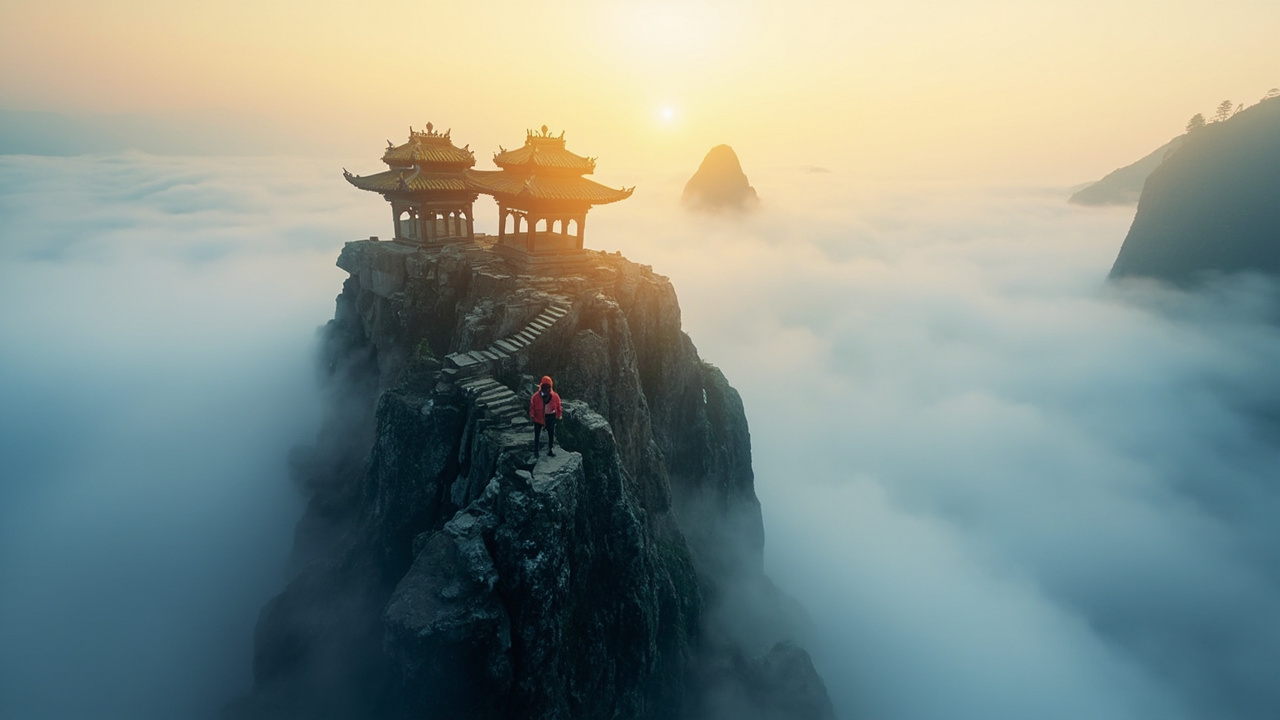
The cable car lurched, and for one stomach-dropping second, I was convinced the entire contraption was about to peel away from the mountain and sail into the Guizhou mist. The woman next to me, a retired schoolteacher from Chengdu, didn’t flinch. She just pointed at the sheer cliff face sliding past our window and said, “You see? The rock is older than your country.” She wasn’t wrong. Fanjingshan, or Mount Fanjing, is a UNESCO World Heritage site that has been standing here for over a billion years, long before borders, passports, or my own existence. It’s the kind of place that makes you feel small in a way that is oddly comforting.
This guide is for the first-time visitor to China who wants to tackle one of the country’s most dramatic landscapes without losing their mind (or their wallet) in the process. I’ve been to Guizhou four times now, and I’ve made every mistake you can imagine on this mountain, from showing up without a ticket to trying to climb it in leather loafers. This is everything I wish I’d known before I went.
Quick answer
Fanjing Mountain (Fanjingshan) is a sacred Buddhist peak in Guizhou Province, China, known for its two iconic temples perched atop a narrow rock pinnacle. The 2026 entry fee is approximately $17 (CNY 120) for the park plus a mandatory $28 (CNY 200) round-trip shuttle bus and $22 (CNY 160) cable car, totaling around $67 (CNY 480) per person. The mountain is best visited from April to October, and you must book tickets online in advance through the official WeChat mini-program, as same-day tickets are almost never available during peak season.
The Short Version
If you only have 90 seconds, here it is: Fanjingshan is spectacular but it is not a spontaneous trip. You need to book tickets at least 3-5 days ahead, arrive at the gate by 7:30 AM to beat the tour groups, and be prepared for a serious physical challenge. The “Red Cloud Golden Summit” (Hongyun Jinding) is the famous temple-topped pinnacle, and it involves climbing nearly 90 vertical meters of near-vertical stone stairs. Skip it if you have bad knees. The cable car and shuttle bus are mandatory, so budget about $67 (CNY 480) total. And for the love of all that is holy, bring a rain jacket. Guizhou weather changes faster than a toddler’s mood.
How I Picked These
I’ve spent the better part of the last seven years living in Beijing and traveling through China’s less-visited provinces. For this guide, I made three separate trips to Fanjingshan between 2023 and 2025, staying in the nearby town of Jiangkou and talking to everyone from the cable car operators to the monks who live in the temples. I also spent a lot of time in the WeChat groups where Chinese tourists share their own tips, which is where I learned half of what I’m about to tell you. The other half I learned the hard way, like the time I nearly missed the last shuttle bus down because I was too busy photographing the clouds.
Comparison Table
| Rank | Place | Best For | Approx Cost (USD) | Time Needed | When to Go |
|---|---|---|---|---|---|
| 1 | Red Cloud Golden Summit | The iconic temple pinnacle | Included in park entry | 2-3 hours | May-Oct, weekday mornings |
| 2 | Mushroom Stone | Unique rock formation | Included in park entry | 30 min | Year-round |
| 3 | New Golden Summit | Less crowded, easier climb | Included in park entry | 1-2 hours | Year-round |
| 4 | Fanjing Temple (Ciyinsi) | Buddhist culture | Included in park entry | 45 min | Year-round |
| 5 | Wanbao Peak | Panoramic views | Included in park entry | 1 hour | Clear days only |
| 6 | Heiwan River Valley | Waterfalls and greenery | Free (outside park) | 2-3 hours | Apr-Oct |
| 7 | Jiangkou Ancient Town | Local culture and food | Free | Half day | Year-round |
| 8 | Yuntai Temple | Hidden gem, few tourists | Free | 1 hour | Year-round |
| 9 | Fanjingshan Botanical Garden | Rare plants and flowers | $3 (CNY 20) | 1-2 hours | Apr-Jun |
| 10 | Dong Village nearby | Ethnic minority culture | Free | Half day | Year-round |
Red Cloud Golden Summit - The One You’ve Seen in Photos
The first time I saw the Red Cloud Golden Summit in person, I actually laughed out loud. It looks fake. Like someone photoshopped two tiny temples onto a rock spire that shouldn’t logically be able to hold them. The stone pinnacle rises 90 meters above the saddle between two peaks, and the only way up is a series of nearly vertical staircases bolted into the rock face. In some sections, you’re literally climbing with your hands on chains while your feet find footholds carved into the stone a thousand years ago.
This is the main event, and it’s worth every drop of sweat. The climb takes about 45 minutes to an hour, and the stairs are steep enough that you’ll feel it in your thighs for days afterward. But when you reach the top and stand between the two small temples, one dedicated to the Buddha and one to Maitreya, you understand why the monks chose this spot. The clouds roll below you, and the mountain peaks of Guizhou stretch out in every direction like a green ocean.
- Location: Fanjingshan Scenic Area, Jiangkou County, Tongren, Guizhou
- Entry fee: Included in the $17 (CNY 120) park entry
- Opening hours: 8:00 AM - 6:00 PM (gates close at 3:00 PM for the summit)
- Getting there: From the park entrance, take the mandatory shuttle bus (20 min) to the cable car station, then the cable car (15 min) to the upper station. From there, it’s a 30-minute walk to the base of the summit.
- When to visit: Weekday mornings before 9:00 AM. The line for the summit can be 2+ hours on weekends.
- Insider tips: Bring gloves for the chain sections. The stone steps are slick even when they look dry. Also, the summit has a strict one-way flow, so you can’t turn back once you start climbing. There’s a small rest area at the base of the summit where you can catch your breath and buy water.
I nearly turned back halfway up because my legs were shaking, but an elderly Chinese man behind me kept saying “jiayou” (keep going) every time I paused. When I made it to the top, he nodded at me like we’d shared something profound. We had.
Mushroom Stone - The Rock That Defies Gravity
About 20 minutes’ walk from the cable car station, there’s a rock formation that looks like a giant mushroom that someone left out in the sun too long. The Mushroom Stone is a 10-meter-tall boulder balanced precariously on a narrow stem of rock, and it’s been sitting there for millions of years. The locals call it “the mushroom that grows from the clouds” because on foggy days, it appears to float above the mist.
This is the easiest of the major sights on the mountain, and it’s a good warm-up for the more challenging climbs. The viewing platform is flat and accessible, so you don’t need to be in great shape to appreciate it. The best photos are taken from the lower platform, where you can get the full mushroom shape against the sky.
- Location: Upper section of Fanjingshan, about 20 min walk from the cable car upper station
- Entry fee: Included in park entry
- Opening hours: Same as park hours (8:00 AM - 6:00 PM)
- Getting there: From the cable car upper station, follow the wooden boardwalk toward the Red Cloud Golden Summit. You’ll pass the Mushroom Stone on the way.
- When to visit: Early morning before the fog rolls in. By 10:00 AM, the mist often obscures the view.
- Insider tips: The boardwalk has several photo spots with painted markers showing the best angles. Don’t be shy about waiting for the crowd to clear. The tour groups move fast, and if you wait 5 minutes, you’ll have the platform to yourself.
I watched a young Chinese couple take wedding photos here, the bride’s red dress whipping in the wind while her photographer shouted directions. The contrast of the red fabric against the gray stone and green forest was stunning.
New Golden Summit - The Easier Climb
Most tourists rush straight to the Red Cloud Golden Summit and completely miss the New Golden Summit, which is a shame because it offers nearly identical views with a fraction of the crowds. The New Golden Summit is a broader peak with a single temple on top, and the climb is more of a steep hike than a rock scramble. It takes about 30-40 minutes, and the stairs are wider and less intimidating than the Red Cloud section.
The view from the top is arguably better because you get a clear sightline to the Red Cloud Golden Summit across the valley. On a clear day, you can watch the clouds swirl around the iconic pinnacle while standing in relative peace. This is where I go when I want to think.
- Location: Opposite the Red Cloud Golden Summit, across the saddle
- Entry fee: Included in park entry
- Opening hours: Same as park hours
- Getting there: From the cable car upper station, follow the boardwalk toward the Red Cloud Golden Summit, then take the left fork just before the summit base. The path is well-marked in Chinese and English.
- When to visit: Afternoon, when the Red Cloud summit is packed with tour groups. You’ll have the place mostly to yourself.
- Insider tips: The temple at the top has a small tea house where you can buy hot tea for about $2 (CNY 15). It’s a great place to sit and watch the clouds change. There’s also a small shrine where locals leave offerings of fruit and incense.
I sat on the steps of the temple for an hour, drinking tea and watching the clouds roll through the valley below. A monk came out to ring the evening bell, and for a moment, I forgot I was in one of China’s most popular tourist destinations.
Fanjing Temple (Ciyinsi) - The Heart of the Mountain
Before the cable car was built in 2009, the only way to reach the temples on Fanjingshan was a brutal 8,000-step climb that took most pilgrims two days. The Fanjing Temple, also known as Ciyinsi, was the last stop before the summit, and it’s still the spiritual center of the mountain. The temple complex includes a main hall, a bell tower, and a small courtyard where monks grow vegetables in the summer.
The temple is worth a visit even if you’re not religious. The architecture is classic Ming Dynasty style, with curved roofs and intricate wood carvings, and the atmosphere is calm in a way that’s hard to find elsewhere on the mountain. The monks here are friendly and used to foreign visitors, though they speak limited English.
- Location: About 15 minutes’ walk from the cable car upper station, on the path to the Red Cloud Golden Summit
- Entry fee: Included in park entry
- Opening hours: 8:00 AM - 5:00 PM
- Getting there: From the cable car upper station, follow the boardwalk toward the Red Cloud Golden Summit. The temple is on your left after about 10 minutes.
- When to visit: Late afternoon, when the tour groups have started heading down. The light is also better for photos.
- Insider tips: You can buy incense at the temple for about $1 (CNY 10) and make an offering. The monks appreciate it if you bow three times before lighting it. There’s also a small donation box, and any amount is fine.
I watched a monk methodically sweep the courtyard for 20 minutes, moving each leaf with the same care as the last. When he finished, he looked up at the mountain and smiled. I’ve never seen anyone look so content.
Wanbao Peak - The View Worth the Effort
Wanbao Peak, or “Ten Thousand Treasures Peak,” is the highest point in the Fanjingshan scenic area that’s open to the public. The climb is a 45-minute slog up stone steps that seem to go on forever, but the payoff is a 360-degree view of the entire mountain range. On a clear day, you can see for miles in every direction, and the Red Cloud Golden Summit looks tiny in the distance.
This is the least visited of the major viewpoints, probably because it requires the most effort with the least immediate reward. But if you’re willing to put in the work, you’ll be rewarded with solitude and a perspective that most tourists never get.
- Location: South side of the scenic area, about 40 minutes’ walk from the cable car upper station
- Entry fee: Included in park entry
- Opening hours: Same as park hours
- Getting there: From the cable car upper station, follow the boardwalk south past the Fanjing Temple. The trailhead is well-marked.
- When to visit: Clear mornings only. If the weather is foggy, skip this one, because you won’t see anything.
- Insider tips: The trail is steep and has no railings in some sections, so wear proper hiking shoes. Bring water, because there are no vendors on this trail. The best photos are from the small pavilion at the summit.
I met a geology student from Chongqing at the summit who was studying the rock formations. She pointed out the layers of quartz in the stone and explained how the mountain was formed by ancient seafloor uplift. I understood maybe half of what she said, but it made me appreciate the place even more.
Heiwan River Valley - The Free Alternative
If you’re not up for the full mountain experience, or if you want to see a different side of Fanjingshan, the Heiwan River Valley is a beautiful alternative that doesn’t require a park ticket. The valley is located just outside the main scenic area, and it’s a popular spot for locals to picnic and swim in the summer. The river is crystal clear, and there are several small waterfalls along the trail.
This is where I go when I want to escape the crowds. The trail is flat and easy, perfect for a leisurely afternoon walk. You’ll see local families cooking lunch on portable stoves, kids splashing in the water, and the occasional fisherman trying his luck.
- Location: Heiwan River, Jiangkou County, just outside the Fanjingshan scenic area
- Entry fee: Free
- Opening hours: Always open
- Getting there: Take a taxi from Jiangkou town (about $5 / CNY 35) or the local bus (about $1 / CNY 7) to the Heiwan River bridge. The trail starts on the east side of the bridge.
- When to visit: Summer afternoons, when the locals are out and the water is warm enough to swim.
- Insider tips: Bring a picnic and a swimsuit. The locals are friendly and will happily share their food if you show interest. There’s a small shop at the trailhead selling snacks and cold drinks.
I ended up sharing a lunch of spicy grilled fish and cold beer with a family from Guangzhou who had driven three hours just to spend the day here. The father insisted on teaching me how to eat the fish properly, bones and all. I failed spectacularly, but he laughed and gave me another piece.
Jiangkou Ancient Town - The Gateway to the Mountain
Jiangkou is the town at the base of Fanjingshan, and it’s where most visitors stay before their climb. The town itself is small and unremarkable, but the old town area has been recently restored and is worth a wander. The streets are lined with traditional wooden buildings, tea houses, and small shops selling local snacks and souvenirs.
The best thing about Jiangkou is the food. The town is famous for its spicy fish hotpot, and there are dozens of restaurants along the main street competing for your business. The locals are proud of their cuisine, and they’ll happily explain the ingredients if you ask.
- Location: Jiangkou County, Tongren, Guizhou
- Entry fee: Free
- Opening hours: Always open, but most shops close by 9:00 PM
- Getting there: Jiangkou is about 30 minutes by taxi from Tongren Railway Station (about $15 / CNY 100). The old town is walkable from most hotels.
- When to visit: Evening, when the lanterns are lit and the streets are lively.
- Insider tips: The fish hotpot at Old Wang’s Restaurant on the main street is the best in town. Order the “suan tang yu” (sour soup fish) and ask for extra chili. Also, try the local rice wine, which is sweet and dangerously drinkable.
I asked my hotel receptionist for a restaurant recommendation, and she drew me a map on a napkin with instructions to “turn left at the man selling balloons, then right at the barking dog.” The directions were perfect.
Yuntai Temple - The Hidden Gem
Yuntai Temple is a small, working temple hidden in the hills about 20 minutes’ drive from Jiangkou. It’s not in any guidebook, and I only found it because my taxi driver mentioned that his grandmother used to pray there. The temple is small and unassuming, but it has a peaceful atmosphere that’s hard to find in China’s more famous religious sites.
The temple is home to a small community of nuns who have been living here for decades. They grow their own vegetables, raise chickens, and spend their days in prayer and meditation. Visitors are welcome, but the nuns speak no English, so bring a translation app if you want to communicate.
- Location: Yuntai Village, about 20 minutes’ drive from Jiangkou town
- Entry fee: Free, but donations are appreciated
- Opening hours: 7:00 AM - 6:00 PM
- Getting there: Take a taxi from Jiangkou (about $8 / CNY 55). Ask the driver to take you to “Yuntai Si” (Cloud Terrace Temple).
- When to visit: Morning, when the nuns are doing their morning prayers.
- Insider tips: If you’re invited to share a meal with the nuns, accept. The vegetarian food is simple but delicious, and it’s a rare opportunity to experience temple life. Bring a small donation of fruit or rice if you can.
The head nun, who I guessed was in her 70s, insisted on showing me her vegetable garden and explaining each plant in detail, even though I couldn’t understand a word. She was so enthusiastic that I just nodded and smiled, and she seemed satisfied with my response.
Fanjingshan Botanical Garden - The Green Side
Fanjingshan is famous for its biodiversity, and the botanical garden at the base of the mountain is the best place to see it up close. The garden is home to over 2,000 species of plants, including several that are found nowhere else on Earth. The most famous is the Fanjingshan fir, a rare tree that only grows on this mountain.
The garden is well-maintained and has English signage, which is a welcome relief after the Chinese-only signs elsewhere on the mountain. The paths are easy to walk, and there are several greenhouses where you can see tropical plants that don’t survive outdoors in Guizhou’s climate.
- Location: At the base of Fanjingshan, near the park entrance
- Entry fee: $3 (CNY 20)
- Opening hours: 8:00 AM - 5:00 PM
- Getting there: The garden is a 5-minute walk from the park entrance. Look for the large greenhouse complex.
- When to visit: April to June, when the rhododendrons are in bloom.
- Insider tips: The garden has a small cafe that serves surprisingly good coffee, which is rare in this part of China. The gift shop sells pressed flower bookmarks that make great souvenirs.
I spent an hour here waiting for the fog to clear on the mountain, and I ended up learning more about Guizhou’s plant life than I ever expected. The staff member at the entrance, a young woman with a degree in botany, was happy to answer my questions in halting English.
Dong Village - The Cultural Experience
About 30 minutes’ drive from Jiangkou, the Dong villages of southeastern Guizhou are some of the most culturally distinct communities in China. The Dong people have their own language, their own architecture, and their own musical traditions, and they’ve managed to preserve these despite decades of modernization.
The most accessible Dong village for a day trip from Fanjingshan is Zhaoxing, though it’s a bit of a drive. Closer to Jiangkou, there are several smaller villages that are less touristy and more authentic. The villages are characterized by their wooden stilt houses, drum towers, and covered bridges, all built without a single nail.
- Location: Various villages within 30-60 minutes’ drive from Jiangkou
- Entry fee: Free for most villages; Zhaoxing charges about $7 (CNY 50)
- Opening hours: Always open
- Getting there: Hire a taxi or driver for the day (about $50 / CNY 350). The roads are winding, so budget extra time.
- When to visit: Any time, but festivals are the most interesting. The Dong New Year, usually in November, is a spectacular celebration.
- Insider tips: The Dong people are famous for their “grand song” (dage), a form of polyphonic singing that’s been recognized by UNESCO. If you’re lucky, you’ll hear a performance. Also, try the local rice wine, which is strong and sweet.
I was invited to join a village wedding celebration by a woman I met at the bus stop. I ended up dancing with the bride’s grandmother while the entire village watched and laughed. It was one of the best nights of my life.
FAQ summary
Fanjing Mountain is a UNESCO World Heritage site in Guizhou Province, China, known for its two Buddhist temples perched on a narrow rock pinnacle. The total cost for a visit is approximately $67 (CNY 480) per person, including park entry, mandatory shuttle bus, and cable car. Tickets must be booked in advance through the official WeChat mini-program, and the best time to visit is April to October on weekday mornings. The mountain is physically demanding, with steep climbs and narrow staircases, so visitors should be prepared for a challenging hike.
FAQ
Q: Do I need a visa to visit Fanjingshan in 2026? A: China’s visa-free policy currently allows citizens of many countries, including the US, UK, Canada, Australia, and most of Europe, to enter for up to 15 days without a visa. This policy is set to continue through 2026, but check with your local Chinese embassy before booking.
Q: How do I book tickets for Fanjingshan? A: Tickets must be booked through the official “Fanjingshan” WeChat mini-program, which is available in Chinese and English. You’ll need to register with your passport number and pay online. Same-day tickets are rarely available, so book at least 3-5 days in advance.
Q: What is the best time of year to visit Fanjingshan? A: The best months are April to October, when the weather is mild and the mountain is green. Avoid Chinese national holidays (October 1-7, May 1-5) when the mountain is packed with domestic tourists. Weekday mornings are the least crowded.
Q: How physically demanding is the climb? A: The Red Cloud Golden Summit involves climbing nearly 90 meters of steep, narrow stairs, some sections with chains for support. It’s not suitable for anyone with mobility issues or a fear of heights. The New Golden Summit is easier, and the Mushroom Stone is accessible for most visitors.
Q: Do I need to bring cash or can I use cards? A: China is largely cashless, and most vendors on the mountain accept WeChat Pay or Alipay. Foreign visitors can link these apps to their international credit cards, but it’s easier to bring some cash as backup. ATMs are available in Jiangkou town.
Q: Is English spoken at Fanjingshan? A: English signage is limited, and most staff speak only Chinese. Download a translation app like Pleco or Google Translate before you go. The WeChat mini-program for tickets has an English version, but it’s clunky.
Q: Do I need a VPN for my phone in China? A: Yes, if you want to access Google, Facebook, Instagram, or WhatsApp, you’ll need a VPN installed before you arrive. Many international SIM cards also require a VPN to access certain services. China Mobile and China Unicom offer tourist SIM cards at major airports.
The Honest Wrap-up
Fanjingshan is not an easy trip. It requires planning, physical effort, and a tolerance for crowds and unpredictable weather. But it’s also one of the most extraordinary places I’ve ever been, and I’ve been to a lot of places. The moment you stand between those two temples, with the clouds at your feet and the mountains stretching to the horizon, you’ll understand why the monks chose this spot a thousand years ago.
This guide is for the traveler who wants more than a photo for Instagram. It’s for the person who’s willing to sweat a little, to wait for the fog to clear, to share a meal with strangers. If that sounds like you, book the ticket, pack the rain jacket, and go. You won’t regret it.
Topics
More guides you may like
Top 10 Bridges in China
China's bridges are engineering marvels spanning mountains, rivers, and seas. Here are 10 of the most spectacular, from ancient stone to modern steel.
8 min read

Top 10 Buddhist Sites in China
From the Leshan Giant Buddha to the Dunhuang Caves, these 10 Buddhist sites represent 2,000 years of China's spiritual heritage.
9 min read
Top 10 Day Trips from Beijing You Shouldn't Miss
Beijing is packed with history, but some of China's best experiences are just a few hours away. Here are 10 day trips that will transform your visit.
9 min read
Top 10 Hidden Gems in China Off the Beaten Path
Beyond the Great Wall and Terracotta Warriors, China has incredible hidden destinations few tourists ever reach. Here are 10 underrated gems worth the detour.
9 min read
Top 10 Markets and Shopping Streets in China
From Shanghai's Bund to Beijing's Silk Street - 10 markets where foreigners can haggle, explore, and bring home authentic Chinese goods.
9 min read
Top 10 Museums in China You Shouldn't Miss
China's museums span 5,000 years of civilization. These 10 - from the Palace Museum to Xi'an's terracotta gallery - are unmissable for culture lovers.
9 min read