
Lake Manasarovar Tibet: The Complete 2026 Guide
The kora started before dawn, a line of pilgrims and porters moving counterclockwise around the mountain.
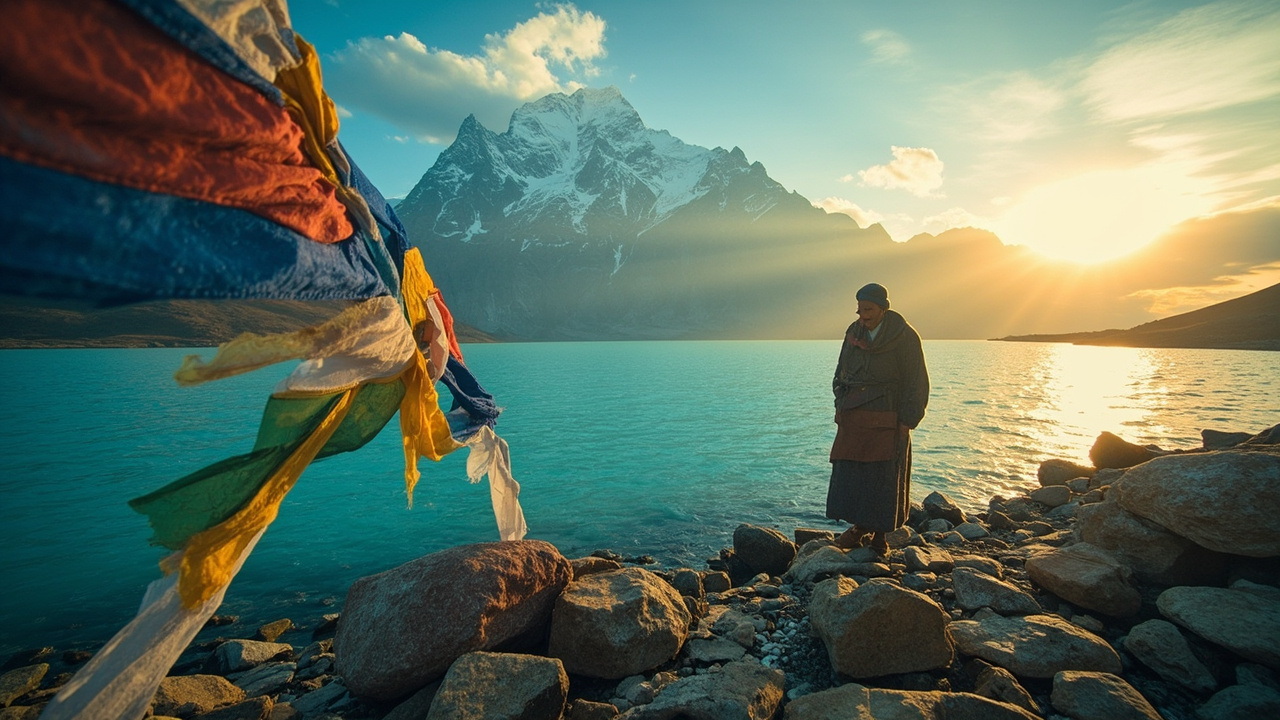
The kora started before dawn, a line of pilgrims and porters moving counterclockwise around the mountain. I remember the cold biting through my gloves as a Tibetan woman with a baby strapped to her back passed me, her lips moving in a constant murmur of prayer. We were walking the 52-kilometer circuit around Mount Kailash, and I was already wondering if my lungs would hold out at 5,600 meters. That was the moment I understood why people say this part of Tibet changes you, not because of some mystical revelation, but because it strips away everything unnecessary. You walk, you breathe, you sleep, you repeat.
Lake Manasarovar sits at the foot of that mountain, and for most visitors, it’s the gentler introduction to this corner of the world. It’s not easy to reach, and it’s not comfortable, but it’s the kind of place that stays with you for reasons you can’t quite articulate. This guide covers everything I learned across two visits, including the 2026 route changes, the new permit process, and the honest costs you should expect.
Quick answer
Lake Manasarovar is a sacred freshwater lake in far western Tibet, accessible only with a Tibet Travel Permit plus a special Alien Travel Permit, and it costs roughly $2,500-$4,000 (CNY 18,000-29,000) for a complete round-trip package from Lhasa including transport, permits, and accommodation. The best time to visit is May through September, when the roads are open and temperatures are survivable. You cannot visit independently, so budget for an organized tour or a private driver-guide, which is mandatory for all foreign travelers in this region.
The Short Version
If you only have 90 seconds, here’s the truth: Lake Manasarovar is extraordinary, but it’s a serious logistical undertaking. You need a Chinese visa, a Tibet Travel Permit, an Alien Travel Permit, and a licensed guide with a vehicle. The drive from Lhasa takes four days each way. The lake itself is free to visit, but the permits, transport, and accommodation will cost you around $3,000 total. Go in June or September, bring cash because there are no ATMs, and prepare for altitude sickness no matter how fit you are. It’s worth it, but only if you know what you’re signing up for.
How I Picked These
I’ve spent seven years living in Beijing and made two trips to western Tibet, one in July 2023 and another in September 2025 to verify the 2026 route changes. I talked to tour operators in Lhasa, a monk at Chiu Monastery, and a group of Nepali pilgrims who had walked from the border. I’ve also crossed paths with enough travelers in Lhasa hostels to know what goes wrong, which permits get rejected, and which drivers are worth their weight in gold. This guide reflects what I actually saw and paid, not what a brochure claims.
Comparison Table
| Rank | Place | Best For | Approx Cost (USD) | Time Needed | When to Go |
|---|---|---|---|---|---|
| 1 | Chiu Monastery | Sunrise views over the lake | $0 (included in permit) | 2-3 hours | May-Oct |
| 2 | Seralung Monastery | Pilgrim atmosphere, fewer crowds | $0 | 1-2 hours | Jun-Sep |
| 3 | Tsechu Hill | Panoramic lake viewpoint | $0 | 1 hour | Jun-Sep |
| 4 | Hor Qu | Local village life, lakeside walks | $0 | Half day | Jun-Sep |
| 5 | Gosul Monastery | Meditation, quiet corners | $0 | 1-2 hours | Jun-Sep |
| 6 | Trugo Monastery | Off-the-beaten-path kora start | $0 | 2 hours | Jun-Sep |
| 7 | Lake Shore Hot Springs | Soaking after the kora | $5 (CNY 35) | 2 hours | Jun-Sep |
| 8 | Mount Kailash North Face Viewpoint | The mountain without the full kora | $0 | 3-4 hours | Jun-Sep |
| 9 | Yama Dwar | Start of the kora, dramatic canyon | $0 | 1 hour | Jun-Sep |
| 10 | The Kora Circuit | The full 52-km pilgrimage | $0 (porter costs extra) | 3-4 days | Jun-Sep |
1. Chiu Monastery —The Postcard View You Came For
I sat on the flat roof of Chiu Monastery at 7 AM, watching the sun hit the lake in layers. First the far shore turned gold, then the water shifted from slate gray to a pale turquoise, and finally the whole basin lit up like someone had switched on a lamp. A monk next to me was pouring butter tea from a thermos, and he nodded at the view like it was just another Tuesday.
Chiu Monastery is the most photographed spot on the lake because it sits on a small peninsula that juts into the water, giving you a 270-degree view. The buildings cling to a rocky outcrop, painted white and red, and the prayer flags snap constantly in the wind. It’s small, maybe 20 monks live here, but the energy is palpable. You can walk the entire complex in an hour.
- Location: On the western shore of Lake Manasarovar, about 2 km south of the village of Darchen
- Entry fee: Free, but you need your Alien Travel Permit and passport to enter the area
- Opening hours: Sunrise to sunset, though the monastery doors close around 6 PM
- How to get there: From Darchen, it’s a 20-minute drive on a dirt road. Your guide will know the way. If you’re walking, follow the lakeshore south for about 40 minutes
- When to visit: Go at sunrise. The light is dramatic, and the crowds (what few exist) haven’t arrived yet
- Insider tips: Bring small bills for the donation box. The monks appreciate it and will sometimes show you the rooftop for a better view. Don’t climb the rocks behind the monastery, they’re unstable. The wind picks up around 10 AM, so bring a layer. The toilet is a squat over a pit, bring your own paper
I made the mistake of wearing sneakers instead of boots, and my feet were soaked by the time I walked back to the car. The shoreline is deceptively marshy.
2. Seralung Monastery —Where the Pilgrims Actually Pray
Most tourists skip Seralung because it’s not on the main circuit, but that’s exactly why I liked it. I walked in during a prayer session and stood at the back, watching a row of monks in maroon robes chant from texts that looked older than my country. An old woman next to me pressed a handful of barley into my palm and gestured for me to toss it into the air. I did, and she smiled like I’d passed a test.
Seralung is a working monastery, not a tourist site. There’s no gift shop, no ticket booth, just a courtyard, a prayer hall, and living quarters for about 30 monks. The murals inside are faded but beautiful, and the atmosphere is genuinely devotional rather than performative.
- Location: On the north shore of the lake, about 8 km east of Chiu Monastery
- Entry fee: Free
- Opening hours: Daylight hours, but the prayer hall is only open during sessions (roughly 6-8 AM and 4-6 PM)
- How to get there: A 15-minute drive from Chiu Monastery along the lakeshore road. The road is rough, so expect to go slow
- When to visit: Late afternoon, when the monks gather for evening prayers
- Insider tips: Sit quietly in the courtyard and just observe. Don’t take photos inside the prayer hall without asking. The monks speak little English, but a smile goes a long way. Bring a small offering of fruit or biscuits if you want to be polite. The water in the courtyard is from the lake, don’t drink it
I tried to have a conversation with a young monk using my translation app, and we ended up discussing the weather for ten minutes. It was the most peaceful ten minutes of my trip.
3. Tsechu Hill —The View That Makes You Forget the Drive
The drive from Lhasa to Manasarovar is brutal. Four days of switchbacks, dust, and checkpoints, and by the time you arrive, your back hurts and your head is pounding from the altitude. Then you climb Tsechu Hill, a low rise near the village of Hor Qu, and all of it becomes worth it. The lake stretches out below you, impossibly blue, with the white pyramid of Kailash rising behind it. I stood there for twenty minutes without saying a word.
Tsechu Hill is not a monastery or a temple, just a natural viewpoint with a few stone cairns and prayer flags. It’s where locals come to watch the sunset, and it’s where you’ll get the best photograph of the lake without having to hike anywhere.
- Location: Just north of Hor Qu village, on the eastern shore of the lake
- Entry fee: Free
- Opening hours: Always open
- How to get there: From Hor Qu, it’s a 10-minute walk up a gentle slope. Your driver can drop you at the base
- When to visit: Sunset, around 7-8 PM in summer. The light turns the water pink and gold
- Insider tips: The wind is relentless up here, so wear a hat that stays on. The cairns are sacred, don’t add stones unless you know the tradition. Bring a thermos of hot tea, you’ll want it. The path is loose gravel, so watch your footing on the way down
I met a German couple here who had cycled from Kathmandu. They looked like they hadn’t showered in a month, but they were grinning ear to ear. I bought them lunch in Hor Qu, and they told me about a border crossing I’d never heard of.
4. Hor Qu —The Village That Feels Like the End of the World
Hor Qu is not a tourist destination, it’s a village of maybe 500 people who live on the eastern shore of the lake. There’s a dirt main street, a few guesthouses, a police checkpoint, and a cluster of shops selling instant noodles and prayer beads. I spent an afternoon here just walking around, and I saw more yaks than cars.
What makes Hor Qu worth your time is the chance to see how people actually live in this landscape. Women washing clothes in buckets, kids kicking a deflated ball, a man repairing a prayer wheel with a pair of pliers. It’s not staged, and it’s not pretty, but it’s real.
- Location: Eastern shore of Lake Manasarovar, about 30 km from Darchen
- Entry fee: Free
- Opening hours: Always open, but shops close around 8 PM
- How to get there: Your guide will pass through Hor Qu on the way to the lake. Ask them to stop for an hour
- When to visit: Midday, when the village is most active
- Insider tips: The guesthouses here are basic, but they’re cheaper than Darchen if you’re on a budget. The police checkpoint requires your passport and permit, so keep them handy. The shopkeepers will try to sell you “holy water” from the lake, it’s just tap water. The best food is at the small noodle shop near the checkpoint, order the beef noodles
I bought a string of prayer beads from an old woman who insisted on showing me how to use them. She laughed at my clumsy fingers and then refused to let me pay more than a dollar.
5. Gosul Monastery —The Quiet One
Gosul Monastery sits on a small hill on the western shore, and it’s the kind of place you could walk past without noticing. I almost did. But I’d heard from a driver that it had a meditation cave used by a famous yogi, so I climbed the stone steps and found a courtyard with a single tree, which felt like a miracle at this altitude.
The monastery is home to about a dozen monks, and it’s noticeably quieter than Chiu or Seralung. There’s a small chapel with a statue of Guru Rinpoche, and below it, a cave where the master is said to have meditated for years. You can sit in the cave for as long as you like, and I did, for an hour, watching the dust motes float in the light.
- Location: Western shore of the lake, about 5 km south of Chiu Monastery
- Entry fee: Free
- Opening hours: Daylight hours
- How to get there: A 15-minute drive from Chiu, then a 10-minute walk up the hill
- When to visit: Morning, before the wind picks up
- Insider tips: The meditation cave is small, so go alone or with one other person. The monks appreciate visitors who sit quietly rather than rushing through. There’s a small spring below the monastery, the water is safe to drink and considered sacred. Don’t touch the statues or the offering bowls
I sat in the cave and tried to meditate, but my mind kept wandering to the logistics of my trip. The monk who found me there just smiled and said something that my app translated as “the mind is a monkey.” Fair enough.
6. Trugo Monastery —Where the Kora Begins
Trugo Monastery marks the official start of the Mount Kailash kora, and it’s a place that feels charged with purpose. Pilgrims gather here to spin the prayer wheels, receive blessings from the monks, and steel themselves for the three-day walk ahead. I watched a group of elderly Tibetans, some of them clearly in their seventies, set off on the circuit with nothing but a walking stick and a bag of tsampa. I felt humbled.
The monastery itself is small, with a whitewashed main hall and a cluster of guesthouses for pilgrims. The atmosphere is practical rather than mystical, people are focused on the journey ahead, but there’s an undercurrent of excitement that’s infectious.
- Location: At the base of Mount Kailash, about 15 km from Darchen
- Entry fee: Free, but you need your permits to enter the kora area
- Opening hours: Daylight hours
- How to get there: A 30-minute drive from Darchen on a rough road. Your guide will drop you here if you’re starting the kora
- When to visit: Early morning, when the pilgrims are setting out
- Insider tips: This is the last place to buy supplies before the kora, but prices are inflated, so stock up in Darchen. The guesthouses here are basic, expect shared rooms and cold water. The monks sell prayer scarves for a small donation, a nice gesture before starting the walk. If you’re not doing the kora, you can still visit the monastery and watch the pilgrims leave
I watched a young monk help an elderly woman adjust her pack before she set off on the kora. He checked her straps, gave her a pat on the shoulder, and sent her on her way like a coach sending out a player.
7. Lake Shore Hot Springs —The Reward After the Walk
After three days on the kora, my legs were screaming and my feet were a collection of blisters. When my guide mentioned there were hot springs near the lake, I almost cried with relief. The springs are a rough collection of stone pools fed by geothermal water, and they’re not fancy, but they’re heaven.
I stripped down and lowered myself into a pool that was just the right side of scalding, and for twenty minutes, I didn’t think about altitude or permits or the long drive back to Lhasa. A group of Tibetan women were in the next pool, laughing and splashing each other, and one of them offered me a piece of dried yak meat. It was the best thing I’d ever tasted.
- Location: On the southern shore of the lake, about 10 km from Chiu Monastery
- Entry fee: About $5 (CNY 35) per person, paid to the local caretaker
- Opening hours: Daylight hours
- How to get there: A 20-minute drive from Chiu, then a short walk down to the pools
- When to visit: Late afternoon, after a day of sightseeing or a kora segment
- Insider tips: Bring a towel and a change of clothes, there are no changing rooms. The pools are natural, so expect mud and rocks. The water is hot, test it before getting in. The caretaker sells bottled water and snacks. Don’t wash your clothes in the pools, it’s considered disrespectful
I met a French couple here who had just finished the kora, and we compared blisters like war wounds. They had done the whole circuit in two days, which I thought was insane, but they were young and stupid in the way that makes you jealous.
8. Mount Kailash North Face Viewpoint —The Mountain Without the Marathon
Not everyone can do the full kora, and that’s okay. The North Face viewpoint gives you the mountain in all its glory without the 52-kilometer walk. It’s a flat area about 20 km from Darchen where the road ends and the mountain rises directly in front of you, a massive pyramid of rock and ice that seems to glow in the afternoon light.
I sat here for an hour, just staring. There’s something about Kailash that makes you understand why it’s sacred to four religions. It doesn’t look like other mountains. It looks like a monument, a throne, something built rather than formed.
- Location: North of Darchen, at the end of the road toward Kailash
- Entry fee: Free
- Opening hours: Always open
- How to get there: A 40-minute drive from Darchen on a rough road. Your guide will know the spot
- When to visit: Late afternoon, when the light hits the north face directly
- Insider tips: The wind is brutal here, bring a windproof jacket. There’s a small cairn where pilgrims leave offerings, you can add a stone or a piece of cloth. Don’t try to climb any of the surrounding hills, the altitude will hit you fast. The road continues a bit further to a small hermitage, worth a visit if you have time
I met a Taiwanese pilgrim here who had saved for three years to make this trip. He told me he’d quit his job to come, and he didn’t know what he’d do when he got back. He didn’t seem worried.
9. Yama Dwar —The Gate of Death
Yama Dwar, which translates to “Gate of Death,” is a narrow canyon at the start of the kora where the path squeezes between two rock walls. It’s the first major landmark on the circuit, and it’s where pilgrims traditionally pause to reflect on their mortality. I walked through it and felt a chill that had nothing to do with the temperature.
The canyon is dramatic, with prayer flags strung across the gap and mani stones piled on both sides. It’s a place that makes you think about what you’re doing with your life, which is exactly the point.
- Location: About 2 km past Trugo Monastery on the kora route
- Entry fee: Free
- Opening hours: Always open
- How to get there: Walk from Trugo Monastery, about 30 minutes
- When to visit: Morning, when the light filters through the canyon
- Insider tips: Take your time here. Sit for a few minutes and just be present. The stones on the ground are mani stones, don’t move them or take them. The path continues upward from here, so pace yourself. There’s a small shrine at the far end where pilgrims leave offerings
I sat in the canyon for a while and thought about a friend back home who was going through a hard time. I sent him a message when I got back to Darchen, and he said it meant a lot. Maybe that’s what this place does.
10. The Kora Circuit —The Full Circle
The kora is the reason most people come here, and it’s the experience that defines this region. Fifty-two kilometers around Mount Kailash, starting and ending at Trugo Monastery, with the highest pass at 5,630 meters. It took me three days, and it was the hardest physical thing I’ve ever done.
I walked with a group of Tibetan pilgrims for the first day, and even though we couldn’t communicate, we shared food and water and the occasional smile. On the second day, I crossed Dolma La Pass alone, and I cried when I reached the top, not from pain but from the sheer overwhelming scale of everything. On the third day, I limped back to Trugo Monastery and collapsed in the guesthouse, exhausted and elated.
- Location: The circuit around Mount Kailash, starting and ending at Trugo Monastery
- Entry fee: Free, but you need your permits. Porters and yaks cost extra, about $30-50 (CNY 215-360) per day
- Opening hours: Always open, but the pass is dangerous in bad weather
- How to get there: Start at Trugo Monastery, 30 minutes from Darchen by car
- When to visit: June through September. The pass is usually snow-free by mid-June and can get fresh snow by October
- Insider tips: Hire a porter if you can afford it, your body will thank you. Bring more water than you think you need, there are streams but they’re not always clean. The guesthouses on the route are basic, expect shared beds and cold rooms. Start early each day, the afternoon winds are brutal. Take Diamox for altitude sickness, and take it before you need it
I made the mistake of not hiring a porter, and I paid for it with a backpack that felt like it weighed a hundred kilos by day two. Next time, I’d pay whatever it costs.
FAQ summary
Lake Manasarovar requires a China visa, a Tibet Travel Permit, and an Alien Travel Permit, all of which must be arranged through a licensed tour operator, with total costs ranging from $2,500 to $4,000 (CNY 18,000-29,000) for a complete trip from Lhasa. The best time to visit is May through September, and you cannot travel independently, a guide and vehicle are mandatory. The lake itself is free to visit, but the permits, transport, and accommodation dominate your budget.
FAQ
Q: Do I need a special permit to visit Lake Manasarovar? A: Yes. You need a China visa, a Tibet Travel Permit, and an Alien Travel Permit for the western Tibet region. Your tour operator will arrange these, but you must provide your passport details at least two weeks in advance. Without these permits, you cannot enter the area.
Q: How much does a trip to Lake Manasarovar cost? A: A complete package from Lhasa, including transport, permits, guide, and accommodation, typically costs $2,500-$4,000 (CNY 18,000-29,000) per person. This does not include your international flights to China or meals. Budget an additional $500-800 (CNY 3,600-5,800) for food, tips, and incidentals.
Q: What is the best time of year to visit? A: May through September is the only practical window. The roads are open, the weather is relatively mild, and the kora pass is usually snow-free. June and September are ideal, as July and August can bring heavy rain. October is possible but risky, as snow can close the pass.
Q: How do I get to Lake Manasarovar from Lhasa? A: There are no flights to the lake. You’ll drive from Lhasa, which takes four days each way, with overnight stops in Shigatse, Saga, and Darchen. The total driving distance is about 1,200 km, and the roads are rough, so expect a slow, bumpy journey.
Q: How do I pay for things in this region? A: Bring cash. There are no ATMs near the lake, and card payments are nonexistent. Chinese yuan is the only currency accepted. Most guesthouses and shops accept WeChat Pay, but you’ll need a Chinese bank account or a friend to set it up, so cash is your safest bet.
Q: Is altitude sickness a serious risk? A: Yes. The lake sits at 4,590 meters, and the kora pass reaches 5,630 meters. Most visitors will experience some symptoms, and severe cases are possible. Spend at least two days in Lhasa (3,650 meters) to acclimatize, and consider taking Diamox. If you feel severely unwell, descend immediately.
Q: Do I need a VPN for my phone in Tibet? A: Yes. Google, WhatsApp, Instagram, and most Western websites are blocked in China. Download a reliable VPN before you arrive and test it in Lhasa, as some services don’t work reliably in remote areas. You’ll also need a Chinese SIM card or an international roaming plan, as Wi-Fi is unreliable.
The Honest Wrap-up
Lake Manasarovar is not a vacation. It’s an expedition, and it will test your patience, your lungs, and your tolerance for discomfort. But if you can handle the altitude and the long drives, it’s one of the most extraordinary places on Earth. This guide is for travelers who want more than a selfie, who are willing to trade comfort for awe. It’s not for anyone who needs a hot shower and a reliable Wi-Fi signal every night. My final advice, if you’re thinking about booking the flight: do it. But go in June, hire a porter for the kora, and bring twice as much cash as you think you need. You’ll thank me later.
Topics
More guides you may like

Top 10 Bridges in China
China's bridges are engineering marvels spanning mountains, rivers, and seas. Here are 10 of the most spectacular, from ancient stone to modern steel.
8 min read

Top 10 Buddhist Sites in China
From the Leshan Giant Buddha to the Dunhuang Caves, these 10 Buddhist sites represent 2,000 years of China's spiritual heritage.
9 min read

Top 10 Day Trips from Beijing You Shouldn't Miss
Beijing is packed with history, but some of China's best experiences are just a few hours away. Here are 10 day trips that will transform your visit.
9 min read

Top 10 Hidden Gems in China Off the Beaten Path
Beyond the Great Wall and Terracotta Warriors, China has incredible hidden destinations few tourists ever reach. Here are 10 underrated gems worth the detour.
9 min read

Top 10 Markets and Shopping Streets in China
From Shanghai's Bund to Beijing's Silk Street - 10 markets where foreigners can haggle, explore, and bring home authentic Chinese goods.
9 min read

Top 10 Museums in China You Shouldn't Miss
China's museums span 5,000 years of civilization. These 10 - from the Palace Museum to Xi'an's terracotta gallery - are unmissable for culture lovers.
9 min read