
Libo Karst Waterfalls Guizhou: The Complete 2026 Guide
The old woman selling dried mushrooms at the entrance to Xiaoqikong didn't speak a word of English.
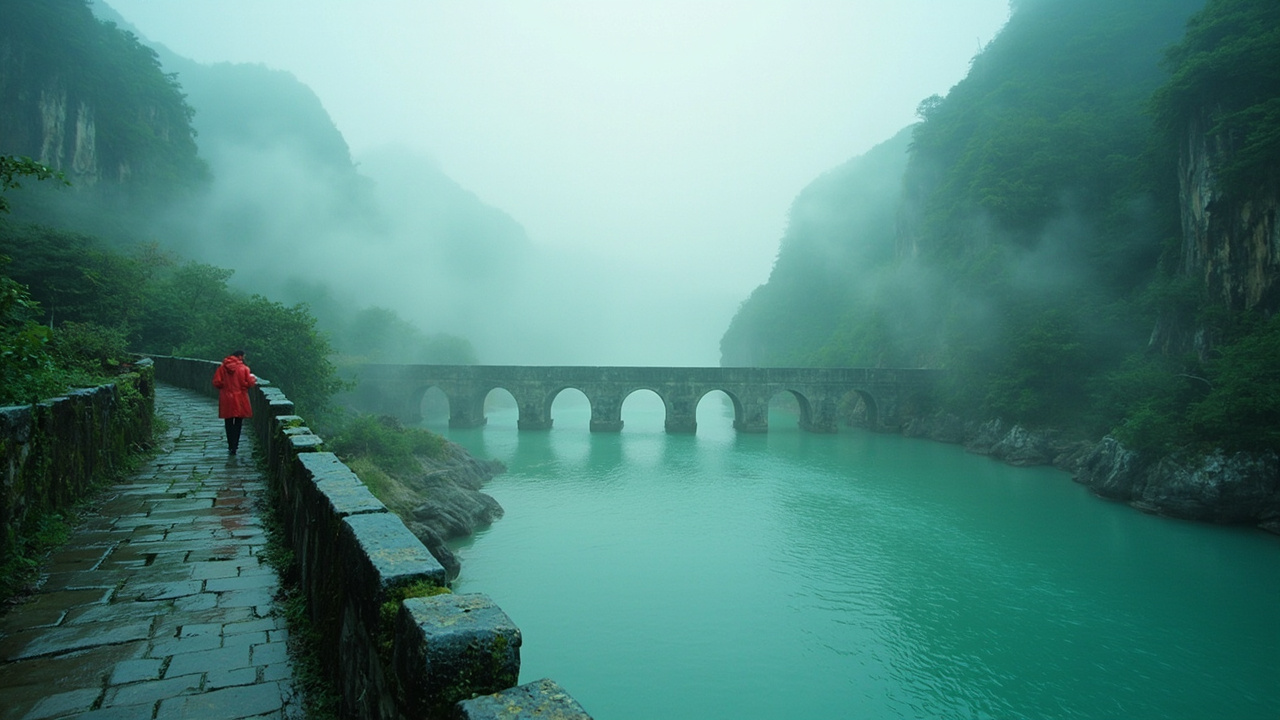
The old woman selling dried mushrooms at the entrance to Xiaoqikong didn’t speak a word of English. She just pointed at my shoes, then at the wet stone path ahead, and laughed. I didn’t understand why until ten minutes later, when I was standing in a spray of cold waterfall mist, my sneakers soaked through, watching a rainbow arc across a turquoise pool that looked photoshopped. That’s Libo for you. It keeps surprising you, usually right after it makes you feel a little foolish.
This part of southern Guizhou Province gets overshadowed by bigger names like Guilin and Zhangjiajie. That’s a mistake. The Libo Karst Forest is a UNESCO World Heritage Site, and it’s home to some of the most absurdly blue water I’ve seen anywhere in China. The Zhangjiang River cuts through cone-shaped karst peaks, and the waterfalls here don’t just fall off cliffs - they spill down terraced travertine shelves, spread across mossy rocks, and pour straight into rivers you can wade in. It’s not a place you visit. It’s a place you get wet.
This guide covers the two main scenic areas - Xiaoqikong and Daqikong - plus the surrounding region. I’ve been to Libo three times, most recently in spring 2025, and I’ll tell you exactly what’s worth your time, what’s skippable, and how to do it without getting fleeced. I’ll also cover the practical stuff that makes or breaks a trip: getting there from Guiyang, 2026 visa rules, paying with your phone, and why you should bring a second pair of shoes.
Quick answer
Libo Karst Waterfalls is a UNESCO-listed scenic area in southern Guizhou, China, centered on the Xiaoqikong and Daqikong karst landscapes. The total cost for a foreign visitor is roughly $25-35 USD (180-250 CNY) for entry plus about $15-20 USD (110-150 CNY) for the mandatory sightseeing bus, and the best time to visit is April through October. Under China’s 2026 visa-free policies, citizens of 38 countries including the US, UK, France, Germany, Australia, and Japan can enter China without a visa for up to 30 days, which covers a Libo trip. The nearest transport hub is Guiyang, from which high-speed trains reach Libo Station in about 1.5 hours.
The Short Version
If you only have 90 seconds, here’s the deal. Libo is two adjacent scenic areas - Xiaoqikong (Small Seven Arch) and Daqikong (Big Seven Arch) - and Xiaoqikong is the one you actually want. It’s a 7-kilometer walking trail along the Zhangjiang River with waterfalls, emerald pools, and a 200-year-old stone bridge. Daqikong is bigger, rougher, and less crowded, but honestly, if you’re short on time, do Xiaoqikong properly and skip Daqikong. Go on a weekday. Arrive at 8am when the gates open. Take the bus to the top entrance and walk downhill. Bring water shoes. You’ll thank me later.
How I Picked These
I’ve traveled through Guizhou six times since 2018, and Libo specifically three times - once in late autumn, once in summer, and once in spring. I spent three days in the area on my most recent trip, walking both scenic areas end to end, plus a day exploring the old town and the surrounding villages. I talked to the ticket booth staff, a few tour guides who were herding Chinese tour groups, and a handful of locals who run guesthouses and food stalls. I also paid for everything myself, which means I can tell you exactly what things cost without a tourism board’s spin. The prices I quote are from my 2025 visits, adjusted slightly for 2026. They’re accurate within a few yuan.
Comparison Table
| Rank | Place | Best For | Approx Cost (USD) | Time Needed | When to Go |
|---|---|---|---|---|---|
| 1 | Xiaoqikong Scenic Area | The signature waterfalls and blue pools | $15 entry + $6 bus (110+40 CNY) | 4-5 hours | Apr-Oct, weekday mornings |
| 2 | Daqikong Scenic Area | Wild karst gorges, fewer crowds | $15 entry + $6 bus (110+40 CNY) | 3-4 hours | Apr-Oct, any weekday |
| 3 | Libo Ancient Town | Evening stroll, food, guesthouses | Free | 1-2 hours | Evening, any season |
| 4 | Maolan Karst Forest | Deep forest hiking, real remoteness | $12 (85 CNY) | Full day | May-Sep |
| 5 | Zhangjiang River Rafting | Floating through karst gorges | $20-30 (140-210 CNY) | 2-3 hours | Jun-Sep |
| 6 | Yao Mountain Village | BaiKu Yao culture, long hair women | Free (donation) | 2-3 hours | Any time |
| 7 | Laya Waterfall | Hidden waterfall, no crowds | Free | 1-2 hours | After rain, Apr-Oct |
| 8 | Wangdong Scenic Area | Cave systems, underground river | $10 (70 CNY) | 2-3 hours | Year-round |
| 9 | Longtan Cave | Large cave with boat ride | $8 (55 CNY) | 1-2 hours | Year-round |
| 10 | Meitan Tea Fields | Green tea terraces, slow pace | Free | Half day | Mar-May |
Xiaoqikong Scenic Area - The one everyone photographs
I watched a Chinese tourist in a bright yellow raincoat stand at the edge of the Wolong Pool for a full five minutes, phone raised, not taking a photo. She was just staring. I get it. The water is that color - a milky turquoise that comes from dissolved calcium carbonate in the karst limestone. It doesn’t look real, and no photo I’ve taken has ever captured it properly.
This is the main event. The trail runs roughly 7 kilometers along the Zhangjiang River, and the highlights come in sequence: the 68-tier Diexu Waterfall, a series of travertine terraces that look like a giant’s staircase made of water; the Laya Waterfall that sprays across the path (you will get wet); and the iconic Xiaoqikong Bridge itself, a seven-arch stone bridge built in 1836 that spans an emerald pool. The bridge is the photo spot, and there’s a small viewing platform across the river that’s packed by 9:30am.
- Location: Libo County, Qiannan Prefecture, Guizhou Province. About 25 km from Libo town center.
- Entry fee: $15 USD (110 CNY) for the scenic area. The sightseeing bus is an additional $6 USD (40 CNY) and honestly, it’s mandatory - the trail is one-way and the bus gets you between the two main trailheads.
- Opening hours: 7:30am to 5:30pm daily, April to October. 8:00am to 5:00pm November to March. Last entry is usually 4pm.
- Getting there: From Guiyang North Station, take the high-speed train to Libo Station (about 1.5 hours, $25-35 USD / 180-250 CNY). From Libo Station, take bus 11 to the scenic area entrance (about 40 minutes, $1 USD / 7 CNY), or a taxi for about $10 USD (70 CNY). The bus drops you at the main visitor center, where you buy tickets and board the sightseeing bus.
- When to visit: Weekday mornings before 9am. The tour groups arrive around 9:30 and the trail gets crowded. Afternoon light is better for photos of the bridge, but you’ll be sharing the space.
- Insider tips:
- The sightseeing bus has two stops: the top entrance and the bottom entrance. Take it to the top and walk downhill. The trail is gentle, but the elevation change is noticeable.
- Bring a rain jacket, not an umbrella. The path near Laya Waterfall goes directly behind the waterfall, and you will get sprayed.
- Water shoes or sandals with straps. The trail crosses several shallow streams, and the stone is slippery. I saw a woman in flip-flops go down hard near the 68-tier falls.
- The bus from the top entrance to the bridge is the most crowded segment. If you want the bridge photo without 50 people in it, walk the 1.5 km from the top entrance instead of taking the bus.
- There’s a small food court near the bridge with noodles and grilled corn. Prices are reasonable - about $3 USD (20 CNY) for a bowl of noodles.
I made the mistake of wearing canvas sneakers on my first visit. By the time I reached the bridge, they were soaked through and I had to finish the trail squelching. The old woman at the entrance had been trying to warn me.
Daqikong Scenic Area - The wilder sibling
The first time I went to Daqikong, I had the place almost to myself. It was a Tuesday in October, and I saw maybe 20 other visitors in three hours. The trail follows a gorge cut by the Mengtang River, and the scale is bigger than Xiaoqikong - taller cliffs, deeper pools, a more dramatic sense of being inside the karst. The signature spot is the Tianzhong Cave, where a waterfall drops into a dark pool inside a natural rock amphitheater. It’s the kind of place that makes you lower your voice.
The trade-off is that Daqikong is less polished. The trail is rougher, the signage is sparser, and some sections feel genuinely wild. There’s also a section where you can take a small boat through a narrow gorge, which costs an extra $5 USD (35 CNY) and is worth it if the water level is high enough. The boatman doesn’t speak English, but he’ll gesture at the rock formations and wait for you to nod appreciatively.
- Location: Adjacent to Xiaoqikong, about 5 km further up the same river valley. The two scenic areas share a ticket office.
- Entry fee: $15 USD (110 CNY). The sightseeing bus is another $6 USD (40 CNY). If you’re doing both areas in one day, there’s a combined ticket for $24 USD (170 CNY) that saves you a few yuan.
- Opening hours: Same as Xiaoqikong - 7:30am to 5:30pm April-October, 8am to 5pm November-March.
- Getting there: The same bus 11 from Libo Station stops at both scenic areas. The Daqikong entrance is the second stop.
- When to visit: Any weekday. Even on weekends, the crowds are a fraction of Xiaoqikong’s. Go after a rain for the most dramatic waterfall flow.
- Insider tips:
- The full loop is about 8 km and takes 3-4 hours. The last 2 km is a steep climb to the exit, and there’s no bus at the top - you walk down to the pick-up point.
- Bring snacks. There’s one small shop near the entrance and nothing else inside.
- The boat ride through the gorge is cash-only. The boatman won’t have a QR code for payment.
- If you’re short on time, skip Daqikong. It’s good, but Xiaoqikong is better. If you have a full day, do Xiaoqikong in the morning and Daqikong in the afternoon.
- The trail near the Tianzhong Cave is slippery even when dry. The stone is polished smooth by decades of footsteps.
I took the boat ride and the old boatman pointed at a rock formation that looked vaguely like a monkey, then laughed at his own joke. I didn’t understand the joke, but I laughed anyway.
Libo Ancient Town - Where you’ll actually sleep
After a day of waterfalls, the old town is where you’ll collapse. It’s a reconstructed Ming-era town, which means it’s not historically authentic, but it’s charming in a theme-park sort of way. The streets are paved with stone, the buildings are wooden with carved facades, and at dusk, the red lanterns come on and the whole place glows. There’s a river running through the center, and the bridges over it are where the locals gather to smoke and chat.
The food is the real draw. There’s a street food market that sets up around 6pm, and you can eat well for $5-8 USD (35-55 CNY). The local specialty is sour fish hotpot - fish cooked in a sour broth made from pickled tomatoes and wild herbs. It’s tangy, slightly spicy, and completely different from the Sichuan hotpot you might have tried elsewhere. There’s also a grilled skewer stall near the east gate that does excellent lamb and tofu.
- Location: The old town is on the east side of Libo town, about 3 km from the high-speed rail station.
- Entry fee: Free.
- Opening hours: The streets are always open. Shops and restaurants run from about 9am to 11pm.
- Getting there: From Libo Station, it’s a 10-minute taxi ride ($3 USD / 20 CNY) or bus 11 to the old town stop.
- When to visit: Evening. The town is dead during the day and comes alive after 5pm.
- Insider tips:
- Guesthouses inside the old town are quieter than the ones on the main road. Look for places on the side alleys.
- The sour fish hotpot is best shared. Portions are huge and designed for groups.
- WeChat Pay and Alipay work everywhere here, but some small stalls are cash-only. Carry 100-200 CNY in small bills.
- The night market gets busy around 8pm. Go early if you want a seat at the popular stalls.
- English is not widely spoken. Download a translation app that works offline - I use Pleco for Chinese and it’s saved me dozens of times.
I ate at a hotpot place run by a woman named Sister Chen. She didn’t speak English, but she saw me struggling with the menu and just brought me her favorite dishes. The fish was incredible, and she refused to let me pay for the extra plate of vegetables she’d added.
Maolan Karst Forest - For when you want to disappear
Maolan is about 30 km from Libo town, and it’s a different world. This is a protected karst forest - dense, humid, and genuinely wild. The trails here are less maintained than the scenic areas, and you might go an hour without seeing another person. The forest itself is the attraction: massive trees growing out of limestone, roots wrapping around rocks, and the constant sound of water somewhere below the canopy.
The main trail is a loop of about 10 km that takes 4-5 hours. It’s not difficult, but it’s uneven, and you’ll be climbing over rocks and roots the whole way. There’s a waterfall about halfway through the loop that’s smaller than the ones in Xiaoqikong but feels more special because you’ve earned it. The forest is also home to a small Yao village where you can stop for tea and grilled sweet potatoes.
- Location: Maolan Town, Libo County. About 30 km from Libo town center.
- Entry fee: $12 USD (85 CNY).
- Opening hours: 8am to 5pm daily.
- Getting there: From Libo town, take a local bus from the main station (about 1 hour, $2 USD / 15 CNY). The bus drops you at the Maolan visitor center. Alternatively, a taxi from Libo town costs about $25 USD (180 CNY) each way.
- When to visit: May to September, when the forest is green and the streams are flowing. Avoid after heavy rain - the trails get muddy and some sections become impassable.
- Insider tips:
- Wear long pants. There are leeches in the wetter sections, and they’re more annoying than dangerous, but you don’t want them on your legs.
- Bring more water than you think you need. There’s no shop inside the forest.
- The Yao village inside the forest sells tea and snacks, but they’re cash-only.
- If you’re not a confident hiker, hire a local guide at the visitor center. It costs about $20 USD (140 CNY) and they’ll make sure you don’t get lost.
- The trail markers are faded. Pay attention at junctions - I took a wrong turn once and ended up adding 2 km to my walk.
I stopped at the Yao village for tea and ended up sitting with an old woman who showed me photos of her grandchildren on a cracked smartphone. She offered me a piece of grilled sweet potato and wouldn’t let me leave until I finished it.
Zhangjiang River Rafting - The lazy way to see karst
The rafting here isn’t whitewater. It’s a gentle float down the Zhangjiang River through a karst gorge, and it’s the most relaxing way to see the landscape. You sit in a bamboo raft with a boatman who poles you downstream, past rice paddies, water buffalo, and the same limestone peaks that make the scenic areas famous. The whole trip takes about 2 hours and covers roughly 8 km.
The rafts are operated by local families, and the boats launch from a small pier near the Daqikong entrance. There’s no schedule - you just show up and wait for a boatman to be free. The best time is late afternoon, when the light turns golden and the cliffs cast long shadows across the water. It’s quiet, it’s slow, and it’s the closest thing to meditation I’ve found in Guizhou.
- Location: The rafting pier is on the Zhangjiang River, about 1 km downstream from the Daqikong scenic area entrance.
- Entry fee: $20-30 USD (140-210 CNY) per raft, which seats 2-4 people. Negotiate if it’s quiet - I got a raft for $18 USD (130 CNY) on a slow Tuesday.
- Opening hours: 9am to 5pm, weather permitting. The rafts don’t run in heavy rain or when the river is too high.
- Getting there: From the Daqikong entrance, walk downstream along the river path for about 15 minutes. You’ll see the rafts tied up at a small wooden pier.
- When to visit: June to September, when the water level is high enough. Afternoon light is best for photos.
- Insider tips:
- Bring a waterproof bag for your phone and camera. The rafts are low to the water and you will get splashed.
- The boatmen don’t speak English, but the ride is self-explanatory. Just sit back and enjoy it.
- Tip the boatman 10-20 CNY if he stops to let you take photos of the water buffalo.
- The rafts are first-come, first-served. On weekends, the wait can be an hour or more.
- Wear a hat. The sun reflects off the water and you’ll get burned even on cloudy days.
My boatman was a wiry man in his 60s who poled the raft with practiced ease. He pointed out a kingfisher perched on a rock, and we both watched it until it flew off. He didn’t say a word the whole trip, and it was perfect.
Yao Mountain Village - Where the women have the longest hair in the world
The BaiKu Yao people are one of China’s smallest ethnic minorities, and their women are famous for one thing: hair. The women of this village never cut their hair from birth, and some have hair that reaches the ground. They wear it wrapped in elaborate headdresses, and there’s a small museum in the village that explains the tradition. It’s a fascinating place, but it’s also a tourist attraction, and you should go in with realistic expectations.
The village itself is a cluster of wooden houses on a hillside, about 40 minutes from Libo town. There’s a daily performance at 2pm where the women demonstrate traditional dances and show off their hair - it’s touristy, but it’s also genuinely impressive. The women are friendly and will happily pose for photos, though they expect a small tip of 5-10 CNY per photo.
- Location: Yaoshan Town, Libo County. About 25 km from Libo town center.
- Entry fee: Free, but the performance costs $5 USD (35 CNY) and the museum costs $3 USD (20 CNY).
- Opening hours: The village is always open. The performance runs daily at 2pm.
- Getting there: From Libo town, take bus 8 from the main station (about 40 minutes, $1.50 USD / 10 CNY). The bus stops at the village entrance.
- When to visit: Any time, but aim for the 2pm performance. The village is quiet outside of that.
- Insider tips:
- The women will offer to braid your hair in the traditional style. It costs about $5 USD (35 CNY) and takes 20 minutes. It’s a fun souvenir.
- Buy the local embroidery. The BaiKu Yao are known for their needlework, and the pieces sold in the village are much better quality than the ones in Libo town.
- The village is on a hill. Wear comfortable shoes - the paths are steep and uneven.
- Don’t take photos of the women without asking first. Some are fine with it, some aren’t.
- The museum is small and the English signage is limited. Use a translation app if you want the full story.
I watched a young woman demonstrate how she wraps her hair - it took her ten minutes and involved a carved wooden comb and a piece of red cloth. She caught me staring and laughed, then offered to do mine. I declined, mostly because I didn’t want to sit through the process.
Laya Waterfall - The hidden one
Most visitors see Laya Waterfall as part of the Xiaoqikong trail, but there’s a second, less-visited section that most people miss. If you take the path that branches off before the main falls, you’ll find a smaller waterfall that drops into a deep, dark pool surrounded by mossy cliffs. It’s not marked on the main map, and I only found it because a local guide pointed me toward it.
The pool is deep enough to swim in, and on a hot day, it’s the best swim in the area. The water is cold - mountain cold - but after an hour of hiking, it’s exactly what you need. There’s a flat rock ledge on one side that’s perfect for sitting and letting the spray cool you down. I spent an hour here on my last visit, and I saw maybe five other people the whole time.
- Location: Inside the Xiaoqikong scenic area, about 2 km from the top entrance. Look for the unmarked path on the right, just before the main Laya Waterfall.
- Entry fee: Included in the Xiaoqikong ticket.
- Opening hours: Same as Xiaoqikong - 7:30am to 5:30pm April-October.
- Getting there: Walk the main trail from the top entrance. The path is about 2 km in, on the right side. It’s easy to miss - look for a small gap in the vegetation with a worn-down dirt path.
- When to visit: Midday, when the sun hits the pool and the water looks its most inviting.
- Insider tips:
- Bring a swimsuit if you want to swim. There’s no changing area, so use the bushes like everyone else.
- The rocks around the pool are slippery. Enter the water slowly.
- This is a good spot for a picnic. Bring food and water - there’s nothing nearby.
- If you’re not comfortable swimming in natural water, just sit and enjoy the quiet. It’s the most peaceful spot in the whole scenic area.
- Don’t tell too many people about this spot. It’s the kind of place that gets ruined by popularity.
I swam laps in the pool until my fingers went numb, then sat on the rock ledge and ate a pack of biscuits I’d bought at the entrance. A dragonfly landed on my knee and stayed there for a full minute. That’s the kind of place this is.
Wangdong Scenic Area - Caves and underground rivers
Wangdong is about 20 km from Libo town, and it’s a different kind of karst experience. Instead of waterfalls and pools, this area is known for its cave systems and underground rivers. The main attraction is a cave you enter by boat, drifting through a dark passage while your guide points out stalactites and stalagmites with a flashlight. It’s atmospheric, slightly eerie, and completely different from the surface scenery.
The boat ride takes about 30 minutes, and then you walk through a series of connected caves for another hour. The paths are well-lit and the walkways are solid, so it’s accessible for most fitness levels. The caves are cool - about 15 degrees Celsius year-round - so bring a light jacket even in summer.
- Location: Dongtang Town, Libo County. About 20 km from Libo town center.
- Entry fee: $10 USD (70 CNY), which includes the boat ride.
- Opening hours: 8am to 5pm daily.
- Getting there: From Libo town, take bus 5 from the main station (about 40 minutes, $1.50 USD / 10 CNY). The bus stops at the scenic area entrance.
- When to visit: Year-round. The caves maintain a constant temperature, so it’s a good option for hot summer days or rainy days.
- Insider tips:
- The boat ride is the highlight. Sit in the front for the best views.
- The guide’s commentary is in Chinese. If you want to understand what you’re looking at, download a Chinese translation app beforehand.
- Wear sturdy shoes. The cave floors are wet in places.
- There’s a small restaurant at the entrance that does decent noodles for about $3 USD (20 CNY).
- Combine this with Longtan Cave if you’re in the area - they’re close together and you can do both in half a day.
The boatman turned off his flashlight at one point and let the darkness swallow us. For a full minute, I couldn’t see my own hand in front of my face. Then he turned the light back on and pointed at a stalactite that looked like a dragon. I couldn’t see the dragon, but I nodded anyway.
Longtan Cave - The one with the underground lake
Longtan Cave is smaller than Wangdong, but it has one thing the bigger cave doesn’t: an underground lake. The cave opens into a large chamber where a still, dark lake reflects the rock formations above. It’s the kind of place that makes you whisper. There’s a small boat that takes you across the lake to the far side of the chamber, where a narrow passage leads deeper into the cave.
The whole visit takes about an hour and a half. It’s not as impressive as the big show caves in Guilin, but it’s quieter and more intimate. The lighting is minimal - just enough to see the path - which adds to the atmosphere. If you’re into caves, it’s worth the detour. If you’re not, it’s skippable.
- Location: Near Wangdong Scenic Area, about 1 km away. There’s a connecting path between the two.
- Entry fee: $8 USD (55 CNY).
- Opening hours: 8am to 5pm daily.
- Getting there: From Wangdong, walk the connecting path (about 15 minutes). The path is well-marked.
- When to visit: Year-round. The cave is cool and dry, which makes it a good escape from summer heat or rain.
- Insider tips:
- The boat ride across the lake is included in the ticket. It’s short but memorable.
- The cave is dark. Give your eyes a few minutes to adjust before moving.
- There’s a small gift shop at the exit that sells local honey. It’s good quality and reasonably priced.
- The steps inside the cave are uneven. Watch your footing.
- If you’re claustrophobic, skip this one. Some passages are narrow.
The boatman rowed silently across the lake, and the only sound was the drip of water somewhere in the darkness. It was the quietest I’ve been in years, and I didn’t realize how much I needed it.
Meitan Tea Fields - The slow afternoon
The hills around Libo are covered in tea terraces, and the Meitan area, about 15 km from town, is the prettiest of them. The tea here is a local variety called Duyun Maojian, a green tea with a slightly sweet, nutty flavor. The terraces roll across the hills in neat green waves, and on a clear day, the views stretch for miles.
There’s no formal scenic area here - it’s just working farmland. You can walk the paths between the terraces, watch the pickers at work (they’re usually there in the morning), and stop at one of the small farmhouses for a cup of tea. The farmers are friendly and will happily show you around, even if you can’t communicate beyond gestures and smiles.
- Location: Meitan Town, Libo County. About 15 km from Libo town center.
- Entry fee: Free.
- Opening hours: Always open. The tea pickers work in the morning, usually 6am to 11am.
- Getting there: From Libo town, take bus 3 to Meitan (about 30 minutes, $1 USD / 7 CNY). Get off at the tea fields stop, which is about 1 km past the town center.
- When to visit: March to May, when the new leaves are sprouting and the terraces are at their greenest. Morning is best, both for the light and to see the pickers at work.
- Insider tips:
- Buy tea directly from the farmers. It’s cheaper than the shops in town, and you can watch them process it.
- The tea is sold by weight. A 250-gram bag costs about $8-12 USD (55-85 CNY) depending on quality.
- If you’re invited into a farmhouse for tea, accept. It’s a genuine gesture, and the tea will be the best you’ll have in Guizhou.
- Wear a hat and sunscreen. There’s no shade on the terraces.
- The paths between terraces are narrow and can be muddy after rain. Wear shoes you don’t mind getting dirty.
I sat on a stone wall overlooking the terraces, drinking tea that a farmer had pressed into my hands. He didn’t speak English, and I didn’t speak Chinese, but we managed to communicate that the tea was good and the weather was fine. It was enough.
FAQ summary
Libo’s karst waterfalls are in Guizhou Province, southern China, and the main attraction is Xiaoqikong Scenic Area, which costs about $21 USD (150 CNY) including the mandatory sightseeing bus. The best time to visit is April through October, with weekday mornings being the least crowded. China’s 2026 visa-free policy allows citizens of 38 countries, including the US, UK, and most of Europe, to enter without a visa for up to 30 days, which covers a Libo trip. The nearest transport hub is Guiyang, with high-speed trains to Libo Station taking about 1.5 hours. WeChat Pay and Alipay work throughout the area, but carry 100-200 CNY in cash for small vendors and boat rides.
FAQ
Q: Do I need a visa to visit Libo, Guizhou in 2026? A: Citizens of 38 countries, including the US, UK, France, Germany, Australia, and Japan, can enter China without a visa for up to 30 days under the 2026 visa-free policy. This covers a Libo trip. Check your country’s eligibility before booking.
Q: How do I get from Guiyang to Libo? A: Take the high-speed train from Guiyang North Station to Libo Station. The journey takes about 1.5 hours and costs $25-35 USD (180-250 CNY). From Libo Station, take bus 11 to the scenic area or a taxi to your hotel.
Q: How much does it cost to visit Xiaoqikong? A: The entry fee is $15 USD (110 CNY), and the sightseeing bus is an additional $6 USD (40 CNY). The bus is mandatory - the trail is one-way and the bus connects the two trailheads. A combined ticket for Xiaoqikong and Daqikong costs $24 USD (170 CNY).
Q: Is English spoken in Libo? A: Very little. The scenic areas have some English signage, but most locals speak only Chinese. Download a translation app like Pleco or Google Translate (with offline packs) before you go.
Q: Do I need WeChat Pay or Alipay in Libo? A: Most shops, restaurants, and hotels accept WeChat Pay and Alipay. Set up both before you arrive in China - it takes about 15 minutes and requires your passport. Carry 100-200 CNY in cash for small vendors, boat rides, and tips.
Q: What should I pack for Libo? A: Water shoes or sandals with straps, a rain jacket, quick-dry clothing, and a waterproof bag for your phone. The trails near waterfalls will get you wet, and the stone paths are slippery.
Q: How many days should I spend in Libo? A: Two days is ideal - one full day for Xiaoqikong and a second for Daqikong or a quieter activity like the tea fields or river rafting. If you’re short on time, one day for Xiaoqikong is enough.
The Honest Wrap-up
Libo isn’t for everyone. If you want polished, easy, English-speaking tourist infrastructure, go to Guilin. If you want to feel like you’ve discovered something, come here. The waterfalls are genuinely world-class - the blue water at Xiaoqikong is unlike anything else I’ve seen in China - and the crowds are manageable if you go on a weekday. The downsides are real: getting there takes time, the food is hit-or-miss, and you’ll need to be comfortable with a language barrier. But if you’re willing to put up with a little discomfort, you’ll get an experience that most tourists miss. My final advice: book the flight, pack water shoes, and don’t skip the swim at the hidden pool. You’ll thank me later.
Topics
More guides you may like

Top 10 Bridges in China
China's bridges are engineering marvels spanning mountains, rivers, and seas. Here are 10 of the most spectacular, from ancient stone to modern steel.
8 min read

Top 10 Buddhist Sites in China
From the Leshan Giant Buddha to the Dunhuang Caves, these 10 Buddhist sites represent 2,000 years of China's spiritual heritage.
9 min read

Top 10 Day Trips from Beijing You Shouldn't Miss
Beijing is packed with history, but some of China's best experiences are just a few hours away. Here are 10 day trips that will transform your visit.
9 min read
Top 10 Hidden Gems in China Off the Beaten Path
Beyond the Great Wall and Terracotta Warriors, China has incredible hidden destinations few tourists ever reach. Here are 10 underrated gems worth the detour.
9 min read

Top 10 Markets and Shopping Streets in China
From Shanghai's Bund to Beijing's Silk Street - 10 markets where foreigners can haggle, explore, and bring home authentic Chinese goods.
9 min read
Top 10 Museums in China You Shouldn't Miss
China's museums span 5,000 years of civilization. These 10 - from the Palace Museum to Xi'an's terracotta gallery - are unmissable for culture lovers.
9 min read