
Baiyun Mountain Guangzhou: The Complete 2026 Guide
The cab driver looked at me in the rearview mirror and laughed. Not a mean laugh, just a genuine "you have no idea what you're in for" laugh.
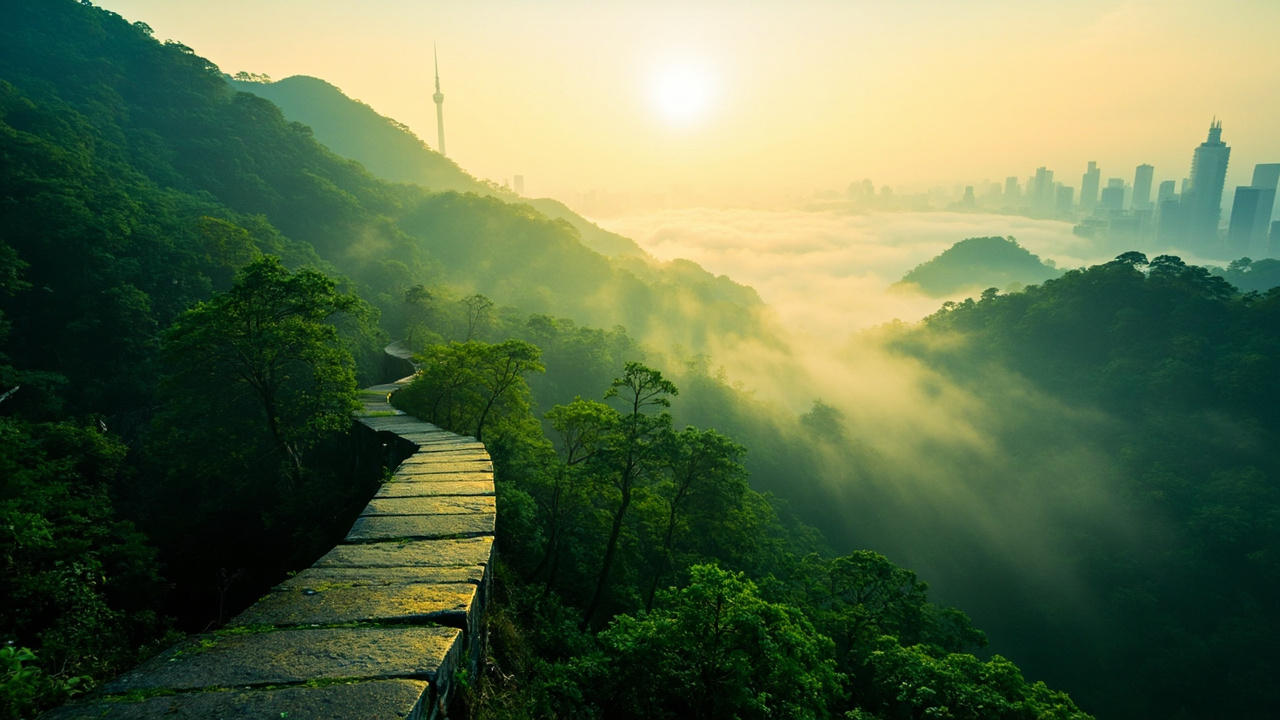
The cab driver looked at me in the rearview mirror and laughed. Not a mean laugh, just a genuine “you have no idea what you’re in for” laugh. I had just told him I planned to walk from the base of Baiyun Mountain to the summit and back in one morning.
“Young man,” he said, switching to English, “that mountain is 382 meters high. But the road is 20 kilometers. You will be walking until dinner.”
He wasn’t wrong. But he also wasn’t right, because he didn’t know about the cable car, or the scenic bus, or the fact that half the fun of Baiyun Mountain is getting lost in its network of forest paths and deciding on the fly which way to go. I’ve been back six times since that first visit, and I still haven’t seen all of it.
Baiyun Mountain, or White Cloud Mountain, is Guangzhou’s green lung. It sits right in the middle of the city, a 28-square-kilometer block of forested hills that locals treat as their backyard. On any given morning you’ll see retirees doing tai chi with swords, office workers power-walking in business casual, and families picnicking on slopes that look down over the Pearl River Delta. For a first-time visitor to China, it’s also one of the easiest places to experience the country’s outdoor culture without leaving the city limits.
This guide covers the ten things I think matter most for a first-time visitor, based on those six visits and a lot of conversations with people who live here. I’ll tell you what’s worth your money, what’s skippable, and how to avoid the mistakes I made.
Quick answer
Baiyun Mountain is Guangzhou’s most accessible natural escape, with entry fees starting at $1.40 (CNY 10) for the main gate and $7 (CNY 50) for the summit area. The best time to visit is October through December, when the heat breaks and the air clears. Take Metro Line 2 to Baiyun Park Station, Exit B, then walk 10 minutes to the South Gate, or take a taxi directly to the West Gate for the cable car. China’s current visa-free policies (as of 2026) allow citizens of 54 countries to enter for up to 30 days for tourism, which covers most Western visitors.
The Short Version
Baiyun Mountain is worth a half-day, not a full day. Go early on a weekday, take the cable car up if it’s hot, and walk down through the forest paths. Skip the amusement park at the south entrance. Don’t skip the view from Moxingling (Star-Viewing Pavilion) at the summit. Bring water, wear proper shoes, and expect crowds of friendly locals who will absolutely try to take photos with you if you’re visibly foreign. The whole thing costs less than $20 (CNY 140) including transport, food, and entry.
How I Picked These
I’ve been living in Guangzhou on and off since 2019, and I’ve visited Baiyun Mountain in every season, in rain, in smog, and in that perfect October clarity when you can see all the way to the Pearl River. I’ve hiked the main ridge line, gotten lost on the eastern slopes, and sat through an entire thunderstorm in a pavilion with a group of elderly locals who found my inability to understand Cantonese hilarious. The recommendations below come from those visits, plus conversations with park staff, taxi drivers, and the regulars who walk the same loop every morning. I’ve also cross-checked prices and hours against the official park website and recent visitor reports, because things change and I don’t want you showing up to a closed gate.
Comparison Table
| Rank | Place | Best For | Approx Cost (USD) | Time Needed | When to Go |
|---|---|---|---|---|---|
| 1 | Moxingling Summit | Best views of Guangzhou | $7 (CNY 50) | 1-2 hours | Early morning |
| 2 | Cable Car Ride | Easy access, aerial views | $3.50 (CNY 25) one-way | 15 min | Any clear day |
| 3 | Mingchun Valley | Peaceful forest walks | Included in entry | 1-2 hours | Weekday mornings |
| 4 | Nengren Temple | History and incense | $1.40 (CNY 10) | 30-45 min | Morning |
| 5 | Yuntai Garden | Flowers and photos | $3.50 (CNY 25) | 1 hour | Spring |
| 6 | West Gate Forest Path | Quiet hiking | $1.40 (CNY 10) | 2-3 hours | Cool months |
| 7 | Baiyun Mountain Museum | Quick history lesson | Free | 20 min | Any time |
| 8 | Peach Blossom Valley | Spring blooms | $1.40 (CNY 10) | 1 hour | February-March |
| 9 | Scenic Bus Loop | Cover more ground | $2.80 (CNY 20) per segment | 30-45 min | Any time |
| 10 | Sunrise Point | Best sunrise in the city | $1.40 (CNY 10) | 1-2 hours | 5:30-6:30 AM |
1. Moxingling Summit - The View That Makes It All Worthwhile
The first time I reached the top of Moxingling, the city was hidden under a layer of haze so thick I could barely see the buildings below. I was disappointed, sure, but the locals around me didn’t seem bothered. They were doing their morning exercises, chatting, and generally treating the summit like a neighborhood park. That’s when I realized Baiyun Mountain isn’t about the view, it’s about the act of being up here.
Still, when the air is clear, which happens most often from October to February, the view is genuinely spectacular. You can see the entire Guangzhou skyline, including the Canton Tower and the Pearl River winding through the city. On the clearest days, you can see all the way to the mountains of Foshan on the western horizon.
The summit area is well-developed, with a large observation deck, a small cafe, and plenty of benches. It’s not wilderness, but it doesn’t pretend to be. This is a city viewpoint, and it does that job very well.
- Location: Summit of Baiyun Mountain, accessible via the main ridge path
- Entry fee: $7 (CNY 50) for the summit area, which includes access to the upper sections
- Opening hours: 6:00 AM to 6:00 PM daily
- Getting there: Take Metro Line 2 to Baiyun Park Station, Exit B, walk 10 minutes to the South Gate, then take the scenic bus to the summit area (about 20 minutes), or hike 2-3 hours
- When to visit: Early morning on weekdays, before the tour groups arrive around 10 AM
- Insider tips: The cafe at the summit sells decent coffee for about $2.80 (CNY 20), which is cheaper than most places in the city center. Bring a light jacket even in summer, the summit is windier than you’d expect. The observation deck gets crowded on weekends, so go early. If you’re fit, skip the bus and hike the ridge path from the South Gate, it’s a great workout with constant views.
I once spent an hour up here with a retired teacher named Mr. Chen who told me the history of every building visible from the summit. He’d been coming up every morning for 15 years. He pointed out his apartment building, his daughter’s school, and the hospital where his wife had surgery. This mountain is part of his daily life, not a tourist attraction.
2. The Cable Car - The Smart Way Up
I’m not going to pretend I hiked up every time. On my second visit, after a late night of Cantonese food and too much beer, I took the cable car. It was the right call. The ride takes about 15 minutes and gives you a completely different perspective on the mountain, floating over the treetops with the city sprawling behind you.
The cable car runs from the West Gate area up to the summit zone. It’s not the longest or most dramatic cable car ride in China, but it’s smooth, reliable, and saves you about two hours of uphill walking. The cars hold about 6-8 people, so you’ll likely share with other visitors. This is a good thing, because the locals love chatting with foreigners.
The West Gate area also has a small parking lot and is easier to reach by taxi than the South Gate. If you’re coming from the city center, this is probably your best entry point.
- Location: West Gate, Baiyun Mountain, near the intersection of Baiyun Avenue South
- Entry fee: $3.50 (CNY 25) one-way, $7 (CNY 50) round trip, plus the $1.40 (CNY 10) park entry
- Opening hours: 9:00 AM to 5:30 PM, with the last car down at 5:00 PM
- Getting there: Take Metro Line 2 to Baiyun Park Station, Exit B, then a 10-minute taxi ride to the West Gate, or take bus 24, 36, or 76 to the Baiyun Cable Car Station stop
- When to visit: Any clear day, but avoid weekends when the queue can be 30-45 minutes
- Insider tips: Buy your return ticket at the bottom, it’s the same price and saves you queueing at the top. The cable car stops running during thunderstorms, so check the weather before you go. If you’re scared of heights, sit facing the mountain, not the city. The last car down is earlier than you think, don’t miss it or you’ll be walking down in the dark.
I shared my car with a young couple from Shenzhen who were on their first date. The girl was terrified of heights and gripped her boyfriend’s arm the whole way. He kept pointing out landmarks to distract her. By the time we reached the top, she was laughing. It was a nice moment.
3. Mingchun Valley - Where the Locals Go to Escape
Most tourists head straight for the summit and miss the best part of Baiyun Mountain. Mingchun Valley, on the eastern side of the mountain, is where the locals go when they want to get away from the crowds. It’s a network of forest paths, small streams, and quiet clearings that feels a world away from the city below.
The valley gets its name from the spring water that flows through it, and there are several spots where you can fill your water bottle with cold, clean mountain water. The locals do this all the time, and there’s something deeply satisfying about drinking water that literally came out of the mountain.
The paths here are well-maintained but less crowded than the main ridge. You’ll see more serious hikers, families with picnics, and the occasional tai chi practitioner finding a quiet spot among the trees. It’s the closest thing to wilderness you’ll find in central Guangzhou.
- Location: Eastern section of Baiyun Mountain, accessible from the East Gate or via paths from the summit
- Entry fee: Included in the main park entry of $1.40 (CNY 10)
- Opening hours: 6:00 AM to 6:00 PM daily
- Getting there: Take Metro Line 2 to Baiyun Park Station, Exit B, then a 15-minute taxi to the East Gate, or hike from the summit area following signs for Mingchun Valley
- When to visit: Weekday mornings, when the valley is at its quietest
- Insider tips: The spring water is safe to drink, but locals still boil it out of habit. Bring insect repellent, the valley has mosquitoes year-round. The paths can get slippery after rain, wear shoes with good grip. There’s a small noodle shop near the East Gate that serves decent bowls for about $2 (CNY 15), a bargain even by local standards.
I got lost here once, took a wrong turn on a path that looked the same as the one I’d come from, and ended up walking an extra 40 minutes. An elderly woman with a bamboo walking stick saw me checking my phone and wordlessly pointed me in the right direction. She didn’t speak a word of English, but she understood exactly what I needed.
4. Nengren Temple - A Quiet Corner of History
Nengren Temple is easy to miss, which is exactly why you should make the effort to find it. Tucked into the western foothills of Baiyun Mountain, this small Buddhist temple has been here since the Qing Dynasty, though most of what you see today dates from a 1990s restoration.
The temple compound is compact, with a main hall, a few side buildings, and a small courtyard with incense burners and old trees. It’s not grand like the big temples in Guangzhou city center, but it has a quiet dignity that I find more appealing. The monks here seem genuinely devoted, and the atmosphere is calm and contemplative.
You’ll likely have the place mostly to yourself, especially on weekday mornings. The only other visitors tend to be elderly locals who come to pray and light incense. It’s a peaceful stop on the way up or down the mountain, and a good place to catch your breath.
- Location: Western foothills of Baiyun Mountain, near the West Gate
- Entry fee: $1.40 (CNY 10), separate from the main park entry
- Opening hours: 8:00 AM to 5:00 PM daily
- Getting there: From the West Gate, follow the signs for Nengren Temple, about a 15-minute walk along a paved path
- When to visit: Morning, before the heat of the day
- Insider tips: The temple sells incense for about $0.70 (CNY 5), and it’s considered polite to light some even if you’re not Buddhist. Dress modestly, covering shoulders and knees. Photography is allowed in the courtyard but not inside the main hall. The temple has a small vegetarian restaurant that serves simple, delicious meals for about $3.50 (CNY 25), one of the best-kept secrets on the mountain.
A monk here once offered me tea and showed me a photo of the temple as it looked in the 1980s, before the restoration. He’d been here for 30 years and had watched the city grow up around him. He spoke no English, but we communicated through gestures and the translation app on my phone. It was one of the most peaceful afternoons I’ve spent anywhere.
5. Yuntai Garden - Flowers, Photos, and Local Life
Yuntai Garden is technically part of Baiyun Mountain, but it feels like a different world. Located at the southern foot of the mountain, this is a formal Chinese garden with flower beds, ponds, and pavilions. It’s the kind of place where locals come to take wedding photos, practice instruments, and just enjoy a beautiful afternoon.
The garden is at its best in spring, when the flowers are in full bloom. There are roses, azaleas, and a variety of seasonal displays that change throughout the year. The layout is classic Chinese garden design, with winding paths, ornamental bridges, and carefully placed rocks and trees.
It’s not the most exciting thing on this list, but it’s one of the most pleasant. If you have an hour to spare and want to see how locals actually use their green spaces, this is worth a visit. Plus, it’s a great spot for photos, both of the garden and of the mountain looming behind it.
- Location: Southern foot of Baiyun Mountain, near the South Gate
- Entry fee: $3.50 (CNY 25)
- Opening hours: 8:00 AM to 6:00 PM daily
- Getting there: Take Metro Line 2 to Baiyun Park Station, Exit B, walk 5 minutes to the South Gate, the garden is just inside
- When to visit: Spring for flowers, weekday afternoons for fewer crowds
- Insider tips: The garden has free Wi-Fi, which is rare in China’s parks. There’s a small tea house near the main pond that serves good jasmine tea for about $2.80 (CNY 20). Wedding photographers are everywhere on weekends, and they’re usually happy to let you watch. The best photo spot is the stone bridge over the main pond, with the mountain as a backdrop.
I watched a wedding photoshoot here once, and the photographer spent 20 minutes trying to get the bride’s veil to flutter just right in the breeze. The bride was laughing the whole time, and her groom kept making faces to try to get her to crack up. The photos probably turned out great, but the outtakes would have been better.
6. West Gate Forest Path - For When You Want to Earn It
If you’re the kind of traveler who wants to actually hike, not just ride a cable car to a viewpoint, the West Gate Forest Path is where you want to be. This is the most challenging route up Baiyun Mountain, a 5-kilometer trail that climbs steadily through dense forest before joining the main ridge path near the summit.
The path is well-marked and maintained, but it’s a real hike, with stone steps, steep sections, and plenty of shade from the canopy above. You’ll pass small streams, rocky outcrops, and the occasional pavilion where you can rest and catch your breath. It takes most people 2-3 hours to reach the summit from here, depending on fitness and how often you stop.
This is also the quietest route up the mountain. Most tourists take the cable car or the scenic bus, so the forest path is mostly used by serious hikers and locals who do this as their morning workout. It’s a completely different experience from the crowded summit area.
- Location: West Gate, Baiyun Mountain, starting near the cable car station
- Entry fee: $1.40 (CNY 10) for the main park entry
- Opening hours: 6:00 AM to 6:00 PM daily
- Getting there: Take Metro Line 2 to Baiyun Park Station, Exit B, then a 10-minute taxi to the West Gate, the trailhead is clearly marked
- When to visit: October to March, when the weather is cooler and the air is clearer
- Insider tips: Bring at least 1 liter of water per person, there are no shops on this trail. The path is steep in places, and the stone steps can be slippery when wet. Start early, before 8 AM, to avoid the heat and give yourself plenty of time. There are public toilets at the trailhead and at the summit, but nowhere in between. The trail joins the main ridge path at a pavilion about 1 kilometer from the summit, and the views from that junction are some of the best on the mountain.
I hiked this trail with a group of local office workers who were training for a marathon. They lapped me twice on the way up, barely breaking a sweat while I was gasping for air. One of them, a woman named Lily who worked in finance, gave me a bottle of water and told me to keep going. She was at the top waiting for me when I finally made it, and she clapped when I arrived. I’ve never been so happy to be patronized.
7. Baiyun Mountain Museum - Quick, Free, and Surprisingly Interesting
Most visitors walk right past the Baiyun Mountain Museum without a second glance. That’s a mistake. This small museum, located near the South Gate, tells the story of the mountain’s geology, ecology, and cultural history in a way that’s surprisingly engaging.
The exhibits cover everything from the mountain’s formation millions of years ago to its role in Chinese poetry and painting. There are displays of local wildlife, including the birds and insects you might see on your hike, and a section on the mountain’s history as a retreat for scholars and officials.
It’s not a world-class museum, but it’s free, air-conditioned, and takes about 20 minutes to go through. On a hot day, that air conditioning alone is worth the stop. And you’ll come away with a better understanding of why this mountain matters to the people of Guangzhou.
- Location: Near the South Gate, Baiyun Mountain
- Entry fee: Free
- Opening hours: 9:00 AM to 5:00 PM, closed Mondays
- Getting there: From the South Gate, follow the signs for the museum, about a 5-minute walk
- When to visit: Any time, but it’s a good break from the heat in summer
- Insider tips: The museum has clean, free public toilets, which are worth knowing about. The exhibits have English translations, which is rare for small Chinese museums. The gift shop sells decent postcards and books about the mountain. The museum staff are friendly and will happily answer questions, even if it requires a translation app.
I was the only visitor when I went, and the woman at the front desk seemed genuinely excited to see a foreigner. She gave me a guided tour in Mandarin, which I mostly didn’t understand, but she was so enthusiastic that I didn’t have the heart to stop her. She pointed at a stuffed bird and made a chirping sound, then laughed at her own joke. I laughed too, even though I had no idea what was funny.
8. Peach Blossom Valley - Spring’s Best Kept Secret
Peach Blossom Valley is exactly what it sounds like, a valley full of peach trees that burst into bloom every spring. Located on the eastern side of Baiyun Mountain, this is one of the most beautiful spots in Guangzhou from late February to early March, when the trees are covered in pink and white blossoms.
The valley is a popular spot for locals, who come to walk among the blossoms, take photos, and have picnics under the trees. It’s a scene straight out of a Chinese painting, with the pink blossoms contrasting against the green forest and the blue sky. The petals fall like snow when the wind blows, and the ground becomes a carpet of pink.
Outside of spring, the valley is still worth a visit, with pleasant walking paths and a small stream running through it. But if you can time your visit to coincide with the blooming season, you won’t regret it.
- Location: Eastern section of Baiyun Mountain, accessible from the East Gate
- Entry fee: $1.40 (CNY 10), included in the main park entry
- Opening hours: 6:00 AM to 6:00 PM daily
- Getting there: Take Metro Line 2 to Baiyun Park Station, Exit B, then a 15-minute taxi to the East Gate, follow the signs for Peach Blossom Valley
- When to visit: Late February to early March for the blossoms, weekday mornings to avoid crowds
- Insider tips: The blooming season is short, about 2-3 weeks, and the exact timing varies by year. Check the park’s official WeChat account for updates. The valley gets crowded on weekends during blooming season, so go early. There are several good photo spots, but the best is the small bridge over the stream with the blossoms behind you. Bring a picnic, there are plenty of flat, grassy areas under the trees.
I was here during the peak bloom in early March, and the valley was full of families and couples. A group of grandmothers in matching red jackets were doing a photoshoot, taking turns posing under the trees while the others directed them. They saw me watching and pulled me into the photos, insisting I stand with them. I have a photo somewhere of me, grinning awkwardly, surrounded by five grandmothers in red, all of us framed by peach blossoms.
9. The Scenic Bus Loop - Cheating, But Smart Cheating
I have a confession to make. On my third visit to Baiyun Mountain, I took the scenic bus for the entire loop without getting off once. I was tired, it was hot, and I just wanted to see the mountain without exerting myself. It was the right decision.
The scenic bus runs a loop through the main sections of the mountain, connecting the South Gate, the summit area, and several other key points. You can hop on and off at any stop, and the buses run frequently throughout the day. Each segment costs about $2.80 (CNY 20), and you pay per ride.
The bus is popular with elderly visitors and families with young children, but there’s no shame in using it. It’s a practical way to see the mountain’s highlights without spending the whole day hiking. And the views from the bus, as it winds through the forest, are surprisingly good.
- Location: Main stops at the South Gate, summit area, West Gate, and East Gate
- Entry fee: $2.80 (CNY 20) per segment, or about $14 (CNY 100) for a full loop
- Opening hours: 8:00 AM to 6:00 PM daily
- Getting there: The main boarding point is at the South Gate, near the park entrance
- When to visit: Any time, but the bus is most useful in summer when the heat makes hiking unpleasant
- Insider tips: The bus runs on a loop, so you can get on and off as many times as you want, but you pay per segment. The last bus leaves the summit area at 5:30 PM, don’t miss it. The bus can get crowded on weekends, so be prepared to stand. The drivers are experienced and the roads are safe, but the winding route can make you queasy if you’re prone to motion sickness.
I shared the bus with a group of elderly women who were clearly on a day trip from a nearby town. They had matching hats and were carrying bags of snacks. They offered me some kind of dried fruit, which I accepted, and we spent the ride passing the bag back and forth. I still don’t know exactly what it was, but it was delicious.
10. Sunrise Point - Worth the Early Alarm
I’m not a morning person. I’ve made that clear to anyone who’s ever traveled with me. But I dragged myself out of bed at 4:30 AM to catch the sunrise at Baiyun Mountain, and I’d do it again.
Sunrise Point is a small observation deck on the eastern side of the mountain, positioned to catch the first light as it comes up over the Pearl River Delta. On clear mornings, you can watch the sun rise over the city, with the sky turning from deep blue to orange to gold as the city below slowly wakes up.
You’ll be joined by a dedicated group of locals who do this regularly. They bring thermoses of tea, small stools, and sometimes even a portable radio. It’s a communal experience, with everyone sharing the quiet anticipation of the sun cresting the horizon.
- Location: Eastern side of Baiyun Mountain, near the East Gate
- Entry fee: $1.40 (CNY 10) for the main park entry
- Opening hours: The park opens at 6:00 AM, but you can enter through the East Gate from 5:30 AM during summer months
- Getting there: Take a taxi to the East Gate, then follow the signs for Sunrise Point, about a 20-minute walk
- When to visit: Summer months for the earliest sunrises, check the exact sunrise time before you go
- Insider tips: Bring a flashlight for the walk, it’s dark before sunrise. The observation deck is small, so arrive early to get a good spot. The locals bring tea and snacks, and they’re usually happy to share. Check the weather forecast before you commit, a cloudy morning means no sunrise. The walk back down is beautiful in the morning light, so don’t rush it.
I was the only foreigner there, and the locals seemed amused by my presence. One man, who introduced himself as Mr. Wong, showed me the best spot to stand and explained, through a mix of English and gestures, that he’d been coming here for 20 years. He told me that the sunrise never looks the same twice, and that’s why he keeps coming back. He was right.
FAQ summary
Baiyun Mountain is Guangzhou’s central green space, with entry fees ranging from $1.40 (CNY 10) for the main park to $7 (CNY 50) for the summit area. The mountain is accessible via Metro Line 2 to Baiyun Park Station, Exit B, with the South Gate a 10-minute walk away. The best time to visit is October through December, when temperatures are moderate and air quality is better. The cable car from the West Gate costs $3.50 (CNY 25) one-way and saves about two hours of hiking. China’s 2026 visa-free policies allow citizens of 54 countries to enter for up to 30 days, covering most Western tourists.
FAQ
Q: How much does it cost to visit Baiyun Mountain? A: The main park entry is $1.40 (CNY 10), with the summit area costing an additional $7 (CNY 50). The cable car is $3.50 (CNY 25) one-way, and the scenic bus costs $2.80 (CNY 20) per segment. A full day with transport and food will run you about $20 (CNY 140).
Q: How do I get to Baiyun Mountain from central Guangzhou? A: Take Metro Line 2 to Baiyun Park Station, Exit B, and walk 10 minutes to the South Gate. Alternatively, take a taxi to the West Gate, which is closer to the cable car. A taxi from the city center costs about $5-8 (CNY 35-55).
Q: Do I need to book tickets in advance? A: No, you can buy tickets at the gate. However, during national holidays like Chinese New Year and Golden Week, the mountain gets extremely crowded, and you may want to book online through the official WeChat mini-program to skip the queue.
Q: Is Baiyun Mountain suitable for elderly visitors or those with mobility issues? A: Yes, the scenic bus and cable car make the mountain accessible to most visitors. The summit area has paved paths and ramps, though some sections do have stairs. The cable car is the easiest option for those who can’t walk long distances.
Q: What should I bring for a visit to Baiyun Mountain? A: Bring water, comfortable walking shoes, insect repellent, and a light jacket for the summit. Sunscreen is essential in summer. Cash is useful for small purchases, though most shops and ticket offices accept WeChat Pay and Alipay.
Q: Is English widely spoken at Baiyun Mountain? A: Not really. The museum has English translations, and some signs are bilingual, but most staff and visitors speak only Mandarin or Cantonese. Download a translation app like Pleco or Google Translate before you go.
Q: Do I need a VPN for my phone in China? A: Yes, if you want to access Google, WhatsApp, Instagram, or Facebook. Most Western apps are blocked in China. Buy a SIM card at the airport or use a travel eSIM, and set up a VPN before you arrive.
The Honest Wrap-up
Baiyun Mountain isn’t the most spectacular natural attraction in China. It’s not the Great Wall, it’s not Zhangjiajie, it’s not even the best mountain in Guangdong province. But that’s not the point. The point is that it’s right there, in the middle of a city of 15 million people, and it’s where the locals go to breathe.
If you’re the kind of traveler who needs every destination to be epic, skip this. If you want to understand how people actually live in Guangzhou, spend a morning here. Watch the retirees do tai chi, share a bench with a grandmother and her grandchild, take the cable car up and the forest path down. You’ll leave with a better understanding of this city than any museum could give you.
My final advice is simple: go early, go on a weekday if you can, and don’t try to see everything. Pick one or two things from this list and do them properly. Then find a bench, sit down, and just watch the city for a while. That’s what Baiyun Mountain is really for.
Topics
More guides you may like
Top 10 Bridges in China
China's bridges are engineering marvels spanning mountains, rivers, and seas. Here are 10 of the most spectacular, from ancient stone to modern steel.
8 min read

Top 10 Buddhist Sites in China
From the Leshan Giant Buddha to the Dunhuang Caves, these 10 Buddhist sites represent 2,000 years of China's spiritual heritage.
9 min read
Top 10 Day Trips from Beijing You Shouldn't Miss
Beijing is packed with history, but some of China's best experiences are just a few hours away. Here are 10 day trips that will transform your visit.
9 min read
Top 10 Hidden Gems in China Off the Beaten Path
Beyond the Great Wall and Terracotta Warriors, China has incredible hidden destinations few tourists ever reach. Here are 10 underrated gems worth the detour.
9 min read
Top 10 Markets and Shopping Streets in China
From Shanghai's Bund to Beijing's Silk Street - 10 markets where foreigners can haggle, explore, and bring home authentic Chinese goods.
9 min read
Top 10 Museums in China You Shouldn't Miss
China's museums span 5,000 years of civilization. These 10 - from the Palace Museum to Xi'an's terracotta gallery - are unmissable for culture lovers.
9 min read