
China for Photographers Workshop: The Complete 2026 Guide
The old man next to me on the train to Pingyao didn't speak a word of English, but he kept pointing at my camera and then at the window.
The old man next to me on the train to Pingyao didn’t speak a word of English, but he kept pointing at my camera and then at the window. Outside, the Loess Plateau rolled past in waves of yellow-brown earth, cut by deep ravines and dotted with cave dwellings that looked like they’d been there since the beginning of time. He mimed taking a photo. I did. He nodded, satisfied, and went back to his tea.
That’s the thing about China for photographers. You don’t need to speak the language to understand what matters here. The country is so visually overwhelming that even a phone camera will get you shots you’ll brag about for years. But if you want the real stuff - the moments that make people ask “wait, where was that?” - you need to know where to point your lens and when.
I’ve spent seven years living in Beijing and made more than forty trips across this country, chasing light and dust and steam and silence. This guide is the one I wish I’d had before my first trip. It covers ten places that photograph spectacularly, with exact directions, honest costs, and the kind of insider details that take most people years to learn.
Quick answer
China is currently visa-free for citizens of 38 countries (including the US, UK, Australia, and most of Europe) for stays up to 30 days, through December 2026. A two-week photography-focused trip costs roughly $2,500-4,000 (CNY 18,000-29,000) including flights, internal transport, and mid-range hotels. The best seasons are spring (April-May) and autumn (September-October) when light is clear and temperatures are manageable.
The Short Version
If you have 90 seconds, here’s the truth: skip the Great Wall at Badaling, skip the Bund at noon, and skip any tour that promises “authentic villages” with gift shops. Go to Pingyao for the old city walls, Yangshuo for the karst mountains, and Zhangjiajie for the pillars that inspired Avatar. Download WeChat and Alipay before you fly - China is essentially cashless and you’ll struggle without them. And for the love of good photographs, get up before dawn. The light here rewards early risers.
How I Picked These
I didn’t pull this list from a travel blog roundup. Every single place on it is somewhere I’ve personally stood with a camera in my hand, often multiple times, in different seasons. I’ve gotten lost in hutongs, paid too much for tea, missed the last bus, and once spent three hours waiting for fog to clear on a mountain in Fujian (it didn’t, and the photos were better for it). I’ve also talked to local photographers, taxi drivers, and the occasional monk about what makes these places special beyond the obvious postcard shots. This list favors places that photograph well in real conditions - not just in perfect golden hour stock photos - and places where a foreigner with a camera feels welcome rather than like a walking target.
Comparison Table
| Rank | Place | Best For | Approx Cost (USD) | Time Needed | When to Go |
|---|---|---|---|---|---|
| 1 | Yangshuo | Karst mountains, rivers, rural life | $30-50/day | 3-4 days | Apr-May, Sep-Oct |
| 2 | Zhangjiajie | Avatar-style pillars, mist, hiking | $40-60/day | 2-3 days | May-Jun, Sep-Oct |
| 3 | Pingyao | Ancient city walls, Ming/Qing architecture | $25-40/day | 2 days | Any season, avoid holidays |
| 4 | Beijing Hutongs | Street life, architecture, culture | $50-80/day | 2-3 days | Apr-May, Oct |
| 5 | Guilin & Li River | Iconic river views, rice terraces | $35-55/day | 2-3 days | Apr-Oct |
| 6 | Xi’an | Terracotta Warriors, city walls, Muslim Quarter | $40-60/day | 2 days | Mar-May, Sep-Nov |
| 7 | Huangshan | Sea of clouds, pine trees, sunrise | $50-80/day | 2 days | Apr-May, Sep-Oct |
| 8 | Chengdu & Sichuan | Pandas, teahouses, Leshan Buddha | $40-60/day | 2-3 days | Mar-Jun, Sep-Nov |
| 9 | Yunnan (Lijiang/Shangri-La) | Tibetan culture, mountains, old towns | $35-55/day | 4-5 days | Mar-May, Oct-Nov |
| 10 | Fujian Tulou | Earthen roundhouses, Hakka culture | $30-45/day | 2 days | Any season, avoid rain |
1. Yangshuo - The Landscape That Made Postcards Famous
I remember the first time I cycled out of Yangshuo town and the karst peaks just appeared, rising out of the rice paddies like they’d been placed there by a god with a very specific aesthetic. A water buffalo looked up at me, unimpressed, and went back to chewing. That moment alone was worth the entire trip.
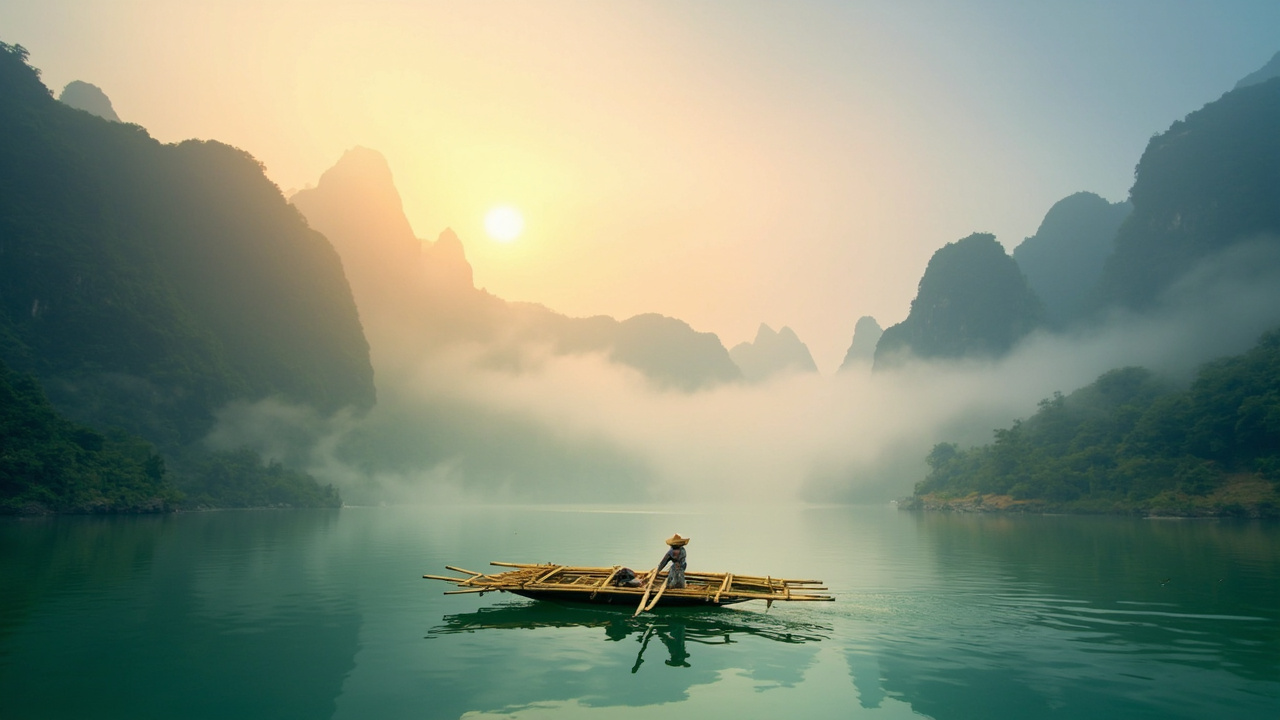
Yangshuo is the landscape that launched a thousand Chinese ink paintings. The Li River winds through limestone karst peaks that change character with every hour of light. Morning mist turns them into ghosts. Sunset sets them on fire. The town itself is touristy, sure, but the countryside around it is where the real magic lives.
- Location: Yangshuo County, Guilin Prefecture, Guangxi Province
- Entry fee: Free for the countryside. Yulong River bamboo rafting costs about $25 (CNY 180) per raft.
- Opening hours: The landscape is always open. Most bike rentals open by 7am.
- How to get there: Fly to Guilin Liangjiang International Airport, then take the high-speed train from Guilin North Station to Yangshuo Station (about 30 minutes, $10/CNY 70). From the station, it’s a 20-minute taxi to town.
- When to visit: April-May for fresh green rice paddies, September-October for golden fields and clear skies. Avoid Chinese national holidays (October 1-7) at all costs.
- Insider tips:
- Rent a bike or e-bike and head toward Yulong River, not the Li River. The crowds are thinner and the scenery is just as good.
- The “Nine Horses” mural hill is overrated. Skip it and walk along the river path instead.
- Bring a polarizing filter for your lens. The water reflections are stunning but glare will ruin them without one.
- Stay in a farmstay outside town, not in the center. You’ll get sunrise over the karsts from your window.
- Learn to say “duo shao qian” (how much?) - you’ll need it for every bike rental and fruit purchase.
- I once met a retired fisherman named Wei who’d been rowing tourists down the Li River for 30 years. He showed me his cormorant birds and laughed when I tried to hold one. “They bite,” he said in English, which was the only English he knew.
2. Zhangjiajie - The Pillars That Inspired Avatar
The first time I saw the sandstone pillars of Zhangjiajie, I actually laughed out loud. They’re so absurd, so impossibly vertical, that they look like a movie set. Then I remembered they were the movie set - James Cameron reportedly used them as inspiration for the floating mountains in Avatar.
The park is massive, and the crowds can be brutal, but there’s a reason people make the pilgrimage. The pillars rise hundreds of meters from the valley floor, often wreathed in mist that makes them look like they’re floating. The Bailong Elevator, a glass elevator built into the cliff face, is both terrifying and spectacular - you rise 326 meters in under two minutes.
- Location: Wulingyuan Scenic Area, Zhangjiajie City, Hunan Province
- Entry fee: $35 (CNY 248) for a 4-day pass. The Bailong Elevator costs an extra $10 (CNY 72).
- Opening hours: 7am-6pm daily, but the park is best entered at 7am sharp before tour groups arrive.
- How to get there: Fly to Zhangjiajie Hehua International Airport (direct flights from Beijing, Shanghai, Xi’an). From the airport, take a taxi to the Wulingyuan entrance (about $15/CNY 100, 40 minutes).
- When to visit: May-June for misty conditions, September-October for clear views. Weekdays are dramatically less crowded than weekends.
- Insider tips:
- Go to the Yuanjiajie area first thing in the morning. The Avatar Hallelujah Mountain viewpoint is packed by 9am.
- The Tianzi Mountain cable car is worth the extra money. The views on the way up are as good as anything at the top.
- Bring a wide-angle lens. The pillars are so tall you’ll struggle to fit them in frame otherwise.
- The glass bridge at Zhangjiajie Grand Canyon is terrifying and expensive ($30/CNY 210). Skip it if you’re afraid of heights.
- Eat the local specialty - a spicy fish hotpot called “san guo” - before you go up the mountain. You’ll need the energy.
- I got hopelessly lost in the park once and ended up at a viewpoint that wasn’t on any map. An elderly local woman was selling tea there. She poured me a cup, refused payment, and pointed at the view. We sat in silence for ten minutes. It was the best photo I took all trip.
3. Pingyao - A Ming Dynasty City Frozen in Time
The cab driver who took me to Pingyao from the train station laughed when I asked if the city walls were original. “Original walls, original buildings, original everything,” he said. “Only the people are new.” He wasn’t wrong.
Pingyao is one of the best-preserved ancient cities in China, with Ming and Qing dynasty architecture that somehow survived the Cultural Revolution and the modernization wave that flattened so many other historic towns. The city walls are intact, the streets are cobblestone, and the courtyard houses have been converted into guesthouses and shops. It’s a bit of a tourist trap in the main street, but the side alleys are where the real atmosphere lives.
- Location: Pingyao County, Shanxi Province, about 2 hours by train from Taiyuan
- Entry fee: Free to enter the city. A combined ticket for all the museums and attractions costs about $20 (CNY 130) and is worth it if you plan to visit more than two.
- Opening hours: The city is always open. Individual museums typically open 8am-6pm.
- How to get there: Take the high-speed train from Taiyuan South Station to Pingyao Ancient City Station (about 30 minutes, $8/CNY 55). From the station, it’s a 15-minute walk or a short taxi ride to the city walls.
- When to visit: Any season works, but spring and autumn are most comfortable. Avoid Chinese New Year and October holidays.
- Insider tips:
- Stay inside the city walls. The guesthouses are converted courtyard homes and the experience is worth the higher price.
- Climb the city walls at sunset. The light on the rooftops is extraordinary and most tourists have left by then.
- The Rishengchang Draft Bank, China’s first bank, is genuinely fascinating. It’s not just a museum - it’s the birthplace of Chinese banking.
- Try “pingyao beef” - it’s a local specialty, sliced thin and served cold with vinegar.
- The night market on Mingqing Street is touristy but fun. Go for the atmosphere, not the food quality.
- I watched a calligrapher in a tiny shop paint characters for tourists. He’d been doing it for 40 years. When I asked if I could take his photo, he posed with his brush raised, then laughed and said something to his wife that made her giggle. I never found out what he said, but the photo is one of my favorites.
4. Beijing Hutongs - The Real China, Between the Skyscrapers
I’ve lived in Beijing for seven years and I still get lost in the hutongs. That’s the point. These narrow alleyways, lined with courtyard homes and tiny shops, are the beating heart of old Beijing. They’re being demolished at an alarming rate, replaced by glass towers and shopping malls, but the ones that remain are worth exploring with a camera.
The best hutongs are in the area between the Drum Tower and the Bell Tower, and around Nanluoguxiang (which is touristy but still charming). Go early in the morning, before the shops open, when the alleyways are quiet and the old men are doing tai chi in the courtyards. That’s when the real Beijing shows up.
- Location: Dongcheng District, Beijing. Focus on the area around Shichahai (the lakes) and Nanluoguxiang.
- Entry fee: Free. The Drum Tower costs about $5 (CNY 30) to climb.
- Opening hours: Always open. Shops typically open 10am-10pm.
- How to get there: Take Subway Line 8 to Shichahai Station, Exit A. Walk south into the hutong area. Or take Line 6 to Nanluoguxiang Station, Exit B.
- When to visit: Early morning (before 9am) for empty streets and soft light. Autumn (October) is the best season.
- Insider tips:
- Rent a bike and wander. You’ll cover more ground and can stop whenever something catches your eye.
- The “hutong tours” that start at Houhai Lake are overpriced. Just walk and get lost.
- Look up. The best details - carved doorways, painted beams, old signs - are often above eye level.
- Learn to say “qing wen” (excuse me) before you take photos of locals. Most will wave you off or pose happily.
- The Drum Tower at sunset, from the street below, is a classic shot for a reason. Get there 30 minutes before sunset.
- I once followed a man carrying a cage of crickets through the hutongs. He was a retired opera singer who kept crickets for their songs. He let me photograph him and his cricket for an hour, then insisted I come to his home for tea. His wife made dumplings. I never got his name, but I think about him every time I see a cricket.
5. Guilin & the Li River - The Iconic View, Done Right
The 20 yuan note. That’s what everyone wants to see. The image of the Li River winding through karst peaks, with a fisherman and his cormorants in the foreground, is so iconic it’s printed on Chinese currency. And it’s real. You can stand in the exact spot and take the exact photo.
But the Li River is more than the postcard view. The river itself is a living thing, changing with the light and the seasons. Misty mornings turn the peaks into silhouettes. Rainy days make everything glow. The rice terraces at Longji, a few hours away, are a whole other world of green and gold.
- Location: Guilin City and Yangshuo County, Guangxi Province
- Entry fee: The river is free to view. Boat cruises from Guilin to Yangshuo cost about $60 (CNY 430) and take 4-5 hours.
- Opening hours: Always open. Boat cruises typically run 8am-2pm.
- How to get there: Fly to Guilin Liangjiang International Airport. From Guilin, take a cruise down the Li River to Yangshuo, or take the high-speed train (30 minutes).
- When to visit: April-October. The river is most dramatic after rain, when the water is high and the mist is thick.
- Insider tips:
- The 20 yuan note viewpoint is at Xingping, a small town between Guilin and Yangshuo. Take the ferry across the river for the best angle.
- Skip the big cruise boats. Take a small bamboo raft from Yangdi to Xingping instead - it’s cheaper, quieter, and you’ll get better photos.
- The Longji Rice Terraces are worth the 2-hour drive from Guilin. Go in May when the terraces are flooded and reflect the sky.
- Bring a tripod. The river is beautiful at dawn and you’ll want the long exposure.
- The local specialty is “beer fish” (beer yu) - a river fish cooked in beer and spices. It’s delicious.
- I watched a cormorant fisherman on the Li River at dusk. He was in his 70s, with a face like carved wood. He didn’t speak English, and I didn’t speak his dialect, but we communicated through gestures and shared cigarettes. He let me photograph him for an hour. When I tried to pay him, he refused, then pointed at my camera and mimed taking a photo of me. He took my picture with my own camera. It’s the worst photo I’ve ever taken, and I treasure it.
6. Xi’an - Where History Has Layers
The first time I saw the Terracotta Warriors, I cried. I’m not ashamed to admit it. Standing in that massive hangar, looking at thousands of life-sized soldiers who’ve been standing guard for 2,200 years, is the most humbling experience I’ve had in China. They’re not just artifacts - they’re an army, frozen in time, waiting for their emperor to wake up.
But Xi’an is more than the warriors. The city walls are the most complete in China, and you can bike around the top of them. The Muslim Quarter is a sensory overload of street food, spices, and calligraphy. And the Big Wild Goose Pagoda, lit up at night, is a photographer’s dream.
- Location: Xi’an City, Shaanxi Province
- Entry fee: Terracotta Warriors: $25 (CNY 180). City walls: $8 (CNY 54). Big Wild Goose Pagoda: $7 (CNY 50).
- Opening hours: Terracotta Warriors: 8:30am-5:30pm (March-November), 8:30am-5pm (December-February). City walls: 8am-10pm.
- How to get there: Fly to Xi’an Xianyang International Airport. From the airport, take the airport shuttle or taxi to the city center (about $15/CNY 100, 1 hour). The Terracotta Warriors are 40 minutes east of the city.
- When to visit: March-May and September-November for comfortable weather. Go to the Terracotta Warriors first thing in the morning to beat the tour groups.
- Insider tips:
- The Terracotta Warriors are in three pits. Pit 1 is the famous one, but Pit 3 is smaller and more intimate.
- Rent a bike and ride the city walls at sunset. The light on the old buildings is beautiful.
- The Muslim Quarter is best visited at night, when the food stalls are in full swing. Try the “rou jia mo” (Chinese hamburger) - it’s a local staple.
- The Shaanxi History Museum is free but requires a reservation. Book at least 3 days in advance.
- Learn to say “la” (spicy) if you want your food mild. Xi’an food is famously spicy and they don’t hold back.
- I met a young Chinese photographer at the Terracotta Warriors who was shooting with the same camera I had. We spent an hour comparing settings and complaining about the crowds. He told me his grandfather had been one of the farmers who discovered the warriors in 1974. “He was digging a well,” he said. “Now he’s a national hero.”
7. Huangshan - The Mountain That Made Chinese Painting
The Yellow Mountains are where Chinese landscape painting was invented. Literally. The mist, the twisted pine trees, the granite peaks - they’re all straight out of a Song dynasty scroll. And unlike most places that disappoint compared to their artistic depictions, Huangshan is actually better in person.
The key to Huangshan is the weather. The famous “sea of clouds” only appears when conditions are right, which means you need to check the forecast and be flexible. I’ve been three times and only seen the clouds once. That one time was worth the other two visits.
- Location: Huangshan City, Anhui Province
- Entry fee: $30 (CNY 190) for the park. Cable cars cost an additional $15 (CNY 100) each way.
- Opening hours: 6am-6pm daily. The park is open year-round, but the cable cars may close in bad weather.
- How to get there: Take the high-speed train to Huangshan North Station (from Shanghai, about 3 hours, $45/CNY 320). From the station, take a bus to the Tangkou entrance (about 1 hour).
- When to visit: April-May and September-October for clear skies. Winter is beautiful but cold and icy.
- Insider tips:
- Stay overnight on the mountain. The sunrise from the summit is worth the expensive (and basic) hotel.
- The “West Sea Grand Canyon” is the most spectacular part of the park. Most tourists skip it because it requires a long walk.
- Bring layers. The temperature at the summit can be 10 degrees colder than at the base.
- The famous “Welcoming Pine” is a bit of a letdown - it’s surrounded by railings and tourists. The less famous pines are better.
- Check the weather forecast before you go. If it’s going to be clear, go. If it’s going to be cloudy, wait.
- I once spent a night in a dormitory on Huangshan with a group of Chinese students who were on a photography assignment. We shared instant noodles and compared photos until 2am. One of them, a girl named Lin, showed me a photo she’d taken of the sea of clouds that looked like it belonged in a museum. She was 19. I felt old.
8. Chengdu & Sichuan - Pandas, Teahouses, and the Buddha
Chengdu is the most laid-back city in China. The people are friendly, the food is incredible, and the pace of life is slower than anywhere else in the country. It’s the perfect place to rest your legs and your camera after the intensity of Beijing or Xi’an.
The main draw for most visitors is the Giant Panda Breeding Research Base, where you can watch pandas eat bamboo, sleep, and occasionally roll around in ways that make you forget they’re bears. But Chengdu is also home to the Leshan Giant Buddha, a 71-meter-tall statue carved into a cliff face, and some of the best teahouses in China.
- Location: Chengdu City, Sichuan Province
- Entry fee: Panda Base: $10 (CNY 55). Leshan Giant Buddha: $12 (CNY 90).
- Opening hours: Panda Base: 7:30am-6pm. Leshan Giant Buddha: 8am-6pm.
- How to get there: Fly to Chengdu Shuangliu International Airport. The Panda Base is 30 minutes north of the city. Leshan is 1.5 hours by high-speed train from Chengdu East Station.
- When to visit: March-June and September-November. The pandas are most active in the morning, so arrive at 7:30am sharp.
- Insider tips:
- Go to the Panda Base at opening time. The pandas are most active in the morning and the crowds are thinner.
- The red panda enclosure is less crowded than the giant panda area and the red pandas are just as cute.
- Visit a teahouse in People’s Park. The “gaiwan” tea is cheap ($3/CNY 20) and you can sit for hours watching the locals.
- The Leshan Giant Buddha is best viewed from the river. Take a boat tour for the full effect.
- Try “mapo tofu” in Chengdu. It’s the original, and it’s spicier than anything you’ll find elsewhere.
- I spent an afternoon at a teahouse in People’s Park, watching a group of elderly men play mahjong. One of them noticed my camera and motioned for me to take his photo. He posed with his winning hand, grinning like a kid. His friends laughed and pointed at him. He won the next round too, and I got a photo of his triumphant face.
9. Yunnan - Tibet’s Backyard, Without the Altitude
Yunnan is the most diverse province in China, both geographically and culturally. The north is Tibetan territory, with snow-capped mountains and monasteries that feel a world away from the rest of China. The south is tropical, with rice terraces and minority villages that look like they haven’t changed in centuries.
Lijiang is the most famous destination, and it’s beautiful, but it’s also a tourist trap. The real magic is in the smaller towns and villages around it. Shangri-La (formerly Zhongdian) is the gateway to Tibetan culture, with a massive monastery that’s worth the altitude sickness. And the Tiger Leaping Gorge is one of the best hikes in China.
- Location: Yunnan Province, focusing on Lijiang, Shangri-La, and the surrounding areas
- Entry fee: Lijiang Old Town: free. Jade Dragon Snow Mountain: $30 (CNY 200). Tiger Leaping Gorge: $10 (CNY 65).
- Opening hours: Varies by site. Most attractions open 8am-6pm.
- How to get there: Fly to Lijiang Sanyi International Airport (direct flights from major Chinese cities). From Lijiang, take a bus to Shangri-La (about 3 hours, $15/CNY 100).
- When to visit: March-May for spring flowers, October-November for clear skies and autumn colors. Avoid the rainy season (June-August).
- Insider tips:
- Skip Lijiang Old Town and stay in Shuhe, a smaller town 20 minutes away. Same architecture, fewer crowds.
- The Tiger Leaping Gorge hike takes 2 days and requires decent fitness. It’s worth every step.
- Shangri-La is at 3,300 meters elevation. Take it easy for the first day and drink lots of water.
- The Songzanlin Monastery in Shangri-La is the largest Tibetan monastery in Yunnan. Go early to catch the monks’ morning prayers.
- Try “yaks meat” (it’s actually yak) and “butter tea” (it’s an acquired taste).
- I got altitude sickness in Shangri-La and spent an afternoon lying in a hotel room, feeling sorry for myself. The hotel owner, a Tibetan woman named Drolma, brought me tea and told me to eat more. “You’re too thin,” she said. “Eat more meat.” She was right. I ate yak meat, felt better, and got the best photos of the trip the next day.
10. Fujian Tulou - Round Houses, Round Lives
The tulou of Fujian Province are the most underrated photographic destination in China. These massive earthen buildings, some of them hundreds of years old, are circular fortresses that house entire clans. They look like something out of a sci-fi movie, which is why they were used in the movie “Mulan” and inspired the architecture of the “Star Wars” set in Tunisia.
The best tulou are in the mountains of southwestern Fujian, around the town of Nanjing. The most famous is the “Four Dishes and One Soup” cluster, which is exactly what it sounds like - four round buildings and one square one, arranged like a meal. It’s spectacular from above, but the real magic is inside, where families still live and dry their laundry on the balconies.
- Location: Nanjing County, Zhangzhou City, Fujian Province
- Entry fee: $15 (CNY 100) for the main tulou clusters.
- Opening hours: 8am-6pm daily.
- How to get there: Take the high-speed train to Nanjing Station (from Xiamen, about 1 hour, $15/CNY 100). From the station, take a taxi or bus to the tulou area (about 30 minutes).
- When to visit: Any season, but avoid the rainy season (June-August) when the mountain roads can be treacherous.
- Insider tips:
- Stay overnight in a tulou. Many have guestrooms, and you’ll get the place to yourself after the day-trippers leave.
- Climb to the top floor of a tulou for the best photos. The residents are used to it and will often wave you up.
- The “Earth Building King” (Zhencheng Lou) is the most impressive. It’s a UNESCO World Heritage site for a reason.
- Try the local tea - the tulou area is famous for its oolong tea, and the residents will happily share it with you.
- The best light is in the late afternoon, when the sun hits the round walls and makes them glow.
- I stayed overnight in a tulou and woke up at 5am to the sound of roosters. An old woman was already up, sweeping the courtyard. She saw me with my camera and motioned for me to follow her. She led me to the top floor, where the morning light was streaming through the circular opening in the roof. She pointed at the light, then at my camera, and nodded. I took the photo. She smiled and went back to sweeping.
FAQ summary
China is currently visa-free for citizens of 38 countries through December 2026, allowing stays up to 30 days. The best time for a photography trip is April-May or September-October, when weather is mild and light is clear. You’ll need WeChat Pay or Alipay set up before you arrive, as China is largely cashless, and a VPN installed on your phone to access Google, Instagram, and other Western services. Budget $2,500-4,000 (CNY 18,000-29,000) for a two-week trip including flights, internal transport, and mid-range hotels.
FAQ
Q: Do I need a visa to visit China as a tourist in 2026? A: Citizens of 38 countries, including the US, UK, Australia, Canada, and most of Europe, can enter China visa-free for up to 30 days through December 2026. Check the latest policy on the Chinese embassy website for your country before booking.
Q: Is it safe to travel in China as a solo photographer? A: Yes. China is one of the safest countries I’ve traveled in. Violent crime against tourists is extremely rare. The main risks are petty theft in crowded tourist areas and getting lost, so keep your gear close and your phone charged.
Q: Do I need to speak Chinese to get around? A: No, but it helps. English is not widely spoken outside major tourist areas. Download a translation app like Google Translate (with the Chinese language pack downloaded offline) or Pleco before you go. Learn a few basic phrases - “ni hao” (hello), “xie xie” (thank you), “duo shao qian” (how much).
Q: How do I pay for things in China? A: China is essentially cashless. You’ll need WeChat Pay or Alipay set up on your phone before you arrive. Both apps allow foreign credit cards to be linked, but you’ll need to set them up while you’re still abroad. Some places accept cash, but many small vendors don’t.
Q: Do I need a VPN for internet access in China? A: Yes. Google, Instagram, Facebook, WhatsApp, and many other Western services are blocked in China. Install a reliable VPN on your phone and laptop before you arrive. ExpressVPN and NordVPN both work well, but test them before you fly.
Q: What’s the best way to get around between cities? A: The high-speed rail network is excellent and affordable. Book tickets on the official 12306 app or through a travel agency like Trip.com. Flights are also good for longer distances, but the trains are more reliable and the stations are easier to navigate.
Q: Is it safe to eat street food in China? A: Generally yes, but use common sense. Eat at stalls that are busy (locals won’t eat at bad places), avoid anything that’s been sitting out for hours, and stick to cooked food. The street food in Xi’an’s Muslim Quarter and Chengdu is some of the best in the world.
The Honest Wrap-up
This list isn’t for everyone. If you want a relaxing beach vacation, go to Thailand. If you want luxury resorts and Instagram-perfect infinity pools, go to Bali. But if you want to see a country that will challenge everything you thought you knew about photography, about history, about scale, then China is waiting.
My final advice to a friend about to book the flight: go early, go often, and go with an open mind. The China you see on the news isn’t the China you’ll find on the ground. The real China is a farmer in Yangshuo who waves at you from his rice paddy, a monk in Shangri-La who shares his tea, a grandmother in a tulou who shows you the light. Bring your camera, but leave your expectations at home. You’ll need the space for what you’ll find instead.
Topics
More guides you may like

Top 10 Bridges in China
China's bridges are engineering marvels spanning mountains, rivers, and seas. Here are 10 of the most spectacular, from ancient stone to modern steel.
8 min read

Top 10 Buddhist Sites in China
From the Leshan Giant Buddha to the Dunhuang Caves, these 10 Buddhist sites represent 2,000 years of China's spiritual heritage.
9 min read

Top 10 Day Trips from Beijing You Shouldn't Miss
Beijing is packed with history, but some of China's best experiences are just a few hours away. Here are 10 day trips that will transform your visit.
9 min read

Top 10 Hidden Gems in China Off the Beaten Path
Beyond the Great Wall and Terracotta Warriors, China has incredible hidden destinations few tourists ever reach. Here are 10 underrated gems worth the detour.
9 min read

Top 10 Markets and Shopping Streets in China
From Shanghai's Bund to Beijing's Silk Street - 10 markets where foreigners can haggle, explore, and bring home authentic Chinese goods.
9 min read

Top 10 Museums in China You Shouldn't Miss
China's museums span 5,000 years of civilization. These 10 - from the Palace Museum to Xi'an's terracotta gallery - are unmissable for culture lovers.
9 min read