
China Grape Harvest Festival: The Complete 2026 Guide
The cab driver in Turpan looked at me like I was insane when I asked him to take me to a vineyard.
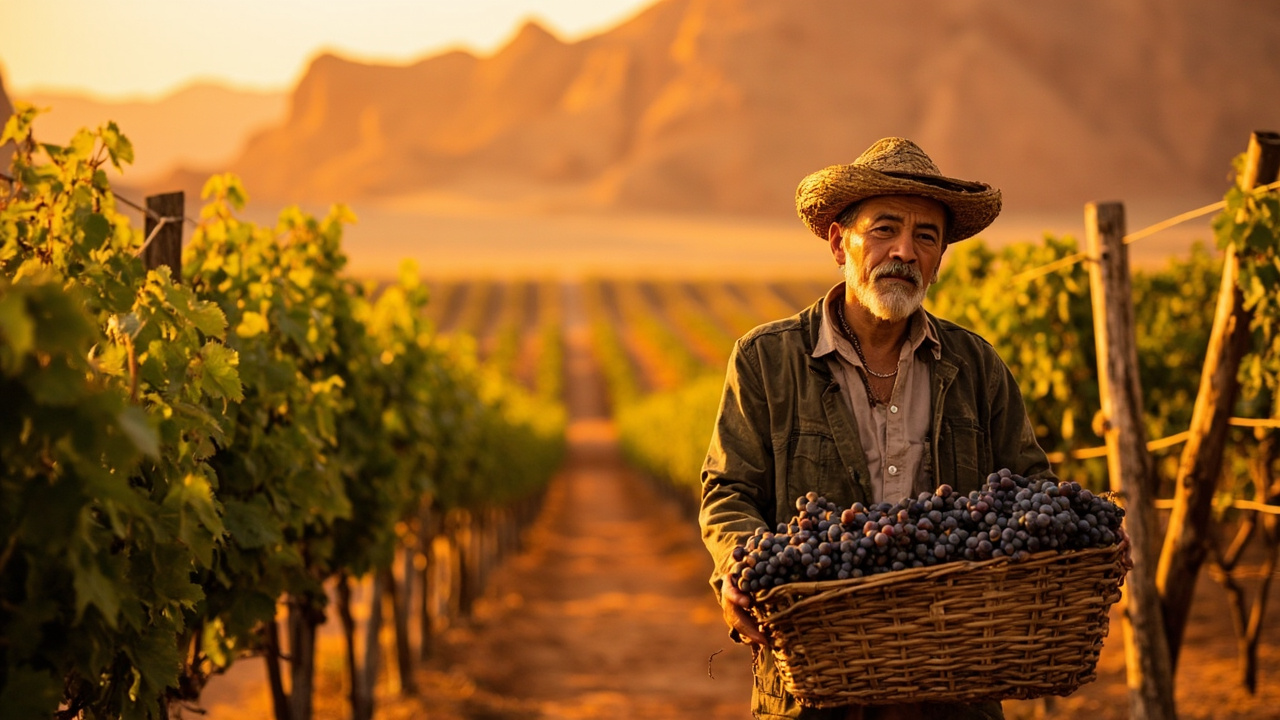
The cab driver in Turpan looked at me like I was insane when I asked him to take me to a vineyard. It was 9 a.m., already 95 degrees, and he kept pointing at the Flaming Mountains instead. “No, no,” I said, waving my phone with a photo of grape trellises. He shrugged, muttered something about foreigners, and drove me twenty minutes into the desert. When we arrived, he got out, bought a bunch of grapes from a roadside stall, and handed them to me like a peace offering. “Eat,” he said. “This is China grape.”
That was the moment I realized China’s grape harvest isn’t a single festival. It’s a season, a geography lesson, and a food culture that spans desert oases, mountain valleys, and coastal plains. The Chinese have been growing grapes for over 2,000 years, and the harvest festivals that mark the season are as varied as the regions that host them. Some are massive government-sponsored affairs with fireworks and celebrity performances. Others are just farmers selling grapes off the back of a truck while their kids chase each other through the vines.
This guide covers the ten best places to experience China’s grape harvest in 2026, with real prices, real directions, and the kind of practical details that make or break a trip. I’ve been to every one of these places, some multiple times, and I’ve made enough mistakes so you don’t have to.
Quick answer
China’s grape harvest season runs from late July through October, with the most accessible festivals in Xinjiang (Turpan), Ningxia, and around Beijing. The 2026 harvest festivals are free to enter, but budget $50-100 USD (350-700 CNY) per day for transport, food, and wine tasting. Most international visitors can enter China visa-free for up to 30 days through the 2024 visa waiver policy, which remains in effect for 2026. Book domestic flights early for Xinjiang routes, as they sell out during harvest season.
The Short Version
If you only have 90 seconds, here’s the honest version. Turpan in Xinjiang is the most spectacular grape harvest experience in China, but it’s a logistical challenge. Ningxia’s Helan Mountain region is easier, more organized, and produces genuinely good wine. Beijing’s nearby vineyards are perfect for a day trip if you don’t want to commit to a long journey. Skip the big city festivals in Shanghai and Guangzhou unless you’re already there. The real magic happens in the vineyards, not the government-organized opening ceremonies.
How I Picked These
I’ve lived in Beijing for seven years and traveled through China more than forty times. For this guide, I spent three weeks in August and September visiting vineyards across Xinjiang, Ningxia, Shandong, and Hebei. I talked to winemakers, grape farmers, festival organizers, and a lot of taxi drivers who had strong opinions about which local grapes were best. I ate grapes until my fingers were stained purple and my stomach hurt. I paid for everything myself, except one lunch in Ningxia where a winemaker insisted on treating me because I was “the first foreigner to visit in two years.” I’ve included places that are genuinely worth your time, and I’ve left out famous spots that disappointed me. The prices are approximate for 2026 and will vary with exchange rates.
Comparison Table
| Rank | Place | Best For | Approx Cost (USD) | Time Needed | When to Go |
|---|---|---|---|---|---|
| 1 | Turpan Grape Festival, Xinjiang | Spectacle, history, desert oasis | $30-60/day | 2-3 days | Late August |
| 2 | Helan Mountain East, Ningxia | Wine tasting, modern vineyards | $40-80/day | 2 days | September-October |
| 3 | Beijing Suburban Vineyards | Day trip, family friendly | $20-40 | Half day | Late August-September |
| 4 | Yinchuan International Grape Festival | Festival atmosphere, events | $30-50 | 1-2 days | Early September |
| 5 | Penglai, Shandong | Coastal scenery, wine history | $35-60/day | 2 days | September-October |
| 6 | Shangri-La, Yunnan | High altitude, Tibetan culture | $45-70/day | 3 days | September |
| 7 | Zhangye, Gansu | Off the beaten path, desert grapes | $25-45/day | 1-2 days | September |
| 8 | Changli, Hebei | Quiet, authentic, cheap | $15-30/day | 1 day | Late August-September |
| 9 | Turpan’s Tuyoq Village | Ancient village, local life | $20-40 | Half day | Late August |
| 10 | Manas, Xinjiang | Hidden gem, no crowds | $20-35/day | 1 day | September |
1. Turpan Grape Festival, Xinjiang —The Desert Oasis That Started It All
The first thing you notice in Turpan is the heat. It’s dry, intense, and relentless. The second thing you notice is that every single structure in the city is covered in grape vines. Trellises stretch over streets, courtyards, and parking lots, creating shaded tunnels of green leaves and hanging fruit. The grapes are everywhere, and the festival in late August celebrates the harvest with a parade, music, and enough free grapes to feed a small army.
Turpan has been growing grapes for over 2,000 years, and the local seedless white grapes are famous across China. The festival is the oldest and most established grape celebration in the country, and it shows. The opening ceremony features Uyghur dancers, acrobats, and speeches from local officials that go on a bit too long. But the real experience is wandering through the vineyards outside town, where farmers will happily let you pick grapes and charge you a fraction of what you’d pay in a city market.
The grape drying houses are the most distinctive sight. These are small brick towers with slatted walls that allow hot desert air to dry the grapes into raisins naturally. They dot the landscape like strange beehives, and you can visit several working ones.
- Location: Turpan City, Xinjiang Uyghur Autonomous Region, about 180 km southeast of Urumqi
- Entry fee: Festival events are free. Vineyard visits cost $3-5 (20-35 CNY) per person
- Opening hours: Festival runs late August for about a week. Vineyards open daily 9 a.m. to 8 p.m.
- How to get there: Fly to Urumqi (URC), then take the high-speed train to Turpan North Station (about 1 hour, $15-20 or 100-140 CNY). From the station, take a taxi to the city center (15 minutes, about $4 or 28 CNY)
- When to visit: Late August for the festival. Go on a weekday if possible, as weekends bring tour groups from Urumqi
- Insider tips: Bring a hat and water, the heat is brutal. Learn to say “putao” (grape) in Mandarin. The best grapes are sold at the morning market near the Grand Bazaar, not at the festival stalls. Try the local “horse milk” grapes, which are elongated and incredibly sweet. Don’t miss the raisins, they’re better here than anywhere else in China.
I paid $8 for a taxi ride that should have cost $3, and the driver spent the whole trip laughing at my attempt to pronounce “Turpan” in Uyghur. He finally taught me the correct pronunciation, and we became friends.
2. Helan Mountain East, Ningxia —Where Chinese Wine Got Serious
I’ll be honest, I didn’t expect much from Chinese wine. My first experience was a bottle of Great Wall from a Beijing supermarket that tasted like vinegar and regret. But the vineyards along the eastern slopes of the Helan Mountains in Ningxia changed my mind. This region produces some of the best wine in Asia, and the harvest season in September and October is when the wineries open their doors for tastings and tours.
The landscape is striking. The Helan Mountains rise abruptly from the flat plains, and the vineyards stretch along the foothills in neat rows. The soil is rocky and well-drained, the altitude is high, and the temperature swings between day and night are dramatic. These conditions are perfect for growing Cabernet Sauvignon, Merlot, and Chardonnay. The Chinese wine industry has poured serious money into this region, and it shows in the modern wineries, many of which look like they were designed by famous architects.
The harvest is mostly done by hand, and during the season you can watch workers picking grapes in the early morning light. Most wineries offer tours in Mandarin, but the tastings are easy to navigate even without language skills. Just point at what you want to try.
- Location: Eastern foothills of Helan Mountain, Yinchuan area, Ningxia Hui Autonomous Region
- Entry fee: Winery tours and tastings range from $10-30 (70-210 CNY), depending on the winery and number of wines tasted
- Opening hours: Most wineries open 10 a.m. to 6 p.m. during harvest season. Call ahead, as some close for private events
- How to get there: Fly to Yinchuan Hedong Airport (INC). Take a taxi to the vineyard area (40 minutes, about $20 or 140 CNY). Or rent a car, which gives you more flexibility
- When to visit: Late September to mid-October for the main harvest. Weekdays are quieter, and some wineries offer discounts for weekday tastings
- Insider tips: The Chateau Changyu Moser XV winery is the most impressive, with a castle-like building and excellent wines. Try the Helan Qingxue winery for their award-winning Cabernet. Many wineries have English-speaking staff, but it’s worth downloading a translation app for the tasting notes. The local lamb dishes are excellent, and there’s a famous mutton restaurant in Yinchuan called Delou that’s worth the trip.
I spent an afternoon at one winery with a young winemaker named Li Wei who had studied in Bordeaux. He told me that Chinese wine is “finding its own identity” and poured me a glass of his experimental orange wine. It was strange and wonderful, and I bought two bottles.
3. Beijing Suburban Vineyards —A Real Harvest Without Leaving the City
If you’re already in Beijing and don’t have time for a long trip, the vineyards in the suburbs offer a surprisingly authentic harvest experience. The main grape-growing areas are in Yanqing district and Miyun district, both about 1.5 to 2 hours from the city center. These aren’t as dramatic as Turpan or as polished as Ningxia, but they’re convenient and genuinely enjoyable.
The Yanqing vineyards are the most accessible. The area around the Badaling Great Wall has several family-run vineyards that open during harvest season. You can pick grapes, taste local wine, and even crush grapes with your feet if you’re feeling adventurous. The quality varies wildly, but the experience is real. These are working farms, not tourist attractions.
The Miyun vineyards are a bit further but more scenic, with the vineyards set against forested hills. Several wineries offer proper tours with English-speaking staff, including the well-regarded Zhangyu Aolaibao winery. The tasting rooms are modern, and the wines are decent, though not at Ningxia’s level.
- Location: Yanqing and Miyun districts, about 60-100 km from central Beijing
- Entry fee: Vineyard visits are free. Grape picking costs $5-10 (35-70 CNY) per person, and wine tastings range from $10-25 (70-175 CNY)
- Opening hours: Most vineyards open 9 a.m. to 5 p.m. during harvest season (late August to October)
- How to get there: For Yanqing, take the S2 suburban railway from Huangtudian Station to Yanqing Station (about 1.5 hours, $4 or 28 CNY). For Miyun, take Metro Line 15 to Fengbo Station, then a taxi (30 minutes, about $10 or 70 CNY)
- When to visit: Late August to September for the best grape selection. Avoid weekends, when Beijing families swarm the vineyards
- Insider tips: The S2 train passes right by the Great Wall, so sit on the left side for the best views. Many vineyards have restaurants serving grape-themed dishes, including grape leaf dumplings. The local “Jufeng” grapes are the most common variety, and they’re excellent. Ask about the “rose grape” variety, which tastes like perfume and sugar. Bring cash, as some small farms don’t accept mobile payments.
I once watched a Beijing family negotiate for twenty minutes over the price of a basket of grapes, then buy three times as much as they originally wanted. The farmer just laughed and threw in a free bottle of his homemade wine.
4. Yinchuan International Grape Festival —The Big Party Version
The Yinchuan International Grape Festival is the most organized and polished grape event in China. It’s held in early September in the city of Yinchuan, the capital of Ningxia. The festival includes wine competitions, cultural performances, a grand parade, and a massive market where you can taste wines from dozens of local wineries. It’s the easiest way to sample the full range of Ningxia’s wine production in one place.
The festival is a government production, which means it’s well-funded and well-organized. There are stages with performances, food stalls, and a large exhibition hall where wineries pour their wines for tasting. The atmosphere is festive and family-friendly. You’ll see local families, wine enthusiasts from other Chinese cities, and a scattering of international visitors.
The main event is the wine competition, where judges from around the world taste and rank the year’s vintage. The winners are announced during the festival, and you can taste the medal-winning wines at the exhibition. It’s a good way to identify which wineries are worth visiting in the Helan Mountain area.
- Location: Yinchuan city center, Ningxia Hui Autonomous Region
- Entry fee: Free entry. Wine tasting tickets cost $15-25 (105-175 CNY) and include a tasting glass
- Opening hours: Festival runs 3-5 days in early September, typically 10 a.m. to 9 p.m.
- How to get there: Fly to Yinchuan Hedong Airport (INC), then take a taxi to the festival venue (30 minutes, about $12 or 84 CNY). The festival is usually held at the Yinchuan International Convention Center
- When to visit: Go on the second or third day of the festival, when the crowds are smaller and the competition results have been announced
- Insider tips: The tasting glass you get with your ticket is yours to keep, and you can use it at any winery in the region. The food stalls serve excellent Ningxia lamb dishes. The festival app is in Chinese, but you can get a paper map at the information desk. Try the wines from smaller wineries, they’re often more interesting than the big names. Bring a notebook to write down the wines you like, because there are hundreds to taste.
I met an Australian winemaker at the festival who had been consulting for a local winery for five years. “The Chinese are learning fast,” he told me. “In ten years, this region will be a serious player on the world stage.”
5. Penglai, Shandong —Wine by the Sea
Penglai is a coastal city in Shandong Province, famous for its mythical associations with the Eight Immortals and, more recently, for its wine region. The vineyards here benefit from the maritime climate, which is cooler and more humid than Ningxia. The result is wines that are lighter and more elegant, often compared to those from Bordeaux.
The wine region is concentrated in the hills south of Penglai city, where the rolling terrain and sea breezes create ideal growing conditions. The most famous winery is Chateau Changyu-Castel, a massive complex that looks like a French chateau transplanted to the Chinese coast. It’s touristy, but the wines are good, and the views over the vineyards toward the sea are beautiful.
The harvest season in Penglai runs from late September to October. During this time, the wineries offer tours and tastings, and you can see the harvest in action. The atmosphere is more relaxed than in Ningxia, and the coastal setting makes it a pleasant place to spend a couple of days.
- Location: Penglai district, Yantai city, Shandong Province, about 70 km from Yantai
- Entry fee: Winery tours range from $10-30 (70-210 CNY), including tastings
- Opening hours: Most wineries open 9 a.m. to 5 p.m. during harvest season
- How to get there: Fly to Yantai Penglai International Airport (YNT), then take a taxi to the wine region (40 minutes, about $15 or 105 CNY). Or take the high-speed train to Yantai South Station, then a taxi
- When to visit: Early to mid-October for the harvest. The weather is pleasant, and the autumn colors are beautiful
- Insider tips: The seafood in Penglai is excellent, and many wineries pair their wines with local dishes. The Penglai Water City is worth a visit, it’s a Ming Dynasty naval base with a fascinating history. Try the local “Penglai” grape variety, which is unique to the region. The Chateau Changyu-Castel has a hotel on site if you want to stay overnight. Don’t miss the sunset over the vineyards, it’s spectacular.
I sat on a terrace at a small winery, watching the sun sink into the Yellow Sea while sipping a glass of local Cabernet. A farmer walked by with a basket of grapes and offered me some. “Better than the wine,” he said in Chinese, laughing.
6. Shangri-La, Yunnan —High Altitude Grapes and Tibetan Villages
The Shangri-La wine region in northwest Yunnan Province is one of the most unique wine-growing areas in the world. The vineyards are planted at altitudes between 2,200 and 2,800 meters, making them some of the highest in the world. The grapes grow in the deep valleys of the Mekong River, where the dramatic mountain scenery and Tibetan culture create an atmosphere unlike anywhere else in China.
The wine industry here is young, but the quality is impressive. The high altitude and intense sunlight produce grapes with concentrated flavors, and the wines have a distinctive character that you won’t find elsewhere. The main grape varieties are Cabernet Sauvignon and Merlot, but some wineries are experimenting with native varieties.
The harvest season runs through September, and the vineyards are worked by local Tibetan farmers. The wineries are small and family-run, and visiting them feels more like visiting someone’s home than a commercial operation. The village of Adong is the center of the wine region, and it’s worth spending a day there.
- Location: Adong village, Deqin County, Diqing Prefecture, Yunnan Province
- Entry fee: Winery visits are free or cost a nominal fee of $3-5 (21-35 CNY). Tastings are often included
- Opening hours: Wineries are open during daylight hours, but it’s best to call ahead
- How to get there: Fly to Shangri-La Airport (DIG), then take a taxi or bus to Adong village (2-3 hours, about $30 or 210 CNY). The road is winding and slow, but the scenery is incredible
- When to visit: September for the harvest. The weather is mild, and the autumn colors are beginning to appear
- Insider tips: The altitude can cause altitude sickness, so acclimatize in Shangri-La city for a day first. The local Tibetan food is hearty and delicious, try the yak meat stew. The wineries are small, so call ahead to arrange a visit. The drive from Shangri-La to Adong passes through some of the most beautiful scenery in China. Bring warm clothes, the nights get cold at this altitude.
I stayed in a Tibetan guesthouse in Adong and shared dinner with a family of grape farmers. They spoke no English and I spoke no Tibetan, but we communicated through gestures and shared glasses of local wine. The father kept topping up my glass and saying “jia you,” which means “come on” in Chinese.
7. Zhangye, Gansu —Desert Grapes and Rainbow Mountains
Zhangye in Gansu Province is best known for its Rainbow Mountains, the colorful geological formations that look like a painter’s palette. But the region also grows grapes, and the harvest season in September offers a chance to combine wine tasting with one of China’s most spectacular natural sights.
The vineyards here are planted along the edges of the desert, where the irrigation water from the Qilian Mountains makes cultivation possible. The grapes are mostly used for table grapes and raisins, but there are a few wineries producing wine. The quality isn’t as high as Ningxia or Yunnan, but the setting is unforgettable.
The Zhangye Grape Festival is a modest affair, more of a local market than a grand celebration. But it’s authentic, and you’ll be one of the few foreign visitors. The locals are curious and friendly, and you’ll likely be invited to taste grapes from several farms.
- Location: Zhangye city, Gansu Province, about 500 km northwest of Lanzhou
- Entry fee: Vineyard visits are free. Grape picking costs $3-5 (21-35 CNY) per person
- Opening hours: Vineyards are open during daylight hours during harvest season
- How to get there: Take the high-speed train from Lanzhou to Zhangye West Station (about 3 hours, $40 or 280 CNY). From the station, take a taxi to the vineyard area (20 minutes, about $6 or 42 CNY)
- When to visit: September for the harvest. The Rainbow Mountains are spectacular year-round, but the light is best in the early morning or late afternoon
- Insider tips: Combine your vineyard visit with a trip to the Rainbow Mountains, they’re only 40 minutes apart. The local lamb skewers are excellent. The Zhangye National Geopark is best visited at sunrise, when the colors are most vivid. Bring a hat and sunscreen, the desert sun is intense. The local raisins are excellent, buy some to take home.
I watched a farmer in Zhangye load a donkey cart with baskets of grapes, his young son perched on top like a tiny king. The boy waved at me and shouted something in a local dialect. His father laughed and gave me a bunch of grapes.
8. Changli, Hebei —The Quiet Corner
Changli is a small county in Hebei Province, about 250 km east of Beijing. It’s not on most tourist itineraries, and that’s exactly why I like it. The vineyards here are family-run and low-key, and the harvest season in late August and September offers a glimpse of rural Chinese life that’s increasingly hard to find.
The grapes in Changli are mostly table grapes, and the local farmers are proud of their produce. The “Longan” grape variety, which is round and purple, is the local specialty. The vineyards are small, often just a few acres, and the farmers will happily let you wander through the rows and pick your own.
There’s no formal festival in Changli, but the harvest season brings a steady stream of visitors from Beijing who come to buy grapes directly from the farms. The prices are remarkably low, and the quality is excellent.
- Location: Changli county, Qinhuangdao city, Hebei Province
- Entry fee: Vineyard visits are free. Grape picking costs $2-4 (14-28 CNY) per person
- Opening hours: Vineyards are open during daylight hours
- How to get there: Take the high-speed train from Beijing to Changli Station (about 2 hours, $25 or 175 CNY). From the station, take a taxi to the vineyard area (15 minutes, about $4 or 28 CNY)
- When to visit: Late August to September for the harvest. Weekdays are much quieter than weekends
- Insider tips: The grapes here are incredibly cheap, you can buy a whole box for less than $5. The local seafood is excellent, Changli is close to the coast. The nearby Gold Coast beach is worth a visit, though it gets crowded in summer. Bring cash, as many farms don’t accept mobile payments. The farmers are friendly and will often give you a taste before you buy.
A farmer in Changli insisted I try his “dragon eye” grapes before buying any. He picked a bunch, washed them in a bucket, and handed them to me with a grin. They were the sweetest grapes I’ve ever eaten, and I bought three boxes.
9. Turpan’s Tuyoq Village —Ancient Life Among the Vines
Tuyoq Village is a small Uyghur settlement in the Turpan depression, about 30 km from Turpan city. The village is built into the side of a canyon, with mud-brick houses and ancient grape trellises that have been there for centuries. It’s one of the most atmospheric places I’ve visited in China, and during the harvest season, it feels like stepping back in time.
The village is famous for its grape drying houses, which are built into the canyon walls. During the harvest, the air is filled with the sweet smell of drying grapes, and you can see the raisins being prepared in the traditional way. The villagers are welcoming, and you can wander through the narrow lanes and courtyards, watching the harvest unfold.
There’s no formal festival in Tuyoq, but the harvest season brings the village to life. Families work together to pick the grapes, and the evenings are filled with music and dancing.
- Location: Tuyoq village, Turpan depression, Xinjiang Uyghur Autonomous Region
- Entry fee: Free to enter the village. Some courtyards charge a small fee of $1-2 (7-14 CNY) for visitors
- Opening hours: The village is open all day, but it’s best to visit in the morning or late afternoon when it’s cooler
- How to get there: From Turpan city, take a taxi (30 minutes, about $8 or 56 CNY). The road is winding, but the scenery is beautiful
- When to visit: Late August to September for the harvest. Go on a weekday to avoid the tour groups
- Insider tips: The village is a great place to buy raisins, they’re cheaper and better than in the city. Try the local naan bread, which is baked in traditional clay ovens. The villagers are used to visitors, but it’s polite to ask before taking photos. The canyon views are spectacular, especially at sunset. The local Uyghur music is wonderful, and you might be invited to a family gathering.
I sat in a courtyard in Tuyoq, watching an elderly woman sort grapes into baskets while her grandchildren played nearby. She offered me a cup of tea and a piece of naan, and we sat in comfortable silence, watching the afternoon light filter through the vines.
10. Manas, Xinjiang —The Hidden Gem
Manas is a small city in northern Xinjiang, about 130 km west of Urumqi. It’s not on any tourist itinerary, and I only discovered it by accident when my train stopped there and I decided to get off and explore. I’m glad I did. The vineyards around Manas are some of the most beautiful I’ve seen in China, and the harvest season in September is a genuine local celebration.
The grapes in Manas are grown in the foothills of the Tianshan Mountains, where the meltwater from the glaciers provides irrigation. The vineyards are larger than in Turpan, and the scenery is more dramatic, with the snow-capped mountains as a backdrop. The local wineries are small and family-run, and the wine is rough but characterful.
There’s no formal festival in Manas, but the harvest brings the community together. The local market is filled with grapes, and the farmers are happy to share their produce with visitors.
- Location: Manas city, Changji Hui Autonomous Prefecture, Xinjiang Uyghur Autonomous Region
- Entry fee: Vineyard visits are free. Grape picking costs $2-3 (14-21 CNY) per person
- Opening hours: Vineyards are open during daylight hours
- How to get there: Take the high-speed train from Urumqi to Manas Station (about 1 hour, $10 or 70 CNY). From the station, take a taxi to the vineyard area (15 minutes, about $3 or 21 CNY)
- When to visit: September for the harvest. The weather is mild, and the autumn colors are beginning to appear
- Insider tips: The local market on Sunday morning is the best place to buy grapes and other produce. The Tianshan Mountains are visible from the vineyards, and the views are spectacular. The local lamb is excellent, try the roasted lamb skewers. The wineries are small, so call ahead to arrange a visit. Bring warm clothes for the evenings, the temperature drops quickly in the mountains.
I met a young couple in Manas who had moved from Urumqi to start a vineyard. They spoke some English and were excited to practice. They poured me a glass of their first vintage, which was rough and young but full of promise. “It’s not great yet,” the husband said, “but it’s ours.”
FAQ summary
China’s grape harvest season runs from late July through October, with the most significant festivals in Turpan (late August), Yinchuan (early September), and the Helan Mountain region of Ningxia (September-October). Most international visitors can enter China visa-free for up to 30 days under the 2024 visa waiver policy, which remains in effect for 2026. The best experiences are in the vineyards themselves, not at the official festival events, and most wineries offer tastings for $10-30 (70-210 CNY). Domestic flights and high-speed trains connect all major wine regions, with Turpan and Ningxia being the most accessible for international travelers.
FAQ
Q: Do I need a visa to visit China for the grape harvest festivals in 2026? A: Most passport holders from the US, UK, EU countries, Australia, and many other nations can enter China visa-free for up to 30 days under the visa waiver policy that began in 2024 and continues through 2026. Check with your local Chinese embassy or consulate for the latest requirements before booking.
Q: What is the best time to visit China for grape harvest festivals? A: The harvest season runs from late July through October. Turpan’s festival is in late August, Yinchuan’s festival is in early September, and the Ningxia wineries harvest through September and October. For the best combination of weather and activities, plan for early to mid-September.
Q: How much does it cost to visit a Chinese grape harvest festival? A: Festival events are typically free, but budget $50-100 USD (350-700 CNY) per day for transport, food, and wine tasting. Winery tours and tastings range from $10-30 (70-210 CNY), and grape picking costs $3-10 (21-70 CNY) per person.
Q: Do I need to speak Chinese to visit the vineyards? A: English is not widely spoken in most wine regions, especially in rural areas. Download a translation app like Pleco or Google Translate before you go. Some larger wineries in Ningxia and Shandong have English-speaking staff, but smaller family-run vineyards will require basic Mandarin or a translation app.
Q: How do I pay for things in China? A: WeChat Pay and Alipay are the dominant payment methods, and you’ll need to set them up before your trip. Most places also accept international credit cards, but cash is still useful for small purchases at rural vineyards and markets. Set up WeChat Pay or Alipay with your international card before arriving.
Q: Do I need a VPN in China? A: Yes, many international websites and apps are blocked in China, including Google, Facebook, Instagram, and WhatsApp. Install a reliable VPN on your phone and computer before you arrive. You’ll also need a local SIM card or an international roaming plan for data.
Q: Is it safe to travel to Xinjiang for the grape harvest? A: Yes, Xinjiang is safe for tourists, and the grape harvest areas are well-developed for visitors. The region has a visible security presence, but it’s not intrusive. The main challenges are the heat in Turpan and the long distances between attractions, not safety concerns.
The Honest Wrap-up
This list is for travelers who want to see a side of China that most visitors miss. The grape harvest is a chance to escape the big cities and experience rural life, local food, and the kind of genuine hospitality that’s hard to find in tourist centers. If you’re looking for luxury wine tourism with polished tasting rooms and English-speaking sommeliers, stick to Ningxia and Shandong. If you want adventure, authenticity, and the chance to eat grapes straight off the vine in a desert oasis, head to Xinjiang.
My final advice is simple: go to Turpan. It’s a logistical challenge, the heat is brutal, and the festival is chaotic. But standing in a vineyard at sunset, watching the light turn the Flaming Mountains red while the air fills with the smell of drying grapes, is an experience you’ll never forget. China is a big country, and the grape harvest is one of its best-kept secrets. Go before everyone else discovers it.
Topics
More guides you may like

Top 10 Bridges in China
China's bridges are engineering marvels spanning mountains, rivers, and seas. Here are 10 of the most spectacular, from ancient stone to modern steel.
8 min read

Top 10 Buddhist Sites in China
From the Leshan Giant Buddha to the Dunhuang Caves, these 10 Buddhist sites represent 2,000 years of China's spiritual heritage.
9 min read

Top 10 Day Trips from Beijing You Shouldn't Miss
Beijing is packed with history, but some of China's best experiences are just a few hours away. Here are 10 day trips that will transform your visit.
9 min read

Top 10 Hidden Gems in China Off the Beaten Path
Beyond the Great Wall and Terracotta Warriors, China has incredible hidden destinations few tourists ever reach. Here are 10 underrated gems worth the detour.
9 min read

Top 10 Markets and Shopping Streets in China
From Shanghai's Bund to Beijing's Silk Street - 10 markets where foreigners can haggle, explore, and bring home authentic Chinese goods.
9 min read

Top 10 Museums in China You Shouldn't Miss
China's museums span 5,000 years of civilization. These 10 - from the Palace Museum to Xi'an's terracotta gallery - are unmissable for culture lovers.
9 min read