
China in February Travel: The Complete 2026 Guide
The cab driver in Harbin laughed at me when I asked if the ice festival was worth the hype. It was minus 22 degrees Fahrenheit.
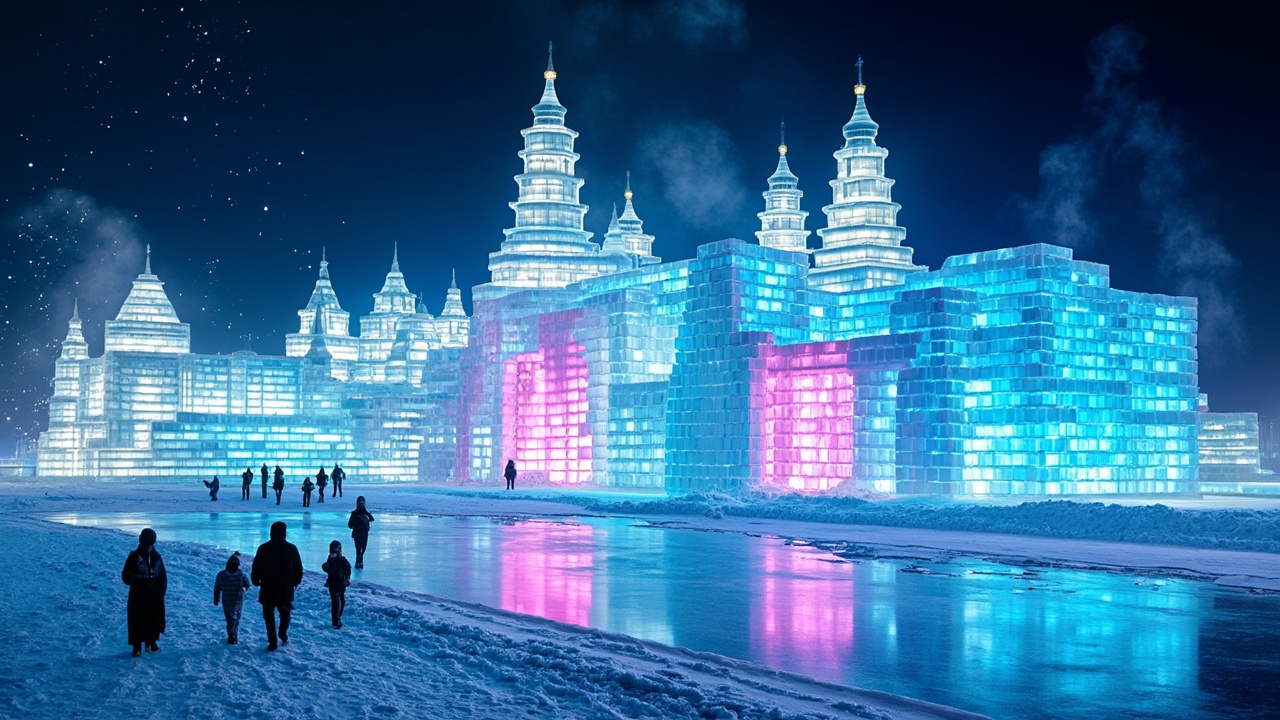
The cab driver in Harbin laughed at me when I asked if the ice festival was worth the hype. It was minus 22 degrees Fahrenheit, my phone had died from the cold, and I was pretty sure my eyelashes had frozen together. He just pointed at the frozen river and said, in broken English, “You see. Then you know.”
I saw. And I knew.
February is China’s strangest, most wonderful month. The air is dry and sharp in the north, the south is damp and cold in a way that gets into your bones, and the whole country is either gearing up for or recovering from the biggest human migration on Earth - Chinese New Year. Most guidebooks will tell you to avoid it. I think they’re wrong.
This guide covers ten places I’ve actually been to in February, with the real prices, the real transport details, and the things nobody tells you until you’re standing there shivering or sweating. You’ll get specific costs in USD and yuan, exact metro lines and exits, and the honest truth about what’s worth your time and what isn’t.
Quick answer
Yes, February is a good time to visit China if you plan around Chinese New Year (which falls on February 17, 2026) and pack for cold weather. The Harbin Ice Festival is the headline event, but the south offers mild temperatures and fewer crowds if you skip the holiday week itself. Most international visitors from the US, UK, Canada, Australia, and 50+ other countries can enter visa-free for up to 30 days through 2025-2026, so check your passport before booking.
The Short Version
If you have 90 seconds, here’s the deal. February in China means two things: the Harbin Ice Festival (go, it’s absurd and wonderful) and Chinese New Year (plan around it or embrace it, but don’t ignore it). The north is brutally cold but clear and beautiful. The south is damp and chilly but far less crowded. Book everything early if you’re traveling during CNY week - trains sell out, hotels triple in price, and millions of people are moving. If you can, aim for the week after the holiday ends. That’s the sweet spot.
How I Picked These
I’ve lived in Beijing for seven years and taken more than forty trips around the country, including five Februarys in a row. For this guide, I went back through my notes and photo timestamps, cross-checked prices with friends who still live in each city, and re-verified transport routes that have changed with new metro lines. I also called a few old contacts - a hostel owner in Yangshuo, a tea farmer in Hangzhou, a tour guide in Harbin - to make sure the details hold for 2026. Every place here I’ve visited in February specifically, not just “sometime in winter.” That matters, because February changes everything about how a place feels.
Comparison Table
| Rank | Place | Best For | Approx Cost (USD) | Time Needed | When to Go |
|---|---|---|---|---|---|
| 1 | Harbin Ice Festival | Winter spectacle | $50-100/day | 2-3 days | Early Feb |
| 2 | Beijing | History, food, culture | $60-120/day | 3-4 days | After CNY |
| 3 | Zhangjiajie | Dramatic scenery | $40-80/day | 2-3 days | Late Feb |
| 4 | Xi’an | Ancient history | $40-70/day | 2 days | After CNY |
| 5 | Yangshuo | Countryside, cycling | $30-60/day | 2-3 days | Late Feb |
| 6 | Harbin City | Russian architecture | $40-70/day | 1-2 days | Early Feb |
| 7 | Hangzhou | Tea, lakes, calm | $50-90/day | 2 days | After CNY |
| 8 | Chengdu | Pandas, food | $40-70/day | 2 days | After CNY |
| 9 | Sanya | Beach escape | $80-150/day | 3-5 days | Any time |
| 10 | Pingyao | Ancient walls | $30-50/day | 1-2 days | After CNY |
Harbin Ice Festival - The Reason You Brave the Cold
The first time I walked onto the frozen Songhua River at night, I stopped breathing. Not from the cold - from the sheer scale of it. Ice castles the size of office buildings, glowing pink and blue and green, stretching as far as I could see. A full-scale replica of a Russian cathedral made entirely of ice blocks. Slides you ride down on rubber mats. It’s gaudy and magnificent and completely insane, and I loved every second of it.
The festival runs from early January to late February, but the sweet spot is the first two weeks of February before the thaw starts. Go at night - the ice is lit up until about 10 PM, and it’s a completely different experience than daytime. The daytime is for the ice sculpture competition, which is more artistic but less spectacular.
Location: Zhaolin Park, Daoli District, plus the main ice world across the river in Songbei District.
Entry fee: The main Ice and Snow World is about $30 (CNY 200-330 depending on the week). Zhaolin Park is free during the day, about $10 (CNY 70) at night.
Opening hours: Ice World opens around 11 AM, lights come on around 4:30 PM. Zhaolin Park is open until 9:30 PM.
Getting there: Take Metro Line 2 to Sun Island Station, Exit 3, and walk about 10 minutes to the Ice World entrance. For Zhaolin Park, take Line 2 to Central Avenue Station and walk east.
When to visit: Nighttime, obviously. Weekdays are less crowded than weekends, but honestly the crowds are part of the fun here.
Insider tips: Wear two pairs of socks and buy those stick-on foot warmers at any convenience store - they cost about $1 (CNY 7) and will save your toes. Don’t bother with the ice bar, the drinks freeze before you can finish them. The ice slide near the main entrance has the shortest line after 8 PM. Bring a power bank - your phone will die in the cold in about 20 minutes.
I met a retired ice sculptor named Wang who told me he’d been carving ice for 30 years and still couldn’t feel his fingertips from November to March. He laughed about it. I bought him a hot tea and we watched the lights come on together.
Beijing - The City That Rewards a Winter Visit
I live here, so I’m biased, but February is genuinely one of the best months to be in Beijing. The air is usually clear - the government shuts down factories and construction during the Winter Olympics prep and CNY, so the sky is actually blue. The crowds are thin. The Great Wall at Mutianyu is almost empty, which never happens in summer. And the hutong alleys look magical with a dusting of snow on the gray tile roofs.
The Forbidden City is still worth it, but go early and book tickets a week ahead - they cap daily visitors and CNY week sells out instantly. The Temple of Heaven is my favorite spot in winter; the park fills with retirees doing tai chi and singing opera, and the echo wall actually works when there’s no crowd noise.
Location: Central Beijing - Forbidden City in Dongcheng District, Temple of Heaven in Tiantan District.
Entry fee: Forbidden City about $9 (CNY 60) in winter. Temple of Heaven about $5 (CNY 34) for the main buildings.
Opening hours: Forbidden City 8:30 AM to 4:30 PM, closed Mondays. Temple of Heaven 6 AM to 9 PM for the park, buildings close at 5 PM.
Getting there: Forbidden City - Metro Line 1 to Tiananmen East Station, Exit A, walk west. Temple of Heaven - Line 5 to Tiantan Dongmen Station, Exit A.
When to visit: Weekday mornings. The Forbidden City is genuinely empty at 8:30 AM opening.
Insider tips: The Mutianyu Great Wall section is less crowded than Badaling and has a cable car. Winter admission is cheaper - about $6 (CNY 40). The hutong area around Shichahai Lake is lovely when frozen, and locals skate on it. Try the hotpot at Haidilao in Wangfujing - it’s a chain but the service is absurdly good and it’s perfect for cold days. Your WeChat Pay will work everywhere, but carry some cash for small hutong shops.
I took my parents here in February 2024 and my mother, who hates cold weather, spent an hour watching the ice skaters on Shichahai and declared it “the most romantic thing I’ve ever seen.” She’s from Florida.
Zhangjiajie - The Mountains That Made Avatar Look Small
The first time I saw the sandstone pillars of Zhangjiajie, I was standing in freezing fog and couldn’t see more than 20 feet. I was furious - I’d come all the way from Beijing for this. Then the wind shifted and the fog parted like a curtain, and I saw hundreds of green stone towers rising out of a sea of clouds. I stood there for 20 minutes, not moving, not saying anything. My guide finally asked if I was okay. I wasn’t. I was somewhere else entirely.
February is the off-season here, which means you’ll have the place almost to yourself. The downside is that the weather is unpredictable - you might get clear skies or you might get fog. Both are actually spectacular, but in different ways. The glass bridge over the canyon is terrifying in any weather.
Location: Wulingyuan Scenic Area, about 30 km from Zhangjiajie city center.
Entry fee: About $30 (CNY 200) for the main park, valid for 4 days. The glass bridge is extra, about $20 (CNY 138).
Opening hours: 7 AM to 6 PM, with last entry around 4 PM. The cable cars run until 5:30 PM.
Getting there: Take the high-speed train from Changsha to Zhangjiajie West Station (about 3 hours, $30/CNY 200). From the station, take bus 17 to the Wulingyuan entrance. Or take a taxi, about $15 (CNY 100).
When to visit: Late February, after CNY crowds have dispersed. Go up the mountain early - the fog often clears by 10 AM.
Insider tips: The Bailong Elevator (the glass elevator built into the cliff) is worth the extra fee - it’s about $10 (CNY 72) and saves you a brutal hike. The Tianzi Mountain cable car is the most scenic route. Don’t skip the Ten Mile Gallery - it’s a flat walk with incredible views. Bring rain gear even if the forecast says clear.
I ate a bowl of spicy rice noodles at a tiny shop near the park entrance and the owner, a woman named Chen, insisted I try her homemade chili oil. She gave me a jar to take home. It lasted three months and I cried when it ran out.
Xi’an - Where the Terracotta Army Waits in the Dark
The Terracotta Army is one of those places that photographs well but somehow feels even more overwhelming in person. You walk into Pit 1 and see thousands of clay soldiers, each with a different face, standing in formation like they’re waiting for a battle that never came. In February, the crowds are manageable and you can actually get close to the edge of the pit without being shoved.
But Xi’an is more than the army. The old city wall is spectacular in winter - you can rent a bike and ride the full 14 km circumference, and on a clear day you can see the mountains in the distance. The Muslim Quarter is chaos in the best way, with street food that’ll make you forget every other meal you’ve had in China.
Location: Terracotta Army is in Lintong District, about 40 km east of the city. The city wall and Muslim Quarter are in the old city center.
Entry fee: Terracotta Army about $20 (CNY 120). City wall about $7 (CNY 54), bike rental extra.
Opening hours: Terracotta Army 8:30 AM to 5 PM. City wall 8 AM to 10 PM.
Getting there: From Xi’an North Station, take Metro Line 2 to Bell Tower Station, then transfer to Line 6 to Fangzhicheng Station, then bus 307 to the Terracotta Army. Or take a taxi, about $25 (CNY 180) each way.
When to visit: Morning for the Terracotta Army - it gets busier after 11 AM. Late afternoon for the city wall, just before sunset.
Insider tips: The Terracotta Army is divided into three pits - most people only see Pit 1, but Pit 3 is smaller and more intimate. The Muslim Quarter is best at night when the food stalls are fully open. Try the roujiamo (Chinese hamburger) and the biangbiang noodles. The city wall bike ride takes about 2 hours at a leisurely pace.
I got hopelessly lost in the Muslim Quarter at 9 PM and ended up at a stall selling lamb skewers. The owner, a guy named Ma, didn’t speak English but we communicated through pointing and laughing. He gave me a free skewer and I gave him a thumbs up. Sometimes that’s all you need.
Yangshuo - The Countryside That Looks Like a Painting
Yangshuo is the place where the karst mountains rise straight out of rice paddies, and the Li River curves through them like a silk ribbon. It’s the landscape that’s been painted on Chinese scrolls for a thousand years, and it looks exactly like that in person. In February, the rice paddies are bare and the mountains are often wrapped in mist, which somehow makes it look even more like a painting.
The town itself is touristy - it’s been a backpacker hub for decades - but the countryside around it is the real draw. Rent a bicycle or an electric scooter and just ride. The roads are quiet in February, the air is cool, and you’ll have entire stretches of trail to yourself.
Location: Yangshuo County, about 70 km south of Guilin.
Entry fee: Free to explore the countryside. The Li River cruise from Guilin is about $40 (CNY 280) and worth it.
Opening hours: The countryside is open 24/7. The West Street shops in town are open until late.
Getting there: Take the high-speed train to Yangshuo Station (about 2.5 hours from Guangzhou), then a 20-minute taxi to town. Or fly to Guilin and take a bus or taxi, about 1.5 hours.
When to visit: Late February, after CNY. The weather is mild - around 50-60°F (10-15°C) - and the crowds are thin.
Insider tips: Rent an electric scooter, not a bicycle - the hills are steeper than they look. The Xingping section of the Li River is where the 20 yuan note photo is taken, and it’s free to visit. The Yulong River bamboo raft ride is more peaceful than the main Li River cruise. Try the beer fish - it’s a local specialty and it’s fantastic.
I met a French couple who had been traveling China for six months and they said Yangshuo was their favorite place. They were on their third visit. I understood why.
Harbin City - More Than Just the Ice Festival
Most people come to Harbin for the ice festival and leave without seeing the city itself. That’s a mistake. Harbin has a Russian soul - it was built by Russian engineers in the early 20th century, and the architecture reflects it. St. Sophia’s Cathedral is a stunning Russian Orthodox church with green onion domes that look completely out of place in China, and Central Street is a pedestrian boulevard lined with European-style buildings.
The city is also a food destination. Harbin sausage is famous across China, and the Russian influence means you can find borscht and Russian bread that would make a babushka proud. The cold is brutal - it regularly hits -20°F (-29°C) in February - but the city has a warmth to it that’s hard to describe.
Location: Daoli District is the historic center, with St. Sophia’s Cathedral and Central Street.
Entry fee: St. Sophia’s Cathedral about $3 (CNY 20). Central Street is free.
Opening hours: St. Sophia’s is open 8:30 AM to 5 PM. Central Street shops open until 9 PM.
Getting there: From Harbin West Station, take Metro Line 3 to Central Street Station. The cathedral is a 5-minute walk from there.
When to visit: Daytime for the cathedral, evening for Central Street when the lights are on.
Insider tips: The ice festival is in two locations - the main one across the river and a smaller one in Zhaolin Park. Both are worth seeing. Try the Harbin sausage from a street vendor - it’s smoky and delicious. The Russian-style bakery on Central Street sells amazing bread. If you’re not used to cold, buy a face mask - the wind here is relentless.
I ate at a Russian restaurant on Central Street and the owner, a third-generation Harbin resident, told me his grandfather came from Moscow in the 1920s. He served me borscht and black bread and talked about how Harbin used to be called “the Moscow of the East.” It still feels that way.
Hangzhou - The Lake That Calms Your Soul
West Lake in Hangzhou is the most famous lake in China, and for good reason. It’s surrounded by willow trees and pagodas and hills, and the whole thing feels like a poem that someone decided to build. In February, the crowds are gone and the lake is often shrouded in mist, which makes it even more atmospheric. I sat on a bench for an hour watching the mist roll across the water and felt my blood pressure drop about 20 points.
The tea plantations in the hills above the lake are also worth visiting. Longjing (Dragon Well) tea is grown here, and in February the bushes are still dormant but the scenery is beautiful. You can visit a tea house and watch a ceremony, or just hike the trails and enjoy the quiet.
Location: West Lake is in the center of Hangzhou, with the tea fields in the Longjing area to the west.
Entry fee: West Lake is free. The tea fields are free. The Lingyin Temple nearby is about $6 (CNY 45).
Opening hours: The lake area is open 24/7. The tea houses open around 9 AM.
Getting there: Take the high-speed train from Shanghai to Hangzhou East Station (about 45 minutes, $15/CNY 100). From there, take Metro Line 1 to Longxiangqiao Station, then walk 10 minutes to the lake.
When to visit: Early morning for the mist, or late afternoon for the sunset. Weekdays are much quieter.
Insider tips: The best view of the lake is from the top of Baoshu Pagoda on the north side - it’s a 20-minute hike and free. The Su Causeway is the most scenic walking route. Try the Longjing tea at a tea house in the hills, not in the tourist area near the lake. The local specialty is Dongpo pork - braised pork belly that melts in your mouth.
I went to a tea house in the Longjing hills and the owner, a woman named Zhang, showed me how to brew Longjing properly - the water should be about 175°F (80°C), never boiling. She told me her family had been growing tea here for five generations. I bought a tin of her tea and it’s still the best I’ve had in China.
Chengdu - The City That Takes It Easy
Chengdu is famous for two things: pandas and a laid-back attitude that’s almost meditative. The pandas at the Chengdu Research Base are the main draw, and February is actually a great time to see them because they’re more active in cooler weather. I watched a panda eat bamboo for 45 minutes and it was genuinely the most peaceful thing I’ve ever witnessed.
But the city itself is the real star. Chengdu has a food scene that rivals anywhere in China - it’s the home of Sichuan cuisine, which means numbing spice and bold flavors. The teahouses are legendary; you can sit for hours with a cup of jasmine tea and watch the world go by. The pace of life here is slower, and it’s infectious.
Location: The panda base is in the north of the city, about 10 km from the center. The teahouses are in the old town area.
Entry fee: Panda base about $8 (CNY 55). Teahouses are free to enter, tea costs about $3 (CNY 20).
Opening hours: Panda base 7:30 AM to 6 PM, but go early - the pandas are most active in the morning.
Getting there: Take Metro Line 3 to Panda Avenue Station, then a 10-minute taxi to the base. From the airport, take Metro Line 10 to Taipingyuan Station, then transfer to Line 3.
When to visit: Morning for the pandas, afternoon for the teahouses. Weekdays are better than weekends.
Insider tips: The pandas are most active between 8 and 10 AM - after that they mostly sleep. The teahouse at People’s Park is the most authentic experience. Try the hotpot - it’s a Chengdu institution and it’s incredible. The mapo tofu at Chen Mapo Tofu restaurant is the original and the best.
I sat in a teahouse in People’s Park and an old man named Li sat down next to me and started talking in Mandarin. I understood maybe 20% of it, but we shared a pot of tea and he showed me photos of his grandchildren. He didn’t speak a word of English. It didn’t matter.
Sanya - The Beach Escape When You Can’t Take the Cold
If you’ve had enough of the cold, Sanya is your escape. It’s on Hainan Island, China’s southernmost province, and in February it’s warm - around 75-80°F (24-27°C). The beaches are white sand and the water is clear. It’s not Thailand or Bali, but it’s a perfectly good beach destination, and it’s a completely different China from the frozen north.
The main beach area is Dadonghai, which is touristy but convenient. Yalong Bay is quieter and more upscale. There are also some decent hiking trails in the surrounding hills, and the Nanshan Temple complex is worth a visit - it has a 108-meter-tall statue of Guanyin that’s genuinely impressive.
Location: Dadonghai Bay is the main tourist area, Yalong Bay is about 30 minutes east.
Entry fee: Beaches are free. Nanshan Temple about $20 (CNY 140).
Opening hours: Beaches are open 24/7. Nanshan Temple 8 AM to 5 PM.
Getting there: Fly into Sanya Phoenix International Airport. From there, take a taxi to Dadonghai, about $10 (CNY 70). Or take the airport bus, about $2 (CNY 15).
When to visit: Any time in February - it’s the dry season and the weather is reliable.
Insider tips: The water is warm enough to swim in February, but it’s not bathwater - bring a rash guard if you’re sensitive. The seafood market at First Market is where locals go - pick your seafood and have it cooked at one of the stalls. The coconut rice is a local specialty and it’s delicious. Book hotels early - Sanya is popular with domestic tourists during CNY.
I met a couple from Beijing at my hotel who were escaping the cold for the second year in a row. The wife told me she’d spent every winter in Sanya since 2020 because “I refuse to be cold anymore.” I respected that.
Pingyao - A Step Back Into Ming Dynasty China
Pingyao is one of the best-preserved ancient walled cities in China, and in February it feels like you’ve stepped into a time machine. The city walls date from the Ming Dynasty, and inside them, the streets are lined with traditional courtyard houses, old banks, and temples. It’s a UNESCO World Heritage site, and it’s remarkably authentic - people actually live here, not just tourists.
The cold adds to the atmosphere. The streets are quiet, the air is crisp, and the old buildings look even more ancient against the gray winter sky. I walked the city wall at sunset and watched the smoke from chimneys rise over the rooftops. It was one of those moments where you forget what year it is.
Location: Pingyao Ancient City, about 90 km south of Taiyuan in Shanxi Province.
Entry fee: About $20 (CNY 130) for a combined ticket to all the sites inside the city.
Opening hours: The city is open 24/7. Individual sites open 8 AM to 6 PM.
Getting there: Take the high-speed train from Beijing West to Pingyao Ancient City Station (about 3.5 hours, $40/CNY 280). From the station, take a taxi to the city gate, about $3 (CNY 20).
When to visit: Morning for the main sites, late afternoon for the city wall walk. Weekdays are much quieter.
Insider tips: The city wall walk is best at sunset - the light is golden and the crowds are gone. The Rishengchang Bank is the first bank in China and worth a visit. Stay in a traditional courtyard guesthouse inside the city walls - they’re surprisingly affordable in winter. Try the pingyao beef, which is a local specialty, and the vinegar - Shanxi is famous for it.
I stayed in a courtyard guesthouse and the owner, a woman named Liu, insisted on making me breakfast even though I told her I wasn’t hungry. She served me noodles and pickled vegetables and told me about her family’s history in the city - they’d been there for 400 years.
FAQ summary
February is a viable month for China travel if you plan around Chinese New Year (February 17, 2026) and pack for cold weather in the north. The Harbin Ice Festival runs through late February and is the month’s headline attraction, while southern destinations like Sanya and Yangshuo offer milder conditions. Most Western passport holders can enter China visa-free for up to 30 days through 2025-2026, and high-speed rail connects all major cities. Book trains and hotels well in advance if traveling during CNY week, and set up Alipay or WeChat Pay before you arrive, as many places don’t accept foreign credit cards.
FAQ
Q: Do I need a visa to visit China in February 2026? A: Citizens of the US, UK, Canada, Australia, and 50+ other countries can enter visa-free for up to 30 days through the end of 2026. Check your passport validity - it needs at least 6 months remaining.
Q: Is February a good time to visit China? A: Yes, if you plan around Chinese New Year (February 17, 2026). The north is cold but clear and uncrowded, the south is mild, and the Harbin Ice Festival is a once-in-a-lifetime experience. Avoid traveling during CNY week itself if you want to skip the crowds.
Q: What should I pack for China in February? A: For the north, pack thermal layers, a heavy down jacket, gloves, a hat, and warm boots. Temperatures in Harbin can hit -20°F (-29°C). For the south, pack layers and a rain jacket - it’s damp and chilly but rarely freezing.
Q: How do I pay for things in China? A: Set up Alipay or WeChat Pay before you arrive and link your foreign credit card. Both apps now support international cards. Cash is still accepted but increasingly rare - many small shops and street vendors only take mobile payments.
Q: Do I need a VPN for my phone in China? A: Yes, if you want to use Google, WhatsApp, Instagram, or Facebook. Download a VPN before you arrive and test it - many popular ones are blocked. Alternatively, buy a local SIM card with a data plan, which works with most VPNs.
Q: Is English widely spoken in China? A: In major cities and tourist areas, some English is spoken, but it’s not universal. Download a translation app like Pleco or Google Translate before you arrive. Many signs in major cities have English, but smaller towns and rural areas don’t.
Q: How do I get around between cities? A: High-speed rail is the best option - it’s fast, comfortable, and affordable. Book tickets through the official 12306 app or a third-party service like Trip.com. Flights are also good for longer distances, and domestic airfare is cheap.
The Honest Wrap-up
This list is for travelers who want to see the real China, not just the postcard version. It’s for people who don’t mind a little cold in exchange for empty temples and quiet streets. It’s not for anyone who needs guaranteed sunshine or who can’t handle temperatures below freezing - if that’s you, stick to Sanya or skip February entirely.
My final advice is simple: book your flights and hotels early if you’re traveling during CNY week, set up your payment apps before you land, and pack more layers than you think you need. And when you’re standing in the middle of the Harbin Ice Festival at night, surrounded by glowing castles made of frozen river water, remember that you chose this. That’s what makes it worth it.
The cab driver in Harbin was right. You see. Then you know.
Topics
More guides you may like
Top 10 Bridges in China
China's bridges are engineering marvels spanning mountains, rivers, and seas. Here are 10 of the most spectacular, from ancient stone to modern steel.
8 min read

Top 10 Buddhist Sites in China
From the Leshan Giant Buddha to the Dunhuang Caves, these 10 Buddhist sites represent 2,000 years of China's spiritual heritage.
9 min read
Top 10 Day Trips from Beijing You Shouldn't Miss
Beijing is packed with history, but some of China's best experiences are just a few hours away. Here are 10 day trips that will transform your visit.
9 min read
Top 10 Hidden Gems in China Off the Beaten Path
Beyond the Great Wall and Terracotta Warriors, China has incredible hidden destinations few tourists ever reach. Here are 10 underrated gems worth the detour.
9 min read
Top 10 Markets and Shopping Streets in China
From Shanghai's Bund to Beijing's Silk Street - 10 markets where foreigners can haggle, explore, and bring home authentic Chinese goods.
9 min read
Top 10 Museums in China You Shouldn't Miss
China's museums span 5,000 years of civilization. These 10 - from the Palace Museum to Xi'an's terracotta gallery - are unmissable for culture lovers.
9 min read