
Gubei Water Town Beijing: The Complete 2026 Guide
The night I first saw Gubei Water Town, I was standing on a stone bridge watching a wedding photo shoot.
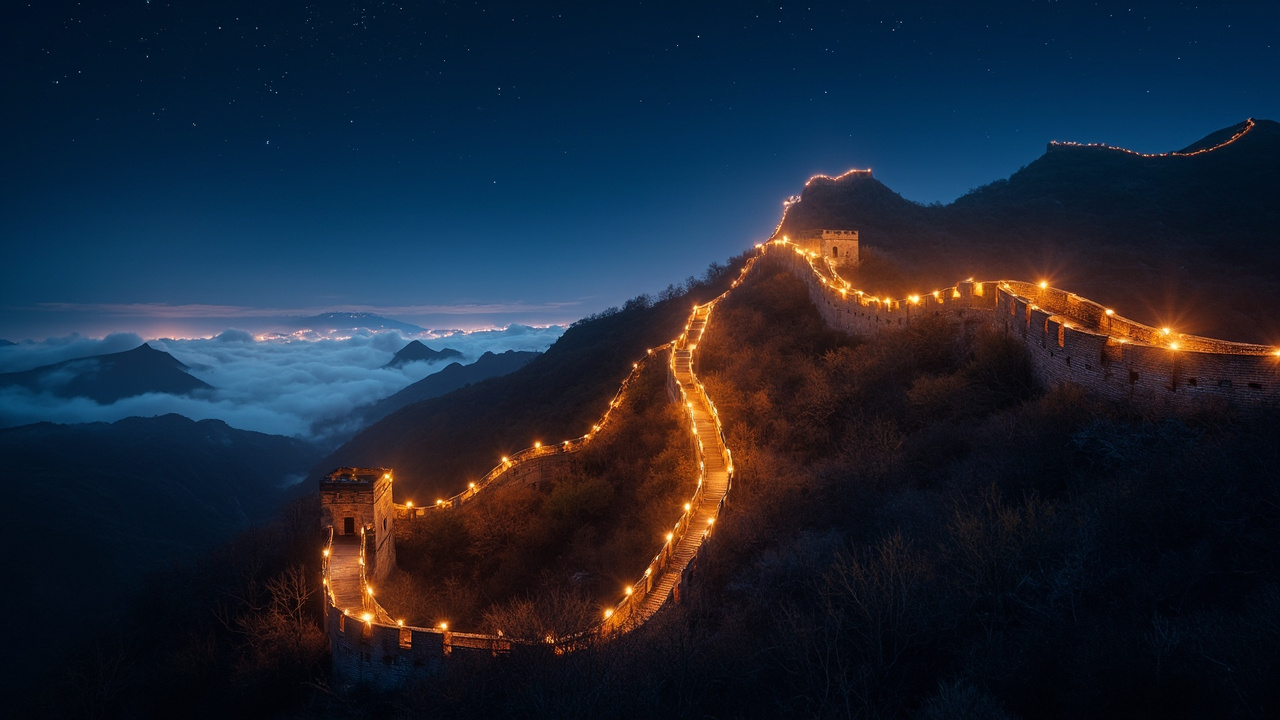
The night I first saw Gubei Water Town, I was standing on a stone bridge watching a wedding photo shoot. The couple was posed on a wooden boat, the bride’s red dress glowing against the dark water, and behind them the entire town was lit up like a lantern festival. The photographer kept shouting instructions in Mandarin, and the boatman was clearly bored, smoking a cigarette and steering with his foot.
I’d come to Gubei expecting a tourist trap. What I found was something stranger and more interesting: a meticulously rebuilt Qing Dynasty water town that sits in the shadow of one of the most dramatic sections of the Great Wall. It’s fake in the way a movie set is fake, but it’s also genuinely beautiful, genuinely atmospheric, and genuinely worth your time if you know how to do it right.
This guide covers everything you need to know: how to get there, what it costs, when to visit, where to stay, and the mistakes I made so you don’t have to. I’ve been to Gubei four times now, in every season, and I’ve got opinions about all of it.
Quick answer
Gubei Water Town is a reconstructed Qing Dynasty riverside village at the foot of the Simatai Great Wall, about 140 km northeast of Beijing. It costs approximately $20 (CNY 140) for entry, and you can reach it by direct bus from Dongzhimen Station in about 2 hours. The best time to visit is October through November for autumn colors, or on a weekday in spring to avoid crowds. Most international visitors combine it with a night stay to see the illuminated Great Wall, which is the single most impressive sight in the Beijing area.
The Short Version
Gubei Water Town is a purpose-built recreation of an ancient water village, and it’s worth seeing despite that. The daytime crowds are brutal on weekends, so go on a weekday or stay overnight. The night cable car up to Simatai Great Wall is the best thing you’ll do in Beijing. Skip the expensive hotels inside the town and stay at one of the cheaper guesthouses nearby. Bring cash or make sure Alipay is set up before you come, because some small shops don’t take foreign cards.
How I Picked These
I’ve lived in Beijing since 2019 and have visited Gubei Water Town four times: once in March (cold, empty, magical), once in July (hot, crowded, still worth it), once in October (perfect weather, peak crowds), and once in January (freezing, but the wall at night was unforgettable). I’ve taken the public bus, the tourist bus, and a Didi ride. I’ve stayed in the expensive hotel inside the town and the cheap guesthouse outside it. I’ve eaten at the fancy restaurants and the street stalls. This guide reflects what I actually learned, including the things I wish someone had told me before my first visit.
Comparison Table
| Rank | Place | Best For | Approx Cost (USD) | Time Needed | When to Go |
|---|---|---|---|---|---|
| 1 | Simatai Great Wall at Night | The single best view in the region | $50-60 (CNY 360-430) | 3-4 hours | Weekday evenings, May-Oct |
| 2 | Gubei Water Town Day Pass | Wandering canals and alleys | $20 (CNY 140) | 3-5 hours | Weekday mornings |
| 3 | Yinghua Academy | History and architecture | $25 (CNY 180) | 1-2 hours | Any time |
| 4 | The Old Post Office | Quiet corner, good photos | Free (included in entry) | 30-45 min | Early morning |
| 5 | Sunset Platform | Golden hour views | Free | 30 min | 1 hour before sunset |
| 6 | The Water Theater | Evening performances | Free | 1 hour | 7-8 PM |
| 7 | Simatai Great Wall Day Hike | Serious walkers | $45 (CNY 320) | 4-5 hours | Spring or autumn |
| 8 | The Hot Springs | Relaxing after the wall | $30-60 (CNY 215-430) | 2 hours | Evening, winter |
| 9 | The Distillery | Local baijiu tasting | $10 (CNY 70) | 30 min | Afternoon |
| 10 | The Night Market | Street food and snacks | $5-15 (CNY 35-105) | 1 hour | Evening |
Simatai Great Wall at Night —The reason you came
I’ll never forget the first time the cable car crested the ridge and the wall appeared, lit up like a spine of light running across the dark mountains. It’s the only section of the Great Wall in China you can visit at night, and it’s worth the entire trip to Beijing on its own.
The wall here is original Ming Dynasty construction, not restored like Badaling or Mutianyu. You can see the rough stonework, the crumbling watchtowers, the way the wall follows the ridgeline like it grew there. At night, the lighting is subtle enough that you still feel the age of the place.
Location: Simatai Great Wall, adjacent to Gubei Water Town (same complex) Entry fee: $45-60 (CNY 320-430) depending on cable car package Opening hours: Night visits run from 5:30 PM to 9:30 PM, with last cable car up around 8:30 PM How to get there: Take the shuttle bus from the Gubei Water Town entrance to the cable car station (5 minutes, free with entry). From Beijing, take the direct bus from Dongzhimen Station (see transport section below) When to visit: Weekday evenings are dramatically quieter. Summer nights are warm but crowded. October nights are cold but spectacular Insider tips:
- Book your night slot in advance online, especially on weekends. The quota is limited
- Bring a jacket even in summer. The ridge line gets windy
- The last cable car down is 9:30 PM. Don’t miss it unless you want a very dark hike down
- Check the weather forecast. If it’s foggy, you’ll see nothing
- The best photos are from the second watchtower, not the first one where everyone stops
I met a retired Australian couple on the cable car who’d come to China specifically for this. They’d seen the wall at Badaling earlier in the week and were disappointed. Here, they just stood at the railing and didn’t speak for ten minutes.
Gubei Water Town Day Pass —The main event
The town itself is a reconstruction, and you should know that going in. The original village was flooded in the 1950s when a reservoir was built, and what you see now was rebuilt in 2014 using traditional techniques and materials. It’s not authentic in the way a museum is authentic, but it’s authentic in the way a film set can be: every detail is considered, from the stone bridges to the wooden shutters to the way the canals curve.
The daytime experience is about wandering. There are alleys that dead-end at courtyards, shops selling silk fans and calligraphy brushes, teahouses overlooking the water. The crowds are the problem. On weekends, you’ll be shuffling shoulder to shoulder with tour groups. On weekdays, it’s genuinely pleasant.
Location: Miyun District, about 140 km northeast of Beijing Entry fee: $20 (CNY 140) for adults. This includes the town but not the Great Wall Opening hours: 9 AM to 10 PM daily. The town is most atmospheric after 6 PM when the lights come on How to get there: The direct bus from Dongzhimen Station (Exit B) departs at 9 AM and 1 PM, costs about $7 (CNY 50), and takes 2 hours. Alternatively, take the Beijing-Miyun bus from Dongzhimen and transfer, or book a Didi (about $60-80 / CNY 430-575) When to visit: Weekday mornings are the quietest. The light is best at golden hour, just before sunset Insider tips:
- Enter through the south gate. The north gate is where the tour buses drop people off
- The town is free after 10 PM if you’re staying in one of the hotels inside. The night staff will let you in
- Rent a hanfu (traditional dress) from one of the shops near the entrance. It’s about $15 (CNY 105) for a full outfit and makes for incredible photos
- The boat ride through the canals is $30 (CNY 215) per person and worth it once, especially at dusk
- The public restrooms are surprisingly clean. Use them before you go to the wall
I paid too much for a “hand-painted” fan at one of the shops before I realized the same fan was selling for half the price two alleys over. Shop around before you buy anything.
Yinghua Academy —The history you didn’t expect
Most visitors skip the Yinghua Academy because it’s tucked away at the north end of the town, past the restaurants and the souvenir stalls. That’s a mistake. This is the only building in Gubei that survived the flooding, and it dates back to the Qing Dynasty.
The academy was a private school where local boys studied Confucian classics. The courtyard has a centuries-old wisteria vine that’s still alive, and the wooden beams are original. There’s a small exhibition about the history of the region, with photographs of the original village before it was flooded. Seeing those photos makes the reconstruction feel different. You realize the people who built this place were trying to bring something back.
Location: North end of Gubei Water Town, near the Great Wall shuttle stop Entry fee: Included in the town entry Opening hours: 9 AM to 6 PM How to get there: Walk north from the central square, past the distillery, and look for the sign with the calligraphy characters When to visit: Mid-afternoon, when the tour groups are at the restaurants Insider tips:
- The wisteria blooms in late April. It’s worth timing your visit for this
- The exhibition has English translations, which is rare in this town
- The back courtyard has a small tea house that’s quieter than the ones on the main canal
- The staff are knowledgeable and happy to answer questions if you speak some Mandarin
The woman at the ticket counter was reading a book when I walked in, and she seemed genuinely surprised that a foreigner had found the place. She gave me a free map and pointed out the best spots for photos.
The Old Post Office —Where the town gets quiet
There’s a small building near the south gate that used to be the town’s post office. It’s now a museum of postal history, which sounds boring, but it’s one of the few places in Gubei where you can escape the crowds entirely.
The building has original wooden counters and a collection of old stamps and letters from the early 20th century. There’s a corner where you can write a postcard and have it stamped with a special Gubei postmark, which is a nice touch. The staff will even mail it for you, though it might take a while to arrive.
Location: Near the south gate, on the west side of the main canal Entry fee: Included in the town entry Opening hours: 9 AM to 5 PM How to get there: From the south gate, walk straight ahead for 100 meters, then turn right at the stone bridge When to visit: Early morning, before the tour groups arrive Insider tips:
- The postcards here are cheaper than the ones sold in the souvenir shops
- The postmark is a special design that you can’t get anywhere else
- The building has air conditioning, which is a relief in summer
- There’s a small courtyard behind the building that’s perfect for a quiet break
I wrote a postcard to my mother from here and it arrived three weeks later, which felt appropriate for a place that’s about slowing down.
Sunset Platform —The view that makes it all worth it
There’s a wooden platform on the east side of the town, up a short flight of stone steps, that gives you a view over the entire complex. It’s not marked on the main maps, and most visitors never find it.
From here, you can see the canals winding through the town, the rooftops with their gray tiles, and the Great Wall snaking along the ridge in the distance. At sunset, the light turns everything golden, and the town below starts to light up. It’s the best view in Gubei that doesn’t require a cable car.
Location: East side of town, behind the hot spring area Entry fee: Free Opening hours: Always open How to get there: From the central square, cross the bridge to the east side and look for the stone steps near the restrooms When to visit: 45 minutes before sunset. Bring a jacket, it gets cold up there Insider tips:
- The platform faces west, so you get the sunset over the town
- The best photos are when the lights start coming on, about 15 minutes after sunset
- This is a good spot for a picnic if you bring food from the night market
- The steps are steep and uneven. Watch your footing
I sat up here for an hour one evening, watching the town transform from day to night. A Chinese family came up, took some photos, and left. I stayed until the last light faded.
The Water Theater —Free entertainment after dark
Every evening, the town puts on a water show in the central square. It’s a combination of fountains, lights, and music, with a projection show on the water itself. It’s cheesy, but it’s also genuinely fun, and the kids love it.
The show runs twice, at 7 PM and 8 PM, and lasts about 20 minutes. The square fills up quickly, so get there early if you want a good spot. The best view is from the bridge on the west side, which gives you a higher angle.
Location: Central square, at the intersection of the two main canals Entry fee: Free Opening hours: 7 PM and 8 PM daily How to get there: Follow the sound of the music. You’ll find it When to visit: The 7 PM show is less crowded Insider tips:
- The show is in Chinese, but you don’t need to understand it
- The bridge on the west side is the best viewing spot, but it gets crowded
- Bring earplugs if you’re sensitive to loud music
- The show is cancelled in heavy rain
I watched the show twice in one evening because I was too lazy to move. The second time, I noticed details I’d missed the first time, like the way the fountains change color with the music.
Simatai Great Wall Day Hike —For the serious walkers
If you’re fit and have the time, the daytime hike along the Simatai section of the wall is a completely different experience from the night visit. You can see the original stonework up close, climb the watchtowers, and look out over the mountains.
The hike is challenging. The wall here is steep, with sections that are nearly vertical, and some of the watchtowers require climbing narrow stone staircases. It’s not suitable for anyone with mobility issues or a fear of heights. But the views are extraordinary, and you’ll have large sections of the wall to yourself if you go on a weekday.
Location: Simatai Great Wall, same complex as Gubei Water Town Entry fee: $45 (CNY 320) including cable car Opening hours: 8 AM to 5 PM How to get there: Take the shuttle from the town entrance to the cable car station, then either take the cable car or hike up the access path When to visit: Spring (April-May) or autumn (September-October) for the best weather Insider tips:
- The hike from the cable car station to the highest watchtower takes about 2 hours each way
- Bring water. There are no shops on the wall
- The stone steps are slippery when wet. Wear proper shoes
- The wall is not restored here. Some sections have large gaps in the stonework
- The cable car is the easy way down. The hiking path down is steep and takes an hour
I made the mistake of doing this hike in July. By the time I reached the third watchtower, I was drenched in sweat and had to sit down for ten minutes. The view was worth it, but I should have gone in October.
The Hot Springs —Where your legs recover
After a day of walking, the hot springs at the north end of the town are a welcome relief. There are several pools of varying temperatures, some outdoors with views over the canal, and the facilities are clean and modern.
The springs are a recent addition, built as part of the resort complex, but they’re well done. The outdoor pools are especially nice in winter, when the steam rises off the water and the air is cold. It’s a strange and pleasant sensation.
Location: North end of Gubei Water Town, near the Great Wall shuttle stop Entry fee: $30-60 (CNY 215-430) depending on the package Opening hours: 10 AM to 10 PM How to get there: Follow the signs from the central square. It’s a 10-minute walk When to visit: Evening, after the day visitors have left Insider tips:
- The outdoor pools are the best. The indoor ones are crowded
- Bring your own towel. The rental fee is extra
- The springs are clothing-optional in the changing areas, which surprises some Western visitors
- The water is real spring water, not heated tap water. You can tell by the mineral smell
I went to the hot springs after the night wall visit and spent an hour soaking in the outdoor pool, watching the stars come out. It was the most relaxed I’d been in months.
The Distillery —A taste of local history
There’s a small distillery in the center of the town that produces baijiu, the Chinese liquor that’s an acquired taste. The distillery has been operating for over a century, though it moved to its current location when the town was rebuilt.
You can tour the facility, see the traditional fermentation process, and taste the finished product. The baijiu here is a local specialty, made from sorghum and wheat, and it’s strong stuff. The tasting room has a few different varieties, from the mild to the face-melting.
Location: Central area of Gubei Water Town, near the water theater Entry fee: $10 (CNY 70) for the tour and tasting Opening hours: 10 AM to 6 PM How to get there: From the central square, follow the signs for the distillery When to visit: Afternoon, when the tour groups are at lunch Insider tips:
- The tasting is small. Don’t expect to get drunk
- The baijiu here is smoother than the cheap stuff you’ll find in Beijing
- They sell bottles in the gift shop, but they’re heavy to carry home
- If you don’t like baijiu, try the rice wine instead. It’s sweeter and easier to drink
I tried the baijiu and immediately regretted it. The distillery worker laughed at my expression and poured me a glass of rice wine instead. We ended up having a conversation about the history of the distillery, which was the highlight of my visit.
The Night Market —Street food and snacks
The night market in Gubei Water Town is small compared to the ones in Beijing, but it’s got a good selection of snacks and street food. There are stalls selling grilled skewers, fried dumplings, candied fruit, and various noodle dishes.
The food is decent, not amazing, but the atmosphere is the real draw. The stalls are lit with lanterns, the steam rises off the grills, and the smell of cooking food fills the air. It’s a pleasant way to spend an hour in the evening.
Location: Along the main canal, near the water theater Entry fee: Free (food costs extra) Opening hours: 5 PM to 10 PM How to get there: Follow the smell of grilled meat When to visit: 6-7 PM, before the dinner rush Insider tips:
- The grilled lamb skewers are the best thing here. Get them from the stall with the red lanterns
- The candied hawthorn berries are a local specialty. They’re sweet and sour
- Bring cash. Some stalls don’t accept mobile payments
- The food is cooked to order, so expect to wait a few minutes
- The prices are higher than in Beijing, but not outrageous
I had a plate of fried dumplings that were perfectly crispy on the outside and juicy on the inside. I went back for a second plate, which the stall owner seemed to appreciate.
FAQ summary
Gubei Water Town is a reconstructed Qing Dynasty water village about 140 km from Beijing, with entry at approximately $20 (CNY 140). The highlight is the night visit to the Simatai Great Wall, which costs $45-60 (CNY 320-430) including the cable car and operates from 5:30 PM to 9:30 PM. The easiest way to get there is the direct bus from Dongzhimen Station, which costs about $7 (CNY 50) and takes 2 hours. The best time to visit is on a weekday in autumn, and visitors should bring cash and set up Alipay before arriving.
FAQ
Q: Do I need a visa to visit Gubei Water Town? A: If you’re a citizen of one of the countries covered by China’s visa-free transit policy, you can enter without a visa for up to 10 days. Otherwise, you’ll need a standard tourist visa. The town itself doesn’t require any additional permits.
Q: How do I get from Beijing to Gubei Water Town? A: The easiest option is the direct bus from Dongzhimen Station (Exit B), which departs at 9 AM and 1 PM and costs about $7 (CNY 50). The journey takes 2 hours. You can also book a Didi ride for about $60-80 (CNY 430-575), which takes 1.5 hours.
Q: Can I visit Gubei Water Town and the Great Wall in one day? A: Yes, but it’s rushed. Arrive early, spend the morning in the town, hike the wall in the afternoon, and stay for the night view. If you want to do the night wall visit, you’ll need to stay overnight or book a late bus back.
Q: Is the Great Wall at Simatai different from other sections? A: Yes. Simatai is the only section of the Great Wall open for night visits, and it’s largely unrestored, meaning you see the original Ming Dynasty stonework. It’s also steeper and more dramatic than the restored sections like Badaling or Mutianyu.
Q: What should I bring with me? A: Cash (some small shops don’t take cards), a jacket (it gets cold in the evening), comfortable walking shoes, and a translation app. If you’re visiting in winter, bring thermal layers. If you’re visiting in summer, bring sunscreen and water.
Q: Is English widely spoken in Gubei Water Town? A: No. Most staff speak only basic English. Download a translation app like Pleco or Google Translate before you go, and learn a few key phrases like “how much” (duo shao qian) and “thank you” (xie xie).
Q: Can I use my foreign credit card in Gubei Water Town? A: Not reliably. Set up Alipay or WeChat Pay before you arrive, and bring cash as a backup. Some restaurants and shops accept foreign cards, but many don’t.
The Honest Wrap-up
Gubei Water Town is not a hidden gem. It’s a purpose-built tourist destination, and it’s crowded on weekends. But the night view of the Great Wall is genuinely spectacular, and the town itself is well done if you know what you’re looking at. Go on a weekday, stay overnight, and take the cable car up to the wall after dark. Skip the expensive hotels inside the town and save your money for the hot springs. If you’re in Beijing and have two days to spare, this is worth the trip. If you’re on a tight schedule, it’s the first thing I’d cut.
The best advice I can give you is to slow down. The town is small, and you can see it all in a few hours, but the magic is in the details: the way the light hits the water at dusk, the smell of the food stalls, the sound of the water lapping against the stone. Don’t rush it.
Topics
More guides you may like

Top 10 Bridges in China
China's bridges are engineering marvels spanning mountains, rivers, and seas. Here are 10 of the most spectacular, from ancient stone to modern steel.
8 min read

Top 10 Buddhist Sites in China
From the Leshan Giant Buddha to the Dunhuang Caves, these 10 Buddhist sites represent 2,000 years of China's spiritual heritage.
9 min read
Top 10 Day Trips from Beijing You Shouldn't Miss
Beijing is packed with history, but some of China's best experiences are just a few hours away. Here are 10 day trips that will transform your visit.
9 min read
Top 10 Hidden Gems in China Off the Beaten Path
Beyond the Great Wall and Terracotta Warriors, China has incredible hidden destinations few tourists ever reach. Here are 10 underrated gems worth the detour.
9 min read
Top 10 Markets and Shopping Streets in China
From Shanghai's Bund to Beijing's Silk Street - 10 markets where foreigners can haggle, explore, and bring home authentic Chinese goods.
9 min read
Top 10 Museums in China You Shouldn't Miss
China's museums span 5,000 years of civilization. These 10 - from the Palace Museum to Xi'an's terracotta gallery - are unmissable for culture lovers.
9 min read