
Yantai Wine Coast Guide: The Complete 2026 Guide
The cab driver in Yantai looked at me in the rearview mirror and asked, in the universal language of confused taxi drivers everywhere.
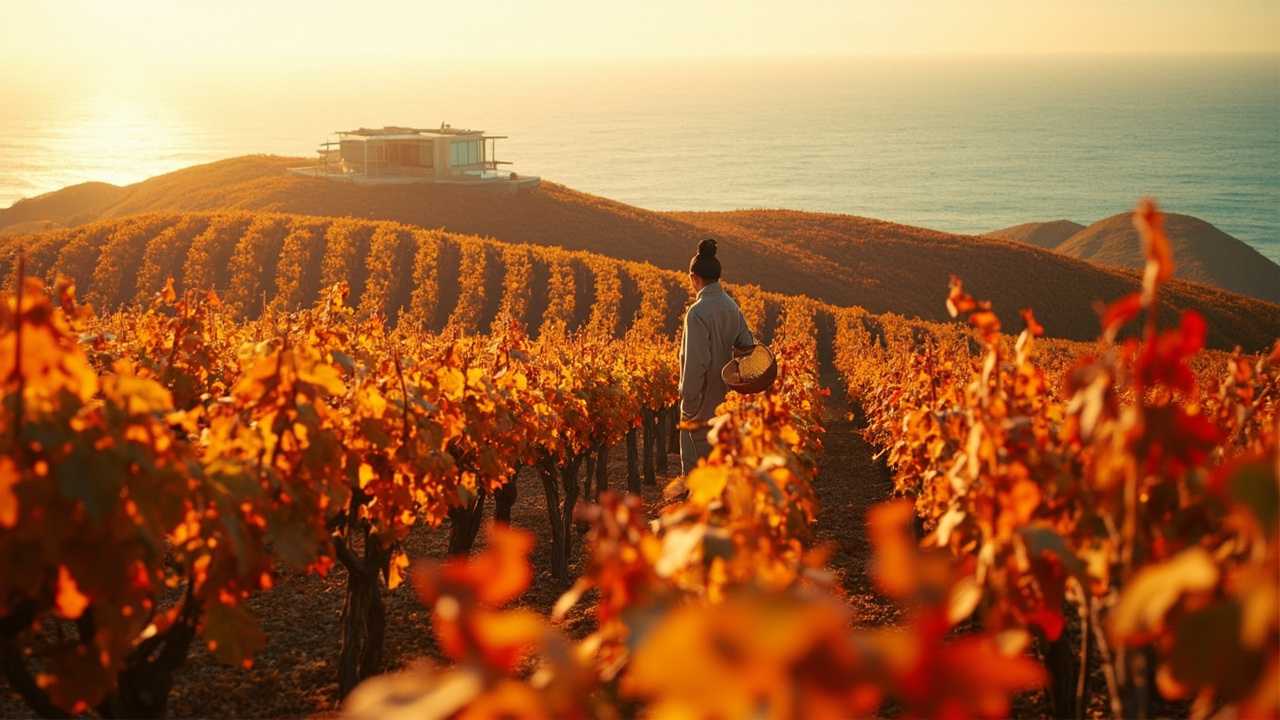
The cab driver in Yantai looked at me in the rearview mirror and asked, in the universal language of confused taxi drivers everywhere, why I had come to his city. Not to the beaches. Not to the aquarium. To the wine region. He shrugged, turned up the radio, and we drove past rows of vines that stretched all the way to the sea. That was my first hint that I had found something most travelers to China miss entirely.
Most people fly into Beijing, see the Great Wall, eat Peking duck, and leave. They never make it to Shandong Province, and they certainly never make it to China’s oldest wine-producing region. But the Yantai Wine Coast is where French missionaries planted vines in 1892, where the first bottle of Chinese wine was produced, and where you can now cycle between chateaus that look like they were airlifted from Bordeaux. The sea air, the granite hills, and the cool maritime climate make this one of the few places in China where wine actually belongs.
This guide covers the ten places I would send a friend who wants to taste real Chinese wine, walk through working vineyards, and understand why this corner of China matters. I’ve included exact transport directions, honest prices, and the kind of practical details that only come from getting lost a few times.
Quick answer
Yantai Wine Coast is China’s oldest and largest wine region, located in Shandong Province about 1.5 hours by high-speed rail from Qingdao. A two-to-three day visit costs roughly $150-250 USD (1,050-1,750 CNY) per person excluding accommodation, and the best time to go is September through October during harvest season. China’s 15-day visa-free transit policy applies to many nationalities, and the region is easiest to visit as a side trip from Qingdao or Beijing.
The Short Version
If you have 90 seconds, here’s what matters. Yantai is not a polished wine tourism destination like Napa or Tuscany. It’s raw, a bit chaotic, and deeply rewarding if you’re flexible. The wine is better than you expect, especially the small-batch Cabernet Gernischt and Marselan. You need a driver or a rented car to reach most wineries. WeChat Pay is essential. English is rare outside the big chateaus. Go for the history, stay for the sea views, and don’t skip the seafood.
How I Picked These
I’ve been to Yantai four times since 2019, most recently in October 2025. I spent ten days cycling between wineries, sitting in tasting rooms, and drinking with local winemakers who were baffled that a foreigner had found them. I talked to taxi drivers, hotel receptionists, and a retired winery worker who had been at Changyu since 1982. I visited every major chateau that offers tours, plus a few that technically don’t. I also made plenty of mistakes - showing up at wineries that were closed, taking the wrong bus, and once paying triple the normal price for a taxi because I didn’t negotiate first. This list reflects what I’d actually recommend, not what the tourism board wants you to see.
Comparison Table
| Rank | Place | Best For | Approx Cost (USD) | Time Needed | When to Go |
|---|---|---|---|---|---|
| 1 | Changyu Wine Culture Museum | History buffs | $15 (105 CNY) | 2-3 hours | Year-round |
| 2 | Chateau Changyu-Castel | Grand architecture | $20 (140 CNY) | Half day | Apr-Oct |
| 3 | The Chateau of Yantai | Photography | $10 (70 CNY) | 2 hours | May-Sep |
| 4 | Chateau Junding | Small-batch tasting | $25 (175 CNY) | 2-3 hours | Sep-Oct |
| 5 | Penglai Old Town | Culture break | Free | 3-4 hours | Year-round |
| 6 | Yantai Hill | City views | $8 (55 CNY) | 2 hours | Apr-Oct |
| 7 | Chateau Lafite Rothschild | Wine nerd bucket list | $30 (210 CNY) | 1-2 hours | By appointment |
| 8 | Sohu Wine Castle | Family travel | $18 (125 CNY) | 3 hours | Jun-Sep |
| 9 | Moutai Great Wall Wine | Working winery feel | $12 (85 CNY) | 2 hours | Sep-Oct |
| 10 | Nanwang Mountain Vineyards | Off-grid adventure | Free | Half day | Sep-Nov |
Changyu Wine Culture Museum - Where Chinese Wine Started
I stood in front of a stone building that looked like it belonged in a French village, except for the Chinese characters carved above the door. A group of schoolchildren in matching yellow hats ran past me, shouting. The guard at the entrance waved me through with a bored expression. This is Changyu, the company that put Chinese wine on the map, and this museum is where the whole story begins.
Changyu was founded in 1892 by Zhang Bishi, a Chinese businessman who brought grape varieties from Europe and hired Austrian winemakers to produce the first modern Chinese wines. The museum traces that history through photographs, old bottles, and the original underground cellars where oak barrels still age wine. The cellars are the highlight - they run for over a kilometer beneath the city, and the smell of damp stone and old wood stays with you.
The museum is more informative than glamorous. Exhibits are in Chinese, so bring a translation app or hire a guide. The underground cellar tour is worth the entrance fee alone. The wine tasting at the end is basic but included.
- Location: No. 56 Dama Road, Zhifu District, central Yantai
- Entry fee: $15 (105 CNY), tasting included
- Opening hours: 8:30 AM - 5:00 PM daily
- Getting there: Take Bus 3 or 17 to the Changyu Museum stop, or taxi from Yantai Railway Station (about 15 minutes)
- When to visit: Any time, but weekday mornings are quietest
- Insider tips: The museum shop sells older vintages that are hard to find elsewhere. Ask about the 1992 vintage. The underground cellar is cold, bring a light jacket. Combine with Yantai Hill, which is a 10-minute walk away. The English audio guide is worth the extra few dollars.
A retired winery worker named Mr. Chen spent twenty minutes explaining to me, through a translation app, how the cellars were dug by hand in the 1890s. He had worked there since 1982 and still came back to visit.
Chateau Changyu-Castel - The Grandest of Them All
The first time I saw Chateau Changyu-Castel, I laughed out loud. It’s a full-scale French chateau, complete with turrets and a moat, dropped into the middle of the Chinese countryside. A moat. In Shandong Province. The taxi driver who took me there clearly thought I was wasting my money, but he waited anyway, which was lucky because there are no taxis waiting outside.
This is the most tourist-friendly winery in the region. The grounds are immaculate, the tour is well-organized, and there’s a restaurant that serves surprisingly good food. The winery produces several ranges, from cheap blends to premium single-vineyard wines. The tasting room staff speak some English, which is rare in this region.
The scale is what impresses. The main building is vast, the cellars stretch for what feels like miles, and the surrounding vineyards are planted in neat rows that run down to the coast. You can see the sea from the upper floors. The tour includes a barrel cellar, a bottling line, and a tasting of three wines.
- Location: 18 kilometers southwest of Yantai city center, Fushan District
- Entry fee: $20 (140 CNY) for the full tour and tasting
- Opening hours: 9:00 AM - 5:00 PM, closed Mondays in winter
- Getting there: No public transport. Taxi from Yantai city center costs about $12 (85 CNY) each way. Negotiate the return trip before you get in.
- When to visit: May through October when the gardens are in bloom
- Insider tips: Book ahead for the premium tasting, which includes their top-end wines. The restaurant’s braised pork is excellent. Ask to see the underground barrel cellar, it’s the most impressive part. If you’re cycling, there are bike racks near the entrance. Don’t bother with the gift shop, the prices are inflated.
I paid for the premium tasting and ended up buying a bottle of their Cabernet Gernischt, a grape variety that originated in China and is now being rediscovered by wine nerds worldwide. It cost $18 (125 CNY), which felt like a steal.
The Chateau of Yantai - The Photographer’s Favorite
This chateau is smaller and quieter than Changyu-Castel, which is exactly why I liked it. The building is modeled on a French chateau, but the proportions feel more human. The vineyards here are older, with thicker trunks and gnarlier branches. You can walk through them without a guide, which is rare in this region.
The tasting room has large windows that look out over the vines toward the sea. On a clear day, you can see the islands in the Bohai Strait. The wines are solid, not spectacular, but the setting makes up for it. The staff are friendly and used to foreign visitors, though their English is limited.
This is the place to come if you want photos without crowds. The architecture is photogenic, the light is good in the late afternoon, and there’s a small garden with roses that smells incredible in June.
- Location: Penglai District, about 45 minutes from Yantai city center
- Entry fee: $10 (70 CNY) for the basic tour
- Opening hours: 9:00 AM - 5:00 PM daily
- Getting there: Taxi from Penglai town center, about 15 minutes. Or take the Penglai-bound bus from Yantai and ask the driver to drop you at the chateau turnoff.
- When to visit: Late afternoon for the best light
- Insider tips: The rose garden is at its best in June. Ask to taste the ice wine, it’s a regional specialty. The chateau has a small hotel attached, which is a good base for exploring Penglai. The staff can call a taxi for you, but expect a 20-minute wait.
I spent an hour sitting on the terrace, drinking a glass of their dry white wine, watching a farmer on a tractor work the vines below. It was the most peaceful afternoon I had in Shandong.
Chateau Junding - The Winemaker’s Winery
Junding is the winery that local wine professionals actually respect. It’s smaller than the big chateaus, and the wines are more interesting. The winemaker, who trained in France, focuses on small-batch production and isn’t afraid to experiment. The tasting room feels like a working winery rather than a tourist attraction, with barrels stacked in corners and wine stains on the concrete floor.
The signature wine here is a Marselan, a grape that was created in France in 1961 and has found a second home in China. Junding’s version is dark, spicy, and surprisingly complex. I bought three bottles to take home, which I’ve never done at any other Chinese winery.
The tour is more technical than at the big chateaus. You’ll see the fermentation tanks, the barrel room, and the bottling line. The staff are passionate and happy to answer questions, though you’ll need a translation app for anything beyond basic conversation.
- Location: Penglai District, near the coast
- Entry fee: $25 (175 CNY) for the full tour and premium tasting
- Opening hours: 9:00 AM - 5:00 PM, closed Sundays
- Getting there: Taxi from Penglai town center, about 20 minutes. The road is winding, so budget extra time.
- When to visit: September and October during harvest, when the winery is most active
- Insider tips: The premium tasting includes their top-end Marselan, which is worth the extra cost. Ask about the experimental wines, they sometimes have small batches that aren’t on the menu. The winery can arrange lunch, which is simple but good. If you’re serious about wine, this is the place to spend your money.
The winemaker, a man in his forties named Wang, told me that he moved back to China from France because he wanted to prove that Chinese terroir could produce world-class wine. He poured me a glass of his Marselan and said, simply, “Taste this and tell me I’m wrong.” I couldn’t.
Penglai Old Town - The Culture Break
After three days of wineries, I needed a break from wine. Penglai Old Town was that break. It’s a walled historic district that dates back to the Ming Dynasty, with narrow stone streets, traditional courtyard houses, and a waterfront that faces the Bohai Strait. It’s touristy, but in a way that feels authentic rather than manufactured.
The main attraction is the Penglai Pavilion, a complex of temples and towers that has been a pilgrimage site for centuries. Legend says that the Eight Immortals crossed the sea from here. The views from the top are spectacular, especially at sunset when the light turns the sea gold.
The old town is also a great place to try local food. The seafood is fresh and cheap, and there are street stalls selling everything from grilled squid to candied hawthorn berries. I had a bowl of seafood noodles that cost $3 (20 CNY) and was one of the best things I ate in China.
- Location: Penglai District, about 1 hour from Yantai city center
- Entry fee: Free for the old town, $10 (70 CNY) for Penglai Pavilion
- Opening hours: Old town always open, Pavilion 8:00 AM - 6:00 PM
- Getting there: Bus from Yantai to Penglai, about 90 minutes, then walk or take a short taxi ride
- When to visit: Weekday mornings before the tour groups arrive
- Insider tips: The seafood market near the waterfront is worth a wander. Try the grilled oysters, they’re the best in the region. The pavilion gets crowded by 10 AM, so go early. Bargaining is expected at the souvenir stalls, start at half the asking price. The sunset view from the city wall is free and better than the pavilion view.
A noodle shop owner named Auntie Liu insisted I try her family’s recipe for seafood soup. She didn’t speak a word of English, but she watched me eat with a smile and refused to let me pay more than the local price.
Yantai Hill - The City View
Yantai Hill is the city’s namesake - the name “Yantai” means “smoke tower,” referring to the beacon tower that once stood here to warn of pirate attacks. The hill is now a park with walking paths, old European buildings from the colonial era, and views over the harbor and the city.
The European buildings are the unexpected highlight. Yantai was one of the first Chinese ports opened to foreign trade, and the British, French, and Germans all left their mark. The old consulates and merchant houses have been preserved, and walking through them feels like stepping into a different era.
The hill is small, so you can see everything in a couple of hours. The views are best in the morning when the light is clear. There’s a small museum at the top that explains the city’s history, with English translations.
- Location: Zhifu District, northern edge of Yantai city center
- Entry fee: $8 (55 CNY)
- Opening hours: 8:00 AM - 6:00 PM daily
- Getting there: Walk from Yantai Railway Station, about 20 minutes. Or take Bus 17 to the Yantai Hill stop.
- When to visit: Clear mornings for the best views
- Insider tips: The colonial buildings are free to walk around, you only pay for the park itself. The beacon tower at the top is a reconstruction, but the view is real. Bring binoculars if you have them, you can see the islands offshore. The park is popular with local couples taking wedding photos, which makes for great people-watching.
I watched a wedding photoshoot here, with the bride in a white dress and the groom in a suit, posing in front of a century-old German consulate while a photographer shouted directions. It was a perfect collision of old and new China.
Chateau Lafite Rothschild - The Bucket List Visit
Yes, that Lafite Rothschild. The famous Bordeaux chateau has a sister property in Penglai, and it’s the most exclusive winery visit in China. The chateau itself is a striking modern building that looks like a glass and stone sculpture, set on a hillside overlooking the sea. The vineyards are planted on south-facing slopes that the winemakers chose specifically for their similarity to Bordeaux.
Getting in is not easy. The chateau doesn’t do walk-in visits. You need to book ahead, and they limit the number of visitors. The tour is thorough and professional, and the tasting includes their premium wines, which are excellent. This is the most expensive winery visit in the region, but it’s also the most polished.
The wine is genuinely good. The 2018 vintage, which I tasted in 2025, was complex and elegant, with the kind of structure that suggests it will age well. It’s not cheap, but neither is anything else from Lafite.
- Location: Penglai District, 10 minutes from Chateau Junding
- Entry fee: $30 (210 CNY) for the tour and tasting, booking required
- Opening hours: By appointment only, typically 9:00 AM - 4:00 PM
- Getting there: Taxi from Penglai town center, about 25 minutes. The chateau can arrange pickup if you book ahead.
- When to visit: Spring or autumn, when the weather is mild
- Insider tips: Book at least a week in advance through their website or WeChat. The tasting includes three wines, and you can buy bottles at the end. The architecture is worth seeing even if you don’t care about wine. Ask about the underground cellar, it’s carved into the hillside.
The guide, a young woman who had studied enology in France, told me that the 2018 vintage was the first one that made the French owners truly confident in the Chinese terroir. She said it with a quiet pride that I found moving.
Sohu Wine Castle - The Family Option
If you’re traveling with kids, Sohu Wine Castle is the winery for you. It’s a theme park version of a winery, with a fake castle, a maze, a small zoo, and enough activities to keep children entertained for hours. The wine is secondary here, which is fine, because the wine isn’t the point.
The castle itself is impressively kitschy, with turrets, drawbridges, and a moat. Inside, there’s a wine museum, a tasting room, and a restaurant. The grounds include a vineyard, a garden, and a playground. There are also regular shows and performances, mostly aimed at Chinese tourists.
For adults, the appeal is limited. The wine is average, and the crowds can be intense on weekends. But if you need to keep kids happy while you taste wine, this is the best option in the region.
- Location: Penglai District, near the coast
- Entry fee: $18 (125 CNY) for adults, children under 1.2 meters free
- Opening hours: 8:30 AM - 5:30 PM daily
- Getting there: Taxi from Penglai town center, about 20 minutes
- When to visit: Weekdays to avoid the crowds
- Insider tips: The maze is more fun than it looks. The restaurant serves decent local food at reasonable prices. The gift shop has wine-themed toys that kids love. If you’re visiting in summer, bring sunscreen, there’s not much shade.
I watched a group of Chinese tourists take photos in front of the castle, all of them striking the same pose with their arms spread wide. It was absurd and joyful, and I couldn’t help but smile.
Moutai Great Wall Wine - The Working Winery
Moutai Great Wall Wine is the opposite of Sohu. It’s a working winery that produces millions of bottles a year, and it feels like it. The facilities are industrial, the tour is functional, and the tasting room is basic. But there’s an honesty to it that I appreciated.
The winery is part of the Great Wall Wine brand, which is one of China’s largest wine producers. The tour takes you through the production process, from the crushing tanks to the bottling line. It’s not glamorous, but it’s informative, and you get a sense of how Chinese wine is made at scale.
The tasting is simple - three wines, poured generously. The quality is consistent, if not exciting. The best part is the price: the tasting is included in the entry fee, and the bottles are cheap.
- Location: Yantai Economic Development Zone, west of the city center
- Entry fee: $12 (85 CNY) including tasting
- Opening hours: 9:00 AM - 5:00 PM, closed weekends
- Getting there: Taxi from Yantai city center, about 30 minutes. Or Bus 21 to the winery stop.
- When to visit: September and October, when the harvest is happening
- Insider tips: The factory shop sells bottles at wholesale prices, which is a good deal if you want to stock up. The tour is in Chinese, but the production process is visual enough to follow. Ask to see the barrel room, it’s the most atmospheric part. The staff are used to foreign visitors and will try to help.
A worker on the bottling line, a woman in her fifties named Zhang, offered me a cup of tea from her thermos while I watched the machines run. We couldn’t communicate, but the gesture was universal.
Nanwang Mountain Vineyards - The Off-Grid Adventure
This is the one place on this list that most tourists will never find. Nanwang Mountain is a small vineyard area in the hills south of Yantai, where a handful of independent growers produce wine on a tiny scale. There are no chateaus here, no tasting rooms, no tours. Just vines, hills, and a few farmers who make wine for themselves and their friends.
I found this place by accident, after a taxi driver took me to the wrong location and I decided to walk. The vineyards are planted on steep slopes, and the views over the surrounding countryside are stunning. The grapes are grown organically, not because of certification, but because the farmers can’t afford chemicals.
If you want to taste the wine, you’ll need to knock on doors and ask. The farmers are welcoming, and they’ll pour you a glass from a plastic bottle while their children watch curiously. The wine is rough and rustic, but it has a character that the commercial wineries lack.
- Location: Nanwang Mountain area, about 40 minutes south of Yantai city center
- Entry fee: Free
- Opening hours: Whenever the farmers are around
- Getting there: Taxi from Yantai, about $15 (105 CNY). Ask the driver to take you to the Nanwang Mountain vineyard area.
- When to visit: September through November, during and after harvest
- Insider tips: Bring cash, the farmers don’t accept mobile payments. The wine is strong, drink slowly. If you’re invited to a meal, accept - it will be the best food you have in Yantai. Don’t expect to buy bottles, the farmers make just enough for themselves.
A farmer named Old Li poured me a glass of his homemade wine and watched me drink it with a grin. It tasted like grape juice that had been left in a shed for too long, but I told him it was delicious, and he laughed and poured me another.
FAQ summary
The Yantai Wine Coast is China’s oldest wine region, founded in 1892, and is best visited from September to October during harvest. Most wineries charge between $10-30 USD (70-210 CNY) for tours and tastings, and the region is accessible via high-speed rail from Qingdao or Beijing. China’s visa-free transit policy allows stays up to 15 days for citizens of many countries, and WeChat Pay or Alipay is essential since most wineries don’t accept foreign credit cards. The most impressive wineries are Chateau Changyu-Castel and Chateau Junding, while Chateau Lafite Rothschild requires advance booking.
FAQ
Q: Do I need a visa to visit Yantai as a tourist? A: China’s visa-free transit policy allows citizens of 54 countries to stay up to 15 days without a visa when transiting through major cities like Beijing or Shanghai. If you’re staying longer or entering directly into Yantai, you’ll need a standard tourist visa, which costs about $140 (980 CNY) and takes 4-5 business days to process.
Q: How do I get from Beijing to Yantai? A: The high-speed train from Beijing South Station to Yantai takes about 5 hours and costs $60-75 (420-525 CNY) for second class. There are also daily flights from Beijing Capital Airport to Yantai Penglai International Airport, taking about 1.5 hours and costing $80-120 (560-840 CNY) one way.
Q: Is English widely spoken in Yantai? A: No. English is limited to major hotels and the larger wineries like Changyu-Castel. You’ll need a translation app like Google Translate or Pleco for most interactions. Download the offline Chinese language pack before you arrive, and have your hotel’s name written in Chinese to show taxi drivers.
Q: Can I use my credit card at wineries in Yantai? A: No. Most wineries, restaurants, and shops only accept WeChat Pay or Alipay, which require a Chinese bank account or international card linked to the app. Set up WeChat Pay with your foreign credit card before you arrive, and always carry some cash as backup.
Q: Do I need a VPN for internet access in China? A: Yes. Google, Facebook, Instagram, and WhatsApp are blocked in China. You’ll need a VPN installed before you arrive, as the app stores in China don’t have them. ExpressVPN and NordVPN both work reliably in Yantai.
Q: What’s the best time of year to visit the Yantai Wine Coast? A: September and October are ideal, when the grapes are being harvested and the weather is mild. Summer is hot and humid, and winter is cold and gray. If you want to see the vines in full leaf, visit in June or July, but expect crowds at the major wineries.
Q: How many days do I need to see the Yantai Wine Coast? A: Two to three days is enough to visit the main wineries and see the highlights. Day one covers Changyu and Yantai Hill, day two covers the Penglai wineries, and day three is for Penglai Old Town and any wineries you missed. If you’re serious about wine, add an extra day for Chateau Lafite Rothschild and Nanwang Mountain.
The Honest Wrap-up
The Yantai Wine Coast is not Napa. It’s not Tuscany. It’s a region still figuring out how to do wine tourism, which means you’ll deal with translation apps, confusing directions, and the occasional winery that’s closed for no apparent reason. But that’s also what makes it worth visiting. You’ll taste wines you can’t find anywhere else, meet people who are genuinely excited that you came, and see a side of China that most tourists never experience.
This list is for travelers who are curious, flexible, and willing to embrace a bit of chaos. It’s not for people who want a polished, predictable experience. If you fall into the first group, book the flight, download WeChat, and go. You won’t regret it.
Topics
More guides you may like

Top 10 Bridges in China
China's bridges are engineering marvels spanning mountains, rivers, and seas. Here are 10 of the most spectacular, from ancient stone to modern steel.
8 min read

Top 10 Buddhist Sites in China
From the Leshan Giant Buddha to the Dunhuang Caves, these 10 Buddhist sites represent 2,000 years of China's spiritual heritage.
9 min read

Top 10 Day Trips from Beijing You Shouldn't Miss
Beijing is packed with history, but some of China's best experiences are just a few hours away. Here are 10 day trips that will transform your visit.
9 min read

Top 10 Hidden Gems in China Off the Beaten Path
Beyond the Great Wall and Terracotta Warriors, China has incredible hidden destinations few tourists ever reach. Here are 10 underrated gems worth the detour.
9 min read

Top 10 Markets and Shopping Streets in China
From Shanghai's Bund to Beijing's Silk Street - 10 markets where foreigners can haggle, explore, and bring home authentic Chinese goods.
9 min read

Top 10 Museums in China You Shouldn't Miss
China's museums span 5,000 years of civilization. These 10 - from the Palace Museum to Xi'an's terracotta gallery - are unmissable for culture lovers.
9 min read