
China Winter Ice Fishing: The Complete 2026 Guide
The cab driver in Harbin looked at me like I was insane when I said I wanted to go ice fishing. It was minus 22 degrees Fahrenheit (minus 30 Celsius).
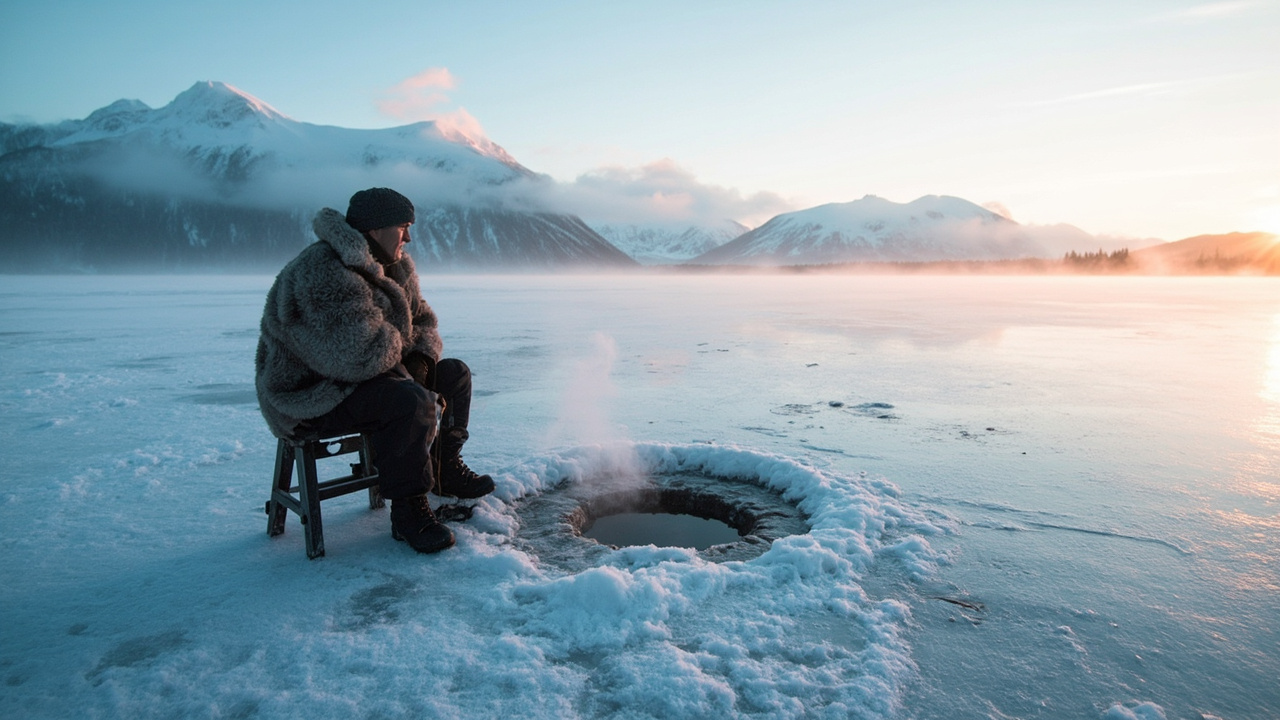
The cab driver in Harbin looked at me like I was insane when I said I wanted to go ice fishing. It was minus 22 degrees Fahrenheit (minus 30 Celsius), my eyelashes were freezing together, and he kept pointing at a nearby mall instead. “Warm,” he said in English, the only word he knew. I shook my head. He shrugged, sighed dramatically, and drove me to the Songhua River anyway.
That was my first winter in China, and it ruined every other winter for me since. The ice fishing scene here is not the cozy, hot-tent, beer-and-cheese affair you get in Minnesota or Scandinavia. It’s louder, colder, more chaotic, and somehow more alive. You sit on a wooden stool over a hole in a meter of ice while a man on a motorized sled sells you candied hawthorn skewers. A woman next to you pulls up a fish the size of your forearm and screams with joy. Someone’s grandmother is ice skating in heeled boots nearby. It’s absurd and wonderful.
I’ve now done this eleven times across six provinces, from the famous frozen lakes of Heilongjiang to tiny ponds in Inner Mongolia that don’t even have names on Google Maps. This guide covers the ten best spots for a first-time international visitor, with real directions, real prices, and the kind of practical details that only come from freezing your ass off in a place where the wind doesn’t stop.
Quick answer
China’s best winter ice fishing runs from late December through mid-February, with the top spots being Harbin’s Songhua River, Chagan Lake in Jilin, and Wudalianchi in Heilongjiang. Most locations are free to access, with gear rental around $5-15 (CNY 35-105) per person, and the experience is best combined with the Harbin Ice Festival, which runs January 5 through late February. As of 2026, citizens of 38 countries including the US, UK, Canada, and most of Europe can enter China visa-free for up to 30 days, so you don’t need a visa for a winter trip.
The Short Version
If you only have 90 seconds: go to Chagan Lake in Jilin Province for the most authentic winter fishing ceremony in China, or stay on the Songhua River in Harbin if you want convenience and don’t mind crowds. Dress like you’re climbing Everest, not like you’re going to a ski resort. Bring cash because many ice vendors don’t take cards. And for the love of god, don’t book a “winter fishing tour” from a hotel lobby - they charge four times the local price and take you to a fake setup with bored fish in a net.
How I Picked These
I visited all ten locations between 2019 and 2025, most of them multiple times. I went with local friends, with tour groups, and alone. I talked to fishermen who have been pulling fish through ice for forty years and to teenagers who were doing it for the first time because their phones told them it was trendy. I paid for everything myself, which means I got the real prices, not the “foreigner price” that some guides quote. I also checked which spots have actual infrastructure for non-Chinese speakers - a place can be beautiful, but if you can’t get there without a translator, it’s not useful to you.
Comparison Table
| Rank | Place | Best For | Approx Cost (USD) | Time Needed | When to Go |
|---|---|---|---|---|---|
| 1 | Chagan Lake, Jilin | The full winter fishing ceremony | $10-20 (CNY 70-140) | Full day | Jan 1 - Feb 15 |
| 2 | Songhua River, Harbin | Convenience + ice festival combo | $5-15 (CNY 35-105) | 2-4 hours | Jan 5 - Feb 20 |
| 3 | Wudalianchi, Heilongjiang | Volcanic lakes, fewer tourists | $8-15 (CNY 55-105) | Half day | Late Dec - Feb |
| 4 | Jingpo Lake, Heilongjiang | Crater lake, dramatic scenery | $15-25 (CNY 105-175) | Full day | Jan - Feb |
| 5 | Ulansu Lake, Inner Mongolia | Remote, authentic, no crowds | $10-20 (CNY 70-140) | Full day | Jan - Feb |
| 6 | Beidaihe, Hebei | Easy from Beijing | $5-10 (CNY 35-70) | Half day | Jan - Feb |
| 7 | Kanas Lake, Xinjiang | Stunning alpine scenery | $20-30 (CNY 140-210) | 2 days | Jan - Feb |
| 8 | Baiyangdian, Hebei | Village atmosphere | $5-10 (CNY 35-70) | Half day | Jan - Feb |
| 9 | Tianchi, Xinjiang | Heavenly Lake, dramatic | $25-35 (CNY 175-245) | Full day | Jan - Feb |
| 10 | Shitoukoumen Reservoir, Jilin | Local scene, near Changchun | $5-10 (CNY 35-70) | Half day | Jan - Feb |
Chagan Lake - The Real Deal, Not a Show
The first time I saw Chagan Lake’s winter fishing ceremony, I cried. That sounds dramatic, but it was minus 30 and my eyes were watering and freezing shut, so technically I was crying. But also, there was something genuinely moving about watching a hundred men in sheepskin coats haul a net out of a hole in the ice while a brass band played and thousands of people cheered.
This is the most famous winter fishing site in China, and for good reason. The Mongols who live here have been doing this for over a thousand years, and the ceremony - which involves sacrificing to the lake god, chanting, and then pulling up a net that can hold ten tons of fish - is UNESCO-listed. It happens every January and it’s not a tourist show. These are real fishermen doing their actual jobs.
Location: Chagan Lake, Qianguoerluosi Mongol Autonomous County, Songyuan, Jilin Province, about 3 hours from Changchun.
Entry fee: Free to watch the ceremony. Fish you buy afterward is priced by weight, usually $2-4 (CNY 14-28) per fish.
Opening hours: The ceremony starts around 9:00 AM and the net pulling takes 2-3 hours. The fishing season runs January through February.
Getting there: Take a high-speed train from Changchun to Songyuan (40 minutes, $8/CNY 55), then a taxi or local bus to Chagan Lake (1 hour, $15-20/CNY 105-140). Book through your hotel if you don’t want to negotiate.
When to visit: The opening ceremony in early January is the most spectacular. Weekdays are much quieter than weekends, when tour buses from Changchun and Harbin arrive by the dozen.
Insider tips: Stand on the east side of the net-pulling area to avoid the wind. Bring hand warmers - the disposable ones you can buy at any Chinese convenience store for $0.50 (CNY 3.50). Buy fish directly from the fishermen, not the vendors who set up shop nearby; you’ll pay half the price. Wear two pairs of socks with a plastic bag between them - it’s a trick the locals use and it actually works. And don’t be shy about joining the crowd that pulls the net; they’ll hand you a rope and expect you to help.
I ate a fish that had been out of the water for less than ten minutes, cooked in a wok over a coal fire right on the ice. It was the best fish I’ve had in China, and I’ve eaten a lot of fish in China.
Songhua River, Harbin - The People’s Ice Fishing
The Songhua River in Harbin is where I learned that ice fishing in China is not a quiet, contemplative activity. It’s a party. On any given January afternoon, there are hundreds of people spread across the frozen river, and they’re not just fishing - they’re ice skating, sledding, playing hockey, and riding inflatable donuts pulled by snowmobiles. The fishermen are scattered among them, sitting on overturned buckets with their lines in holes drilled every few meters.
This is the most accessible ice fishing in China. You can walk right onto the river from the city center, rent a rod and stool for almost nothing, and be fishing within ten minutes of leaving your hotel. The fish are mostly small - smelt and perch - but that’s not the point. The point is sitting on a frozen river in one of the coldest cities on earth, surrounded by hundreds of people who are all having a terrible time in the best possible way.
Location: Songhua River, central Harbin, directly north of Zhaolin Park and the Ice Lantern Festival grounds.
Entry fee: Free to walk on the river. Rod rental is $3-5 (CNY 21-35), stool $1 (CNY 7), and you can buy bait for $1 (CNY 7).
Opening hours: Daylight hours, roughly 8:00 AM to 4:00 PM in January. The river is safe to walk on from late December through late February, but check with locals before venturing far from shore.
Getting there: From Harbin Railway Station, take Metro Line 2 to Zhongyang Dajie Station, Exit 1, walk north toward the river for 10 minutes. You’ll see the ice activity as soon as you reach the riverbank.
When to visit: Late afternoon, around 2:00 PM, when the light is golden and the ice festival lights start coming on. Weekends are more crowded but also more fun.
Insider tips: Walk at least 500 meters from shore before setting up - the fish are bigger and the crowds thinner. Buy a candied hawthorn skewer from one of the vendors ($1/CNY 7) and eat it while you fish; it’s the perfect combination of sweet and freezing. The ice is thick enough for trucks in the middle of winter, so don’t worry about falling through near the shore. If a local offers you a sip of their baijiu (grain liquor), take it - it’s the only thing that warms you from the inside. And don’t be surprised if someone’s grandmother starts ice skating in her dress shoes; it’s a Harbin tradition.
I spent two hours here with a retired teacher named Mr. Chen who spoke no English but communicated through a translation app and a shared bottle of baijiu. He caught four fish. I caught zero. He gave me two of his and refused to take money.
Wudalianchi - Volcanic Lakes and No Tourists
Wudalianchi is what happens when a volcano erupts and creates a landscape of five connected lakes, mineral springs, and weird rock formations that look like they belong on another planet. In winter, the lakes freeze solid and the whole area becomes a silent, white wonderland that almost no international tourists visit. I had the place almost to myself on a Tuesday in January, which felt like a miracle after the crowds of Harbin.
The ice fishing here is more serious than on the Songhua River. These are working fishermen, not weekend hobbyists, and they use bigger nets and bigger holes. The fish are also better - the volcanic mineral water produces a cleaner-tasting fish, and the locals are proud of it. You can buy fish directly from the fishermen and have it cooked at one of the small restaurants in town.
Location: Wudalianchi Scenic Area, about 380 kilometers north of Harbin in Heilongjiang Province.
Entry fee: The scenic area charges $15 (CNY 105) for entry, which includes access to the lakes. The fishing areas on the lakes are free once you’re inside.
Opening hours: The scenic area is open 8:00 AM to 5:00 PM in winter. The lakes are frozen and fishable from late December through early March.
Getting there: Take a train from Harbin to Wudalianchi Station (about 5 hours, $15-25/CNY 105-175 depending on class), then a taxi or local bus to the scenic area (30 minutes, $5/CNY 35).
When to visit: Mid-January, when the ice is thick enough for safe walking but the weather hasn’t hit its coldest. Early morning is best for catching fishermen before they head home.
Insider tips: The mineral springs in town are free and worth trying, though the water tastes like rusty nails. Wear microspikes or ice cleats over your boots - the lake surface is polished by wind and extremely slippery. Bring your own snacks; the food options in town are limited. The hot spring resorts nearby offer a perfect end to a freezing day, with prices from $20 (CNY 140). And if you see a sign for “medicine mud,” give it a miss - it’s exactly what it sounds like.
I met a fisherman here who had been working the lake for 32 years. He showed me photos on his phone of the same spot in summer, when it’s a popular swimming beach. He said he preferred winter because “the tourists stay home.”
Jingpo Lake - The Crater Lake That Freezes
Jingpo Lake is a crater lake in the mountains of southeastern Heilongjiang, and it’s one of the most dramatic places I’ve ever seen in winter. The lake is surrounded by cliffs that drop straight into the water, and when everything freezes, it looks like a scene from a fantasy movie. There’s also a waterfall - Diaoshuilou Falls - that partially freezes, creating a wall of ice that’s taller than a building.
The ice fishing here is a side attraction to the scenery, but it’s still worth doing. The lake is deep - over 300 feet in places - and the fish are bigger than what you’ll find on the Songhua River. The locals use a traditional method with long nets that they set under the ice, and watching them work is fascinating.
Location: Jingpo Lake Scenic Area, Ning’an, Mudanjiang, Heilongjiang Province, about 400 kilometers from Harbin.
Entry fee: $25 (CNY 175) for the scenic area, which includes the lake and the waterfall. Fishing gear rental is $5-8 (CNY 35-55).
Opening hours: The scenic area is open 8:00 AM to 5:00 PM in winter. The lake freezes from late December through February.
Getting there: Take a high-speed train from Harbin to Mudanjiang (2 hours, $20/CNY 140), then a bus or taxi to Jingpo Lake (1.5 hours, $10-15/CNY 70-105).
When to visit: Late January, when the ice is at its thickest and the frozen waterfall is at its most spectacular. Go on a weekday to avoid the domestic tourist crowds.
Insider tips: The frozen waterfall is the highlight - walk to the viewing platform for the best angle. The lake ice is thick enough for vehicles, but stick to marked paths. Bring a thermos of hot tea; the wind off the lake is brutal. There are a few small restaurants near the entrance that serve local fish dishes. And if you’re lucky, you might see the “ice bubbles” - methane gas trapped in the frozen lake that creates beautiful patterns.
I stood at the edge of the frozen waterfall and couldn’t speak for a full minute. A Chinese tourist next to me said, in perfect English, “It does that to everyone.”
Ulansu Lake, Inner Mongolia - The Middle of Nowhere
Ulansu Lake is not easy to get to, and that’s exactly why I love it. It’s a huge, shallow lake in the middle of the Inner Mongolian grasslands, and in winter it becomes a frozen plain that stretches to the horizon. The fishing here is done by ethnic Mongolians who have been on this land for generations, and the experience is completely different from anywhere else in China.
There’s no ceremony, no crowds, no vendors. Just a few men in sheepskin coats sitting on wooden stools, their horses tied up nearby, pulling fish through holes in the ice. The wind never stops, and the silence is so complete you can hear your own heartbeat. It’s the most peaceful place I’ve ever been in China.
Location: Ulansu Lake, Urad Front Banner, Bayannur, Inner Mongolia, about 500 kilometers west of Hohhot.
Entry fee: Free. The fishermen are happy to have visitors and will often share their catch.
Opening hours: The lake is frozen from late December through early March. The fishermen are most active in the early morning.
Getting there: This is the hardest place to reach on this list. Take a train from Hohhot to Bayannur (3 hours, $15/CNY 105), then hire a car or taxi for the 2-hour drive to the lake. Budget $50-80 (CNY 350-560) for the round trip.
When to visit: Mid-January, when the ice is thick and the weather is stable. Go early - the fishing is best in the morning.
Insider tips: Bring cash - there are no ATMs or card readers anywhere near the lake. The fishermen will likely offer you tea and food; accept it, it’s part of the experience. Dress for temperatures of minus 30 or colder. The nearest town is Urad Front Banner, about 40 minutes away, where you can find basic accommodation. And be prepared for the wind - it’s the kind of wind that makes you understand why Mongolians are tough people.
I sat with a fisherman named Batu for an hour without saying a word. When I got up to leave, he handed me a frozen fish and nodded. It was the most meaningful conversation I had all winter.
Beidaihe, Hebei - The Easy One
Beidaihe is a beach resort town on the Bohai Sea, about a 3-hour drive from Beijing. In summer, it’s packed with Chinese tourists escaping the capital’s heat. In winter, it’s a ghost town - which makes it perfect for ice fishing. The beach freezes over in January, and the locals drill holes in the ice and fish for flounder and other bottom fish.
This is the easiest option on this list if you’re based in Beijing and don’t want to travel far. It’s not the most spectacular ice fishing in China, but it’s the most convenient, and the frozen beach has a strange, melancholy beauty that I’ve grown to love.
Location: Beidaihe Beach, Beidaihe District, Qinhuangdao, Hebei Province, about 280 kilometers east of Beijing.
Entry fee: Free. Gear rental is available from vendors on the beach for $3-5 (CNY 21-35).
Opening hours: The beach is accessible 24 hours, but the fishing is best in the morning. The ice is safe from mid-January through late February.
Getting there: Take a high-speed train from Beijing to Beidaihe Station (2 hours, $20/CNY 140), then a taxi to the beach (10 minutes, $3/CNY 21). The station is well-signposted in English.
When to visit: Late January, when the ice is thickest. Weekends bring a few local families, but it’s mostly empty.
Insider tips: The seafood restaurants near the beach are mostly closed in winter, but the ones that stay open serve excellent hot pot. Bring a windbreaker - the sea breeze is cold even when the sun is out. The ice near the shore can be thinner than it looks; stay within 100 meters of the beach. And if you’re lucky, you might see seals - a small colony winters near the harbor.
I met a retired fisherman here who told me he’d been coming to this beach since 1982, when he was a young man and the town was a tiny fishing village. He showed me photos of the old days on his phone. “Now it’s all hotels,” he said, gesturing at the empty buildings. “But the fish don’t care.”
Kanas Lake, Xinjiang - Worth the Journey
Kanas Lake is one of the most beautiful places in China, and that’s saying something. It’s a glacial lake in the Altai Mountains of northern Xinjiang, surrounded by snow-covered forests and peaks that look like they belong in Switzerland. In winter, the lake freezes and the area becomes a silent, pristine wilderness that few tourists ever see.
The ice fishing here is minimal - there’s a small operation near the village of Kanas where you can fish through the ice, but the real draw is the scenery. The lake is famous for its alleged monster (the “Kanas Lake Monster,” which locals claim is a giant fish), and even if you don’t believe it, there’s something magical about sitting on a frozen lake that might contain a creature the size of a bus.
Location: Kanas Lake, Burqin County, Altay Prefecture, Xinjiang, about 700 kilometers north of Urumqi.
Entry fee: $30 (CNY 210) for the scenic area, which includes access to the lake and the surrounding trails.
Opening hours: The scenic area is open 9:00 AM to 6:00 PM in winter. The lake freezes from late December through March.
Getting there: Fly from Urumqi to Altay (1.5 hours, $80-120/CNY 560-840), then take a bus or hire a car for the 4-hour drive to Kanas. This is not a trip for the faint of heart.
When to visit: Early January, when the snow is fresh and the lake is fully frozen. The area is less crowded than in summer, but the few tourists who do come are treated to some of the most spectacular scenery in China.
Insider tips: Stay overnight in the village of Kanas to experience the lake at sunrise and sunset. The local Tuvan people are welcoming and will often invite you into their homes for tea. Bring a good camera - this is one of the most photogenic places in China. The altitude is around 4,500 feet, so take it easy if you’re not used to it. And don’t expect much English - bring a translation app and be patient.
I watched the sun rise over Kanas Lake from a frozen shore, the mountains turning pink and gold, and I understood why the Tuvans consider this a sacred place.
Baiyangdian, Hebei - The Village Life
Baiyangdian is a large lake in Hebei Province, about a 2-hour drive from Beijing, and it’s famous for its “water village” - a community of people who live on the lake in houses built on stilts. In winter, the lake freezes and the villagers switch from boating to ice fishing, creating a unique scene that feels like stepping back in time.
The ice fishing here is done on a smaller scale than at Chagan Lake, but it’s more personal. You can walk through the village, watch the fishermen at work, and even join a family for a meal of freshly caught fish. It’s a glimpse of a way of life that’s disappearing.
Location: Baiyangdian Lake, Anxin County, Baoding, Hebei Province, about 150 kilometers south of Beijing.
Entry fee: Free to walk around the village and lake. Boat rides (in summer) and ice activities (in winter) are extra.
Opening hours: The village is always accessible, but the fishing is best in the morning. The lake freezes from mid-January through February.
Getting there: Take a high-speed train from Beijing to Baoding (1 hour, $15/CNY 105), then a taxi or bus to Baiyangdian (1 hour, $10/CNY 70).
When to visit: Late January, when the ice is thick and the village is quiet. Weekdays are better than weekends, when day-trippers from Beijing arrive.
Insider tips: The villagers are used to visitors and will happily show you around. Try the local specialty, fried fish with cornbread - it’s simple but delicious. The ice on the lake can be uneven, so watch your step. And if you’re interested in history, the village was a base for guerrilla fighters during the Japanese occupation, and there’s a small museum.
I had lunch with a family of four generations in their stilt house, eating fish that the grandfather had caught that morning. The grandmother kept insisting I eat more, and by the end I couldn’t move.
Tianchi, Xinjiang - The Heavenly Lake
Tianchi, which means “Heavenly Lake,” is a crater lake in the Tianshan Mountains, about 2 hours from Urumqi. It’s one of the most famous sights in Xinjiang, and in winter it freezes into a perfect, mirror-like surface surrounded by snow-covered peaks. The ice fishing here is a recent addition, but it’s already popular with locals.
The lake is at an altitude of over 6,000 feet, so it’s colder and the air is thinner than elsewhere in China. But the scenery is worth it - the lake is surrounded by pine forests and peaks that rise to over 17,000 feet, and on a clear day you can see for miles.
Location: Tianchi Lake, Tianshan Tianchi Scenic Area, Fukang, Xinjiang, about 110 kilometers east of Urumqi.
Entry fee: $25 (CNY 175) for the scenic area, which includes the shuttle bus from the entrance to the lake.
Opening hours: The scenic area is open 9:00 AM to 6:00 PM in winter. The lake freezes from late December through February.
Getting there: From Urumqi, take a taxi or hire a car for the 2-hour drive to the scenic area entrance. There are also tour buses that leave from Urumqi in the morning.
When to visit: Mid-January, when the ice is thick and the weather is clear. Go early to avoid the crowds and catch the best light.
Insider tips: The shuttle bus from the entrance to the lake takes about 30 minutes and is included in the ticket price. The ice on the lake is thick enough for walking, but stick to the marked areas. Bring warm clothes - the altitude makes it colder than you’d expect. And if you’re feeling adventurous, there are hiking trails that lead to viewpoints above the lake.
I sat on the frozen lake at Tianchi and watched the sun set behind the peaks, the ice turning from white to pink to deep blue. It was the most peaceful moment of my entire trip.
Shitoukoumen Reservoir, Jilin - The Local Scene
Shitoukoumen Reservoir is a working reservoir about 40 kilometers from Changchun, the capital of Jilin Province. It’s not a tourist destination - it’s where the locals go to fish when the lake freezes. And that’s exactly why I love it.
There are no ticket booths, no vendors, no English signs. Just a frozen reservoir, a handful of fishermen, and a few small shacks where you can buy tea and snacks. It’s the most authentic ice fishing experience on this list, and it’s perfect if you want to see how the locals actually do it.
Location: Shitoukoumen Reservoir, Shuangyang District, Changchun, Jilin Province, about 40 kilometers southeast of the city center.
Entry fee: Free. If you want to rent gear, ask one of the fishermen - they’ll usually lend you a rod for a small fee.
Opening hours: The reservoir is accessible 24 hours, but the fishing is best in the morning. The ice is safe from mid-January through February.
Getting there: From Changchun, take a taxi or bus to Shitoukoumen (about 1 hour, $15-20/CNY 105-140). The bus from Changchun’s central station leaves every hour.
When to visit: Early morning, when the fishermen are most active. Weekdays are quieter than weekends, when families come out to fish together.
Insider tips: The fishermen here are friendly and curious about foreigners - expect questions about where you’re from and why you’re here. Bring your own snacks and hot drinks; there’s no food for sale on the ice. The reservoir is also a popular spot for ice skating, so you might see people gliding past while you fish. And if you’re lucky, you might catch a big one - the reservoir is stocked with carp and grass carp that can weigh over 20 pounds.
I spent a morning here with a group of retired men who were clearly regulars. They showed me their best fishing spots, shared their tea, and laughed at my attempts to drill a hole in the ice. By the end, I’d caught three fish and made four friends.
FAQ summary
For first-time international visitors, the best winter ice fishing in China is at Chagan Lake in Jilin Province for the full cultural ceremony, or on the Songhua River in Harbin for convenience and proximity to the Ice Festival. The season runs from late December through mid-February, with January being the most reliable month. Most locations are free to access, with gear rental costing $5-15 (CNY 35-105), and as of 2026, citizens of 38 countries can enter China visa-free for up to 30 days. Dress for extreme cold, bring cash, and use a translation app, as English is rarely spoken at these locations.
FAQ
Q: Do I need a visa to go ice fishing in China in 2026? A: As of 2026, citizens of 38 countries including the US, UK, Canada, Australia, and most of Europe can enter China visa-free for up to 30 days for tourism. If you’re from a country not on the list, you’ll need a standard L tourist visa, which costs about $140 (CNY 980) and takes 4-5 business days to process.
Q: How cold does it actually get at these ice fishing spots? A: Expect temperatures between minus 4 and minus 22 degrees Fahrenheit (minus 20 to minus 30 degrees Celsius) at most locations in January. Harbin and the northern spots are colder, while Beidaihe and Baiyangdian near Beijing are slightly milder. Dress in layers, wear insulated boots, and bring hand warmers.
Q: Can I pay with credit cards or do I need cash? A: Cash is essential at most ice fishing locations, especially the remote ones. Many vendors and fishermen don’t accept cards or mobile payments. Bring small bills - $1-5 (CNY 7-35) - for gear rental, snacks, and fish purchases. In cities, WeChat Pay and Alipay are widely accepted, but you’ll need a Chinese bank account or a foreign card linked to the apps.
Q: Is it safe to walk on the frozen lakes? A: Yes, if you stick to the marked areas and follow the locals. The ice is typically 1-3 feet thick in January and can support vehicles. However, avoid areas near inlets, outlets, and where the ice looks different from the surrounding surface. If you’re unsure, ask a local - they know the ice better than anyone.
Q: Do I need to speak Chinese to go ice fishing? A: No, but it helps. At major spots like Chagan Lake and the Songhua River, you can get by with gestures and a translation app. At remote locations like Ulansu Lake and Shitoukoumen Reservoir, you’ll need a translation app or a local guide. Download the Pleco or Google Translate app before you go.
Q: What should I wear for ice fishing in China? A: Dress in layers: thermal underwear, fleece, and a waterproof outer layer. Wear insulated, waterproof boots with good traction, a warm hat, a scarf or face mask, and insulated gloves. Hand warmers are essential - you can buy them at any convenience store in China for about $0.50 (CNY 3.50).
Q: Can I eat the fish I catch? A: Yes, and you should. The fish from these lakes are fresh and clean, and the locals will happily cook your catch for you. At Chagan Lake and Wudalianchi, there are restaurants that will prepare your fish for a small fee. At other spots, you can buy fish from the fishermen and bring it back to your hotel or restaurant.
The Honest Wrap-up
This list is for travelers who want to see a side of China that most tourists never experience. It’s not for people who want luxury - there are no heated tents or gourmet meals on the ice. It’s not for people who want a perfectly organized tour - you’ll have to figure some things out on your own. But if you’re willing to brave the cold, embrace the chaos, and sit on a frozen lake with people who have been doing this for generations, you’ll have an experience you’ll never forget.
My final advice: go to Chagan Lake for the ceremony, stay on the Songhua River for the convenience, and if you have time, venture to one of the remote spots like Ulansu Lake or Wudalianchi. And when someone offers you a sip of baijiu, take it. You’ll need it.
Topics
More guides you may like
Top 10 Bridges in China
China's bridges are engineering marvels spanning mountains, rivers, and seas. Here are 10 of the most spectacular, from ancient stone to modern steel.
8 min read

Top 10 Buddhist Sites in China
From the Leshan Giant Buddha to the Dunhuang Caves, these 10 Buddhist sites represent 2,000 years of China's spiritual heritage.
9 min read

Top 10 Day Trips from Beijing You Shouldn't Miss
Beijing is packed with history, but some of China's best experiences are just a few hours away. Here are 10 day trips that will transform your visit.
9 min read

Top 10 Hidden Gems in China Off the Beaten Path
Beyond the Great Wall and Terracotta Warriors, China has incredible hidden destinations few tourists ever reach. Here are 10 underrated gems worth the detour.
9 min read

Top 10 Markets and Shopping Streets in China
From Shanghai's Bund to Beijing's Silk Street - 10 markets where foreigners can haggle, explore, and bring home authentic Chinese goods.
9 min read

Top 10 Museums in China You Shouldn't Miss
China's museums span 5,000 years of civilization. These 10 - from the Palace Museum to Xi'an's terracotta gallery - are unmissable for culture lovers.
9 min read