
Jilin Rime Ice Festival: The Complete 2026 Guide
The taxi dropped me at the edge of the Songhua River at 6:40 AM, and the cold hit me like a door slamming shut.
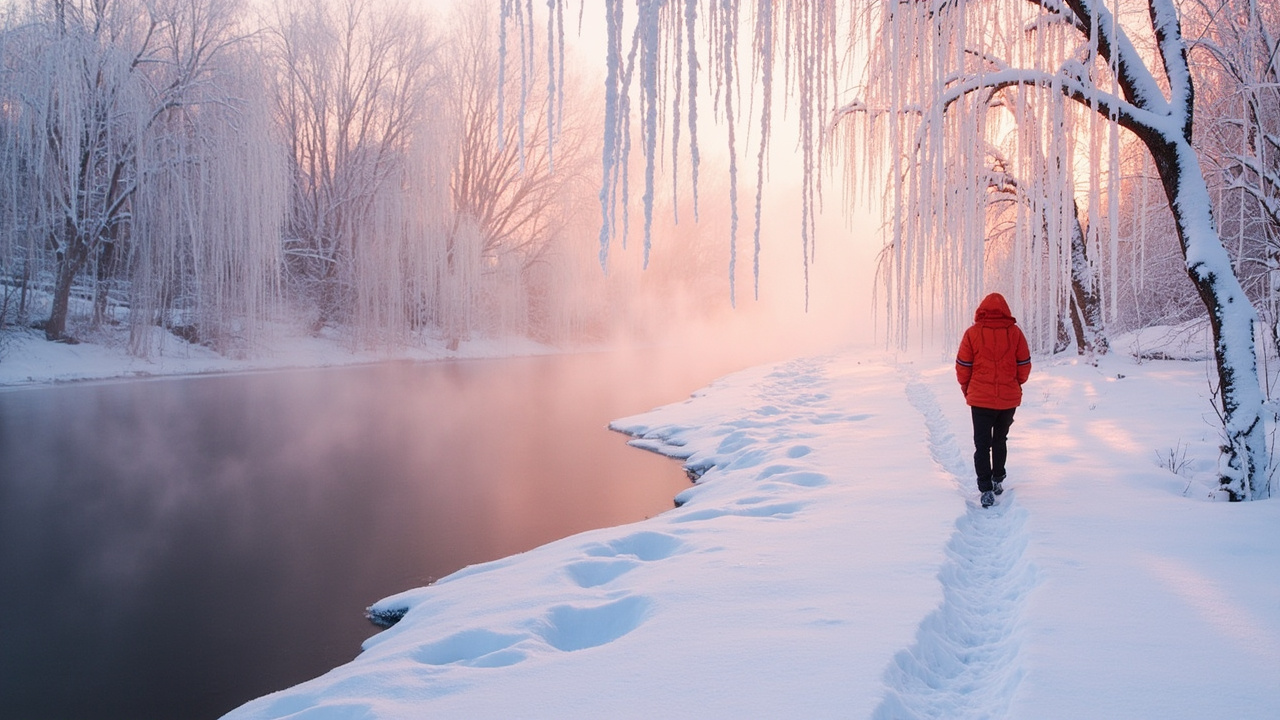
The taxi dropped me at the edge of the Songhua River at 6:40 AM, and the cold hit me like a door slamming shut. Minus 22 degrees Celsius, my phone battery already dropping. But I forgot about the cold when I saw the trees. Every branch, every twig, every needle was encased in thick white frost, so heavy the willows bent toward the river like old men. The fog from the unfrozen water rolled through the willow grove, and for a moment I couldn’t tell where the river ended and the sky began. A Chinese photographer next to me, bundled so only his eyes showed, said something I couldn’t understand, then pointed at the trees and made a gesture like an explosion. He was right. It looked like winter had detonated.
The Jilin Rime Ice Festival is one of China’s four great natural wonders, alongside the Three Gorges, the Guilin karst landscape, and Yunnan’s Stone Forest. Every winter, the Songhua River stays open because of the warm water discharged from the Fengman Hydropower Station upstream. The temperature difference between the water and the freezing air creates thick fog, and when that fog hits the willow trees along the riverbank, it freezes into rime ice. The result is a forest of white crystal that lasts from late December through February. I’ve been to Harbin’s ice lantern festival, which is spectacular in a man-made way. This is different. This is nature doing something you can’t replicate with colored lights and scaffolding.
This guide covers everything you need to know for the 2026 season: how to get there, when to go, what to pay, and the mistakes I made so you don’t have to. I’ve been to Jilin City twice for the rime festival, and I’ve learned the hard way that the difference between a magical morning and a disappointing one comes down to a few specific decisions you make the night before.
Quick answer
The Jilin Rime Ice Festival runs from late December 2025 through February 2026, with the best viewing between 6:30 AM and 9:00 AM when the fog is thickest. The main viewing areas along the Songhua River in Jilin City are free to enter. For most international visitors, China’s visa-free transit policy (240 hours, or 10 days) covers a trip, and the total cost for a weekend visit from Beijing is roughly $300-400 USD (2,100-2,900 CNY) including flights, hotel, and meals.
The Short Version
If you only have 90 seconds, here’s what matters. Go to the Wulajie Rime Island (雾凇岛) if you want the postcard version, but know it’s crowded and requires a 40-minute drive from the city. Stay in Jilin City proper and walk the river promenade if you want the authentic experience with fewer tourists. Wake up at 5:30 AM, check the local rime forecast before you commit to anything, and be on the riverbank by 6:30. The rime melts by mid-morning, so there’s no such thing as a lazy start here. Skip the paid “scenic areas” inside the city. The best rime I saw was on a random stretch of riverbank near the Wenmiao Temple, with no ticket booth in sight.
How I Picked These
I’ve spent two separate winters in Jilin City, totaling about six days on the ground. The first trip was a disaster. I showed up at 10 AM, the rime had already melted, and I spent the afternoon watching disappointed tour groups shuffle through a fog-free park. The second trip I did it right. I stayed at a hotel near the river, checked the rime forecast app the locals use, and got out before sunrise. I also talked to a lot of people. A hotel receptionist named Zhang Wei drew me a map of her favorite spots. A taxi driver named Liu, who had been driving tourists to the rime island for 15 years, told me which days are worth the trip and which are not. This list combines my own experiences, those conversations, and the practical logistics of getting around as a foreign visitor.
Comparison Table
| Rank | Place | Best For | Approx Cost (USD) | Time Needed | When to Go |
|---|---|---|---|---|---|
| 1 | Songhua River Promenade (City Center) | First-timers, photographers | Free | 2-3 hours | 6:30-9:00 AM |
| 2 | Wulajie Rime Island | Iconic photos, full experience | $8 (60 CNY) ferry | Half day | 6:00-9:00 AM |
| 3 | Zengtong Rime Viewing Area | Fewer crowds, local feel | Free | 2 hours | 6:30-9:00 AM |
| 4 | Longtan Mountain | Panoramic views | Free | 3-4 hours | Late morning |
| 5 | Beishan Park | Rime plus temple culture | Free | 2-3 hours | 7:00-10:00 AM |
| 6 | Fengman Hydropower Station | Understanding the science | Free (outside) | 1 hour | Any time |
| 7 | Jilin City Museum | Context and history | Free | 1-2 hours | Afternoon |
| 8 | Songhua Lake | Rime on a larger scale | $15 (110 CNY) boat | Half day | 7:00-10:00 AM |
| 9 | Night river walk | City lights, no crowds | Free | 1 hour | 6:00-8:00 PM |
| 10 | Yanji (side trip) | Korean-Chinese culture | $50 (360 CNY) train | 1-2 days | Any time |
1. Songhua River Promenade —The One Tourists Miss
I walked this promenade on a Tuesday morning, and for the first hour I had the entire riverbank to myself. A few locals were doing tai chi near the Wenmiao Temple, and an old man was fishing through a hole in the ice, which seemed optimistic given the river was steaming. The rime here is less dramatic than on the island, but it’s more honest. You see it forming on the trees in real time, the fog rolling off the water and coating each branch gradually, like watching someone paint a white picture in slow motion.
The promenade runs along both sides of the Songhua River through the center of Jilin City. The best section is between the Wenmiao Temple and the Jiangwan Bridge, about a 20-minute walk. The rime forms best on the north bank because of wind patterns, but both sides get coverage on good days. What makes this spot special is the contrast: you’re in a working city, with buses and delivery scooters behind you, and in front of you is this impossible white forest.
- Location: Songjiang Middle Road, Chuanying District, central Jilin City
- Entry fee: Free
- Opening hours: 24 hours, but the rime only shows between 6:30 AM and 9:00 AM
- Getting there: From Jilin Railway Station, take Bus 32 or 46 to the Wenmiao stop (about 20 minutes). Or just walk south from the station for 25 minutes. The river is hard to miss.
- When to visit: Weekday mornings are dramatically quieter than weekends. Go at 6:30 AM, not 7:30.
- Insider tips: Check the “吉林雾凇” (Jilin Rime) forecast on WeChat before you go. If the temperature is above minus 15 degrees Celsius, the rime won’t form. Also, the rime melts fast when the sun hits it, so the south bank, which gets sun first, loses its rime by 8:30 AM. Stick to the north bank.
I met a retired teacher here who told me she’d been photographing the rime every winter for 20 years. She showed me her first photo from 2005 on her phone, then the one she took that morning. Same trees, same fog, same white magic. She just smiled and shrugged.
2. Wulajie Rime Island —The Postcard Version
The first time I went to Wulajie, I made every mistake possible. I arrived at 9:30 AM, the rime was gone, and I paid 60 CNY for a ferry ride across a river I could have walked around. The second time, I got there at 6:00 AM, and I understood why people make the trip. The island is a small patch of land in the middle of the Songhua River, covered in willow trees that turn completely white when conditions are right. The fog sits low over the ground, and you walk through it like a ghost.
This is the most photographed rime location in China, and it’s popular for a reason. The density of trees, the low fog, and the open sightlines create compositions you can’t get in the city. But here’s the honest truth: it’s also the most crowded. On good mornings, there are hundreds of photographers jostling for position, many with tripods and serious cameras. If you’re a casual visitor, you’ll still get great photos, but don’t expect solitude.
- Location: Wulajie Town, Longtan District, about 40 minutes northeast of Jilin City center
- Entry fee: Ferry crossing is 60 CNY ($8). The island itself has no additional fee.
- Opening hours: The ferry starts at 6:00 AM. Rime viewing is best before 9:00 AM.
- Getting there: From Jilin Railway Station, take Bus 203 to Wulajie Town (about 50 minutes). Or take a taxi, which costs around 80-100 CNY ($11-14). The ferry dock is a 5-minute walk from the bus stop.
- When to visit: Check the rime forecast the night before. If it’s predicted to be a “level 3” day (the highest rating), go. Otherwise, save your money and stay in the city.
- Insider tips: The ferry can get backed up on weekends, so arrive by 6:00 AM or before. Bring cash for the ferry, as the ticket booth sometimes has card issues. And don’t bother with the “VIP” photo spots on the island that charge extra. The free areas are just as good.
A photographer from Guangzhou told me he’d flown 3,000 kilometers for this specific morning. He checked his camera settings, looked at the rime, and said, “Worth it.” I agreed.
3. Zengtong Rime Viewing Area —The Local’s Choice
I found this place because my hotel receptionist, Zhang Wei, drew me a map. She said, “The tourists go to the island. We go to Zengtong.” She was right. This stretch of riverbank, about 15 minutes south of the city center, has the same rime conditions as the island but maybe 10 percent of the crowd. On the morning I visited, there were maybe 20 people total, mostly locals with phones, not tripods.
The rime here forms on a mix of willows and pine trees, which gives you more variety in your photos. The pines hold the rime differently, with the frost clinging to the needles in a way that looks like white fur. There’s also a small pavilion near the river where you can sit and watch the fog roll in. It’s not as dramatic as the island, but it’s more peaceful, and you can actually hear the ice crackling as it forms.
- Location: Zengtong Village, Fengman District, south of Jilin City
- Entry fee: Free
- Opening hours: 24 hours, best before 9:00 AM
- Getting there: Take Bus 9 from the city center to the Zengtong stop (about 30 minutes). The viewing area is a 10-minute walk from the bus stop, following the path toward the river.
- When to visit: Same conditions as the rest of Jilin. Cold, windless mornings are best.
- Insider tips: There’s a small breakfast stall near the bus stop that sells hot soy milk and fried dough sticks for about 5 CNY ($0.70). Eat there before you walk to the river. You’ll need the warmth. Also, the path to the river can be icy, so wear boots with real traction, not fashion boots.
I sat in that pavilion for 45 minutes, watching the fog thicken and the trees turn white. A local woman came by with her dog, a fluffy husky that seemed to love the cold. She told me, in broken English and gestures, that she comes every morning when the forecast is good. “Beautiful,” she said. “Every time, beautiful.”
4. Longtan Mountain —The Overlook You Shouldn’t Skip
Most visitors never leave the riverbank, which is a mistake. Longtan Mountain, on the east side of Jilin City, offers a view of the entire rime phenomenon from above. From the summit, you can see the Songhua River snaking through the city, steam rising off the water, and the white frost coating the trees along both banks. It looks like the river is breathing.
The climb is not hard, but it’s not a casual stroll either. The stone steps are steep in places, and in winter they’re often icy. I slipped twice on the way up and once on the way down. Take your time, wear good boots, and consider bringing a walking stick. The view from the top is worth the effort, especially in the late morning when the sun hits the river valley and the rime starts to sparkle before it melts.
- Location: Longtan Mountain Park, Longtan District, east of the river
- Entry fee: Free
- Opening hours: 6:00 AM to 6:00 PM
- Getting there: Take Bus 42 or 44 from the city center to the Longtan Mountain stop. The entrance is a 5-minute walk from the bus stop.
- When to visit: Late morning, around 10:00-11:00 AM, when the rime is still visible from above but the sun has warmed the air slightly.
- Insider tips: The summit has a small temple complex that’s worth a look, but the real payoff is the view. Go on a clear day, not a foggy one, or you’ll see nothing. Also, the steps are slickest in the early morning, so wait until the sun has been up for a few hours.
I met a university student named Li Wei at the summit who was practicing his English. He asked me if I’d seen the rime yet. I told him I had, and he nodded seriously. “It is our city’s gift,” he said. “But only if you wake up early enough to receive it.”
5. Beishan Park —Rime and Temples
Beishan Park is where Jilin City’s religious and natural wonders overlap. The park sits on a hill northwest of the city center, and it’s home to several temples and shrines that date back to the Qing Dynasty. In winter, the trees along the paths get the same rime treatment as the riverbank, but here the white frost contrasts with the red and gold temple roofs, which makes for stunning photos.
The park is also a social hub. On winter mornings, you’ll see groups of retirees doing tai chi, women dancing with fans, and men playing Chinese chess on stone tables, their breath visible in the cold air. It’s the most “local” experience on this list, and it’s completely free. The rime here is less dense than on the river, but the setting makes up for it.
- Location: Beishan Park, Chuanying District, northwest of the city center
- Entry fee: Free
- Opening hours: 6:00 AM to 6:00 PM
- Getting there: Take Bus 1, 7, or 8 to the Beishan Park stop. The main entrance is a 3-minute walk from the bus stop.
- When to visit: 7:00-10:00 AM, when the morning activities are in full swing and the rime is still intact.
- Insider tips: The park has multiple entrances. Use the south gate, which is closest to the temple complex. Also, the tea house near the main temple serves hot tea for 15 CNY ($2), and it’s a good place to warm up before heading back out. Don’t feed the park cats, no matter how hungry they look. They’re fed by the temple monks and have a strict diet.
An elderly man at the park saw me struggling with my camera gloves and took pity on me. He showed me his trick: cut the fingertips off a cheap pair of wool gloves and wear them under your camera gloves. “Then you can press the button,” he said in English, which surprised me. “I learned this in the army.”
6. Fengman Hydropower Station —The Reason It All Happens
The rime exists because of a dam. The Fengman Hydropower Station, built by the Japanese in the 1930s and expanded by the Chinese after 1949, releases warm water from the bottom of the Songhua River reservoir. This water stays above freezing even in the coldest winter, which keeps the river open and creates the fog that turns into rime. Understanding this makes the whole phenomenon more impressive.
You can’t go inside the station, but you can see it from the outside, and there’s a small viewing platform near the dam where you can watch the warm water pour out and steam rise into the freezing air. It’s a strange sight, industrial and natural at the same time. The contrast between the warm water and the cold air is what creates the fog, and watching it happen in real time is oddly mesmerizing.
- Location: Fengman Town, Fengman District, about 25 kilometers southeast of Jilin City
- Entry fee: Free (viewing from outside the station)
- Opening hours: The viewing platform is accessible 24 hours, but daylight is better
- Getting there: Take Bus 9 from the city center to the Fengman stop (about 40 minutes). The viewing platform is a 10-minute walk from the bus stop.
- When to visit: Any time during daylight hours. The fog is thickest in the early morning.
- Insider tips: The bus ride to Fengman passes through some nice countryside, so sit on the right side of the bus for the best views. Also, there’s a small museum near the station that tells the history of the dam, but it’s only open on weekdays and the signage is in Chinese. Bring a translation app.
I stood on the viewing platform for 20 minutes, watching the warm water churn and steam. A tour group of Chinese retirees was there, and one of them, a woman with a red scarf, pointed at the water and said something that made the whole group laugh. I didn’t understand it, but I laughed too. Some things translate.
7. Jilin City Museum —The Context You Need
I’m not usually a museum person, but the Jilin City Museum is worth an hour of your time, especially if you’re visiting during a warm afternoon when the rime has already melted. The museum covers the city’s history, including its role as a major shipbuilding center during the Qing Dynasty and its occupation by the Japanese during World War II. There’s also a section on the rime phenomenon itself, with explanations of how it forms and why Jilin City is one of the few places in the world where it happens regularly.
The museum is small by Chinese standards, which is a good thing. You can see everything in about 90 minutes without feeling rushed. The exhibits are in Chinese, but there are English labels on the major pieces, and the staff are friendly even if they don’t speak much English.
- Location: No. 2 Songjiang South Road, Chuanying District, near the river
- Entry fee: Free (bring your passport for registration)
- Opening hours: 9:00 AM to 4:30 PM, closed Mondays
- Getting there: It’s a 15-minute walk from the Wenmiao Temple along the river promenade. Or take Bus 32 to the museum stop.
- When to visit: Afternoon, after the rime has melted and you need indoor activities.
- Insider tips: The museum has a small gift shop with postcards and books about the rime. The postcards are cheap (2 CNY, about $0.30) and make great souvenirs. Also, the museum’s second floor has a viewing balcony that looks out over the river, which is a good spot for photos without the crowds.
A museum guard, an older man with a kind face, saw me reading the English labels and nodded approvingly. He gestured for me to follow him to a corner exhibit about the rime, then pointed at a photo and said, “You go there. Tomorrow morning. Good.” I did. He was right.
8. Songhua Lake —Rime on a Grander Scale
Songhua Lake, the reservoir created by the Fengman Dam, is about 40 minutes from Jilin City, and it offers a different kind of rime experience. Here, the fog forms over the vast expanse of open water, and the rime coats the trees along the shoreline in thicker, more dramatic layers. The scale is bigger, and the scenery is more remote, with forested hills rising from the water.
The downside is accessibility. There’s no direct public transport to the lake, so you’ll need to hire a taxi or join a tour. A taxi from Jilin City will cost about 150-200 CNY ($21-28) each way, and you’ll need to negotiate a waiting time with the driver. It’s worth it if you want to escape the crowds, but it’s not the easiest option for a first-time visitor.
- Location: Fengman District, about 40 minutes south of Jilin City
- Entry fee: Free to view from the shore. Boat tours cost about 110 CNY ($15).
- Opening hours: 24 hours, but the rime is best in the early morning
- Getting there: Taxi or private car from Jilin City. There’s no direct bus.
- When to visit: Early morning, before 9:00 AM, when the fog is thickest.
- Insider tips: If you take a boat tour, go early and sit on the port side, which faces the sunrise. Also, the lake has several small fishing villages along its shore where you can buy fresh fish, but they’re hard to find without a local guide. Ask your taxi driver to take you to one.
My taxi driver, Liu, told me he used to fish on the lake before it froze. “Now I drive tourists,” he said. “But I still come here sometimes, just to look.” He pointed at the rime-covered trees along the shore. “This is better than any fish.”
9. Night River Walk —The City After Dark
Most visitors leave Jilin City by evening, which means they miss the night view of the river. After dark, the city lights reflect off the steam rising from the Songhua River, and the rime on the trees glows under the streetlights. It’s not as dramatic as the daytime version, but it’s more atmospheric, like walking through a scene from a fantasy movie.
The best section for the night walk is between the Jiangwan Bridge and the Wenmiao Temple, the same stretch as the morning promenade. The difference is the crowd. At night, it’s mostly locals walking their dogs or couples on dates. There’s a small night market near the temple that sells grilled skewers and hot drinks, which makes for a good pit stop.
- Location: Songjiang Middle Road, along the river between Jiangwan Bridge and Wenmiao Temple
- Entry fee: Free
- Opening hours: 24 hours, best after 6:00 PM
- Getting there: Walk from anywhere in the city center. The river is the main landmark.
- When to visit: 6:00-8:00 PM, before it gets too cold and the night market closes.
- Insider tips: The night market near the temple has a stall that sells candied hawthorn skewers (糖葫芦) for 10 CNY ($1.40). They’re a classic northern Chinese winter snack, and they’re perfect for eating while you walk. Also, the steam from the river can create icy patches on the walkway at night, so watch your step.
I bought a candied hawthorn skewer from a vendor who was also selling roasted sweet potatoes. She smiled at my attempt to say thank you in Chinese and gave me an extra skewer for free. “For luck,” she said, or at least that’s what I think she said.
10. Yanji —The Worthwhile Side Trip
Yanji is not part of the rime festival, but it’s the best side trip you can take from Jilin City, and it’s a city most international tourists have never heard of. Yanji is the capital of the Yanbian Korean Autonomous Prefecture, home to a large ethnic Korean population that has lived in China for generations. The city feels like a blend of China and Korea, with Korean-language signage everywhere, Korean food on every corner, and a distinct cultural identity you won’t find anywhere else in China.
The train from Jilin City to Yanji takes about 2.5 hours and costs around 50-80 CNY ($7-11) for a second-class seat. Once you’re there, the highlights are the Korean food, the markets, and the surrounding countryside, which has its own winter scenery. It’s not rime, but it’s a different kind of cold-weather beauty, with snow-covered hills and traditional Korean villages.
- Location: Yanbian Korean Autonomous Prefecture, about 300 kilometers east of Jilin City
- Entry fee: Free (city itself)
- Opening hours: N/A
- Getting there: High-speed train from Jilin Railway Station to Yanji West Station (about 2.5 hours). From the station, take a taxi to the city center (about 20 minutes, 30 CNY / $4).
- When to visit: Any time, but winter is especially atmospheric.
- Insider tips: Try the cold noodles (冷面) at a restaurant called Sun Family (孙家), which is famous locally. Yes, cold noodles in winter. It’s a Korean tradition, and it’s better than it sounds. Also, the morning market near the Yanji River has the best street food in the region, including rice cakes and kimchi pancakes.
I ate cold noodles at a small restaurant in Yanji, sitting next to a group of Korean tourists who were visiting from Seoul. One of them, a woman about my age, asked me in English where I was from. When I said America, she laughed. “You came all the way here to eat cold noodles?” she said. “You must be a real traveler.”
FAQ summary
The Jilin Rime Ice Festival runs from late December through February, with the best viewing between 6:30 AM and 9:00 AM when the fog is thickest and the rime is fully formed. The main viewing areas along the Songhua River in Jilin City are free, while the Wulajie Rime Island ferry costs 60 CNY ($8). China’s 240-hour visa-free transit policy covers most international visitors, and the total cost for a weekend trip from Beijing is approximately $300-400 USD (2,100-2,900 CNY). The rime only forms when temperatures drop below minus 15 degrees Celsius, so check the local forecast before committing to an early morning.
FAQ
Q: Do I need a visa to visit the Jilin Rime Ice Festival? A: Most international visitors can use China’s 240-hour visa-free transit policy, which allows stays of up to 10 days for travelers passing through China to a third country. If you’re flying directly into China and staying for less than 10 days, you likely qualify. Check with your airline or the Chinese embassy before you book.
Q: What is the best time of day to see the rime ice? A: The rime forms overnight and is thickest between 6:30 AM and 9:00 AM. After 9:00 AM, the sun starts to melt the frost, and by 10:30 AM, most of it is gone. You need to be on the riverbank by 6:30 AM at the latest.
Q: How cold does it get in Jilin City in winter? A: Daytime temperatures in January typically range from minus 10 to minus 20 degrees Celsius (14 to -4 degrees Fahrenheit). Early mornings can be colder. Dress in layers, wear insulated boots with good traction, and bring hand warmers. Your phone battery will drain faster in the cold, so keep it in an inner pocket.
Q: Can I use my credit card or do I need cash? A: China is largely cashless, and most places accept WeChat Pay or Alipay. However, as a foreign visitor, you may have trouble setting up these apps without a Chinese bank card. Bring some cash as a backup, especially for small vendors, ferry tickets, and street food. Many tourist areas now accept international credit cards, but don’t rely on it.
Q: Do I need a VPN for my phone in China? A: Yes. Google, Facebook, Instagram, WhatsApp, and many other Western services are blocked in China. Download a reliable VPN before you arrive and test it before you land. Also, consider buying a Chinese SIM card at the airport for data, as your home carrier’s roaming may be slow and expensive.
Q: Is English widely spoken in Jilin City? A: No. Jilin City is not a major tourist destination, and English is rarely spoken outside of hotels and major attractions. Download a translation app like Google Translate (with offline packs) or Pleco before you arrive. Most locals are patient and helpful, but you’ll need the app to communicate.
Q: How do I get from Beijing to Jilin City? A: The high-speed train from Beijing to Jilin City takes about 4.5 to 5 hours and costs around 300-400 CNY ($42-56) for second class. There are also flights from Beijing Capital Airport to Jilin Changchun Airport, followed by a 1.5-hour train or bus ride to Jilin City. The train from Beijing is the easiest option.
The Honest Wrap-up
This list is for travelers who want to see something they can’t see anywhere else, who are willing to wake up at 5:30 AM in freezing temperatures, and who understand that the best experiences in China often require a little discomfort. It’s not for people who want a polished, curated experience with English-speaking guides and heated viewing platforms. That exists in Harbin, and it’s fine, but it’s not this.
If you’re going to go, go in January, when the rime is most reliable. Check the forecast the night before, set two alarms, and get to the river before the sun. And when you’re standing there, watching the fog roll off the water and the trees turn white, take a moment to just look. No camera. No phone. Just look. That’s the moment you came for.
Topics
More guides you may like

Top 10 Bridges in China
China's bridges are engineering marvels spanning mountains, rivers, and seas. Here are 10 of the most spectacular, from ancient stone to modern steel.
8 min read

Top 10 Buddhist Sites in China
From the Leshan Giant Buddha to the Dunhuang Caves, these 10 Buddhist sites represent 2,000 years of China's spiritual heritage.
9 min read

Top 10 Day Trips from Beijing You Shouldn't Miss
Beijing is packed with history, but some of China's best experiences are just a few hours away. Here are 10 day trips that will transform your visit.
9 min read

Top 10 Hidden Gems in China Off the Beaten Path
Beyond the Great Wall and Terracotta Warriors, China has incredible hidden destinations few tourists ever reach. Here are 10 underrated gems worth the detour.
9 min read

Top 10 Markets and Shopping Streets in China
From Shanghai's Bund to Beijing's Silk Street - 10 markets where foreigners can haggle, explore, and bring home authentic Chinese goods.
9 min read

Top 10 Museums in China You Shouldn't Miss
China's museums span 5,000 years of civilization. These 10 - from the Palace Museum to Xi'an's terracotta gallery - are unmissable for culture lovers.
9 min read