
Jingpo Lake Heilongjiang: The Complete 2026 Guide
The train from Harbin rolled past birch forests that were just starting to turn. A woman across the aisle was peeling an apple with a small knife.
The train from Harbin rolled past birch forests that were just starting to turn. A woman across the aisle was peeling an apple with a small knife, the skin coming off in one long ribbon. She caught me watching and offered me a slice. That’s how my first trip to Jingpo Lake started - with a stranger’s apple and a landscape that kept getting greener as we moved south.
Jingpo Lake isn’t on most first-time China itineraries. That’s exactly why you should go. It’s a volcanic crater lake in southeast Heilongjiang, about 400 kilometers from Harbin, and it’s where Chinese tourists go when they want to escape Chinese tourists. The lake itself is massive - 90 kilometers long - and it’s famous for two things: the Diaoshuilou Waterfall (which freezes into a 20-meter wall of ice in winter) and the underground forest at the crater site.
This guide covers everything you need to know for a 2026 trip: how to get there, what it costs, when to visit, and the specific mistakes I made so you don’t have to. I’ve been to Jingpo Lake twice - once in summer, once in winter - and I’m still not sure which was better.
Quick answer
Jingpo Lake is a volcanic crater lake in southeast Heilongjiang Province, about a 4-5 hour train ride from Harbin. The full trip costs roughly $150-250 (CNY 1,100-1,800) per person including transport, one night’s lodging, and entry fees. Best visited in June-September for waterfalls and boating, or December-February for the frozen waterfall and ice fishing. China’s 240-hour visa-free transit policy covers this region for many nationalities, but check your specific passport before booking.
The Short Version
Jingpo Lake is worth the journey if you have 3+ days beyond Harbin. The waterfall alone justifies it - it’s wider than Niagara’s Horseshoe Falls and you can walk right up to it. The underground forest is genuinely weird and wonderful. But the lake itself is just… a lake. Don’t come expecting dramatic fjords. Come for the waterfall, the volcanic geology, and the chance to see a part of China that most foreign tourists never reach. Two days is enough. Three if you want to do the crater hike properly.
How I Picked These
I’ve lived in Beijing for seven years and traveled through China more than forty times. For this guide, I spent five days in the Jingpo Lake area across two trips - one in late August, one in early January. I stayed in a family guesthouse in Bohai Town, ate breakfast with the owners, and got lost on the crater rim trail twice. I also talked to a park ranger who’d worked there for eleven years and a bus driver who told me which months are actually worth visiting (his answer: “June, September, and February. Everything else is a gamble.”). The recommendations below come from those conversations and my own missteps.
Comparison Table
| Rank | Place | Best For | Approx Cost (USD) | Time Needed | When to Go |
|---|---|---|---|---|---|
| 1 | Diaoshuilou Waterfall | The main event - huge falls, ice in winter | $14 entry included in park pass | 2-3 hours | June-Sept or Dec-Feb |
| 2 | Underground Forest | Volcanic crater hike, unique geology | $14 (included) | 3-4 hours | May-Oct |
| 3 | Bohai Town | Local life, rice terraces, hot springs | Free (lodging extra) | Half day | Any season |
| 4 | Lake Cruise | Seeing the lake’s scale | $20-30 (CNY 150-220) | 2-3 hours | June-Sept |
| 5 | Crater Rim Trail | Best views, fewest crowds | Free (park pass required) | 4-5 hours | May-Oct |
| 6 | Ice Fishing Village | Winter experience, local culture | $15-25 (CNY 110-180) | 2-3 hours | Dec-Feb |
| 7 | Jingpo Grand Canyon | Smaller, quieter waterfall | $10 (CNY 75) | 2 hours | June-Sept |
| 8 | Bailong Lake | Photography, morning mist | Free (part of park) | 1-2 hours | Dawn, any season |
| 9 | Volcanic Museum | Geology background | $5 (CNY 35) | 1 hour | Any season |
| 10 | Hancong Village | Hot springs, Korean-Chinese culture | $30-50 for springs | Half day | Winter |
1. Diaoshuilou Waterfall - The reason you came
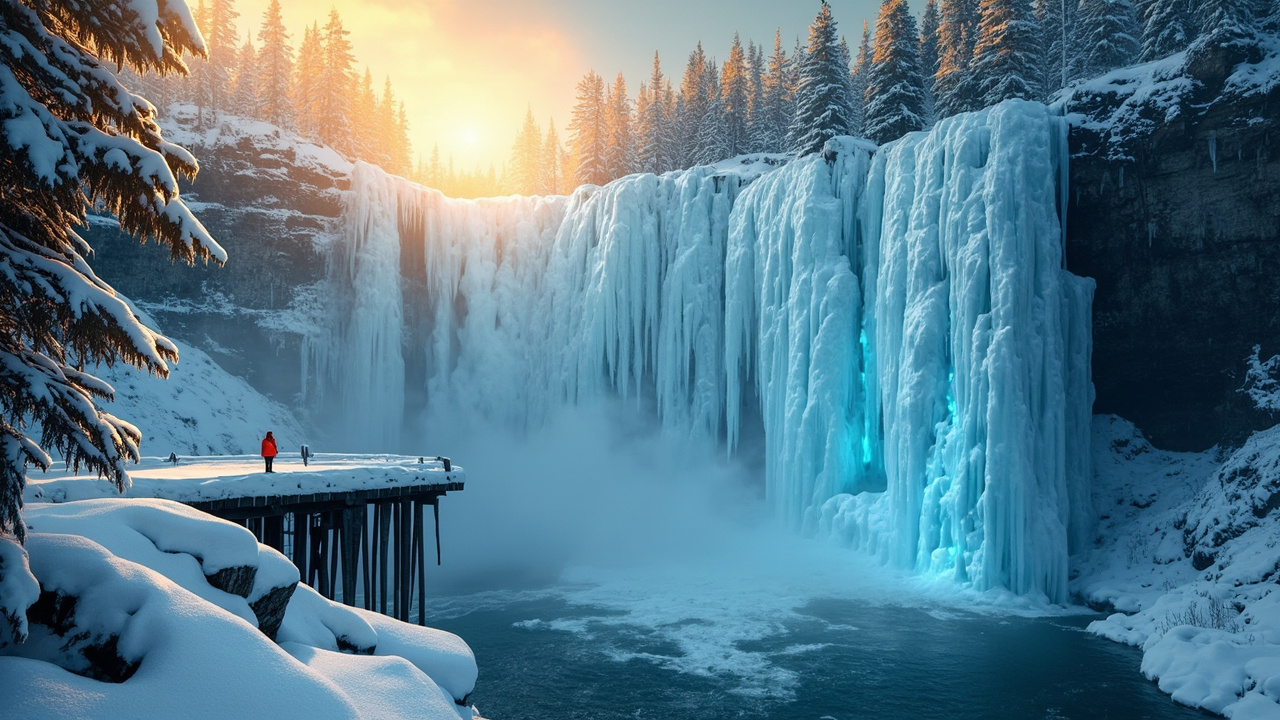
The first thing you hear is the noise. I was still a kilometer away, walking through pine forest, and the sound was already there - a low rumble that you feel in your chest before your ears register it. Then you turn a corner and the whole valley opens up and there it is: a wall of water maybe 40 meters tall and 100 meters wide, falling into a pool that’s impossibly blue-green.
This is the outlet of Jingpo Lake, where the lake narrows and spills over a basalt cliff formed by ancient volcanic eruptions. What makes it special is the access. You can walk right to the base of the falls on a stone path. You’ll get wet. Bring a rain jacket even in summer.
The winter version is completely different. The waterfall freezes into a massive ice column, and you can walk behind it through a cave that locals have carved out. I did this in January and it was one of the strangest, most beautiful things I’ve seen in China - blue ice, muffled sound, your breath fogging in front of you.
Location: Mudanjiang City, Ning’an County, inside Jingpo Lake Scenic Area Entry fee: Included in the park pass ($14 / CNY 100 for the main scenic area) Opening hours: 8:00 AM - 5:00 PM daily (winter closes at 4:30 PM) How to get there: From Bohai Town, take the scenic area shuttle bus (10 minutes, CNY 10) or walk 40 minutes along the lake path When to visit: Early morning before tour groups arrive, or late afternoon for golden light Insider tips:
- The boardwalk to the base of the falls is slippery in winter - wear crampons or shoes with serious grip
- There’s a viewing platform halfway down that most people miss; look for the side path near the souvenir stalls
- The mist from the falls creates rainbows on sunny mornings around 9-10 AM
- You can take a boat to the base of the falls from the lake side, but it’s expensive and not worth it
- Bring a waterproof bag for your phone/camera - the spray is relentless
I met a retired teacher from Jilin who comes here every October. She told me she’s watched the waterfall change for twenty years and it never looks the same twice. I believe her.
2. Underground Forest - The volcano’s secret
There’s a moment on the Underground Forest trail where you’re walking through normal forest - birch, pine, undergrowth - and then the ground just drops away. You’re standing at the rim of a collapsed volcanic crater, and below you is a forest growing inside it. The trees at the bottom are taller than the ones at the top, because they’re protected from wind and have better soil. It looks like a natural amphitheater filled with green.
The trail takes you down into the crater - about 300 meters of switchback stairs - and then through the forest floor. It’s cool and damp down there, and the light filters through the canopy in a way that feels almost underwater. There are interpretive signs in Chinese and English explaining the geology, but honestly, the experience is more about the feeling than the facts.
I got lost on the rim trail on my first visit. The path splits in several places and the signage is inconsistent. If you’re not confident with your navigation, stick to the main loop or hire a guide at the entrance (about $10 / CNY 70 for a group).
Location: About 15 km from the main lake entrance, accessible via the scenic area shuttle Entry fee: Included in the park pass Opening hours: 8:00 AM - 5:00 PM (closed during heavy rain) How to get there: Take the shuttle from the main entrance to the Underground Forest stop (25 minutes) When to visit: May-October; avoid midday in summer when the stairs get crowded Insider tips:
- The stairs are steep and uneven - this is not a trail for people with mobility issues
- There’s a shorter loop (about 1 hour) and a longer one (3-4 hours); the longer one is worth it
- Bring water - there’s no shop inside the crater
- The temperature drops noticeably at the bottom, even in summer
- Look for the old lava tube caves near the entrance - you can walk into one for about 20 meters
My mistake: I wore sneakers instead of hiking shoes and slipped twice on the damp stairs. My knees hurt for two days. Wear proper shoes.
3. Bohai Town - Where you should actually stay
Every guidebook tells you to stay in Mudanjiang city and day-trip to the lake. That’s wrong. Stay in Bohai Town, a small settlement right at the lake’s edge. It’s where the Korean-Chinese community lives, and it’s got a completely different feel from the tourist infrastructure around the main entrance.
I stayed at a family guesthouse run by a woman named Li who cooked breakfast every morning - rice porridge, pickled vegetables, and these incredible scallion pancakes that I still think about. She didn’t speak English, but we communicated through a translation app and lots of pointing. She charged me $18 (CNY 130) per night including breakfast.
The town itself is tiny - a few streets, some restaurants, a small market. There’s a hot spring complex on the outskirts that’s popular with Chinese tourists but almost unknown to foreigners. The water is genuinely hot and mineral-rich, and it’s $8 (CNY 60) for a private room with a tub. After a day of hiking, it’s the best thing in the area.
Location: Ning’an County, on the northwest shore of Jingpo Lake Entry fee: Free (hot springs extra) Opening hours: N/A How to get there: From Mudanjiang, take the bus to Bohai Town (1.5 hours, CNY 25) or arrange pickup with your guesthouse When to visit: Any season Insider tips:
- Book accommodation in advance during Chinese holidays (May 1-5, October 1-7) - it fills up fast
- The Korean restaurants in town serve better food than anything in the scenic area
- Ask your guesthouse owner to call the scenic area shuttle for you - they’ll get you a better rate
- The morning market (6-8 AM) has fresh produce and local specialties like wild mushrooms
- Most guesthouses can arrange a driver for the day for about $40 (CNY 290)
I ate a bowl of cold Korean noodles at a tiny shop in Bohai Town that I still dream about. The owner saw me struggling with chopsticks and brought me a fork without me asking. Not everyone in China is like that, but this town is.
4. Lake Cruise - Seeing the scale
Here’s the thing about Jingpo Lake: it’s 90 kilometers long, and you can’t see any of that from the shore. The lake is so big that it feels more like an inland sea, and the only way to understand its scale is to get on a boat.
The cruise takes you from the main pier to the far end of the lake and back, about 2-3 hours depending on the route. You’ll pass forested shorelines, small islands, and the cliffs that mark the old volcanic caldera rim. The water is deep - over 50 meters in places - and it’s a strange, dark blue that looks almost black in the middle of the lake.
Is it worth it? Yes, but with caveats. The boats are large and can feel crowded during peak season. The commentary is in Mandarin only. And the best views are actually from the deck, which means you’ll be standing the whole time. But there’s something about being on that much water, surrounded by forest, that puts the place in perspective.
Location: Main pier at the scenic area entrance Entry fee: $20-30 (CNY 150-220) depending on route Opening hours: Boats depart hourly from 8:30 AM - 3:30 PM (weather dependent) How to get there: Walk to the pier from the main entrance (5 minutes) When to visit: June-September; morning departures have calmer water Insider tips:
- The fast boat (30 minutes) is cheaper but not worth it - you don’t see anything
- Bring motion sickness medication if you’re prone - the lake can get choppy
- The far end of the lake has a small village where you can get off and hike back (2-3 hours)
- Winter cruises only run if the lake is partially frozen - check with the ticket office
- Don’t buy snacks on the boat - they’re double the price of the shore stalls
I shared my boat with a group of retirees from Shanghai who spent the entire trip taking photos of each other with the same pose. It was annoying at first, then kind of endearing. They offered me sunflower seeds and we communicated through gestures and laughter.
5. Crater Rim Trail - The one most people miss
The Underground Forest gets all the attention, but the Crater Rim Trail is where you go for actual views. It’s a 12-kilometer loop that follows the edge of the old volcanic caldera, with viewpoints that look out over the lake and the surrounding forest. It’s a full day’s hike, and most tour groups don’t do it because it takes too long.
I did this trail on my second visit, and it was the best decision I made. The path is well-maintained but uneven - lots of roots and rocks - and it climbs and drops constantly. The views change every few hundred meters: lake, forest, cliffs, more lake. There’s a section near the northern rim where you can see the waterfall from above, which is a completely different perspective.
The trail is marked with red arrows on trees, but they’re easy to miss. I got turned around once and ended up adding an extra hour to my hike. Download an offline map before you go.
Location: Starts near the Underground Forest entrance Entry fee: Free (requires the park pass) Opening hours: Daylight hours How to get there: Take the shuttle to the Underground Forest stop and follow the signs to the trailhead When to visit: May-October; start early (before 8 AM) to finish before dark Insider tips:
- Bring at least 2 liters of water - there’s no source on the trail
- The trail is exposed in places - bring sun protection even on cloudy days
- Watch for snakes in summer (they’re harmless but startling)
- The best viewpoint is at the 7-kilometer mark, where the trail opens onto a cliff overlooking the lake
- If you’re not fit, skip this one - it’s genuinely strenuous
I met a Korean-Chinese hiker named Park who was training for a mountain climb in Nepal. He gave me a piece of dried squid and told me the trail was “easy compared to what’s coming.” He was right about the trail being manageable, and I hope he made it to Nepal.
6. Ice Fishing Village - Winter’s hidden gem
In January, the lake freezes solid enough to drive a truck on. That’s when the ice fishing village comes alive - a collection of tents and shacks set up on the ice, where locals drill holes and pull out fish that are then cooked on the spot.
I visited in early January, when the ice was about 60 centimeters thick. The village is a strange mix of tourist attraction and real working operation. Some of the fishermen are there for tourists; others are actually catching fish to sell. You can tell the difference by how much equipment they have.
The experience is simple: you walk out onto the ice (which is disorienting at first), visit the fishing holes, and then eat. The fish - usually a local species called “whitefish” - is grilled over a charcoal brazier and served with salt and chili. It’s the freshest fish you’ll ever eat, and the cold air makes it taste even better.
Location: On the lake ice near the main pier, December to February Entry fee: $15-25 (CNY 110-180) for the experience including fish Opening hours: 9:00 AM - 4:00 PM (weather dependent) How to get there: Walk from the main entrance onto the ice (follow the crowds) When to visit: Late December to mid-February, when the ice is thickest Insider tips:
- Dress in layers - it’s often -20C or colder on the ice
- The fish is cooked over open flame, so expect smoke and ash
- Bring cash - some of the smaller stalls don’t accept mobile payment
- The ice can be slippery; wear shoes with good traction
- Ask for the fish “well done” - the locals prefer it slightly undercooked, which might not be safe for foreign stomachs
I watched a group of Chinese tourists take turns pulling a fish through the ice, screaming with laughter every time one got away. The fisherman running the operation just smiled and handed them another line. It was the most joy I saw all winter.
7. Jingpo Grand Canyon - The quieter waterfall
Most tourists see Diaoshuilou and leave. The Jingpo Grand Canyon, about 20 minutes away, is where locals go when they want a waterfall without the crowds. It’s smaller - maybe a third of the height and width - but it’s set in a narrow gorge with walkways that get you right up close to the water.
The canyon is also home to a small Korean-Chinese village, where you can see traditional houses and try local food. The village is a bit touristy, but the food is real - I had a bowl of kimchi stew that was properly spicy, the kind that makes your nose run and your ears pop.
The walk through the canyon takes about two hours, and it’s much easier than the main scenic area. There’s a boardwalk the whole way, and the shade from the gorge keeps it cool even in summer. It’s a good option if you’re traveling with kids or older relatives who can’t handle the Underground Forest stairs.
Location: About 20 minutes from the main scenic area by car Entry fee: $10 (CNY 75) Opening hours: 8:00 AM - 5:00 PM How to get there: Take a taxi from Bohai Town (about $8 / CNY 60) or arrange with your guesthouse When to visit: June-September for the waterfall; the village is interesting year-round Insider tips:
- The waterfall is best in the morning when the sun hits it directly
- There’s a suspension bridge over the gorge that’s wobbly but fun
- The village sells homemade rice wine - try a small cup before buying a bottle
- Combine this with the Underground Forest for a full day (they’re in the same direction)
- The parking lot is small - arrive before 10 AM on weekends
The rice wine was stronger than I expected. I bought a bottle for $4 (CNY 30) and drank it over two nights at my guesthouse, watching the snow fall. It tasted like sweet vinegar and went straight to my head.
8. Bailong Lake - For the photographers
Bailong Lake is a small side lake connected to the main Jingpo Lake, and it’s where you go for the classic postcard shot: mist rising off still water, forested hills in the background, a single boat cutting through the fog. It’s also one of the few places in the area where you can see the lake without any tourist infrastructure.
The best time is dawn, when the temperature difference between the water and the air creates a layer of mist that sits about a meter above the surface. I got there at 5:30 AM on my second visit and had the place to myself for an hour. The only sounds were birds and the occasional splash of a fish.
There’s a small dock where you can rent a rowboat for $5 (CNY 35) per hour. It’s not the most stable boat I’ve ever been in, but it’s the best way to get into the mist. Just be careful - the water is cold even in summer.
Location: East side of the main lake, accessible via a dirt road Entry fee: Free (part of the scenic area) Opening hours: Daylight hours How to get there: Walk from the main entrance along the lake path (30 minutes) or take a taxi When to visit: Dawn, any season (winter mist is especially dramatic) Insider tips:
- The mist is best between 5:30-7:30 AM, before the sun burns it off
- Bring a tripod - the low light at dawn requires slow shutter speeds
- The rowboat rental is cash only
- Mosquitoes are bad in summer - bring repellent
- There’s a small pavilion on the far shore that makes a good subject for photos
I sat on the dock for an hour that morning, just watching the mist move. A fisherman in a small boat appeared and disappeared through the fog like a ghost. He waved, I waved back, and then he was gone.
9. Volcanic Museum - The context you need
Before you see the waterfall or hike the crater, spend an hour at the Volcanic Museum. It’s small and a bit dated, but it explains the geology that makes this place unique - the eruptions that created the lake, the collapse that formed the crater, the lava flows that built the waterfall’s cliff.
The exhibits are in Chinese and English, though the English translations are sometimes rough. There are dioramas and models that show the lake’s formation in stages, and a collection of volcanic rock samples that you can actually touch. The best part is a short film (about 15 minutes) that shows aerial footage of the area - it’s the only way to see the full scale of the caldera.
I went to the museum on my second visit, after I’d already seen the waterfall and hiked the crater. It made everything click into place. If I’d gone first, I would have understood what I was looking at.
Location: Near the main scenic area entrance Entry fee: $5 (CNY 35) Opening hours: 8:30 AM - 4:30 PM How to get there: Walk from the main entrance (5 minutes) When to visit: Any time; it’s a good rainy day activity Insider tips:
- The film is shown every hour on the hour
- The museum is popular with school groups - go early or late to avoid noise
- The gift shop sells volcanic rock specimens for $2-5 (CNY 15-35)
- Combine with the main scenic area for a full day
- There’s a small cafe with decent coffee and terrible instant noodles
A school group came through while I was there, and a boy of about ten asked me in English where I was from. When I said “America,” he showed me a photo of the waterfall he’d taken on his phone. He was prouder of that photo than any of the exhibits.
10. Hancong Village - The hot springs you didn’t know about
The last stop on this list is a small village about 30 minutes from the lake, known for its hot springs and its Korean-Chinese heritage. The village has a traditional feel - low houses with heated floors, kimchi jars lined up on porches, and old women in colorful clothes sitting on street corners.
The hot springs are the main draw. There’s a modern bathhouse with indoor and outdoor pools, but the real experience is at the older, more basic springs where locals go. These are simple concrete pools filled with mineral water that’s genuinely hot - around 45C. You’ll be sharing them with elderly locals who will absolutely stare at you, but in a friendly, curious way.
I spent an afternoon here on my winter trip, alternating between the outdoor pool (where the water was hot and the air was -15C) and the cold plunge pool next to it. The contrast is bracing in the best way. My skin felt incredible for days afterward.
Location: Hancong Village, about 30 minutes from Bohai Town Entry fee: $30-50 (CNY 220-370) for the modern bathhouse; $5-8 (CNY 35-60) for the local springs Opening hours: 8:00 AM - 10:00 PM (modern); daylight hours (local) How to get there: Taxi from Bohai Town (about $12 / CNY 90) When to visit: Winter is best - the contrast between hot water and cold air is the point Insider tips:
- Bring your own towel - the bathhouse charges for rentals
- The local springs don’t have changing rooms - come with your swimsuit on under your clothes
- The water is high in minerals and can stain light-colored swimsuits
- Don’t stay in the hot pool for more than 15 minutes at a time
- The village has a small restaurant that serves Korean-Chinese specialties - the cold noodles are excellent
An elderly woman at the local springs motioned for me to follow her to a smaller, hotter pool that she said was “better.” She was right. We sat in silence for twenty minutes, steam rising around us, and I’ve never felt more welcome in a foreign country.
FAQ summary
Jingpo Lake is a volcanic crater lake in southeast Heilongjiang Province, reachable by a 4-5 hour train from Harbin to Mudanjiang, followed by a 1.5 hour bus to the lake area. The main attractions are the Diaoshuilou Waterfall (freezes in winter), the Underground Forest crater hike, and the lake itself. A typical 2-3 day trip costs $150-250 (CNY 1,100-1,800) per person including transport, lodging, and entry fees. Best visited June-September or December-February. China’s 240-hour visa-free transit policy covers this region for many nationalities, but travelers should verify their specific eligibility before booking.
FAQ
Q: Do I need a visa to visit Jingpo Lake in 2026? A: If you’re eligible for China’s 240-hour visa-free transit policy, you can enter without a visa for up to 10 days, which is enough time for a Harbin and Jingpo Lake trip. Check your nationality against the eligible list before booking. Standard tourist visas (L visa) are also available for those who prefer certainty.
Q: How do I get from Harbin to Jingpo Lake? A: Take a high-speed train from Harbin to Mudanjiang (about 2 hours, $25-40 / CNY 180-290), then transfer to a bus or taxi to Bohai Town or the scenic area (1.5 hours, $5-15 / CNY 35-110). The entire journey takes about 4-5 hours door to door.
Q: Is English spoken at Jingpo Lake? A: Not much. The scenic area has some English signage, but most locals speak only Chinese. Download a translation app like Pleco or Google Translate before you go, and have your destination written in Chinese to show taxi drivers.
Q: What’s the best time of year to visit Jingpo Lake? A: June-September for the waterfall and boating, December-February for the frozen waterfall and ice fishing. May and October are shoulder seasons with fewer crowds but unpredictable weather. Avoid Chinese national holidays (May 1-5, October 1-7) when the area is packed.
Q: Do I need cash or is mobile payment accepted? A: Most places accept WeChat Pay and Alipay, but you’ll need a Chinese bank card or a foreign card linked to these apps. Bring cash as backup - some small vendors and the local hot springs only take cash. ATMs are available in Mudanjiang and Bohai Town.
Q: Do I need a VPN for my phone in China? A: Yes. Google, WhatsApp, Instagram, and Facebook are blocked in China. Set up a VPN before you arrive, and download offline maps and translation dictionaries as backup. You can buy a local SIM card at the airport or use an eSIM from providers like Airalo.
Q: How many days should I spend at Jingpo Lake? A: Two days is enough to see the waterfall, Underground Forest, and take a lake cruise. Three days allows time for the Crater Rim Trail and a visit to the hot springs. Any longer and you’ll run out of things to do.
The Honest Wrap-up
Jingpo Lake is not for everyone. If you’re on a two-week first trip to China and trying to hit Beijing, Xi’an, and Shanghai, skip it. The travel time and the relative lack of English infrastructure make it a commitment. But if you’ve got an extra three days and you want to see something that most foreign tourists never do, it’s absolutely worth the journey.
The waterfall is genuinely world-class. The underground forest is unlike anything else I’ve seen in China. And the chance to spend time in a small town like Bohai, eating Korean-Chinese food and soaking in hot springs, is the kind of experience that makes travel memorable.
My final advice: go in winter. The frozen waterfall is something you’ll never forget, and the ice fishing village is pure joy. Just bring the warmest clothes you own - and a good pair of boots. Your feet will thank you.
Topics
More guides you may like
Top 10 Bridges in China
China's bridges are engineering marvels spanning mountains, rivers, and seas. Here are 10 of the most spectacular, from ancient stone to modern steel.
8 min read

Top 10 Buddhist Sites in China
From the Leshan Giant Buddha to the Dunhuang Caves, these 10 Buddhist sites represent 2,000 years of China's spiritual heritage.
9 min read
Top 10 Day Trips from Beijing You Shouldn't Miss
Beijing is packed with history, but some of China's best experiences are just a few hours away. Here are 10 day trips that will transform your visit.
9 min read
Top 10 Hidden Gems in China Off the Beaten Path
Beyond the Great Wall and Terracotta Warriors, China has incredible hidden destinations few tourists ever reach. Here are 10 underrated gems worth the detour.
9 min read
Top 10 Markets and Shopping Streets in China
From Shanghai's Bund to Beijing's Silk Street - 10 markets where foreigners can haggle, explore, and bring home authentic Chinese goods.
9 min read
Top 10 Museums in China You Shouldn't Miss
China's museums span 5,000 years of civilization. These 10 - from the Palace Museum to Xi'an's terracotta gallery - are unmissable for culture lovers.
9 min read