
Mohe Arctic Village Aurora: The Complete 2026 Guide
The night train from Harbin smelled of instant noodles and coal dust. I remember pressing my face to the cold window as we crossed the frozen Songhua River.
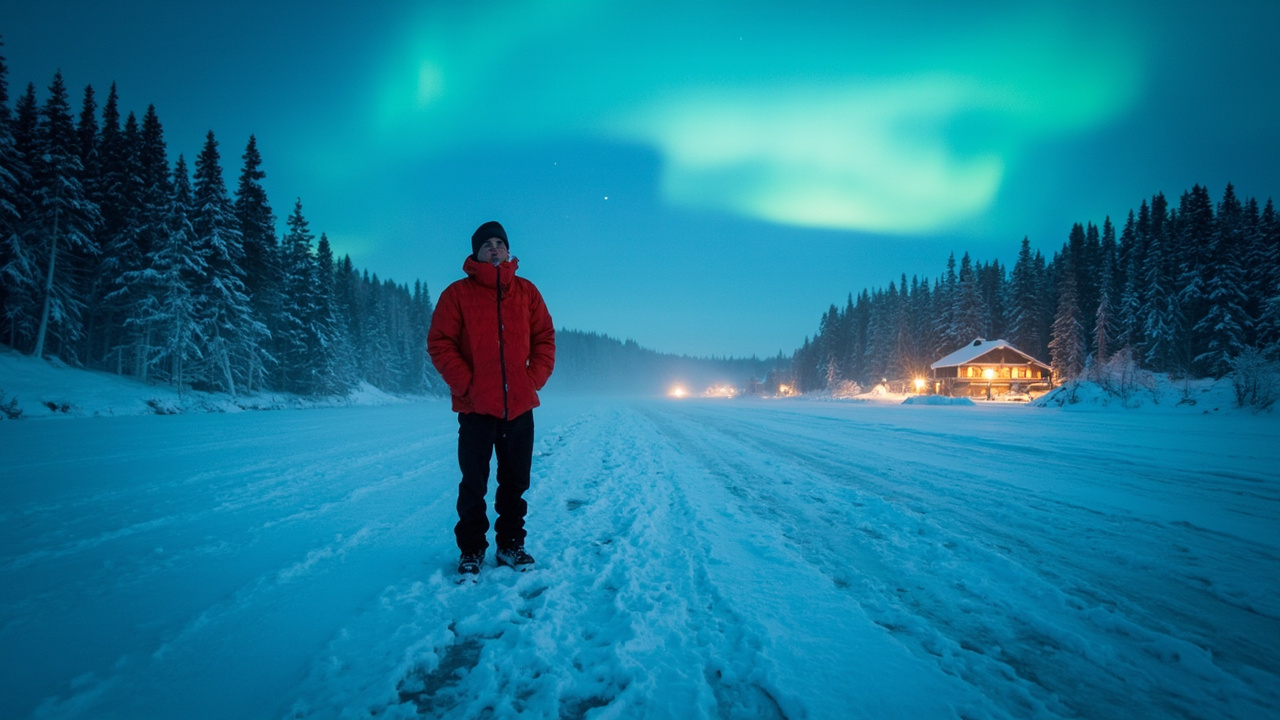
The night train from Harbin smelled of instant noodles and coal dust. I remember pressing my face to the cold window as we crossed the frozen Songhua River, watching the temperature gauge on my phone drop from minus 15 to minus 30 degrees Celsius. The carriage was quiet except for the rhythmic clack of wheels on rail. A man across the aisle was peeling a hard-boiled egg with frozen fingers. We were all heading to the same place: the northernmost point of China, a village called Beiji Cun, Arctic Village, where the aurora occasionally paints the winter sky.
Most people come to China for the Great Wall, the Shanghai skyline, the panda sanctuaries in Chengdu. I’ve been to all of those places, and they’re worth your time. But there’s a different China that exists above the 53rd parallel, a China of pine forests buried in snow, of reindeer herders from the Evenki ethnic group, of winter temperatures that hit minus 40 and make your eyelashes freeze shut. This guide covers the aurora-chasing experience in Mohe’s Arctic Village, plus the practical realities of getting there, staying warm, and actually seeing the lights. You’ll get real prices, real transport details, and the honest truth about what this trip is like.
Quick answer
Mohe Arctic Village (Beiji Cun) is China’s northernmost settlement, reachable by flight from Harbin or Beijing to Mohe Gulian Airport, then a 1.5-hour drive. The aurora season runs from late August through March, but you need clear skies, solar activity, and luck. The 2026 visa-free policy allows citizens of 54 countries, including the US, UK, and most of Europe, to enter China for up to 30 days without a visa. Budget roughly $800-$1,200 (CNY 5,800-8,700) for a 4-day trip from Beijing, including flights, lodging, meals, and local transport.
The Short Version
If you only have 90 seconds, here’s the truth: Arctic Village is remote, freezing, and not guaranteed to show you an aurora. Go anyway. The journey itself is the experience. Fly to Mohe, stay in a homestay with heated kang beds, spend your days walking the frozen Heilongjiang River that borders Russia, and your nights waiting for green lights to dance across the sky. Book for late September or early March when the weather is less brutal. Bring every layer you own. And lower your expectations about the aurora - then let the place surprise you anyway.
How I Picked These
I’ve made this trip twice, once in March 2023 and again in December 2025. The first time, I saw nothing but stars and almost gave up. The second time, I caught a faint green glow that lasted maybe four minutes. Between those trips, I spent hours talking to local homestay owners, the staff at the Mohe Tourism Bureau, and a retired railway worker who’s lived in the village since 1987. This guide combines what I learned from those conversations with practical research on current prices, flight schedules, and the 2026 visa policies. I’m not a meteorologist, so I’ve kept the aurora science simple. I’m a traveler who’s been cold, confused, and eventually rewarded.
Comparison Table
| Rank | Place | Best For | Approx Cost (USD) | Time Needed | When to Go |
|---|---|---|---|---|---|
| 1 | Arctic Village (Beiji Cun) | The aurora, the northernmost point | $50-100/night lodging | 2-3 days | Sep-Mar |
| 2 | Mohe City | Logistics, supplies, backup lodging | $30-60/night | 1 day | Year-round |
| 3 | Heilongjiang River | Walking on a frozen border river | Free | Half day | Dec-Feb |
| 4 | Beiji Star Observation Deck | Best aurora viewing spot | Free | 2-3 hours | Night |
| 5 | Arctic Village Christmas Post Office | Sending postcards from the north | $2-5 | 30 min | Year-round |
| 6 | Songyuan Forest Park | Snow-covered pine forests, quiet trails | $10 (CNY 70) | Half day | Dec-Feb |
| 7 | Beihong Village | Authentic Evenki reindeer herders | $15 (CNY 100) | 2-3 hours | Sep-Mar |
| 8 | Mohe Railway Station | The nostalgic train journey | $30-60 train ticket | 18 hours | Year-round |
| 9 | Guanyin Mountain | Panoramic views of the border | $8 (CNY 55) | 2 hours | Sep-Oct |
| 10 | The Northernmost Point Marker | The symbolic photo spot | Free | 20 min | Year-round |
1. Arctic Village (Beiji Cun) - The Main Event
The first thing you notice is the silence. Not the quiet of a city park, but a deep, swallowing silence that makes you check if your ears still work. Then you notice the cold. It’s not like winter in New York or London. It’s a pressure, a physical weight on your skin. I arrived in late December and my phone died within minutes of stepping outside. That’s the kind of place this is.
Arctic Village is a small settlement of maybe 400 permanent residents, spread along the western bank of the Heilongjiang River. Across the frozen water, maybe 200 meters away, is Russia. You can see the watchtowers. The village has been developed for tourism over the past decade, so you’ll find homestays, small restaurants serving dumplings and hot pot, and a handful of souvenir shops. But it’s still a real place, not a theme park. The locals are mostly farmers and forestry workers who’ve adapted to the tourist economy.
- Location: Beiji Cun, Mohe City, Daxing’anling Prefecture, Heilongjiang Province. The village is about 80 km north of Mohe city center.
- Entry fee: Free. The village itself costs nothing to enter. Some attractions within the village, like the observation deck, are also free.
- Opening hours: 24/7. The village never closes. Shops and restaurants typically operate 8:00 AM to 9:00 PM in winter.
- How to get there: Fly to Mohe Gulian Airport (OHE) from Harbin (1.5 hours, about $60-100 USD / CNY 430-720 one way) or Beijing (3 hours, about $150-250 USD / CNY 1,080-1,800). From the airport, take a taxi or arrange a pickup with your homestay. The drive takes about 1.5 hours and costs $30-40 USD (CNY 220-290). Alternatively, take the K7041 train from Harbin to Mohe Railway Station (18 hours, hard sleeper about $35 USD / CNY 250). From the station, it’s another 1 hour by taxi.
- When to visit: Late September for autumn colors and milder cold (minus 5 to minus 15 degrees Celsius). March for the best combination of dark skies and manageable cold (minus 15 to minus 25). December and January are the coldest (minus 30 to minus 40) but offer the longest nights.
- Insider tips: Book your homestay at least 2 weeks in advance during aurora season. Most homestays include meals in the price - ask for the “bao can” (full board) option. Bring a power bank that works in cold weather; lithium batteries drain fast below freezing. The village has free Wi-Fi in most public buildings, but it’s slow. Download offline maps before you arrive. Don’t expect English signage - have your translation app ready.
- One thing I learned: The homestay owner, a woman named Auntie Wang, insisted I wear her husband’s fur hat on my first night. “You’ll thank me,” she said. She was right. My ears would have frozen without it.
2. Mohe City - The Gateway
Mohe City is the kind of place you pass through, but it’s worth a day of your time. It’s a small administrative center with a population of around 80,000, and it feels like a frontier town. Wide streets, low buildings, and a sense that you’re at the edge of something. The main street has a few decent restaurants serving local specialties like wild mushroom hotpot and grilled fish from the river.
The city is also where you’ll find the Mohe Museum, which tells the story of the region’s history, including its role in the Sino-Russian border disputes of the 19th century. It’s small but worth an hour. More practically, Mohe City is where you should stock up on supplies before heading to Arctic Village. There’s a supermarket on Zhenxing Street where you can buy thermal underwear, hand warmers, and snacks at reasonable prices.
- Location: Mohe City proper, about 80 km south of Arctic Village.
- Entry fee: Free for the city. The museum costs about $2 USD (CNY 15).
- Opening hours: The museum is open 9:00 AM to 5:00 PM, closed Mondays.
- How to get there: From Mohe Gulian Airport, take a taxi into the city (15 minutes, about $5 USD / CNY 35). From Mohe Railway Station, it’s a 10-minute taxi ride.
- When to visit: Any time, but it’s most useful as a staging point before heading north.
- Insider tips: The taxi drivers in Mohe City are honest and will negotiate fair prices. Agree on the fare before you get in. The local dialect is Mandarin with a strong northeastern accent, so use your translation app for anything complex. If you need a SIM card, buy one in Mohe City rather than at the airport - it’s cheaper and the staff at the China Unicom store on Zhenxing Street are helpful.
- One thing I learned: I tried a local dish called “tie guo dun” (iron pot stew) at a restaurant called Laotie Guo. The owner, a man in his 60s named Mr. Chen, told me his family has lived in Mohe for four generations. He served the stew with cornbread baked on the side of the pot. It was the best meal I had in the entire region.
3. Heilongjiang River - Walking on a Frozen Border
There’s something surreal about walking on a river that forms an international border. The Heilongjiang River, known as the Amur in Russia, is frozen solid from late November through early April. In winter, it becomes a highway of ice, with locals crossing it on foot, on snowmobiles, and even in cars when the ice is thick enough.
I walked out onto the ice in March, when the surface was still solid but starting to soften at the edges. The ice was a deep blue-green color, cracked in places with lines that looked like veins. On the Russian side, I could see a small village with smoke rising from chimneys. A border patrol boat was frozen into the ice near the shore. It was quiet, except for the creaking of the ice under my feet, a sound I’ll never forget.
- Location: The river runs along the northern edge of Arctic Village. Access is easy from the village’s northern road.
- Entry fee: Free.
- Opening hours: Accessible 24/7 in winter when the ice is safe. Do not attempt to walk on the river in spring or early winter when the ice is unstable.
- How to get there: From Arctic Village, walk or take a short taxi ride to the northern edge of the village. There’s a path that leads down to the riverbank.
- When to visit: December through February for the thickest ice. March is still safe but the ice starts to melt near the shore.
- Insider tips: Stay at least 50 meters away from the Russian border markers. Chinese border guards patrol the area and will ask you to move back if you get too close. Don’t cross the river, even if the ice looks solid. It’s not worth the risk. Bring a thermos of hot tea - you’ll want it after 20 minutes in the wind.
- One thing I learned: A local fisherman told me that in the 1980s, before the border was strictly enforced, villagers would walk across the ice to trade with Russians. “We’d exchange vodka for Chinese cigarettes,” he said, laughing. “Now we just wave at each other.”
4. Beiji Star Observation Deck - The Best Aurora Viewing Spot
The observation deck is a wooden platform built on a small hill just north of the village. It’s the highest point in the area, which makes it the best place to watch for auroras. I spent three nights there in December, bundled in every layer I owned, staring at the sky.
The first two nights were clear but quiet. No aurora. Just a sky full of stars so bright they seemed fake. On the third night, around 11:30 PM, a faint green glow appeared on the northern horizon. It grew slowly, spreading like a curtain being drawn across the sky. It wasn’t the dramatic, dancing lights you see in photos from Iceland or Norway. It was subtler, more like a pale green mist that shimmered and faded. It lasted about four minutes. I stood there, frozen, not wanting to move.
- Location: On a hill about 1 km north of Arctic Village center. Follow the road past the Christmas Post Office and look for the wooden stairs on your left.
- Entry fee: Free.
- Opening hours: 24/7. The deck is lit by small solar lights, but bring a headlamp for the walk.
- How to get there: From Arctic Village center, walk north for about 15 minutes. The path is well-marked in winter.
- When to visit: Any clear night between September and March. Check the aurora forecast (apps like Aurora Forecast or My Aurora Forecast) and the weather forecast before heading out.
- Insider tips: The best time is between 10:00 PM and 2:00 AM. Bring a chair or a foam pad to sit on - the deck is wooden and cold. Wear a face mask or balaclava; the wind at the top of the hill is brutal. Set up your camera on a tripod before it gets dark. Fumbling with a camera in minus 30 is miserable.
- One thing I learned: I met a photographer from Guangzhou who had been waiting for three nights. He showed me his camera settings: ISO 3200, 15-second exposure, f/2.8. “The aurora here is weak,” he said. “You need a fast lens and patience.” He was right.
5. Arctic Village Christmas Post Office - Mail From the Edge of the World
The Christmas Post Office sounds like a tourist gimmick, and it kind of is. But it’s also genuinely charming. The building is painted bright red and green, with a large Santa Claus figure on the roof. Inside, it’s a small, cozy space with a fireplace, wooden counters, and walls covered in postcards from visitors around the world.
You can buy postcards, stamps, and even have your passport stamped with a special Arctic Village mark. The post office will mail your postcards anywhere in the world. I sent one to my parents in London. It took about three weeks to arrive, but the look on my mother’s face when she saw the postmark was worth it.
- Location: In the center of Arctic Village, next to the main square.
- Entry fee: Free to enter. Postcards cost about $1-2 USD (CNY 7-15), and international stamps are about $2 USD (CNY 15).
- Opening hours: 9:00 AM to 5:00 PM daily.
- How to get there: From the village center, it’s a 5-minute walk. You can’t miss the red and green building.
- When to visit: Any time. It’s busiest in December when the Christmas decorations are up.
- Insider tips: The post office has a special “Arctic Village” postmark that they’ll stamp on your postcards for free. Ask for it. If you want your passport stamped, they’ll do it for a small donation. The staff speak a little English and are used to foreign visitors.
- One thing I learned: The woman behind the counter, a local named Xiao Li, told me she’s been working there since 2015. “Every day, people come in and say they’re sending a postcard to someone they love,” she said. “It’s a nice job.”
6. Songyuan Forest Park - Snow and Silence
If you want to experience the taiga forest without the crowds, Songyuan Forest Park is the place. It’s a protected area of pine and birch forest, about 20 km south of Arctic Village. In winter, the trees are covered in snow, and the paths are quiet and empty. I walked for an hour without seeing another person.
The park has a few marked trails, ranging from easy 30-minute loops to a longer 3-hour hike that goes up to a viewpoint. The snow is deep - bring snowshoes or at least waterproof boots that come up to your ankles. The silence is the thing I remember most. No traffic, no people, just the wind in the pines and the occasional crack of a branch under the weight of snow.
- Location: About 20 km south of Arctic Village, off the main road to Mohe City.
- Entry fee: About $10 USD (CNY 70) in winter, $5 USD (CNY 35) in summer.
- Opening hours: 8:00 AM to 5:00 PM daily.
- How to get there: From Arctic Village, take a taxi or arrange a ride with your homestay. The drive takes about 30 minutes. Taxis cost about $15-20 USD (CNY 110-145) each way.
- When to visit: December through February for the best snow. The park is also beautiful in September when the birch leaves turn gold.
- Insider tips: The park is not well-signposted in English. Download a map before you go. There’s a small tea house near the entrance where you can warm up and buy snacks. The locals recommend visiting on a weekday to avoid the weekend crowds from Mohe City.
- One thing I learned: I got lost on the long trail and had to backtrack for 20 minutes in the snow. It was my own fault - I’d ignored the trail markers. A park ranger found me and walked me back to the entrance, shaking his head the whole way.
7. Beihong Village - The Reindeer Herders
Beihong Village is a small settlement about 40 km south of Arctic Village, home to a community of Evenki people, one of China’s smallest ethnic groups. The Evenki have traditionally been reindeer herders, and while modern life has changed their ways, they still keep a small herd of reindeer in the village.
I visited in December and was greeted by a man named Gerile, who introduced himself as the village’s “reindeer keeper.” He led me to a fenced area where about 20 reindeer were lounging in the snow. They were calm and curious, coming up to sniff my hands. Gerile told me that the Evenki once followed the reindeer across the forests of northern China and Siberia. Now, they’re settled, but they still practice their traditional crafts, including making reindeer leather goods and jewelry.
- Location: Beihong Village, about 40 km south of Arctic Village on the road to Mohe City.
- Entry fee: About $15 USD (CNY 100) for the reindeer area, which includes a guided tour.
- Opening hours: 9:00 AM to 4:00 PM daily.
- How to get there: From Arctic Village, take a taxi (about $25-30 USD / CNY 180-220) or arrange a tour with your homestay. The drive takes about 45 minutes.
- When to visit: Any time, but the reindeer are most active in the morning.
- Insider tips: Bring small snacks to feed the reindeer - they love dried fruit and bread. The Evenki people are welcoming but reserved. Let them guide the conversation. There’s a small shop selling handmade reindeer leather goods. The quality is good, and the prices are reasonable. Buy a pair of reindeer fur gloves - they’re the warmest things I’ve ever worn.
- One thing I learned: Gerile showed me a traditional Evenki shaman drum made of reindeer hide. “My grandfather used this,” he said. “Now I keep it in the museum.” He said it with a mix of pride and sadness.
8. Mohe Railway Station - The Journey Is the Destination
The train journey to Mohe is an experience in itself. The K7041 from Harbin takes about 18 hours, winding through the forests and frozen rivers of Heilongjiang Province. It’s not a luxury ride. The carriages are old, the heating is inconsistent, and the toilets are basic. But it’s a window into a China that most tourists never see.
I took the train in March, sharing a hard sleeper compartment with three Chinese travelers. We spent the journey drinking tea, eating instant noodles, and trying to communicate through a translation app. One of them, a man from Shandong, was going to Mohe to visit his parents. “They moved here for the forestry work in the 1980s,” he said. “Now they’re retired and they love it.” By the time we arrived, we were friends.
- Location: Mohe Railway Station, about 5 km from Mohe City center.
- Entry fee: Train tickets cost about $30-60 USD (CNY 220-430) for a hard sleeper, depending on the season.
- Opening hours: The station is open 24/7, but train departures are limited. Check the schedule in advance.
- How to get there: From Harbin, take the K7041 train, which departs in the evening and arrives in Mohe the next afternoon. From Mohe station, take a taxi to Mohe City (10 minutes, about $3-5 USD / CNY 20-35) or arrange a pickup with your homestay.
- When to visit: The train runs year-round, but winter is the most atmospheric time to travel.
- Insider tips: Book your train ticket at least a week in advance, especially during Chinese New Year (late January to mid-February). Bring your own food - the dining car has limited options. The heating in the carriages can be inconsistent, so bring warm clothes even for the journey. The train passes through some beautiful scenery, so keep your camera handy.
- One thing I learned: The train conductor, a woman in her 50s, told me she’s been working the Harbin-Mohe route for 20 years. “In winter, the tracks can freeze,” she said. “We carry extra coal for the heating.” She said it like it was nothing.
9. Guanyin Mountain - The View From Above
Guanyin Mountain is a small hill about 10 km east of Mohe City, named after the Buddhist goddess of mercy. There’s a temple at the top, but the real draw is the view. On a clear day, you can see the Heilongjiang River winding through the forest, with Russia on the other side.
I hiked up in September, when the birch trees were turning gold. The path was steep but manageable, taking about 40 minutes. At the top, I found a small temple with a statue of Guanyin, surrounded by prayer flags. An elderly monk was sweeping the courtyard. He nodded at me and went back to his work. I sat on a bench, eating a snack I’d brought, and watched the river below.
- Location: About 10 km east of Mohe City, off the main road toward the river.
- Entry fee: About $8 USD (CNY 55).
- Opening hours: 8:00 AM to 5:00 PM daily.
- How to get there: From Mohe City, take a taxi (about $10-15 USD / CNY 70-110) or a local bus. The bus is cheaper but less frequent.
- When to visit: September and October for the autumn colors. The view is also good in winter, but the path can be icy.
- Insider tips: The path is steep and can be slippery, especially after rain or snow. Wear sturdy shoes. The temple at the top is small but worth a look. The monk there is friendly and will let you ring the bell for a small donation. Bring water - there are no shops on the mountain.
- One thing I learned: The monk told me he’s been living on the mountain for 15 years. “In winter, it’s very quiet,” he said. “Sometimes I don’t see anyone for days.” He smiled. “That’s why I like it.”
10. The Northernmost Point Marker - The Symbolic Photo Spot
Every visitor to Arctic Village makes the pilgrimage to the northernmost point marker, a large stone monument that marks the northernmost point of China. It’s a simple thing, a stone pillar with “中国最北点” (China’s Northernmost Point) carved into it, but it’s become a symbol of the journey.
I visited in March, when the snow was still deep. There was a small crowd of Chinese tourists taking photos, laughing and posing. I waited my turn, then stood next to the marker and had a stranger take my photo. It felt a little silly, but also meaningful. I’d come a long way to stand at this spot. The marker is surrounded by a wooden platform, and there’s a small pavilion nearby where you can sit and look out at the river.
- Location: At the northern tip of Arctic Village, about 2 km from the center.
- Entry fee: Free.
- Opening hours: 24/7.
- How to get there: From Arctic Village center, walk north along the main road for about 20 minutes. You can also take a local shuttle or taxi.
- When to visit: Any time, but early morning or late afternoon is best for photos when the light is softer.
- Insider tips: The marker is popular with Chinese tourists, so expect crowds during holidays. Go early in the morning to avoid them. There’s a small gift shop nearby selling souvenirs like keychains and magnets. The prices are reasonable. Don’t expect any English signage - the marker is in Chinese only.
- One thing I learned: A couple from Shanghai asked me to take their photo. We ended up chatting for 20 minutes, huddled together for warmth. They were on their honeymoon, and this was their last stop before heading home. “We wanted to start our marriage at the edge of China,” the bride said. I thought that was beautiful.
FAQ summary
The most important things to know about Mohe Arctic Village: the aurora is visible from late August through March, but you need clear skies and solar activity, and even then, it’s often faint. The best time to visit is late September or March for milder cold. Flights from Harbin take 1.5 hours and cost about $60-100 USD (CNY 430-720) one way; the train takes 18 hours and costs about $30-60 USD (CNY 220-430) for a hard sleeper. The 2026 visa-free policy covers citizens of 54 countries for stays up to 30 days. Budget $800-1,200 USD (CNY 5,800-8,700) for a 4-day trip from Beijing.
FAQ
Q: Do I need a visa to visit Mohe Arctic Village in 2026? A: If you’re a citizen of one of the 54 countries covered by China’s visa-free policy, including the US, UK, Canada, Australia, and most of Europe, you can enter China without a visa for up to 30 days. This policy is valid until December 31, 2026. If your country isn’t covered, you’ll need a standard tourist visa (L visa), which costs about $140 USD (CNY 1,015) and takes 4-5 working days to process.
Q: What’s the best time of year to see the aurora in Mohe? A: The aurora season runs from late August through March, but the best months are September, October, and March when the skies are clearer and the cold is more manageable. December and January are colder (minus 30 to minus 40 degrees Celsius) but offer longer nights. You need clear skies, solar activity, and luck. Check aurora forecast apps before you go.
Q: How do I get to Mohe Arctic Village from Beijing? A: The fastest way is to fly from Beijing to Mohe Gulian Airport (OHE), which takes about 3 hours and costs $150-250 USD (CNY 1,080-1,800) one way. From the airport, it’s a 1.5-hour drive to Arctic Village. Alternatively, you can fly to Harbin (1.5 hours from Beijing) and then take the K7041 train to Mohe (18 hours, about $30-60 USD / CNY 220-430 for a hard sleeper).
Q: Is it safe to walk on the frozen Heilongjiang River? A: Yes, in winter when the ice is thick enough. The river is frozen solid from late November through early April, and locals regularly walk on it. However, stay at least 50 meters away from the Russian border markers, and don’t attempt to cross the river. In spring and early winter, the ice is unstable and you should not walk on it.
Q: What should I pack for a winter trip to Mohe? A: Layers are essential. You’ll need thermal underwear, a fleece or wool mid-layer, a down jacket, waterproof boots with good traction, thick wool socks, gloves, a hat, and a face mask or balaclava. Hand warmers are a lifesaver. Bring a power bank for your phone - batteries drain fast in the cold. Also, pack a thermos for hot drinks.
Q: Do locals speak English in Mohe Arctic Village? A: Very little. Most locals speak Mandarin with a strong northeastern accent. English signage is almost nonexistent. Download a translation app like Google Translate or Pleco before you go, and make sure it works offline. Your homestay host will likely have some basic English, but don’t rely on it.
Q: How much does a trip to Mohe Arctic Village cost? A: A 4-day trip from Beijing will cost roughly $800-1,200 USD (CNY 5,800-8,700) per person, including flights, lodging, meals, and local transport. Lodging in Arctic Village costs about $50-100 USD (CNY 360-720) per night, including meals. Flights from Beijing are the biggest expense at $300-500 USD (CNY 2,160-3,600) round trip.
The Honest Wrap-up
This trip isn’t for everyone. If you want guaranteed aurora views, go to Iceland or Norway. If you want luxury accommodations and English-speaking guides, go somewhere else. But if you’re willing to endure some discomfort for a genuinely unique experience, Mohe Arctic Village will reward you. The cold is brutal, the aurora is unpredictable, and the journey is long. But standing at the northernmost point of China, watching the frozen river stretch toward Russia, with the possibility of green lights dancing overhead - that’s something you’ll remember for the rest of your life.
My final advice: go in late September or early March, when the cold is manageable. Book your homestay in advance. Bring more layers than you think you need. And don’t chase the aurora too hard. Sometimes the best moments are the ones you don’t plan for - the conversation with a reindeer herder, the silence of a snow-covered forest, the warmth of a bowl of dumplings after hours in the cold. That’s what this trip is really about.
Topics
More guides you may like

Top 10 Bridges in China
China's bridges are engineering marvels spanning mountains, rivers, and seas. Here are 10 of the most spectacular, from ancient stone to modern steel.
8 min read

Top 10 Buddhist Sites in China
From the Leshan Giant Buddha to the Dunhuang Caves, these 10 Buddhist sites represent 2,000 years of China's spiritual heritage.
9 min read

Top 10 Day Trips from Beijing You Shouldn't Miss
Beijing is packed with history, but some of China's best experiences are just a few hours away. Here are 10 day trips that will transform your visit.
9 min read

Top 10 Hidden Gems in China Off the Beaten Path
Beyond the Great Wall and Terracotta Warriors, China has incredible hidden destinations few tourists ever reach. Here are 10 underrated gems worth the detour.
9 min read

Top 10 Markets and Shopping Streets in China
From Shanghai's Bund to Beijing's Silk Street - 10 markets where foreigners can haggle, explore, and bring home authentic Chinese goods.
9 min read

Top 10 Museums in China You Shouldn't Miss
China's museums span 5,000 years of civilization. These 10 - from the Palace Museum to Xi'an's terracotta gallery - are unmissable for culture lovers.
9 min read