
Shennongjia Primeval Forest: The Complete 2026 Guide
The rain came down sideways off the mountains, and for a moment, the entire valley disappeared behind a wall of white.
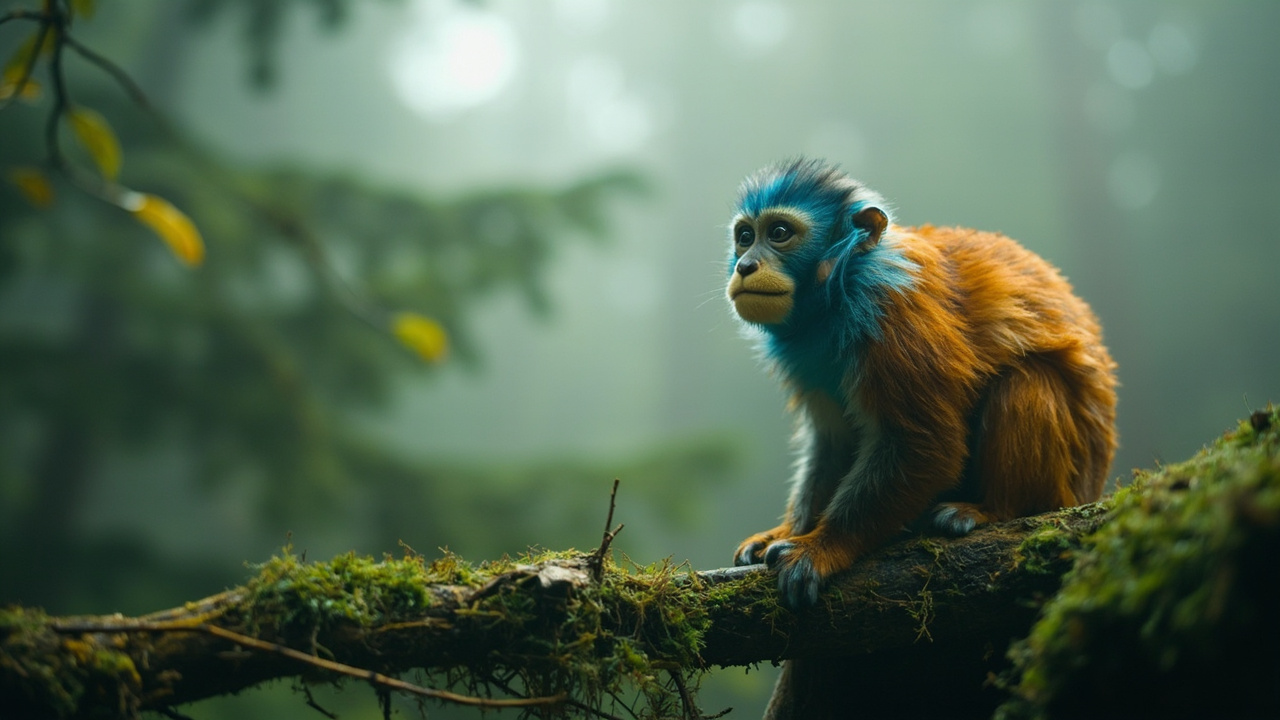
The rain came down sideways off the mountains, and for a moment, the entire valley disappeared behind a wall of white. I was standing at the edge of the Shennongjia boardwalk, soaked through, watching mist swallow the spruce trees one by one. A group of golden snub-nosed monkeys sat in a tree thirty feet away, completely unbothered, grooming each other like they owned the place. Which, technically, they do.
Shennongjia is not a place you stumble upon. It’s a massive forested mountain range in western Hubei Province, a UNESCO World Heritage Site that most international tourists skip entirely. They go to Beijing, Xi’an, Shanghai, Guilin. They miss this. And honestly, I almost did too. It took me three separate trips to China before I finally made the journey out here, and I’ve been kicking myself ever since.
This guide covers everything you need to know before you go - how to get there, where to stay, which of the nine scenic areas are worth your time (and which you can skip), what it costs, and the practical stuff like SIM cards and getting around without speaking Chinese. I’ve been to Shennongjia twice now, once in summer and once in autumn, and I’ve made enough mistakes here that you don’t have to.
Quick answer
Shennongjia is a UNESCO-listed mountain forest reserve in western Hubei Province, China, best visited from May to October for hiking, wildlife (golden snub-nosed monkeys), and cloud-sea views. The main scenic areas are spread across a 100-kilometer stretch, so you need at least 2-3 days and a car or private driver. Entry passes cost roughly $20-30 USD (150-200 CNY) per scenic area, and the closest transport hub is the high-speed rail station at Shennongjia Station, which opened in 2022. China’s 240-hour visa-free transit policy applies to many nationalities, but check your specific eligibility before booking.
The Short Version
If you only have 90 seconds, here’s the deal. Shennongjia is beautiful, remote, and poorly organized. The scenery is genuinely world-class - think Yosemite meets the Scottish Highlands, but with monkeys and more fog. But it’s not easy to reach, the scenic areas are spread out over a huge distance, and you absolutely need your own transport. Don’t try to do it in one day. Don’t skip the monkey valley. And whatever you do, bring a rain jacket. I’m serious about the rain jacket.
How I Picked These
I spent a combined nine days in Shennongjia across two visits - one in late July 2024, one in mid-October 2025. I hired a local driver named Mr. Chen on both trips (more on him later), stayed in three different towns, and visited all nine of the official scenic areas. I also talked to a lot of people: park staff, guesthouse owners, a wildlife researcher who studies the monkeys, and a group of Chinese tourists from Wuhan who shared their lunch with me when I ran out of food on the boardwalk. This guide reflects what I actually saw and paid for, not what the promotional materials claim. Prices are approximate for 2026 and can shift with the seasons.
Comparison Table
| Rank | Place | Best For | Approx Cost (USD) | Time Needed | When to Go |
|---|---|---|---|---|---|
| 1 | Dajiuhu Wetlands | Scenic boardwalk, cloud seas | $25 (180 CNY) | 3-4 hours | Jun-Oct |
| 2 | Golden Monkey Ridge | Wildlife viewing | $20 (140 CNY) | 2-3 hours | Year-round |
| 3 | Shennong Peak | Highest point, panoramic views | $20 (140 CNY) | 3-4 hours | May-Oct |
| 4 | Banbi Mountain | Hiking, fewer crowds | $20 (140 CNY) | 4-5 hours | May-Oct |
| 5 | Tianyan Scenic Area | Cliff walks, stone forests | $25 (180 CNY) | 3 hours | Year-round |
| 6 | Xiangxi Source | Waterfalls, easy walking | $15 (100 CNY) | 2 hours | Apr-Oct |
| 7 | Hongping Canyon | Canyon views, less visited | $15 (100 CNY) | 2-3 hours | May-Oct |
| 8 | Shennong Altar | Cultural site, giant statue | $10 (70 CNY) | 1-2 hours | Year-round |
| 9 | Yanshan Scenic Area | Off-the-beaten-path, quiet | Free | 2 hours | May-Oct |
Dajiuhu Wetlands - The boardwalk that made me forget I was in China
The first time I walked out onto the Dajiuhu boardwalk, the fog was so thick I couldn’t see the mountains. Just wooden planks disappearing into white. I walked for twenty minutes convinced I was about to see something incredible, or nothing at all. Then the wind shifted, the clouds lifted, and the whole valley appeared like someone had pulled back a curtain. Golden grass, winding streams, and mountains stacked behind each other in layers of blue. I stood there for a long time.
Dajiuhu is the crown jewel of Shennongjia, and it’s the one place I’d tell anyone not to miss. It’s a high-altitude wetland - think 1,700 meters above sea level - with a 4.5-kilometer boardwalk that loops through the marsh. In summer, it’s green and lush. In autumn, it turns gold and amber. In winter, it’s frozen and white. I’ve seen it in summer and autumn, and I genuinely can’t pick a favorite.
- Location: Dajiuhu Township, western Shennongjia, about 80 km from Muyu Town
- Entry fee: $25 USD (180 CNY), includes shuttle bus
- Opening hours: 8:00 AM - 5:30 PM, shorter hours in winter
- Getting there: You need a car. From Muyu Town, it’s about a 2-hour drive through mountain roads. Mr. Chen charged me 400 CNY for the round trip.
- When to visit: Early morning for the best chance of clear views, or late afternoon when the tour groups have left. Weekdays are much quieter.
- Insider tips: The shuttle bus drops you at the start of the boardwalk, but you can also walk an extra 500 meters to a viewing platform that most people skip. Also, the wind up here is no joke - bring a windproof layer even in summer. The last shuttle back leaves at 4:30 PM, so don’t dawdle. And bring snacks; the only food options are at the entrance.
I met a retired couple from Shanghai on the boardwalk who had been coming to Dajiuhu every autumn for six years. They told me the secret to the cloud sea is arriving before 9 AM, when the temperature difference is greatest. I tried it the next day. They were right.
Golden Monkey Ridge - The reason I’ll come back to Shennongjia
The monkeys found us before we found them. We were walking up the paved path through the forest, and suddenly there was rustling in the canopy above. Then a face appeared, then another, then a whole troop of golden snub-nosed monkeys, their faces a striking pale blue, their fur a shimmering orange-gold. They moved through the trees like they were dancing. I stood there with my mouth open, and Mr. Chen laughed at me.
This is the only place in China where you can reliably see wild golden snub-nosed monkeys, and it’s the reason Shennongjia is on the UNESCO list. The monkeys here are semi-wild - they’re fed by researchers to keep them in the area, but they still live in the forest and come and go as they please. The viewing area is a large open space with a small research station, and the monkeys are usually around in the morning and late afternoon.
- Location: Xiaolongtan area, about 20 km from Muyu Town
- Entry fee: $20 USD (140 CNY)
- Opening hours: 8:00 AM - 5:00 PM
- Getting there: By car from Muyu Town, about 30 minutes. The road is paved and in good condition.
- When to visit: Morning feeding time is around 8:30-9:00 AM, and the monkeys are most active then. Afternoon visits are hit or miss.
- Insider tips: Don’t bring food - the monkeys are wild and the rangers will be annoyed. Keep a respectful distance; they’re not aggressive, but they’re not pets. The best photos come from the wooden platform at the edge of the clearing, not the main viewing area. And if you see a monkey with a radio collar, that’s one of the research animals - don’t be alarmed, it’s normal.
I watched a researcher named Dr. Wang note down the monkeys’ behavior in a small notebook. She told me the troop has grown from about 40 individuals in 2005 to over 200 now. She also told me the monkeys recognize individual researchers by their jackets. I found that oddly touching.
Shennong Peak - The highest point in central China
The road to Shennong Peak is a switchback nightmare, and I say that with affection. We climbed past spruce forests, past alpine meadows, past a sign that said “Altitude 2,800 meters” and then another that said “3,000 meters.” At the top, there’s a stone marker that reads “Shennong Peak, 3,106 meters” - the highest point in central China. The view, when the clouds cooperate, stretches for a hundred kilometers in every direction.
The peak is named after Shennong, the mythical Chinese emperor who supposedly discovered tea here and tasted hundreds of herbs in this forest. There’s a small temple at the summit, and a boardwalk that loops around the top. It’s not a difficult hike - the road goes almost all the way up - but the altitude makes everything feel harder than it should.
- Location: Western Shennongjia, about 90 km from Muyu Town
- Entry fee: $20 USD (140 CNY)
- Opening hours: 8:00 AM - 5:00 PM
- Getting there: By car from Muyu Town, about 2.5 hours. The road is well-maintained but very winding. Bring motion sickness tablets if you’re prone to car sickness.
- When to visit: Clear days are rare, so check the weather forecast and be flexible. June to September is the most reliable window.
- Insider tips: The summit is often 10 degrees colder than the base, so bring layers. The oxygen at 3,100 meters is noticeably thinner - take it slow. There’s a small restaurant at the base of the peak that does decent noodles. And if you’re lucky enough to get a clear day, the sunrise is spectacular, but you’ll need to stay overnight nearby to catch it.
I made the mistake of running up the final set of stairs to the summit marker. I spent the next ten minutes bent over, gasping, while a group of elderly Chinese tourists walked past me without breaking a sweat. They were very polite about it. I was not.
Banbi Mountain - The hike that almost broke me
Banbi Mountain is not for everyone. It’s a proper hike - 4,000 stone steps that climb 800 meters through dense forest, with no cable car and no shortcuts. The first time I attempted it, I turned back after 20 minutes because I was sweating through my shirt and the path seemed endless. The second time, I made it to the top, and I’m glad I did.
The reward is a ridge-top walk with views over the entire Shennongjia range, plus a section of virgin forest that feels genuinely primeval. The trees here are enormous - spruce and fir that have been growing for centuries, their trunks covered in moss and lichen. I saw a bird I couldn’t identify, heard something large moving in the undergrowth, and felt very small.
- Location: Southern Shennongjia, about 30 km from Muyu Town
- Entry fee: $20 USD (140 CNY)
- Opening hours: 8:00 AM - 5:00 PM
- Getting there: By car from Muyu Town, about 45 minutes. The entrance is well-signposted.
- When to visit: May to October, when the trail is dry. Avoid after heavy rain - the steps get slippery.
- Insider tips: Start early, like 8 AM, to avoid the heat and give yourself time to go up and down. Bring at least 2 liters of water per person. There are no shops on the trail, so pack snacks. The stone steps are uneven, so wear proper hiking shoes, not sneakers. And if you meet other hikers coming down, ask them how much further - the answer will either motivate you or crush you.
I met a university student from Wuhan on the trail who was hiking Banbi for the third time. She told me her grandmother used to live in the mountains here before the reserve was established, and that her family still has a cabin on the other side of the ridge. She pointed at a distant peak and said, “That’s where I spent my summers as a kid.” I didn’t ask why she was hiking the tourist trail instead of visiting the cabin. It felt too personal.
Tianyan Scenic Area - Where the cliffs drop away
Tianyan is the most dramatic landscape in Shennongjia, and the most touristy. The centerpiece is a cliff-top boardwalk that hangs over a 300-meter drop, with views of a stone forest that looks like it belongs in a fantasy movie. The boardwalk is well-maintained and safe, but it’s not for anyone with a serious fear of heights. I watched a woman from Guangzhou cling to the handrail for the entire 2-kilometer loop, inching forward like she was walking on ice.
The stone forest is the main attraction - a field of limestone pillars that have been weathered into bizarre shapes over millions of years. The locals have given them names like “Monkey Watching the Moon” and “Phoenix Spreading Its Wings.” I couldn’t see the monkey or the phoenix, but the shapes were impressive regardless.
- Location: Eastern Shennongjia, about 40 km from Muyu Town
- Entry fee: $25 USD (180 CNY)
- Opening hours: 8:00 AM - 5:30 PM
- Getting there: By car from Muyu Town, about 1 hour. The road is good, but the last 5 km is a steep climb.
- When to visit: Any time of year, but the boardwalk can be icy in winter. Spring and autumn are best for clear views.
- Insider tips: The shuttle bus from the parking lot to the boardwalk entrance costs an extra 10 CNY - worth it. The boardwalk is one-way, so you can’t turn back once you’re on it. There’s a glass-bottomed section near the end that’s more terrifying than it looks. And the stone forest is best photographed in the late afternoon, when the low sun brings out the texture of the rock.
I got stuck behind a group of tour groups at the narrowest part of the boardwalk, and one of the guides, a young woman with a megaphone, was explaining the legend of the stone forest to her group. She caught my eye and switched to English for a sentence: “The legend says these stones were once soldiers who turned to stone.” Then she went back to Chinese. It was a small kindness, and I appreciated it.
Xiangxi Source - The waterfalls you can hear before you see
The sound of Xiangxi Source reaches you before the sight of it. A low rumble that grows as you walk through the forest, until you round a corner and see a curtain of water dropping 50 meters into a deep green pool. It’s not the tallest waterfall in China, but it might be the most beautiful one I’ve seen in the country. The water is so clear you can see the rocks at the bottom of the pool, 10 meters down.
The scenic area is named after the source of the Xiangxi River, which starts here and flows all the way to the Yangtze. There’s a short walking trail that loops past the main waterfall, plus a series of smaller cascades and pools. It’s an easy walk, suitable for families and anyone who doesn’t want to hike 4,000 steps.
- Location: Southern Shennongjia, about 25 km from Muyu Town
- Entry fee: $15 USD (100 CNY)
- Opening hours: 8:00 AM - 5:00 PM
- Getting there: By car from Muyu Town, about 40 minutes. The entrance is on the main road, hard to miss.
- When to visit: April to October, when the water flow is strongest. After heavy rain, the waterfall is spectacular but the trail can be muddy.
- Insider tips: The best photo spot is the bridge about 200 meters upstream from the main waterfall, not the viewing platform right at the base. There’s a small pavilion at the end of the trail where you can sit and listen to the water - do that. The mosquitoes are fierce in summer, so bring repellent. And the trail is shaded, so it’s a good option for a hot day.
I sat on a rock near the pool for half an hour, just watching the water. A Chinese family was having a picnic nearby, and the grandmother offered me a piece of watermelon. I tried to refuse, but she insisted, and we ended up sharing the watermelon in silence, listening to the waterfall. It was one of the most peaceful afternoons I’ve spent in China.
Hongping Canyon - The quiet one
Hongping Canyon is the scenic area that most people skip, and I’m not sure why. It’s smaller than the others, with fewer facilities, but the canyon itself is stunning - a narrow gorge with a river running through it, flanked by cliffs that rise 200 meters on either side. The walking trail follows the river for about 2 kilometers, crossing it several times on small bridges.
The lack of crowds is the main draw. When I visited on a weekday in October, I saw maybe ten other people the entire time. The only sounds were the river, the wind, and the occasional bird. It felt like I had the whole canyon to myself.
- Location: Central Shennongjia, about 35 km from Muyu Town
- Entry fee: $15 USD (100 CNY)
- Opening hours: 8:00 AM - 5:00 PM
- Getting there: By car from Muyu Town, about 50 minutes. The road to the entrance is a bit rough in places.
- When to visit: May to October. The canyon is at its best in autumn, when the maple trees along the river turn red.
- Insider tips: The trail is a loop, so you don’t have to backtrack. The bridges can be slippery when wet - watch your step. There’s a small tea house near the entrance that serves decent local tea. And the canyon is cooler than the surrounding area, so bring a light jacket even in summer.
I met a photographer from Beijing at the tea house who had been coming to Hongping for five years. He told me the canyon is best in late October, when the fog rolls in and the maple leaves are at their peak. He showed me photos from his previous visits, and they were stunning. I told him I’d have to come back. He nodded and said, “Everyone says that.”
Shennong Altar - The statue that looks better from a distance
I’ll be honest - Shennong Altar was my least favorite of the nine scenic areas. It’s a cultural site, not a natural one, and it feels a bit like a theme park. The centerpiece is a massive statue of Shennong, the mythical emperor, standing 21 meters tall on a hilltop. The statue is impressive in scale, but the surrounding area is mostly paved plazas and gift shops.
That said, the altar has its moments. The climb up the 243 steps to the statue is a workout, and the view from the top, over the surrounding forest, is pleasant. There’s also a small museum at the base that explains the Shennong legend and the history of herbal medicine in the region. It’s worth an hour if you’re passing by, but I wouldn’t go out of my way for it.
- Location: Near Muyu Town, about 10 km from the center
- Entry fee: $10 USD (70 CNY)
- Opening hours: 8:00 AM - 5:30 PM
- Getting there: By car from Muyu Town, about 15 minutes. It’s on the main road, well-signposted.
- When to visit: Any time of year. The statue is visible from the road, so you can even see it without entering.
- Insider tips: The best view of the statue is actually from the road below, not from the base. If you’re short on time, skip the entrance fee and just take a photo from the parking lot. The museum has English translations, which is rare in Shennongjia. And the gift shop sells decent herbal teas, if you’re into that sort of thing.
I overheard a tour guide telling her group that Shennong tasted 72 kinds of poison in this forest and discovered the antidote for each one. I have no idea if that’s true, but it’s a good story. The group seemed impressed.
Yanshan Scenic Area - The free one
Yanshan is the only scenic area in Shennongjia that’s completely free, and it shows. The facilities are minimal - a small parking lot, a basic trail, no shuttle bus, no gift shop. But the scenery is genuinely beautiful, and the lack of development means you get a more authentic experience of the forest.
The trail climbs through mixed forest to a viewpoint overlooking a valley that’s mostly untouched. I saw more birds here than anywhere else in Shennongjia, including a pair of pheasants that crossed the trail in front of me. The silence was remarkable. For most of my visit, the only sound was the wind in the trees.
- Location: Northern Shennongjia, about 60 km from Muyu Town
- Entry fee: Free
- Opening hours: No official hours, but the parking lot is open during daylight
- Getting there: By car from Muyu Town, about 1.5 hours. The road is narrow and winding, so drive carefully.
- When to visit: May to October. The trail can be muddy after rain.
- Insider tips: The trail is not well-maintained, so wear sturdy shoes. There are no facilities, so bring everything you need. The viewpoint is about 1.5 km from the parking lot, and it’s worth the walk. And if you see a sign that says “No Entry” partway up the trail, respect it - the forest beyond is a protected core zone.
I got lost on the way back to the parking lot and ended up on a logging road that led nowhere. It took me 20 minutes to find my way back, and I was starting to get genuinely worried when I finally saw the car. Mr. Chen was asleep in the driver’s seat. He woke up, looked at me, and said, “You were gone a long time. I was starting to think the monkeys got you.”
How do I get to Shennongjia from major Chinese cities?
The easiest way is to take a high-speed train to Shennongjia Station, which opened in 2022 on the Zhengzhou-Wanzhou line. From Wuhan, the train takes about 2.5-3 hours and costs around $25-35 USD (180-250 CNY) for second class. From Beijing, it’s longer - about 5-6 hours - and costs $55-70 USD (400-500 CNY). From the station, you’ll need to take a taxi or bus to Muyu Town, the main tourist base, which is about 1.5 hours away. Alternatively, you can fly into Yichang or Shiyan and take a bus from there, but the train is more reliable.
How many days do I need in Shennongjia?
At minimum, two full days. Three is better, especially if you want to see the monkeys, hike Banbi Mountain, and catch the Dajiuhu cloud sea. The scenic areas are spread out, and the driving times between them are significant. If you’re coming from Wuhan, plan for at least four days total, including travel time. I’d recommend basing yourself in Muyu Town, which has the most accommodation and restaurant options.
Is Shennongjia safe for solo travelers?
Yes, but with caveats. The scenic areas are well-maintained and safe, and the local people are friendly. The main risks are the mountain roads, which can be treacherous in bad weather, and the altitude, which can cause headaches if you’re not used to it. I’d recommend hiring a driver for at least part of your trip, especially if you’re not comfortable driving on narrow mountain roads. Mr. Chen charged me about $50 USD (350 CNY) per day for a full day of driving, which I thought was reasonable.
Do I need to book accommodation in advance?
In summer and during Chinese holidays, yes. Muyu Town gets busy in July and August, and the good guesthouses book up quickly. Outside those months, you can usually find a room on the spot. I stayed at a guesthouse called Shanju that cost about $25 USD (180 CNY) per night for a private room. It was basic but clean, and the owner, a woman named Auntie Li, made excellent breakfast noodles.
What should I pack for Shennongjia?
Rain gear is non-negotiable. The weather can change in minutes, and you will get wet. I’d also recommend layers, even in summer - the mountains are cool, and the summit can be cold. Good walking shoes are essential, especially if you plan to hike Banbi Mountain. And bring cash, because some of the smaller shops and restaurants don’t accept cards or mobile payments.
Do I need to speak Chinese to visit Shennongjia?
It helps, but it’s not essential. The main tourist areas have some English signage, and the younger staff at hotels and restaurants usually speak a little English. For everything else, I’d recommend downloading a translation app - I use Pleco for Chinese, and it’s been invaluable. WeChat Pay and Alipay are widely accepted, but you’ll need to set them up with a foreign card, which is possible but takes some effort. A local SIM card is essential - I’d recommend getting one at the airport or train station when you arrive.
FAQ summary
Shennongjia is a UNESCO-listed mountain forest in western Hubei Province, best visited from May to October, with the main tourist base at Muyu Town. The most important practical facts: you need at least 2-3 days, a car or private driver is essential, and the high-speed rail station at Shennongjia Station (opened 2022) is the easiest access point from Wuhan or Beijing. Entry fees range from free to $25 USD (180 CNY) per scenic area, and the must-see sites are Dajiuhu Wetlands, Golden Monkey Ridge, and Shennong Peak. China’s 240-hour visa-free transit policy applies to many nationalities, but always check your specific eligibility before booking.
The Honest Wrap-up
Shennongjia is not for everyone. If you want polished tourist infrastructure, English-speaking guides, and easy access to everything, this might frustrate you. The roads are winding, the weather is unpredictable, and you’ll need to plan more carefully than you would for a trip to Guilin or Hangzhou.
But if you’re willing to put in the effort, this is one of the most rewarding places in China. The scenery is genuinely world-class, the wildlife is unforgettable, and the lack of international tourists means you’ll feel like you’ve discovered something real. I’ve been twice, and I’m already planning a third trip for the autumn colors.
My final advice: hire a local driver. It’s the single best decision you can make. They know the roads, they know the weather patterns, and they know which scenic areas are worth your time on any given day. Mr. Chen became a friend over the course of my visits, and I trust his judgment more than any guidebook.
And bring the rain jacket. Trust me on that one.
Topics
More guides you may like

Top 10 Bridges in China
China's bridges are engineering marvels spanning mountains, rivers, and seas. Here are 10 of the most spectacular, from ancient stone to modern steel.
8 min read

Top 10 Buddhist Sites in China
From the Leshan Giant Buddha to the Dunhuang Caves, these 10 Buddhist sites represent 2,000 years of China's spiritual heritage.
9 min read

Top 10 Day Trips from Beijing You Shouldn't Miss
Beijing is packed with history, but some of China's best experiences are just a few hours away. Here are 10 day trips that will transform your visit.
9 min read

Top 10 Hidden Gems in China Off the Beaten Path
Beyond the Great Wall and Terracotta Warriors, China has incredible hidden destinations few tourists ever reach. Here are 10 underrated gems worth the detour.
9 min read

Top 10 Markets and Shopping Streets in China
From Shanghai's Bund to Beijing's Silk Street - 10 markets where foreigners can haggle, explore, and bring home authentic Chinese goods.
9 min read

Top 10 Museums in China You Shouldn't Miss
China's museums span 5,000 years of civilization. These 10 - from the Palace Museum to Xi'an's terracotta gallery - are unmissable for culture lovers.
9 min read