
Alashan Desert Inner Mongolia: The Complete 2026 Guide
The train from Yinchuan rolled west into the dusk, and the world outside the window turned to gravel and scrub.
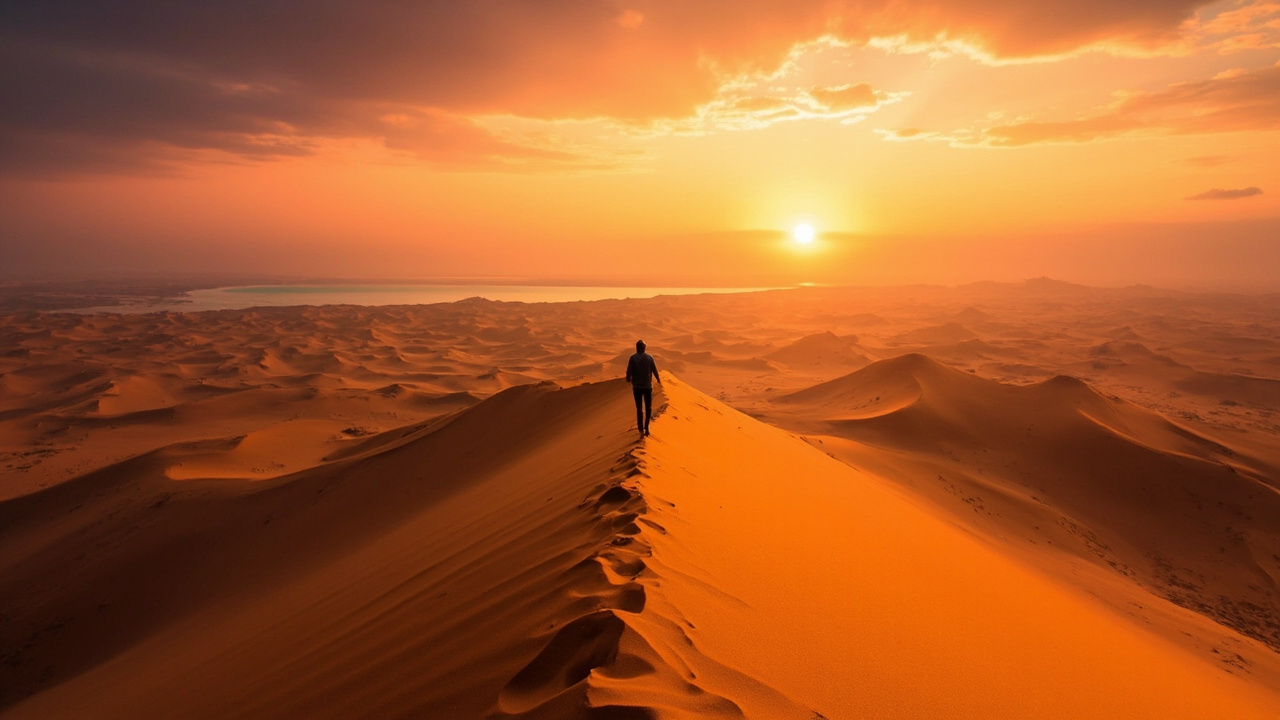
The train from Yinchuan rolled west into the dusk, and the world outside the window turned to gravel and scrub. I remember the man across the aisle, a herder from the Alxa Left Banner, offering me a piece of dried camel meat from a plastic bag. He spoke no English, and my Mandarin was still clumsy, but we managed to communicate the essentials: where I was going, why, and whether I’d ever seen a desert before. When I told him no, not like this, he laughed and pointed at the window. “You’ll see,” he said, or something close to it.
The Alashan Desert isn’t one desert. It’s a sprawling, lesser-known region of Inner Mongolia that folds together the Badain Jaran, Tengger, and Ulan Buh deserts, plus the Helan Mountains that mark the border with Ningxia. Most international tourists skip it entirely, heading instead to Dunhuang or the tourist-trodden edges of the Gobi. That’s their loss. This is the part of China that feels genuinely wild, where dunes rise to heights that defy what you thought a sand dune could be, and where the silence is so complete you can hear your own heartbeat.
This guide comes from two separate trips: one in late September, one in early June. I’ve walked the dunes, gotten lost in the backstreets of Bayanhot, and paid too much for a jeep ride so you don’t have to. Below you’ll find the ten places that actually matter, the ones I’d send a friend to, and the ones I’d tell you to skip.
Quick answer
The Alashan Desert region of Inner Mongolia is China’s most dramatic desert landscape, anchored by the Badain Jaran Desert’s towering sand dunes and its 140+ lakes. For first-time visitors in 2026, the easiest approach is flying into Yinchuan Hedong Airport, then taking a bus or hire car to Bayanhot (Alxa Left Banner), the region’s practical base. Plan for 4-6 days, budget around $600-900 USD (CNY 4,300-6,500) per person including transport and a jeep tour, and go between late May and mid-October, with September being the sweet spot for clear skies and comfortable temperatures.
The Short Version
If you only have 90 seconds, here’s the deal: Alashan is not a place you stumble into. It’s a commitment. The Badain Jaran Desert is the single most impressive desert landscape I’ve seen anywhere in the world, and almost nobody outside China knows about it. You’ll need a 4WD jeep, a local driver who knows the sand, and at least two full days to do it justice. Skip the touristy desert theme parks near Yinchuan. Skip the camel rides at the edge of the highway. Go deep, stay overnight in a desert camp, and watch the stars from a dune that’s taller than any building in Beijing.
How I Picked These
I’ve made two dedicated trips to this region, totaling about nine days on the ground. The first time, I hired a driver through my hotel in Bayanhot and basically said “take me to the desert.” The second time, I went back with a better plan, having talked to locals, a geology student from Lanzhou, and a German couple who’d been coming here for a decade. I’ve walked the sections of the Badain Jaran that are accessible without a permit, ridden jeeps through the Tengger, and spent a night in a ger camp that felt like the edge of the world. I’ve also skipped the places that felt like tourist traps, and I’ll tell you about those too. Prices and hours are approximate for 2026, based on my visits and recent reports from friends still in China.
Comparison Table
| Rank | Place | Best For | Approx Cost (USD) | Time Needed | When to Go |
|---|---|---|---|---|---|
| 1 | Badain Jaran Desert Dunes | The world’s tallest sand dunes | $80-150/day jeep tour | 2-3 days | May-Oct |
| 2 | Badain Jaran Lake Camp | Overnight desert stay | $50-100/night | 1-2 nights | Jun-Sep |
| 3 | Helan Mountains Western Slopes | Hiking and views | Free | Half day | May-Oct |
| 4 | Bayanhot Old Town | Local life and food | Free | 2-3 hours | Any time |
| 5 | Tengger Desert Lake District | Lakes and wetlands | $40-80 | Half day | Jun-Sep |
| 6 | Alxa Desert Geological Park | Geology and viewpoints | $15 (CNY 100) | 2-3 hours | May-Oct |
| 7 | Ulan Buh Desert Edge | Remote desert driving | Free | Half day | Year-round |
| 8 | Alxa Museum | Context and history | $5 (CNY 35) | 1-2 hours | Any time |
| 9 | Moon Lake (Yueya Lake) | Easy desert access | $30 (CNY 200) | Half day | Jun-Sep |
| 10 | Shapotou (Ningxia side) | Sand sliding and river views | $40 (CNY 280) | Full day | May-Oct |
Badain Jaran Desert - The Dunes That Make You Feel Small
The first time I crested a dune in the Badain Jaran, I actually sat down. Not because I was tired, though I was, but because my legs just gave out. The dune dropped away in front of me for what looked like a thousand feet, and beyond it, another dune, and another, until the whole world was sand and shadow and a sky so blue it felt artificial. The Badain Jaran has the tallest sand dunes on Earth - some exceed 400 meters (1,300 feet) - and they don’t look like the gentle curves you see in postcards. They look like mountains that got misplaced.
The desert covers about 49,000 square kilometers, straddling the border between Inner Mongolia and Gansu. What makes it truly special, beyond the scale, are the lakes. More than 140 lakes sit between the dunes, some freshwater, some saltwater, some so blue they look like someone Photoshopped them into the landscape. The combination of towering sand and clear water is something you will not see anywhere else on the planet.
- Location: Alxa Right Banner, western Inner Mongolia, about 180 km (110 miles) northwest of Bayanhot
- Entry fee: Free for the desert itself, but you need a licensed guide and 4WD vehicle. Expect to pay $80-150 (CNY 580-1,080) per day for a jeep with driver.
- Opening hours: No official hours. You go when your driver says you go, usually dawn to dusk.
- How to get there: From Bayanhot, it’s a 3-4 hour drive on mostly paved roads until the last stretch, which is sand. You must have a 4WD vehicle. There are no buses. Your hotel in Bayanhot can arrange a driver, or you can negotiate directly with the jeep drivers who hang around the main square.
- When to visit: September is perfect. June and October are also good. July and August are brutally hot, with sand temperatures that can burn through your shoes.
- Insider tips:
- Bring a scarf or buff. The sand gets everywhere, and I mean everywhere, including places you didn’t know you had.
- The lakes are swimmable in summer, but check with your guide first. Some are too salty or too shallow.
- Your phone will not have signal in most of the desert. Download offline maps before you go.
- The “singing sand” phenomenon is real. Slide down a steep dune and you’ll hear a low hum. It’s the sand grains vibrating.
- Don’t try to walk between dunes on your own. The scale is deceptive, and people get lost.
- One specific thing: My driver, a man named Bat who had spent 20 years driving these dunes, stopped the jeep at the top of a ridge, killed the engine, and just sat there. “Listen,” he said. I heard nothing. Then, after a minute, I heard the wind moving sand, a sound like a distant waterfall. He nodded. “That’s the desert talking.”
Badain Jaran Lake Camp - A Night Under the Loudest Stars
I’ve slept in a lot of places in China, from five-star hotels in Shanghai to a train station floor in Lanzhou, but nothing prepared me for the night I spent at a lake camp in the Badain Jaran. The camp is a cluster of ger tents, the traditional round felt tents of the Mongols, set up on the shore of one of the larger lakes. There’s no electricity after 10 PM, no wifi, no phone signal. There is, however, a sky full of stars so bright and so dense that I lay awake for an hour just staring at it.
The camp is run by a local family who’ve been herding in this area for generations. They cook simple meals - lamb stew, rice, tea with milk and salt - and they’ll happily tell you stories about the desert if you can manage any Mandarin. The experience is basic. The toilets are a hole in the ground. The water is cold. But the moment you step outside at 2 AM and see the Milky Way stretched across the sky like a river of light, you’ll understand why people make this journey.
- Location: On the shore of a lake in the heart of the Badain Jaran, about 2 hours by jeep from the desert’s edge
- Entry fee: Included in your jeep tour package, or $50-100 (CNY 360-720) per night if you arrange it separately
- Opening hours: Camp is open roughly May through October. Off-season, the family moves to their winter pastures.
- How to get there: Only by 4WD jeep with a guide. Your driver will know the camp. There’s no address, no signpost, just a cluster of tents on a lake shore.
- When to visit: September is ideal. The nights are cool but not freezing, and the skies are usually clear.
- Insider tips:
- Bring a headlamp. The camp is pitch black after the generator shuts off.
- The food is simple but good. If you have dietary restrictions, bring your own snacks.
- The lake water is drinkable after boiling, but bring bottled water to be safe.
- The family speaks some Mandarin but no English. Download a translation app before you go.
- There’s no heat in the tents. A warm sleeping bag is essential, even in summer.
- One specific thing: The family’s daughter, a girl of about ten, showed me how to milk a goat at dawn. She was faster and more efficient than I was, and she laughed at my clumsy attempts. Her laughter echoed across the lake in the morning quiet, and I’ve never heard a sound that fit a place better.
Helan Mountains Western Slopes - The Green Line Between Deserts
The Helan Mountains run like a spine along the border between Inner Mongolia and Ningxia, and their western slopes, on the Alashan side, are a shock to the system after days of sand. The mountains rise abruptly from the desert floor, and their flanks are covered in juniper and pine forests that feel almost alpine. On my first visit, I spent a morning hiking a trail that switchbacked up a ridge, and from the top I could see the desert stretching west to the horizon while the green mountains fell away to the east. It’s the kind of view that makes you want to sit down and not move for a while.
The mountains are also home to the Alxa blue sheep, a rare species that clings to the steep slopes. I didn’t see one, but I saw plenty of tracks and droppings, and a local ranger told me they’re most active at dawn and dusk. The hiking is moderate, with some steep sections, and the trails are not well marked. You’ll want a guide or at least a downloaded offline map.
- Location: Western slopes of the Helan Mountains, about 30 km (19 miles) south of Bayanhot
- Entry fee: Free. The area is public land, though there’s a small parking fee of about $2 (CNY 15) at some trailheads.
- Opening hours: No official hours. Go during daylight.
- How to get there: From Bayanhot, take a taxi or hire a car for the 40-minute drive south. The road follows the mountain line, and you’ll see trailheads on the right. Ask for “Helan Shan” and the driver will know where to stop.
- When to visit: May through October. The summer is pleasant, with temperatures 10-15 degrees cooler than the desert floor.
- Insider tips:
- The trails are not marked in English. Download an offline map and GPS app before you go.
- Bring more water than you think you need. The dry air will dehydrate you faster than you expect.
- There are wild boars in the forest. Make noise as you walk, and you’ll be fine.
- The ranger station at the main trailhead has basic toilets and a small shop selling water and snacks.
- If you’re lucky, you might see the blue sheep at dawn. Bring binoculars.
- One specific thing: I met a retired geology professor from Yinchuan on the trail, a man in his seventies who hiked these mountains every weekend. He pointed out rock formations and told me about the tectonic forces that pushed the Helan range up out of the desert floor. His English was excellent, and he was delighted to have someone to talk to. We walked together for an hour, and he showed me a fossil embedded in a rock face that must have been millions of years old.
Bayanhot Old Town - Where the Desert City Still Feels Like a Town
Bayanhot, the capital of the Alxa Left Banner, is not a beautiful city. It’s a dusty, sprawling place that grew up around the desert trade routes, and its modern center is a tangle of concrete buildings and wide, empty streets. But the old town, a small cluster of lanes near the central mosque, is a different story. Here, the buildings are low and whitewashed, the streets are narrow and shaded, and the pace of life slows to something that feels almost Mediterranean.
I spent an afternoon wandering these lanes, stopping at a small shop that sold camel wool products, watching an old man repair a saddle, and drinking tea at a tiny restaurant that served the best hand-pulled noodles I had in all of Inner Mongolia. The old town is also home to a small market where herders from the surrounding desert come to sell sheep, goats, and camels. It’s chaotic and dusty and absolutely fascinating.
- Location: The old town is centered around the intersection of Xinhua Street and Minzu Street, about 1 km west of the city center
- Entry fee: Free
- Opening hours: Shops and restaurants are open roughly 9 AM to 9 PM, though many close for a few hours in the afternoon.
- How to get there: From the center of Bayanhot, walk west on Xinhua Street for about 15 minutes, or take a taxi for $1-2 (CNY 7-15). The old town is the area with the low white buildings and narrow lanes.
- When to visit: Morning is best, when the market is active and the light is soft. Avoid the afternoon heat.
- Insider tips:
- The camel wool products here are excellent and much cheaper than in tourist shops. A scarf costs about $10-15 (CNY 70-110).
- The hand-pulled noodle shop on the corner of Xinhua and Minzu is unmarked but always busy. Just point at what other people are eating.
- The mosque is open to visitors but dress modestly and don’t enter during prayer times.
- Most shopkeepers speak no English. Have your translation app ready.
- The market is cash-only. Bring small bills.
- One specific thing: I bought a camel wool scarf from an elderly woman who insisted on giving me a cup of tea before she’d let me pay. We sat in her tiny shop for twenty minutes, communicating through gestures and a translation app, and she told me, or at least I think she told me, that her family had been weaving camel wool for four generations. The scarf is still one of my favorite possessions.
Tengger Desert Lake District - The Wet Desert
The Tengger Desert, which lies south of the Badain Jaran, is less dramatic but more accessible, and its lake district is a strange and beautiful landscape of shallow, reed-fringed lakes scattered across the sand. The water is often brackish, and the lakes are home to a surprising variety of birds, including herons, egrets, and, if you’re lucky, the rare black-necked crane. I visited in early June, when the reeds were green and the birdlife was at its peak, and I spent a happy afternoon sitting on a dune, watching a pair of herons stalk fish in the shallows.
The lake district is also home to a few small villages where the residents live a hybrid life, herding sheep in the winter and hosting the occasional tourist in the summer. The tourism here is much less developed than in the Badain Jaran, which means you’ll likely have the place to yourself, but it also means fewer facilities. Bring your own food and water.
- Location: Southern Tengger Desert, about 100 km (62 miles) south of Bayanhot, near the village of Tonghu
- Entry fee: Free, though some lake areas are on private land and may charge a small fee of $3-5 (CNY 20-35)
- Opening hours: No official hours. Go during daylight.
- How to get there: From Bayanhot, take the S218 highway south for about 90 minutes. The road passes through the lake district, and you can stop at any of the lakes that catch your eye. A taxi or hire car is essential.
- When to visit: June through September, when the lakes are full and the birds are active.
- Insider tips:
- The lakes are not all the same. Some are freshwater, some are salty, and some are so alkaline they’re a strange shade of green. Ask locals before swimming.
- The birdwatching is best at dawn and dusk.
- There are no restaurants in the lake district. Bring a picnic.
- The road is paved but rough in places. A high-clearance vehicle is helpful.
- The villages along the road have small shops selling water and snacks, but they may be closed without warning.
- One specific thing: I stopped at a lake where a group of herders were watering their camels. The camels stood in the shallows, their long necks curved down to the water, and the herders sat on the bank, drinking tea and watching. One of them waved me over and offered me a cup. We sat in silence for a while, and then he pointed at a distant dune and said something I didn’t understand. His friend translated: “He says the sand moves more than the water here.”
Alxa Desert Geological Park - The Museum Without Walls
The Alxa Desert Geological Park is a UNESCO Global Geopark that protects some of the most interesting geological features in the region, including the Badain Jaran dunes and the strange rock formations of the surrounding desert. The park’s visitor center, located about 40 km (25 miles) west of Bayanhot, has exhibits on the region’s geology, ecology, and history, all with English translations, which is a rare and welcome thing in this part of China.
But the real highlight is the park’s network of viewpoints and short trails, which take you to some of the most photogenic spots in the region. There’s a viewpoint overlooking a cluster of dunes that looks like a frozen ocean, a trail that winds through a field of wind-carved rock formations, and a boardwalk that crosses a wetland area where you can see the desert’s surprising biodiversity. The park is not as dramatic as the deep desert, but it’s a great introduction if you’re short on time.
- Location: About 40 km (25 miles) west of Bayanhot, off the S218 highway
- Entry fee: $15 (CNY 100) for the visitor center and main viewpoints
- Opening hours: 8:30 AM to 6 PM, May through October. Closed in winter.
- How to get there: From Bayanhot, take the S218 highway west for about 40 minutes. The park entrance is well signposted. A taxi will cost about $30-40 (CNY 220-290) round trip, including waiting time.
- When to visit: Morning is best for light and temperature. The viewpoints face west, so afternoon light is also good, but the heat can be intense.
- Insider tips:
- The visitor center has excellent English signage. Start there to get context before you explore.
- The viewpoints are a short walk from the parking area, but the trails are not shaded. Bring a hat and sunscreen.
- The rock formations are fragile. Don’t climb on them.
- There’s a small cafe at the visitor center with basic snacks and drinks.
- The park is much less crowded than the deep desert, so you’ll likely have the viewpoints to yourself.
- One specific thing: I spent an hour at the main dune viewpoint, watching the light shift across the sand as the sun moved. A Chinese family arrived, and the father, seeing my camera, offered to take my photo. We ended up taking photos of each other, and his daughter, a teenager with excellent English, told me she was studying tourism and hoped to work in the park one day. She asked me what I thought of her home, and I told her it was one of the most beautiful places I’d ever seen. She beamed.
Ulan Buh Desert Edge - The Road to Nowhere
The Ulan Buh Desert, which lies north of the Badain Jaran, is the least visited of the region’s deserts, and its edge is a landscape of stark, wind-swept plains that feel more like the surface of another planet than anything on Earth. I drove along the desert’s southern edge on a road that seemed to go nowhere, past abandoned buildings and rusted vehicles half-buried in sand, and I didn’t see another car for two hours.
This is not a place for sightseeing in the traditional sense. There are no viewpoints, no visitor centers, no marked trails. But if you want to understand the scale and emptiness of this part of China, there’s no better place. The silence is total, the horizon is endless, and the sky seems to go on forever. It’s the kind of place that makes you feel both insignificant and strangely free.
- Location: Northern Alxa Left Banner, about 150 km (93 miles) north of Bayanhot
- Entry fee: Free
- Opening hours: No official hours. Go during daylight.
- How to get there: From Bayanhot, take the S312 highway north for about two hours. The road is paved but in variable condition. A high-clearance vehicle is recommended.
- When to visit: Year-round, though winter can be brutally cold and windy. Spring and autumn are best.
- Insider tips:
- Fill up your gas tank before you leave Bayanhot. There are no gas stations on this road.
- Bring a spare tire. The road has sharp rocks that can cause flats.
- There’s no phone signal for most of the route. Tell someone where you’re going.
- The abandoned buildings along the road are interesting to explore but be careful. Some are unstable.
- The sunsets here are extraordinary. The flat landscape means you can see the entire sky change color.
- One specific thing: I stopped at an abandoned gas station, its pumps rusted and its windows smashed, and walked around the empty building. In the back, someone had left a child’s toy, a small plastic car, sitting on a windowsill. It was the only sign of human life for miles, and it made me think about the people who had lived and worked here before the road moved on.
Alxa Museum - The Story of a Place
The Alxa Museum in Bayanhot is a small, quiet museum that tells the story of the region, from its geological origins to its nomadic herding culture to its modern development. It’s not a world-class museum, but it’s a valuable stop for anyone who wants to understand the place they’re visiting. The exhibits include fossils, traditional Mongol clothing and tools, and displays on the region’s camel culture, which is more important here than anywhere else in China.
I spent about two hours in the museum, and I came out with a much better understanding of the region. The exhibits are in Chinese, but there are English translations on the main displays, and the staff are friendly and helpful. It’s a quiet, air-conditioned refuge from the desert heat, and it’s a good way to spend a morning or afternoon.
- Location: 1 Bayanhot Street, in the center of Bayanhot, near the government buildings
- Entry fee: $5 (CNY 35)
- Opening hours: 9 AM to 5 PM, Tuesday through Sunday. Closed Mondays.
- How to get there: The museum is in the center of Bayanhot, about a 10-minute walk from the main square. It’s well signposted in Chinese.
- When to visit: Any time, but morning is best to avoid the afternoon heat.
- Insider tips:
- The English translations are on the main displays but not all of them. Bring a translation app for the smaller exhibits.
- The museum has a small gift shop with books and postcards.
- The staff are happy to answer questions, but they speak limited English. Be patient.
- The museum is air-conditioned, which makes it a good midday stop.
- The exhibits on camel culture are the highlight. Don’t skip them.
- One specific thing: The museum’s director, a woman in her fifties who had worked there for two decades, gave me a personal tour when she saw me reading the English translations. Her English was halting but enthusiastic, and she told me about the museum’s efforts to preserve the region’s nomadic heritage. She gave me a postcard of a camel herder at sunset, and I still have it on my desk.
Moon Lake (Yueya Lake) - The Easy Desert
Moon Lake, about 50 km (31 miles) southwest of Bayanhot, is the easiest way to experience the desert if you’re short on time or don’t want to commit to a multi-day jeep tour. The lake is a crescent-shaped body of water surrounded by dunes, and there’s a small resort complex with camel rides, sand sliding, and basic accommodation. It’s touristy, but it’s also genuinely beautiful, and the lake itself is a striking sight, its blue water contrasting with the golden sand.
I visited Moon Lake on my first trip to the region, before I knew about the deeper desert, and I enjoyed it. The camel ride was fun, the sand sliding was thrilling, and the view from the top of the dunes was lovely. But after experiencing the Badain Jaran, Moon Lake felt a bit tame. If you have time for the deep desert, skip this. If you don’t, it’s a perfectly good introduction.
- Location: About 50 km (31 miles) southwest of Bayanhot, off the S218 highway
- Entry fee: $30 (CNY 200) for the resort complex, including camel ride and sand sliding
- Opening hours: 8 AM to 6 PM, year-round
- How to get there: From Bayanhot, take the S218 highway southwest for about 50 minutes. The resort is well signposted. A taxi will cost about $40-50 (CNY 290-360) round trip.
- When to visit: Morning or late afternoon, to avoid the midday heat.
- Insider tips:
- The camel rides are short, about 15 minutes. If you want a longer ride, negotiate with the handlers.
- Sand sliding is more fun than it looks. Rent a board and try it.
- The resort has a restaurant with basic Chinese food.
- The accommodation is basic but clean. If you want to stay overnight, book in advance.
- The resort is popular with Chinese tourists on weekends. Go on a weekday if you can.
- One specific thing: The camel handler, a young man from a nearby village, told me that his family had been raising camels for generations, but he was the first to work in tourism. He said the camels were getting softer, which made him laugh. “They used to work,” he said. “Now they just carry tourists.”
Shapotou - The Desert Theme Park (Ningxia Side)
Shapotou, technically in Ningxia Province but just a short drive from the Alashan region, is the most developed desert attraction in the area. It’s a full-blown tourist complex with sand sliding, cable cars, a zip line, camel rides, and a section of the Yellow River that offers raft rides. It’s fun, but it’s also crowded, expensive, and about as far from the wild desert experience as you can get.
I went to Shapotou on a weekend in June, and it was packed with Chinese tourists. The lines for the sand sliding were long, the prices were high, and the whole place felt like a theme park rather than a natural attraction. If you’re looking for a family-friendly day out, it’s fine. If you want to experience the desert, skip it and head to the Badain Jaran instead.
- Location: About 20 km (12 miles) west of Zhongwei, Ningxia, about 120 km (75 miles) south of Bayanhot
- Entry fee: $40 (CNY 280) for the main complex, including cable car and sand sliding
- Opening hours: 8 AM to 6 PM, year-round
- How to get there: From Bayanhot, take the S218 highway south to Zhongwei, then follow signs for Shapotou. The drive takes about 2 hours. A taxi will cost about $60-80 (CNY 430-580) round trip.
- When to visit: Weekdays only. Weekends are chaos.
- Insider tips:
- The zip line over the Yellow River is the best attraction. Do that first.
- The sand sliding is fun but the lines are long. Go early.
- The camel rides are longer than at Moon Lake, about 30 minutes.
- The food inside the park is overpriced and mediocre. Bring your own.
- The park is huge. Wear comfortable shoes and plan for a full day.
- One specific thing: I watched a group of Chinese tourists take a group photo on a dune, all of them striking the same pose, jumping in the air with arms spread. The photographer, a young woman with a professional camera, directed them with the patience of a kindergarten teacher. It was a scene I’d seen a hundred times in China, but somehow, against the backdrop of the desert and the river, it felt different. It felt like joy.
FAQ summary
The Alashan Desert region of Inner Mongolia is best accessed via Yinchuan or Bayanhot, with the Badain Jaran Desert as the primary destination for its world-record sand dunes and lakes. The best time to visit is September, with May-June and October as good alternatives. A 4-6 day trip costs approximately $600-900 USD (CNY 4,300-6,500) per person, including transport, accommodation, and a jeep tour. No special permits are required for the main attractions, but a licensed guide and 4WD vehicle are essential for the deep desert. English is not widely spoken, so a translation app is essential, and WeChat Pay or Alipay are the standard payment methods throughout the region.
FAQ
Q: Do I need a visa to visit Alashan Desert in 2026? A: Most nationalities need a Chinese visa, but as of 2026, citizens of many countries, including the US, UK, Australia, and most of Europe, can enter China visa-free for up to 30 days for tourism. Check the latest policy with the Chinese embassy before you book, as rules change.
Q: How do I get to the Alashan Desert from Beijing? A: The easiest route is to fly from Beijing to Yinchuan Hedong Airport (about 2 hours), then take a bus or hire a car for the 2-hour drive to Bayanhot. Alternatively, take a high-speed train from Beijing to Yinchuan (about 5 hours), then continue by road.
Q: Is it safe to travel in the Alashan Desert? A: Yes, if you go with a licensed guide and stick to the established routes. The desert is remote, and getting lost is a real risk, but the local guides know the terrain well. Don’t attempt to explore the deep desert on your own.
Q: What should I pack for a trip to the Alashan Desert? A: Bring sun protection (hat, sunglasses, sunscreen), a scarf or buff for sand, comfortable walking shoes, warm layers for cool nights, a headlamp, and a refillable water bottle. In September, daytime temperatures are around 25-30 degrees Celsius (77-86 degrees Fahrenheit), but nights can drop to 10 degrees (50 degrees Fahrenheit).
Q: Do I need to speak Mandarin to travel in the Alashan region? A: No, but it helps. English is rarely spoken outside of the major hotels and tourist sites. Download a translation app like Google Translate or Pleco, and learn a few basic phrases. Most people are patient and helpful.
Q: Is WeChat Pay or Alipay accepted in the Alashan region? A: Yes, both are widely accepted, even in small shops and restaurants. Set up your accounts before you arrive, as the process requires a foreign bank card and passport verification. Cash is also accepted, but change can be hard to come by.
Q: What is the best time of year to visit the Alashan Desert? A: September is the best month, with clear skies, comfortable temperatures, and fewer crowds. May and June are also good, but can be windy. July and August are very hot, and winter (November to March) is cold and often closed to tourists.
The Honest Wrap-up
The Alashan Desert is not for everyone. If you want comfort, convenience, and a well-trodden tourist path, go to Dunhuang or the Gobi instead. But if you’re willing to trade a little comfort for an experience that feels genuinely wild, this is the place. The Badain Jaran’s dunes are the most impressive natural landscape I’ve seen in China, and the region as a whole offers a glimpse of a way of life that’s disappearing.
My advice to a friend: go in September, spend at least three days in the Badain Jaran, and don’t try to do too much. The desert rewards patience. Sit on a dune at sunset and watch the light change. Listen to the wind. Let the silence do its work. You’ll come back different, and I mean that in the best way.
Topics
More guides you may like

Top 10 Bridges in China
China's bridges are engineering marvels spanning mountains, rivers, and seas. Here are 10 of the most spectacular, from ancient stone to modern steel.
8 min read

Top 10 Buddhist Sites in China
From the Leshan Giant Buddha to the Dunhuang Caves, these 10 Buddhist sites represent 2,000 years of China's spiritual heritage.
9 min read

Top 10 Day Trips from Beijing You Shouldn't Miss
Beijing is packed with history, but some of China's best experiences are just a few hours away. Here are 10 day trips that will transform your visit.
9 min read

Top 10 Hidden Gems in China Off the Beaten Path
Beyond the Great Wall and Terracotta Warriors, China has incredible hidden destinations few tourists ever reach. Here are 10 underrated gems worth the detour.
9 min read

Top 10 Markets and Shopping Streets in China
From Shanghai's Bund to Beijing's Silk Street - 10 markets where foreigners can haggle, explore, and bring home authentic Chinese goods.
9 min read

Top 10 Museums in China You Shouldn't Miss
China's museums span 5,000 years of civilization. These 10 - from the Palace Museum to Xi'an's terracotta gallery - are unmissable for culture lovers.
9 min read