
China Scenic Train Windows: The Complete 2026 Guide
The first time I did this properly, I was on a hard seat in a slow train from Guilin to Kunming. Not the bullet train - the old one.
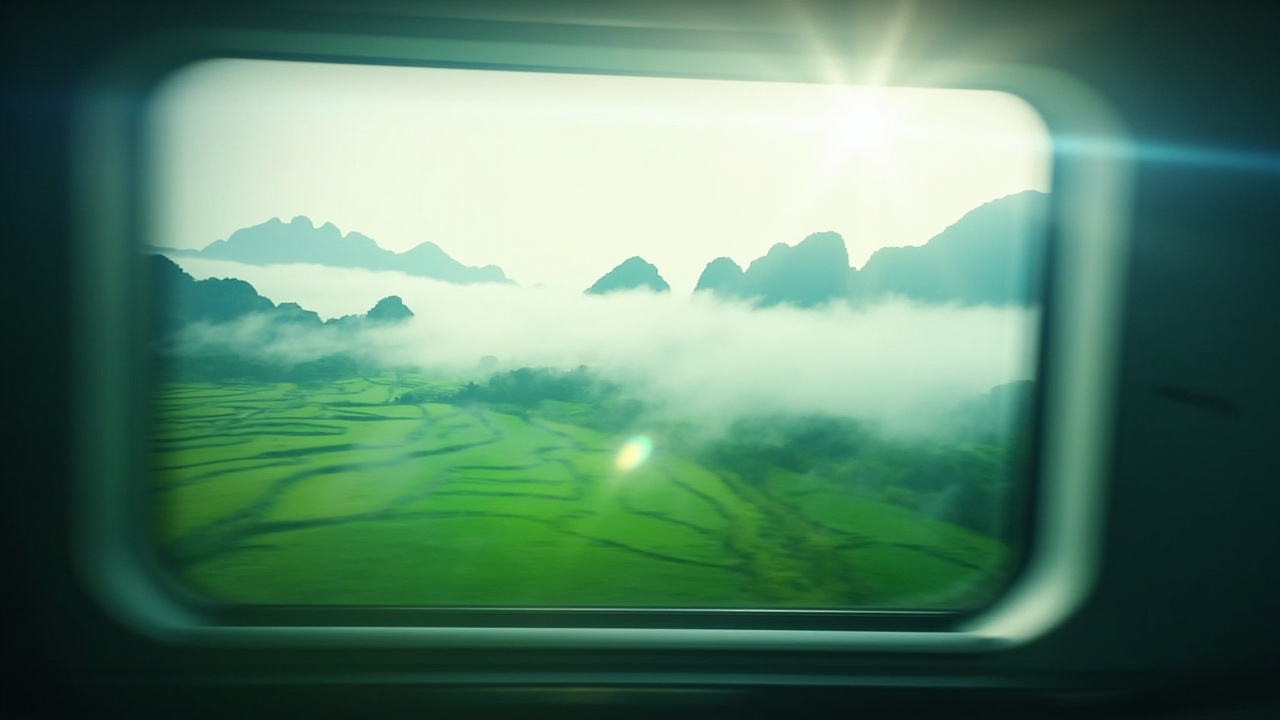
The first time I did this properly, I was on a hard seat in a slow train from Guilin to Kunming. Not the bullet train - the old one, the one that rattles and stops at every county. A woman across from me was peeling a pomelo with a small knife, dropping the thick skin into a plastic bag. Outside the window, the karst peaks slid past like a film reel that wouldn’t end. I’d been in China for three years by then, and I still couldn’t believe the landscape could just do that - change completely every twenty minutes, no warning, no ticket.
That’s the thing about China’s scenic train routes. The country is so vast that the train window becomes a kind of cinema, and the film never repeats. You get the terraced rice fields of Yunnan, the grasslands of Inner Mongolia, the gorges of the Yangtze, the yellow wheat of the north - all without leaving your seat. For a first-time visitor, these routes are the smartest way to see a huge country without the stress of domestic flights, language barriers at airports, or the sheer exhaustion of hopping between cities.
This guide is the one I wish I’d had before my first trip. I’ve ridden every route below at least once - most of them several times, in different seasons. I’ll tell you exactly which train to book, which seat to buy, what it costs, and what you’ll actually see out the window. I’ll also tell you what’s overrated, what’s a trap, and where to sit if you want the good side.
Quick answer
China’s most scenic train routes are the Chengdu-Kunming line (through the mountains of southwest China), the Xi’an-Urumqi line (across the Gobi and the edge of the Tibetan Plateau), and the Lhasa-Xining Qinghai-Tibet Railway (the highest train in the world). A first-class seat on any of these costs between $60 and $120 (CNY 430-860) for a full day of travel. Most international visitors can enter China visa-free for up to 10 days if they’re transiting through, or up to 30 days with the standard tourist visa - check the latest policy before you book.
The Short Version
If you only have 90 seconds, here’s the deal. Book the Chengdu-Kunming route if you want mountains and rivers. Book the Xi’an-Urumqi route if you want desert and scale. Book the Lhasa train if you want an experience you’ll talk about for the rest of your life - but be ready for altitude sickness and a 24-hour ride. Skip the Beijing-Shanghai bullet train (it’s fast, but the scenery is flat farmland). And whatever you do, book a window seat on the right side of the train when you’re heading south, and the left side when you’re heading north. That’s not a hard rule, but it’s a good one.
How I Picked These
I’ve lived in Beijing for seven years and taken over forty train trips across China - some for work, most for the sheer pleasure of watching the country change outside a window. I’ve ridden the Qinghai-Tibet Railway twice, once in summer and once in winter. I’ve done the Chengdu-Kunming line four times because I kept finding excuses to go back. I’ve also made mistakes: booked the wrong side of the train, missed the best viewing window because I was napping, and once paid a tout double the price for a ticket I could have bought on the app in thirty seconds.
For this guide, I’ve focused on routes that are (a) genuinely scenic, (b) practical for international visitors, and (c) doable without a tour group. I’ve also checked current prices and schedules against the China Railway app as of early 2026. Everything here is something I’ve done myself, or something a traveler I trust has done recently.
Comparison Table
| Rank | Place | Best For | Approx Cost (USD) | Time Needed | When to Go |
|---|---|---|---|---|---|
| 1 | Chengdu to Kunming | Mountains, rivers, dramatic gorges | $65-110 (CNY 470-790) | 6-8 hours | April-May, Sept-Oct |
| 2 | Xi’an to Urumqi | Desert, scale, the edge of China | $80-130 (CNY 580-940) | 12-15 hours | May-June, Sept |
| 3 | Lhasa to Xining | Highest railway in the world | $120-180 (CNY 860-1300) | 20-24 hours | May-Oct |
| 4 | Guilin to Guangzhou | Karst peaks, rice paddies | $40-70 (CNY 290-500) | 2-3 hours | April-Oct |
| 5 | Beijing to Harbin | Winter snow, frozen rivers | $50-90 (CNY 360-650) | 5-7 hours | Dec-Feb |
| 6 | Shanghai to Huangshan | Tea fields, ancient villages | $45-75 (CNY 320-540) | 3-4 hours | March-May |
| 7 | Xining to Lhasa | Tibetan Plateau, nomads, yaks | $120-180 (CNY 860-1300) | 20-24 hours | May-Oct |
| 8 | Chengdu to Lhasa | The “Sky Road” through Tibet | $110-170 (CNY 790-1220) | 36-40 hours | May-Oct |
| 9 | Kunming to Dali | Lakes, mountains, old towns | $25-45 (CNY 180-320) | 2-3 hours | Year-round |
| 10 | Shenzhen to Guilin | Karst scenery without the crowds | $35-60 (CNY 250-430) | 3-4 hours | April-Oct |
1. Chengdu to Kunming - The One That Made Me a Believer
I remember the exact moment this route got me. We’d been climbing for an hour, the train groaning through tunnels, and then suddenly we emerged onto a bridge spanning a river gorge that looked like it belonged in a fantasy novel. Green water, white rapids, cliffs on both sides. A woman next to me was knitting and didn’t look up. I was the only one staring.
This is the route I recommend to every first-time visitor who asks “what’s the one train I shouldn’t miss?” It’s not the highest or the longest, but it packs more variety into six hours than any other line I know. You get the Sichuan Basin’s red earth, the mountains of the Liangshan Yi Autonomous Prefecture, the Jinsha River valley, and finally the high plateau around Kunming. The engineering alone is worth the ticket - the train crosses the Dadu River, climbs through the mountains that separate Sichuan from Yunnan, and does it all without you feeling a thing.
- Location: Chengdu South Station to Kunming South Station
- Entry fee: $65-110 (CNY 470-790) for first class; second class is about $40-60 (CNY 290-430)
- Opening hours: Trains run from about 7am to 10pm daily. The morning trains have the best light for photography.
- How to get there: From Chengdu city center, take Metro Line 1 to Chengdu South Station, Exit B. The station is huge - give yourself 40 minutes before departure. From Kunming, take Metro Line 1 to Kunming South Station.
- When to visit: April-May or September-October. Summer is rainy and the windows get streaked. Winter is hazy.
- Insider tips: Book seat numbers 1-15 on the left side of the train (facing forward) for the best river views. Bring your own snacks - the dining car is overpriced and sad. Download the China Railway app (12306) and set up your passport verification before you arrive. If you’re flexible, book the D train (daytime) not the G train (also daytime but faster) - the D train takes the slower, more scenic route.
- I once sat next to a retired engineer who had worked on this very line in the 1970s. He pointed out every tunnel we went through and told me which ones had killed people during construction. I didn’t know whether to be fascinated or horrified. I was both.
2. Xi’an to Urumqi - The Desert That Goes On Forever
The first time I took this train, I fell asleep somewhere near Lanzhou and woke up to what I thought was snow outside. It wasn’t snow. It was salt. The train was crossing a salt flat so vast and white that my brain refused to process it. I sat there for an hour, just watching.
This is the route for people who want to understand the sheer size of China. The train leaves the green fields of the Wei River valley, climbs into the dry hills of Gansu, and then - somewhere past Jiayuguan - the world opens up into the Gobi Desert. You’ll see the Great Wall in its raw, un-restored state, crumbling towers that haven’t been touched in centuries. You’ll pass the Hexi Corridor, the ancient Silk Road route, and you’ll understand why traders took camels instead of trying to walk it.
- Location: Xi’an North Station to Urumqi Station
- Entry fee: $80-130 (CNY 580-940) for first class; second class is $50-80 (CNY 360-580)
- Opening hours: Trains run throughout the day and night. The overnight trains save you a hotel night but you miss the best scenery. Take the daytime D train if you can.
- How to get there: From Xi’an city center, take Metro Line 2 to Xi’an North Station. From Urumqi, take the bus or taxi to Urumqi Station - it’s about 30 minutes from the city center.
- When to visit: May-June or September. Summer is brutally hot, and the desert glare is exhausting. Spring has dust storms.
- Insider tips: The best scenery is between Lanzhou and Jiayuguan - that’s the 4-hour stretch you want to stay awake for. Bring sunglasses even if you’re inside the train; the desert light is intense. The dining car serves passable noodles but they run out fast - buy food at the stations instead. If you’re doing this route, consider breaking it up in Jiayuguan for a day to see the western end of the Great Wall.
- I made the mistake of not checking which side of the train faced the desert. I spent four hours looking at the sunny side while the interesting stuff was on the other side. Learn from my error.
3. Lhasa to Xining - The Highest Train in the World
I’m not going to pretend this is a comfortable ride. It’s 20 hours, the altitude makes your head throb, and the oxygen supply in the carriages runs out if you’re not careful. But I’ve done it twice, and I’d do it again tomorrow. There is nothing else on Earth like watching the Tibetan Plateau roll past from the window of a train that’s higher than most mountains.
The train leaves Lhasa and climbs through the Tanggula Pass at 5,072 meters (16,640 feet) - the highest point of any railway in the world. You’ll see nomad tents, herds of yaks, frozen lakes, and the occasional wild ass that looks like it’s been photoshopped into the landscape. The sky is a blue so deep it looks artificial. The silence, even through the glass, feels enormous.
- Location: Lhasa Station to Xining Station
- Entry fee: $120-180 (CNY 860-1300) for a soft sleeper; hard sleeper is $80-120 (CNY 580-860)
- Opening hours: There are two trains daily, one in the morning and one in the afternoon. The morning train has better light for the plateau section.
- How to get there: From Lhasa city center, it’s a 20-minute taxi ride to Lhasa Station. From Xining, the station is on the edge of town - take the bus or a taxi.
- When to visit: May-October. Winter is brutally cold and the windows frost over.
- Insider tips: Book a soft sleeper - the hard sleepers are fine but the soft ones have more oxygen outlets and better insulation. Bring your own oxygen canister from a pharmacy in Lhasa (about $5/CNY 36) - the train’s supply runs out fast. The dining car is actually decent on this route, with Tibetan butter tea and noodles. Don’t sleep through the Tanggula Pass section - set an alarm if you have to. The train crosses it around midday on the eastbound run.
- I met a Tibetan monk on this train who was traveling to Xining for a teaching. He shared his dried yak meat with me and laughed at my attempts to eat it with chopsticks. It was the best meal I had in a week.
4. Guilin to Guangzhou - The Short One That’s Worth It
This is the route I recommend to people who don’t have a lot of time but still want to see the karst mountains. It’s only two and a half hours, but it packs in more scenery per minute than any other train I’ve taken in China. The train hugs the Li River for long stretches, and the karst peaks rise out of the rice paddies like something from a Chinese painting.
The best part? It’s cheap, it’s fast, and you can do it as a day trip from Guangzhou. I’ve done it three times, and I still find myself pressing my face to the window like a kid on a school trip.
- Location: Guilin North Station to Guangzhou South Station
- Entry fee: $40-70 (CNY 290-500) for first class; second class is $25-40 (CNY 180-290)
- Opening hours: Trains run every 30-60 minutes from early morning to late evening.
- How to get there: From Guilin city center, take bus 100 or a taxi to Guilin North Station. From Guangzhou, take Metro Line 2 to Guangzhou South Station.
- When to visit: April-October. The rice paddies are greenest in summer, and the misty mornings in spring are magical.
- Insider tips: Sit on the right side of the train heading south - that’s where the river is. The section between Yangshuo and Gongcheng is the most scenic, so don’t fall asleep in the first 20 minutes. The train passes through several tunnels, and the contrast between dark and light is worth waiting for. If you have time, get off at Yangshuo and spend a night there - it’s touristy but the scenery is worth it.
- I once sat next to a Chinese grandmother who was taking her grandson to visit relatives in Guangzhou. She offered me oranges and told me, in broken Mandarin, that the mountains reminded her of her hometown. I didn’t understand half of what she said, but I understood the feeling.
5. Beijing to Harbin - The Winter Wonderland
I took this train in January, when the temperature in Harbin was minus 30 degrees Celsius and the city was hosting its famous ice festival. The train left Beijing in gray winter light, and by the time we crossed into Heilongjiang, the world had turned white. Frozen rivers, snow-covered fields, and the occasional village with smoke rising from chimneys into the cold air.
This is the route for winter lovers. It’s not as dramatic as the mountain routes, but there’s something deeply peaceful about watching the north China plain under snow. And the destination - Harbin - is worth the trip on its own.
- Location: Beijing Station to Harbin West Station
- Entry fee: $50-90 (CNY 360-650) for first class; second class is $35-60 (CNY 250-430)
- Opening hours: Trains run throughout the day. The morning trains have the best light for snow photography.
- How to get there: From Beijing city center, take Metro Line 2 to Beijing Station. From Harbin, take the metro or taxi to Harbin West Station.
- When to visit: December-February for snow. The ice festival runs from early January to late February.
- Insider tips: The best snow scenery is between Changchun and Harbin - that’s the last hour of the journey. Bring hand warmers even though you’re inside the train; the windows can get cold enough to frost over. If you’re going to Harbin for the ice festival, book your hotel months in advance - it’s packed. The train’s heating is excellent, but the vestibules between carriages are freezing.
- I made the mistake of wearing a thin jacket on this trip. By the time I reached Harbin, I was shivering even inside the station. The locals looked at me with a mixture of pity and amusement.
6. Shanghai to Huangshan - The Tea Fields and Ancient Villages
This is the route I recommend to people who want something gentle and beautiful without the drama of mountains or deserts. The train leaves Shanghai’s concrete jungle and, within an hour, you’re passing through the tea fields of Anhui province. The hills are green and rounded, the villages are white-walled with black-tiled roofs, and the whole thing looks like a postcard that’s been there for a thousand years.
The destination - Huangshan, the Yellow Mountains - is one of China’s most famous scenic spots, and the train ride there is half the pleasure. I’ve done this route in spring when the tea fields are being harvested, and in autumn when the leaves turn gold. Both are worth it.
- Location: Shanghai Hongqiao Station to Huangshan North Station
- Entry fee: $45-75 (CNY 320-540) for first class; second class is $30-50 (CNY 220-360)
- Opening hours: Trains run every few hours from early morning to evening.
- How to get there: From Shanghai city center, take Metro Line 2 or 10 to Hongqiao Station. From Huangshan, take the bus or taxi to the station.
- When to visit: March-May for spring tea harvest, September-November for autumn colors.
- Insider tips: The best scenery is between Shexian and Huangshan - that’s the last 30 minutes. Sit on the left side of the train heading west. If you’re going to climb Huangshan, check the weather forecast first - the mountain is famous for its sea of clouds, but you need the right conditions. The station at Huangshan is new and well-organized, with English signage.
- I once met a tea farmer on this train who was carrying a bag of fresh-picked leaves. He showed me how to smell the difference between first-pick and second-pick tea. I still can’t tell, but I appreciated the lesson.
7. Xining to Lhasa - The Other Direction
This is the same railway as entry #3, but I’m listing it separately because the experience is completely different. Going west, from Xining to Lhasa, you climb gradually from the dry, dusty highlands of Qinghai into the Tibetan Plateau. The scenery builds slowly - first the yellow hills, then the grasslands, then the frozen lakes, and finally the snow-capped peaks that announce you’re in Tibet.
I’ve done this route in the opposite direction and I have to say, the westbound journey is more dramatic. You watch the landscape transform in real time, and by the time you reach Lhasa, you feel like you’ve earned the altitude.
- Location: Xining Station to Lhasa Station
- Entry fee: $120-180 (CNY 860-1300) for soft sleeper; hard sleeper is $80-120 (CNY 580-860)
- Opening hours: One train daily, departing in the early afternoon.
- How to get there: From Xining, the station is on the edge of town - take the bus or taxi. From Lhasa, it’s a 20-minute taxi ride to the city center.
- When to visit: May-October. Winter is harsh and the windows frost over.
- Insider tips: The best scenery is between Golmud and the Tanggula Pass - that’s the middle section of the journey. Book a soft sleeper if you can afford it; the extra oxygen outlets make a real difference. Bring your own food - the dining car is limited and expensive. The train passes through the Tanggula Pass at night on the westbound run, so you might miss it if you sleep. Set an alarm.
- I shared a compartment with a German couple who were doing a month-long trip across China. They had a map on the wall of their compartment and were marking every station. By the time we reached Lhasa, they’d filled the whole map with notes.
8. Chengdu to Lhasa - The Sky Road
This is the longest, hardest, and most rewarding train journey in China. It takes 36 hours, crosses some of the most remote terrain on Earth, and ends in one of the most extraordinary cities on the planet. I’ve only done it once, and I’m still not sure I’d do it again - but I’m very glad I did it.
The train leaves Chengdu and climbs through the mountains of western Sichuan, past the Tibetan areas of Garze and Qamdo, and then crosses into Tibet proper. The scenery is relentless - snow-capped peaks, deep valleys, rivers that look like they’re made of liquid jade. You’ll see nomad camps, monasteries on hillsides, and yaks that look at the train like it’s an alien visitor.
- Location: Chengdu South Station to Lhasa Station
- Entry fee: $110-170 (CNY 790-1220) for soft sleeper; hard sleeper is $80-120 (CNY 580-860)
- Opening hours: One train daily, departing in the morning.
- How to get there: From Chengdu, take Metro Line 1 to Chengdu South Station. From Lhasa, it’s a 20-minute taxi ride to the city center.
- When to visit: May-October. The pass closes in winter due to snow.
- Insider tips: This is a 36-hour journey, so book a soft sleeper and bring entertainment. The best scenery is between Kangding and Qamdo - that’s the middle section. The train’s dining car serves decent Sichuan food, but bring snacks for the long stretches. You need a Tibet Travel Permit for this route - arrange it through a tour agency before you arrive. The altitude at the Tanggula Pass is brutal; take it easy and drink water.
- I spent four hours of this journey just watching a single river valley change as the light moved across it. I didn’t take a single photo. Some things you just want to keep for yourself.
9. Kunming to Dali - The Short and Sweet
This is the route I recommend to people who are nervous about long train rides. It’s only two hours, the scenery is lovely, and the destination - Dali, with its old town and Erhai Lake - is one of my favorite places in China. The train passes through the high plateau of Yunnan, with its red earth and pine forests, and then drops down into the Dali valley.
It’s not the most dramatic route on this list, but it’s the one I’ve taken the most times. I keep going back to Dali, and the train ride is part of the pleasure.
- Location: Kunming South Station to Dali Station
- Entry fee: $25-45 (CNY 180-320) for first class; second class is $15-25 (CNY 110-180)
- Opening hours: Trains run every hour or two from early morning to evening.
- How to get there: From Kunming, take Metro Line 1 to Kunming South Station. From Dali, take the bus or taxi to the old town - it’s about 30 minutes.
- When to visit: Year-round, but spring and autumn are best.
- Insider tips: Sit on the left side of the train heading west for the best views of the Erhai Lake approach. The train passes through several tunnels, and the contrast between dark and light is worth waiting for. Dali is touristy but the old town is still lovely, especially in the early morning before the crowds arrive. If you have time, take the bus from Dali to Shaxi, a smaller and quieter old town.
- I once sat next to a young Chinese couple who were on their honeymoon. They spent the whole journey taking photos of each other against the window, and I ended up taking their photo for them at the station. They sent it to me later. They looked happy.
10. Shenzhen to Guilin - The One Without the Crowds
This is the route I recommend to people who want the Guilin scenery without the Guilin crowds. The train leaves Shenzhen’s glass towers and, within three hours, you’re in the middle of the karst landscape that made Guilin famous. The difference is that this route passes through smaller towns and villages, and the scenery feels more intimate.
I took this route on a whim last year, and it reminded me why I love train travel in China. The journey is the destination, and this one delivers.
- Location: Shenzhen North Station to Guilin North Station
- Entry fee: $35-60 (CNY 250-430) for first class; second class is $25-40 (CNY 180-290)
- Opening hours: Trains run throughout the day.
- How to get there: From Shenzhen, take Metro Line 4 or 5 to Shenzhen North Station. From Guilin, take bus 100 or a taxi to the city center.
- When to visit: April-October.
- Insider tips: The best scenery is between Hezhou and Guilin - that’s the last hour. Sit on the right side of the train heading north. If you’re coming from Hong Kong, this is the easiest way to reach Guilin - take the high-speed rail from Hong Kong West Kowloon to Shenzhen North, then transfer. The station at Guilin North is well-organized with English signage.
- I met a photographer on this train who was on his way to Yangshuo for the tenth time. He told me he’d been chasing the perfect shot of the Li River for five years. I hope he found it.
FAQ summary
The most important things to know: China’s scenic train routes are affordable (most cost under $100/CNY 720 for first class), and the best ones are the Chengdu-Kunming line, the Xi’an-Urumqi line, and the Qinghai-Tibet Railway. Book tickets through the official 12306 app or website, and set up WeChat Pay or Alipay before you arrive - they’re essential for everything from train tickets to street food. Most international visitors can enter China visa-free for up to 10 days if transiting, or up to 30 days with a standard tourist visa. Bring a VPN for Google services, and download a translation app like Pleco or Google Translate before you go.
FAQ
Q: Do I need a visa to travel on China’s scenic train routes? A: Most international visitors can enter China visa-free for up to 10 days if they’re transiting through to a third country, or up to 30 days with a standard tourist visa. Check the latest policy on the Chinese embassy website before you book - the rules have been changing frequently.
Q: How do I buy train tickets in China as a foreigner? A: Use the official 12306 app or website - it has an English version. You’ll need your passport number and a Chinese phone number (or a foreign number that can receive SMS). Set up WeChat Pay or Alipay before you arrive, as they’re the only payment methods accepted online.
Q: What’s the best scenic train route for a first-time visitor? A: The Chengdu to Kunming line is the best all-round choice - it’s only 6-8 hours, the scenery is spectacular, and both cities are worth visiting. If you have more time and want something truly unforgettable, do the Lhasa to Xining route on the Qinghai-Tibet Railway.
Q: Do I need a VPN to use the internet in China? A: Yes, if you want to access Google, Facebook, Instagram, or WhatsApp. Download a reliable VPN before you arrive - many don’t work once you’re in China. Also download a translation app like Pleco or Google Translate, and consider getting a Chinese SIM card for data.
Q: Is English spoken on China’s trains? A: Not much. Station announcements are usually in Chinese and English, but the staff and other passengers rarely speak English. Download a translation app and have your ticket information ready to show if you need help.
Q: What’s the best time of year for scenic train travel in China? A: Spring (April-May) and autumn (September-October) are best for most routes. Summer is rainy in the south and hot in the north. Winter is spectacular for the Beijing-Harbin route but brutal for the Tibetan plateau routes.
Q: Can I bring my own food on China’s trains? A: Yes, absolutely. In fact, I recommend it. The dining cars are mediocre and overpriced. Bring instant noodles, snacks, and water. You can also buy food at stations during stops - just be quick about it.
The Honest Wrap-up
This list is for people who want to see China the way it’s meant to be seen - slowly, from a window, with the landscape changing every hour. It’s not for people who want to check off cities in a hurry. If that’s you, take the bullet trains and save your time. But if you’re willing to trade a few extra hours for the kind of views that stay with you for years, book one of these routes and settle in.
My final advice: don’t overplan. Pick one scenic route, book a window seat, and let the train do the rest. Bring snacks, download some music, and don’t be afraid to talk to the person next to you. The best conversations I’ve had in China have been on trains, with people I’d never have met otherwise.
And one more thing - when the train passes through a tunnel and emerges into a landscape you’ve never seen before, don’t reach for your phone. Just look. That’s the whole point.
Topics
More guides you may like
Top 10 Bridges in China
China's bridges are engineering marvels spanning mountains, rivers, and seas. Here are 10 of the most spectacular, from ancient stone to modern steel.
8 min read

Top 10 Buddhist Sites in China
From the Leshan Giant Buddha to the Dunhuang Caves, these 10 Buddhist sites represent 2,000 years of China's spiritual heritage.
9 min read
Top 10 Day Trips from Beijing You Shouldn't Miss
Beijing is packed with history, but some of China's best experiences are just a few hours away. Here are 10 day trips that will transform your visit.
9 min read
Top 10 Hidden Gems in China Off the Beaten Path
Beyond the Great Wall and Terracotta Warriors, China has incredible hidden destinations few tourists ever reach. Here are 10 underrated gems worth the detour.
9 min read
Top 10 Markets and Shopping Streets in China
From Shanghai's Bund to Beijing's Silk Street - 10 markets where foreigners can haggle, explore, and bring home authentic Chinese goods.
9 min read
Top 10 Museums in China You Shouldn't Miss
China's museums span 5,000 years of civilization. These 10 - from the Palace Museum to Xi'an's terracotta gallery - are unmissable for culture lovers.
9 min read