
China with a Baby Stroller: The Complete 2026 Guide
The hotel lobby had a marble floor so polished my stroller wheels skidded sideways like they were on ice.
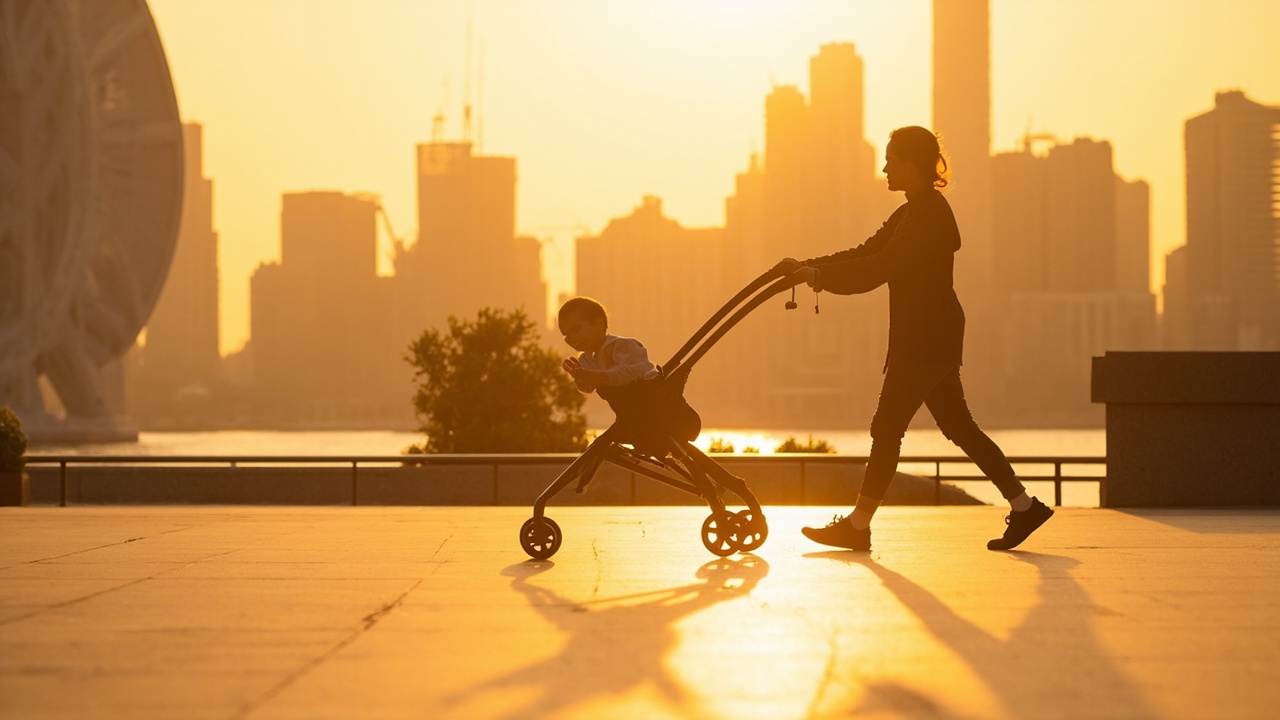
The hotel lobby had a marble floor so polished my stroller wheels skidded sideways like they were on ice. My daughter, then 14 months old, found this hilarious. The concierge found it less funny when I nearly took out a potted plant. That was my first hour in China with a baby, and I remember thinking: this is either going to be the best decision we ever made or a spectacular disaster.
Seven years and forty-something trips later, I can tell you it was the best decision. China with a stroller is not the logistical nightmare most guidebooks make it out to be. It’s different, sure. You’ll learn to fold that stroller faster than you ever thought possible. You’ll discover that every subway station has an elevator, even if you sometimes have to hunt for it like a treasure map. And you’ll watch your kid get more attention from grandmothers in one afternoon than they’ve received in their entire life back home.
This guide is everything I wish someone had told me before that first trip. The specific exits, the workarounds, the places where you should just leave the stroller at the hotel, and the ones where you’d be crazy not to bring it.
Quick answer
Yes, China is absolutely doable with a baby stroller in 2026, especially for citizens of 38 countries who can visit visa-free for up to 30 days (including the US, UK, Canada, Australia, and most of Europe). The biggest challenges are stairs at older subway stations and crowds at major sights, but modern infrastructure, free-entry policies for young children, and a culture that dotes on babies make it far easier than most parents expect. Budget around $80-150 per day for a comfortable family trip, and set up Alipay before you land.
The Short Version
If you only remember three things: bring a lightweight stroller that folds one-handed, download Alipay and link your passport to it before you fly, and know that Chinese people will absolutely adore your baby. People will take photos. Grandmas will offer snacks. Staff will let you skip lines. It’s exhausting and wonderful. The subway is your best friend. Taxis are cheap but car seats are nonexistent, so bring your own or plan around it.
How I Picked These
I’ve traveled to every province in China, and about half of those trips involved a child under three. I’ve pushed strollers through the Forbidden City in August heat, carried them up the Great Wall (not recommended, but I did it), and navigated the narrow alleys of old Shanghai at midnight with a sleeping toddler. I talked to other expat parents in Beijing, read Chinese parenting forums, and made plenty of mistakes so you don’t have to. These ten places aren’t just “good for kids” in a generic sense. They’re places where the practical details actually work: elevators exist, bathrooms have changing tables, and you won’t spend your entire visit fighting the infrastructure.
Comparison Table
| Rank | Place | Best For | Approx Cost (USD) | Time Needed | When to Go |
|---|---|---|---|---|---|
| 1 | Shanghai | First-time families | $0-30 per day | 3-4 days | Mar-May, Oct-Nov |
| 2 | Beijing | History + culture | $0-40 per day | 4-5 days | Apr-Jun, Sep-Oct |
| 3 | Chengdu | Pandas + relaxed pace | $0-25 per day | 2-3 days | Mar-Jun, Sep-Nov |
| 4 | Xi’an | Ancient China | $0-30 per day | 2-3 days | Apr-May, Sep-Oct |
| 5 | Hangzhou | Nature + tea country | $0-20 per day | 2 days | Mar-May, Sep-Nov |
| 6 | Guilin/Yangshuo | Scenery + outdoor | $0-25 per day | 3-4 days | Apr-Oct |
| 7 | Hong Kong | Disney + urban ease | $0-50 per day | 3-4 days | Oct-Apr |
| 8 | Xiamen | Coastal chill | $0-20 per day | 2-3 days | Oct-Apr |
| 9 | Suzhou | Gardens + canals | $0-15 per day | 1-2 days | Mar-May, Sep-Nov |
| 10 | Yunnan (Dali/Lijiang) | Slow travel + mountains | $0-25 per day | 4-5 days | Mar-May, Sep-Nov |
Shanghai - The City That Actually Works
I remember standing at the intersection of Nanjing Road and Zhongshan East Road, watching a mother push a stroller through a crowd of thousands while carrying a shopping bag in each hand, and thinking: this city was designed for parents. The sidewalks are wide. The subway stations have elevators everywhere. The malls have nursing rooms.
Shanghai is the easiest Chinese city for a first-time family trip. The metro system is clean, air-conditioned, and every station I’ve visited in the central area has an elevator. The city’s parks are stroller-friendly, and the Bund’s riverside promenade is a straight, flat stretch with a view that will make you forget the jet lag.
- Location: Central Shanghai, mainly Huangpu and Xuhui districts
- Entry fee: Free for most sights; Shanghai Tower observation deck is about $30 (CNY 220)
- Opening hours: Most sights 8:30am-5pm; parks open early and close late
- How to get there: Fly into PVG, take the Maglev to Longyang Road station, then transfer to Line 2. For the Bund, take Line 2 to East Nanjing Road station, Exit 1, walk east for 10 minutes
- When to visit: October is perfect. May is good. Avoid July-August heat and January-February cold
- Insider tips: The elevator to the Bund’s riverside walkway is at the intersection of Nanjing Road and Zhongshan East Road, look for the glass building. Every major mall has a nursing room on the upper floors, just ask security. The ferry across the Huangpu River costs $0.30 (CNY 2) and is a great cheap boat ride. The Shanghai Museum has free entry but requires passport reservation. Avoid Nanjing Road on weekends, it’s a wall of people
- I once watched a Shanghai grandmother give my daughter a full tutorial on how to properly eat a soup dumpling, complete with dramatic hand gestures and a demonstration that ended with soup on her own shirt.
Beijing - History With a Side of Crowds
The first time I visited the Forbidden City with a stroller, I almost turned back at the gate. The crowds were insane, the cobblestones were uneven, and I was convinced we’d made a terrible mistake. Then a security guard saw us, waved us to a side entrance, and personally escorted us past a line that stretched for 200 meters. That’s Beijing in a nutshell: brutal and generous in equal measure.
Beijing rewards patience. The big sights are genuinely spectacular, but they’re also genuinely crowded. Go early, use the side entrances, and accept that you’ll see less than you planned. The city’s subway system is excellent, and most newer stations have elevators, but the older lines (especially Line 1 and Line 2) can be tricky.
- Location: Central Beijing, mainly Dongcheng and Xicheng districts
- Entry fee: Forbidden City $10 (CNY 60) adults, free for kids under 1.2m; Temple of Heaven $5 (CNY 30); Jingshan Park $0.30 (CNY 2)
- Opening hours: Forbidden City 8:30am-5pm, closed Mondays. Temple of Heaven 6am-9pm, but the main buildings close at 5pm
- How to get there: For the Forbidden City, take Line 1 to Tiananmen East station, Exit A, walk north. For the Temple of Heaven, take Line 5 to Tiantandongmen station, Exit A
- When to visit: April-May and September-October. The summer heat is brutal, and the winter wind cuts through everything
- Insider tips: Book Forbidden City tickets on the official WeChat mini-program at least a week ahead, they sell out. The Forbidden City has free stroller rentals at the entrance, but they’re basic and uncomfortable, bring your own. The best view of the Forbidden City is from Jingshan Park, and the hill is worth the climb even with a baby carrier. The Mutianyu section of the Great Wall has a cable car and a toboggan ride down, far easier than Badaling with a stroller. Avoid the Forbidden City on weekends and national holidays, it’s genuinely unsafe with a stroller
- I made the mistake of visiting on a Saturday in October once. Never again. We lasted 40 minutes before retreating to a nearby hutong for noodles and a nap.
Chengdu - The Panda Whisperers
My daughter’s first word in Chinese was “panda.” She pointed at a giant panda rolling on its back, munching bamboo, and said it with such conviction that the elderly woman next to us burst into applause. Chengdu is the only city where I’ve seen a toddler meltdown get solved by a passing grandmother offering a piece of candy and a piggyback ride.
Chengdu is China’s most relaxed big city. The pace is slower, the people are friendlier, and the food is spectacular (though you’ll want to ask for “bu la” - not spicy - for the kids). The panda base is the main draw, and it’s genuinely worth it. Go at opening time, when the pandas are most active and the crowds are thinnest.
- Location: Chengdu, Sichuan Province. Panda base is in the northern suburbs
- Entry fee: Panda base $7 (CNY 55), free for kids under 1.3m
- Opening hours: Panda base 7:30am-6pm, but pandas are most active before 10am
- How to get there: Take Metro Line 3 to Panda Avenue station, Exit B, then a 5-minute walk or free shuttle bus. Or take a taxi, about $8 (CNY 60) from the city center
- When to visit: March-June and September-November. Go on a weekday, arrive by 8am
- Insider tips: The panda base has a nursing room near the exit, ask staff. The stroller paths are paved but hilly, a baby carrier is useful for the upper sections. The Sichuan Opera show in the evening is surprisingly kid-friendly, the face-changing act mesmerizes babies. Chengdu’s teahouses are the perfect afternoon break, they’re loud enough that a crying baby won’t bother anyone. If your kid is picky about food, the local chain “Long Chao Shou” has dumplings that are basically baby food
- A taxi driver named Mr. Chen insisted on driving us back to our hotel after the panda base, refused payment, and gave my daughter a small panda plush toy from his own dashboard.
Xi’an - The Ancient City Walls
Xi’an hits different. There’s something about standing on a 600-year-old city wall, watching the sun set over the skyline, that makes you feel the weight of history. And with a stroller, the city wall is actually one of the easiest sights in China. You can rent a bike with a child trailer, or just walk the flat, wide surface with a stroller.
The Terracotta Warriors are the main event, and they’re worth every bit of the hype. But they’re also a 90-minute drive from the city, and the crowds inside the pits are intense. Go early, hire a guide at the entrance, and don’t try to see everything.
- Location: Xi’an, Shaanxi Province. City wall in the center, Terracotta Warriors in the eastern suburbs
- Entry fee: City wall $7 (CNY 54), Terracotta Warriors $20 (CNY 150), free for kids under 1.4m
- Opening hours: City wall 8am-10pm, Terracotta Warriors 8:30am-5pm
- How to get there: City wall is walkable from the Bell Tower. Terracotta Warriors: take Metro Line 9 to Huaqingchi station, then a taxi or shuttle bus, about $5 (CNY 35)
- When to visit: April-May and September-October. Avoid Chinese national holidays at all costs
- Insider tips: The city wall has stroller-friendly ramps at the South Gate and East Gate. The Muslim Quarter’s narrow streets are chaos with a stroller, use a baby carrier instead. The Terracotta Warriors site has a free stroller check near the entrance, but the paths inside are rough. The Bell Tower area has the best night market food, but it’s crowded, go before 7pm with kids. Xi’an’s subway is newer and has good elevator access
- I watched a Chinese tour guide incorporate my daughter into his spiel, pointing at her stroller as “the future generation of travelers” while his group nodded approvingly.
Hangzhou - The Tea Country
Hangzhou is where Chinese tourists go on their honeymoon, and it’s not hard to see why. West Lake is absurdly beautiful, ringed by willow trees and pagodas, with misty mountains in the background. The city is compact, the lake is flat and stroller-friendly, and the tea plantations in the surrounding hills are a gentle escape from the city.
The best thing about Hangzhou with a baby is that you can do almost everything at a slow pace. Take a boat ride on the lake, walk the causeways, sit in a teahouse and watch the world go by. It’s the least stressful city on this list.
- Location: Hangzhou, Zhejiang Province. West Lake is in the city center
- Entry fee: West Lake is free. The Lingyin Temple is $10 (CNY 75). Tea plantations are free
- Opening hours: West Lake is always open. Lingyin Temple 7am-6pm
- How to get there: Take the high-speed train from Shanghai, about 45 minutes. From Hangzhou East station, take Metro Line 1 to Longxiangqiao station for West Lake
- When to visit: March-May for spring blossoms, September-November for autumn colors
- Insider tips: The boat rentals on West Lake are negotiable, agree on a price before boarding. The Longjing tea village has a stroller-friendly path through the plantations, but it’s uphill. The night market near Hefang Street is fun but crowded, go early. The city’s public bathrooms are surprisingly clean and often have changing tables. The best view of West Lake is from the top of Leifeng Pagoda, but the elevator only goes partway, be prepared to carry the stroller
- A tea farmer in Longjing village insisted on showing us how to properly brew tea, then gave my daughter a cup of warm water with a single leaf floating in it, calling it “baby’s first tea ceremony.”
Guilin and Yangshuo - The Karst Mountains
The landscape around Guilin looks fake. Towering limestone karsts rise out of flat rice paddies, and the Li River winds between them like a scene from a Chinese painting. It’s the kind of scenery that makes you put down your phone and just stare.
The challenge is that this area is less developed for stroller travel. The towns are small, the paths are uneven, and the best views require some effort. But the effort is worth it. Yangshuo, in particular, has a laid-back vibe that suits families. Rent a scooter with a child seat, or take a bamboo raft ride (yes, they allow babies, just hold on tight).
- Location: Guilin and Yangshuo, Guangxi Province. Yangshuo is about 90 minutes from Guilin
- Entry fee: Most sights are free. The Li River cruise is $30-50 (CNY 220-360) per person
- Opening hours: Varies by sight, but most are 8am-6pm
- How to get there: Fly into Guilin Liangjiang International Airport. Take the high-speed train from Guilin to Yangshuo station, about 30 minutes. From the station, take a taxi to town, about $5 (CNY 35)
- When to visit: April-October. The rice paddies are green in summer, golden in autumn
- Insider tips: The Yulong River bamboo raft ride is gentler than the Li River cruise and more kid-friendly. The West Street area in Yangshuo is touristy but fun, go in the evening. The bike paths around Yangshuo are flat and easy, but rent a bike with a child seat, not a trailer. The best view of the karst mountains is from the Xianggong Hill viewpoint, but it’s a steep climb, skip it with a stroller and go to the nearby Moon Hill instead. English is less common here, download a translation app before you go
- I ate the best rice noodles of my life at a tiny shop in Yangshuo, sitting on plastic stools with my daughter on my lap, while the owner’s mother watched her with undisguised delight.
Hong Kong - The Easy Mode
Hong Kong is technically not mainland China, but it’s part of China, and it’s the easiest place to start a China trip with a baby. The infrastructure is world-class, the English signage is everywhere, and the city is compact enough to explore on foot. Plus, Disneyland Hong Kong is smaller and less crowded than the Shanghai version, which makes it perfect for toddlers.
The catch is that Hong Kong is expensive. Hotels are pricey, food is pricey, and everything adds up. But if you’re nervous about the logistics of mainland China, Hong Kong is a soft landing. The MTR is stroller-friendly, the sidewalks are wide, and the city is genuinely walkable.
- Location: Hong Kong Island, Kowloon, and the New Territories
- Entry fee: Free for most sights. Disneyland is about $80 (CNY 580) per adult
- Opening hours: Varies, but most attractions are open 10am-8pm
- How to get there: Fly into Hong Kong International Airport. Take the Airport Express to Hong Kong Station, then transfer to the MTR
- When to visit: October-April. The summer is hot and humid, and typhoon season runs June-September
- Insider tips: The MTR has stroller-friendly gates at every station, just look for the wide gates. The Star Ferry is cheap and kid-friendly, and the views are spectacular. The Peak Tram is worth it, but go early or late to avoid queues. The Hong Kong Science Museum has a dedicated toddler area, and it’s free on Wednesdays. The city’s malls have excellent nursing rooms, and most restaurants have high chairs
- I remember watching my daughter fall asleep on the Star Ferry, the harbor lights reflecting on her face, and thinking that this was the easiest travel day we’d ever had.
Xiamen - The Coastal Chill
Xiamen is the city that most tourists skip, and that’s exactly why you should go. It’s a coastal city in Fujian Province with a relaxed vibe, good food, and a beautiful pedestrian island called Gulangyu that’s completely car-free. With a stroller, that means no traffic to worry about, just cobblestones and crowds.
The island is small enough to explore in a day, and the ferry ride over is a highlight in itself. The city proper has a lovely seaside promenade, and the weather is mild for most of the year.
- Location: Xiamen, Fujian Province. Gulangyu Island is a 10-minute ferry ride from the city
- Entry fee: Gulangyu ferry is about $5 (CNY 35) round trip. The island’s sights are mostly free
- Opening hours: Gulangyu is always open. The ferry runs 6am-midnight
- How to get there: Fly into Xiamen Gaoqi International Airport. Take a taxi to the ferry terminal, about $10 (CNY 70)
- When to visit: October-April. The summer is hot and humid
- Insider tips: The ferry to Gulangyu requires a booking in advance, use the WeChat mini-program. The island’s stroller paths are uneven, a baby carrier is useful. The best food on the island is at the small stalls near the beach, not the restaurants near the ferry. The Xiamen Botanical Garden has a stroller-friendly path and a giant cactus greenhouse that kids love. The city’s beaches are clean but the water is cold, even in summer
- A shop owner on Gulangyu gave my daughter a free seashell necklace and refused payment, saying it was “for the little princess.”
Suzhou - The Gardens and Canals
Suzhou is often described as the “Venice of the East,” and while that’s a lazy comparison, it’s not wrong. The city’s classical gardens are UNESCO-listed, and the old town’s canals are lined with whitewashed buildings and stone bridges. It’s a day trip from Shanghai, but it’s worth staying overnight.
The gardens are small and intimate, which makes them perfect for a slow morning with a stroller. The paths are paved, the shade is plentiful, and the crowds are manageable on weekdays.
- Location: Suzhou, Jiangsu Province. The gardens are in the old town
- Entry fee: Humble Administrator’s Garden $10 (CNY 70). The Master of the Nets Garden $5 (CNY 30)
- Opening hours: Most gardens 7:30am-5:30pm
- How to get there: Take the high-speed train from Shanghai, about 30 minutes. From Suzhou station, take Metro Line 4 to Beisita station, then walk 10 minutes
- When to visit: March-May for spring blossoms, September-November for autumn colors
- Insider tips: The Humble Administrator’s Garden is the most famous, but the Master of the Nets Garden is smaller and more peaceful. The Pingjiang Road canal area is stroller-friendly in the morning before the crowds arrive. The Suzhou Museum is free and has a great kids’ section. The city’s old town is best explored on foot, but the sidewalks are narrow, use a baby carrier for the tightest sections. The local snack “squirrel-shaped mandarin fish” is a hit with kids, even if it looks terrifying
- I got hopelessly lost in Suzhou’s old town, and a grandmother walking her dog personally escorted us back to the main road, scolding us gently for “wandering too far.”
Yunnan - Dali and Lijiang
Yunnan is China’s most diverse province, and the area around Dali and Lijiang is its most beautiful corner. Snow-capped mountains, ancient towns, and a mild climate make it a favorite for Chinese tourists and expats alike. It’s also one of the best places in China for slow travel with a family.
Dali’s old town is flat and walkable, with a lake and mountains as a backdrop. Lijiang’s old town is more atmospheric but also more crowded and uneven. Both are worth visiting, but Dali is easier with a stroller.
- Location: Dali and Lijiang, Yunnan Province. The old towns are in the center of each city
- Entry fee: Dali old town is free. Lijiang old town charges a $10 (CNY 70) “maintenance fee” at some entrances
- Opening hours: The old towns are always open
- How to get there: Fly into Dali Airport or Lijiang Airport. From the airports, take a taxi to the old towns, about $10-15 (CNY 70-100)
- When to visit: March-May and September-November. The summer is rainy, and the winter is cold at night
- Insider tips: Dali’s Erhai Lake has a stroller-friendly bike path along the eastern shore. Lijiang’s old town is stroller-hostile, use a baby carrier and leave the stroller at the hotel. The local Bai and Naxi ethnic minorities are incredibly friendly to children, expect lots of photo requests. The food in Yunnan is less spicy than Sichuan, and the local mushroom hotpot is a family favorite. The altitude is around 2,000 meters, so take it easy for the first day
- A Naxi woman in Lijiang taught my daughter to say “hello” in her language, and for weeks afterward, she greeted everyone with a cheerful “A-li-la.”
FAQ summary
For a first-time family trip to China with a baby stroller, the essentials are: a lightweight stroller that folds easily, Alipay set up with your passport before arrival, and a visa-free entry if you’re from one of the 38 eligible countries (including the US, UK, Canada, Australia, and most of Europe, valid for up to 30 days). The easiest cities for stroller travel are Shanghai, Hong Kong, and Xiamen, while Beijing’s major sights require more planning. Most major attractions offer free entry for children under 1.2-1.4 meters, and the subway systems in major cities have elevator access, though older stations may require hunting for them.
FAQ
Q: Do I need a visa to visit China with a baby in 2026? A: Citizens of 38 countries, including the US, UK, Canada, Australia, and most of Europe, can visit visa-free for up to 30 days through December 31, 2026. Check your passport’s eligibility before booking, and note that children need their own passports.
Q: Is it safe to use a stroller on China’s sidewalks and subways? A: Yes, in major cities. Modern subway stations have elevators, and sidewalks in Shanghai, Hong Kong, and Xiamen are wide and smooth. Older areas like Beijing’s hutongs and Lijiang’s old town are trickier, so bring a baby carrier as backup.
Q: What should I do about car seats and taxis in China? A: Taxis and ride-hailing services like Didi generally don’t provide car seats. Bring your own travel car seat if you plan to use taxis frequently, or rely on the subway, which is the safest and easiest option.
Q: How do I pay for things in China with a baby? A: Set up Alipay or WeChat Pay before you arrive, linking your international credit card to the app. Cash is accepted but increasingly rare, and some small vendors won’t accept foreign cards. Alipay has an English interface and is the easiest option.
Q: What should I pack for a baby trip to China? A: Pack a lightweight stroller, a baby carrier, familiar snacks (Chinese baby food exists but might not match your baby’s tastes), diapers (available but sizes run small), and a travel kettle for boiling water. Pack formula if your baby uses it, as Chinese brands differ.
Q: Are there nursing rooms and changing facilities in China? A: Yes, most major malls, airports, and museums have nursing rooms, and public bathrooms often have changing tables. They’re not always well-marked, so ask security or use the “nursing room” feature on Chinese map apps like Amap.
Q: Will people be friendly to my baby in China? A: Absolutely. Chinese people love babies, and you’ll likely get lots of smiles, photos, and offers of snacks. It’s a wonderful way to connect with locals, even if you don’t speak the language.
The Honest Wrap-up
This list is for parents who want to see China without losing their minds. It’s not for people who want to backpack through remote villages or hike the Great Wall’s wild sections with a toddler strapped to their chest. If that’s you, go for it, but this guide won’t help you.
The truth is, China with a baby is easier than most people think, but it’s not easy. You’ll have days when everything goes wrong, when the stroller wheel catches on a curb and your kid starts screaming and you can’t find the elevator and you wonder why you didn’t just go to Disney World. But you’ll also have moments that make it all worth it: watching your child’s face light up at a panda, hearing them say their first word in a foreign language, feeling the warmth of a grandmother who insists on holding your baby while you eat your noodles.
My advice: book the flight. Bring the stroller. Download the apps. And remember that the best memories are usually the ones that don’t go according to plan.
Topics
More guides you may like

Top 10 Bridges in China
China's bridges are engineering marvels spanning mountains, rivers, and seas. Here are 10 of the most spectacular, from ancient stone to modern steel.
8 min read

Top 10 Buddhist Sites in China
From the Leshan Giant Buddha to the Dunhuang Caves, these 10 Buddhist sites represent 2,000 years of China's spiritual heritage.
9 min read

Top 10 Day Trips from Beijing You Shouldn't Miss
Beijing is packed with history, but some of China's best experiences are just a few hours away. Here are 10 day trips that will transform your visit.
9 min read

Top 10 Hidden Gems in China Off the Beaten Path
Beyond the Great Wall and Terracotta Warriors, China has incredible hidden destinations few tourists ever reach. Here are 10 underrated gems worth the detour.
9 min read

Top 10 Markets and Shopping Streets in China
From Shanghai's Bund to Beijing's Silk Street - 10 markets where foreigners can haggle, explore, and bring home authentic Chinese goods.
9 min read

Top 10 Museums in China You Shouldn't Miss
China's museums span 5,000 years of civilization. These 10 - from the Palace Museum to Xi'an's terracotta gallery - are unmissable for culture lovers.
9 min read