
Stone Forest Kunming Geopark: The Complete 2026 Guide
The rain came down hard the day I first saw the Stone Forest. Not a drizzle - a proper Yunnan downpour that turned the limestone into polished black glass and s.
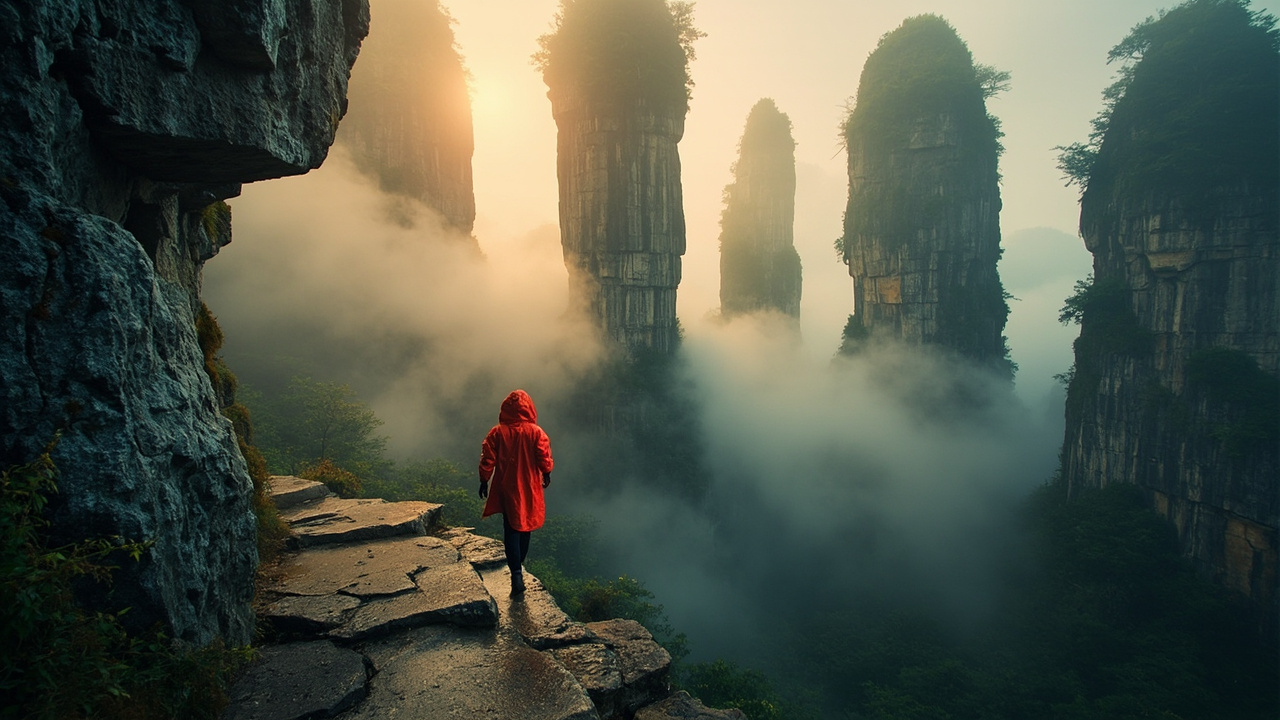
The rain came down hard the day I first saw the Stone Forest. Not a drizzle - a proper Yunnan downpour that turned the limestone into polished black glass and sent streams rushing between the pillars. I stood under a shallow cave with a group of Yi women in embroidered headdresses, all of us watching the water cascade off the stone columns that rose like a petrified city around us. One of them laughed at my soaked shirt and handed me a piece of warm flatbread wrapped in a leaf.
That was seven years ago, and I’ve been back four times since. The Stone Forest - Shilin in Chinese - is one of those places that photographs like a postcard but only makes sense when you’re standing inside it. It’s a karst landscape that looks like a forest made of rock, with pillars that reach 30 meters high, carved over 270 million years by water and time. It’s been a UNESCO World Heritage Site since 2007, and it’s one of the most popular day trips from Kunming, the capital of Yunnan province.
This guide covers everything you need to know for a 2026 visit: how to get there, what it costs, which sections are worth your time, and the mistakes I’ve made so you don’t have to. I’ll also give you my honest take on what’s genuinely impressive versus what’s just tourist infrastructure dressed up as culture.
Quick answer
The Stone Forest is a 270-million-year-old karst landscape about 85 kilometers (53 miles) southeast of Kunming, reachable by a 1.5-hour train ride or direct bus. Entry costs about $24 (CNY 170) for the main scenic area, and the best time to visit is between March and October, though the park is open year-round. Most international visitors can enter China visa-free for up to 30 days under the 2024-2026 visa-free policies, which covers a trip to Yunnan.
The Short Version
If you only have 90 seconds: the Stone Forest is worth seeing, but it’s not a full day in itself. Combine it with a morning in the nearby Naigu Stone Forest or the Yi village at the park’s edge, and you’ve got a proper day trip. Go early - before 9am - to beat the tour groups. Skip the electric shuttle inside the park; walk instead. And don’t skip the smaller, less crowded sections. The main area is spectacular but it’s also where every tour bus in Kunming seems to empty out.
How I Picked These
I’ve visited the Stone Forest four times between 2019 and 2025, in different seasons and with different companions - solo, with Chinese friends, and once with my parents who’d never been to China. I’ve also spent time in Kunming proper, so I’ve tested the transport options repeatedly. I’ve talked to park staff, local Yi guides, and taxi drivers about what they think visitors get wrong. This guide reflects what I’d tell a friend, not what the official brochure says.
Comparison Table
| Rank | Place | Best For | Approx Cost (USD) | Time Needed | When to Go |
|---|---|---|---|---|---|
| 1 | Major Stone Forest (Big Shilin) | First-timers, iconic views | $24 (CNY 170) | 3-4 hours | Mar-Oct, weekday mornings |
| 2 | Naigu Stone Forest | Crowd-free hiking, views | $24 (CNY 170) combined | 2-3 hours | Same as above |
| 3 | Zhiyun Cave | Cave exploration, geology | $24 (CNY 170) combined | 1-2 hours | Year-round (cool inside) |
| 4 | Long Lake (Changhu) | Photography, quiet walks | $24 (CNY 170) combined | 1-2 hours | Spring and autumn |
| 5 | Yi Village (Shilin Town) | Local culture, food | Free (food extra) | 1-2 hours | Market days, weekends |
| 6 | Stone Forest Museum | Context before you walk | Included in entry | 30-45 min | Any time |
| 7 | Qifeng Cave | Off-the-beaten-path | $24 (CNY 170) combined | 1-2 hours | Year-round |
| 8 | Scented Mountain | Panoramic views | Free (hike) | 2-3 hours | Clear days |
| 9 | Moon Lake | Picnic spot, families | Free (park entry only) | 1 hour | Spring and autumn |
| 10 | Shilin Night Market | Food, souvenirs | $5-15 (CNY 35-100) | 1-2 hours | Evenings |
Major Stone Forest (Big Shilin)
The first time I walked into the main section, I stopped dead. You see photos, you think you understand, and then you’re standing at the base of a stone pillar that’s 20 meters tall and you realize the scale is just different. The paths wind between the pillars, sometimes squeezing through gaps barely wide enough for one person, sometimes opening into natural amphitheaters. There’s a reason this is the postcard view.
The Major Stone Forest is the heart of the geopark. It’s the most accessible section, with paved paths, clear signage, and plenty of places to sit. The formations are dense here - hundreds of pillars packed together, some resembling animals, others looking like ruined towers. The locals have named many of them, and you’ll see signs pointing out “Lotus Peak” and “Sword Peak.” The names are a bit much, but the geology is genuinely remarkable.
Location: Shilin Yi Autonomous County, about 85 km southeast of Kunming city center.
Entry fee: $24 (CNY 170) for the combined ticket covering all sections of the geopark. This includes the Major Stone Forest, Naigu, and the caves. There’s no way to buy a single-section ticket, which is annoying if you only want the main area.
Opening hours: 7:30am to 6:00pm daily, year-round. The ticket office closes at 5:00pm. Winter hours are slightly shorter - gates close around 5:30pm.
How to get there: Take the high-speed train from Kunming South Station (Kunmingnan) to Shilin Station. The ride takes about 25 minutes and costs about $8 (CNY 55). From Shilin Station, it’s a 10-minute taxi ride to the park entrance (about $4 / CNY 30). Alternatively, there are direct buses from Kunming East Bus Station, but the train is faster and more comfortable. If you’re driving, it’s about 1.5 hours from central Kunming on the G80 expressway.
When to visit: Weekday mornings, ideally before 9am. The tour groups start arriving around 10am, and by noon the main paths are crowded. March to May and September to October have the best weather - mild temperatures and clear skies. July and August are rainy season, and the stone gets slippery.
Insider tips: The electric shuttle inside the park costs extra and skips the best walking sections. Walk. Also, the “Lotus Peak” viewpoint is worth the climb but it’s steep - take water. The park has free Wi-Fi at the visitor center but it’s unreliable; download offline maps before you go. English signage is good throughout the main area. Don’t bother with the “ethnic costume rental” photo spots near the entrance - they’re overpriced and the quality is poor.
I once spent 20 minutes watching a group of French tourists try to photograph a butterfly that kept landing on a stone pillar. They never got the shot, but the butterfly stayed longer than they did.
Naigu Stone Forest
Naigu is the quieter, wilder sibling of the Major Stone Forest. It’s about 20 kilometers from the main section, and it feels completely different. The pillars here are taller and thinner, and the paths are rougher. There are fewer railings, fewer signs, and far fewer people. On my last visit, I walked for an hour without seeing another tourist.
The name “Naigu” comes from the Yi language and roughly translates to “black stone forest” - the rock here is darker than the main area. The formations are more dramatic, with some pillars reaching over 40 meters. There’s a viewing platform at the top of a long staircase that gives you a panoramic view of the entire area, and it’s absolutely worth the climb.
Location: About 20 km from the main Stone Forest entrance, within the same geopark.
Entry fee: Included in the combined ticket ($24 / CNY 170).
Opening hours: Same as the main park - 7:30am to 6:00pm.
How to get there: There’s a shuttle bus from the main park entrance that runs every 30 minutes and costs about $2 (CNY 15) each way. It’s a 20-minute ride. Alternatively, you can take a taxi from Shilin town for about $8 (CNY 55).
When to visit: Go in the morning, right after you’ve seen the Major Stone Forest. The light is better for photos before noon, and you’ll have the place nearly to yourself. Avoid rainy days - the paths get muddy and slippery.
Insider tips: The staircase to the viewing platform has about 300 steps. Take your time. There’s a small tea house at the base of the viewing platform that sells decent local tea for about $2 (CNY 15) a cup. The toilets near the entrance are the only ones in the park - use them before you start walking. Bring snacks; there are no food vendors inside Naigu.
I got lost here once. The paths aren’t as clearly marked as the main area, and I took a wrong turn near a cluster of pillars that all looked identical. It took me 20 minutes to find my way back. The experience taught me to keep the entrance in sight whenever possible.
Zhiyun Cave
Zhiyun Cave is the kind of place that makes you feel like you’ve stepped into a different world. It’s a limestone cave system that runs for about 3 kilometers underground, filled with stalactites, stalagmites, and underground streams. The lighting inside is theatrical - colored lights illuminate the formations, which is a bit much, but the scale is genuinely impressive.
The cave was formed over millions of years as water dissolved the limestone, creating chambers that range from intimate to cathedral-like. The largest chamber, called the “Dragon Palace,” is about 50 meters high and 100 meters wide. There’s a walkway that takes you through the entire system, and it takes about an hour to complete.
Location: About 15 km from the main Stone Forest entrance, within the geopark.
Entry fee: Included in the combined ticket.
Opening hours: 8:00am to 5:30pm daily.
How to get there: The shuttle bus from the main park entrance also stops here. It’s about a 15-minute ride. You can also walk from the Major Stone Forest if you’re feeling ambitious - it’s about 4 km on a paved path.
When to visit: Any time of year. The cave stays at a constant temperature of about 15-18 degrees Celsius (59-64 degrees Fahrenheit), which makes it a nice escape from the summer heat or winter cold.
Insider tips: The colored lighting is gaudy, but try to look past it and focus on the formations. The underground stream is the highlight - it’s crystal clear and you can hear it running through the cave. Wear non-slip shoes; the walkway can be wet. The cave is not accessible for wheelchair users - there are stairs throughout.
I met a geology student from Kunming University here who was doing fieldwork. She pointed out formations I would never have noticed on my own - the way the water had carved tiny channels in the rock, the difference between stalactites and stalagmites. It made me realize how much I was missing by just walking through.
Long Lake (Changhu)
Long Lake is the quiet corner of the geopark that most visitors miss. It’s a narrow lake that sits at the base of the stone formations, reflecting the pillars in its still water. On a calm day, the reflection is perfect - you get a double image of the rocks, one pointing up, one pointing down.
The lake is about 2 kilometers long and surrounded by a walking path. It’s a peaceful place, especially in the early morning when the mist hangs over the water. There are a few benches along the path where you can sit and just watch the light change.
Location: About 10 km from the main Stone Forest entrance, within the geopark.
Entry fee: Included in the combined ticket.
Opening hours: Same as the main park, 7:30am to 6:00pm.
How to get there: The shuttle bus stops here. It’s about a 10-minute ride from the main entrance.
When to visit: Early morning is best, before the wind picks up and disturbs the water. Spring and autumn have the clearest skies.
Insider tips: The best photo spot is near the southern end of the lake, where the pillars are closest to the water. There’s a small pavilion there that frames the view nicely. Bring a picnic - there are no food vendors around the lake. The path is flat and easy, suitable for all fitness levels.
I sat on a bench here for 30 minutes one afternoon, watching a heron fish in the shallows. It caught three fish in that time. I caught zero, but I wasn’t trying.
Yi Village (Shilin Town)
The town of Shilin, which sits right next to the geopark, is where the Yi people who call this area home actually live. The village is a mix of traditional mud-brick houses and newer concrete buildings, with a small central square where locals gather in the evenings.
The Yi are one of China’s 55 ethnic minorities, and they have a distinct culture - their own language, clothing, and festivals. The most famous is the Torch Festival, held in the summer, when the entire town lights up with bonfires and dancing. If you can time your visit to coincide with it, do. It’s one of the most memorable experiences I’ve had in China.
Location: Shilin Town, immediately adjacent to the geopark entrance.
Entry fee: Free to walk around. Food and souvenirs cost extra.
Opening hours: The town is always open. Shops and restaurants typically operate from 8:00am to 9:00pm.
How to get there: It’s a 10-minute walk from the park entrance. Just follow the main road out of the park and you’ll hit the town.
When to visit: The Torch Festival is usually held in late June or early July - check the exact dates before you book. Other than that, any time of day works, though evenings are liveliest.
Insider tips: Try the local specialty, “crossing the bridge noodles” (guoqiao mian), at one of the small restaurants in town. It’s a Yunnan classic - a bowl of hot broth with raw ingredients that you cook yourself at the table. The version in Shilin is as good as anything in Kunming. Also, the embroidery sold in the town’s shops is much cheaper than the stuff at the park entrance. Bargaining is expected - start at half the asking price.
I once spent an evening in the town square watching a group of Yi women practice a dance for the Torch Festival. They invited me to join, and I made a complete fool of myself trying to follow their steps. They laughed, but kindly, and one of them taught me the basic rhythm. I still can’t do it.
Stone Forest Museum
The museum at the geopark entrance is easy to skip, and that would be a mistake. It’s a small, well-designed space that explains the geology of the Stone Forest in a way that’s actually interesting. There are dioramas showing how the karst landscape formed, samples of the different rock types, and displays about the Yi culture.
The museum takes about 30-45 minutes to go through, and it’s worth doing before you walk into the park. You’ll understand what you’re looking at much better if you know how the pillars formed - and you’ll be able to spot the different layers of rock that the displays explain.
Location: Inside the geopark visitor center, right at the main entrance.
Entry fee: Included in the combined ticket.
Opening hours: 8:00am to 5:30pm daily.
How to get there: You can’t miss it - it’s the first building you see when you enter the park.
When to visit: Go before you enter the park, so the information is fresh in your mind.
Insider tips: The museum has English translations for all exhibits, which is better than most Chinese museums. There’s also a short film about the park’s geology that runs every 30 minutes - it’s worth catching. The gift shop has decent books about the Stone Forest in English, which are hard to find elsewhere.
I learned more about karst geology in this museum than I did in any of my school science classes. That’s not saying much - I slept through most of those - but the museum genuinely makes the subject engaging.
Qifeng Cave
Qifeng Cave is the least visited of the geopark’s caves, and that’s exactly why I like it. It’s smaller than Zhiyun, less developed, and feels more like a natural space. The entrance is a narrow opening in a cliff face, and you have to duck to get inside.
The cave runs for about 1.5 kilometers and takes about 40 minutes to explore. The formations are less dramatic than Zhiyun, but there’s a sense of discovery here that’s missing from the more polished cave. You’re walking through a space that feels untouched, even though there’s a walkway and lighting.
Location: About 18 km from the main Stone Forest entrance, in the southern part of the geopark.
Entry fee: Included in the combined ticket.
Opening hours: 8:00am to 5:00pm daily.
How to get there: The shuttle bus stops here, but it runs less frequently than the stops for the main sections. Check the schedule at the visitor center before you go. It’s about a 20-minute ride.
When to visit: Any time of year. The cave is cool and dry, even in summer.
Insider tips: The lighting inside is minimal - bring a flashlight or use your phone. The path is rougher than Zhiyun, so wear sturdy shoes. There are no toilets inside the cave - use the ones at the entrance. The exit is about 500 meters from the entrance, and you have to walk back along a path through the forest.
The guide who took me through Qifeng was a retired geology professor who volunteered at the park. He told me that the cave was only discovered in the 1980s, and that locals had known about it for generations but kept it secret because they believed it was home to a dragon. He laughed when he told me, but I’m not sure he was joking.
Scented Mountain
Scented Mountain is the highest point in the geopark, and it’s the place to go for panoramic views. The name comes from the wildflowers that cover the slopes in spring, which give off a sweet scent that carries on the wind.
The hike to the top takes about 45 minutes from the base, and it’s a steady climb with no shade. The reward is a 360-degree view of the entire Stone Forest - the pillars spread out below you like a grey city, with the green of the surrounding countryside beyond. On a clear day, you can see for miles.
Location: In the western part of the geopark, about 12 km from the main entrance.
Entry fee: Free, but you need the park ticket to access the trailhead.
Opening hours: The trail is open from 8:00am to 5:00pm.
How to get there: The shuttle bus stops near the trailhead. It’s about a 15-minute ride from the main entrance.
When to visit: Go on a clear day - the view is wasted if there’s haze. Early morning is best for light, and the air is cooler.
Insider tips: Bring water - there’s no vendor on the trail. The path is steep and uneven in places, so wear proper hiking shoes. The summit has a small pavilion where you can sit and rest. If you’re there in April or May, the wildflowers are in full bloom and the scent is incredible.
I hiked this mountain with my father, who was 68 at the time and not a hiker. He made it to the top, but he needed a full 20 minutes to catch his breath. The view was worth it, he said, and I believed him.
Moon Lake
Moon Lake is a small, crescent-shaped lake that sits in a natural depression between the stone pillars. It’s a peaceful spot, popular with local families on weekends but mostly empty on weekdays.
The lake is shallow and clear, and you can see the bottom even in the deepest parts. There’s a small beach area where people sit and picnic, and a walking path that circles the lake. It’s not a destination in itself, but it’s a nice place to rest if you’re spending a full day in the park.
Location: In the eastern part of the geopark, about 8 km from the main entrance.
Entry fee: Free, but you need the park ticket to access the area.
Opening hours: Same as the main park, 7:30am to 6:00pm.
How to get there: The shuttle bus stops here. It’s about a 10-minute ride from the main entrance.
When to visit: Spring and autumn are best, when the weather is mild. Weekdays are much quieter than weekends.
Insider tips: There’s a small food stall near the lake that sells grilled corn and sweet potatoes for about $1 (CNY 7). It’s the best value food in the park. The beach area is a good spot for a picnic - bring a blanket and some snacks.
I had lunch here once with a group of Yi women who were also picnicking. They shared their food with me - grilled meat, pickled vegetables, and a type of flatbread I’d never tried before. They wouldn’t let me pay for anything.
Shilin Night Market
The night market in Shilin Town is where the town comes alive after dark. It’s not a big market - maybe 30 stalls - but it’s genuine. The food is local, the prices are fair, and the atmosphere is relaxed.
You’ll find all the Yunnan classics here: grilled skewers, rice noodles, fried insects (if you’re brave), and a local specialty called “ru shan” - a cheese that’s fried and served with sugar. There’s also a good selection of Yi embroidery and other handicrafts.
Location: In the center of Shilin Town, about a 10-minute walk from the park entrance.
Entry fee: Free to wander. Food costs $1-5 (CNY 7-35) per item.
Opening hours: Roughly 5:00pm to 10:00pm, though some stalls stay open later.
How to get there: Walk from the park entrance toward the town center. You’ll see the market lights.
When to visit: Go hungry. The food is the reason to be here.
Insider tips: The fried cheese (ru shan) is a must-try - it’s sweet, savory, and unlike anything you’ll find elsewhere. The grilled mushroom skewers are also excellent - Yunnan is famous for its wild mushrooms. Bargaining is expected at the craft stalls, but not at the food stalls. Bring cash - some stalls don’t accept mobile payments.
I tried fried bees here once, on a dare from a local vendor. They tasted like crunchy peanuts with a hint of honey. I wouldn’t order them again, but I’m glad I tried them.
FAQ summary
The Stone Forest Geopark is a UNESCO World Heritage karst landscape about 85 km from Kunming, reachable by a 25-minute high-speed train ride from Kunming South Station to Shilin Station followed by a short taxi. The combined entry ticket costs approximately $24 (CNY 170) and covers all sections including the Major Stone Forest, Naigu, and the caves. The best time to visit is March to October on weekday mornings to avoid tour groups, and most international visitors can enter China visa-free for up to 30 days under current policies.
FAQ
Q: How do I get from Kunming to the Stone Forest? A: Take the high-speed train from Kunming South Station (Kunmingnan) to Shilin Station - it takes about 25 minutes and costs about $8 (CNY 55). From there, take a 10-minute taxi to the park entrance for about $4 (CNY 30). Direct buses from Kunming East Bus Station also run regularly but take about 2 hours.
Q: Is the Stone Forest worth visiting? A: Yes, if you’re already in Kunming. It’s a unique landscape that you won’t see anywhere else, and it’s a manageable day trip. But it’s not worth traveling to Yunnan specifically for - combine it with other destinations like Dali or Lijiang.
Q: How much time do I need at the Stone Forest? A: Plan for at least 4-5 hours if you want to see the Major Stone Forest and one other section. A full day (7-8 hours) allows you to see the main areas at a relaxed pace. Most tour groups spend about 3 hours, which feels rushed.
Q: Do I need a tour guide? A: No. The park is well-signposted with English translations, and the paths are easy to follow. A guide adds context about the geology and Yi culture, but you can get that from the museum and the audio guide app.
Q: Is the Stone Forest accessible for people with mobility issues? A: Partially. The Major Stone Forest has paved paths and is mostly accessible, though there are some stairs. Naigu and the caves have steep sections and are not suitable for wheelchair users. The shuttle bus is accessible.
Q: What should I bring? A: Comfortable walking shoes, water, sun protection, and a light jacket - the weather can change quickly. Cash is useful for small purchases, though most places accept Alipay and WeChat Pay. Download an offline map before you go.
Q: Do I need a VPN for my phone in China? A: Yes, if you want to access Google, Facebook, Instagram, or WhatsApp. Set up a VPN before you arrive, because the app stores are also blocked. You can buy a local SIM card at the airport or use an eSIM from providers like Airalo.
The Honest Wrap-up
The Stone Forest is one of those places that’s better than you expect but not in the way you expect. The photos prepare you for the scale; they don’t prepare you for the way the light moves through the pillars, or the sound of wind in the narrow passages, or the feeling of being completely surrounded by stone. It’s worth the trip from Kunming, and it’s worth more time than most tour itineraries allow.
This guide is for first-time visitors who want to see the highlights without feeling rushed. It’s not for people who want to check a box and move on - if that’s you, the 3-hour tour group version will do. But if you want to actually experience the place, give it a day, walk the quiet sections, and eat something in the town afterward.
One last thing: bring cash. The park and the town are modern, but some of the smaller vendors only take cash, and you don’t want to miss out on the grilled cheese because you couldn’t pay for it. Trust me on that.
Topics
More guides you may like

Top 10 Bridges in China
China's bridges are engineering marvels spanning mountains, rivers, and seas. Here are 10 of the most spectacular, from ancient stone to modern steel.
8 min read

Top 10 Buddhist Sites in China
From the Leshan Giant Buddha to the Dunhuang Caves, these 10 Buddhist sites represent 2,000 years of China's spiritual heritage.
9 min read

Top 10 Day Trips from Beijing You Shouldn't Miss
Beijing is packed with history, but some of China's best experiences are just a few hours away. Here are 10 day trips that will transform your visit.
9 min read

Top 10 Hidden Gems in China Off the Beaten Path
Beyond the Great Wall and Terracotta Warriors, China has incredible hidden destinations few tourists ever reach. Here are 10 underrated gems worth the detour.
9 min read

Top 10 Markets and Shopping Streets in China
From Shanghai's Bund to Beijing's Silk Street - 10 markets where foreigners can haggle, explore, and bring home authentic Chinese goods.
9 min read

Top 10 Museums in China You Shouldn't Miss
China's museums span 5,000 years of civilization. These 10 - from the Palace Museum to Xi'an's terracotta gallery - are unmissable for culture lovers.
9 min read