
Yamdrok Lake Tibet: The Complete 2026 Guide
The cab driver from Lhasa airport looked at me sideways when I said I wanted to go to Yamdrok Lake.
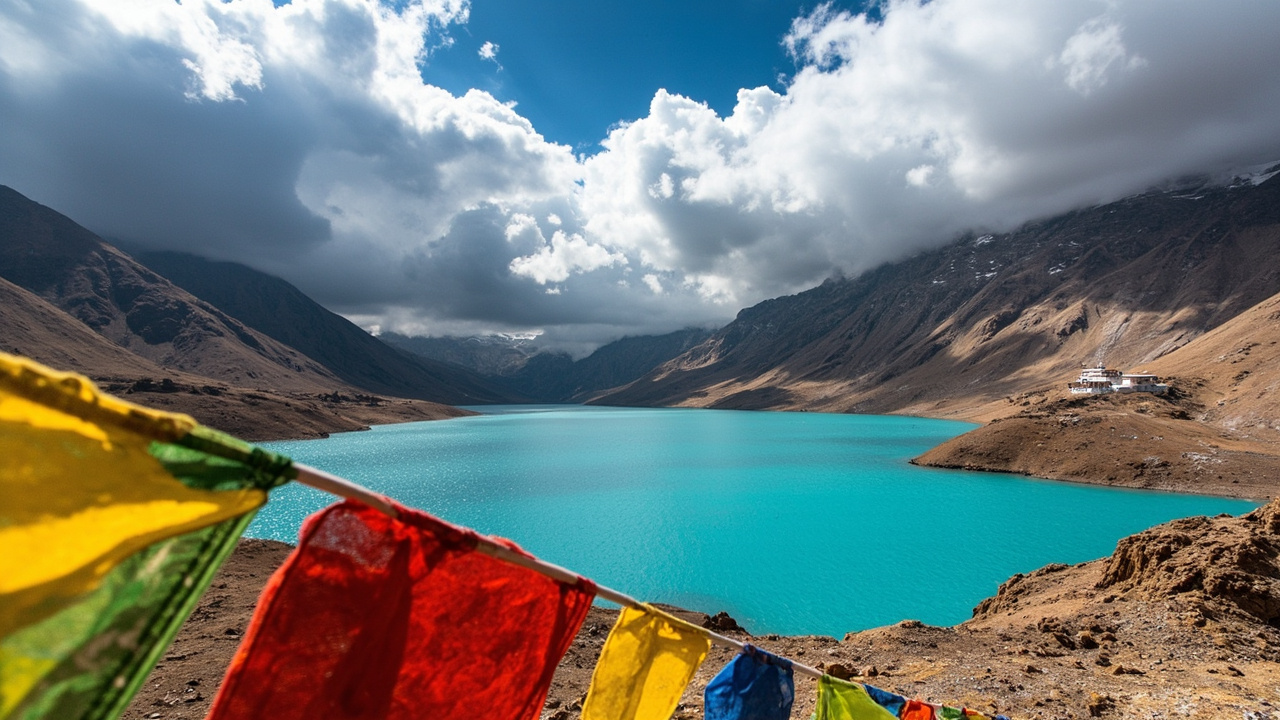
The cab driver from Lhasa airport looked at me sideways when I said I wanted to go to Yamdrok Lake. “It’s a long way,” he said, in the way locals say when they think you don’t know what you’re asking for. He was right, but not for the reason he meant. The drive over the Karola Pass at 5,030 meters (16,500 feet) is one of those experiences that rearranges something inside you. You come over the crest, and the lake just sits there, a ribbon of turquoise wrapped around mountains that look like they were drawn by a child who only knew how to use one shade of blue. I stood there for twenty minutes without saying anything. The driver smoked a cigarette and waited. He’d seen it before.
Yamdrok Lake is one of the three great sacred lakes of Tibet, and it’s the easiest day trip from Lhasa that actually feels like you’ve left the city behind. This guide covers everything you need to know for 2026: how to get there, what it costs, whether the visa-free policies apply to you, and the things I wish someone had told me before I made the trip myself.
Quick answer
Yamdrok Lake is a sacred turquoise lake about 100 kilometers (62 miles) southwest of Lhasa, reachable as a day trip on the newly completed Lhasa-Shigatse expressway. For 2026, most American, British, and European tourists can visit Tibet without a separate Tibet Travel Permit if they enter China under the 30-day visa-free policy, but you still need a Chinese visa or visa-free entry plus a guided tour for Tibet. Budget $80-150 USD (CNY 580-1,090) for a private car day trip, and go between May and October when the mountain passes are clear of snow.
The Short Version
If you have one day outside Lhasa, spend it at Yamdrok. It’s three hours each way, the altitude will make you feel like you ran a marathon, and you’ll take photos that make your friends think you hired a professional photographer. The lake is free to see from the Karola Pass viewpoint. You’ll pay for transport, a driver, and your Tibet permits. Go on a weekday. Bring sunglasses, lip balm, and a jacket that blocks wind. Don’t try to do it on your own unless you speak Mandarin and have a Chinese driver’s license, because the roads are winding and the altitude makes bad decisions easier.
How I Picked These
I’ve lived in Beijing since 2019 and made seven trips to Tibet, including three visits to Yamdrok in different seasons. I’ve done the trip with a private driver, with a group tour, and once with a local guide who grew up in a village on the lake’s shore. I’ve also talked to dozens of travelers in Lhasa hostels and teahouses about what they wished they’d known. The recommendations here come from those conversations, my own mistakes, and the specific logistics that matter for international visitors navigating China’s permit system in 2026.
Comparison Table
| Rank | Place | Best For | Approx Cost (USD) | Time Needed | When to Go |
|---|---|---|---|---|---|
| 1 | Karola Pass Viewpoint | The classic postcard view | Free (included in tour) | 30-45 min | May-Oct, morning |
| 2 | Lakeside Village (Dawa’s Home) | Meeting locals, yak butter tea | $5-10 (CNY 36-73) | 1-2 hours | Year-round |
| 3 | Rimpung Monastery | History, fewer crowds | $3 (CNY 22) | 45 min | May-Oct |
| 4 | The Peninsula Walk | Solitude, photography | Free | 1-2 hours | June-Sept |
| 5 | Samding Monastery | Female reincarnation lineage | $4 (CNY 29) | 1 hour | May-Oct |
| 6 | The Western Shore | Wild camping vibes, no tourists | Free | Half day | June-Aug |
| 7 | Yamdrok View Hotel Terrace | Best sunset without driving back | $15-20 for tea (CNY 109-145) | 1 hour | Year-round |
| 8 | The Yak Herder’s Ridge | Meeting nomads, baby yaks | Free (tip $2-5) | 30 min | June-Sept |
| 9 | The Abandoned Ferry Dock | Local history, quiet reflection | Free | 30 min | May-Oct |
| 10 | The Night Sky Point | Stargazing, zero light pollution | Free | 1-2 hours | Nov-Feb |
1. Karola Pass Viewpoint —the one you’ve seen in every photo
The first time I saw Yamdrok, I was hungover from a night of barley beer in Lhasa and convinced I was going to die of altitude sickness before we reached the pass. Then the driver stopped the car, I stepped out, and I forgot about my headache completely. The lake stretches out below like a piece of jewelry someone dropped on the earth. It’s 72 kilometers (45 miles) long, and from this height it looks like a fjord that got confused and ended up in the Himalayas.
This is the view you’ve seen on Instagram, and it’s not oversold. The water changes color depending on the clouds, shifting from deep sapphire to pale jade in the space of ten minutes. The wind whips across the pass hard enough to steal your hat, and there are prayer flags everywhere, snapping like they’re trying to communicate something urgent.
Location: Karola Pass, on the Lhasa-Shigatse expressway, about 2.5 hours from Lhasa Entry fee: Free. The viewpoint is just a pull-off on the road. Opening hours: Always open. The pass itself has no gates. How to get there: From Lhasa, take the new expressway toward Shigatse. Your driver will know the exit. If you’re not on a tour, you can’t reach this by public bus. When to visit: Morning, before the tour buses arrive from Lhasa around 11am. Weekdays are dramatically quieter. Insider tips: The toilets at the viewpoint are the worst you’ll encounter in Tibet. Go before you leave Lhasa. Also, the altitude here is 5,030 meters (16,500 feet), so walk slowly and carry oxygen cans if you’re prone to headaches. The vendors selling prayer flags will charge you 10 yuan ($1.40) for a string, which is fair. I bought a string of prayer flags and tied them to the post, and a Tibetan woman next to me nodded approvingly and handed me a piece of dried yak meat. It tasted like beef jerky that had been through a war.
2. Lakeside Village —where the lake actually lives
The viewpoint is for tourists. The village is for understanding why this lake matters. I spent an afternoon here with a family who have lived on the shore for four generations. The grandmother, who was 78 and looked like she could out-hike me, made yak butter tea and told stories through my guide’s translation. She pointed at the lake and said, “This is our mother. We don’t fish her, we don’t pollute her, we just live beside her.”
The village itself is small, maybe thirty houses, all made of stone with flat roofs weighed down by firewood. Children run around with absolutely no fear of the altitude, and the yaks wander through the streets like they own the place, which they do. There’s a small temple at the edge of the village with a monk who will show you around if you ask politely.
Location: A small village on the eastern shore, about 30 minutes from the Karola Pass viewpoint Entry fee: Free to walk around. The family I visited asked for a small donation, which is customary. Opening hours: Villages don’t have hours. Go during daylight. How to get there: You need a car. The road down to the shore is unpaved and rough in places. Your driver should know the way. When to visit: Any time, but afternoon is when the light makes the lake look almost unreal. Insider tips: Bring small gifts for children, like pens or notebooks. They’ll appreciate it more than candy. The yak butter tea is an acquired taste, but drink it anyway, it helps with altitude. Don’t take photos of people without asking first, especially the elderly. If you want to buy a handwoven carpet, this is the place, the ones in Lhasa are triple the price. I tried to help the grandmother carry a bucket of water and she laughed at me for a full minute. Then she made me sit down and drink more tea.
3. Rimpung Monastery —the one nobody talks about
Every tour goes to the viewpoint. Almost none go to Rimpung. That’s a mistake. This monastery sits on a hill above the lake’s northern shore, and it’s been here since the 14th century. The buildings are whitewashed and compact, clinging to the slope like they’re afraid of falling into the water below.
The monk who showed me around was named Tenzin, and he’d been at Rimpung for eleven years. He spoke English surprisingly well, learned from a previous visitor who’d stayed for a month. He showed me the assembly hall, the prayer wheels, and the small library that holds texts older than my home country. “We don’t get many visitors,” he said. “The tour groups go to the big monasteries in Lhasa. Here, we have the lake.”
Location: Northern shore of Yamdrok, about 20 minutes from the lakeside village Entry fee: 20 yuan ($2.80), which goes to the monastery’s upkeep Opening hours: 9am to 6pm, but the monks close for lunch around 1pm How to get there: By car from the village. The road is narrow but paved. When to visit: Morning, before the wind picks up. The monastery is quiet any day, but weekdays are even quieter. Insider tips: The monks appreciate small donations of cooking oil or rice, which you can buy in Lhasa. There’s a small guesthouse attached to the monastery if you want to stay overnight, but it’s basic, no heating, and the toilet is a hole in the ground. If you’re not used to altitude, don’t stay here. The monastery has no medical facilities and the nearest hospital is two hours away. Tenzin asked me where I was from, and when I said America, he smiled and said, “Ah, the country with the big cars.” He wasn’t wrong.
4. The Peninsula Walk —for when you need quiet
There’s a peninsula on the lake’s southern shore that you can walk out onto, and I’ve never seen another tourist there. The first time I found it, I was wandering aimlessly with my driver and we stopped because I needed to stretch my legs. I walked out onto the rocky spit and sat down, and for an hour, the only sounds were the water lapping and the wind moving through the grass.
This is where you go if you want to feel the lake rather than photograph it. The water is so clear near the shore that you can see the stones at the bottom, and on a calm day the surface is so still it looks like glass. I watched a pair of cormorants fishing for twenty minutes and felt my shoulders drop for the first time in weeks.
Location: Southern shore, about 45 minutes from the Karola Pass viewpoint by car Entry fee: Free Opening hours: Always open, but don’t walk out after sunset. The path is uneven and there are no lights. How to get there: You need a driver who knows the area. It’s not marked on maps, so show your driver this description. When to visit: Late afternoon, when the light turns golden and the crowds at the viewpoint have left. Insider tips: Bring a picnic. There are no shops anywhere nearby. The wind can be brutal, so wear layers. If you see a small cairn of stones, that’s a local tradition, you can add one but don’t take any away. The water is freezing even in summer, don’t be tempted to swim. I sat there long enough that my driver came looking for me, worried I’d passed out from altitude. I hadn’t. I was just finally breathing.
5. Samding Monastery —where the abbess is a woman
Samding is the only monastery in Tibet where the highest spiritual authority is a woman, and it’s been that way for centuries. The current incarnation, the Dorje Phagmo, is recognized as the highest female reincarnation lineage in Tibetan Buddhism. The monastery itself is smaller than Rimpung, but the history is bigger.
I visited on a day when the abbess was in residence, and I was told I could meet her briefly. She was in her sixties, with a calm that felt almost physical, like standing near a large body of water. She asked where I was from, what I did, and whether I was happy. I answered honestly, and she nodded, and then she gave me a blessing and a small piece of red string to tie around my wrist.
Location: On a hill above the lake’s eastern shore, about 40 minutes from the lakeside village Entry fee: 30 yuan ($4.20) suggested donation Opening hours: 9am to 5pm, but check with your guide, the abbess’s schedule affects access How to get there: By car. The road is steep and unpaved in the last section. When to visit: Morning, when the light hits the monastery’s white walls Insider tips: Dress modestly, shoulders and knees covered. Photography is not allowed inside the main temple. If you want to meet the abbess, ask your guide to arrange it in advance, it’s not guaranteed but it’s possible. The monastery sells small blessed amulets for 10 yuan ($1.40), which make good gifts. The red string stayed on my wrist for three months until it wore through and fell off somewhere in Shanghai. I like to think that’s the blessing working.
6. The Western Shore —where the tourists don’t go
The western shore of Yamdrok is where the lake gets wild. The road disappears and becomes a dirt track, and the villages thin out until there’s nothing but grass, yaks, and the occasional herder’s tent. I spent a night here once, camping with a group of herders who shared their fire and their stories.
The lake here is wider, more open, and the mountains on the far side seem impossibly close. At dusk, the water turns silver and the sky goes through every shade of pink and orange before settling into a deep blue that feels like it’s pressing down on you. I’ve seen a lot of sunsets in my life. This one is in the top three.
Location: Western shore, about 1.5 hours from the Karola Pass viewpoint Entry fee: Free Opening hours: Always open, but the dirt road is impassable after heavy rain How to get there: You need a 4x4 and a driver who knows the terrain. This is not for your first visit. When to visit: June to August, when the grass is green and the weather is stable Insider tips: If you camp, bring all your own supplies, there’s nothing out here. The herders are friendly but keep a respectful distance. Don’t walk far from your vehicle, the terrain is deceptive and the altitude makes everything harder. If you see wild donkeys, don’t approach them, they’re not domesticated and they can kick. I woke up at dawn and stepped out of my tent to find a yak staring at me from five meters away. We regarded each other for a long moment, and then it wandered off, unimpressed.
7. Yamdrok View Hotel Terrace —the civilized option
If you’re not a camping person, this is your sunset spot. The Yamdrok View Hotel sits on a ridge above the lake, and its terrace has the best view you can get without standing in the wind. I came here on my second visit, after a long day of driving, and I ordered a pot of tea and just watched the light change for two hours.
The hotel itself is a bit rough around the edges, the rooms are basic and the heating is unreliable, but the terrace is worth the stop even if you’re not staying. They serve Tibetan food, including a surprisingly good thukpa (noodle soup), and the staff are used to foreign visitors.
Location: On the ridge above the lake’s northern shore, near the Karola Pass Entry fee: Free to enter the terrace. Tea costs 15-20 yuan ($2-3). Opening hours: The terrace is open until 10pm, but the kitchen closes at 8pm How to get there: It’s on the main road between Lhasa and the lake. Your driver will know it. When to visit: Sunset, around 7pm in summer, 5:30pm in winter Insider tips: The hotel can arrange a driver for you if you’re stuck, but it’s expensive, around 500 yuan ($70) for a day trip back to Lhasa. The thukpa is the best thing on the menu. If you’re staying overnight, book in advance, it fills up in summer. I met a German couple here who had been traveling in China for three months and said this was the most beautiful place they’d seen. I didn’t disagree.
8. The Yak Herder’s Ridge —where the babies are
In summer, the herders move their yaks to higher pastures, and there’s a ridge above the lake’s eastern shore where you can see the whole operation up close. I drove up here with my guide in July and found a family camped with about forty yaks, including several calves that were only a few weeks old.
The herder, a man named Phuntsok, invited us to sit and have tea while his wife milked the yaks. The calves were curious and came right up to us, sniffing our hands and trying to chew on my camera strap. Phuntsok laughed and said, “They think everything is food.” He was right.
Location: Ridge above the eastern shore, about 50 minutes from the lakeside village Entry fee: Free, but a small tip of 10-20 yuan ($1.50-3) is appreciated if you stay for tea Opening hours: The herders are there from June to September, then they move to lower pastures How to get there: By car, then a short walk up the ridge When to visit: June to September, when the calves are born Insider tips: Ask before taking photos of the herders or their families. The yak butter tea here is the freshest you’ll taste, and it’s different from the store-bought stuff. If you’re offered dried yak cheese, it’s an acquired taste, but try it anyway. Don’t chase the yaks, they’re not aggressive but they’re not pets either. Phuntsok’s daughter, who was about ten, showed me how to milk a yak and then laughed at my pathetic attempt. I got about a cup before she took over and filled the bucket in five minutes.
9. The Abandoned Ferry Dock —a piece of the past
Before the roads were built, the only way across Yamdrok was by ferry. There’s a dock on the northern shore that’s been abandoned since the 1980s, and it’s one of the most atmospheric places I’ve found around the lake. The wooden pier is rotting and half-submerged, and the old ferry, a rusted hulk, sits beached nearby.
I came here on a gray day, and the whole scene felt like something out of a post-apocalyptic movie. The wind moaned through the metal, and the lake slapped against the pier with a sound that was almost musical. I sat on the shore for a while and tried to imagine what it was like when this was the only way across.
Location: Northern shore, about 30 minutes from the Karola Pass viewpoint Entry fee: Free Opening hours: Always open How to get there: By car, then a short walk down to the shore When to visit: Any time, but the light is best in the late afternoon Insider tips: The pier is rotten, don’t walk on it. The old ferry is a popular spot for photographers, so don’t be surprised if you see someone with a tripod. There’s a small shrine nearby where locals leave offerings, you can add a stone or a piece of cloth but don’t take anything. I found an old coin embedded in the rust of the ferry and left it there. It felt wrong to take it.
10. The Night Sky Point —the one that changes you
I almost didn’t include this one because it’s not a place you can easily visit, but it’s the one that stays with me the most. On my third visit to Yamdrok, I stayed overnight at a herder’s camp, and around midnight, I stepped outside to use the facilities and looked up.
I have seen the Milky Way before, but never like this. The altitude, the dry air, the complete absence of light pollution, it all combined to make the sky look like someone had spilled a bag of diamonds on black velvet. The stars were so bright they cast shadows. I stood there for I don’t know how long, until my toes went numb and my guide came out to check on me.
Location: Anywhere on the western shore, away from the main road Entry fee: Free Opening hours: Night, obviously. Best between midnight and 3am. How to get there: You need to be staying overnight in the area. This is not a day trip thing. When to visit: November to February, when the sky is clearest. Summer has more clouds. Insider tips: Bring a headlamp, the terrain is uneven. The temperature drops below freezing at night even in summer, so dress warm. If you have a camera, bring a tripod and a wide-angle lens. Your phone won’t capture this, don’t even try. I didn’t take a single photo. I just stood there and let the universe do its thing. It was enough.
FAQ summary
Yamdrok Lake is a sacred turquoise lake in Tibet, about 100 kilometers from Lhasa, reachable as a day trip by car. For 2026, most international tourists can visit under China’s 30-day visa-free policy, but you still need a Tibet Travel Permit arranged through a licensed tour operator. A private car day trip costs $80-150 USD (CNY 580-1,090), and the best time to visit is May through October. The main viewpoint at Karola Pass is free, but you need transport to reach it. Altitude sickness is a real concern at 5,030 meters, so acclimatize in Lhasa first and bring oxygen if you’re prone to headaches.
FAQ
Q: Do I need a special permit to visit Yamdrok Lake? A: Yes. Even with China’s visa-free entry, you need a Tibet Travel Permit, which can only be arranged through a licensed tour operator. Your tour operator will handle this for you, but you must provide your passport details at least 10 days in advance.
Q: How much does a day trip to Yamdrok Lake cost? A: A private car with driver costs $80-150 USD (CNY 580-1,090) depending on your negotiation skills and the season. This includes the permit arrangement, fuel, and driver’s time. Group tours are cheaper, around $50-70 USD (CNY 360-510), but you’ll have less flexibility.
Q: Can I visit Yamdrok Lake without a tour? A: Technically no. The Tibet Travel Permit system requires you to be on an organized tour, though in practice the “tour” can be just you and a driver. You cannot rent a car and drive yourself without a Chinese driver’s license, which is difficult to obtain for foreigners.
Q: How long does it take to get to Yamdrok Lake from Lhasa? A: About 2.5 to 3 hours each way on the new expressway. The road is winding and the altitude makes the journey feel longer. Plan for a full day, leaving Lhasa by 8am and returning by 6pm.
Q: What should I do about altitude sickness? A: Spend at least two days in Lhasa (3,650 meters) before attempting Yamdrok (5,030 meters at the pass). Drink lots of water, avoid alcohol, and consider bringing portable oxygen cans, available at any pharmacy in Lhasa for about 30 yuan ($4). If you feel severe symptoms, descend immediately.
Q: What should I wear to Yamdrok Lake? A: Layers are essential. Even in summer, the temperature at the pass can drop to near freezing with wind. Bring a warm jacket, a hat, sunglasses (the UV is intense), and sunscreen. In winter, temperatures can drop to -20°C (-4°F), so dress accordingly.
Q: Can I use my credit card or do I need cash? A: Cash is king in rural Tibet. Bring enough yuan for the day, including tips for your driver and any small purchases. In Lhasa, you can use WeChat Pay or Alipay, but these require a Chinese bank account or a foreign card linked to the app. Set this up before you leave home if you want to use it.
The Honest Wrap-up
This list is for people who want to see Yamdrok Lake without feeling like they’re on a conveyor belt. It’s for travelers who are willing to spend a little more for a private car, who don’t mind rough roads, and who understand that the best experiences in Tibet require patience and a tolerance for discomfort. It’s not for people who want luxury, who are short on time, or who have health conditions that make altitude risky.
If you take only one piece of advice from this guide, let it be this: go on a weekday, leave early, and don’t rush. The lake has been here for millions of years. It’s not going anywhere. The only thing you’ll regret is not staying long enough to really see it.
I’ve been to Yamdrok three times, and every time I leave, I feel like I’ve forgotten something. Maybe that’s the point. Maybe the lake keeps a piece of you, and that’s why you have to go back.
Topics
More guides you may like

Top 10 Bridges in China
China's bridges are engineering marvels spanning mountains, rivers, and seas. Here are 10 of the most spectacular, from ancient stone to modern steel.
8 min read

Top 10 Buddhist Sites in China
From the Leshan Giant Buddha to the Dunhuang Caves, these 10 Buddhist sites represent 2,000 years of China's spiritual heritage.
9 min read
Top 10 Day Trips from Beijing You Shouldn't Miss
Beijing is packed with history, but some of China's best experiences are just a few hours away. Here are 10 day trips that will transform your visit.
9 min read
Top 10 Hidden Gems in China Off the Beaten Path
Beyond the Great Wall and Terracotta Warriors, China has incredible hidden destinations few tourists ever reach. Here are 10 underrated gems worth the detour.
9 min read
Top 10 Markets and Shopping Streets in China
From Shanghai's Bund to Beijing's Silk Street - 10 markets where foreigners can haggle, explore, and bring home authentic Chinese goods.
9 min read
Top 10 Museums in China You Shouldn't Miss
China's museums span 5,000 years of civilization. These 10 - from the Palace Museum to Xi'an's terracotta gallery - are unmissable for culture lovers.
9 min read