
Zhaoxing Dong Village: The Complete 2026 Guide
The cab from Congjiang dropped me at a concrete bridge on the edge of a valley, and for a second I thought the driver had made a mistake.
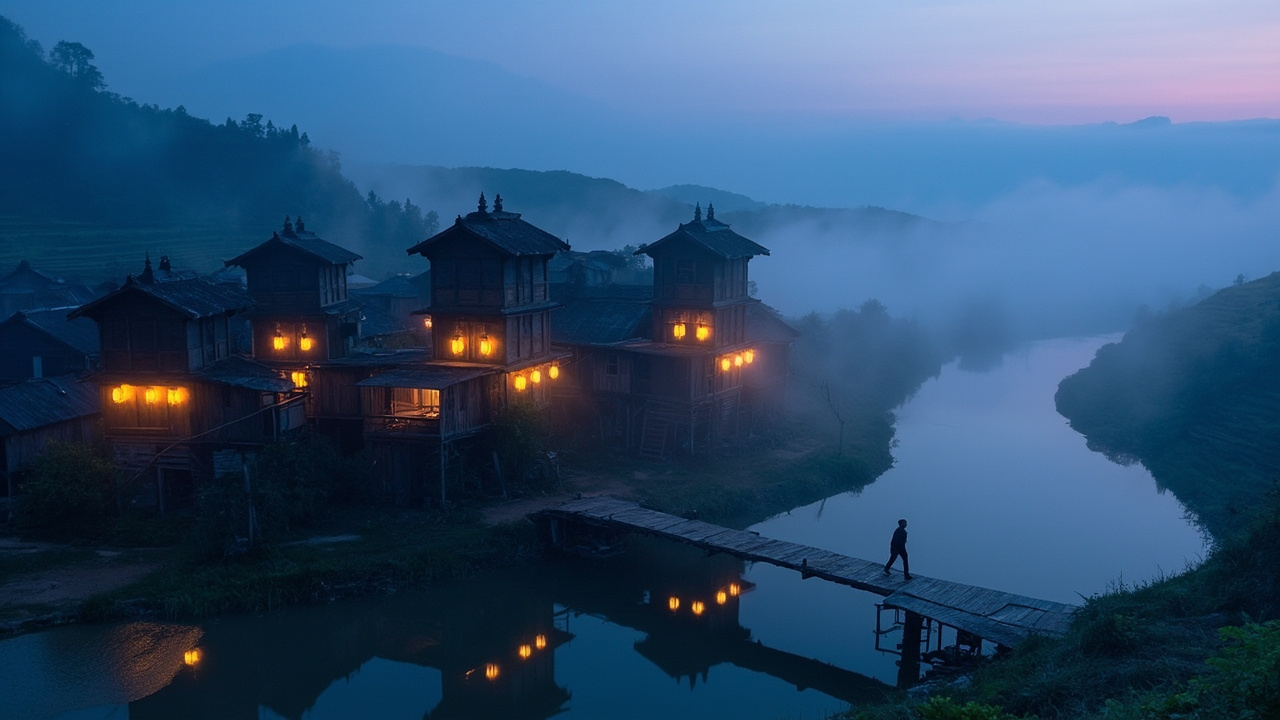
The cab from Congjiang dropped me at a concrete bridge on the edge of a valley, and for a second I thought the driver had made a mistake. Then I heard it: the low, wooden thump of a lusheng reed pipe, echoing off the hills. I followed the sound past a row of rice paddies and into a maze of dark wooden stilt houses, where old women in indigo-dyed jackets were winnowing grain in the dust of the late afternoon sun.
That was my first hour in Zhaoxing Dong Village, and it remains one of the most vivid afternoons of my years traveling through China. This is not a museum piece. It’s a living, breathing Dong minority village of roughly 1,000 households, wrapped around five wind-and-rain bridges and anchored by five drum towers that rise above the rooftops like wooden pagodas. It’s also, mercifully, still a place where the rhythm of daily life — rice harvests, singing competitions, the clatter of mahjong tiles — matters more than the souvenir shops.
This guide covers everything a first-time visitor needs: how to get here from Guizhou’s airports, what to pay, where to sleep, and the honest truth about which parts of the village are touristy and which parts you’ll have to yourself. I’ve been here three times since 2019, most recently in late 2025, and I’ll tell you exactly what’s worth your time and what you can skip.
Quick answer
Zhaoxing Dong Village is a large, inhabited Dong minority village in southeastern Guizhou Province, about a 3-hour drive from Guiyang or a 90-minute drive from Congjiang high-speed rail station. The average visitor spends 1–2 nights and budgets roughly $60–$100 per day (¥430–¥720) including a mid-range guesthouse, meals, and local transport. The village is open year-round, but the best time to visit is April–June or September–October, when the rice terraces are green or gold and the weather is mild. No special permit is needed, but you will need a valid China visa or visa-free transit arrangement to enter the country.
The Short Version
Zhaoxing is the largest Dong village in China, and it’s genuinely worth the detour. The drum towers and wind-and-rain bridges are the headline attractions, but the real magic is sitting on a bridge at dusk watching the village light up. It’s touristy in the center — expect group tours and selfie sticks — but the side alleys and surrounding hillsides are quiet. Give it one full day and one night. The night show at the central performance square is surprisingly good. Skip it if you’re on a tight schedule and can’t get off the main Guizhou tourist circuit.
How I Picked These
I’ve traveled through Guizhou extensively since 2019, and I’ve visited Zhaoxing three times: once in October 2021 during the rice harvest, once in June 2023, and most recently in November 2025. I’ve also spent time in smaller Dong villages like Tang’an and Zhaoxing’s quieter neighbors. I talked to guesthouse owners, the women who run the dye workshops, and a retired schoolteacher who told me more about Dong history than any guidebook. The recommendations below are based on what I actually did, what I’d do again, and what I’d tell a friend to skip.
Comparison Table
| Rank | Place | Best For | Approx Cost (USD) | Time Needed | When to Go |
|---|---|---|---|---|---|
| 1 | Zhaoxing Village Center | First-time visitors, night views | Free (village pass ¥80/$11) | 1–2 nights | Apr–Jun, Sep–Oct |
| 2 | Tang’an Village | Quiet walks, rice terraces | Free | Half day | Same as above |
| 3 | Zhaoxing Night Show | Cultural performance | $8 (¥58) | 1.5 hours | Nightly, weather permitting |
| 4 | Drum Tower Square | Photography, people-watching | Free | 1–2 hours | Early morning or dusk |
| 5 | Wind-and-Rain Bridges | Architecture, shade | Free | 30 min each | Anytime |
| 6 | Rice Terraces (east side) | Hiking, sunrise | Free | 2–3 hours | Sunrise |
| 7 | Dong Embroidery Workshop | Hands-on craft | $5–$15 (¥35–¥110) | 1–2 hours | Afternoon |
| 8 | Zhaoxing Museum | History, context | Free | 45 min | Midday |
| 9 | Local Market (morning) | Food, daily life | $2–$5 (¥15–¥35) | 1 hour | 7–9 AM |
| 10 | Surrounding Villages (Jitang, Jilan) | Off-the-beaten-path | Free | Full day | Dry season |
1. Zhaoxing Village Center — The Heart of It All
I remember standing on the main bridge at 7 PM, watching the drum towers light up one by one. The village had gone quiet after the day-trippers left, and the only sounds were the river and a woman singing a lullaby from an open window. That’s the Zhaoxing you want to see.
The village center is a dense cluster of wooden stilt houses, five drum towers (each belonging to a different clan), and several wind-and-rain bridges spanning the small river that runs through town. It’s the largest Dong village in China, with around 1,000 households and 6,000 residents. The architecture is the draw: the drum towers are multi-tiered wooden pagodas that served as communal meeting points, and the bridges are covered walkways with carved beams and benches.
📍 Location: Zhaoxing Town, Liping County, Qiandongnan Prefecture, southeastern Guizhou 🎫 Entry fee: Village pass ¥80 ($11), valid for multiple days. Some guesthouses can help you avoid it, but honestly, just pay it. 🕒 Opening hours: Always open. The village doesn’t close. 🚕 How to get there: From Congjiang High-Speed Rail Station, take the shuttle bus (¥10/$1.50, 30 minutes) or a taxi (¥50–¥80/$7–$11). The shuttle drops you at the village gate. 📅 When to visit: Early morning (before 8 AM) for empty streets, or after 7 PM for the lights. Weekdays are quieter than weekends. 💡 Insider tips:
- The village pass is checked at the main gate, but the side entrances are often unguarded. That said, the pass supports village maintenance. Pay it.
- Climb to the observation deck on the hill behind the village for the classic postcard shot. It’s a 10-minute walk up concrete steps.
- The river is clean enough to wade in near the upper bridges in summer. Locals do it.
- Ask your guesthouse to book the night show tickets for you. They get a discount.
- Don’t miss the morning market near the east gate. It’s real life, not a performance.
I met a grandmother named Wu who sold me a bowl of youcha (oil tea) for ¥5 ($0.70) from her front door. She laughed at my attempt to say “delicious” in Dong dialect and then taught me the correct word. I still can’t pronounce it.
2. Tang’an Village — The Quiet Neighbor
I walked to Tang’an on a misty morning in June, and for 40 minutes I didn’t see another tourist. Just rice paddies, a few water buffalo, and the sound of my own footsteps on the stone path. It was the best walk I did in Guizhou.
Tang’an is a smaller Dong village perched on a hillside about 2 kilometers from Zhaoxing. It’s famous for its rice terraces and its preserved architecture, and it’s been designated a UNESCO World Heritage candidate site. The village itself is compact — maybe 200 households — but the setting is spectacular. You can see the terraces cascading down the valley from the village’s drum tower.
📍 Location: Tang’an Village, about 2 km east of Zhaoxing 🎫 Entry fee: Free. Some guesthouses in Zhaoxing offer guided walks that include a meal here. 🕒 Opening hours: Always open. 🚕 How to get there: Walk from Zhaoxing (40–50 minutes on a paved path) or take a local motorbike taxi (¥20/$3). The path starts near the east gate of Zhaoxing. 📅 When to visit: Early morning for the light on the terraces. The path is shaded in parts, so it’s fine even in summer. 💡 Insider tips:
- The path to Tang’an passes through working rice paddies. In harvest season (September–October), you’ll see families cutting rice by hand.
- There’s a small guesthouse in Tang’an if you want to stay overnight. It’s basic but the sunrise views are worth it.
- Bring water. There’s no shop on the path.
- The terraces are flooded in May–June, which creates mirror-like reflections. That’s the best time for photos.
- If you’re lucky, you’ll hear the village choir practicing in the drum tower. Dong singing is famous for its harmonies.
I stopped to rest on a stone bridge outside Tang’an, and an old man came out of his house to offer me a chair and a cup of tea. We communicated entirely through gestures and smiles. He pointed at the terraces and said one word I understood: “beautiful.” He was right.
3. The Night Show — Worth the Ticket Price
I was skeptical about the night show. Most “ethnic performances” in China are tourist traps with bad sound systems and tired dancers. The Zhaoxing show surprised me. It’s a full-scale production with hundreds of performers, and the grand finale — a mass chorus of Dong songs — gave me goosebumps.
The show takes place in a purpose-built performance square near the village center. It tells the story of the Dong people through song, dance, and costume, covering everything from rice planting to courtship rituals. The costumes alone are worth the ticket price: layers of indigo-dyed cloth, silver jewelry, and embroidered aprons that take months to make.
📍 Location: Performance Square, central Zhaoxing 🎫 Entry fee: ¥58 ($8) per person. Children under 1.2 meters are free. 🕒 Opening hours: Shows run nightly at 8 PM, weather permitting. In winter, they may cancel if it’s raining or too cold. 🚕 How to get there: It’s a 5-minute walk from anywhere in the village. Follow the sound of the drums. 📅 When to visit: Go on a clear night. The show is outdoors, and the light effects are much better when the sky is dark. 💡 Insider tips:
- Buy tickets through your guesthouse. They often get a small discount, and you’ll avoid the queue.
- Arrive 15 minutes early to get a good seat. The front rows are closest to the action but also the loudest.
- The show ends with an audience participation segment. Don’t be shy — it’s fun.
- If you’re on a budget, you can hear the show from outside the square. The sound carries well.
- The show is in Mandarin and Dong, but the visuals are self-explanatory.
The woman next to me was a local grandmother who’d come to watch her granddaughter perform. She spent the whole show pointing at the stage and saying “my family” in Mandarin. I didn’t need a translation.
4. Drum Tower Square — The Social Heart
The drum tower square in the center of Zhaoxing is where the village comes to life. On any given afternoon, you’ll find old men playing Chinese chess, women embroidering, and children chasing each other around the wooden pillars. It’s the best place in the village to just sit and watch.
Each of the five drum towers belongs to a different clan, and the tallest one — the Ren tower — is the centerpiece of the village. It’s 13 stories tall and covered in intricate carvings. The square in front of it is the meeting point for festivals, weddings, and the nightly dance practice that happens in summer.
📍 Location: Central Zhaoxing, near the main bridge 🎫 Entry fee: Free 🕒 Opening hours: Always open. The square is busiest in the late afternoon. 🚕 How to get there: You can’t miss it. It’s the biggest open space in the village. 📅 When to visit: Late afternoon (4–6 PM) for the best light and the most activity. Early morning is good for photos without people. 💡 Insider tips:
- The drum tower itself is usually open during the day. Climb the first few levels for a different perspective.
- In summer, the square hosts impromptu dance sessions in the evening. Join in if you’re brave.
- The benches around the square are prime real estate. Claim one early.
- There’s a small shop near the tower that sells cold drinks and ice cream. Overpriced, but worth it on a hot day.
- If you see a group of women in matching embroidered jackets, they’re probably from a village choir. They’ll happily pose for photos if you ask.
I sat on a bench for an hour one afternoon, and an elderly man named Yang eventually came over to practice his English with me. He’d learned it from tourists over 20 years. His vocabulary was surprisingly good, and his questions were even better. “Why do Americans always take photos of my shoes?” he asked. I didn’t have an answer.
5. The Wind-and-Rain Bridges — Architecture in Motion
The covered bridges of Zhaoxing are called “wind-and-rain bridges” because they shelter travelers from both. They’re also the best place in the village to escape the midday sun, watch the river, and eavesdrop on local conversations you won’t understand.
There are five main bridges in Zhaoxing, each with its own character. The ones near the village center are the busiest, with shops and snack stalls built into the sides. The ones further out are quieter and more atmospheric. My favorite is the bridge near the east gate, which is slightly elevated and offers a view of the rice paddies beyond the village.
📍 Location: Various points along the river through Zhaoxing 🎫 Entry fee: Free 🕒 Opening hours: Always open 🚕 How to get there: Walk along the river. You’ll cross at least two bridges just by exploring. 📅 When to visit: Late afternoon, when the light comes through the wooden slats and the river sparkles. 💡 Insider tips:
- The bridges have built-in benches. Sit for a while. This is the best people-watching in the village.
- Some bridges have small shrines at one end. Don’t touch anything, but feel free to look.
- In summer, locals nap on the benches in the afternoon. Don’t be alarmed.
- The bridges are at their best during festivals, when they’re decorated with lanterns and banners.
- If you’re a photographer, the bridge near the west gate has the best angle of the drum towers in the background.
I once spent an entire afternoon on the east bridge, reading and watching the river. A young boy came by with a fishing rod and caught three small fish in an hour. He showed them to me with immense pride before throwing them back. The river is that clean.
6. The Rice Terraces (East Side) — Sunrise Without the Crowds
I woke up at 5:30 AM to watch the sunrise from the terraces east of Zhaoxing, and I had the entire hillside to myself. The light came up slowly, turning the flooded paddies from gray to gold, and the village below me woke up in stages: first a rooster, then a dog, then the first motorbike.
The terraces east of the village are less visited than the ones near Tang’an, but they’re just as beautiful. The path starts near the east gate and climbs steadily for about 30 minutes. You’ll pass through working farmland, so be respectful of the crops and the farmers.
📍 Location: East of Zhaoxing, accessible via a path from the east gate 🎫 Entry fee: Free 🕒 Opening hours: Always open, but best at sunrise 🚕 How to get there: From the east gate, follow the concrete path uphill. It’s well-marked and easy to follow. 📅 When to visit: Sunrise (around 6 AM in summer, 7 AM in winter). The light is best in the first hour after dawn. 💡 Insider tips:
- Bring a flashlight for the early morning walk. The path is uneven in places.
- The terraces are flooded from May to June, which creates the mirror effect. September–October is harvest season, when the paddies are golden.
- There’s a small pavilion about 20 minutes up the path. It’s a good rest stop with a view.
- If you see a farmer working, a simple “ni hao” and a smile goes a long way.
- The path continues past the terraces to a small reservoir. It’s another 30 minutes, but worth it if you have time.
I met a farmer named Pan on the path who was carrying two buckets of water uphill. He stopped to catch his breath, and we walked together for a few minutes. He pointed at the terraces and said something in Dong that I later learned meant “our ancestors built these.” I nodded, and he nodded back, and we both understood each other perfectly.
7. Dong Embroidery Workshop — Get Your Hands Dirty
I’m not a craft person. I can’t sew a button on straight. But the embroidery workshop in Zhaoxing got me. The women who run it are patient, funny, and genuinely excited to teach foreigners their craft. I spent two hours there and came away with a small embroidered bookmark that I still use.
The workshop is run by a cooperative of local women who are trying to keep traditional Dong embroidery alive. They teach basic stitches, explain the symbolism of the patterns, and let you try your hand at a small project. The finished pieces are sold in their shop, with the proceeds going back to the cooperative.
📍 Location: Near the east gate of Zhaoxing, look for the sign that says “Dong Embroidery Workshop” in English 🎫 Entry fee: ¥35–¥110 ($5–$15) depending on the project. The bookmark is the cheapest; the full apron is the most expensive. 🕒 Opening hours: 9 AM–6 PM, daily 🚕 How to get there: From the village center, walk east toward the gate. The workshop is on the left side of the main path. 📅 When to visit: Afternoon, when the morning tour groups have left. 💡 Insider tips:
- The women speak basic English, but a translation app helps for the more detailed explanations.
- The workshop uses natural dyes, including indigo and a root that produces a deep red. Ask to see the dye pots.
- If you’re short on time, just browse the shop. The quality is excellent, and the prices are fair.
- The cooperative also runs a small guesthouse next door. Staying there supports the women directly.
- Don’t be afraid to ask questions. The women love talking about their craft.
The woman who taught me, a grandmother named Lan, laughed at my clumsy stitches for a full hour. By the end, she’d taken over my bookmark and finished it herself, adding a tiny bird that she said was for “good luck.” I still have it on my desk.
8. Zhaoxing Museum — Context in 45 Minutes
I usually skip small-town museums. They’re often dusty, poorly curated, and not worth the time. The Zhaoxing Museum surprised me. It’s small, but it’s well-organized and gives you real context for what you’re seeing in the village.
The museum covers Dong history, architecture, music, and customs. There are displays on the construction of drum towers, the tradition of “grand songs” (the polyphonic singing the Dong are famous for), and the role of women in Dong society. The English translations are decent, and there’s a short video in Mandarin with English subtitles.
📍 Location: Near the west gate of Zhaoxing, in a restored wooden building 🎫 Entry fee: Free 🕒 Opening hours: 9 AM–5 PM, closed Mondays 🚕 How to get there: From the village center, walk west toward the gate. The museum is on the right. 📅 When to visit: Midday, when the sun is hottest and you need a break from walking. 💡 Insider tips:
- The museum is small. Don’t plan more than 45 minutes.
- The video about Dong singing is worth watching. It explains the tradition better than any text.
- The museum shop sells books about Dong culture. Most are in Chinese, but some have English summaries.
- If you’re interested in architecture, the museum has a model of a drum tower that shows the internal structure.
- The staff are friendly and will answer questions, even if their English is limited.
The museum curator, a young man named Long, spent 20 minutes explaining the difference between the five drum towers to me. He was so passionate about the subject that I felt bad for only understanding half of it. He gave me a pamphlet in English at the end, and I read it that night in my guesthouse.
9. The Morning Market — Real Life at 7 AM
The morning market near the east gate of Zhaoxing is not for tourists. It’s for locals. And that’s exactly why you should go. I wandered through it at 7:30 AM, and I saw things I’d never seen before: fresh bamboo shoots the size of my arm, live fish in buckets, and a woman selling what she called “mountain medicine” (I didn’t ask).
The market is small, maybe 20 stalls, but it’s a window into daily life in the village. You’ll see farmers bringing in produce from the surrounding hills, women buying ingredients for the day’s meals, and children grabbing breakfast before school. It’s chaotic, noisy, and wonderful.
📍 Location: Near the east gate of Zhaoxing, along the main path 🎫 Entry fee: Free (unless you buy something, which you should) 🕒 Opening hours: Roughly 6:30–9 AM, daily 🚕 How to get there: From the village center, walk east toward the gate. Follow the noise. 📅 When to visit: Early. The market is mostly done by 9 AM. 💡 Insider tips:
- Bring small bills. Vendors may not have change for large notes.
- Try the youcha (oil tea) from a stall. It’s a Dong staple, and the market version is the real deal.
- The market is a great place to practice your Mandarin. Vendors are patient with foreigners.
- Don’t take photos without asking. Some vendors are shy, and some don’t want their faces on the internet.
- If you see something you don’t recognize, ask. Vendors love explaining their goods.
I bought a bag of small, green plums from a woman who insisted on giving me a few extra “for the road.” They were tart and delicious. I ate them all before I got back to my guesthouse.
10. The Surrounding Villages — Jitang and Jilan
I rented a motorbike for a day and rode to Jitang and Jilan, two villages further up the valley from Zhaoxing. The ride took me through some of the most beautiful countryside I’ve seen in China: terraced hillsides, dense forests, and small clusters of wooden houses clinging to the slopes.
Jitang is known for its “singing” tradition, and Jilan is famous for its paper-making. Both are much smaller than Zhaoxing, with no tourist infrastructure to speak of. That’s the point. You’ll see daily life in a Dong village that hasn’t been touched by tourism.
📍 Location: About 10–15 km from Zhaoxing, up the valley 🎫 Entry fee: Free 🕒 Opening hours: Always open 🚕 How to get there: Rent a motorbike in Zhaoxing (¥50–¥80/$7–$11 per day) or hire a local driver (¥150–¥200/$21–$28 for the day). The road is paved but winding. 📅 When to visit: Dry season (October–April). The road can be slippery in summer rain. 💡 Insider tips:
- The road is narrow in places. Drive carefully, especially on blind corners.
- Jitang has a small guesthouse if you want to stay overnight. It’s basic, but the hospitality is genuine.
- Jilan’s paper-making workshop is worth a visit. The craftsman will show you the whole process.
- Bring snacks and water. There are no shops in either village.
- If you’re not comfortable on a motorbike, hire a driver. It’s worth the money.
I stopped in Jitang for lunch and ended up eating with a family I’d never met. The grandmother insisted I try her homemade rice wine, and the grandfather showed me his collection of handmade tools. We communicated through a translation app and a lot of pointing. It was the best meal I had in Guizhou.
FAQ summary
Zhaoxing Dong Village is the largest Dong minority village in China, located in southeastern Guizhou Province. It’s accessible via a 30-minute shuttle bus from Congjiang High-Speed Rail Station, which connects to Guiyang and other major cities. The village pass costs ¥80 ($11) and is valid for multiple days. Most visitors stay 1–2 nights in a local guesthouse, with daily costs of $60–$100 (¥430–¥720). The best times to visit are April–June and September–October, when the weather is mild and the rice terraces are at their most scenic. The village is open year-round, and no special permit is required beyond a valid China visa or visa-free transit arrangement.
FAQ
Q: How do I get to Zhaoxing Dong Village from Guiyang?
A: Take a high-speed train from Guiyang North Station to Congjiang Station (about 1.5 hours, ¥100–¥150/$14–$21). From Congjiang Station, take the shuttle bus to Zhaoxing (¥10/$1.50, 30 minutes) or a taxi (¥50–¥80/$7–$11). The shuttle runs frequently during the day and drops you at the village gate.
Q: Do I need a special permit to visit Zhaoxing Dong Village?
A: No, you don’t need a special permit. Zhaoxing is open to all tourists. You just need a valid China visa or visa-free transit arrangement to enter the country. The village pass (¥80/$11) is required for entry and covers your stay for multiple days.
Q: How much time should I spend in Zhaoxing?
A: I’d recommend at least one full day and one night. That gives you time to explore the village, walk to Tang’an, see the night show, and catch a sunrise over the rice terraces. If you want to visit the surrounding villages like Jitang and Jilan, add another day.
Q: Is Zhaoxing Dong Village worth visiting?
A: Yes, if you’re interested in minority culture, traditional architecture, or just want to see a different side of China. It’s more touristy than smaller Dong villages, but it’s also the most accessible and has the best infrastructure. If you’re on a tight schedule and can’t get off the main Guizhou circuit, it’s worth the detour.
Q: What’s the best time of year to visit Zhaoxing?
A: April to June is ideal, when the rice terraces are flooded and the weather is mild. September to October is also good, when the rice is golden and ready for harvest. Summer (July–August) is hot and humid, and winter (December–February) can be cold and damp, but the village is quieter.
Q: Do people in Zhaoxing speak English?
A: Not much. Guesthouse owners and shopkeepers near the village center know some basic English, but most locals speak only Mandarin and the Dong dialect. Download a translation app like Pleco or Google Translate before you go. A few phrases in Mandarin will go a long way.
Q: Is it safe to travel to Zhaoxing as a solo female traveler?
A: Yes, I’d say it’s very safe. The village is small, well-lit at night, and the locals are friendly and used to tourists. The main risks are the same as anywhere in China: pickpocketing in crowded areas and uneven walking surfaces. Use common sense, and you’ll be fine.
Q: Do I need cash or can I use mobile payments in Zhaoxing?
A: Mobile payments are widely accepted in Zhaoxing. Set up Alipay or WeChat Pay before you arrive, as most guesthouses, restaurants, and shops accept them. However, it’s a good idea to carry some cash (¥200–¥300/$28–$42) for small vendors at the market or in the surrounding villages.
The Honest Wrap-up
Zhaoxing isn’t for everyone. If you’re looking for a completely untouched village with no other tourists, this isn’t it. The center is busy, especially on weekends and during Chinese holidays. But if you’re willing to walk 10 minutes off the main path, you’ll find the real Zhaoxing: the farmers in the fields, the grandmothers on the bridges, the children running through the alleys.
This guide is for the traveler who wants to see a living, breathing minority culture without a 10-hour bus ride into the middle of nowhere. Zhaoxing is accessible, safe, and genuinely beautiful. It’s also a place where you can actually connect with people, even if you don’t speak the language.
My final advice: book a guesthouse with a balcony facing the drum towers. Sit there in the evening with a cup of tea and just watch. The village will do the rest.
Topics
More guides you may like

Top 10 Bridges in China
China's bridges are engineering marvels spanning mountains, rivers, and seas. Here are 10 of the most spectacular, from ancient stone to modern steel.
8 min read

Top 10 Buddhist Sites in China
From the Leshan Giant Buddha to the Dunhuang Caves, these 10 Buddhist sites represent 2,000 years of China's spiritual heritage.
9 min read

Top 10 Day Trips from Beijing You Shouldn't Miss
Beijing is packed with history, but some of China's best experiences are just a few hours away. Here are 10 day trips that will transform your visit.
9 min read

Top 10 Hidden Gems in China Off the Beaten Path
Beyond the Great Wall and Terracotta Warriors, China has incredible hidden destinations few tourists ever reach. Here are 10 underrated gems worth the detour.
9 min read

Top 10 Markets and Shopping Streets in China
From Shanghai's Bund to Beijing's Silk Street - 10 markets where foreigners can haggle, explore, and bring home authentic Chinese goods.
9 min read

Top 10 Museums in China You Shouldn't Miss
China's museums span 5,000 years of civilization. These 10 - from the Palace Museum to Xi'an's terracotta gallery - are unmissable for culture lovers.
9 min read