
China 21 Day Itinerary
The train pulled out of Shanghai Hongqiao at 7:02 AM, and I watched the city dissolve into a flat green blur of rice paddies and factory roofs.
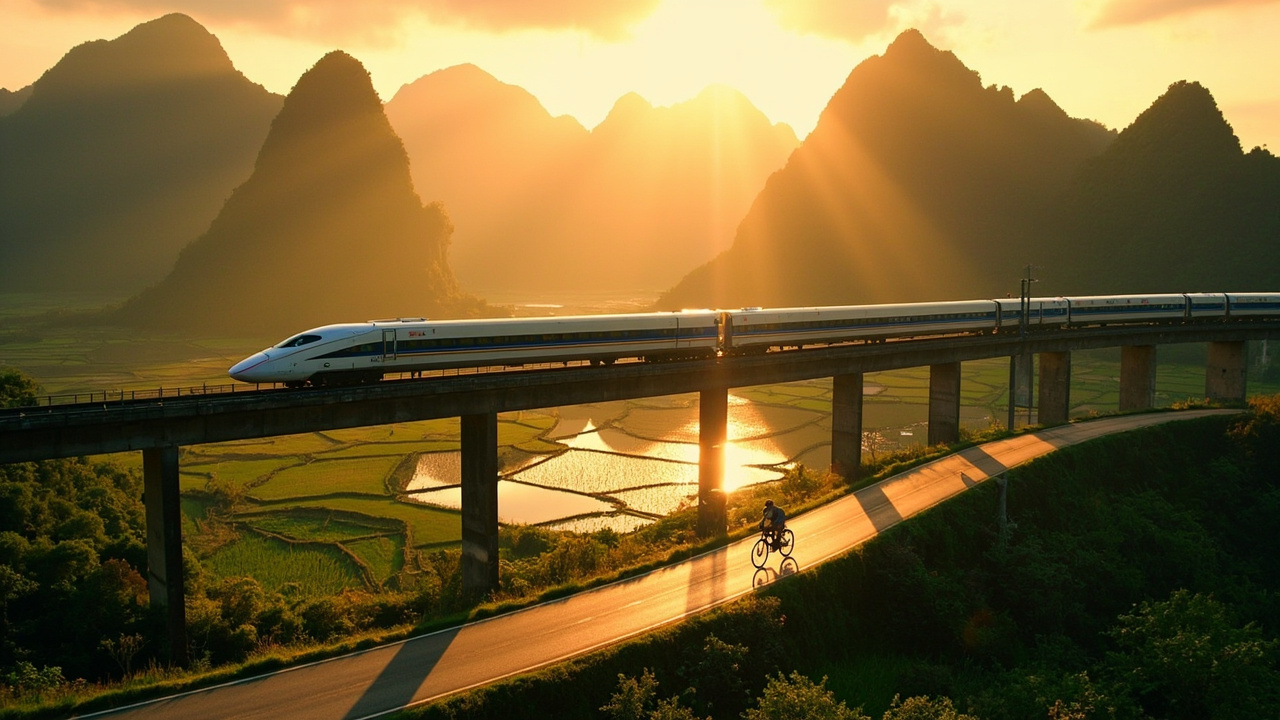
The train pulled out of Shanghai Hongqiao at 7:02 AM, and I watched the city dissolve into a flat green blur of rice paddies and factory roofs. I’d done this route a dozen times by then, but there was a woman across the aisle who hadn’t. She was clutching a paper ticket like it was a winning lottery slip, filming the departure board on her phone. That’s the thing about China’s high-speed rail: it never stops feeling like a small miracle, even when you’ve gotten used to it. This itinerary is built around that feeling. It’s the route I’d give a friend who has three weeks, has never been to China, and wants to see the big sights without losing their mind to logistics. I’ve walked every one of these streets, missed trains in most of these cities, and eaten things I still think about years later. This guide is what I learned from those mistakes.
Quick answer
A 21-day first-timer itinerary covering Beijing, Xi’an, Chengdu, Guilin/Yangshuo, and Shanghai costs roughly $2,500–$3,500 per person (CNY 18,000–25,000) excluding international flights. Most US, UK, Australian, and European passport holders can enter visa-free for up to 30 days through 2026, but you must book flights and hotels before arrival. The backbone of the trip is the high-speed rail network — it’s faster than flying once you factor in airport security and the hour-long ride to most airports.
The Short Version
If you only read one section, read this. Five cities, roughly four days each, connected by high-speed rail. Beijing for history, Xi’an for the Terracotta Army, Chengdu for pandas and food, Yangshuo for scenery, Shanghai for the modern stuff. Book your trains the day they open (14 days ahead), download Alipay before you land, and pack for layers because Chinese buildings run hot in winter and the AC is aggressive in summer. Don’t try to add a sixth city. You’ll regret it.
How I Picked These
I’ve lived in Beijing for seven years and made more than forty trips around the country. For this itinerary, I went back and re-visited every city on the list in 2025, timing my visits to match the seasons most tourists would actually travel. I talked to hostel receptionists, taxi drivers, and a retired English teacher in Chengdu who insisted on practicing her English with me over hotpot. I also checked current prices and hours against official sources and local friends who still live in each city. This isn’t a list of the “best” places in China — it’s the route that makes sense for someone who’s never been here and wants to see the country’s greatest hits without a tour bus.
Comparison Table
| Rank | Place | Best For | Approx Cost (USD) | Time Needed | When to Go |
|---|---|---|---|---|---|
| 1 | Beijing | History, the Great Wall, hutongs | $400–600 | 4–5 days | Apr–May, Sep–Oct |
| 2 | Xi’an | Terracotta Army, ancient walls | $250–400 | 3 days | Mar–May, Sep–Nov |
| 3 | Chengdu | Pandas, Sichuan food, teahouses | $250–400 | 3–4 days | Mar–Jun, Sep–Nov |
| 4 | Yangshuo | Karst scenery, cycling, river | $200–350 | 3–4 days | Apr–Oct |
| 5 | Shanghai | Modern China, food, nightlife | $350–550 | 3–4 days | Mar–May, Oct–Nov |
Beijing — Start Where the History Is
I remember my first morning in Beijing, jet-lagged at 5 AM, standing in Tiananmen Square as the sun came up over the portrait of Mao. The sheer scale of the place hit me then — this square could swallow a dozen football fields. Beijing is the city that makes you understand why China calls itself the Middle Kingdom. It’s the political heart, the cultural anchor, and the place where every dynasty left its fingerprints.
The Forbidden City is the obvious centerpiece, and it deserves the hype. But Beijing rewards the patient traveler. The hutongs around Shichahai, the temple markets on weekend mornings, the old men flying kites in the park — that’s where the city’s real character lives. You need at least four days here, and five if you want to see the Great Wall properly.
📍 Location: Central Beijing, mostly within the 2nd Ring Road 🎫 Entry fee: Forbidden City ¥60 ($8); Great Wall at Mutianyu ¥40 ($6) + cable car ¥100 ($14); Temple of Heaven ¥35 ($5) 🕒 Opening hours: Forbidden City 8:30–17:00 (closed Mondays); Great Wall 7:30–18:00 (varies by season) 🚇 Getting there: Forbidden City — take Line 1 to Tiananmen East, Exit A, walk 5 minutes north. Mutianyu Great Wall — take the Dongzhimen bus 916 to Huairou, then a taxi (about ¥50/$7) to the entrance. Or book a private driver through your hotel. 🗓 When to visit: April–May and September–October. Avoid Golden Week (Oct 1–7) and Chinese New Year at all costs. 💡 Insider tips: Book Forbidden City tickets on the official WeChat mini-program at least a week ahead — they sell out daily. Go to Mutianyu instead of Badaling; it’s less crowded and the restored sections are more scenic. The subway is the fastest way around, but download an offline map because Google Maps doesn’t work well here.
I once spent an afternoon in a hutong tea house near the Drum Tower, and the owner, a man named Mr. Chen, insisted I try his jasmine tea before telling me the story of how his grandfather had rebuilt the courtyard after the Cultural Revolution. That’s the Beijing you won’t find in a guidebook.
Xi’an — The Ancient Capital That Feels Alive
Xi’an hit me differently than I expected. I’d read about the Terracotta Army for years, but nothing prepares you for the moment you walk into Pit 1 and see thousands of clay soldiers staring back at you. It’s less a museum and more a time machine that accidentally got left on.
But Xi’an isn’t just the army. The old city wall — still intact, still walkable — is the best place in China to rent a bike and watch the city change from above. The Muslim Quarter is a sensory overload of skewers, flatbreads, and the smell of cumin that follows you for blocks. And the food — Xi’an is where Chinese food gets serious. The biang biang noodles alone are worth the trip.
📍 Location: City center, mostly within the Ming Dynasty city wall 🎫 Entry fee: Terracotta Army ¥120 ($17); City Wall ¥54 ($8); bike rental on the wall ¥45 ($6) 🕒 Opening hours: Terracotta Army 8:30–18:00 (March–November), 8:30–17:00 (winter); City Wall 8:00–22:00 🚇 Getting there: Terracotta Army — take Metro Line 9 to Huaqing Pool Station, then a 15-minute taxi (about ¥30/$4). Or take the direct tourist bus from the Xi’an Railway Station. City Wall — take Line 2 to Yongningmen Station, Exit A, and you’re basically at the South Gate. 🗓 When to visit: March–May or September–November. Summer is brutally hot and the army pits get packed. 💡 Insider tips: Hire a guide at the Terracotta Army entrance — they cost about ¥100 ($14) and will show you details you’d never notice alone. Go to the City Wall at sunset when the light turns golden. In the Muslim Quarter, look for the stalls with the longest lines — that’s where the locals eat.
I made the mistake of trying to see the Terracotta Army and the city wall in one day. By the time I got to the wall, my legs were done and I barely enjoyed the sunset. Split them across two days.
Chengdu — The City That Taught Me to Slow Down
Chengdu is the only city in China where I’ve seen people openly nap in parks at 2 PM on a Tuesday. The pace here is different — slower, more deliberate, more about enjoying the moment than checking boxes. The pandas are the headline act, and they’re worth every minute of the queue, but the city itself is the real attraction.
The teahouses are where Chengdu’s soul lives. I sat in one for three hours one afternoon, drinking jasmine tea, watching old men play mahjong, and listening to a storyteller who’d been performing in the same spot for twenty years. The food is the other reason to come — Sichuan cuisine is the most exciting regional food in China, and the hotpot here will change your understanding of what spicy means.
📍 Location: Central Chengdu, around the Jinjiang District 🎫 Entry fee: Panda Base ¥55 ($8); Wenshu Monastery free; People’s Park free 🕒 Opening hours: Panda Base 7:30–18:00 (arrive by 8 AM to see them active); Wenshu Monastery 8:00–17:00 🚇 Getting there: Panda Base — take Metro Line 3 to Panda Avenue Station, then a 10-minute taxi (about ¥20/$3). Or take the direct bus from the city center. People’s Park — take Line 2 to People’s Park Station, Exit A. 🗓 When to visit: March–June or September–November. Spring is best for pandas — they’re more active in cooler weather. 💡 Insider tips: Get to the panda base before 8 AM or you’ll only see them sleeping. The teahouse in People’s Park is the most authentic experience in the city — order a cup of jasmine tea and just sit. For hotpot, ask your hotel to book a table at a local place like Shu Da Xia; the tourist spots near the city center are overpriced.
I met a retired teacher named Li Wei at the Wenshu Monastery teahouse who insisted on practicing her English with me. She told me she’d been coming to the same teahouse every day for fifteen years. I understood why.
Yangshuo — The Scenery You’ve Seen in Every Chinese Painting
Yangshuo is the place where China’s landscape finally makes sense. The karst peaks that rise out of the Li River look like they were painted by someone who’d never actually seen a mountain — they’re too perfect, too dramatic, too green. But they’re real, and they’re the reason I’ve been back three times.
The town itself is touristy — think backpacker bars and souvenir shops — but the countryside around it is where the magic lives. Rent a bicycle or an e-bike and ride through the rice paddies, past water buffalo and old farmhouses, and you’ll understand why this region has inspired poets for a thousand years. The Li River cruise from Guilin is the classic way to arrive, but I’d skip it and take the train instead — the cruise takes four hours and the scenery is better from the shore.
📍 Location: Yangshuo County, Guilin Prefecture, Guangxi Province 🎫 Entry fee: Most of the countryside is free; the Impression Liu Sanjie show is ¥198 ($28); bamboo rafting on the Yulong River is ¥150–200 ($21–28) 🕒 Opening hours: Open-air attractions are 24/7; the show runs nightly at 8 PM 🚇 Getting there: Take the high-speed train from Guilin to Yangshuo Station (about 30 minutes, ¥30/$4), then a 20-minute taxi to town (about ¥40/$6). From the station, there’s a shuttle bus that runs to the West Street area. 🗓 When to visit: April–October. September and October are ideal — the weather is warm but not oppressive, and the rice paddies are golden. 💡 Insider tips: Rent an e-bike for the day (about ¥50/$7) and ride toward the Yulong River — the scenery gets better the further you get from town. The bamboo rafting on the Yulong River is more peaceful than the Li River cruise. Skip the West Street bars at night and find a rooftop restaurant instead — the view of the karst peaks at sunset is worth the climb.
I got lost on an e-bike ride and ended up in a village where an old woman invited me into her home for tea. She didn’t speak a word of English, and I didn’t speak a word of her dialect, but we managed to communicate through gestures and laughter. That’s the Yangshuo I remember.
Shanghai — The Future, Arriving on Schedule
Shanghai is the city that makes Beijing look like a museum. The skyline along the Bund is a testament to what China has become — glass towers that seem to grow taller every time I visit, lit up like a Christmas tree that never gets taken down. It’s the most modern city in China, and it feels like it’s still being built.
But Shanghai isn’t just the skyscrapers. The French Concession is a leafy, low-rise neighborhood of plane trees and art deco buildings that feels more like Paris than Asia. The food scene is the best in China — you can eat your way from street stalls to Michelin-starred restaurants without leaving the city center. And the nightlife, from jazz bars to rooftop lounges, is the most sophisticated in the country.
📍 Location: Central Shanghai, around the Bund and the French Concession 🎫 Entry fee: The Bund is free; Shanghai Tower observation deck ¥180 ($25); Yu Garden ¥40 ($6) 🕒 Opening hours: The Bund is open 24/7; Shanghai Tower 8:30–21:30; Yu Garden 8:45–16:45 (closed Mondays) 🚇 Getting there: The Bund — take Line 2 to East Nanjing Road Station, Exit 1, and walk east for 10 minutes. Yu Garden — take Line 10 to Yuyuan Garden Station, Exit 1. 🗓 When to visit: March–May or October–November. Summer is humid and sticky; winter is cold and grey. 💡 Insider tips: Walk the Bund at sunrise — you’ll have it almost to yourself and the light is magical. The French Concession is best explored on foot or by bike; rent a shared bike and wander the side streets. For a view of the skyline without the crowds, go to the bar at the top of the W Shanghai Hotel — it’s pricey but worth it.
I watched the sunset from the Bund with a group of Chinese college students who asked me to take their photo. They were so excited to practice their English that we ended up talking for an hour. That’s the thing about Shanghai — it’s a city that’s always looking forward, but the people are still happy to stop and chat.
FAQ summary
This 21-day itinerary covers Beijing, Xi’an, Chengdu, Yangshuo, and Shanghai with high-speed rail connections between all cities. Most Western passport holders can enter China visa-free for up to 30 days through 2026, but must book flights and hotels in advance. The total cost is approximately $2,500–$3,500 per person (CNY 18,000–25,000) including trains, hotels, food, and attractions, but excluding international flights. Download Alipay and WeChat Pay before arrival, and set up a VPN if you want to access Google, Facebook, or Instagram.
FAQ
Q: Do I need a visa for China in 2026? A: Most US, UK, Australian, Canadian, and European passport holders can enter China visa-free for up to 30 days through 2026. You must book your flights and hotels before arrival and carry proof with you. Check the latest policy on the Chinese embassy website before you book.
Q: How much does a 21-day trip to China cost? A: Budget $2,500–$3,500 per person (CNY 18,000–25,000) excluding international flights. This covers mid-range hotels ($40–80/night), high-speed rail between cities ($50–100 per leg), food ($15–30/day), and attraction fees. Add $1,000–1,500 for international flights.
Q: Is it safe to travel in China as a foreigner? A: Yes, China is one of the safest countries I’ve traveled in. Violent crime is rare, and the biggest risks are pickpocketing in crowded tourist areas and getting lost. Keep your passport on you (hotels may need it for check-in) and carry a copy of your visa information.
Q: Do I need to speak Chinese to travel in China? A: No, but it helps. English is spoken in major tourist areas and hotels, but less so in smaller cities and rural areas. Download a translation app like Pleco or Google Translate (with offline packs) before you go. Learning a few phrases like “xièxiè” (thank you) and “duōshǎo qián” (how much) will get you far.
Q: What’s the best way to get between cities? A: High-speed rail is the best option. It’s faster than flying once you account for airport security and travel time, and the stations are usually in the city center. Book tickets on the official 12306 app or through a travel agent like Trip.com. Trains sell out during holidays, so book early.
Q: Do I need a VPN for internet access in China? A: Yes. Google, Facebook, Instagram, and WhatsApp are blocked in China. Download a reliable VPN before you arrive and test it before you land. A local SIM card with a data plan is also essential — you can buy one at the airport or use an eSIM like Airalo.
Q: What should I pack for a 21-day trip to China? A: Pack light and layer. Chinese buildings run hot in winter and the AC is aggressive in summer. Comfortable walking shoes are essential — you’ll be on your feet a lot. Bring a power adapter (China uses Type A/C/D/I plugs), a portable charger, and a refillable water bottle.
The Honest Wrap-up
This itinerary is for the first-time visitor who wants to see the big sights without being herded around on a tour bus. It’s not for the traveler who wants off-the-beaten-path adventures or deep cultural immersion — that requires more time and a willingness to embrace chaos. If you’re reading this and thinking about booking the flight, here’s my advice: do it. China is overwhelming, exhausting, and occasionally frustrating, but it’s also the most fascinating country I’ve ever visited. The food alone is worth the trip. And if you get lost, just smile and say “xièxiè” — it’ll get you further than any guidebook.
Topics
More guides you may like

Top 10 Bridges in China
China's bridges are engineering marvels spanning mountains, rivers, and seas. Here are 10 of the most spectacular, from ancient stone to modern steel.
8 min read

Top 10 Buddhist Sites in China
From the Leshan Giant Buddha to the Dunhuang Caves, these 10 Buddhist sites represent 2,000 years of China's spiritual heritage.
9 min read

Top 10 Day Trips from Beijing You Shouldn't Miss
Beijing is packed with history, but some of China's best experiences are just a few hours away. Here are 10 day trips that will transform your visit.
9 min read

Top 10 Hidden Gems in China Off the Beaten Path
Beyond the Great Wall and Terracotta Warriors, China has incredible hidden destinations few tourists ever reach. Here are 10 underrated gems worth the detour.
9 min read

Top 10 Markets and Shopping Streets in China
From Shanghai's Bund to Beijing's Silk Street - 10 markets where foreigners can haggle, explore, and bring home authentic Chinese goods.
9 min read

Top 10 Museums in China You Shouldn't Miss
China's museums span 5,000 years of civilization. These 10 - from the Palace Museum to Xi'an's terracotta gallery - are unmissable for culture lovers.
9 min read