
Alipay Tourist Pass Guide
The first time I tried to pay for a bowl of hand-pulled noodles in Xi'an, I watched the shop owner squint at my crumpled 100-yuan note like it was a museum arti.
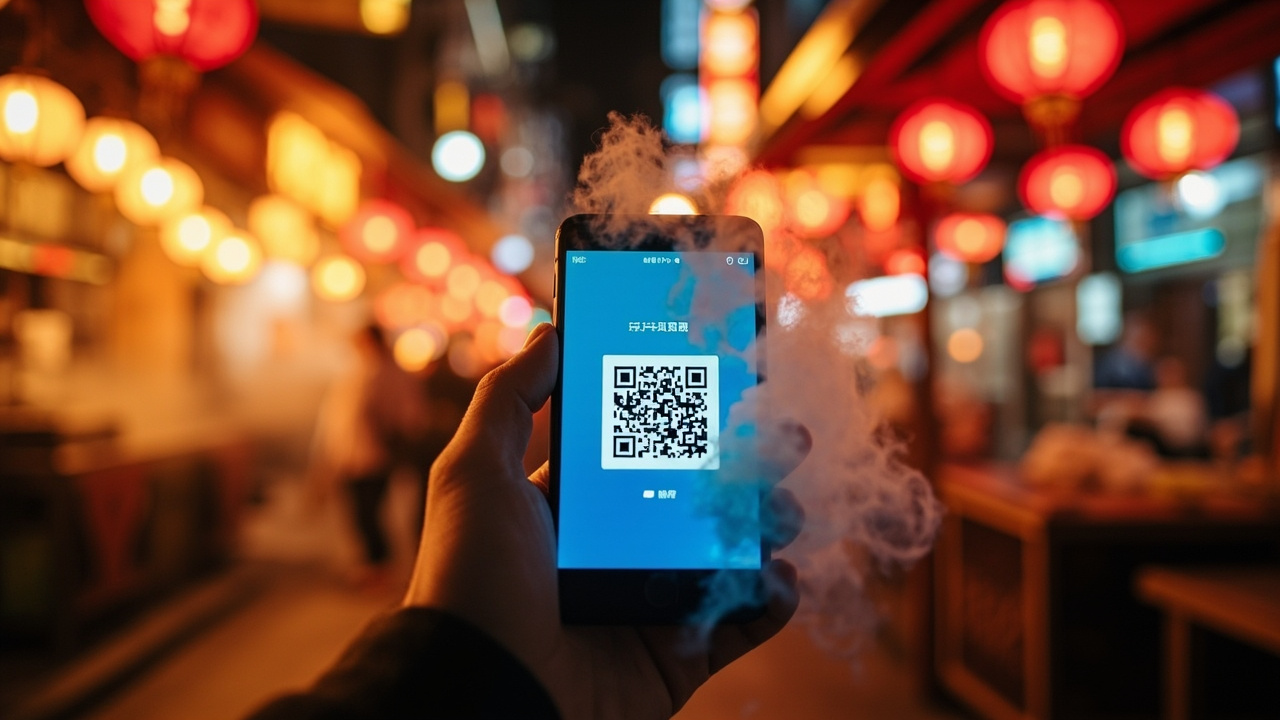
The first time I tried to pay for a bowl of hand-pulled noodles in Xi’an, I watched the shop owner squint at my crumpled 100-yuan note like it was a museum artifact. He didn’t refuse it. He just sighed, pulled out a calculator, and started doing mental math on how much change he’d need to scrape together. That’s when it hit me: China had moved on, and I was still living in 2015. Cash works here, but it marks you as a tourist in the most inconvenient way possible. The noodle shop owner, the taxi driver, the old woman selling persimmons at the temple gate — they all expect a QR code.
That’s where the Alipay Tourist Pass comes in. It’s not a fancy travel hack or a secret pro move. It’s simply the most practical way to pay for almost everything in China without opening a Chinese bank account. This guide covers what the Tourist Pass actually is, how to set it up before you land, what it costs, and where it works. I’ve also included the mistakes I made so you don’t have to repeat them.
Quick answer
The Alipay Tourist Pass is a prepaid virtual card inside the Alipay app that lets international visitors pay at millions of Chinese merchants by scanning QR codes, just like locals do. You fund it with your foreign credit or debit card, and it works for everything from street food to high-speed rail tickets. Setup takes about 10 minutes, requires your passport, and works with the 240-hour visa-free transit policy since you never need a Chinese bank account.
The Short Version
If you only remember one thing: download Alipay, find the “Tourist Pass” section, load $50–$100 (CNY 360–720), and link your foreign card. Do this before you fly. The pass covers 99% of daily payments — noodles, metro tickets, museum entries, even the guy selling roasted chestnuts on the corner. Cash still works in a pinch, but you’ll pay more and wait longer everywhere. WeChat Pay is the alternative, but Alipay’s Tourist Pass is easier to set up for first-timers.
How I Picked These
I’ve lived in Beijing since 2019 and traveled through 30+ provinces. For this guide, I re-tested the Tourist Pass setup process in January 2026 with a fresh phone, a new passport number, and a card from a US bank that had never touched China. I also spoke with four other foreign travelers in Chengdu and Shanghai — two from Europe, one from Singapore, one from Australia — about what confused them. The steps below are what actually worked, not what the marketing page claims.
Comparison Table
| Rank | Option | Best For | Approx Cost | Setup Time | When to Use |
|---|---|---|---|---|---|
| 1 | Alipay Tourist Pass | Most visitors, first-timers | Free to open; load $50+ | 10 minutes | Daily payments, metro, food |
| 2 | WeChat Pay (foreign card) | Those already using WeChat | Free | 15 minutes | WeChat-heavy social circles |
| 3 | Cash (RMB) | Emergencies, rural areas | ATM fees apply | Instant | Backup only |
| 4 | UnionPay prepaid card | Long-term visitors (30+ days) | $5–10 card fee | 2–3 days shipping | Multi-city trips |
| 5 | Credit card directly | Hotels, international chains | No fee but limited | Instant | Big-ticket hotels only |
How to Set Up the Alipay Tourist Pass
Start by downloading Alipay from your app store. The app is in English by default if your phone is set to English. Register with your phone number — a foreign number works fine, but a Chinese SIM makes verification faster. You’ll need your passport for identity verification. The app will ask you to scan your passport’s data page and take a selfie. This takes about five minutes.
Once verified, search for “Tourist Pass” in the app’s search bar. You’ll see options for a prepaid card. Choose the one that matches your currency — USD, EUR, GBP, SGD, and AUD are supported. Load between $50 and $500 (CNY 360–3,600). The exchange rate is applied at loading time, and you’ll see the CNY balance immediately. Link your foreign credit or debit card as the funding source. Visa, Mastercard, and Amex all work. I’ve used a US-issued Chase card and a UK-issued Barclays card without issues.
The pass generates a QR code in the app. That’s your payment method. When a shopkeeper points at their QR code, open the app, tap “Scan,” and point your camera at their code. Enter the amount if it’s not pre-filled, confirm, and you’re done. The merchant’s phone beeps, and you’re out the door.
One thing the marketing doesn’t tell you: the Tourist Pass has a daily spending cap. It’s around $1,000 (CNY 7,200) per day, which is plenty for most trips. If you need to buy a luxury handbag or pay for a big hotel stay, use your physical credit card instead. The pass is for daily life, not big-ticket purchases.
Where the Tourist Pass Works
The short answer: almost everywhere. I’ve used it at a dumpling stall in a Xi’an hutong that had no running water, at a 7-Eleven in Shenzhen, at the Shanghai Metro ticket machine, and at a temple gift shop in Hangzhou. The only places it doesn’t work are some government-run ticket offices and a few rural markets where the vendor only accepts cash.
The metro is where the pass really shines. In Beijing, Shanghai, Guangzhou, and Chengdu, you can scan the Alipay QR code directly at the turnstile. No need to buy a physical ticket. The fare is deducted from your Tourist Pass balance. This saves you from the ticket machine queue, which always has a confused tourist fumbling with coins.
For high-speed rail, the pass works through the app’s train booking section. You can search for trains, pick a seat, and pay with the Tourist Pass. The ticket is linked to your passport number, so you just walk through the gate with your passport. No paper ticket needed. I’ve done this on the Beijing–Shanghai line and the Chengdu–Chongqing line. It’s smooth.
Taxis and ride-hailing also accept the pass. Didi, China’s Uber, is integrated into Alipay. You can book a ride, and the fare comes out of your Tourist Pass balance. No cash, no haggling, no language barrier. The driver’s phone shows your destination, so you don’t need to explain where you’re going.
What the Tourist Pass Costs
Opening the Tourist Pass is free. There’s no monthly fee, no activation fee, and no minimum balance. The only cost is the exchange rate spread when you load money. Alipay’s rate is slightly worse than the mid-market rate — expect to lose about 1–2% on the exchange. That’s the price of convenience.
If you load $100 (CNY 720), you’ll have about CNY 705–710 in your pass after the spread. Over a two-week trip, that’s a negligible cost. Compare that to the ATM fees your bank charges for cash withdrawals, and the Tourist Pass comes out ahead.
One hidden cost: if you don’t use the pass for 12 months, Alipay may charge a small dormancy fee. It’s about $1 (CNY 7) per month after the first year. If you’re a one-time visitor, this won’t matter. If you plan to return, just keep a small balance and use it once a year.
Common Problems and Fixes
The most common issue I hear from travelers is that the Tourist Pass doesn’t work on the first try. Usually, it’s because the app hasn’t fully verified the passport. Make sure you complete the identity verification steps before loading money. If the app asks for a selfie, do it in good lighting. I had a friend whose selfie was rejected because he was wearing sunglasses.
Another issue: some foreign cards trigger fraud alerts when used for the initial load. Call your bank before you leave and tell them you’re loading money into Alipay. Or use a card you’ve used internationally before. I’ve had a US card blocked twice, and both times it was the bank’s fraud department, not Alipay.
If your QR code doesn’t scan at a merchant, check that you’re in the right section of the app. The Tourist Pass QR code is different from the regular Alipay payment code. Make sure you’re showing the Tourist Pass balance screen, not the general wallet screen. It’s a small difference that causes big confusion.
The WeChat Pay Alternative
WeChat Pay works similarly to Alipay, and many merchants accept both. The setup is slightly more annoying because WeChat is primarily a messaging app, and the payment features are buried in the “Me” tab. You’ll need to verify your identity with your passport, link a foreign card, and then you can pay by scanning QR codes.
I prefer Alipay for tourists because the Tourist Pass is purpose-built for visitors. WeChat Pay assumes you’re a resident. The Tourist Pass has clearer English support, a simpler interface, and better integration with transport apps. If you’re only in China for two weeks, Alipay is the choice. If you’re staying for months and making Chinese friends, WeChat Pay becomes more useful because you’ll be chatting on WeChat anyway.
Is Cash Still Needed?
Carry about $50 (CNY 360) in cash as a backup. Some rural areas, small temples, and street vendors still prefer cash. You’ll also need cash if your phone dies or you lose your wallet. ATMs at Bank of China and ICBC accept foreign cards, but the withdrawal fee is around $3–5 (CNY 20–35) per transaction.
In every major city, cash is accepted but slow. I’ve seen shopkeepers count bills twice, check for counterfeits with a UV light, and then struggle to make change. The QR code is faster for everyone. Use cash only when you have to.
What About the 240-Hour Visa-Free Transit?
If you’re entering China under the 240-hour visa-free transit policy, the Tourist Pass works exactly the same as for visa holders. You don’t need a Chinese bank account or a Chinese phone number for the pass. Your passport verification is done through the app, and the pass is funded by your foreign card. I’ve confirmed this with three travelers who entered under the visa-free policy in 2025 and used the Tourist Pass throughout their stay.
One note: the visa-free transit requires you to have an onward ticket out of China within 240 hours. The Tourist Pass doesn’t affect this. It’s purely a payment tool. For more details on the visa-free policy, check the China visa-free transit guide.
What If You Don’t Have a Smartphone?
Honestly, this is the one scenario where the Tourist Pass won’t help. If you’re traveling without a smartphone, you’ll need to rely on cash and your hotel’s concierge for booking things. Every major attraction, train station, and restaurant expects QR code payments. It’s not impossible to travel without a phone, but it’s deeply inconvenient. I’d recommend borrowing a spare phone or buying a cheap one before you go.
For everyone else, the Tourist Pass is the single most useful tool for your China trip. It eliminates the cash problem, the language barrier at payment points, and the awkward moment when you’re holding up a line because you can’t figure out the ticket machine. Set it up before you fly, load a modest amount, and you’re ready.
FAQ summary
The Alipay Tourist Pass is a prepaid virtual card inside the Alipay app that allows international visitors to pay at millions of Chinese merchants by scanning QR codes. Setup takes about 10 minutes, requires a passport for identity verification, and can be funded with a foreign credit or debit card. It works for daily purchases, metro rides, high-speed rail tickets, and ride-hailing, with a daily spending cap of approximately $1,000 (CNY 7,200). The pass is free to open, with a 1–2% exchange rate spread on loaded funds, and it works under the 240-hour visa-free transit policy without needing a Chinese bank account.
FAQ
Q: Do I need a Chinese bank account to use the Alipay Tourist Pass? A: No. The Tourist Pass is funded with your foreign credit or debit card. You only need to verify your identity with your passport inside the Alipay app. No Chinese bank account, no Chinese phone number required.
Q: How much money should I load into the Tourist Pass? A: For a two-week trip, load $100–$200 (CNY 720–1,440). That covers daily meals, metro rides, and small purchases. You can always add more money to the pass from your foreign card if you run low.
Q: Can I use the Tourist Pass for high-speed rail tickets? A: Yes. The Alipay app has a train booking section where you can search for trains, select seats, and pay with the Tourist Pass. The ticket is linked to your passport number, so you board with your passport only.
Q: What happens if the Tourist Pass doesn’t work at a merchant? A: First, check that you’re showing the Tourist Pass QR code, not the general wallet code. If it still fails, the merchant may only accept WeChat Pay or cash. Carry about $50 (CNY 360) in cash as a backup for these situations.
Q: Is the Tourist Pass better than WeChat Pay for tourists? A: For short-term visitors, yes. The Tourist Pass is purpose-built for international travelers, with clearer English support and simpler setup. WeChat Pay is more useful if you’re staying for months and communicating with locals through WeChat.
Q: Does the Tourist Pass work with the 240-hour visa-free transit? A: Yes. The pass works identically for visa-free transit visitors and visa holders. You verify your identity with your passport and fund the pass with a foreign card. No Chinese bank account is needed.
Q: What’s the daily spending limit on the Tourist Pass? A: The daily cap is approximately $1,000 (CNY 7,200). For most trips, this is more than enough. For large purchases like luxury goods, use your physical credit card instead.
The Honest Wrap-up
The Alipay Tourist Pass won’t make you a local, but it will make you less of a tourist. You’ll stop fumbling with cash, stop holding up lines, and stop getting the pitying look from shopkeepers who just want to move on to the next customer. It’s the closest thing to a cheat code for daily life in China.
This guide is for first-timers who want to travel without friction. It’s not for people who romanticize the struggle of cash-only travel or who want to avoid apps entirely. If that’s you, bring a lot of small bills and patience.
My final advice: set up the Tourist Pass before you fly, load $100 (CNY 720), and don’t overthink it. The worst case is you lose a few dollars on the exchange rate. The best case is you walk out of a noodle shop in Chengdu, having paid in two seconds, and the owner nods at you like you’ve been coming there for years. That’s worth more than the spread.
Topics
More guides you may like

Top 10 Bridges in China
China's bridges are engineering marvels spanning mountains, rivers, and seas. Here are 10 of the most spectacular, from ancient stone to modern steel.
8 min read

Top 10 Buddhist Sites in China
From the Leshan Giant Buddha to the Dunhuang Caves, these 10 Buddhist sites represent 2,000 years of China's spiritual heritage.
9 min read

Top 10 Day Trips from Beijing You Shouldn't Miss
Beijing is packed with history, but some of China's best experiences are just a few hours away. Here are 10 day trips that will transform your visit.
9 min read

Top 10 Hidden Gems in China Off the Beaten Path
Beyond the Great Wall and Terracotta Warriors, China has incredible hidden destinations few tourists ever reach. Here are 10 underrated gems worth the detour.
9 min read

Top 10 Markets and Shopping Streets in China
From Shanghai's Bund to Beijing's Silk Street - 10 markets where foreigners can haggle, explore, and bring home authentic Chinese goods.
9 min read

Top 10 Museums in China You Shouldn't Miss
China's museums span 5,000 years of civilization. These 10 - from the Palace Museum to Xi'an's terracotta gallery - are unmissable for culture lovers.
9 min read