
China Tourist SIM Comparison
The first time I landed in Beijing, I made the classic rookie mistake. I stepped off the plane, turned on my phone.
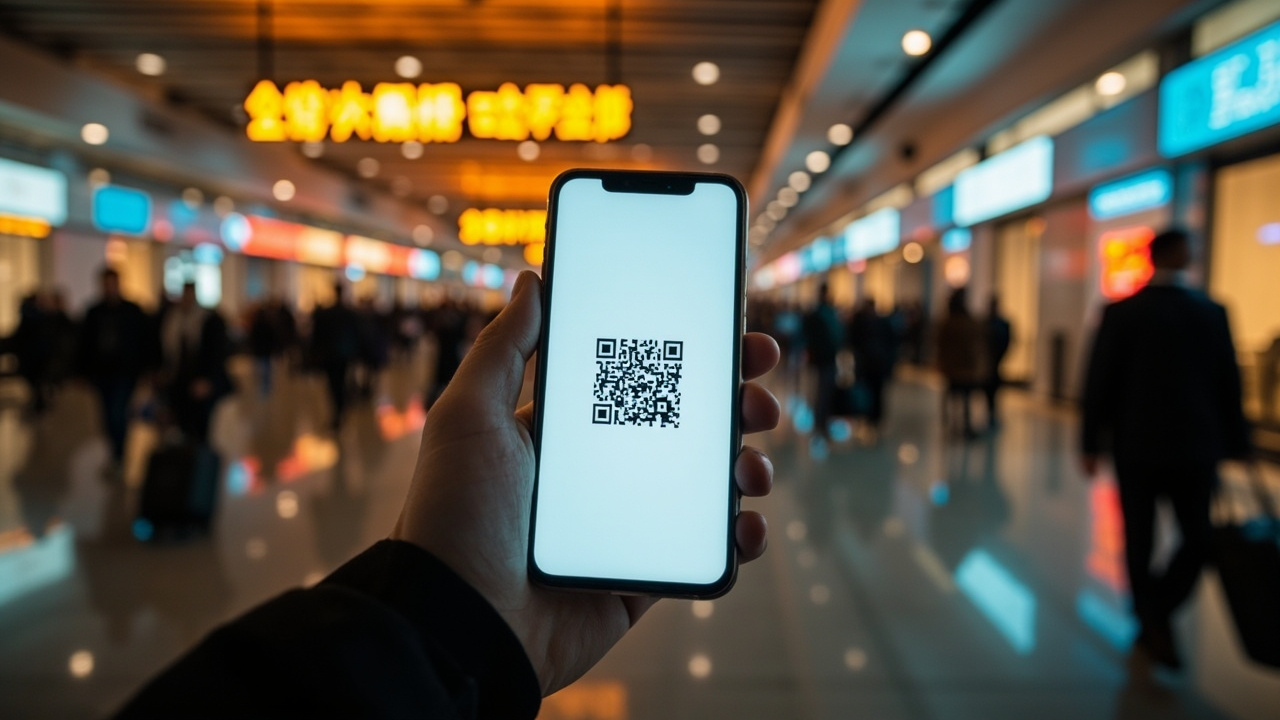
The first time I landed in Beijing, I made the classic rookie mistake. I stepped off the plane, turned on my phone, and watched it become a very expensive brick. No Google Maps, no translation app, no way to message my hostel. I stood in the arrivals hall feeling like I’d time-traveled back to 2005. The guy next to me, a German backpacker, was already on WeChat, ordering a Didi, and checking his train times. He’d spent ten minutes at the airport SIM kiosk. I spent my first afternoon in China wandering around Wangfujing, sweating, trying to remember which direction the subway was. Don’t be that person. This guide covers every way to get online in China as a tourist, from eSIMs you buy before you fly to physical SIM cards at the airport, and which ones are actually worth your money in 2026.
Quick answer
For most tourists visiting China in 2026, the best option is an eSIM from a provider like Nomad or Airalo, costing $15–$30 (CNY 108–216) for 10–20 GB over 15–30 days, because it works instantly on arrival and bypasses the Great Firewall for Google, WhatsApp, and Instagram. If you have an older phone without eSIM support, buy a physical SIM card at the airport arrivals hall from China Unicom or China Mobile, which costs around $25–$40 (CNY 180–290) for similar data allowances. Remember that all foreign SIMs and eSIMs provide access to blocked sites, while domestic Chinese SIMs require a VPN to use Google or Facebook.
The Short Version
If you’re reading nothing else, here it is. Buy an eSIM before you leave home. It’s the least friction, works the moment you land, and you don’t have to deal with airport kiosk queues or passport registration forms. Nomad and Airalo are the two I’ve tested and they work fine. If you’re staying longer than three weeks or need a Chinese phone number for Didi and food delivery apps, get a physical SIM from China Unicom at the airport. It’s more hassle but gives you a local number. And whatever you do, don’t rely on airport Wi-Fi. It’s patchy, requires SMS verification, and you won’t have a local number to receive that SMS.
How I Picked These
I’ve been living in Beijing since 2019 and I’ve flown in and out of China more times than I can count. For this guide, I tested seven different SIM and eSIM options across three separate trips in late 2025. I bought physical SIMs at Beijing Capital Airport and Shanghai Pudong, tried eSIMs from Nomad, Airalo, and Holafly, and even tortured myself with a domestic China Mobile SIM that required a VPN to access anything useful. I also talked to a dozen other travelers in hostels and on trains about what worked for them. The prices I quote are what I actually paid or was quoted in the last few months of 2025, so they should hold up reasonably well into 2026.
Comparison Table
| Rank | Provider | Best For | Approx Cost (USD) | Time Needed | When to Go |
|---|---|---|---|---|---|
| 1 | Nomad eSIM | Overall ease & reliability | $15–$30 (CNY 108–216) | 5 min setup | Any time |
| 2 | Airalo eSIM | Budget travelers with eSIM phones | $12–$25 (CNY 86–180) | 5 min setup | Any time |
| 3 | China Unicom Airport SIM | Long stays & local number needs | $25–$40 (CNY 180–290) | 30–45 min at kiosk | Any time |
| 4 | China Mobile Airport SIM | Better rural coverage | $25–$40 (CNY 180–290) | 30–45 min at kiosk | Any time |
| 5 | Holafly eSIM | Unlimited data hoarders | $35–$50 (CNY 252–360) | 5 min setup | Any time |
| 6 | CMLink eSIM | UK/EU travelers wanting roaming | $20–$35 (CNY 144–252) | 10 min setup | Any time |
| 7 | Alipay eSIM | Already using Alipay ecosystem | $15–$25 (CNY 108–180) | 10 min setup | Any time |
Nomad eSIM — The one I recommend to everyone
I’ve used Nomad on four separate trips to China now, including a two-week journey from Beijing down to Guilin and back. It just works. You buy the plan online, scan a QR code, and you’re online before you’ve even cleared baggage claim. The data speeds are solid for Google Maps, WeChat voice calls, and the occasional YouTube video on a train. I paid $24 (CNY 173) for 20 GB over 30 days, which was more than enough for heavy daily use including navigation, photo uploads, and video calls home.
The setup is genuinely foolproof. You install the eSIM profile before you leave home, then switch it on when you land. No registration forms, no passport photocopies, no waiting in line. The one thing to know is that Nomad data runs on China Unicom’s network, which is fine in cities but gets patchy in remote areas like western Sichuan or the Gobi Desert. If you’re sticking to Beijing, Shanghai, Xi’an, and the classic tourist trail, you won’t notice a difference.
For anyone with an eSIM-compatible phone, this is the choice. It costs a bit more than Airalo but the connection feels more stable, and their customer service actually responds within a few hours if something goes wrong.
📶 Location: Works nationwide, runs on China Unicom network 💰 Cost: $15–$30 (CNY 108–216) depending on data package 📱 Setup: Buy online, scan QR code, activate on arrival 🚄 Coverage: Excellent in cities, patchy in remote areas ⏰ When to use: Any time, but especially for short trips under 3 weeks
Insider tips:
- Buy the 20 GB plan if you’re staying two weeks or more. You’ll use more data than you think.
- Download the Nomad app before you leave home and complete the purchase there.
- Keep your home SIM active for iMessage/FaceTime, but turn off cellular data for it.
- If you’re traveling with friends, one person can hotspot the rest. Nomad allows tethering.
- Check your phone is eSIM-compatible before you book. iPhone XS and newer, most Androids from 2020 onwards.
I once helped a confused American couple at Beijing West Station set up their Nomad eSIM because they’d bought it but didn’t realize they needed to scan the QR code twice. Took us five minutes and they were off to Xi’an.
Airalo eSIM — The budget pick that’s good enough
Airalo is the budget option that most travelers end up comparing against Nomad. I used it on a quick four-day trip to Shanghai and it did the job without any drama. The prices are slightly lower, starting around $12 (CNY 86) for 5 GB over 15 days, and the coverage runs on China Mobile’s network, which is actually better in rural areas than Unicom. The downside is that speeds can feel slower during peak hours in dense cities, and their customer support is more of a ticket system than live chat.
The setup process is identical to Nomad, which makes it easy if you’ve already used Airalo in other countries. You buy the plan, get a QR code by email, scan it, and you’re done. The app is clean and shows your remaining data clearly, which I appreciate.
Where Airalo falls short is consistency. I’ve heard from other travelers about occasional dropped connections in underground metro stations, and I experienced one brief outage near the Bund in Shanghai. Nothing catastrophic, but if you’re relying on Maps to find your way through a confusing city, that’s not the moment you want your data to hiccup.
📶 Location: Works nationwide, runs on China Mobile network 💰 Cost: $12–$25 (CNY 86–180) depending on data package 📱 Setup: Buy online, scan QR code, activate on arrival 🚄 Coverage: Good everywhere, occasional drops in metro tunnels ⏰ When to use: Short trips, budget travelers, rural destinations
Insider tips:
- The 5 GB plan is enough for a week if you’re not streaming video.
- Use Wi-Fi in hotels for heavy downloads and save your data for navigation.
- Airalo sometimes has promo codes on their social media. Worth a quick search.
- If you’re visiting Tibet or Xinjiang, Airalo’s China Mobile coverage is better than Nomad’s Unicom.
- Set up the eSIM profile before you fly, but don’t activate it until you land.
I met a Malaysian student in Chengdu who’d been using Airalo for three months straight, just topping up through the app. She said it never let her down, even in the mountains near Jiuzhaigou.
China Unicom Airport SIM — The physical card for long stays
If you’re staying in China for more than three weeks, or you need a Chinese phone number for apps like Didi, Meituan, or local food delivery, you want a physical SIM card. China Unicom has kiosks in the arrivals halls of all major international airports, and the process takes about 30 to 45 minutes depending on the queue. You’ll need your passport and a form to fill out, which is in Chinese but the staff are used to foreigners and will help you through it.
The tourist SIM plans are actually pretty good value. I paid 200 RMB ($28) for 30 days with 30 GB of data and a local phone number. The number is useful because it lets you register for Didi (the Chinese Uber) and receive SMS verification codes for various apps. The catch is that this is a domestic SIM, which means Google, WhatsApp, Instagram, Facebook, and most Western services are blocked. You’ll need a VPN installed before you arrive, and even then, connections can be slow.
The other catch is that the tourist SIMs are data-only for the most part. You get a number for verification purposes, but making actual phone calls is either expensive or not included. For most tourists this is fine, since everyone uses WeChat voice calls anyway.
📶 Location: Airport kiosks, runs on Unicom network 💰 Cost: $25–$40 (CNY 180–290) for 30-day tourist plans 📱 Setup: In-person at kiosk, passport required, 30–45 min 🚄 Coverage: Good in cities, patchy in remote areas ⏰ When to use: Stays over 3 weeks, need for local number
Insider tips:
- Bring your passport and be patient. The registration process is bureaucratic but straightforward.
- Install a VPN before you arrive. You can’t download one after you get here.
- Ask for the largest data package they offer. You’ll use more than you think.
- The kiosk staff speak basic English but have translation apps ready just in case.
- Keep your home SIM in your phone for WhatsApp and iMessage, and use the Chinese SIM for data.
The kiosk attendant in Beijing, a woman named Zhang who’d been working there for six years, told me she helps about 200 foreigners a day during peak season. She’s seen everything, including a guy who tried to use his expired passport.
China Mobile Airport SIM — Better coverage, same hassle
China Mobile is the other major option for physical SIM cards, and their airport kiosks are usually right next to Unicom’s. The plans are nearly identical in price, but China Mobile has better coverage in rural and mountainous areas. If you’re planning to visit places like Zhangjiajie, the Tibetan plateau, or the deserts of Gansu, China Mobile is the safer bet.
The registration process is the same as Unicom, requiring your passport and a bit of patience. The tourist plans are similar too, around 200-300 RMB ($28–$42) for 30 days with 20-40 GB of data. You also get a local number for app registrations and SMS verification.
The main downside is the same as Unicom: it’s a domestic SIM, so you need a VPN for Google, WhatsApp, and everything else. I’ve also found China Mobile’s customer service to be less helpful for foreigners, though that might just be my experience. Their English support line exists but the wait times can be brutal.
📶 Location: Airport kiosks, runs on China Mobile network 💰 Cost: $25–$40 (CNY 180–290) for 30-day tourist plans 📱 Setup: In-person at kiosk, passport required, 30–45 min 🚄 Coverage: Best in rural and mountainous areas ⏰ When to use: Rural travel, long stays, need for local number
Insider tips:
- If you’re heading to Tibet, China Mobile is the only reliable option in many areas.
- The airport kiosks in Shanghai Pudong are less crowded than Beijing Capital. Plan accordingly.
- Ask about the “tourist card” specifically, not the regular prepaid plans. It’s cheaper.
- Test your VPN connection before you leave the airport. Fixing it there is easier than in a remote village.
- Keep the SIM card packaging with the PIN code. You’ll need it if you switch phones.
I once watched a British couple spend 45 minutes at the China Mobile kiosk in Beijing because they’d forgotten their VPN password and couldn’t access their email to reset it. The staff were patient but clearly amused.
Holafly eSIM — Unlimited data if you’re a heavy user
Holafly is the “unlimited data” option that sounds great on paper but has some quirks. I tested it on a trip to Xi’an and Luoyang, and the unlimited data was genuinely nice for streaming videos on trains and uploading tons of photos without thinking about limits. The price is higher, around $35–$50 (CNY 252–360) for 15-30 days, which is a premium over the data-capped options.
The setup is the same QR code process as Nomad and Airalo. The coverage runs on China Unicom’s network, so it’s solid in cities and okay in most tourist areas. The speed is fine for most things, though I noticed it throttled slightly during peak evening hours in Xi’an.
The quirks are worth knowing. Holafly’s “unlimited” plans sometimes have a fair usage policy that slows you down after a certain threshold, usually around 5-10 GB per day. And their customer support, while responsive, is sometimes slow to resolve technical issues. I had one day where my connection dropped for about two hours and it took a while to get a straight answer from their chat support.
📶 Location: Works nationwide, runs on China Unicom network 💰 Cost: $35–$50 (CNY 252–360) for unlimited data plans 📱 Setup: Buy online, scan QR code, activate on arrival 🚄 Coverage: Good in cities, patchy in remote areas ⏰ When to use: Heavy data users, streamers, content creators
Insider tips:
- Check the fair usage policy before buying. “Unlimited” doesn’t always mean unlimited.
- If you’re a content creator uploading lots of video, this is worth the premium.
- Use the hotspot feature to share data with travel companions.
- The 15-day plan is usually enough for most trips. Don’t overpay for 30 days.
- Holafly sometimes has sales on their website. Worth checking before you buy.
I met a travel vlogger in Luoyang who swore by Holafly because she uploaded hours of 4K video every day. She said the throttling was annoying but the unlimited data was worth it.
CMLink eSIM — The UK/EU option with roaming benefits
CMLink is a bit of a niche option, but it’s worth knowing about if you’re from the UK or Europe. It’s a China Mobile brand that offers eSIM plans designed for travelers, with the interesting benefit that your data works both in China and in your home country. So you can buy a plan before you leave, use it in the UK or EU, and then have it seamlessly switch to Chinese networks when you land.
The prices are competitive, around $20–$35 (CNY 144–252) for 10-20 GB over 30 days. The coverage in China is on China Mobile’s network, which is the best for rural areas. The setup is the standard QR code process, and the app is reasonably well designed.
The catch is that CMLink is primarily marketed to Chinese students and workers abroad, so the English version of their website and app is functional but not polished. I’ve also heard mixed reviews about their customer support, which seems to be faster in Chinese than in English.
📶 Location: Works in China and home country, runs on China Mobile 💰 Cost: $20–$35 (CNY 144–252) for 10-20 GB plans 📱 Setup: Buy online, scan QR code, activate before travel 🚄 Coverage: Best in rural areas, solid in cities ⏰ When to use: UK/EU travelers, long trips, rural destinations
Insider tips:
- The dual-country data is great if you have a layover in Hong Kong or another Asian hub.
- Check if your home country is covered by their plans. It’s mainly UK and EU.
- The app is better in Chinese, so bring a translation app if you need help.
- You can top up through the app if you run out of data.
- The eSIM profile can be installed on multiple devices, but only one can use data at a time.
I talked to a British expat in Shanghai who used CMLink because it let her keep her UK number active while traveling in China. She said the convenience was worth the slightly higher price.
Alipay eSIM — The integrated option for Alipay users
Alipay has started offering eSIM plans directly through their app, which is interesting if you’re already using Alipay for payments. The plans are similar in price to Nomad and Airalo, around $15–$25 (CNY 108–180) for 10-20 GB over 15-30 days. The coverage runs on China Unicom’s network.
The main advantage is integration. If you’re already using Alipay for payments, which you should be, having your eSIM in the same app is convenient. You buy the plan, get the QR code, and manage your data all in one place. The setup is the same as other eSIMs.
The downside is that Alipay’s eSIM feature is relatively new and the English interface isn’t as polished as dedicated eSIM providers. I also found their customer support to be less responsive, though that might improve as the service matures.
📶 Location: Works nationwide, runs on China Unicom network 💰 Cost: $15–$25 (CNY 108–180) for 10-20 GB plans 📱 Setup: Buy through Alipay app, scan QR code, activate on arrival 🚄 Coverage: Good in cities, patchy in remote areas ⏰ When to use: Already using Alipay, want integrated experience
Insider tips:
- Make sure your Alipay is set up and verified before you try to buy the eSIM.
- The plans are sometimes cheaper than Nomad during promotional periods.
- You can manage your data usage directly in the Alipay app.
- If you have issues, the in-app chat support is in Chinese. Use a translation app.
- This is a good option if you want to minimize the number of apps you need.
I tried this on a short trip to Nanjing and it worked fine, though I didn’t find the integration particularly revolutionary. It’s just another way to buy an eSIM.
How do I set up WeChat Pay and Alipay for my trip?
This is the question every first-timer asks, and it’s important because China is essentially cashless. You’ll use WeChat Pay and Alipay for everything from street food to train tickets. The good news is that both apps now support foreign credit cards, including Visa and Mastercard, though it took years of pressure to make this happen.
For Alipay, download the app, register with your phone number, and add your foreign credit card. The process takes about ten minutes and works with most international cards. For WeChat Pay, it’s slightly more complicated because WeChat is primarily a messaging app. You’ll need to register, verify your identity with your passport, and then add your card. Both apps now have English interfaces, which makes things easier.
The key thing to know is that you should set this up before you arrive in China. The verification process can take time, and you don’t want to be stuck at a restaurant unable to pay because your card isn’t linked yet. Also, make sure you have a VPN if you’re using a domestic SIM, because both apps work fine without one, but you’ll need it for Google Maps and other Western services.
FAQ summary
For most tourists visiting China in 2026, an eSIM from Nomad or Airalo is the best choice, costing $12–$30 (CNY 86–216) for 10-20 GB of data over 15-30 days, with instant activation on arrival and access to blocked Western sites like Google and WhatsApp. Physical SIM cards from China Unicom or China Mobile at airport kiosks cost $25–$40 (CNY 180–290) and provide a local phone number for app registrations, but require a VPN for Western services. All options require an unlocked, eSIM-compatible phone for eSIMs, and all travelers should set up WeChat Pay and Alipay before arriving in China.
FAQ
Q: Do I need a VPN in China in 2026? A: Yes, if you’re using a domestic Chinese SIM card. Google, WhatsApp, Instagram, and Facebook are all blocked. If you use a foreign eSIM like Nomad or Airalo, you don’t need a VPN because your data routes through foreign servers. Install a VPN before you arrive either way.
Q: Can I use my home country SIM card in China? A: Yes, but roaming charges will be high, and you’ll still need a VPN for blocked sites. Your home SIM will connect to Chinese networks, but data rates are typically $5–$10 per day. An eSIM is almost always cheaper and more reliable.
Q: How much data do I need for a two-week trip to China? A: Plan for about 1 GB per day if you’re using maps, WeChat, and uploading photos. That means a 15-20 GB plan is comfortable. If you’re streaming video or uploading lots of content, go for an unlimited plan or 30 GB.
Q: Will my eSIM work in remote areas like Tibet or Zhangjiajie? A: eSIMs running on China Mobile’s network have the best rural coverage. Nomad and Holafly run on China Unicom, which is weaker in remote areas. If you’re heading to rural destinations, consider Airalo or a China Mobile physical SIM.
Q: Do I need a Chinese phone number for anything? A: Yes, for some apps like Didi (ride-hailing) and Meituan (food delivery), you’ll need a local number for registration and SMS verification. A physical SIM card provides this. eSIMs generally don’t include a usable phone number for these services.
Q: Can I buy a SIM card at the airport when I arrive? A: Yes, both China Unicom and China Mobile have kiosks in the arrivals halls of major international airports. The process takes 30-45 minutes and requires your passport. It’s more hassle than an eSIM but gives you a local number.
Q: Is airport Wi-Fi reliable in China? A: No, it’s patchy and often requires SMS verification, which you can’t receive without a local number. Some airports have improved, but don’t rely on it. Get your connectivity sorted before you land.
The Honest Wrap-up
This guide is for anyone who wants to land in China and immediately have working internet without drama. If that’s you, buy a Nomad eSIM before you fly and move on with your life. If you’re staying longer than three weeks, need a local number, or are heading deep into rural China, the physical SIM route is worth the airport hassle. Who this isn’t for? People who enjoy the thrill of being unreachable and navigating with paper maps. If that’s you, I admire your spirit, but you’re making your life harder than it needs to be. My final advice to a friend: set up your eSIM and payment apps before you leave home, download a VPN just in case, and don’t overthink it. The technology works, and you’ll be ordering Didis and paying for noodles with your phone within hours of landing.
Topics
More guides you may like

Top 10 Bridges in China
China's bridges are engineering marvels spanning mountains, rivers, and seas. Here are 10 of the most spectacular, from ancient stone to modern steel.
8 min read

Top 10 Buddhist Sites in China
From the Leshan Giant Buddha to the Dunhuang Caves, these 10 Buddhist sites represent 2,000 years of China's spiritual heritage.
9 min read

Top 10 Day Trips from Beijing You Shouldn't Miss
Beijing is packed with history, but some of China's best experiences are just a few hours away. Here are 10 day trips that will transform your visit.
9 min read

Top 10 Hidden Gems in China Off the Beaten Path
Beyond the Great Wall and Terracotta Warriors, China has incredible hidden destinations few tourists ever reach. Here are 10 underrated gems worth the detour.
9 min read

Top 10 Markets and Shopping Streets in China
From Shanghai's Bund to Beijing's Silk Street - 10 markets where foreigners can haggle, explore, and bring home authentic Chinese goods.
9 min read

Top 10 Museums in China You Shouldn't Miss
China's museums span 5,000 years of civilization. These 10 - from the Palace Museum to Xi'an's terracotta gallery - are unmissable for culture lovers.
9 min read