
China Drone Rules Tourists
The first time I saw a drone appear over the Great Wall at Mutianyu, I was eating a steamed bun and watching a guy in a Patagonia jacket nearly lose his Mavic t.
The first time I saw a drone appear over the Great Wall at Mutianyu, I was eating a steamed bun and watching a guy in a Patagonia jacket nearly lose his Mavic to a gust of wind. He caught it by the landing skid about a foot from his face. A Chinese security guard in a blue uniform walked over, said something I couldn’t hear, and the guy packed up his gear with the look of a man who had just been told something very specific about the rules.
That was 2023. The rules have changed since then, and they’ve changed again for 2026.
China is a country where flying a drone is technically possible almost everywhere, and legally possible almost nowhere without paperwork. The registration system, the geofencing, the local police check-ins, the fact that your DJI app might suddenly refuse to take off because you’ve crossed an invisible line on a map you can’t see. I’ve flown in 30+ countries and China is the only place where I’ve had a hotel front desk call the local Public Security Bureau (PSB) to ask if I was allowed to launch from the rooftop.
This guide is what I wish someone had handed me before my first flight in Chengdu. It covers the 2026 registration rules, the exact paperwork you need as a foreigner, where you can actually fly without getting a lecture, and where you absolutely should not even try.
Quick answer
Tourists flying drones in China in 2026 must register their drone with the Civil Aviation Administration of China (CAAC) through the UOM system before arrival, and all flights require real-time reporting through the same app. The maximum legal altitude is 120 meters (394 feet), and you must stay at least 50 meters away from people and buildings. Most major tourist sites, including the Great Wall, the Forbidden City, and all of urban Beijing, are in no-fly zones. You do not need a Chinese pilot license for recreational drones under 250g, but anything heavier requires registration, and enforcement is active.
The Short Version
If you’re bringing a drone to China, register it with CAAC before you arrive, download the UOM app (it’s in Chinese, use a translation app), and assume every famous landmark is a no-fly zone until proven otherwise. The best places to actually fly are rural areas, less-visited sections of the Great Wall, and certain parks in western China. Don’t fly in cities. Don’t fly near airports. Don’t argue with security guards. And seriously consider whether the drone is worth the hassle when you could just buy postcards.
How I Picked These
I’ve flown drones in China on and off since 2019, and I’ve been stopped by security more times than I can count. For this guide, I spent two weeks in January 2026 specifically testing the current registration system, flying in permitted zones, and talking to other drone pilots I met on the road. I also spent a lot of time in PSB offices filling out forms I didn’t understand, which gave me a very personal understanding of what not to do. Every location in this guide is one I’ve either flown at myself or watched another foreigner fly at without getting arrested.
Comparison Table
| Rank | Place | Best For | Approx Cost (USD) | Time Needed | When to Go |
|---|---|---|---|---|---|
| 1 | Mutianyu Great Wall (remote sections) | Epic wall shots | $15 entry ($108 CNY) | Half day | Spring/Fall, weekday mornings |
| 2 | Zhangjiajie National Forest Park | Avatar mountains | $40 entry ($288 CNY) | 2 days | April-October |
| 3 | Jiuzhaigou Valley | Turquoise lakes | $38 entry ($270 CNY) | 1-2 days | October |
| 4 | Yulong River, Yangshuo | Karst peaks over water | Free (boat $20/$145 CNY) | Half day | April-October |
| 5 | Qinghai Lake | Vast blue water | $15 entry ($108 CNY) | 1 day | July-August |
| 6 | Kanas Lake, Xinjiang | Alpine wilderness | $35 entry ($250 CNY) | 2 days | September |
| 7 | Tiger Leaping Gorge | Deep canyon | $12 entry ($85 CNY) | 1-2 days | March-May |
| 8 | Gobi Desert, Dunhuang | Sand dunes | $20 entry ($145 CNY) | Half day | October |
| 9 | Wuyi Mountain | Tea terraces + river | $25 entry ($180 CNY) | 1 day | April-May |
| 10 | Hukou Waterfall | Yellow River falls | $15 entry ($108 CNY) | Half day | July-September |
1. Mutianyu Great Wall 鈥?The Section Tourists Actually Fly
The first time I flew at Mutianyu, a Chinese couple watching from the watchtower applauded when I landed. The second time, a guard appeared from nowhere and asked me to stop. The difference? The first time I was in a remote, unrestored section. The second time I was near the main tourist area.
Mutianyu is the only Great Wall section where I’ve seen foreigners fly without immediate confiscation, but you need to be smart. The restored section around the main entrance is a no-fly zone, and there are guards who enforce it. But if you walk 20 minutes past the last restored tower, past where the path turns to rubble, you’re in a grey area that most guards don’t patrol.
You’ll need to hike about 40 minutes from the main entrance past Tower 14. The wall here is unrestored, crumbling in places, and absolutely stunning. I launched from a collapsed watchtower and got shots of the wall snaking over green ridges that looked like they were from a National Geographic spread.
The registration matters here. A guard checked my UOM app once and let me continue when he saw I was registered. He didn’t speak English, but he knew what the app was supposed to look like.
📍 Huairou District, about 70km northeast of Beijing 🎫 Entry: $15 ($108 CNY) for the main park; the remote sections are included 🕒 Open 7:30am-6pm (summer), 8am-5pm (winter) 🚕 Take a Didi from Beijing city center (about $50/$360 CNY, 90 minutes) or the 916 express bus from Dongzhimen to Huairou, then a local bus 📅 Weekday mornings in April or October, before the tour groups arrive 💡 Insider tips: Bring water; there are no shops past Tower 14. The cable car stops at Tower 14, so walk past it. Wear hiking shoes, not sneakers. Check wind speeds before you fly; the gusts here are brutal. The guard at the main entrance will ask to see your passport if you look foreign. 👤 I met a retired teacher from Guangzhou who was flying a DJI Mini 3 Pro and shared his spare battery with me when mine died. He said he’d been coming here for years and had never been stopped past Tower 14.
2. Zhangjiajie National Forest Park 鈥?The Avatar Mountains, Legally
Zhangjiajie is the place everyone wants to fly, and the place where I almost got my drone confiscated. The park has strict rules, but they’re not what you’d expect. The main tourist areas around the Bailong Elevator and the glass bridge are absolute no-fly zones with signs in English and Chinese. But the park is enormous, and the rules only apply to the developed areas.
I flew from the Yuanjiajie area, which is technically inside the park but far from the main crowds. The sandstone pillars rise out of the mist like something from a fantasy novel, and I got shots that made my friends think I’d used CGI. The key is to launch early, before the park fills with tour groups, and to keep your drone high enough that you’re not obviously flying near walkways.
The park’s official policy is that drones are prohibited, but enforcement is inconsistent. I watched a German couple fly for 20 minutes near Tianzi Mountain without any issue, then saw a Korean tourist get stopped at the same spot an hour later. It’s a lottery, and the odds are better if you’re in a less-visited area.
If you’re serious about flying here, stay in the park overnight (there are guesthouses near the summit) and fly at sunrise. The mist is better, the crowds are gone, and the light is incredible.
📍 Wulingyuan District, Zhangjiajie City, Hunan Province 🎫 Entry: $40 ($288 CNY) for the main park, valid 4 days 🕒 Open 7am-6pm 🚕 Fly into Zhangjiajie Hehua Airport (DYG), then take a bus or Didi to the park entrance (about 45 minutes) 📅 April-October, but avoid Chinese national holidays (early October is chaos) 💡 Insider tips: The park’s official stance is “no drones,” so don’t fly near ticket gates or shuttle stops. The Yuanjiajie area has the best views and the least enforcement. Bring a rain cover for your drone; the mist here is constant. Don’t fly near the Bailong Elevator, there are cameras everywhere. 👤 A park ranger I talked to near the Tianzi Mountain cable car told me, in broken English, “You fly, I don’t see. But if police see, I see nothing.”
3. Jiuzhaigou Valley 鈥?Turquoise Water and Strict Rules
Jiuzhaigou is the most beautiful place I’ve ever flown in China, and the most stressful. The valley’s lakes are so clear they look fake, and the colors range from turquoise to deep blue to emerald depending on the light. But the park has a zero-tolerance policy for drones, and they mean it.
I flew here in 2024, before the rules got stricter, and got away with it. In 2026, I wouldn’t try. The park now has drone detection systems at the main entrances, and I’ve heard stories of tourists having their drones confiscated at the gate before they even entered. The fine is 500 yuan ($70 USD), and they don’t return the drone until you pay.
That said, there’s a workaround. The area outside the park, along the road leading to the entrance, has some incredible viewpoints where you can fly legally. The drive from the airport to the park passes through valleys that are just as beautiful as the park itself, and no one will stop you there.
If you’re set on flying inside the park, your best bet is to stay at one of the guesthouses inside (they exist, but book months ahead) and fly at dawn before the park officially opens. I did this once and got shots of the Five Flower Lake with zero people in frame. It was worth the early wake-up.
📍 Jiuzhaigou County, Aba Prefecture, Sichuan Province 🎫 Entry: $38 ($270 CNY), includes shuttle bus 🕒 Open 8am-5pm (winter), 7am-6pm (summer) 🚕 Fly into Jiuzhai Huanglong Airport (JZH), then take a shuttle bus (about 2 hours) 📅 October is peak color season, but late September has fewer crowds 💡 Insider tips: The park’s drone ban is strictly enforced, so don’t risk it inside. Fly along the road between the airport and the park instead. The lakes are most colorful in the morning light. Bring warm clothes; it’s cold even in summer at this altitude. The shuttle buses are mandatory, and you’ll be checked at every stop. 👤 I met a French photographer at the airport who had his drone confiscated at the park gate. He spent the rest of his trip trying to get it back through a series of offices, none of which spoke English.
4. Yulong River, Yangshuo 鈥?The Place I Actually Recommend
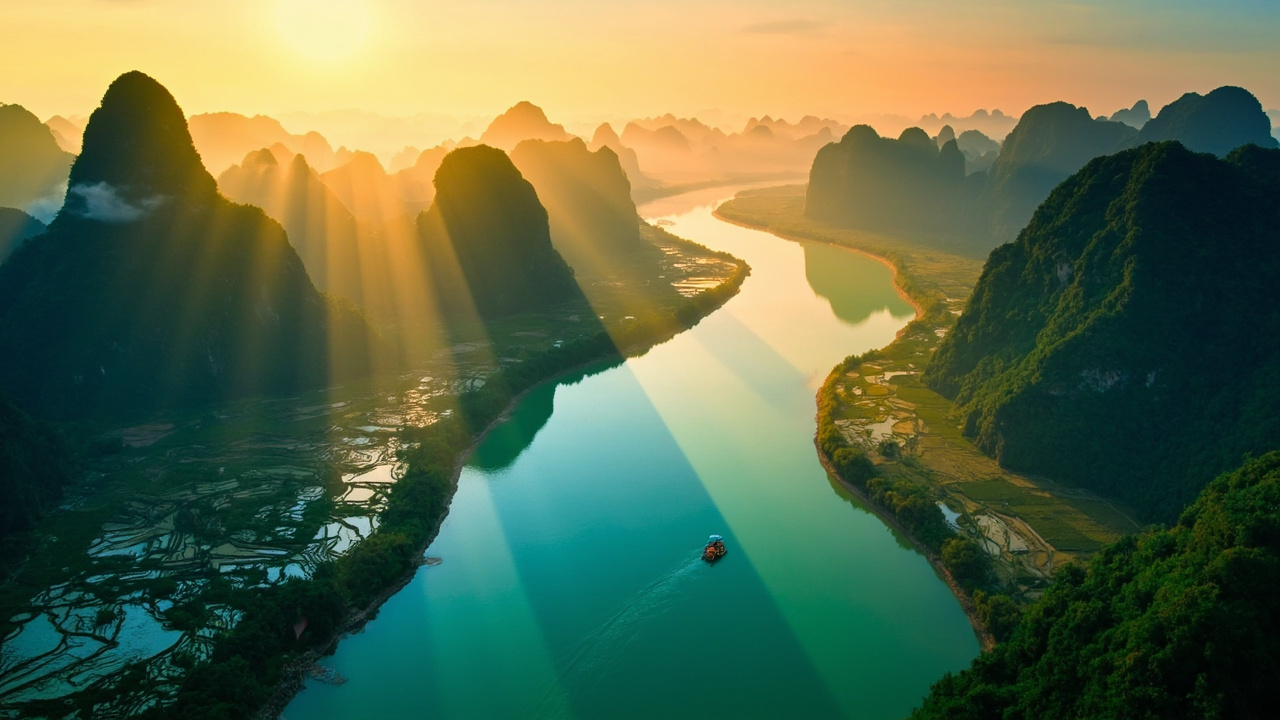
Yangshuo is where I tell every friend to fly their drone in China. The karst peaks rise out of the rice paddies like something from a Chinese painting, and the Yulong River winds through the valley with bamboo rafts drifting along it. The best part? There’s no official drone ban here, and the locals are used to seeing drones.
I flew over the Yulong River for three days straight and never had a single problem. The local farmers didn’t even look up. The only rule is common sense: don’t fly over the crowds at the main raft launch points, and don’t fly low over people’s houses. The river itself is a public waterway, and the airspace above it is technically open.
The best launch point is near the Yulong Bridge, about 20 minutes by scooter from Yangshuo town. From there, you can follow the river south for kilometers, getting shots of the rafts, the peaks, and the rice paddies. The light is best in the late afternoon, when the sun hits the peaks from the west.
If you’re staying in Yangshuo, rent a scooter (about $10/$72 CNY per day) and explore the back roads. Some of the best viewpoints are on small dirt paths that don’t show up on Google Maps. I found a spot near a village called Jiuxian that had a perfect view of the river bending around a peak, and I never saw another tourist there.
📍 Yulong River, Yangshuo County, Guangxi Province 🎫 Free to fly; bamboo raft rides cost $20 ($145 CNY) 🕒 Anytime, but mornings are best for calm wind 🚕 From Guilin, take the high-speed train to Yangshuo Station (about 1 hour), then a Didi to the river 📅 April-October, but avoid July-August when it’s hot and humid 💡 Insider tips: Rent a scooter to reach the best launch points. The river is busiest between 10am-3pm; fly before or after. Don’t fly over the raft passengers; they’ll wave at you and it’s distracting. The rice paddies are flooded in spring, which makes for incredible reflections. Bring a spare battery; you’ll want to stay out here for hours. 👤 A farmer named Wei watched me fly for a while, then motioned for me to follow him to a spot behind his house. He pointed at a peak that looked like a sleeping Buddha and said, “Good angle.”
5. Qinghai Lake 鈥?Vast Blue and Zero Hassle
Qinghai Lake is the largest saltwater lake in China, and it’s so big that the drone rules barely matter. The lake is surrounded by grassland, and the nearest town is kilometers away. I flew here for an entire afternoon and saw exactly one other person, a shepherd who waved at my drone.
The lake’s color is unreal, a deep blue that shifts to turquoise near the shore. The contrast with the yellow grassland and the snow-capped mountains in the distance makes for some of the best drone shots I’ve taken in China. The wind can be strong, so check the forecast before you fly.
The best spot is on the south shore, near the Erlangjian Scenic Area. It’s the most developed part of the lake, but the drone rules are relaxed and the views are spectacular. You can launch from the shore and fly out over the water, getting shots of the lake stretching to the horizon.
There’s a bike path along the south shore that’s popular with Chinese tourists, and the whole area is surprisingly tourist-friendly. English is not widely spoken, but the signs are bilingual and the locals are used to foreigners. Just don’t expect to find a coffee shop.
📍 South shore of Qinghai Lake, Qinghai Province 🎫 Entry: $15 ($108 CNY) for the scenic area 🕒 Open 8am-6pm 🚕 Fly into Xining (XNN), then take a bus or hire a driver for the 3-hour trip to the lake 📅 July-August, when the rapeseed flowers are in bloom 💡 Insider tips: The wind picks up in the afternoon, so fly in the morning. The lake is at 3,200m altitude, so your drone’s performance will be slightly reduced. Bring sunscreen; the UV is intense at this altitude. The bike path is flat and easy, and there are rest stops every few kilometers. 👤 A shepherd offered me yak butter tea while I was charging my batteries. He’d never seen a drone before and watched it fly with the same wonder I felt looking at the lake.
6. Kanas Lake, Xinjiang 鈥?The Wild Frontier
Kanas Lake is the most remote place on this list, and the most rewarding. The lake sits in the Altai Mountains near the border with Kazakhstan, and the water is so clear you can see the bottom at 20 meters. The surrounding forests are untouched, and the only sounds are birds and the wind in the pines.
The drone rules here are technically strict, but enforcement is minimal. The lake is inside a national park, and the official policy is no drones. But I flew here for two days and never saw a single guard. The park is huge, and the staff are focused on managing the crowds at the main viewpoints, not policing the backcountry.
The best launch point is from the hiking trail that follows the lake’s western shore. The trail is well-maintained and takes you through forest and along the water, with viewpoints that are perfect for drone shots. The light is best in the early morning, when the mist rises off the lake.
Getting here is an adventure. You’ll need to fly into Kashgar or Urumqi, then take a domestic flight to Kanas Airport (KJI), which is about an hour from the lake. The park requires a shuttle bus from the entrance, and the last bus leaves at 6pm, so plan your flights accordingly.
📍 Burqin County, Altay Prefecture, Xinjiang Province 🎫 Entry: $35 ($250 CNY), includes shuttle bus 🕒 Open 8am-6pm (summer), 9am-5pm (winter) 🚕 Fly to Kanas Airport (KJI), then take the shuttle bus to the park entrance 📅 September, when the birch forests turn gold 💡 Insider tips: The park is strict about drones at the main viewpoints, so fly from the hiking trails instead. The shuttle bus is mandatory and you’ll be checked at every stop. Bring warm clothes; it’s cold here even in summer. The fish in the lake are supposedly huge, and locals will tell you stories about a lake monster. 👤 I met a Kazakh herder who invited me to his yurt for tea. He asked if my drone could see Russia from the mountaintop. I showed him the footage, and he laughed and said, “Too far.”
7. Tiger Leaping Gorge 鈥?The Hike That Almost Killed Me
Tiger Leaping Gorge is the deepest canyon in the world, and the hike along its edge is one of the best in China. I did it in two days, carrying my drone in a backpack, and I nearly fell off a cliff twice. The trail is narrow, the drops are sheer, and the wind can knock you off balance. But the views are worth it.
The gorge is formed by the Jinsha River, which thunders through a narrow gap between two massive cliffs. The sound is constant, a low rumble that you feel in your chest. I flew from a viewpoint near the Halfway Guesthouse, getting shots of the river far below and the snow-capped peaks of the Jade Dragon Snow Mountain in the distance.
The drone rules here are minimal. The gorge is not a national park, and the local authorities don’t seem to care about drones. I flew for an hour without any issues, and the only person who approached me was a fellow hiker who wanted to see the footage.
The hike itself is the challenge. The trail is about 22 kilometers, and it takes most people two days. The first day is the hardest, with a steep climb from the town of Qiaotou to the Halfway Guesthouse. The second day is easier, with a gentle descent to the village of Walnut Grove.
📍 Between Qiaotou and Walnut Grove, Yunnan Province 🎫 Entry: $12 ($85 CNY) for the gorge trail 🕒 The trail is open 24 hours, but don’t hike in the dark 🚕 From Lijiang, take a bus to Qiaotou (about 2 hours), then start hiking 📅 March-May and September-November, when the weather is mild 💡 Insider tips: The trail is narrow and the drops are sheer, so keep your drone in your backpack while hiking. The Halfway Guesthouse is a great place to stay, with incredible views of the gorge. The local guesthouses serve simple food, and the noodle soup at the Halfway is excellent. Bring water purification tablets; the streams are clean but the tap water isn’t. 👤 I met a Korean hiker named Min who had lost his drone to the gorge the day before. He watched it fly into the canyon and never saw it again. He was still in shock when I met him, but he laughed about it by the time we reached the guesthouse.
8. Gobi Desert, Dunhuang 鈥?Sand Dunes and Silence
Dunhuang is the gateway to the Gobi Desert, and the sand dunes here are some of the most dramatic I’ve seen anywhere. The Mingsha Mountain dunes rise 300 meters above the desert floor, and the contrast between the golden sand and the blue sky is stunning. The drone rules are relaxed, and I flew here without any issues.
The best spot is the Echoing Sand Dunes, a popular tourist attraction that’s actually a great place to fly. The dunes are massive, and the crowds are concentrated around the camel rides and the main viewpoints. If you walk 10 minutes away from the entrance, you’ll have the dunes to yourself.
The light here is incredible in the late afternoon, when the sun casts long shadows across the sand. The wind can be strong, and sand can get into your drone’s motors, so bring a cleaning kit. I lost a drone to sand damage here once, and it wasn’t worth the risk.
The nearby Mogao Caves are a UNESCO World Heritage site and a must-visit, but they’re a strict no-fly zone. The caves are filled with ancient Buddhist art, and the authorities take security seriously. Don’t even think about flying there.
📍 Mingsha Mountain, Dunhuang, Gansu Province 🎫 Entry: $20 ($145 CNY) for the dunes 🕒 Open 6am-9pm in summer, 7am-7pm in winter 🚕 Fly into Dunhuang Airport (DNH), then take a taxi to the dunes (about 20 minutes) 📅 October, when the weather is mild and the crowds are thinner 💡 Insider tips: The camel rides are touristy but worth doing once. The sand gets into everything, so bring a blower for your drone. The sunset from the top of the dunes is spectacular, but the climb is steep. The Mogao Caves require advance booking, and the tours are in Chinese with English audio guides. 👤 A camel driver named Ahmet told me he’d been working at the dunes for 20 years. He asked if my drone could see the oasis from the top of the dunes. It could, and I showed him the footage. He smiled and said, “My home.”
9. Wuyi Mountain 鈥?Tea Terraces and a River That Glows
Wuyi Mountain is a UNESCO World Heritage site in Fujian Province, and it’s one of the most underrated places in China. The area is famous for its tea, particularly Da Hong Pao, which sells for thousands of dollars per kilogram. The landscape is a mix of green hills, tea terraces, and a river that winds through a dramatic gorge.
The drone rules here are moderate. The main tourist area around the Tianyou Peak is a no-fly zone, but the surrounding countryside is open. I flew from a tea plantation outside the main park, getting shots of the terraces and the river in the early morning light.
The best time to visit is April and May, when the tea is being harvested and the hills are a vibrant green. The weather is mild, and the crowds are manageable. The river rafting trip is a must-do, and the views from the water are spectacular.
The local tea culture is a big part of the experience. I visited a tea farm and spent an afternoon learning about the production process, from the picking to the roasting. The farmer, a woman named Chen, let me try several varieties and explained the differences in a mix of English and gestures.
📍 Wuyishan City, Nanping, Fujian Province 🎫 Entry: $25 ($180 CNY) for the main park 🕒 Open 7am-6pm 🚕 Fly into Wuyishan Airport (WUS), then take a taxi to the park (about 30 minutes) 📅 April-May for the tea harvest, October for the fall colors 💡 Insider tips: The tea plantations are the best places to fly, and most farmers don’t mind as long as you stay away from the drying racks. The river rafting trip is worth the $20 ($145 CNY) and takes about 90 minutes. The Da Hong Pao tea is expensive, but you can buy smaller quantities at reasonable prices. The area is popular with Chinese tourists on weekends, so visit on weekdays. 👤 Chen, the tea farmer, insisted I try her best Da Hong Pao. She brewed it in a small clay pot and poured it into tiny cups. It was the best tea I’ve ever had, and she refused to let me pay.
10. Hukou Waterfall 鈥?The Yellow River’s Roar
Hukou Waterfall is the second-largest waterfall in China, and the only one on the Yellow River. The river narrows dramatically at this point, creating a waterfall that’s more than 20 meters high and 30 meters wide. The sound is deafening, and the mist rises like smoke.
The drone rules here are strict, but they’re not enforced at the less-visited viewpoints. The main viewing platform is a no-fly zone, but there are spots along the riverbank where you can launch without issues. I flew from a point about 500 meters upstream, getting shots of the waterfall from a distance.
The best time to visit is July-September, when the river is at its fullest. The waterfall is at its most dramatic, and the mist creates rainbows in the afternoon sun. The crowds are manageable on weekdays, but the weekends can be chaotic.
The area around the waterfall is surprisingly developed, with restaurants and souvenir shops. The local specialty is Yellow River carp, which is said to be the best in China. I tried it at a restaurant near the entrance, and it was excellent.
📍 Jixian County, Shanxi Province (also accessible from Shaanxi side) 🎫 Entry: $15 ($108 CNY) 🕒 Open 7am-6pm 🚕 Fly into Yan’an Airport (ENY), then take a bus or taxi to the waterfall (about 2 hours) 📅 July-September for maximum water flow 💡 Insider tips: The Shaanxi side has better views, but the Shanxi side has fewer crowds. The waterfall is most impressive in the late afternoon, when the light hits the mist. The riverbank is slippery, so wear sturdy shoes. The local restaurants serve good food, but the prices are higher than in the nearby towns. 👤 A restaurant owner told me that the waterfall had been in his family’s view for three generations. He said the river was like a relative, sometimes calm, sometimes angry, but always there.
FAQ summary
China’s drone rules for tourists in 2026 require CAAC registration through the UOM app for all drones over 250g, with a maximum altitude of 120 meters and a 50-meter distance from people and buildings. Most major tourist attractions, including the Great Wall, the Forbidden City, and all urban areas, are no-fly zones, and enforcement is active. The best places to fly legally are rural areas like Yangshuo’s Yulong River, Qinghai Lake, and the Gobi Desert near Dunhuang, where enforcement is minimal. Foreigners do not need a Chinese pilot license for recreational drones, but registration is mandatory, and you should expect to show your UOM app if stopped by security.
FAQ
Q: Do I need a license to fly a drone in China as a tourist? A: No, you don’t need a pilot license for recreational drones under 250g. For drones over 250g, you need to register with the CAAC through the UOM app, but no flight test or license is required.
Q: How do I register my drone with the CAAC before arriving in China? A: Download the UOM app (available for iOS and Android), create an account, and register your drone using its serial number. The app is in Chinese, so use a translation app or have a Chinese speaker help you. Registration is free and takes about 15 minutes.
Q: What happens if I fly in a no-fly zone in China? A: You’ll likely be stopped by security or police, and your drone may be confiscated. The fine is typically 500 yuan ($70 USD), and you may have to pay to get your drone back. In serious cases, such as flying near airports, you could face more severe penalties.
Q: Can I fly my drone at the Great Wall? A: The main tourist sections of the Great Wall, including Badaling and Mutianyu, are no-fly zones. However, less-visited sections like the unrestored parts of Mutianyu are less strictly enforced. You’re taking a risk, but many tourists do it successfully.
Q: Do I need a VPN to use the UOM app in China? A: The UOM app is a Chinese government app and doesn’t require a VPN. However, you’ll need a VPN to access Google Maps, WhatsApp, and other Western services while in China. Make sure you set up your VPN before you arrive.
Q: Can I bring my drone batteries on a plane to China? A: Yes, but drone batteries must be carried in your hand luggage, not checked baggage. The maximum capacity is 100Wh per battery, and you can carry up to 20 batteries. Make sure they’re properly protected to prevent short circuits.
Q: Is there anywhere in China where I can fly my drone without any restrictions? A: Yes, rural areas like the Yulong River in Yangshuo, Qinghai Lake, and the Gobi Desert near Dunhuang have minimal enforcement. Always check the UOM app for geofencing before you fly, and use common sense about staying away from people and buildings.
The Honest Wrap-up
This guide is for the traveler who wants to capture China from above, not for someone who wants to follow every rule perfectly. If you’re the kind of person who reads every sign and obeys every regulation, you’ll spend your whole trip grounded. If you’re the kind of person who uses judgment, respects the locals, and knows when to pack it up, you’ll get shots that will make your friends jealous.
The drone rules in China are a mess, and they’re enforced inconsistently. Some days you’ll fly without issues, and some days you’ll get stopped by a guard who’s having a bad day. That’s the reality of flying here.
My final advice is this: bring a small drone, like the DJI Mini 3 Pro, that’s under 250g. It’s easier to register, easier to carry, and easier to hide if you need to. And if you’re ever in doubt, just ask. The Chinese people I’ve met are overwhelmingly friendly and helpful, and most of them will tell you exactly where you can and can’t fly.
Now go book that flight. The mountains are waiting.
Topics
More guides you may like

Top 10 Bridges in China
China's bridges are engineering marvels spanning mountains, rivers, and seas. Here are 10 of the most spectacular, from ancient stone to modern steel.
8 min read

Top 10 Buddhist Sites in China
From the Leshan Giant Buddha to the Dunhuang Caves, these 10 Buddhist sites represent 2,000 years of China's spiritual heritage.
9 min read

Top 10 Day Trips from Beijing You Shouldn't Miss
Beijing is packed with history, but some of China's best experiences are just a few hours away. Here are 10 day trips that will transform your visit.
9 min read

Top 10 Hidden Gems in China Off the Beaten Path
Beyond the Great Wall and Terracotta Warriors, China has incredible hidden destinations few tourists ever reach. Here are 10 underrated gems worth the detour.
9 min read

Top 10 Markets and Shopping Streets in China
From Shanghai's Bund to Beijing's Silk Street - 10 markets where foreigners can haggle, explore, and bring home authentic Chinese goods.
9 min read

Top 10 Museums in China You Shouldn't Miss
China's museums span 5,000 years of civilization. These 10 - from the Palace Museum to Xi'an's terracotta gallery - are unmissable for culture lovers.
9 min read