
Yangshuo Karst Countryside Guide
The first time I saw the karst peaks of Yangshuo, I was on a bus from Guilin, half-asleep against a window streaked with rain.
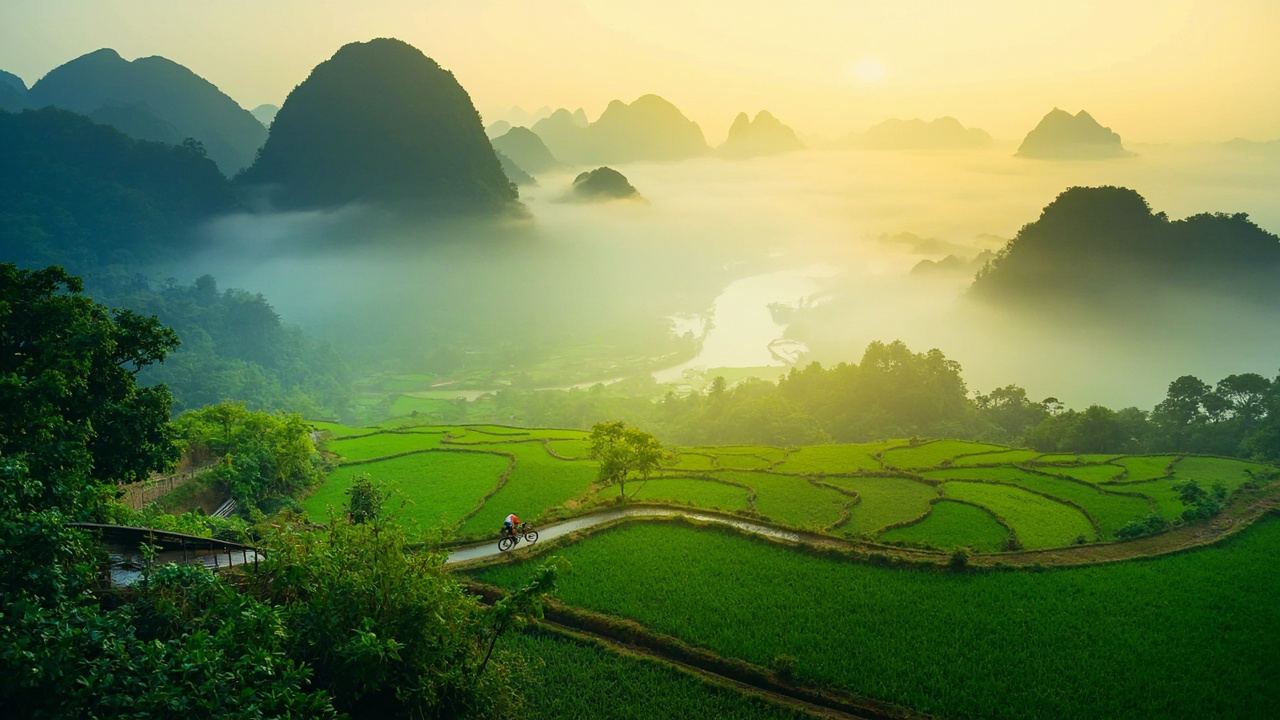
The first time I saw the karst peaks of Yangshuo, I was on a bus from Guilin, half-asleep against a window streaked with rain. Then the bus rounded a bend, and the clouds lifted just enough to reveal a row of green cones rising out of the flat farmland, each one impossibly steep, like the backdrop of a Chinese landscape painting someone had forgotten to roll up. I sat up so fast I hit my head on the window frame. The woman next to me, a local grandmother with a basket of longan fruit, laughed and offered me one.
That was seven years ago. I’ve been back to Yangshuo County at least a dozen times since, and I still get that same jolt every time the peaks come into view. This guide covers the ten places in the karst countryside that I keep returning to, the ones I’d send a first-time visitor to China to see.
Here’s the short version: Yangshuo is a county in southern China’s Guangxi region, famous for its limestone karst mountains, the Li River, and rice paddies. It’s about a 2-hour drive from Guilin, which has an international airport. The best time to visit is April through October, and most of the countryside can be explored by bicycle, e-bike, or bamboo raft. If you’re a US, UK, or most European passport holder, you can enter China visa-free for up to 30 days through 2026, which makes a trip here much simpler than it used to be.
Quick answer
Yangshuo’s karst countryside is the most scenic rural area in southern China, and you can explore it in 2-3 days for about $50-80 per day (350-550 CNY) including accommodation, food, and transport. The best way to see it is by renting an e-bike for $8-12 (55-85 CNY) per day and riding the rural roads between the villages, with the Li River bamboo raft ride as the one must-do activity. Most international visitors can enter China visa-free for up to 30 days through 2026, so no advance visa is needed for trips under a month.
The Short Version
If you only have 90 seconds, here’s what matters: skip the crowded West Street in town and get into the countryside. Rent an e-bike, ride the十里画廊 (Ten-Mile Gallery) road early in the morning before the tour buses arrive, take the bamboo raft from Yulong Bridge to the old bridge, and watch the sunset from a riverside restaurant in the village of Yangdi. Book your accommodation in a village like Yulong or Fuli instead of downtown Yangshuo. The karst scenery is everywhere, but the experience changes completely depending on whether you’re on a tour bus or on a bike with the wind in your face.
How I Picked These
I’ve made this list over multiple trips between 2018 and 2025, riding hundreds of kilometers of rural roads, getting lost more times than I can count, and talking to farmers, raft operators, and hostel owners along the way. I’ve also made plenty of mistakes so you don’t have to: I’ve paid tourist prices for things that cost half as much two streets away, I’ve shown up at viewpoints on national holidays and stood behind 200 people with selfie sticks, and I’ve eaten at restaurants that clearly had two menus, one for locals and one for people who look like me. This guide is the result of all that trial and error. Every place on this list is one I’ve visited personally, and every price is what I actually paid or what a local told me they’d charge a friend.
Comparison Table
| Rank | Place | Best For | Approx Cost (USD) | Time Needed | When to Go |
|---|---|---|---|---|---|
| 1 | Li River Bamboo Raft (Yangdi-Xingping) | The classic karst experience | $40-50 (280-350 CNY) | 3-4 hours | Morning, Apr-Oct |
| 2 | Yulong River Rafting | Quieter, smaller-scale scenery | $30-40 (210-280 CNY) | 2-3 hours | Morning, year-round |
| 3 | Ten-Mile Gallery Cycling | Best first taste of the countryside | Free (bike rental $8-12) | Half day | Early morning, Mar-Nov |
| 4 | Xianggong Hill Viewpoint | The postcard sunrise view | $8 (55 CNY) | 1-2 hours | Sunrise, Oct-Apr |
| 5 | Xingping Ancient Town | Old streets, river views, 20-yuan note spot | Free | Half day | Weekdays |
| 6 | Moon Hill | The iconic arch, good hike | $12 (85 CNY) | 2-3 hours | Morning, Oct-Apr |
| 7 | Fuli Old Town | Working town, no tourists | Free | 2-3 hours | Any time |
| 8 | Yulong Village | Stay here, live among the peaks | Varies | 1-2 days | Any time |
| 9 | Xianggong to Lengfeng Village Walk | A proper countryside hike | Free | 3-4 hours | Morning, Oct-Apr |
| 10 | The Rice Paddy Roads of Putao | Remote, empty, real farming life | Free | Half day | Sep-Oct harvest |
Li River Bamboo Raft (Yangdi to Xingping)
The motor on our raft coughed to life at 8:30 AM, and within five minutes the tour boats from Guilin had disappeared behind a bend. The river here is wide and green, and the karst peaks rise straight out of the water on both sides, each one wearing a thin collar of morning mist. Our raftsman, a wiry man in his sixties named Wei, pointed at a cliff face and said something I didn’t catch. My translation app told me he was talking about a rock that looked like a horse. I nodded. It did, sort of.
This is the stretch of the Li River that appears on the 20-yuan banknote, and for good reason. The rafts are motorized bamboo pontoons that seat four people, and the ride takes about 90 minutes downstream. It’s not a wild whitewater experience, it’s a slow, cinematic drift through the most famous scenery in China.
The rafts run from Yangdi dock to Xingping, and you’ll need to arrange transport back or continue on to Xingping town. Book through your guesthouse or a local agent, not the official ticket office, and you’ll get a better price. Bring a waterproof bag for your phone and camera, because the spray from the motor is constant.
- Location: Yangdi Dock, about 40 minutes from Yangshuo town by car
- Entry fee: $40-50 (280-350 CNY) per raft, seats 4 people
- Opening hours: Rafts run from 8:00 AM to 5:30 PM, but go early to avoid the tour groups
- Getting there: Take a taxi or minibus from Yangshuo bus station to Yangdi, about 40 minutes
- When to visit: April to October, morning is best for mist and fewer boats
- Insider tips: Sit at the front of the raft for the best photos. Tip the raftsman 20-30 CNY at the end if he stops for photos. Bring cash, the docks don’t have great signal for mobile payments. Wear shoes that can get wet.
I asked Wei if he’d ever gotten tired of the view. He laughed and said, “Every day is different. The river changes with the light.” He’d been doing this run for 22 years.
Yulong River Rafting
The Yulong River is the Li River’s quieter, smaller cousin, and I think it’s actually the better experience. The rafts here are bamboo poles pushed by hand, not motorized, so the only sounds are the water and the birds. The river winds through rice paddies and small villages, and the karst peaks here are lower and closer, like you could reach out and touch them.
This is the raft ride to do if you want peace. The most popular section runs from Yulong Bridge down to the old bridge, about 90 minutes of gentle floating. You’ll pass water buffalo cooling off in the shallows, women washing clothes on flat rocks, and the occasional farmer on the bank who’ll wave at you.
The rafts are single-seat bamboo poles, and you’ll sit in a plastic chair that’s bolted to the front. It’s not luxurious, but that’s not the point. The point is drifting silently through a landscape that hasn’t changed much in centuries.
- Location: Yulong Bridge, about 20 minutes from Yangshuo town
- Entry fee: $30-40 (210-280 CNY) per raft
- Opening hours: 8:00 AM to 5:00 PM daily
- Getting there: Rent an e-bike and ride there, or take a taxi from town
- When to visit: Year-round, but the rice paddies are greenest from June to September
- Insider tips: Go on a weekday. The weekends bring busloads of domestic tourists. Bring a small dry bag for your phone. The raft operator will expect a small tip of 10-20 CNY. Don’t wear white pants, the seats can be damp.
My raftsman that day was a young guy named Chen who was studying for his university entrance exams on his phone between trips. He told me he wanted to study tourism management in Guilin. “Then I can work in an office and look at the mountains from a window,” he said. I told him he already had the best office in China. He laughed and pushed the pole deeper into the water.
Ten-Mile Gallery Cycling
The Ten-Mile Gallery (十里画廊) is the main road that runs south from Yangshuo town along the Li River, and it’s the easiest way to get into the countryside. It’s called a gallery because the scenery on both sides is supposedly so good it looks like a painting exhibition. The road is flat, well-paved, and lined with bike rental shops, so it’s the natural starting point for any first-time visitor.
Here’s the thing though: the road itself can get busy with tour buses and rental car traffic, especially between 10 AM and 4 PM. The trick is to go early. I rode it at 7 AM once and had the road almost to myself, just me, the mist, and a farmer herding ducks across the pavement.
The road connects several of the sights on this list, including Moon Hill and the Yulong River bridge. You can ride the whole thing in about two hours if you don’t stop, but you should stop constantly. Every bend in the road reveals another view that makes you want to pull over.
- Location: Starts at the south end of Yangshuo town, runs about 10 km south
- Entry fee: Free, bike rental $8-12 (55-85 CNY) per day
- Opening hours: Always open
- Getting there: Rent a bike or e-bike from any shop in town, they’re everywhere
- When to visit: March to November, early morning or late afternoon
- Insider tips: Rent an e-bike instead of a pedal bike, the hills get tiring. Check the battery before you leave. The shops near the road charge more than the ones a block away in town. Bring water, there are few shops along the road itself.
I stopped at a small fruit stand halfway along the road and bought a bag of mandarins from an old woman who couldn’t have been more than four feet tall. She insisted on giving me extra ones and refused to take payment for them. “You look hungry,” she said, patting my arm. I wasn’t, but I ate them anyway.
Xianggong Hill Viewpoint
If you want the classic postcard photo of the Li River winding through karst peaks, this is where you get it. Xianggong Hill is a small peak on the east bank of the river, and the view from the top is the one you’ve seen on a thousand travel posters. The river curves through the valley in a perfect S-shape, and the peaks rise in layers of green fading to blue.
The catch is the sunrise. Everyone comes for sunrise, and the viewing platform at the top gets crowded. I got there at 5:30 AM once and there were already 30 photographers with tripods set up. The second time I went, I arrived at 6:15 and it was worse.
The climb is about 20 minutes up stone steps, and it’s steep enough to get your heart rate up. There are two viewing platforms, and the upper one is where the photographers gather. The lower one is less crowded and honestly has a better view of the river bend.
- Location: East bank of the Li River, about 30 minutes from Yangshuo town
- Entry fee: $8 (55 CNY) for foreigners, locals pay less
- Opening hours: Sunrise to sunset
- Getting there: Taxi from Yangshuo, or ride an e-bike and cross the river by ferry
- When to visit: Sunrise, October to April when the air is clearest
- Insider tips: The ticket price is different for foreigners, this is one of the few places that still does this. Bring a headlamp if you’re hiking up before dawn. The steps are slippery when wet. Go on a weekday if you can, the weekends are packed.
The first time I went, I was so focused on getting the perfect photo that I almost missed the actual sunrise. A Chinese photographer next to me tapped my shoulder and pointed at the sky. “Look,” he said. “Not through the camera.” I put the camera down and just watched. That’s the moment I remember.
Xingping Ancient Town
Xingping is a small town on the Li River that’s been there for over 1,700 years, and it’s the endpoint of the bamboo raft ride from Yangdi. The old streets are narrow and lined with Ming and Qing dynasty buildings, most of which have been converted into shops selling the usual tourist stuff. But if you walk past the main street and into the residential lanes, you’ll find a real working town.
The main attraction is the 20-yuan note viewpoint, which is a small platform on the riverbank where you can hold up a 20-yuan bill and match it against the actual peaks behind it. It’s a bit of a gimmick, but it’s also genuinely beautiful, and the river here is wide and calm.
The town gets crowded with day-trippers from Guilin between 11 AM and 3 PM. Go early or stay late. The evening light on the river is worth the wait.
- Location: About 40 minutes from Yangshuo town by road
- Entry fee: Free
- Opening hours: Always open, shops open from about 9 AM
- Getting there: Bus from Yangshuo bus station, or take the bamboo raft from Yangdi
- When to visit: Weekdays, early morning or late afternoon
- Insider tips: The 20-yuan viewpoint is free, ignore the people trying to charge you. Walk to the end of the old street and cross the bridge for a different view. The fish restaurants on the riverbank are good but ask for the price before you order. There’s a small temple at the top of the hill behind town that most tourists miss.
I sat on the riverbank in Xingping eating a bowl of rice noodles and watching a fisherman with cormorants on his raft. He wasn’t performing for tourists, he was actually fishing. The cormorants would dive, come up with a fish, and he’d take it from their beaks and toss it in a basket. It was the most honest piece of tourism I’d seen all week.
Moon Hill
Moon Hill is the peak with the big arch through the middle of it, the one you see on every Yangshuo postcard. It’s a 20-minute drive south of town, and it’s one of the few places in the area where you actually have to hike to get the reward.
The climb is about 800 stone steps to the arch, and it’s steep enough that you’ll feel it in your calves. But the view from the arch is worth it, you can see the whole valley spread out below, rice paddies, rivers, and karst peaks in every direction. You can also climb to the top of the hill above the arch, which adds another 20 minutes but gives you a 360-degree view.
The hill is part of a larger park that includes a cave and a few other trails. Most people just do the main climb and leave, which is fine.
- Location: About 8 km south of Yangshuo town on the Ten-Mile Gallery road
- Entry fee: $12 (85 CNY)
- Opening hours: 8:00 AM to 6:00 PM
- Getting there: E-bike or taxi from town, it’s on the main road
- When to visit: Morning, before the heat and the crowds
- Insider tips: Bring water, there are no shops on the hill. The steps are uneven, wear proper shoes. The view from the arch is better than the view from the top. There’s a shortcut back down through the bamboo forest that most people miss, look for the path on the left side of the arch.
I climbed Moon Hill on a day when the humidity was so thick you could taste it. By the time I reached the arch, my shirt was soaked through and I was seriously questioning my life choices. Then a gust of wind came through the arch and cooled me off in a second. I stood there for ten minutes, just letting the breeze do its work.
Fuli Old Town
Fuli is the town that tourism forgot, and I mean that as a compliment. It’s on the east bank of the Li River, about 20 minutes from Yangshuo by ferry or road, and it’s a working town that happens to have some beautiful old buildings. There are no ticket booths, no souvenir shops, no tour groups. Just a river town going about its business.
The old street runs parallel to the river and is lined with buildings from the Qing dynasty, some of them beautifully preserved, some of them falling down. There’s a small market in the morning where farmers sell vegetables and live chickens. There’s a noodle shop that’s been there for three generations. There’s a bridge at the end of the street where old men sit and play chess.
Fuli is also known for its fans, hand-painted paper fans that have been made here for centuries. There are a few workshops where you can watch the process and buy one for a few dollars.
- Location: East bank of the Li River, about 20 minutes from Yangshuo
- Entry fee: Free
- Opening hours: Always open, market is best in the morning
- Getting there: Ferry from Yangshuo dock, or taxi via the bridge
- When to visit: Any time, but the morning market is the most interesting
- Insider tips: The ferry from Yangshuo is the most scenic way to get here. Bring cash, many of the shops don’t take mobile payments. The noodle shop on the main street does the best beef noodles in the county. Don’t be afraid to wander into the residential lanes, that’s where the real Fuli is.
I bought a hand-painted fan from an old man in Fuli who’d been making them since he was a teenager. He showed me how he mixes the ink and paints the mountains in a few practiced strokes. “I paint the same mountain every day,” he said. “But it’s never the same.” I still have that fan. It’s the only souvenir I’ve ever bought in China that I actually use.
Yulong Village
If you want to stay in the countryside rather than just visit it, Yulong Village is where you should base yourself. It’s a small village on the Yulong River, about 20 minutes from Yangshuo town, and it’s surrounded by rice paddies and karst peaks on every side. There are guesthouses here that range from basic farm stays to boutique hotels, and every single one of them has a view that would cost triple in town.
The village is also the starting point for the Yulong River rafting, so you can roll out of bed, walk to the bridge, and be on a raft within ten minutes. There are a few restaurants and a small shop, but it’s not a tourist town. It’s a farming village that happens to have some guesthouses.
The best thing about staying here is the evenings. The tour groups leave, the roads empty out, and you get the whole valley to yourself. I sat on the balcony of my guesthouse one evening watching the mist roll in over the rice paddies and listening to the frogs start their nightly chorus. I didn’t move for two hours.
- Location: On the Yulong River, about 20 minutes from Yangshuo town
- Entry fee: Free, guesthouses from $25-80 (175-560 CNY) per night
- Opening hours: Always open
- Getting there: Taxi from Yangshuo, or ride an e-bike
- When to visit: Any time, but the rice paddies are best from June to September
- Insider tips: Book your guesthouse in advance, there aren’t many rooms. The restaurants close early, eat before 8 PM. Ask your guesthouse to arrange the rafting, they’ll get you a better price. The walking path along the river is beautiful at sunset.
My guesthouse in Yulong was run by a woman named Auntie Li who didn’t speak a word of English. We communicated through a combination of my terrible Mandarin, her patient gestures, and a lot of pointing at food. By the end of my stay, she’d taught me how to say “delicious” in three different ways, and I’d taught her how to say “cheers” in English. We toasted with rice wine on my last night.
Xianggong to Lengfeng Village Walk
This is the walk I recommend to anyone who wants to get properly into the countryside without a bike. It starts at Xianggong Hill and follows the river south through rice paddies and small villages to Lengfeng Village, about 8 kilometers of mostly flat walking.
The path is a mix of paved roads and dirt tracks, and you’ll pass through fields where farmers are planting or harvesting depending on the season. You’ll see water buffalo, egrets, and the occasional snake sunning itself on the path. You’ll also see almost no other tourists, which is the whole point.
The walk takes about three hours at a leisurely pace, and there are a few small shops along the way where you can buy water and snacks. The end point, Lengfeng Village, is a tiny settlement with a few old houses and a small temple. From there, you can arrange a ride back to Yangshuo or continue walking to the main road.
- Location: Starts at Xianggong Hill, ends at Lengfeng Village
- Entry fee: Free
- Opening hours: Daylight hours
- Getting there: Taxi to Xianggong Hill, then walk
- When to visit: October to April, when it’s cooler
- Insider tips: Wear long pants, there are leeches in the wetter sections. Carry more water than you think you need. The path isn’t marked, so download an offline map. Ask a local for directions if you’re unsure, they’re friendly and used to lost foreigners.
I got lost on this walk once, took a wrong turn at a rice paddy and ended up in someone’s farmyard. The farmer’s wife came out, looked at me, and wordlessly handed me a glass of water and pointed back the way I’d come. I tried to thank her in Mandarin, but I only managed “thank you” and “sorry.” She laughed and waved me off.
The Rice Paddy Roads of Putao
Putao is a township north of Yangshuo that most visitors never reach, and that’s exactly why you should go. The roads here wind through some of the most beautiful rice paddy landscapes in the county, with karst peaks rising out of the fields like islands in a green sea.
The best way to explore is by e-bike, just pick a road and follow it. You’ll pass through villages where the old women still wear the traditional black headscarves, where the water buffalo are tied up under the trees, and where the only sound is the wind in the rice.
The harvest season, from late September to early October, is the most spectacular time to come. The paddies turn gold, and the whole valley glows in the afternoon light. It’s also the busiest time for farmers, so you’ll see the harvest in action.
- Location: North of Yangshuo town, about 30 minutes by e-bike
- Entry fee: Free
- Opening hours: Always open
- Getting there: E-bike or taxi from Yangshuo
- When to visit: September to October for the harvest
- Insider tips: The roads are narrow, watch for tractors. Bring cash, there are no ATMs out here. The best light is in the late afternoon. Don’t be afraid to stop and talk to farmers, they’re curious about foreigners and usually happy to chat.
I was riding through Putao in October when I passed a field where a family was harvesting rice by hand. The grandfather waved me over and offered me a piece of sugarcane from a pile they were chewing on. I sat on a bund between the paddies, chewing sugarcane and watching three generations of the family work the field. I stayed for an hour.
FAQ summary
Yangshuo’s karst countryside is best explored over 2-3 days, with the Li River bamboo raft from Yangdi to Xingping and the Yulong River rafting as the two must-do activities. E-bike rental costs about $8-12 (55-85 CNY) per day and is the best way to see the rural areas, while accommodation in countryside villages like Yulong starts at $25 (175 CNY) per night. Most Western passport holders can visit China visa-free for up to 30 days through 2026, and the best time to visit is April through October, with the rice harvest in late September and early October being particularly spectacular.
FAQ
Q: Do I need a visa to visit Yangshuo as a tourist in 2026? A: Most US, UK, Australian, and European passport holders can enter China visa-free for up to 30 days through 2026. For longer stays or other nationalities, you’ll need to apply for a tourist visa (L visa) through your nearest Chinese embassy or consulate. Check the latest visa-free transit policies before you book, as they’ve been expanding.
Q: How do I get from Guilin to Yangshuo? A: Take the high-speed train from Guilin North Station or Guilin West Station to Yangshuo Station, which takes about 30 minutes and costs $15-20 (105-140 CNY). From Yangshuo Station, it’s a 20-minute taxi ride to town. Alternatively, you can take a direct bus from Guilin’s bus station, which takes about 1.5 hours and costs $5-8 (35-55 CNY).
Q: Is it safe to ride an e-bike in Yangshuo if I’ve never ridden one? A: Yes, but practice in a quiet area first. The e-bikes are simple to operate, twist the throttle to go, squeeze the brake to stop. Wear the helmet provided, stick to the smaller roads, and be aware that the main roads can have fast traffic. Start with a short ride and build up your confidence.
Q: Do I need to speak Chinese to get around Yangshuo? A: No, but it helps to have a translation app. The main tourist areas have English signage, and many people in the tourism industry speak basic English. In the countryside, you’ll mostly be communicating through gestures and translation apps. Download the Google Translate app with the Chinese language pack before you arrive.
Q: Can I use my credit card or do I need cash in Yangshuo? A: You’ll need to set up Alipay or WeChat Pay, as most places don’t accept credit cards. Cash is still useful for small purchases in the countryside, but you’ll find that even street vendors in Yangshuo prefer mobile payments. Set up Alipay with your foreign card before you arrive, it’s the most widely accepted.
Q: What’s the best time of year to visit Yangshuo? A: April through October is the best window, with the rice paddies at their greenest from June to September. The harvest in late September and early October is spectacular. November through March is cooler and less crowded, but the scenery is still beautiful. Avoid the Chinese national holidays in early May and early October if you can, the crowds are intense.
Q: Do I need a VPN for my phone in China? A: Yes. Google, Facebook, Instagram, and WhatsApp are all blocked in China, so you’ll need a VPN installed before you arrive. Get a good one and test it before you land. You’ll also need a local SIM card or an eSIM for data, as your home carrier will charge you a fortune for roaming.
The Honest Wrap-up
This list is for the traveler who wants to see the real Yangshuo, the one that exists beyond the souvenir shops and the tour buses. It’s for the person who’s willing to get up early, get a little sweaty, and get a little lost. If that’s not you, if you’d rather see the highlights from an air-conditioned bus and be back at the hotel by noon, this guide will still work, but you’ll miss the point.
The karst countryside of Yangshuo is one of the most beautiful places on earth, but it rewards the curious. It rewards the person who stops to talk to the farmer, who takes the wrong turn and finds a village that isn’t on any map, who sits on a riverbank and watches the light change without taking a single photo.
My final advice, the thing I’d tell a friend who’s about to book the flight: give yourself more time than you think you need. Three days minimum, five if you can manage it. The scenery doesn’t change, but you will. Every time I’ve come back, I’ve seen something I missed before.
Topics
More guides you may like

Top 10 Bridges in China
China's bridges are engineering marvels spanning mountains, rivers, and seas. Here are 10 of the most spectacular, from ancient stone to modern steel.
8 min read

Top 10 Buddhist Sites in China
From the Leshan Giant Buddha to the Dunhuang Caves, these 10 Buddhist sites represent 2,000 years of China's spiritual heritage.
9 min read

Top 10 Day Trips from Beijing You Shouldn't Miss
Beijing is packed with history, but some of China's best experiences are just a few hours away. Here are 10 day trips that will transform your visit.
9 min read

Top 10 Hidden Gems in China Off the Beaten Path
Beyond the Great Wall and Terracotta Warriors, China has incredible hidden destinations few tourists ever reach. Here are 10 underrated gems worth the detour.
9 min read

Top 10 Markets and Shopping Streets in China
From Shanghai's Bund to Beijing's Silk Street - 10 markets where foreigners can haggle, explore, and bring home authentic Chinese goods.
9 min read

Top 10 Museums in China You Shouldn't Miss
China's museums span 5,000 years of civilization. These 10 - from the Palace Museum to Xi'an's terracotta gallery - are unmissable for culture lovers.
9 min read