
China 5 Day Itinerary
The cab driver in Beijing looked at me in the rearview mirror, squinted, and asked in Mandarin if I was sure I only had five days.
The cab driver in Beijing looked at me in the rearview mirror, squinted, and asked in Mandarin if I was sure I only had five days. I had just told him I planned to see Beijing, Xi’an, and Shanghai in that window. He laughed, not unkindly, and said something I caught only half of, something about eating soup with chopsticks being easier. He wasn’t wrong. But he also wasn’t entirely right. Five days in China is tight, but it’s doable if you move smart, skip the filler, and accept that you’ll miss a thousand things so you can actually see the three that matter.
This itinerary is built for first-timers who want the big three: the Great Wall, the Terracotta Army, and the Shanghai skyline. It’s the classic route for a reason. These are the places that define China in the global imagination, and they’re connected by a high-speed rail network that is, frankly, the most impressive piece of transport infrastructure I’ve ever used. You’ll spend a chunk of time on trains, but the trains are part of the experience, not just a way to get between points.
I’ve written this guide so you don’t have to figure out the logistics the hard way, like I did. I’ll tell you exactly which subway exit to take, which ticket window to go to, and which dumpling shop is worth the detour. I’ll also tell you where to save your money and where to spend it. By the end, you’ll have a day-by-day plan, real costs, and the kind of insider details that take most travelers a few trips to learn.
Quick answer
For a first-time visitor with five days, the classic Beijing-Xi’an-Shanghai triangle is the best use of your time. With the 240-hour visa-free transit policy (applicable to many nationalities through 2026), you can cover all three cities without a traditional tourist visa, using high-speed rail to connect them. Budget roughly $800–$1,200 (CNY 5,800–8,700) per person excluding international flights, and book your Great Wall and Terracotta Army visits for weekdays to avoid the worst crowds.
The Short Version
If you only have five days, you’re choosing between depth and breadth. I recommend breadth. Fly into Beijing, take the bullet train to Xi’an, then fly to Shanghai and fly out. That’s the loop. Don’t try to add Hangzhou or Chengdu, you’ll just exhaust yourself. Book train tickets the moment they go on sale (14 days out), carry cash as backup even though everything is digital, and download a translation app before you land because English is thin outside the major tourist hubs. The single most important thing: pre-book your Great Wall trip for a weekday. The Wall on a Saturday is a different, worse experience.
How I Picked These
I’ve lived in Beijing for seven years and have made this exact trip more times than I can count, hosting friends and family from the US, Europe, and Southeast Asia. I’ve also done the full loop solo, with a toddler, and with my 70-year-old mother, which taught me more about accessibility than any guidebook. I’ve missed trains, eaten at the wrong restaurants, and stood in the wrong line at the Terracotta Army. This itinerary is the distilled result of those mistakes. I’ve tested the specific train times, the subway exits, and the food recommendations within the last year, and I’ve adjusted for the 2026 visa-free transit rules, which have genuinely changed the game for short-stay visitors.
Comparison Table
| Rank | Place | Best For | Approx Cost (USD) | Time Needed | When to Go |
|---|---|---|---|---|---|
| 1 | Great Wall (Mutianyu) | Iconic views, fewer crowds | $45–60 (CNY 330–440) incl. transport & cable car | Full day | Weekdays, Apr–Jun or Sep–Oct |
| 2 | Terracotta Army | History, bucket-list moment | $30–40 (CNY 220–290) incl. shuttle | Half day | Weekday mornings, Mar–Nov |
| 3 | Forbidden City | Imperial grandeur | $10 (CNY 70) | 3–4 hours | Weekday mornings, Oct–Apr |
| 4 | The Bund | Skyline, night photography | Free | 1–2 hours | Sunset, year-round |
| 5 | Shanghai Tower | Panoramic views | $30 (CNY 220) | 1–2 hours | Clear days, late afternoon |
| 6 | Xi’an City Wall | Cycling, city perspective | $7 (CNY 54) | 2–3 hours | Late afternoon, Apr–Oct |
| 7 | Temple of Heaven | Local life, park culture | $8 (CNY 60) | 2 hours | Morning, year-round |
| 8 | Muslim Quarter, Xi’an | Street food, night market | $10–20 (CNY 70–150) for food | 2–3 hours | Evening, year-round |
| 9 | Tiananmen Square | History, civic space | Free | 1 hour | Early morning, year-round |
| 10 | Yu Garden, Shanghai | Classical gardens | $5 (CNY 40) | 1–2 hours | Weekday mornings, spring/autumn |
1. Great Wall at Mutianyu — The One That Feels Like the Real Thing
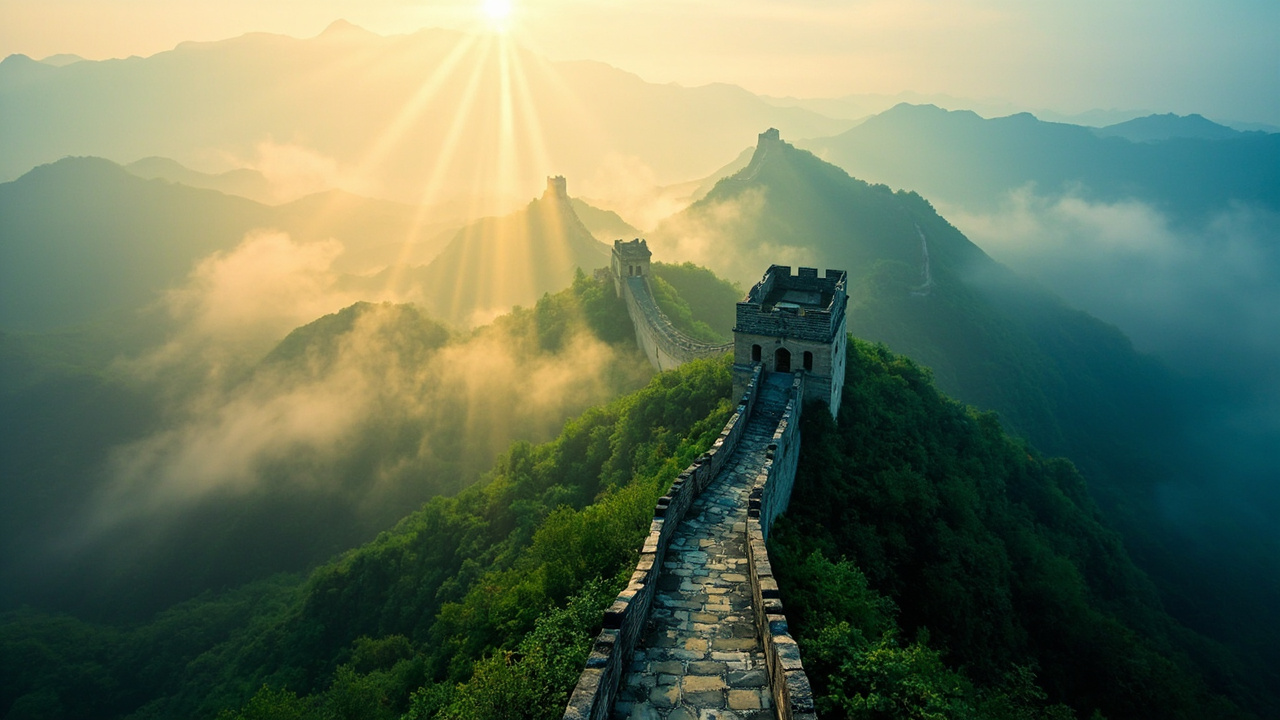
The first time I took a friend to Mutianyu, he stood at the top of the watchtower, looked at the wall snaking over the green ridges, and went quiet for a full minute. Then he said, “Okay. I get it now.” That’s the reaction you’re after. Badaling, the more famous section, is a conveyor belt of tour groups. Mutianyu, about 90 minutes from central Beijing, is the same wall, but with breathing room.
It’s special because it’s the best-preserved section that’s still practical for a day trip. The watchtowers are intact, the restoration is subtle, and the forested hills around it make the wall feel like it’s cutting through wilderness, not a theme park. You can hike for hours and still find stretches where you’re alone, especially if you go past Tower 14, where most people turn back.
- 馃搷 Location: Huairou District, about 70 km (43 mi) northeast of central Beijing
- 馃帿 Entry fee: $6 (CNY 40) for the wall; cable car round trip $15 (CNY 100); shuttle bus $2 (CNY 15)
- 馃晲 Opening hours: 7:30 AM – 6:00 PM (Apr–Oct), 8:00 AM – 5:00 PM (Nov–Mar)
- 馃殕 How to get there: Take subway Line 2 to Dongzhimen Station, Exit B, then transfer to bus 916 Express to Huairou (about 1.5 hours, $1.50/CNY 10). From the bus terminal, take a local taxi or the green shuttle van to the wall entrance (about $8/CNY 60). Alternatively, book a private car through your hotel, which is worth it if you’re in a group of 3+.
- 鈴?When to visit: Weekdays only. Go for the first cable car at 7:30 AM. By 10 AM, the tour groups arrive.
- 馃挕 Insider tips: Bring cash for the shuttle bus, some vendors don’t take cards. The toboggan ride down is $15 (CNY 100) and is genuinely fun, not a gimmick. If you’re fit, walk from Tower 14 to Tower 8 and take the cable car down, that’s the best stretch. Buy water before you go up, it’s triple the price at the top.
I once watched a French couple try to pay for their cable car tickets with a $100 bill. The cashier just stared at them. I stepped in and paid with my phone, and they insisted on buying me lunch. That’s how I learned the dumpling shop at the base of the wall is actually good.
2. Forbidden City — The Palace That Makes You Feel Small
You walk through the Meridian Gate and the first courtyard opens up in front of you, and it’s just… enormous. The scale doesn’t translate in photos. I’ve been there twenty times and I still get that hit of vertigo when I step through the gate. It’s not just a palace, it’s a statement about who the emperor was and who he thought he was.
The Forbidden City is the world’s largest palace complex, 980 buildings, 9,000 rooms, and it’s the best-preserved example of traditional Chinese architecture you’ll find anywhere. The details matter: the golden roof tiles, the marble carvings, the way the entire complex is aligned on a north-south axis. But what I love most is the human scale. You can wander through the side courtyards and find quiet corners where the tour groups don’t go.
- 馃搷 Location: Dongcheng District, central Beijing, directly north of Tiananmen Square
- 馃帿 Entry fee: $10 (CNY 70) in peak season (Apr–Oct), $6 (CNY 40) in low season. Free for children under 18.
- 馃晲 Opening hours: 8:30 AM – 5:00 PM (Apr–Oct), 8:30 AM – 4:30 PM (Nov–Mar). Closed on Mondays (except public holidays).
- 馃殕 How to get there: Take subway Line 1 to Tiananmen East Station, Exit A, walk north through the security checkpoint. You must book tickets online in advance through the official WeChat mini-program, they don’t sell same-day tickets anymore.
- 鈴?When to visit: Tuesday through Thursday mornings. The palace is a sea of people on weekends. Go early, 8:30 AM, and head straight to the back sections first, the front courtyards are always packed.
- 馃挕 Insider tips: Bring your passport, it’s required for the online ticket booking. The audio guide is worth the $6 (CNY 40), it’s well-produced. If you want to see the珍宝馆 (Treasure Gallery) and 钟表馆 (Clock Gallery), buy the combined ticket for $15 (CNY 100). The exit at the north gate leads directly to Jingshan Park, where you can climb the hill for the classic rooftop view.
I made the mistake of visiting on a Monday once. The gate was locked, and a crowd of confused tourists stood outside reading signs in Mandarin. Check the closure day before you plan your Beijing days.
3. Temple of Heaven — Where Beijing Comes to Play
The Temple of Heaven is the place I send every visitor who wants to see “real” Beijing life. The temple itself is stunning, a circular building with a deep blue roof that looks like it’s about to lift off. But the real show is in the park around it. On any morning, you’ll find retirees practicing tai chi, groups playing cards, singers belting out opera, and dancers doing what can only be described as synchronized ballroom aerobics.
It’s special because it’s the only major Beijing sight that’s also a functioning public park. The temple was where emperors prayed for good harvests, but the surrounding grounds are where modern Beijing lives. The contrast is the point. You can see a 600-year-old altar and, fifty meters away, a man walking his bird in a cage.
- 馃搷 Location: Dongcheng District, south of the Forbidden City, about 3 km (2 mi) south
- 馃帿 Entry fee: $8 (CNY 60) for the combined ticket (includes the Hall of Prayer for Good Harvests and the Circular Mound Altar). The park itself is $2.50 (CNY 20).
- 馃晲 Opening hours: 6:00 AM – 9:30 PM (park), 8:00 AM – 5:30 PM (temple buildings, Apr–Oct), 8:00 AM – 5:00 PM (Nov–Mar)
- 馃殕 How to get there: Take subway Line 5 to Tiantan Dongmen Station, Exit A, and you’re at the east gate of the park. Walk straight west through the park to reach the main temple buildings.
- 鈴?When to visit: Go at 7 AM to see the park life in full swing, then visit the temple buildings when they open at 8 AM. Weekdays are quieter, but the weekend morning crowds are part of the charm.
- 馃挕 Insider tips: The Hall of Prayer for Good Harvests is the building you’ve seen in photos, it’s the one with the blue roof. The Circular Mound Altar has a “echo wall” where you can whisper and be heard across the courtyard, but it only works if it’s not too crowded. Bring a deck of cards if you want to join a game, the locals love it when foreigners play along.
I once spent an hour trying to learn a card game called 斗地主 (Dou Dizhu) with three retired men who spoke no English. We communicated entirely through gestures and laughter. I lost every hand. It was one of the best mornings I’ve had in Beijing.
4. Tiananmen Square — The Political Heart
Tiananmen Square is the largest public square in the world, and it’s a strange place to visit. It’s vast, flat, and oddly quiet for a space that can hold a million people. You’ll see the portrait of Mao Zedong on the gate, the Monument to the People’s Heroes, and the Great Hall of the People. It’s a place that carries a lot of weight, and you feel it.
It’s special because it’s the political center of the country, and it’s also the starting point for understanding modern China. The square is where the 20th century happened, for better and worse. For a first-time visitor, it’s a necessary stop, even if it’s not the most beautiful spot on your itinerary.
- 馃搷 Location: Dongcheng District, directly south of the Forbidden City
- 馃帿 Entry fee: Free
- 馃晲 Opening hours: 5:00 AM – 10:00 PM. Security checks at all entrances, bring your passport.
- 馃殕 How to get there: Take subway Line 1 to Tiananmen East or West Station. Note that the square is a single pedestrian zone, you can’t cross the road in the middle, you have to use the underpasses at the north and south ends.
- 鈴?When to visit: Early morning, before 8 AM, when it’s less crowded. The flag-raising ceremony at sunrise is a big deal, but you’ll need to arrive at least an hour early to get a good view.
- 馃挕 Insider tips: You need to pass through security to enter the square, and the lines can be long. Go through the south entrance, near the Qianmen subway station, it’s usually faster. The National Museum of China is on the east side of the square and is free, but you need to book in advance. The square is a no-fly zone for drones, don’t even try.
I was there once when a sudden rainstorm hit. The entire square emptied in minutes, and I watched hundreds of people huddle under the eaves of the museum. The rain on the vast empty square was one of the most cinematic things I’ve seen in China.
5. Xi’an City Wall — The Best Bike Ride in China
The Xi’an City Wall is the most complete city wall in China, and it’s the only one you can cycle the full length of. The wall is 13.7 km (8.5 mi) long, 12 meters (39 ft) wide, and the top is a flat, paved path that’s perfect for biking. You rent a bike at the top and ride the whole loop, looking down at the city below. It’s the best way to get a sense of Xi’an’s layout: the old city inside the wall, the modern city outside.
It’s special because it’s not just a monument, it’s a living part of the city. Locals jog on the wall in the morning, couples walk their dogs, and the park at the base is full of life. It’s also the only place in Xi’an where you can get a genuine aerial perspective of the old city grid.
- 馃搷 Location: Xi’an city center, encircling the old town
- 馃帿 Entry fee: $7 (CNY 54) for the wall. Bike rental $5 (CNY 45) for 2 hours, tandem bikes available.
- 馃晲 Opening hours: 8:00 AM – 10:00 PM (Apr–Oct), 8:00 AM – 6:00 PM (Nov–Mar). The south gate (永宁门) is the main entrance and is open latest.
- 馃殕 How to get there: Take subway Line 2 to Yongningmen Station, Exit D, and you’re at the south gate. The bike rental is just inside the gate, to your right.
- 鈴?When to visit: Late afternoon, around 4 PM, so you can catch the sunset from the wall. The light is golden, and the city below starts to light up. Weekdays are much quieter.
- 馃挕 Insider tips: The bike rental charges a deposit, bring cash or your passport. The wall is bumpy in places, the bikes are basic, but it’s still a fun ride. If you don’t want to do the full loop, the south gate to the east gate stretch is the most interesting. There are restrooms at each gate, but they’re basic.
I rode the full loop once in a light drizzle, and it was magical. The wet stone, the gray sky, the red lanterns, it felt like a scene from a wuxia movie. I stopped at the north gate and watched a man practicing calligraphy with water on the pavement, his brush strokes evaporating as he wrote.
6. Terracotta Army — The Army That Waited 2,200 Years
You walk into Pit 1, the main hall, and it’s like stepping into a hangar full of history. Row after row of terracotta soldiers, each one with a different face, standing in formation, waiting for an emperor who died in 210 BC. The sheer scale of it stops you. There are an estimated 8,000 soldiers, and only about 2,000 have been excavated. The rest are still in the ground, waiting.
It’s special because it’s one of the most significant archaeological discoveries of the 20th century, and it’s a direct window into the mind of Qin Shi Huang, the first emperor of China. He built a city of the dead to match his city of the living. The detail is astonishing: each soldier has a unique face, and they’re arranged by rank, with generals standing taller than the infantry.
- 馃搷 Location: Lintong District, about 40 km (25 mi) east of central Xi’an
- 馃帿 Entry fee: $18 (CNY 120) in peak season (Mar–Nov), $15 (CNY 100) in low season. Includes access to all three pits and the exhibition hall.
- 馃晲 Opening hours: 8:30 AM – 5:30 PM (Mar–Nov), 8:30 AM – 5:00 PM (Dec–Feb)
- 馃殕 How to get there: Take subway Line 9 from Xi’an city center to Huaqingchi Station, Exit C, then transfer to the free shuttle bus to the Terracotta Army. Alternatively, take bus 306 from the Xi’an Railway Station, which takes about an hour. A taxi from the city center costs about $20 (CNY 150).
- 鈴?When to visit: Go on a weekday, and go early. The museum opens at 8:30 AM, and the tour groups start arriving around 10 AM. Visit Pit 1 first, then Pit 3 (the smallest), then Pit 2.
- 馃挕 Insider tips: The official guide service is worth it, about $15 (CNY 100) for a private guide. They’ll explain the history in a way the English signage doesn’t. Don’t buy souvenirs from the vendors at the entrance, they’re overpriced. The museum shop inside has better quality. Bring water, it gets hot and crowded inside.
I once watched a man try to take a selfie with a soldier and accidentally knock over the rope barrier. A guard appeared from nowhere and made him stand in the corner for five minutes. Don’t be that guy.
7. Muslim Quarter — The Street Food Heart of Xi’an
The Muslim Quarter is a maze of narrow alleys in the old city, and it’s where Xi’an’s food culture lives. The streets are lined with stalls selling everything from lamb skewers to pomegranate juice to a flatbread sandwich called roujiamo, which locals call the Chinese hamburger. The air is thick with smoke from charcoal grills and the smell of cumin and chili.
It’s special because it’s a living neighborhood, not a tourist set-piece. The Hui Muslim community has lived here for centuries, and the food is a fusion of Chinese and Central Asian flavors that you won’t find anywhere else in China. The night market is chaotic, loud, and absolutely essential.
- 馃搷 Location: Beiyuanmen Street, in the northwest of the old city, just west of the Drum Tower
- 馃帿 Entry fee: Free, but budget $10–20 (CNY 70–150) for food
- 馃晲 Opening hours: The stalls start setting up around 5 PM and go until midnight. The main street is open all day, but the real energy is at night.
- 馃殕 How to get there: Take subway Line 2 to Zhonglou Station, Exit C, and walk west past the Drum Tower. You’ll see the archway marking the entrance to the Muslim Quarter.
- 鈴?When to visit: Go at 6 PM, when the stalls are fully open but before the 8 PM rush. The weekends are packed, so a Tuesday or Wednesday night is better.
- 馃挕 Insider tips: The lamb skewers (羊肉串) are the must-try, about $0.50 (CNY 3) each. The biangbiang noodles, wide hand-pulled noodles with chili oil, are a Xi’an specialty. Try the persimmon cakes (柿子饼) for dessert, they’re fried and sweet. Don’t eat at the first stall you see, walk deeper into the alleys for better food and lower prices. The roujiamo from a shop called 樊记 is the best I’ve had.
I brought my mother here once, and she was overwhelmed by the chaos. I ordered her a bowl of lamb soup and a roujiamo, and she sat on a plastic stool, eating silently, then looked up and said, “This is the best thing I’ve eaten in twenty years.”
8. Shanghai Tower — The View That Makes You Believe in the Future
The Shanghai Tower is the tallest building in China and the third-tallest in the world, at 632 meters (2,073 ft). The observation deck on the 118th floor is the highest in the world, and the view is a science fiction movie come to life. You look down at the Huangpu River, the Bund, and the endless sprawl of Shanghai, and it’s hard to believe it’s real.
It’s special because it’s not just a building, it’s a symbol of what China is doing. The tower’s twisted, spiral design is not just aesthetic, it reduces wind load by 24%. The elevator travels at 20.5 meters per second (67 ft/s), and your ears pop on the way up. The view from the top is the best in Shanghai, period.
- 馃搷 Location: Lujiazui, Pudong, directly across the river from the Bund
- 馃帿 Entry fee: $30 (CNY 220) for the 118th-floor observation deck. The 119th-floor lounge is $40 (CNY 280).
- 馃晲 Opening hours: 8:30 AM – 10:00 PM (last entry at 9:30 PM)
- 馃殕 How to get there: Take subway Line 2 to Lujiazui Station, Exit 6, and walk east for about 8 minutes. The tower is the one that looks like it’s twisting.
- 鈴?When to visit: Go on a clear day, late afternoon, so you can see the city in daylight, watch the sunset, and then see the lights come on. Check the weather forecast, a hazy day ruins the view.
- 馃挕 Insider tips: The ticket includes a virtual reality experience on the 125th floor, it’s a bit gimmicky but fun. The 119th-floor lounge has seating and a bar, worth the extra $10 (CNY 60) if you want to sit and take it in. Buy your ticket online through the official WeChat mini-program to skip the line. The glass floor sections are near the windows, but they’re not as scary as they look.
I took my niece here when she was 12, and she pressed her face against the glass for a full ten minutes, not saying a word. Then she turned to me and said, “I want to live here.” I think she will.
9. The Bund — The Skyline That Defines Shanghai
The Bund is the waterfront promenade on the west bank of the Huangpu River, and it’s the best place to see the Shanghai skyline. On one side, you have the colonial-era buildings of the old International Settlement, with their art deco facades and stone lions. On the other side, you have the futuristic towers of Pudong, including the Oriental Pearl Tower and the Shanghai Tower. The contrast is the whole point.
It’s special because it’s the one place in China where you can see the 19th and 21st centuries facing each other across a river. The Bund is also a great place to just walk, watch the crowds, and feel the energy of the city. It’s free, it’s always open, and it’s the best photo spot in Shanghai.
- 馃搷 Location: Zhongshan East 1st Road, Huangpu District, west bank of the Huangpu River
- 馃帿 Entry fee: Free
- 馃晲 Opening hours: Always open
- 馃殕 How to get there: Take subway Line 2 to Nanjing East Road Station, Exit 1, and walk east for about 10 minutes. You’ll hit the river and the Bund promenade.
- 鈴?When to visit: Go at sunset, around 5:30 PM in winter or 7 PM in summer. The skyline lights up as the sun goes down, and it’s the most dramatic time. The Bund is crowded at night, but it’s part of the experience.
- 馃挕 Insider tips: The best photo spot is near the south end of the promenade, where you can get the full sweep of the skyline. The ferry across the river to Pudong costs $0.50 (CNY 2) and is a great way to see the skyline from the water. The Peace Hotel, at the north end of the Bund, has a jazz bar that’s been running since the 1930s, worth a drink if you want to step back in time.
I was on the Bund during a typhoon warning once, and the wind was so strong I had to lean into it to walk. The sky was purple and green, and the clouds were moving so fast it felt like time-lapse photography. The few people who were out were all taking photos, and we were all getting soaked, but no one wanted to leave.
10. Yu Garden — The Quiet Corner in the Chaos
Yu Garden is a classical Chinese garden in the middle of Shanghai’s old city, and it’s a shock to the system after the glass towers of Pudong. It was built in the 16th century by a Ming Dynasty official, and it’s a masterpiece of the genre: rockeries, ponds, pavilions, and winding corridors designed to create a sense of endless discovery.
It’s special because it’s a genuine piece of old Shanghai, a city that’s mostly demolished its past. The garden is small, but it’s dense with detail. You can spend an hour just looking at the rock formations, the koi fish, and the dragon walls. It’s also surrounded by the Yuyuan Bazaar, a touristy but fun shopping area.
- 馃搷 Location: 218 Anren Street, Huangpu District, in the old city
- 馃帿 Entry fee: $5 (CNY 40) in peak season, $4 (CNY 30) in low season
- 馃晲 Opening hours: 9:00 AM – 4:30 PM (Mar–Oct), 9:00 AM – 4:00 PM (Nov–Feb). Closed on Mondays.
- 馃殕 How to get there: Take subway Line 10 to Yuyuan Garden Station, Exit 1, and walk east for about 5 minutes. You’ll pass through the Yuyuan Bazaar to reach the garden entrance.
- 鈴?When to visit: Go on a weekday morning, right when it opens. The garden is tiny, and it gets crowded fast. The bazaar around it is best in the late afternoon, when the lanterns come on.
- 馃挕 Insider tips: The garden is a maze, and it’s easy to miss sections. Follow the one-way route marked on the map, it’s designed to take you through everything. The famous zigzag bridge (九曲桥) is just outside the garden, and it’s worth a walk, but it’s always packed. The xiaolongbao (soup dumplings) at the Nanxiang Steamed Bun Restaurant, right at the edge of the bazaar, are famous for a reason.
I once got lost in the garden for an hour, going in circles through the same pavilions. I finally asked a gardener for help, and he just laughed and pointed at the exit, which was ten meters away. The garden is designed to disorient you, and it works.
FAQ summary
For a 5-day first trip to China, the Beijing-Xi’an-Shanghai route is the most efficient, using high-speed rail and domestic flights to connect the three cities. The 240-hour visa-free transit policy covers many nationalities through 2026, but you must verify your eligibility before booking. Budget $800–$1,200 (CNY 5,800–8,700) per person, excluding international flights, and set up Alipay or WeChat Pay before you arrive, as cash is rarely used. Book the Forbidden City and Terracotta Army tickets online in advance, and plan for a weekday visit to the Great Wall to avoid the worst crowds.
FAQ
Q: Do I need a visa for a 5-day trip to China in 2026? A: Many nationalities qualify for the 240-hour visa-free transit policy, which allows stays of up to 10 days. You must enter and exit through approved ports and stay within the designated region. Check your eligibility on the official Chinese visa website before booking flights.
Q: How much does a 5-day trip to China cost? A: Budget $800–$1,200 (CNY 5,800–8,700) per person, excluding international flights. This covers trains, flights, hotels, food, and entry fees. The high-speed rail from Beijing to Xi’an costs about $70 (CNY 515) for second class.
Q: Is it easy to get around without speaking Chinese? A: Yes, in the major tourist areas. English signage is common at airports, train stations, and major attractions, but rare elsewhere. Download a translation app like Google Translate or Pleco, and have your hotel’s name written in Chinese to show taxi drivers.
Q: Do I need a VPN for my phone in China? A: Yes, if you want to use Google, Instagram, Facebook, or WhatsApp. Download a reliable VPN before you arrive, as the app stores are censored in China. A local SIM card from China Mobile or China Unicom is cheap and works well.
Q: Can I use my credit card in China? A: Sometimes, but it’s not reliable. Set up Alipay or WeChat Pay before you arrive, linking your international credit card. These apps are accepted everywhere, from street stalls to high-end restaurants. Carry some cash as backup, but know that many places don’t accept it.
Q: What’s the best way to get between Beijing, Xi’an, and Shanghai? A: Take the high-speed train from Beijing to Xi’an (about 4.5 hours, $70/CNY 515) and fly from Xi’an to Shanghai (about 2.5 hours, $80–120/CNY 580–870). Book train tickets on the official 12306 app or through a travel agent, and domestic flights through Trip.com or Ctrip.
Q: What should I pack for a 5-day trip to China? A: Comfortable walking shoes, a reusable water bottle, a power bank, and a small daypack. Dress in layers, as temperatures can vary. Bring a photocopy of your passport and visa, and keep the original in your hotel safe.
The Honest Wrap-up
This itinerary is for the first-timer who wants to see the big three and is okay with moving fast. It’s not for the traveler who wants to linger in one place, who wants to hike the Great Wall for three days, or who wants to eat their way through Chengdu. If you have more time, slow down. But if you have five days and you want to see China, this is the route.
My final piece of advice: don’t over-plan. Book the big things, the trains, the hotels, the Forbidden City tickets. But leave room for spontaneity. The best moments in China are often the unplanned ones, the dumpling shop you stumble into, the old man who wants to practice his English, the view you didn’t expect. China is a country that rewards the curious. Go with an open mind and an empty stomach.
Topics
More guides you may like
Top 10 Bridges in China
China's bridges are engineering marvels spanning mountains, rivers, and seas. Here are 10 of the most spectacular, from ancient stone to modern steel.
8 min read

Top 10 Buddhist Sites in China
From the Leshan Giant Buddha to the Dunhuang Caves, these 10 Buddhist sites represent 2,000 years of China's spiritual heritage.
9 min read
Top 10 Day Trips from Beijing You Shouldn't Miss
Beijing is packed with history, but some of China's best experiences are just a few hours away. Here are 10 day trips that will transform your visit.
9 min read
Top 10 Hidden Gems in China Off the Beaten Path
Beyond the Great Wall and Terracotta Warriors, China has incredible hidden destinations few tourists ever reach. Here are 10 underrated gems worth the detour.
9 min read
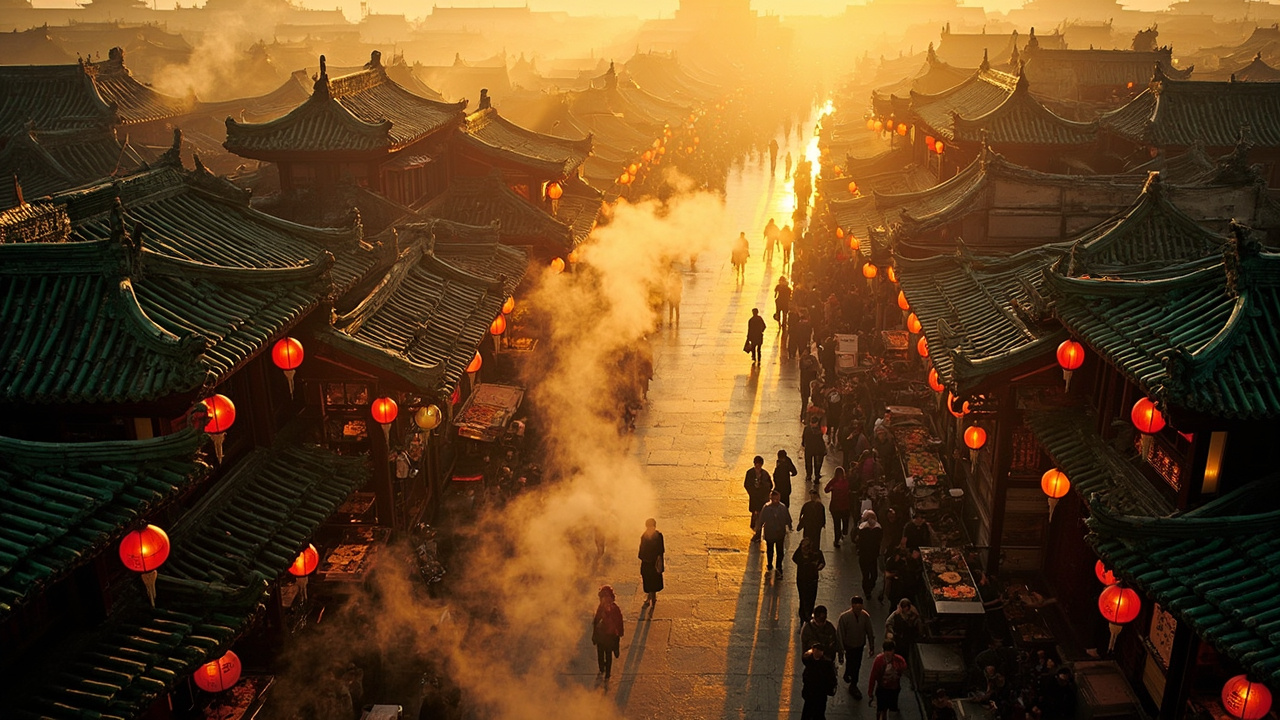
Top 10 Markets and Shopping Streets in China
From Shanghai's Bund to Beijing's Silk Street - 10 markets where foreigners can haggle, explore, and bring home authentic Chinese goods.
9 min read
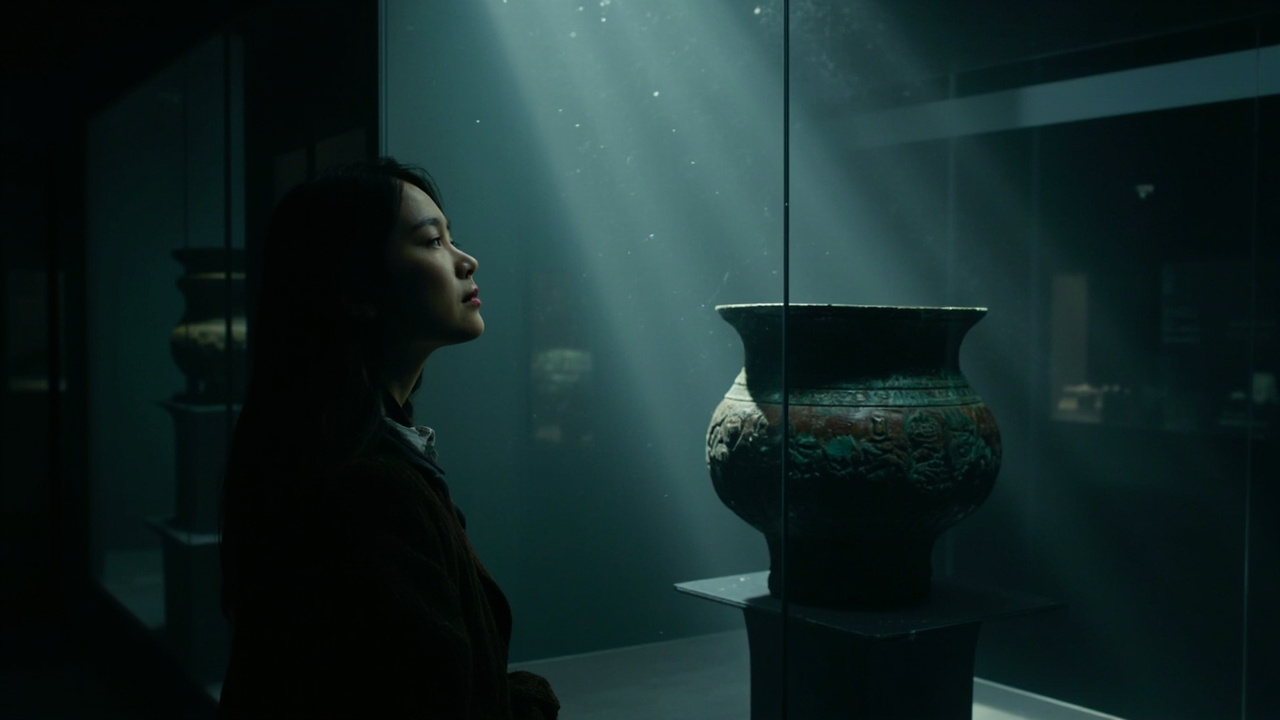
Top 10 Museums in China You Shouldn't Miss
China's museums span 5,000 years of civilization. These 10 - from the Palace Museum to Xi'an's terracotta gallery - are unmissable for culture lovers.
9 min read