
China for First Timers
The cab driver in Shanghai looked at me in the rearview mirror and said, in perfect English, "First time in China?" I nodded.
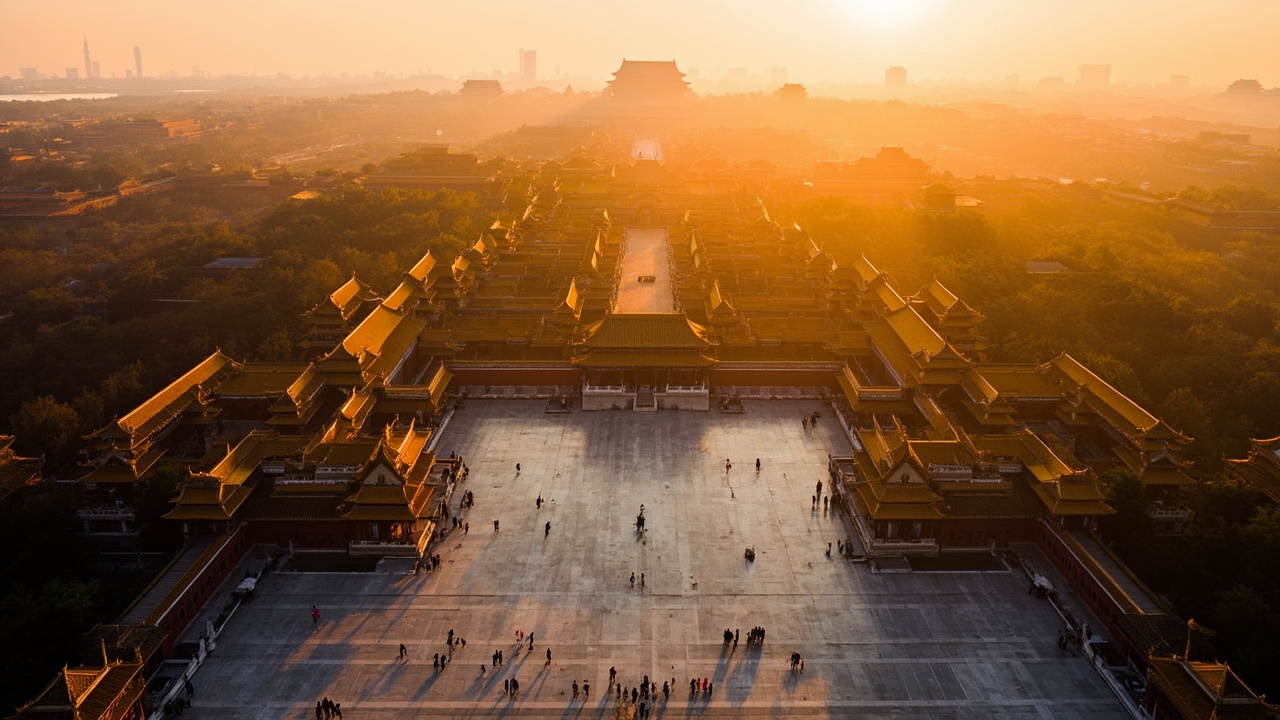
The cab driver in Shanghai looked at me in the rearview mirror and said, in perfect English, “First time in China?” I nodded, clutching my passport like it might evaporate. He laughed. “You look like you’re going to war. Relax. It’s just noodles and skyscrapers.”
He wasn’t wrong. But he wasn’t entirely right either.
China is a country that rewires your expectations. The scale is disorienting, the speed is relentless, and the food, the history, the sheer otherness of it, hits you in waves. I’ve lived in Beijing for seven years and have taken over forty trips through this country, and I still get lost in the good way. This guide is everything I wish someone had told me before my first flight landed. It’s practical, opinionated, and based on real, repeated experience, not a press release.
Quick answer
Yes, China is safe, navigable, and absolutely worth the trip in 2026. Most passport holders from the US, UK, Canada, Australia, and dozens of other countries can enter visa-free for up to 30 days, and a 10-day itinerary will cost roughly $1,500–$2,500 (¥10,800–¥18,000) per person including flights. The two non-negotiables before you go: set up Alipay or WeChat Pay on your phone, and download a VPN.
The Short Version
If you only have 90 seconds, here’s the deal. China is not a “relaxing beach” destination; it’s a “mind-blowing sensory overload” destination. Start in Beijing and Shanghai, then add either Xi’an for history or Chengdu for pandas and food. Use the high-speed rail between cities, not flights. Get Alipay working before you land. Don’t stress about the language; translation apps handle 90% of it. And whatever you do, don’t skip the street food.
How I Picked These
I didn’t pull these ten places from a listicle. I’ve walked the Great Wall at Mutianyu in a snowstorm, gotten hopelessly lost in the hutongs of Beijing, and eaten dumplings in a Xi’an alley that had no English sign and no menu. I’ve argued with taxi drivers, befriended hostel owners, and learned the hard way that “spicy” in Sichuan means something entirely different than it does back home. These picks are the places I’d send my own skeptical friends, the ones who said “China? Really?” and then came back converted.
Comparison Table
| Rank | Place | Best For | Approx Cost (USD) | Time Needed | When to Go |
|---|---|---|---|---|---|
| 1 | Beijing | History, culture, first-timers | $50–100/day | 3–4 days | Apr–May, Sep–Oct |
| 2 | Shanghai | Modern China, nightlife, food | $60–120/day | 2–3 days | Mar–May, Oct–Nov |
| 3 | Xi’an | Terracotta Army, ancient history | $40–80/day | 2 days | Mar–May, Sep–Oct |
| 4 | Chengdu | Pandas, Sichuan food, teahouses | $35–70/day | 2 days | Mar–Jun, Sep–Nov |
| 5 | Guilin & Yangshuo | Karst landscapes, outdoor activities | $30–60/day | 2–3 days | Apr–Oct |
| 6 | Zhangjiajie | Avatar mountains, hiking | $40–70/day | 2 days | Apr–Jun, Sep–Oct |
| 7 | Hangzhou | West Lake, tea plantations, day trip | $40–80/day | 1–2 days | Mar–May, Sep–Nov |
| 8 | Lhasa | Tibetan culture, high-altitude adventure | $60–100/day | 3–4 days | May–Oct |
| 9 | Hong Kong | City energy, food, shopping | $80–150/day | 2–3 days | Oct–Dec |
| 10 | Suzhou | Classical gardens, canals | $40–70/day | 1 day | Mar–May, Sep–Oct |
1. Beijing — The City That Rewrites Your Definition of “Old”
I remember my first morning in Beijing. I woke up at 5:30 AM because of the jet lag, walked out of my hotel in the hutongs, and watched a group of elderly people doing tai chi in a tiny courtyard while a street vendor fried dough sticks over a coal fire. The smell of oil and sesame filled the air. I stood there for ten minutes, frozen. This was the China I’d read about, and it was right outside my door.
Beijing is the essential starting point for any first-timer. It has the Great Wall, the Forbidden City, the Temple of Heaven, and the hutongs, those narrow alleyways that are the city’s beating heart. The scale of the history is overwhelming, but the city itself is surprisingly livable. The subway is efficient, the food is hearty, and the locals, once you get past the initial language barrier, are endlessly patient.
- 📍 Location: Central Beijing, primarily around Dongcheng and Xicheng districts
- 🎫 Entry fee: Forbidden City $12 (¥85), Great Wall at Mutianyu $6 (¥45) plus cable car $15 (¥100), Temple of Heaven $5 (¥35)
- 🕒 Opening hours: Most major sites open 8:30 AM–5:00 PM, closed Mondays (Forbidden City is closed Mondays)
- 🚇 How to get there: Take Subway Line 1 to Tiananmen East Station, Exit A, walk 5 minutes north to the Forbidden City entrance. For the Great Wall, take a bus from Dongzhimen Station (Line 2, Exit B) — the 916 express bus takes about 2 hours
- 🌤️ When to visit: April–May and September–October for mild weather. Avoid the October 1–7 National Day holiday, when the crowds are unbearable
- 💡 Insider tips: Book Forbidden City tickets a week in advance on the official WeChat mini-program. Go to the Great Wall at Mutianyu, not Badaling, unless you enjoy being packed like a sardine. The hutongs around Nanluoguxiang are touristy, but the ones around Baochao Hutong are where locals actually live. Try jianbing, the savory crepe, from a street cart for breakfast. And don’t bother with a tour guide at the Forbidden City; the audio guide is excellent.
I once spent an hour talking to a retired teacher named Mr. Chen in a hutong tea house. He told me he’d lived in the same courtyard for 60 years and watched the city change around him. He didn’t speak English, and my Mandarin was terrible, but we communicated through a translation app and shared a pot of jasmine tea. It was the best hour of my trip.
2. Shanghai — The Future, With a Side of History
The first time I saw the Shanghai skyline from the Bund, I thought it looked fake. Like someone had photoshopped a city into existence. The neon lights, the glass towers, the sheer verticality of it all, it’s a visual assault in the best way. But the real magic of Shanghai isn’t the skyline; it’s the contrast. Walk five minutes away from the Bund and you’re in the French Concession, with its plane trees and art deco buildings and quiet cafes.
Shanghai is China’s most international city, and it’s the easiest place to start if you’re nervous. English is more widely spoken here than anywhere else in the country. The food scene is incredible, from hole-in-the-wall soup dumpling joints to world-class fine dining. And the nightlife, if you’re into that, rivals anything in New York or London.
- 📍 Location: The Bund and French Concession are the two must-see areas; they’re on opposite sides of the city center
- 🎫 Entry fee: The Bund is free, the Shanghai Museum is free (book ahead), the Oriental Pearl Tower is $25 (¥180)
- 🕒 Opening hours: The Bund is best at sunset; the museum is open 9 AM–5 PM, closed Mondays
- 🚇 How to get there: Take Subway Line 2 to East Nanjing Road Station, Exit 1, and walk east for 10 minutes to the Bund. For the French Concession, take Line 10 to Shanghai Library Station and wander the streets around Wukang Road
- 🌤️ When to visit: March–May and October–November for comfortable temperatures. Summer is humid and rainy
- 💡 Insider tips: Go to the Bund at sunrise, not sunset, to beat the crowds and get the light on the skyline. The soup dumplings at Jia Jia Tang Bao are worth the 30-minute wait. Take the ferry across the Huangpu River for $0.50 (¥4) instead of the tourist cruise. And don’t skip the Propaganda Poster Art Centre, a tiny museum tucked away in an apartment building that’s one of the most fascinating places in the city.
I made the mistake of trying to hail a taxi during rush hour in Shanghai. It took 45 minutes. The lesson: use the Didi app (China’s Uber) or just take the subway. The subway is faster, cheaper, and infinitely more reliable.
3. Xi’an — Where the Terracotta Army Actually Lives
I’ll be honest: I was skeptical about the Terracotta Army. I thought it would be a tourist trap, a bunch of statues in a hangar. Then I walked into Pit 1 and my jaw literally dropped. There are over 6,000 life-sized soldiers, each with a unique face, standing in formation as if they’re about to march off to war. It’s been 2,200 years, and they’re still standing. That’s not a tourist trap; that’s a miracle.
Xi’an is China’s ancient capital, and it wears its history on its sleeve. The city walls are intact, the Muslim Quarter is a food lover’s paradise, and the Terracotta Army is, without exaggeration, one of the most impressive archaeological sites on Earth. It’s a two-hour high-speed rail ride from Beijing, so it’s an easy add-on.
- 📍 Location: Terracotta Army is 40 km east of the city center; the city walls and Muslim Quarter are central
- 🎫 Entry fee: Terracotta Army $20 (¥150), City Wall $8 (¥60), Big Wild Goose Pagoda $7 (¥50)
- 🕒 Opening hours: Terracotta Army open 8:30 AM–5:30 PM (closes earlier in winter); City Wall open 8 AM–10 PM
- 🚇 How to get there: From Xi’an North Station, take Subway Line 4 to Dachaishan Station, then transfer to the 307 bus to the Terracotta Army. Or take a taxi, which costs about $25 (¥180) each way
- 🌤️ When to visit: March–May and September–October. Avoid July and August, when it’s brutally hot
- 💡 Insider tips: Go to the Terracotta Army as soon as it opens at 8:30 AM to beat the tour groups. The Muslim Quarter is best at night, when the street food stalls come alive. Try biang biang noodles, the wide, hand-pulled noodles that are a Xi’an specialty. And don’t miss the Tang Dynasty Music and Dance Show at the Tang Palace Hotel, which is touristy but genuinely impressive.
I ate a lamb skewer in the Muslim Quarter that was so good I went back for three more. The vendor, a man named Ma, didn’t speak English, but he saw me eating and gave me a thumbs up. Then he handed me a free skewer. That’s the China I know.
4. Chengdu — The City of Pandas and Spice
The first thing you notice about Chengdu is the smell. It’s not a bad smell; it’s just spicy. The air itself seems to carry a hint of chili and Sichuan pepper. The second thing you notice is the pace. Chengdu is famously laid-back, a city where people sit in teahouses for hours, playing mahjong and drinking jasmine tea. It’s the anti-Shanghai, and I love it for that.
The pandas are the main draw, and they’re worth it. Watching a giant panda munch on bamboo for an hour is surprisingly mesmerizing. But Chengdu is also a food city, and it’s where you’ll find some of the best Sichuan cuisine in the country. The hotpot here is not for the faint of heart, but it’s an experience you won’t forget.
- 📍 Location: Panda Base is 10 km north of the city; the city center, including Jinli Street and the teahouses, is walkable
- 🎫 Entry fee: Panda Base $7 (¥55), Jinli Street is free, Wenshu Monastery $3 (¥20)
- 🕒 Opening hours: Panda Base open 7:30 AM–6 PM (go early, pandas are most active in the morning); Jinli Street open all day
- 🚇 How to get there: Take Subway Line 3 to Panda Avenue Station, then a 10-minute walk to the base. For the city center, take Line 2 to Tianfu Square
- 🌤️ When to visit: March–June and September–November. The panda base is best in the morning, before the crowds and the heat
- 💡 Insider tips: Go to the panda base at 7:30 AM, when the pandas are fed and most active. Skip the touristy hotpot places on Jinli Street and find a local spot in the backstreets. Try chuanchuan, skewers cooked in a spicy broth, at a street stall. And do the teahouse thing, even if it feels slow; it’s the heart of Chengdu culture.
I met a woman named Li at a teahouse in People’s Park. She was 70 years old and had been coming to the same teahouse every day for 20 years. She showed me how to properly brew a cup of jasmine tea, and we sat in silence for an hour, watching the world go by. It was the most peaceful hour of my entire trip.
5. Guilin & Yangshuo — The Landscape That Inspired a Thousand Paintings
The first time I saw the karst mountains of Guilin, I thought I was looking at a painting. The limestone peaks rise out of the rice paddies like giant green teeth, shrouded in mist. It’s the landscape you’ve seen in a thousand Chinese paintings, and it’s real. I took a boat down the Li River and spent the entire two hours with my jaw hanging open.
Guilin and Yangshuo are the postcard version of China, and they deliver. The Li River cruise is the classic experience, but the real magic is in the smaller moments: cycling through rice paddies, watching farmers work the fields, hiking to viewpoints that look out over the karst peaks. It’s a slower, more rural China, and it’s a welcome break from the cities.
- 📍 Location: Guilin is the transport hub; Yangshuo is the more scenic base, about 1.5 hours away
- 🎫 Entry fee: Li River cruise $50 (¥360), Yangshuo’s West Street is free, Xianggong Hill viewpoint $8 (¥60)
- 🕒 Opening hours: Li River cruises run 9 AM–2 PM; Xianggong Hill is best at sunrise
- 🚇 How to get there: From Guilin North Station, take the high-speed rail to Yangshuo Station (30 minutes), then a 20-minute bus to the town center. For the Li River cruise, book through your hotel or a local agency
- 🌤️ When to visit: April–October, but avoid the summer rains (June–August). September–October is ideal
- 💡 Insider tips: Skip the cruise and rent a bike in Yangshuo instead; the countryside is best explored on two wheels. Go to Xianggong Hill for sunrise, but bring a flashlight for the hike up. Try beer fish, a local specialty cooked with beer and chili. And haggle with the boatmen on the Yulong River; the asking price is always inflated.
I got hopelessly lost cycling in the countryside outside Yangshuo and ended up in a tiny village where an old woman invited me into her home for tea. We communicated through gestures and smiles, and she showed me photos of her grandchildren. I didn’t understand a word she said, but I understood everything.
6. Zhangjiajie — The Mountains That Inspired Avatar
The first time I saw the pillars of Zhangjiajie, I thought I was hallucinating. These massive sandstone columns rise hundreds of meters into the sky, covered in vegetation, looking like something out of a fantasy novel. They’re the inspiration for the floating mountains in Avatar, and honestly, the movie doesn’t do them justice.
Zhangjiajie is a national park in Hunan Province, and it’s a hiker’s paradise. The park is huge, with multiple entrances, cable cars, and glass bridges. It’s also crowded, so you need to plan your route carefully. But the views, especially at sunrise or sunset, are worth every bit of the hassle.
- 📍 Location: Zhangjiajie National Forest Park is about 30 km from Zhangjiajie city center
- 🎫 Entry fee: Park entrance $30 (¥220), valid for 4 days; Bailong Elevator $10 (¥72); Tianmen Mountain cable car $20 (¥150)
- 🕒 Opening hours: Park open 6:30 AM–6 PM (hours vary by season); Tianmen Mountain open 8 AM–6 PM
- 🚇 How to get there: From Zhangjiajie West Station, take a taxi or bus to the park entrance (about 1 hour). The park has multiple entrances; the Wulingyuan entrance is the most common
- 🌤️ When to visit: April–June and September–October. Avoid Chinese holidays (May 1–5 and October 1–7), when the park is packed
- 💡 Insider tips: Go to the park’s highest viewpoint, Tianzi Mountain, for sunrise. Take the Bailong Elevator up and hike down to avoid the crowds. The glass bridge at Zhangjiajie Grand Canyon is terrifying and worth it. And bring a rain jacket; the weather changes quickly in the mountains.
I stood on the glass bridge at Zhangjiajie Grand Canyon and looked down at the void below. My legs were shaking. A Chinese tourist next to me, a grandmother in her 70s, walked across like it was nothing, then turned around and took a selfie. I felt deeply inadequate.
7. Hangzhou — The City of West Lake and Green Tea
Hangzhou is the kind of city that makes you want to write poetry. It’s been a favorite of Chinese emperors and scholars for over a thousand years, and it’s easy to see why. West Lake, the city’s centerpiece, is a serene expanse of water surrounded by willow trees, pagodas, and hills. I spent an entire afternoon walking around it, and I didn’t want to leave.
Hangzhou is also the home of Longjing (Dragon Well) tea, one of China’s most famous green teas. You can visit the tea plantations in the hills outside the city, watch the leaves being picked and processed, and, of course, taste the finished product. It’s a peaceful, beautiful, and deeply satisfying place.
- 📍 Location: West Lake is central; the Longjing tea village is about 30 minutes west of the lake
- 🎫 Entry fee: West Lake is free, Lingyin Temple $8 (¥60), Longjing tea village is free (but you’ll pay for tea)
- 🕒 Opening hours: West Lake is open 24/7; Lingyin Temple open 7 AM–6 PM
- 🚇 How to get there: From Hangzhou East Station, take Subway Line 1 to Longxiangqiao Station, then walk 10 minutes to West Lake. For the tea village, take a taxi or bus 27 from the city center
- 🌤️ When to visit: March–May and September–November. The spring tea harvest (late March–April) is a special time to visit
- 💡 Insider tips: Rent a bike and cycle around West Lake; it’s the best way to see it. Go to the tea village early in the morning, before the tour groups arrive. Try the local specialty, Dongpo pork, named after the famous poet and governor. And don’t skip the night view of the lake, when the pagodas are lit up.
I visited a tea farmer named Wang in the Longjing village. He showed me how to pick the leaves, explained the difference between first and second harvest, and brewed me a cup of tea that was so fresh I could taste the grass. He refused to let me pay for it. “You are my guest,” he said.
8. Lhasa — The Roof of the World
Lhasa is not an easy trip. It’s at 3,650 meters (12,000 feet) above sea level, and the altitude will hit you like a truck. I remember walking up the stairs to my hotel room and feeling like I’d just run a marathon. But the payoff is immense. The Potala Palace, the Jokhang Temple, the Barkhor Street, the whole city feels like a living museum of Tibetan Buddhism.
Lhasa is a place that challenges your assumptions. It’s not the “exotic” Tibet of travel brochures; it’s a real city with real people, real politics, and real complexity. But it’s also a place of profound beauty and spirituality. If you’re willing to put in the effort, it’s an experience you’ll never forget.
- 📍 Location: Lhasa is in the Tibet Autonomous Region, at an altitude of 3,650 meters
- 🎫 Entry fee: Potala Palace $20 (¥150), Jokhang Temple $12 (¥85), Sera Monastery $8 (¥60)
- 🕒 Opening hours: Potala Palace open 9 AM–4 PM (closed some days; book tickets a day in advance); Jokhang Temple open 8 AM–6 PM
- 🚇 How to get there: Fly into Lhasa Gonggar Airport (about 1 hour from the city) or take the Qinghai-Tibet Railway from Xining (about 22 hours). You’ll need a Tibet Travel Permit, which your tour operator will arrange
- 🌤️ When to visit: May–October, when the weather is mildest. Avoid the winter, when it’s freezing and many sites are closed
- 💡 Insider tips: Acclimatize for a day before visiting the Potala Palace; the stairs are brutal at altitude. Go to Sera Monastery in the afternoon for the monks’ debating session, which is fascinating to watch. Drink plenty of water and avoid alcohol for the first few days. And be respectful at religious sites; don’t point your camera at monks without asking.
I sat in the courtyard of Jokhang Temple and watched pilgrims prostrating themselves on the ground, over and over, in a rhythm that seemed endless. I didn’t understand the ritual, but I felt its power. It was one of the most humbling experiences of my life.
9. Hong Kong — The City That Never Sleeps (and Never Stops Eating)
Hong Kong is not mainland China, and it knows it. It’s a former British colony with its own currency, its own laws, and its own attitude. It’s a city of contrasts: skyscrapers and street markets, Michelin-starred restaurants and dai pai dong (open-air food stalls), Cantonese opera and K-pop. It’s exhausting and exhilarating in equal measure.
For a first-time visitor, Hong Kong is a great introduction to Chinese culture without the language barrier. English is widely spoken, the transport system is world-class, and the food is incredible. It’s also a great base for exploring the mainland, with high-speed rail connections to Guangzhou and Shenzhen.
- 📍 Location: Central and Tsim Sha Tsui are the main tourist areas; they’re connected by the Star Ferry
- 🎫 Entry fee: Victoria Peak tram $8 (HK$62), Star Ferry $0.50 (HK$4), most temples and markets are free
- 🕒 Opening hours: Victoria Peak tram runs 7 AM–11 PM; markets are best in the evening
- 🚇 How to get there: From Hong Kong International Airport, take the Airport Express to Hong Kong Station (24 minutes). The MTR (subway) is the best way to get around the city
- 🌤️ When to visit: October–December, when the weather is mild and dry. Summer is hot, humid, and typhoon-prone
- 💡 Insider tips: Take the Star Ferry across Victoria Harbour at sunset; it’s the best view of the skyline and costs less than a dollar. Go to the Temple Street Night Market for street food and souvenirs, but haggle hard. Try dim sum at a traditional teahouse like Lin Heung Kui. And don’t skip the hiking trails; the Dragon’s Back trail has incredible views of the coast.
I got lost in the Mong Kok markets and ended up in a tiny noodle shop that had been there for 50 years. The owner, a man named Chan, didn’t speak English, but he pointed at a bowl of wonton noodles and nodded. It was the best bowl of noodles I’ve ever had.
10. Suzhou — The City of Gardens and Silk
Suzhou is often called the “Venice of the East,” and the comparison is apt. The city is crisscrossed with canals, and its classical gardens are UNESCO World Heritage sites. I visited the Humble Administrator’s Garden on a rainy day, and it was one of the most beautiful places I’ve ever seen. The rain added a layer of mist to the pavilions and rockeries, and I felt like I’d stepped into a painting.
Suzhou is an easy day trip from Shanghai (about 30 minutes by high-speed rail), but it deserves at least one night. The gardens are the main draw, but the city’s silk industry is also worth exploring. And the food, especially the freshwater fish and the sweet desserts, is a welcome change from the heavier northern cuisine.
- 📍 Location: The gardens are in the old city center; the Pingjiang Road canal area is the most atmospheric
- 🎫 Entry fee: Humble Administrator’s Garden $10 (¥70), Master of the Nets Garden $5 (¥35), most other gardens $3–8 (¥20–60)
- 🕒 Opening hours: Most gardens open 7:30 AM–5:30 PM (hours vary by season)
- 🚇 How to get there: From Shanghai, take the high-speed rail to Suzhou Station (30 minutes), then a taxi or bus to the old city. The gardens are walkable from the station
- 🌤️ When to visit: March–May and September–October. The gardens are best in the morning, before the crowds
- 💡 Insider tips: Go to the Master of the Nets Garden at night; it offers a special evening performance with traditional music and opera. Take a boat ride on the canals at dusk. Try the local specialty, squirrel-shaped mandarin fish, which is deep-fried and served with a sweet and sour sauce. And buy some silk; Suzhou is the silk capital of China.
I sat in the Humble Administrator’s Garden and watched a group of elderly men playing Chinese chess under a pavilion. They were completely absorbed, oblivious to the tourists around them. I sat there for an hour, just watching. It was the most peaceful hour of my trip.
FAQ summary
For a first-time visitor to China in 2026, the most important takeaways are: most Western passport holders can enter visa-free for up to 30 days, you’ll need Alipay or WeChat Pay for virtually all transactions, and a VPN is essential for accessing Google, WhatsApp, and Instagram. The best time to visit is spring (April–May) or autumn (September–October), and a 10-day itinerary covering Beijing, Shanghai, and one additional city will cost approximately $1,500–$2,500 (¥10,800–¥18,000) per person including flights. High-speed rail is the best way to travel between cities, and while English is limited outside major tourist areas, translation apps handle most situations.
FAQ
Q: Do I need a visa to visit China in 2026? A: Most passport holders from the US, UK, Canada, Australia, and over 50 other countries can enter China visa-free for up to 30 days for tourism. This policy is valid through at least the end of 2026. Always check with your local Chinese embassy or consulate before booking, as policies can change.
Q: Is China safe for tourists? A: Yes, China is one of the safest countries I’ve traveled to. Violent crime is extremely rare, and petty theft is less common than in most Western cities. The biggest risks are traffic (pedestrians don’t always have the right of way) and getting scammed by overcharging taxi drivers or tour operators.
Q: Do I need to speak Chinese to get around? A: No, but it helps. English is limited outside major tourist areas and hotels. Download a translation app like Google Translate (with Chinese downloaded for offline use) or Pleco, and you’ll be fine. Most younger people in cities speak at least basic English.
Q: How do I pay for things in China? A: Cash is increasingly rare in China. You’ll need Alipay or WeChat Pay, which you can set up with a foreign credit card before you arrive. Both apps have English interfaces and are accepted virtually everywhere, from street food stalls to high-end restaurants.
Q: Will my phone work in China? A: Your phone will work, but you’ll need a Chinese SIM card or an eSIM to access mobile data. More importantly, you’ll need a VPN to access Google, WhatsApp, Instagram, and Facebook, which are blocked in China. Set up your VPN before you arrive.
Q: What’s the best way to travel between cities? A: The high-speed rail network is the best way to travel between major cities. It’s fast, comfortable, and affordable. Book tickets through the official 12306 app or a third-party service like Trip.com. Flights are faster for long distances but add airport hassle.
Q: What should I pack for a trip to China? A: Comfortable walking shoes are essential, as you’ll be doing a lot of walking. Pack layers, as temperatures can vary widely. Bring a power adapter (China uses Type A, C, and I plugs), a portable charger, and a refillable water bottle. And don’t forget your passport, which you’ll need for hotel check-ins and train tickets.
The Honest Wrap-up
This list is for the traveler who wants to see the real China, not just the postcard version. It’s for the person who’s willing to get lost, try strange food, and communicate through hand gestures and translation apps. It’s not for the person who wants a relaxing, predictable vacation; China is neither of those things.
If you’re about to book the flight, here’s my final advice: don’t overplan. Pick two or three cities, leave room for spontaneity, and be open to the unexpected. The best experiences in China are the ones you can’t plan for, the conversations with strangers, the unplanned detours, the street food that turns out to be the best meal of your trip. Go with an open mind, and China will surprise you.
Topics
More guides you may like
Top 10 Bridges in China
China's bridges are engineering marvels spanning mountains, rivers, and seas. Here are 10 of the most spectacular, from ancient stone to modern steel.
8 min read

Top 10 Buddhist Sites in China
From the Leshan Giant Buddha to the Dunhuang Caves, these 10 Buddhist sites represent 2,000 years of China's spiritual heritage.
9 min read
Top 10 Day Trips from Beijing You Shouldn't Miss
Beijing is packed with history, but some of China's best experiences are just a few hours away. Here are 10 day trips that will transform your visit.
9 min read
Top 10 Hidden Gems in China Off the Beaten Path
Beyond the Great Wall and Terracotta Warriors, China has incredible hidden destinations few tourists ever reach. Here are 10 underrated gems worth the detour.
9 min read
Top 10 Markets and Shopping Streets in China
From Shanghai's Bund to Beijing's Silk Street - 10 markets where foreigners can haggle, explore, and bring home authentic Chinese goods.
9 min read
Top 10 Museums in China You Shouldn't Miss
China's museums span 5,000 years of civilization. These 10 - from the Palace Museum to Xi'an's terracotta gallery - are unmissable for culture lovers.
9 min read