
China Photography Road Trip
The train slowed somewhere between Datong and Pingyao, and I looked up from my camera to see a wall of yellow dust rolling across the flat farmland.
The train slowed somewhere between Datong and Pingyao, and I looked up from my camera to see a wall of yellow dust rolling across the flat farmland. The sky went from blue to the color of weak tea in about thirty seconds. The old Chinese man across the aisle didn’t even glance up from his phone. I, on the other hand, pressed my face to the window like a kid at an aquarium. That was the moment I realized China doesn’t just give you photo opportunities. It gives you weather systems, light, and landscapes you didn’t know existed, all at once.
I’ve been living in Beijing for seven years now, and I’ve made over forty trips through this country with a camera bag that never quite closes properly. I’ve photographed the Great Wall at dawn when the only other people were soldiers and stray dogs. I’ve gotten lost in Chengdu’s back alleys at midnight chasing the smell of chili oil. I’ve stood in rice paddies in Guangxi while farmers laughed at my expensive tripod and then showed me a better angle with their hands.
This guide is the one I wish I’d had before my first trip. It’s not a list of every scenic spot in China. It’s ten places I’d photograph again tomorrow, with the exact logistics you need to actually pull it off. I’ve included costs, transport details, and the small mistakes I made so you don’t have to.
Quick answer
The best China photography road trip combines the Great Wall near Beijing, Zhangjiajie’s sandstone pillars, Yangshuo’s karst mountains, and the Tibetan plateau around Kham, with a high-speed rail pass or domestic flights connecting them. Budget $2,500–$4,000 (CNY 18,000–29,000) per person for a 14–18 day trip including internal transport, mid-range hotels, and entry fees. Most Western passport holders can enter visa-free for up to 30 days under the 2026 policy, but you must set up Alipay and a VPN before you arrive.
The Short Version
If you have ninety seconds, here’s the truth. Skip Shanghai and Guangzhou for photography. They’re great cities, but they’re not why you came to China. Go to the Great Wall at Jinshanling, not Badaling. Spend three days in Zhangjiajie and two in Yangshuo. Fly to Chengdu and drive west into the mountains if you have time. Bring a wide-angle lens and a polarizer. And for the love of everything, download Alipay and a VPN before you land, because you will not be able to do either easily once you’re here.
How I Picked These
I didn’t pick these places from a listicle. I’ve been to each of these locations at least twice, most of them three or four times. I’ve traveled with Chinese photographers who know the light patterns of their home provinces the way I know my own street. I’ve sat in noodle shops with taxi drivers who told me where the good viewpoints actually are, as opposed to where the tour buses go. Some of these places are famous for good reason. Some are famous for the wrong reason, and I’ll tell you which is which. I’ve also deliberately left out places like the Forbidden City and the Terracotta Warriors because they’re better covered in dedicated guides, and because a photography road trip needs landscapes, not just monuments.
Comparison Table
| Rank | Place | Best For | Approx Cost (USD) | Time Needed | When to Go |
|---|---|---|---|---|---|
| 1 | Jinshanling Great Wall | Wild wall, sunrise, hiking | $15 entry (CNY 110) | 1 day | Apr–May, Sep–Oct |
| 2 | Zhangjiajie National Forest Park | Sandstone pillars, mist | $50 entry (CNY 365) | 2–3 days | Apr–Jun, Sep–Nov |
| 3 | Yangshuo & the Li River | Karst peaks, rice paddies | $20–40/day (CNY 145–290) | 2–4 days | Mar–May, Sep–Nov |
| 4 | Huangshan (Yellow Mountain) | Sea of clouds, pine trees | $45 entry (CNY 330) | 2 days | Apr–May, Oct–Nov |
| 5 | Jiuzhaigou Valley | Turquoise lakes, autumn color | $55 entry (CNY 400) | 2 days | Late Sep–Oct |
| 6 | Chengdu & the Western Highlands | Pandas, Tibetan culture, mountains | $30–60/day (CNY 220–440) | 4–7 days | May–Oct |
| 7 | Xiapu Mudflats | Reflections, fishing nets, dawn | Free | 1–2 days | May–Sep |
| 8 | Kham Tibetan Plateau (Sichuan) | Grasslands, monasteries, nomads | $40–80/day (CNY 290–580) | 5–8 days | Jun–Aug |
| 9 | Yunnan’s Yuanyang Rice Terraces | Staircase fields, sunrise | $20 entry (CNY 145) | 2 days | Nov–Mar |
| 10 | The Gobi Desert near Dunhuang | Sand dunes, crescent lake, stars | $30 entry (CNY 220) | 1–2 days | Apr–Oct |
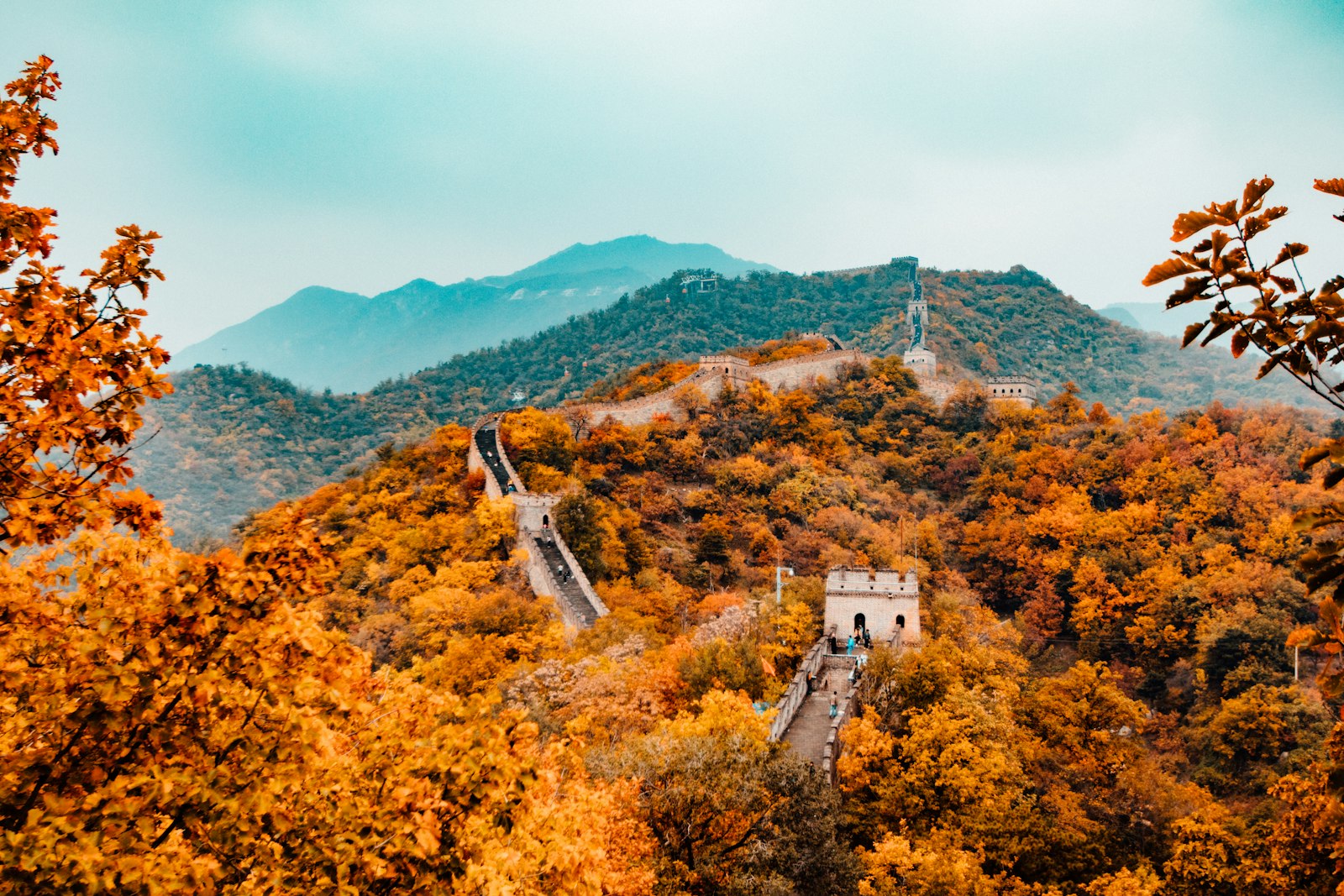
1. Jinshanling Great Wall — The Wall That Actually Looks Like the Wall
The first time I went to Jinshanling, I made the classic mistake of going to Badaling because it was close to Beijing. I spent two hours being shoved along a restored wall that felt more like a shopping mall than a historical site. The second time, a Chinese friend dragged me to Jinshanling, two and a half hours northeast of the city, and I understood what I’d been missing.
Jinshanling is unrestored in the best possible way. The brick is crumbling, the watchtowers are hollow, and the wall snakes over ridgelines that look exactly like the postcards you’ve seen. On a clear morning, you can see twenty kilometers of wall stretching toward the horizon. On a misty morning, it disappears into clouds that look like they’re being pulled through the crenellations.
The walk from the east entrance to the west takes about three hours at a photographer’s pace, which means stopping every fifty meters to swear at the light. The wall is steep in places, and the steps are uneven, so wear real shoes, not fashion sneakers.
- 馃搷 Location: Luanping County, Chengde, about 130 km northeast of Beijing
- 馃帿 Entry fee: $15 (CNY 110) for the scenic area, plus $10 (CNY 70) for the shuttle bus if you don’t want to walk the 3 km from the parking lot
- 馃晲 Opening hours: 6:00 AM to 6:00 PM, year-round. The gate technically opens at 6, but the ticket office opens at 5:30 during peak season
- 馃殕 How to get there: Take the Beijing–Chengde high-speed train from Beijing Chaoyang Station to Gubeikou Station (about 40 minutes, $12/CNY 88). From Gubeikou, it’s a 15-minute taxi ride to the east entrance. Alternatively, book a private car from Beijing for $80–100 (CNY 580–730) round trip, which is what I recommend if you want to catch sunrise
- 鈴?When to visit: Sunrise in April or October, when the air is clearest. Weekdays only. On weekends, Beijing day-trippers arrive around 9 AM and the wall turns into a conga line
- 馃挕 Insider tips: Bring your own water and snacks because the only shop is at the entrance. The west section is less crowded and has better angles for the wall curving away from you. If you want the classic shot of the wall disappearing into the distance, walk about 40 minutes west from the east entrance and look back. Also, the cable car only runs during peak season, so check before you rely on it
I met a retired soldier named Mr. Wang at the ticket office who told me he’d guarded this section of wall in the 1980s. He now works as a guide and knows every watchtower by number. He pointed out the one where the wall makes a perfect S-curve and said, “That’s the one you want.”
2. Zhangjiajie National Forest Park — The Mountains That Inspired Avatar
I’ll be honest. I rolled my eyes when I first heard that Zhangjiajie was the inspiration for the floating mountains in Avatar. It sounded like a tourism marketing gimmick. Then I stood at the top of Yuanjiajie at 7 AM with fog rolling through the sandstone pillars, and I understood completely. The marketing was unnecessary. The place is genuinely otherworldly.
The park is enormous, and most visitors make the mistake of trying to see everything in one day. They end up on shuttle buses for four hours and see nothing but the inside of a queue. The smarter approach is to pick two or three areas and walk between them. The Yuanjiajie area has the most iconic pillars. The Tianzi Mountain area has the best views over the sea of peaks. The Golden Whip Stream is a flat, easy walk along a river that’s perfect for when your legs need a break.
The light changes constantly here because of the humidity. One minute the pillars are sharp against blue sky, the next they’re ghostly silhouettes in fog. This is not a place to pack your camera away. The best shots often come in the twenty minutes after a rain shower.
- 馃搷 Location: Wulingyuan District, Zhangjiajie City, Hunan Province
- 馃帿 Entry fee: $50 (CNY 365) for a four-day pass that includes the shuttle buses. The Bailong Elevator, which takes you up the cliff face, costs an extra $12 (CNY 88) each way
- 馃晲 Opening hours: 7:00 AM to 6:00 PM, year-round. The park is open every day, but the shuttle buses stop running at 5:30 PM, so plan your last ride accordingly
- 馃殕 How to get there: Fly into Zhangjiajie Hehua International Airport from Beijing, Shanghai, or Guangzhou. From the airport, it’s a 40-minute taxi to the Wulingyuan entrance ($20/CNY 145). Or take the high-speed train from Changsha (about 3 hours, $25/CNY 180) to Zhangjiajie West Station, then a 30-minute taxi
- 鈴?When to visit: April to June for the most dramatic fog, September to November for clear skies and autumn color. Go on a weekday and enter through the less-used South Gate if you want to avoid the tour groups
- 馃挕 Insider tips: The glass bridge at Zhangjiajie Grand Canyon is a separate ticket ($30/CNY 220) and requires booking in advance during peak season. The cable car at Tianzi Mountain is worth the extra money for the views on the way up. Bring a rain cover for your camera because the mist here is real and it will find its way into every zipper. The monkeys near the Golden Whip Stream will steal your food, so keep your snacks in your bag, not in your hand
I watched a Chinese grandmother in a bright pink sun hat photograph the pillars with her phone, then turn to her husband and say something that made him laugh. She didn’t need a professional camera. She just needed to be there.
3. Yangshuo & the Li River — Karst Mountains Without the Crowds
Yangshuo is the place I send every friend who visits China and says they want to see “the China from the paintings.” The karst peaks rise out of flat farmland like something from a brush painting, and the Li River curves through them in a way that makes you want to cry or write bad poetry, depending on your personality.
The town of Yangshuo itself is touristy, with the usual shops selling the same scarves and tea sets you’ll find everywhere. But the countryside around it is where the magic lives. Rent a bicycle or an e-bike and ride the back roads between the villages. You’ll pass rice paddies, water buffalo, and farmers who will wave at you like you’re the first foreigner they’ve seen this week, which you might be.
The classic photo spot is the view of the Li River from the top of Xianggong Mountain, where the river makes a dramatic S-curve through the peaks. It’s a 20-minute hike up stone steps, and the view is worth every one of them. The other essential shot is the reflection of the peaks in the rice paddies at sunset, when the water turns the mountains upside down.
- 馃搷 Location: Yangshuo County, Guilin Prefecture, Guangxi Province
- 馃帿 Entry fee: Free to explore the countryside. Xianggong Mountain costs $5 (CNY 35). The Li River bamboo raft ride from Yangdi to Xingping costs $40 (CNY 290) per raft and takes about 90 minutes
- 馃晲 Opening hours: Xianggong Mountain is open from 6:00 AM to 6:00 PM. The village paths are open whenever you want to walk them
- 馃殕 How to get there: Fly to Guilin Liangjiang International Airport, then take the high-speed train from Guilin North Station to Yangshuo Station (about 30 minutes, $8/CNY 58). From Yangshuo Station, it’s a 20-minute taxi to the town center. Or take a direct bus from the airport to Yangshuo for $15 (CNY 110)
- 鈴?When to visit: March to May for the rice paddies at their greenest, September to November for clear skies. Sunrise at Xianggong Mountain is the essential shot, so plan to be there by 5:30 AM in summer
- 馃挕 Insider tips: The “20 yuan note view” is on the road between Yangshuo and Xingping, and the locals will try to charge you to use their viewing platform. Don’t pay. Walk 50 meters further and you’ll get the same shot for free. The e-bike rentals cost about $8 (CNY 58) for the day, and they’re the best way to cover ground. The bamboo rafts are motorized now, not poled, so the experience is noisier than you might expect, but the scenery makes up for it
I got hopelessly lost on the back roads one afternoon and ended up in a village where an old woman was drying chili peppers on a bamboo mat outside her house. She waved me over, gave me a cup of tea, and let me photograph her hands as she sorted the peppers. I still have that photo. It’s one of my favorites from all my years in China.
4. Huangshan — The Mountain That Made Chinese Painters Famous
Huangshan is where Chinese landscape painting was born, and you can feel it the moment you step onto the stone steps. The pine trees grow at impossible angles, the granite peaks are wrapped in cloud, and the whole place feels like it was designed by someone with a very good sense of composition.
The mountain is famous for its “sea of clouds,” which forms when moist air rises and condenses below the peaks, leaving the summits floating above a white ocean. It’s not guaranteed, but if you get it, you’ll understand why generations of painters and photographers have made the pilgrimage here.
The practical reality is that Huangshan is a big physical commitment. The main paths involve thousands of stone steps, and the cable cars only cover the lower sections. You’ll need to be reasonably fit, and you’ll need to pack light because you’ll be carrying everything on your back. The mountain has hotels on the summit, but they’re expensive and basic. The alternative is to do it as a very long day trip, which is what I recommend for most people.
- 馃搷 Location: Huangshan City, Anhui Province, about 300 km southwest of Shanghai
- 馃帿 Entry fee: $45 (CNY 330) for the park entrance, plus $20 (CNY 145) each way for the cable car. The summit hotels cost $80–150 (CNY 580–1,090) per night for a shared room
- 馃晲 Opening hours: The park is open from 6:00 AM to 5:00 PM. The cable cars run from 6:30 AM to 5:00 PM, but check the schedule because it changes seasonally
- 馃殕 How to get there: Take the high-speed train from Shanghai Hongqiao Station to Huangshan North Station (about 3 hours, $35/CNY 255). From the station, take the shuttle bus to the Tangkou entrance (about 1 hour, $5/CNY 35), then the cable car up
- 鈴?When to visit: October and November for the clearest skies and autumn color. April and May for the sea of clouds. Avoid Chinese national holidays at all costs, because the mountain becomes a human conveyor belt
- 馃挕 Insider tips: The “Welcoming Pine” is the most famous tree in China and the most photographed, but it’s also surrounded by a permanent crowd. Skip it and find a less famous pine 100 meters away. The sunrise viewing spots fill up by 4:30 AM, so if you want a good position, get there early. The weather on the summit is unpredictable, so bring a waterproof jacket even in summer. The food on the mountain is expensive and mediocre, so pack your own snacks
I watched a group of Chinese tourists in their sixties climb the steps faster than me, all of them carrying selfie sticks and laughing. One woman stopped at a viewpoint, looked at the sea of clouds, and said something to her friend that I didn’t catch. But she had tears in her eyes. I’ve never forgotten that.
5. Jiuzhaigou Valley — Water That Doesn’t Look Real
Jiuzhaigou is the place where I stopped trusting my camera’s color settings. The lakes here are so blue, so turquoise, so completely improbable that I spent the first hour convinced there was a filter on my lens. There isn’t. The water is colored by calcium carbonate and glacial silt, and it looks like someone poured dye into the valley.
The valley is a series of terraced lakes connected by waterfalls, surrounded by forest and snow-capped peaks. In autumn, the forest turns gold and red, and the combination of orange leaves reflected in blue water is the most photogenic thing I’ve seen in China. It’s also one of the most crowded places in China during October, so you need to plan carefully.
The park operates on a shuttle bus system. The buses take you to the top of the valley, and you walk down, stopping at the lakes that interest you. The most famous spots are Five Flower Lake, which looks like a tropical reef, and Nuorilang Waterfall, which is the widest waterfall in China.
- 馃搷 Location: Jiuzhaigou County, Aba Prefecture, Sichuan Province
- 馃帿 Entry fee: $55 (CNY 400) including the shuttle bus. This is non-negotiable; you can’t enter without paying for the bus
- 馃晲 Opening hours: 7:30 AM to 5:00 PM, year-round. The park is open every day, but the shuttle buses stop running at 4:30 PM
- 馃殕 How to get there: Fly into Jiuzhaigou Huanglong Airport from Chengdu or Xi’an, then take a 2-hour taxi to the park entrance ($30/CNY 220). Or take a bus from Chengdu’s Chadianzi Bus Station, which takes 8–10 hours and costs $20 (CNY 145). The bus is long but scenic
- 鈴?When to visit: Late September to mid-October for the autumn colors. The park is at its most crowded during the first two weeks of October, so if you can, go in late September or late October instead. Weekdays are significantly quieter
- 馃挕 Insider tips: The shuttle bus stops at every lake, but the best strategy is to ride to the top and walk down, which means you’re always facing the scenery. The boardwalks are well-maintained but slippery after rain. The altitude is about 2,000–3,000 meters, so take it easy if you’re not used to elevation. The park limits daily visitors to about 41,000, so book your ticket online in advance during peak season
I sat next to a young Chinese couple on the shuttle bus who were on their honeymoon. The wife kept gasping at every lake and grabbing her husband’s arm. He pretended to be annoyed, but I saw him photographing her photographing the water. That’s the thing about Jiuzhaigou. It makes everyone feel like a beginner again.
6. Chengdu & the Western Highlands — Pandas, Monasteries, and Roads That Go Up
Chengdu is the city I recommend to every first-time visitor who wants to see a different side of China. It’s laid-back in a way that Beijing and Shanghai aren’t. The tea houses are full of people playing mahjong, the food is the best in the country, and the giant pandas are a twenty-minute drive from the city center.
But the real photography magic happens when you leave Chengdu and head west into the highlands. The road from Chengdu to Kangding climbs from the Sichuan Basin into the Tibetan plateau, passing through dramatic river valleys, Tibetan villages, and grasslands that stretch to the horizon. This is where you’ll find the Kham Tibetan culture, with its monasteries, prayer flags, and nomad camps.
The drive is not for the faint of heart. The roads are narrow, the switchbacks are endless, and the altitude reaches 4,000 meters. But the light in the highlands is different from anywhere else in China. It’s sharper, clearer, and the colors are more saturated. I’ve gotten some of my best photos in China on this route, and I’ve also gotten some of my most stressful driving experiences.
- 馃搷 Location: Chengdu city center for pandas and food; the highlands start about 3 hours west of Chengdu
- 馃帿 Entry fee: Panda Base costs $8 (CNY 55). The highlands are free to explore, but you’ll pay for accommodation and food along the way
- 馃晲 Opening hours: Panda Base is open from 7:30 AM to 6:00 PM. The pandas are most active in the morning, so go early
- 馃殕 How to get there: Fly into Chengdu Tianfu International Airport. For the highlands, rent a car with a driver (about $100/CNY 730 per day) or join a small group tour. Public buses go to Kangding from Chengdu’s Xinnanmen Bus Station, but they’re slow and uncomfortable
- 鈴?When to visit: May to October for the highlands. June to August for the grasslands at their greenest. The pandas are active year-round, but the base is less crowded on weekdays
- 馃挕 Insider tips: The pandas are most active during feeding time, which is 8:30–10:00 AM. Get there by 7:30 to beat the crowds. In the highlands, the altitude can cause headaches, so bring medication and drink plenty of water. The Tibetan monasteries are active religious sites, so dress modestly and ask before photographing people. The food in Chengdu is spicy, and I mean genuinely spicy, so have a backup plan if you can’t handle heat
I stopped at a monastery in Tagong and met a young monk who spoke a little English. He showed me around the prayer hall and let me photograph the butter lamps. When I asked him about his life, he said, “I pray, I study, I look at the mountains.” He made it sound like the most complete life a person could live.
7. Xiapu Mudflats — The Place Where Light and Water Dance
Xiapu is not on most tourist itineraries, and that’s exactly why I love it. It’s a coastal county in Fujian Province where the mudflats, fishing nets, and wooden poles create abstract patterns that change with every tide. The locals have been photographing here for years, and it’s become a pilgrimage site for Chinese photographers, but almost no international tourists make the trip.
The key to Xiapu is timing. The best photos happen at dawn and dusk, when the low tide exposes the mudflats and the light comes in at a low angle. The fishing villages use bamboo poles to support their nets, and these poles create geometric patterns in the water that look like modern art. The reflections are extraordinary.
The most famous spots are Beidi, where the fishing nets are arranged in a semicircle, and Xiaohao, where the mudflats are crossed by a winding wooden bridge. You’ll need a local guide to find the exact locations, because they’re not well signposted and the tide times change daily.
- 馃搷 Location: Xiapu County, Ningde City, Fujian Province
- 馃帿 Entry fee: Free to explore the mudflats. Local guides charge about $50 (CNY 365) per day for transport and knowledge of the best spots
- 馃晲 Opening hours: The mudflats are open 24/7, but the light is only good at dawn and dusk
- 馃殕 How to get there: Take the high-speed train from Fuzhou South Station to Xiapu Station (about 40 minutes, $10/CNY 73). From the station, hire a taxi or arrange a guide to take you to the villages
- 鈴?When to visit: May to September for the best light and tide conditions. The ideal time is during the full moon or new moon, when the tides are at their extremes. Check the tide tables before you go
- 馃挕 Insider tips: Bring a telephoto lens because the best shots are often from a distance. The locals are used to photographers and will often pose for you, but ask first. The sunrise spots fill up early, so be there at least 30 minutes before dawn. The weather is unpredictable, so bring rain protection for your gear
I hired a local guide named Mr. Chen who had been photographing the mudflats for twenty years. He took me to a spot that wasn’t on any map, where the fishing nets formed a perfect spiral in the water. He looked at my camera and said, “You have a good eye. But you need to come back tomorrow. The light will be better.”
8. Kham Tibetan Plateau — Grasslands, Monasteries, and the Roof of the World
If you have the time and the nerve, the Kham Tibetan Plateau in western Sichuan is the most rewarding photography destination in China. It’s not easy to reach, and the altitude will test you, but the landscapes are unlike anything you’ll see elsewhere. Endless grasslands, snow-capped peaks, nomadic tents, and monasteries that seem to grow out of the hillsides.
The main route runs from Chengdu through Kangding, Tagong, and Daocheng, ending at the Yading Nature Reserve, which is often called the last Shangri-La. The drive takes several days, and the roads are rough in places, but every bend in the road reveals a new composition. I’ve stopped the car more times than I can count to photograph yaks crossing the road, prayer flags snapping in the wind, and herders in traditional dress.
The culture here is Tibetan, not Han Chinese, and the difference is visible in everything from the architecture to the food. The monasteries are active, and the monks are generally welcoming to photographers, though you should always ask before taking portraits.
- 馃搷 Location: Western Sichuan Province, roughly 400–700 km west of Chengdu
- 馃帿 Entry fee: Yading Nature Reserve costs $45 (CNY 330) including the shuttle bus. The rest of the plateau is free
- 馃晲 Opening hours: Yading is open from 7:00 AM to 5:00 PM. The monasteries have varying hours, but most are open from sunrise to sunset
- 馃殕 How to get there: Rent a car with a driver in Chengdu for $100–150 (CNY 730–1,090) per day. This is the safest and most flexible option. Public buses exist but are infrequent and uncomfortable. The drive from Chengdu to Kangding takes about 4 hours, and Kangding to Daocheng takes another 2 days
- 鈴?When to visit: June to August for the grasslands at their greenest and the wildflowers in bloom. September and October for autumn colors and clear skies. The plateau is cold even in summer, so bring warm layers
- 馃挕 Insider tips: The altitude at Yading reaches 4,700 meters, so acclimatize in Kangding or Daocheng for a day before attempting the high passes. Bring a portable oxygen canister if you’re worried about altitude sickness. The roads can be closed by landslides during the rainy season, so check conditions before you set out. The local food is Tibetan, which means lots of yak meat and butter tea, and it’s an acquired taste
I spent a night in a nomad camp near Tagong, sleeping in a tent with a family of five and their yaks. The grandmother didn’t speak a word of Chinese, let alone English, but she taught me how to make butter tea with her hands. In the morning, she pointed at the mountains and said one word I understood: “Beautiful.”
9. Yuanyang Rice Terraces — Stairways to Heaven
The Yuanyang rice terraces in southern Yunnan are the most photographed rice terraces in China, and for good reason. The Hani people have been carving these terraces into the mountainsides for over a thousand years, and the result is a landscape that looks like a giant staircase leading to the clouds.
The best time to photograph the terraces is during the winter months, when the fields are flooded and reflect the sky. At sunrise, the water turns pink and gold, and the terraces become a mirror for the entire valley. The most famous viewpoints are Duoyishu for sunrise and Laohuzui for sunset, both of which are crowded during the peak season.
The terraces are also home to traditional Hani villages, where the houses are made of mud brick and the roofs are thatched. The villagers are used to photographers, but they’re also warm and welcoming if you take the time to talk to them.
- 馃搷 Location: Yuanyang County, Honghe Prefecture, Yunnan Province
- 馃帿 Entry fee: $20 (CNY 145) for a multi-day pass that covers all the viewpoints
- 馃晲 Opening hours: The viewpoints are open from sunrise to sunset. The villages are open all day
- 馃殕 How to get there: Take the high-speed train from Kunming South Station to Yuanyang Station (about 3 hours, $20/CNY 145), then a 1-hour taxi to the terraces. Or take a bus from Kunming’s South Bus Station, which takes about 6 hours and costs $15 (CNY 110)
- 鈴?When to visit: December to March for the flooded terraces. The rice is harvested in September and October, when the terraces turn golden. Sunrise at Duoyishu is the essential shot, so plan to be there by 6:30 AM in winter
- 馃挕 Insider tips: The viewpoints have ticketed platforms, but you can often get better shots by walking a few hundred meters along the ridges. The weather is unpredictable, so bring rain gear and a waterproof camera cover. The village markets are great for photography, but ask before photographing people. The local specialty is a rice wine that’s stronger than it tastes, so be careful
I met a Hani woman named Amei who sold embroidery at the Laohuzui viewpoint. She showed me photos on her phone of the terraces in every season, and she was proud of them in a way that made me realize these terraces aren’t just a photo opportunity. They’re her family’s livelihood, her history, and her home.
10. The Gobi Desert Near Dunhuang — Sand Dunes, Stars, and the Sound of Silence
Dunhuang is the last stop on my list, and it’s the one that surprises people the most. It’s a small city on the edge of the Gobi Desert, and it’s home to the Mogao Caves, a UNESCO World Heritage site with a thousand years of Buddhist art. But for photographers, the real draw is the sand dunes at Mingsha Mountain, which rise to 250 meters and create a landscape that feels more like Mars than Earth.
The dunes are best photographed at sunset, when the light turns the sand a deep orange and the shadows create dramatic curves. The Crescent Lake, a spring that has survived in the middle of the dunes for thousands of years, is the iconic shot. And at night, the dunes offer some of the darkest skies in China, perfect for astrophotography.
The Mogao Caves are a separate experience. The paintings inside are extraordinary, but photography is not allowed, and the tours are tightly controlled. Still, the caves are worth the visit for the history alone.
- 馃搷 Location: Dunhuang City, Jiuquan Prefecture, Gansu Province
- 馃帿 Entry fee: Mingsha Mountain and Crescent Lake cost $30 (CNY 220). The Mogao Caves cost $35 (CNY 255) and must be booked in advance
- 馃晲 Opening hours: Mingsha Mountain is open from 6:00 AM to 9:00 PM in summer, 7:00 AM to 7:00 PM in winter. The Mogao Caves are open from 8:00 AM to 6:00 PM, with the last tour starting at 4:00 PM
- 馃殕 How to get there: Fly into Dunhuang Mogao International Airport from Beijing, Xi’an, or Lanzhou. From the airport, it’s a 20-minute taxi to the dunes and a 30-minute taxi to the Mogao Caves
- 鈴?When to visit: April to October for the best weather. May and September are ideal because the temperatures are moderate. The dunes are at their most photogenic at sunset, and the stars are best in the hours after midnight
- 馃挕 Insider tips: The camel rides at the dunes are a tourist experience, but they’re also a great way to get into the desert for photos. Negotiate the price before you get on. The sand gets into everything, so bring a dust-proof bag for your camera. The Mogao Caves have a strict no-photography policy, and the guards are serious about it. The night sky is incredible, but the desert gets cold after dark, so bring warm clothes
I walked to the top of the dunes alone one evening and sat there as the sun went down. The only sound was the wind and the distant bells of the camel caravans. For a moment, I understood why the Silk Road travelers who passed through here must have felt like they were at the edge of the world.
FAQ summary
For a first-time photography trip to China, the essential facts are these: most Western passport holders can enter visa-free for up to 30 days under the 2026 policy, but you must set up Alipay and a VPN before you arrive. The best season for photography is spring (April–May) or autumn (September–November), when the light is clear and the temperatures are moderate. A 14–18 day trip covering the Great Wall, Zhangjiajie, Yangshuo, and one western destination will cost $2,500–$4,000 (CNY 18,000–29,000) per person including internal transport, mid-range hotels, and entry fees. High-speed rail is the best way to travel between major cities, and domestic flights are needed for remote destinations like Zhangjiajie and Dunhuang.
FAQ
Q: Do I need a visa to visit China for a photography trip in 2026? A: Most Western passport holders can enter China visa-free for up to 30 days under the current policy, which has been extended through 2026. Check the latest visa-free transit rules before you book, and make sure your passport has at least six months of validity remaining.
Q: How much does a China photography trip cost? A: A 14–18 day trip will cost $2,500–$4,000 (CNY 18,000–29,000) per person, including internal flights or trains, mid-range hotels, entry fees, and food. Budget an extra $500–800 (CNY 3,650–5,800) for a private driver in western regions like
Topics
More guides you may like
Top 10 Bridges in China
China's bridges are engineering marvels spanning mountains, rivers, and seas. Here are 10 of the most spectacular, from ancient stone to modern steel.
8 min read

Top 10 Buddhist Sites in China
From the Leshan Giant Buddha to the Dunhuang Caves, these 10 Buddhist sites represent 2,000 years of China's spiritual heritage.
9 min read
Top 10 Day Trips from Beijing You Shouldn't Miss
Beijing is packed with history, but some of China's best experiences are just a few hours away. Here are 10 day trips that will transform your visit.
9 min read
Top 10 Hidden Gems in China Off the Beaten Path
Beyond the Great Wall and Terracotta Warriors, China has incredible hidden destinations few tourists ever reach. Here are 10 underrated gems worth the detour.
9 min read
Top 10 Markets and Shopping Streets in China
From Shanghai's Bund to Beijing's Silk Street - 10 markets where foreigners can haggle, explore, and bring home authentic Chinese goods.
9 min read
Top 10 Museums in China You Shouldn't Miss
China's museums span 5,000 years of civilization. These 10 - from the Palace Museum to Xi'an's terracotta gallery - are unmissable for culture lovers.
9 min read