
Chengdu Spicy Food Guide
The cab driver looked at me in the rearview mirror and laughed. Not a polite chuckle, but a genuine, head-back laugh that shook his shoulders.
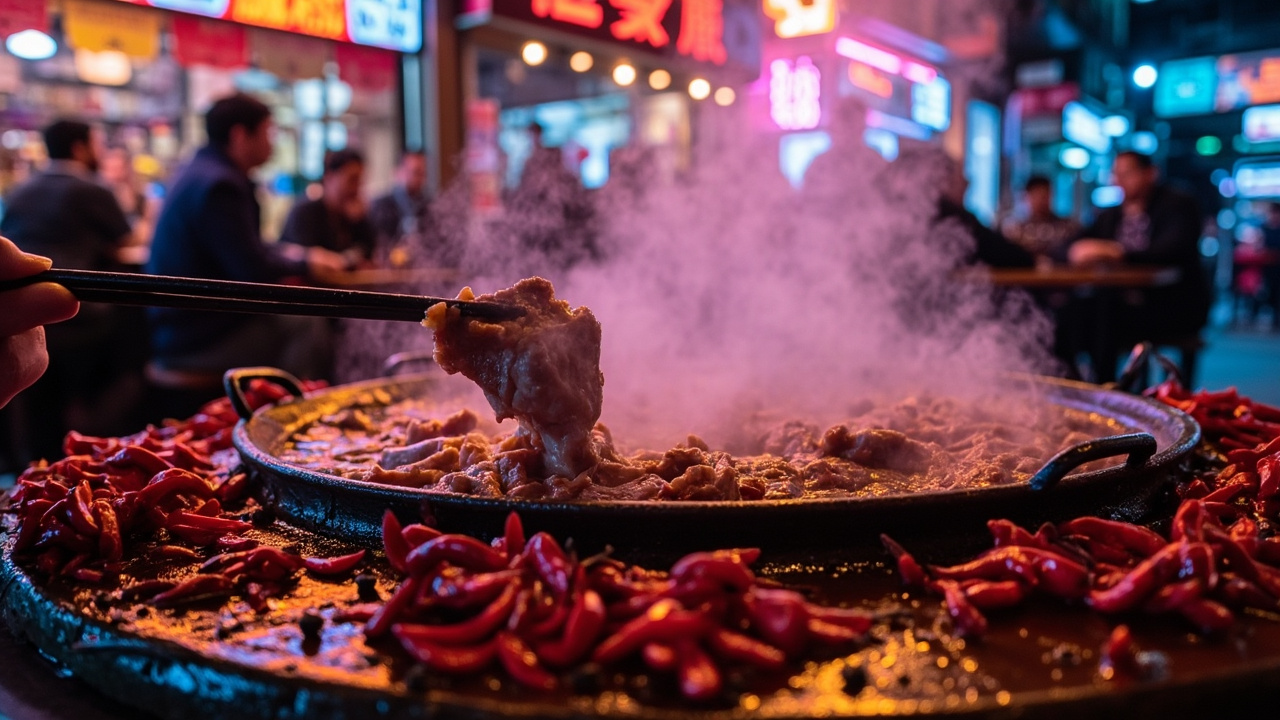
The cab driver looked at me in the rearview mirror and laughed. Not a polite chuckle, but a genuine, head-back laugh that shook his shoulders. I had just told him, in my best broken Mandarin, that I wanted to go to a restaurant that served “not spicy” food. He said something back that I didn’t catch, then pointed at a billboard of a steaming pot covered in dried red chilies. “In Chengdu,” he said, switching to slow English, “that is like asking for a beer with no alcohol.” He wasn’t wrong. I spent my first 48 hours in this city crying into bowls of numbingly spicy noodles, convinced my taste buds had filed for permanent resignation. But somewhere between the third and fourth day, something clicked. The heat stopped being a wall and became a doorway. This guide is everything I wish someone had told me before that first cab ride.
Quick answer
Chengdu’s food scene is built on mala (numbing-and-spicy) flavor, but you control the heat level at most restaurants, and plenty of dishes aren’t spicy at all. Budget $10–25 (¥70–180) per person for a proper meal, and note that the city is currently covered by China’s 240-hour visa-free transit policy for many nationalities, making a food-focused stopover easier than ever. The best strategy is simple: go with a local, point at what others are eating, and always order a side of dan dan noodles.
The Short Version
If you only have 90 seconds: eat at Mingting Restaurant for the mapo tofu, get the dan dan noodles from a hole-in-the-wall on a side street, and don’t skip the chuanchuan (skewers) experience even if you’re scared of the oil. Learn to say “bu la” (not spicy) and “wei la” (mildly spicy) before you arrive. Carry cash as backup even though everyone uses WeChat Pay. And whatever you do, don’t ask for a fork at a hotpot place. You’ll get one, but the look of disappointment on your server’s face will haunt you.
How I Picked These
I’ve lived in Beijing for seven years and have eaten my way through Chengdu on eleven separate visits, the most recent being a three-week research trip in late 2025. I don’t trust listicles written by people who spent 48 hours in the city and called it research. Instead, I ate with local friends, asked taxi drivers where they’d take their mothers, and once followed a delivery rider for three blocks because the smell coming from his cargo box was that good. I also cross-checked my favorites against what Chinese food bloggers and Chengdu residents actually recommend, not what’s trending on international Instagram. Every place on this list I’ve visited at least twice, and several I’ve visited five or more times.
Comparison Table
| Rank | Place | Best For | Approx Cost (USD) | Time Needed | When to Go |
|---|---|---|---|---|---|
| 1 | Mingting Restaurant | Classic mapo tofu | $8–15 (¥55–105) | 1 hour | Lunch, weekdays |
| 2 | Long Chao Shou | Chao shou (wontons) | $5–10 (¥35–70) | 45 min | Anytime |
| 3 | Chen Mapo Tofu | The original mapo tofu | $10–18 (¥70–125) | 1 hour | Early dinner |
| 4 | Shu Jiu Xiang Hotpot | Traditional hotpot | $15–30 (¥105–210) | 2 hours | Dinner, weekday |
| 5 | Hei Zhu Guan | Dan dan noodles | $3–6 (¥20–42) | 30 min | Late morning |
| 6 | Jinsha Site Museum Cafe | Rest stop with history | $5–8 (¥35–55) | 30 min | Afternoon |
| 7 | Yulin Chuanchuan | Street skewers | $10–20 (¥70–140) | 1.5 hours | Evening |
| 8 | Renhe Douhua | Douhua (silken tofu) | $4–8 (¥28–55) | 45 min | Breakfast |
| 9 | Wenshu Monastery Vegetarian | Temple food | $6–12 (¥42–85) | 1 hour | Lunch |
| 10 | Chengdu Grand Market | Street food crawl | $5–15 (¥35–105) | 2–3 hours | Morning |
Mingting Restaurant — Where the Mapo Tofu Changed My Life
I remember the exact moment. The waiter set down a clay bowl of mapo tofu that looked innocent enough — soft white cubes nestled in a red oil slick, scattered with ground pork and fresh scallions. I took a spoonful, expecting the gentle warmth of the tofu to carry me through. Instead, my mouth erupted. The Sichuan peppercorns hit first with that strange, electric numbness that makes your lips feel like they’ve fallen asleep. Then the chilies arrived, not as a punch but as a slow, building wave that made me reach for my tea, then my water, then fan my mouth with my hand like a cartoon character. And then, bizarrely, I took another bite. And another. By the time I finished, I was sweating, my nose was running, and I had never been happier.
Mingting isn’t fancy. It’s a fluorescent-lit, no-nonsense restaurant in the Wuhou district that’s been serving the same dishes for decades. The menu is laminated, the chairs are plastic, and the service is brisk to the point of brusque. But the food is honest, and the mapo tofu here is the version I measure all others against. The key is the ratio of numbing to spicy — it’s balanced in a way that lets the flavor of the fermented bean paste come through rather than just overwhelming you with heat.
📍 Location: Wuhou District, near the Wuhou Shrine 🎫 Entry fee: No entry fee; dishes $3–8 (¥20–55) each 🕒 Opening hours: 11:00 AM – 9:30 PM daily 🚇 How to get there: Take Metro Line 3 to Gaoshengqiao Station, Exit D, walk 10 minutes south on Wuhouci Street. The restaurant is on the east side of the street with a red sign. 📅 When to visit: Weekday lunches are quieter. Weekend evenings mean a 20-minute wait. 💡 Insider tips: Order the mapo tofu with “less numbing” (ma la jian ban) if you’re new to Sichuan peppercorns. The kongxin cai (water spinach with garlic) is the perfect cooling counterpoint. Don’t skip the hongyou chaoshou (chili-oil wontons) even though you came for the tofu. Ask for a bottle of local suanmeitang (sour plum drink) — it cuts through the oil better than water. And whatever you do, don’t ask for “not spicy” here. The chef takes it personally.
I once brought a friend from London who claimed she “couldn’t handle spice.” She ate three bowls of rice with the mapo tofu sauce alone and asked for the recipe on the way out. The owner, a grandmotherly woman named Auntie Chen, wrote it down on a napkin in Chinese characters that my friend still can’t read.
Long Chao Shou — The Wonton Place That Doesn’t Need to Try
Some restaurants try too hard. They have themed decor, costumed servers, and menus the size of a phone book. Long Chao Shou is not one of those places. It’s a small, unpretentious shop in the city center that has been folding wontons the same way for over seventy years. The windows are steamed up, the floor is slightly sticky, and the only decoration is a faded calligraphy scroll that translates roughly to “eat well, live simply.”
The chao shou here are smaller than the wontons you’d find in Shanghai or Guangdong, and the wrapper is thinner, almost translucent. You can order them in a clear chicken broth, which is what I’d recommend for your first visit, or swimming in a dark, glossy chili oil that stains your lips red for hours. The filling is simple — pork and ginger — but the balance is perfect. I’ve eaten these wontons at 9 AM, 3 PM, and 11 PM, and they’ve never disappointed.
📍 Location: Qingyang District, near Tianfu Square 🎫 Entry fee: No entry fee; wontons $2–4 (¥14–28) per bowl 🕒 Opening hours: 7:30 AM – 8:30 PM daily 🚇 How to get there: Take Metro Line 1 or 2 to Tianfu Square Station, Exit C, walk 5 minutes north on Zongfu Road. Look for the line of people spilling onto the sidewalk. 📅 When to visit: Go early — by 11 AM the queue is out the door. Late afternoon is also manageable. 💡 Insider tips: Order the “mixed” option (hun tang) to get both broth and chili-oil wontons in one bowl. The hongyou (chili oil) version is the local favorite, but the broth version lets you actually taste the pork. Add a splash of black vinegar to the chili-oil version — it brightens the whole thing. The lai tang yuan (sweet rice balls in fermented rice soup) is a great dessert to finish with. If you’re nervous about spice, start with the broth version and graduate.
I watched an elderly couple at the next table share one bowl of wontons and two spoons, eating in silence, comfortable in a way that made me miss my grandparents.
Chen Mapo Tofu — The Original, Still Standing
Here’s a piece of trivia that will make you sound impressive at dinner parties: mapo tofu was invented at this very location in the 1860s by a woman named Chen, whose face was pockmarked (ma means pockmarked in Sichuan dialect). The restaurant has moved a few times since then, but the recipe hasn’t changed much. The current location is a large, multi-story affair that feels more like a banquet hall than the humble eatery it once was, but the kitchen still takes its craft seriously.
The mapo tofu here is the benchmark. It arrives bubbling in a clay pot, the oil still sizzling, the ground beef (not pork, which is unusual) adding a textural contrast to the silken tofu. The numbing sensation is more pronounced here than at Mingting — this is the real deal, not a tourist-friendly version. If you’re new to Sichuan food, I’d suggest starting at Mingting and working your way up to this.
📍 Location: Wuhou District, on Kefa Street 🎫 Entry fee: No entry fee; mapo tofu $6 (¥42), other dishes $4–10 (¥28–70) 🕒 Opening hours: 11:00 AM – 9:00 PM daily 🚇 How to get there: Take Metro Line 3 to Moziqiao Station, Exit B, walk 8 minutes east. The restaurant has a large, ornate entrance that’s hard to miss. 📅 When to visit: Arrive before 11:30 AM for lunch or before 6 PM for dinner to avoid the worst of the queue. 💡 Insider tips: The menu has English translations, which is rare for this type of restaurant. Order the mapo tofu with “extra numbing” (jia ma) if you’re feeling brave. The gongbao jiding (kung pao chicken) here is also excellent and less spicy than the tofu. Don’t be fooled by the “small” portion size — it’s plenty for one person with rice. The restaurant has a second floor with private rooms, but the main dining hall is where the atmosphere is.
I made the mistake of ordering three “small” dishes here on my first visit. The waiter looked at me, looked at the menu, and said something to his colleague that I’m fairly certain was a joke at my expense. I ate leftovers for two days.
Shu Jiu Xiang Hotpot — The One That Made Me Sweat Through My Shirt
Hotpot in Chengdu is not a meal. It’s an event. It’s a social ritual that involves a bubbling pot of chili-laced broth in the center of the table, surrounded by plates of raw ingredients — thinly sliced beef, lotus root, enoki mushrooms, pig brain (if you’re brave), and dozens of others — that you cook yourself. The atmosphere is loud, chaotic, and smoky. By the end, your clothes smell like the broth, and you’ll need to wash your hair twice to get the scent out.
Shu Jiu Xiang is one of the most famous hotpot chains in Chengdu, and for good reason. The broth is deep, complex, and properly spicy — this isn’t the watered-down version you’ll find in Beijing or Shanghai. The key is the gan die (dry dipping powder), a mixture of crushed peanuts, Sichuan peppercorns, and salt that you use to season the cooked ingredients. I watched a local woman dip a piece of beef into her gan die, then into the broth, then back into the gan die before eating it. I copied her. I understood.
📍 Location: Multiple branches; the original is on Yulin South Road in the Wuhou District 🎫 Entry fee: No entry fee; expect to spend $15–30 (¥105–210) per person 🕒 Opening hours: 11:00 AM – 2:00 AM daily 🚇 How to get there: Take Metro Line 1 to Nijiaqiao Station, Exit A, walk 10 minutes south on Yulin South Road. The original branch has a large red sign with gold characters. 📅 When to visit: Weekday dinners are manageable. Weekend evenings can mean 1–2 hour waits, so arrive before 6 PM or after 9 PM. 💡 Insider tips: Order the yuanyang (half-spicy, half-clear) broth if you’re nervous. The clear side is perfect for cooking vegetables and tofu, and you can gradually work your way to the spicy side. Huanghou (cow stomach) is a local favorite — it only needs 10 seconds in the broth. The suanmeitang (sour plum drink) is essential; it cuts through the spice better than any beer. Ask for extra gan die — the standard portion isn’t enough. And don’t wear anything you care about; the smell will cling to you for days.
I once spent three hours at Shu Jiu Xiang with a group of local friends, and by the end, I couldn’t feel my lips. They found this hilarious. I found it transformative.
Hei Zhu Guan — The Dan Dan Noodle Shop Hidden in an Alley
Dan dan noodles are one of Sichuan’s most famous exports, but most versions you’ll find outside China are pale imitations. The real thing is a small bowl of noodles tossed in a sauce made from sesame paste, chili oil, Sichuan peppercorns, preserved vegetables, and ground pork. It’s served dry, not in broth, and it’s meant to be eaten quickly, while the sauce is still clinging to the noodles.
Hei Zhu Guan is not easy to find. It’s tucked away in a narrow alley in the Qingyang District, with no English signage and a menu that’s entirely in Chinese. The shop itself is tiny — maybe six tables — and the owner, a man in his sixties named Mr. Wang, has been making the same noodles for thirty years. He doesn’t advertise. He doesn’t need to. The line of locals stretching down the alley is his marketing.
📍 Location: Qingyang District, inside a small alley off Kuanzhai Alley 🎫 Entry fee: No entry fee; dan dan noodles $2.50 (¥18) per bowl 🕒 Opening hours: 10:00 AM – 3:00 PM, closed Mondays 🚇 How to get there: Take Metro Line 4 to Kuanzhai Alley Station, Exit B, walk 5 minutes to the alley entrance. The shop is about 50 meters in, on the left. Look for the steam rising from the window. 📅 When to visit: Go between 10:30 AM and 11:30 AM, before the lunch rush. The noodles sell out by early afternoon. 💡 Insider tips: There’s no English menu — just point at what others are eating or say “dan dan mian” and hope for the best. The noodles are served with a small bowl of clear soup on the side; it’s meant for sipping between bites, not for pouring over the noodles. If you want it less spicy, say “shao la” (less spicy) when ordering. The hongyou chaoshou here is also worth trying. Cash is preferred — Mr. Wang’s WeChat Pay is set up under his daughter’s account and it confuses him.
I asked Mr. Wang once, through a friend’s translation, why he never expanded. He shrugged and said, “If I make more noodles, I have less time to drink tea.” Fair point.
Jinsha Site Museum Cafe — A Rest Stop With 3,000 Years of History
This might seem like an odd inclusion in a food guide, but hear me out. The Jinsha Site Museum is one of Chengdu’s most impressive attractions — an archaeological site where a 3,000-year-old civilization was discovered in 2001. The museum itself is stunning, with a massive circular building that houses the excavation site. But what most tourists don’t know is that the museum’s cafe serves some of the best dan dan noodles in the city, at a fraction of the price you’d pay at a tourist restaurant.
The cafe is small and quiet, a welcome respite from the chaos of the city. The menu is limited — a few noodle dishes, some dumplings, and tea — but everything is made fresh and properly spiced. It’s not the best dan dan noodles in Chengdu (that honor goes to Hei Zhu Guan), but it’s the best you’ll find in a museum, and the setting is unbeatable. You can sit by the window, watch the bamboo sway in the courtyard, and eat noodles that were made with the same technique as the ones served in the city’s best street stalls.
📍 Location: Jinsha Site Museum, Qingyang District 🎫 Entry fee: Museum entry is $9 (¥65); cafe is accessible with museum ticket 🕒 Opening hours: Museum open 9:00 AM – 6:00 PM, closed Mondays; cafe closes at 5:30 PM 🚇 How to get there: Take Metro Line 7 to Jinsha Site Museum Station, Exit C, walk 5 minutes to the main entrance. The cafe is inside the museum complex, near the exit of the main exhibition hall. 📅 When to visit: Go in the early afternoon, after you’ve explored the museum. The cafe is quietest between 2 PM and 4 PM. 💡 Insider tips: The museum’s main attraction is the golden sunbird artifact — worth seeing even if you’re not a history buff. The cafe’s hongyou chaoshou is better than its dan dan noodles, in my opinion. If you’re visiting on a Monday, note that the museum is closed, so plan accordingly. The tea selection is limited but decent — the jasmine tea is a safe choice. Don’t skip the museum gift shop; it has some genuinely interesting books on Sichuan cuisine.
I spent two hours at this cafe on my last visit, reading a book about the history of Sichuan peppercorns and watching the rain fall on the museum’s courtyard. It was the most peaceful afternoon I had in Chengdu.
Yulin Chuanchuan — The Street Skewer Experience
If hotpot is a sit-down meal, chuanchuan is its street-food cousin. You pick raw ingredients from a refrigerated case — everything from beef and chicken to tofu skin and lotus root — all threaded onto bamboo skewers. You then cook them in a shared pot of bubbling broth at your table, just like hotpot, but the experience is more casual, more chaotic, and cheaper. At the end of the meal, the staff counts your skewers by weight and charges you accordingly.
Yulin Chuanchuan is not a single restaurant but a cluster of stalls and shops in the Yulin neighborhood, which is famous for its nightlife and street food. The area transforms after dark, with plastic tables and chairs spilling onto the sidewalks, steam rising from dozens of pots, and the sound of chopsticks clinking against bowls filling the air. It’s loud, it’s messy, and it’s absolutely wonderful.
📍 Location: Yulin neighborhood, Wuhou District 🎫 Entry fee: No entry fee; expect to spend $10–20 (¥70–140) per person 🕒 Opening hours: Most stalls open from 5 PM to midnight, some later on weekends 🚇 How to get there: Take Metro Line 1 to Nijiaqiao Station, Exit A, walk 5 minutes into the Yulin neighborhood. Follow your nose — the smell of chili oil and grilled meat will guide you. 📅 When to visit: Go between 7 PM and 9 PM for the full experience. The area is busiest on Friday and Saturday nights. 💡 Insider tips: The broth in the shared pot is spicy, but you can ask for a separate pot of clear broth if you’re not ready for the full experience. The beef skewers are the best value — look for the ones that are marinated in chili before you pick them up. Don’t eat the skewers directly from the pot; use your chopsticks to slide the food off the bamboo stick and onto your plate. The gan die (dry dipping powder) is essential — mix it with a spoonful of the broth to make a paste. And don’t be afraid to ask for help; the stall owners are used to confused foreigners.
I once ate at Yulin Chuanchuan with a group of friends and accidentally picked up a skewer of what I thought was beef. It was chicken heart. I ate it anyway. It was delicious.
Renhe Douhua — The Breakfast Place That Will Change Your Morning
Forget everything you know about tofu. The douhua (silken tofu) served at Renhe is nothing like the firm blocks you’ll find in Western supermarkets. It’s impossibly soft, almost custard-like, served in a bowl with a spoon. The toppings are where the magic happens: a spoonful of chili oil, some crushed peanuts, pickled vegetables, and a sprinkle of scallions. You mix it all together and eat it while it’s still warm.
Renhe Douhua is a tiny shop in the Qingyang District that opens early and sells out by noon. The owner, a woman named Sister Liu, has been making douhua for twenty years, and she’s perfected the texture — it’s silky without being watery, delicate without being insubstantial. The chili oil she uses is house-made, and it’s the perfect balance of spicy and fragrant.
📍 Location: Qingyang District, near the Wenshu Monastery 🎫 Entry fee: No entry fee; douhua $3–5 (¥20–35) per bowl 🕒 Opening hours: 7:00 AM – 12:00 PM, or until sold out 🚇 How to get there: Take Metro Line 1 to Wenshu Monastery Station, Exit B, walk 8 minutes south. The shop is on a small side street with a yellow sign. 📅 When to visit: Go early — by 10 AM, the popular toppings start running out. 💡 Insider tips: Order the “mixed” douhua (hun douhua) to get both the sweet and savory versions. The savory version is the classic — chili oil, peanuts, and pickled vegetables. The sweet version is topped with brown sugar syrup and is a completely different experience. If you’re not used to spicy food in the morning, start with the sweet version and graduate. The shop also serves you tiao (fried dough sticks) that are perfect for dipping in the douhua broth.
I watched a woman in her seventies eat her douhua with intense concentration, as if she were performing a sacred ritual. She caught me looking and smiled, then pointed at her bowl and gave me a thumbs up.
Wenshu Monastery Vegetarian — The Temple Food That Will Surprise You
Vegetarian food in China often gets a bad rap — bland, oily, and uninspired. But the vegetarian restaurant at Wenshu Monastery is different. It’s run by the monks themselves, and the food is prepared with the same care and attention as the temple’s incense and prayers. The menu is entirely vegetarian, but you’d never know it — the chefs have mastered the art of making tofu and mushrooms taste like meat, a tradition that dates back centuries in Chinese Buddhist cuisine.
The restaurant is located within the monastery complex, which itself is worth a visit. Wenshu Monastery is one of Chengdu’s most important Buddhist temples, with a history dating back over 1,300 years. The atmosphere is calm and contemplative, a world away from the chaos of the city streets. The restaurant serves set meals, which include a variety of dishes, rice, and soup.
📍 Location: Wenshu Monastery, Qingyang District 🎫 Entry fee: Monastery entry is free; set meals $6–12 (¥42–85) per person 🕒 Opening hours: 11:00 AM – 2:00 PM and 5:00 PM – 7:00 PM daily 🚇 How to get there: Take Metro Line 1 to Wenshu Monastery Station, Exit B, walk 5 minutes to the monastery entrance. The restaurant is inside the complex, near the main hall. 📅 When to visit: Go for lunch — the set meals are more substantial, and you’ll have time to explore the monastery afterward. 💡 Insider tips: The “vegetarian duck” (su ya) is a must-try — it’s made from tofu skin and tastes remarkably like the real thing. The set meals are generous; you probably won’t need to order extra dishes. The monastery grounds are beautiful in the morning, before the crowds arrive. If you’re not vegetarian, don’t worry — you won’t miss the meat. The tea house next to the restaurant is a great place to relax after your meal.
I sat next to a monk who was eating his lunch in silence, his chopsticks moving with practiced efficiency. He finished his meal, bowed slightly to the empty table, and walked out. I’ve never seen anyone eat with such intention.
Chengdu Grand Market — Where to Go When You Can’t Decide
Sometimes you don’t want a sit-down meal. Sometimes you want to wander, graze, and eat your way through a dozen different stalls, trying a little bit of everything. That’s where the Chengdu Grand Market comes in. It’s not a single market but a sprawling network of food stalls and vendors that operates in the mornings, mostly in the older neighborhoods of the city.
The market is where locals shop for their daily groceries, but it’s also where you’ll find some of the best street food in Chengdu. There are stalls selling jianbing (savory crepes), baozi (steamed buns), you tiao (fried dough sticks), and dozens of other breakfast items. There are also stalls selling fresh produce, dried chilies, and Sichuan peppercorns — perfect for taking home as souvenirs.
📍 Location: Various locations; the largest is near the Qingyang Palace in the Qingyang District 🎫 Entry fee: No entry fee; budget $5–15 (¥35–105) for a proper food crawl 🕒 Opening hours: Most stalls operate from 6:00 AM to 11:00 AM 🚇 How to get there: Take Metro Line 2 to Tonghuimen Station, Exit A, walk 10 minutes to the market area. Follow the crowds of elderly shoppers carrying plastic bags. 📅 When to visit: Go early — by 9 AM, the best stalls start running out of their signature items. 💡 Insider tips: Bring cash — many of the smaller stalls don’t accept WeChat Pay or Alipay. Try the san dapao (a type of glutinous rice cake) from the stall near the main entrance — it’s a Chengdu specialty that’s hard to find elsewhere. The dried chili vendors will let you taste before you buy; ask for the erjingtiao (a mild, fragrant chili variety) if you want something less spicy. Don’t buy the first Sichuan peppercorns you see — prices vary significantly between stalls. And if you see a long line at a stall, join it. The locals know what’s good.
I bought a bag of dried chilies from a vendor who insisted on teaching me how to distinguish between different varieties. She spoke no English, and I spoke no Mandarin, but we managed to communicate through a shared love of spicy food.
FAQ summary
Chengdu’s spicy food scene is accessible even for first-time visitors, with most restaurants offering milder options and plenty of non-spicy dishes available. Budget $10–25 (¥70–180) per person for most meals, and carry cash as backup since some smaller vendors don’t accept mobile payments. The city is covered by China’s 240-hour visa-free transit policy for many nationalities, making it easy to include in a broader China itinerary. Learn the phrases “bu la” (not spicy) and “shao la” (less spicy), and always order a cooling drink like suanmeitang (sour plum drink) to balance the heat.
FAQ
Q: Is all food in Chengdu spicy? A: No. While Sichuan cuisine is famous for its heat, many dishes are mild or completely non-spicy. Even at hotpot restaurants, you can order a half-spicy, half-clear broth (yuanyang). Dishes like dan dan noodles and mapo tofu can be ordered with reduced spice if you ask for “shao la” (less spicy).
Q: How do I pay for food in Chengdu? A: Most restaurants and larger food stalls accept WeChat Pay and Alipay, which you should set up before your trip. However, smaller street vendors and some traditional shops only accept cash, so carry ¥100–200 (about $15–30) in small bills as backup. Most mid-range and upscale restaurants also accept international credit cards, but don’t rely on this.
Q: Do I need to worry about food safety in Chengdu? A: Street food in Chengdu is generally safe, but use common sense. Look for stalls with high turnover — if locals are eating there, the food is fresh. Avoid anything that’s been sitting out for a long time, and stick to cooked foods rather than raw items. Drink bottled water, and be cautious with ice in drinks at street stalls.
Q: What’s the difference between Sichuan peppercorns and chili peppers? A: Sichuan peppercorns aren’t actually peppers — they’re the dried husks of a type of citrus fruit, and they produce a numbing, tingling sensation rather than heat. Chili peppers provide the actual spice. The combination of the two is called mala (numbing and spicy), and it’s the defining flavor of Sichuan cuisine.
Q: Do I need to book restaurants in advance in Chengdu? A: For most casual restaurants and street food stalls, no — you can just walk in. For popular hotpot places like Shu Jiu Xiang, especially on weekends, it’s wise to arrive early or book through the restaurant’s WeChat account. Some upscale restaurants may require a reservation, but the places in this guide are mostly casual.
Q: Is it rude to ask for less spicy food in Chengdu? A: Not at all. Locals have varying spice tolerances, and asking for “shao la” (less spicy) or “bu la” (not spicy) is completely normal. The only place where you might get a raised eyebrow is at a specialty restaurant like Chen Mapo Tofu, where the whole point is the spice. But even there, the staff would rather you enjoy your meal than suffer through it.
Q: What should I drink with spicy food in Chengdu? A: The local favorite is suanmeitang (sour plum drink), a sweet-tart beverage that cuts through the oil and cools your mouth. Beer also works well — the local brand is called Chengdu Beer. Milk and yogurt-based drinks are less common but effective if you can find them. Avoid drinking plain water with very spicy food; it can actually spread the capsaicin around your mouth.
The Honest Wrap-up
This list is for people who want to eat like a local, not like a tourist with a laminated menu and a fork. It’s for people who are willing to sweat a little, to point at things they can’t pronounce, and to trust that the grandmotherly woman running a hole-in-the-wall shop knows more about flavor than any Michelin-starred chef. If you’re looking for white-tablecloth dining and wine pairings, this isn’t the list for you. But if you want to understand why Chengdu was named a UNESCO City of Gastronomy, start here. One final piece of advice: don’t try to do all ten places in one trip. Your taste buds — and your digestive system — will thank you for spreading them out. And when you’re sitting at your first hotpot, sweating through your shirt and wondering why you ever doubted yourself, remember: the cab driver was right.
Topics
More guides you may like

Top 10 Bridges in China
China's bridges are engineering marvels spanning mountains, rivers, and seas. Here are 10 of the most spectacular, from ancient stone to modern steel.
8 min read

Top 10 Buddhist Sites in China
From the Leshan Giant Buddha to the Dunhuang Caves, these 10 Buddhist sites represent 2,000 years of China's spiritual heritage.
9 min read

Top 10 Day Trips from Beijing You Shouldn't Miss
Beijing is packed with history, but some of China's best experiences are just a few hours away. Here are 10 day trips that will transform your visit.
9 min read

Top 10 Hidden Gems in China Off the Beaten Path
Beyond the Great Wall and Terracotta Warriors, China has incredible hidden destinations few tourists ever reach. Here are 10 underrated gems worth the detour.
9 min read

Top 10 Markets and Shopping Streets in China
From Shanghai's Bund to Beijing's Silk Street - 10 markets where foreigners can haggle, explore, and bring home authentic Chinese goods.
9 min read

Top 10 Museums in China You Shouldn't Miss
China's museums span 5,000 years of civilization. These 10 - from the Palace Museum to Xi'an's terracotta gallery - are unmissable for culture lovers.
9 min read