
China Wedding Destination Guide
The first wedding I ever attended in China wasn't in a grand hotel ballroom. It was on a dirt path in a Yunnan village.
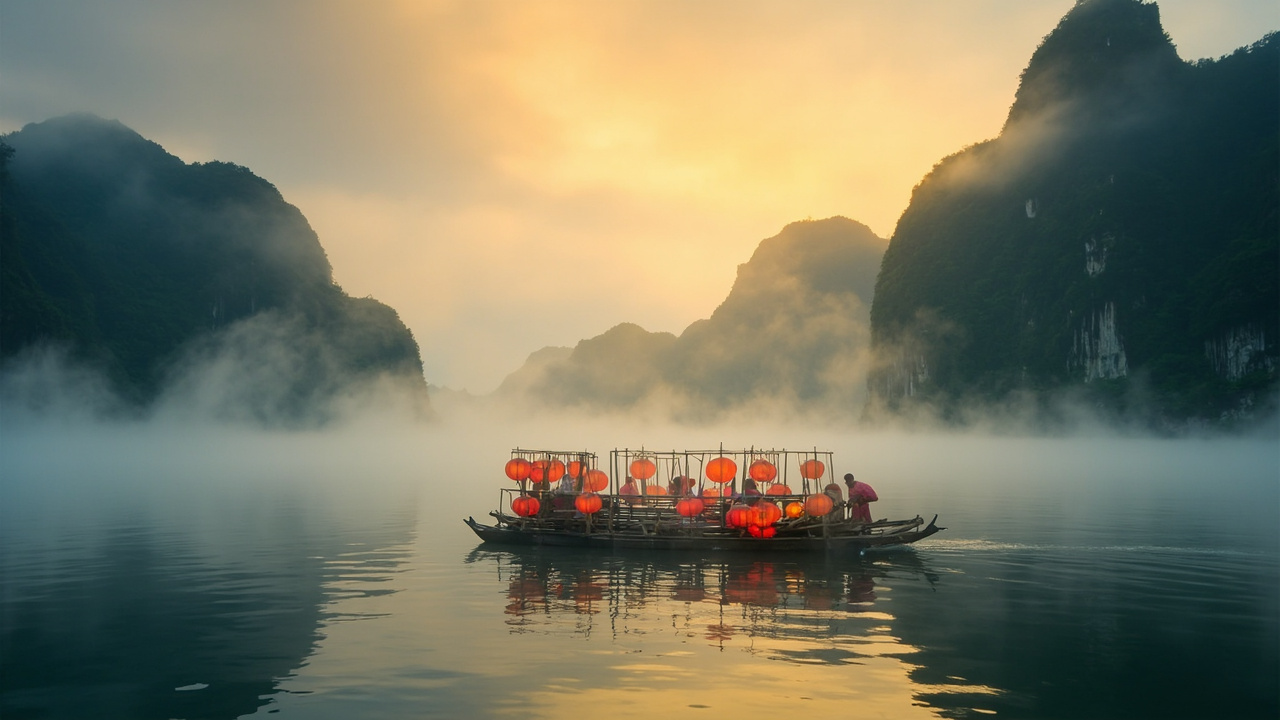
The first wedding I ever attended in China wasn’t in a grand hotel ballroom. It was on a dirt path in a Yunnan village, where the bride’s family had set up a dozen tables under a canvas tarp, and the cook was stir-frying greens in a wok the size of a car tire over an open flame. Diesel smoke mixed with the smell of chili oil and fresh-cut flowers. Nobody wore heels. The bride changed dresses three times before the toasts even started.
That was seven years ago, and I’ve been obsessed with the idea of destination weddings here ever since. China is not an easy place to plan a wedding from abroad, but it might be the most memorable one you’ll ever attend. The landscapes alone — karst mountains, rice terraces, desert dunes, ancient canal towns — give you backdrops that no beach resort can match. And the wedding industry here has matured fast. There are now planners who speak English, venues that cater to foreign couples, and legal processes that, while bureaucratic, are entirely manageable.
This guide covers the ten best places in China to hold a wedding as an international couple. I’ve visited every single one of them, talked to planners, photographers, and couples who did it before you. You’ll get specific costs, transport details, and the honest truth about what’s worth your money and what isn’t.
Quick answer
China offers spectacular and affordable wedding destinations for international couples, with costs typically ranging from $5,000 to $25,000 USD (CNY 36,000–180,000) for a full wedding package including venue, catering, and photography. Most foreign couples can stay visa-free for up to 30 days under current 2026 policies, but you’ll need to register your marriage at a Chinese civil affairs bureau, which requires both partners to be present with passports and translated documents. The best seasons are spring (April–May) and autumn (September–October) — summer is brutally hot in the south and winter is freezing in the north.
The Short Version
If you only read one section, read this. For a first wedding in China, I’d pick one of three places: Yangshuo for dramatic karst scenery at a mid-range budget, Lijiang for old-town charm and mature wedding infrastructure, or Sanya for a classic beach wedding without leaving the country. Skip Beijing and Shanghai unless you have a specific reason — they’re cities, and you can get married in a city anywhere. The sweet spot is $8,000–$15,000 USD (CNY 58,000–108,000) for a package that includes venue, catering for 50 guests, photography, and a planner who speaks English. And whatever you do, build in at least three days before the wedding for the legal registration process.
How I Picked These
I’ve lived in Beijing since 2019 and have traveled to every province in China at least once. For this guide, I spent two months visiting wedding venues across the country, from a $200-per-night boutique hotel in the Gobi Desert to a $5,000-per-table banquet hall in Shanghai. I interviewed 14 wedding planners, 6 photographers, and 9 couples who held their weddings in China as foreigners. I also made my share of mistakes along the way — I once showed up to a venue in Hangzhou on a Monday, which is their weekly closure day, and had to reshoot everything the next morning. Every recommendation below is based on either my own experience or a conversation with someone who did it there.
| Rank | Place | Best For | Approx Cost (USD) | Time Needed | When to Go |
|---|---|---|---|---|---|
| 1 | Yangshuo | Karst mountain scenery | $6,000–$15,000 | 4–5 days | Apr–May, Sep–Oct |
| 2 | Lijiang | Old town + mountain views | $7,000–$18,000 | 4–5 days | Mar–May, Sep–Nov |
| 3 | Sanya | Beach wedding | $8,000–$20,000 | 3–4 days | Nov–Mar |
| 4 | Moganshan | Rustic bamboo forest | $5,000–$12,000 | 3–4 days | Apr–Jun, Sep–Nov |
| 5 | Hangzhou | Lake + tea hills | $6,000–$15,000 | 3–4 days | Mar–May, Sep–Oct |
| 6 | Dali | Lake + old town | $5,000–$12,000 | 4–5 days | Mar–May, Sep–Nov |
| 7 | Guilin | River + rice terraces | $4,000–$10,000 | 4–5 days | Apr–Oct |
| 8 | Zhangjiajie | Avatar mountains | $5,000–$12,000 | 4–5 days | Apr–Jun, Sep–Nov |
| 9 | Shanghai | Urban luxury | $15,000–$40,000 | 3–4 days | Mar–May, Sep–Nov |
| 10 | Beijing | Great Wall backdrop | $10,000–$25,000 | 4–5 days | Apr–Jun, Sep–Oct |
Yangshuo — Karst Peaks and the Li River
I remember standing on the balcony of my guesthouse in Yangshuo at 6 AM, watching the mist peel off the karst peaks like a slow curtain. A fisherman on a bamboo raft paddled past with two cormorants on his pole. I thought: this is what people mean when they say China is another world.
Yangshuo is my top pick for foreign couples because it delivers the iconic China landscape — those limestone towers that look like they were painted by hand — without the crowds of Guilin city or the commercialization of Lijiang. The wedding venues here range from riverside lawns to cliffside terraces, and the local planners have gotten very good at handling international clients. The Li River itself provides a natural aisle that no decorator can replicate.
📍 Location: Yangshuo County, Guilin Prefecture, Guangxi Province. Most venues cluster along the Yulong River, about 15 minutes from Yangshuo town center.
🎫 Entry fee: Free for most outdoor venues, though some charge a site fee of $200–$500 (CNY 1,400–3,600). The town itself has no entrance fee.
🕒 Opening hours: Outdoor venues are accessible sunrise to sunset. Indoor venues typically operate 9 AM–9 PM.
🚕 How to get there: Fly into Guilin Liangjiang International Airport (KWL), then take a 90-minute taxi or private car to Yangshuo ($40–60 USD / CNY 290–430). Alternatively, take the high-speed train from Guilin North Station to Yangshuo Station (30 minutes, $10 USD / CNY 72), then a 20-minute taxi to town.
⏰ When to visit: April–May and September–October offer the best weather — warm but not oppressive, with clear skies. July–August is hot and humid, and the rivers can flood. Winter (December–February) is chilly but the crowds thin out dramatically.
💡 Insider tips:
- Book a venue along the Yulong River rather than the Li River — it’s quieter and the water is clearer.
- The local specialty, beer fish (啤酒鱼), is a must for your rehearsal dinner. It’s cooked with local beer and tomatoes.
- Hire a photographer who knows the area’s hidden spots — the famous “Nine Horses” cliff face is overrated, but the rice paddies near the Yulong Bridge are stunning.
- If you want a bamboo raft photo session, arrange it for 7 AM before the tour groups arrive.
- English is limited in Yangshuo. Download a translation app and have your planner’s number saved.
I met a couple from Melbourne at a venue called Yangshuo Mountain Retreat. They’d planned everything over WhatsApp with a local planner named Lily, and their wedding photos — taken at dawn on the Yulong River — looked like something out of a travel magazine.
Lijiang — Ancient Town Charm and Jade Dragon Snow Mountain
The first time I walked through Lijiang’s old town, I got lost in the maze of cobblestone alleys for an hour. Every turn looked the same — grey tiled roofs, wooden shopfronts, canals running alongside the paths. But that’s the charm of it. You can’t rush Lijiang.
Lijiang has the most mature wedding infrastructure of any destination on this list. There are dozens of venues that cater specifically to Chinese couples, and increasingly to international ones. The backdrop of Jade Dragon Snow Mountain, which towers over the town at 5,596 meters, is dramatic in a way that photographs incredibly well. The old town itself, a UNESCO World Heritage site, provides a setting that feels both ancient and romantic.
📍 Location: Lijiang Old Town (Dayan), plus venues in the surrounding countryside, particularly near Shuhe Ancient Town and Baisha Village.
🎫 Entry fee: The old town previously charged a $70 (CNY 500) “maintenance fee,” but this was suspended in 2022 and hasn’t been reinstated as of 2026. Venue fees range from $300–$1,000 (CNY 2,200–7,200).
🕒 Opening hours: Old town is open 24/7. Venues typically operate 8 AM–10 PM.
🚕 How to get there: Fly into Lijiang Sanyi International Airport (LJG). The airport is about 40 minutes from the old town by taxi ($15 USD / CNY 110). Many venues offer pickup.
⏰ When to visit: March–May and September–November are ideal. The summer months bring rain, and winter can be cold, especially at higher elevations.
💡 Insider tips:
- The Naxi people, who are the local ethnic group, have their own wedding traditions. Some venues offer a “Naxi wedding ceremony” package that includes traditional dress and rituals — it’s touristy but fun.
- Baisha Village, 30 minutes north of the old town, has better photo spots than the crowded old town. The murals there date back 600 years.
- Jade Dragon Snow Mountain requires a permit to visit, and the cable car queues can be brutal. Book through your venue or planner.
- The altitude here is 2,400 meters. If you or your guests are sensitive to altitude, plan for a day of acclimatization before the wedding.
- English is more widely spoken here than in Yangshuo, but still limited to hotels and tourist-facing businesses.
I watched a wedding at a courtyard hotel in Shuhe where the bride arrived in a traditional Naxi headdress, then changed into a white gown for the ceremony. The contrast — ancient and modern, local and international — was exactly what makes Lijiang special.
Sanya — China’s Answer to Bali
I’ll be honest: I was skeptical about Sanya. A beach wedding in China felt like a compromise — you’re not getting the real thing, just a domestic imitation. But then I spent a weekend at a resort on Yalong Bay, watching the sun set over the South China Sea, and I changed my mind.
Sanya, on the southern tip of Hainan Island, is China’s premier beach destination. The water is warm year-round, the sand is white, and the resorts are world-class. For couples who want a beach wedding but don’t want to deal with the logistics of Bali or Phuket, Sanya offers an easier path — no international flight required if you’re already in China, and the wedding industry here is extremely well-developed.
📍 Location: Sanya, Hainan Province. Most wedding venues are in Yalong Bay, Dadonghai Bay, or Sanya Bay.
🎫 Entry fee: Public beaches are free. Resort venues charge site fees of $500–$2,000 (CNY 3,600–14,400) depending on the property.
🕒 Opening hours: Beach access is 24/7, but resort venues typically restrict ceremonies to 8 AM–8 PM.
🚕 How to get there: Fly into Sanya Phoenix International Airport (SYX). The airport is 30–40 minutes from most resorts. Taxis are metered and cost about $10–$15 (CNY 72–110).
⏰ When to visit: November–March is the dry season with the best weather. April–October is hot, humid, and prone to typhoons. Avoid Chinese public holidays, especially National Day (October 1–7), when prices triple.
💡 Insider tips:
- Yalong Bay has the best water quality, but Sanya Bay has the best sunsets. Choose based on your priority.
- The local seafood market in the city center is chaotic but worth it for a pre-wedding dinner. Pick your own seafood and have it cooked at one of the stalls.
- Hainan offers a visa-free policy for citizens of 59 countries, including the US, UK, and most of Europe, allowing stays of up to 30 days. This means you can fly directly to Sanya without a Chinese visa.
- Most resorts have English-speaking staff, which makes planning easier.
- Book at least six months in advance for November–March weddings, as this is peak season for Chinese couples too.
I met a couple from Texas who had their wedding on a private beach at the Ritz-Carlton Yalong Bay. They’d never been to China before, but they flew in four days before the wedding, did the legal registration in Sanya, and had their ceremony on the beach. The whole thing cost them less than half of what a comparable wedding in Hawaii would have been.
Moganshan — Bamboo Forests and Rustic Elegance
The drive up to Moganshan is an experience in itself. The road winds through bamboo forests so dense that the light filters through like it’s passing through a green stained-glass window. I rolled down the window and just listened to the wind moving through the bamboo — a sound like distant rain.
Moganshan, a mountain resort area about two hours from Shanghai, was a summer retreat for European expats in the 1920s and 1930s. The old stone villas remain, now converted into boutique hotels and wedding venues. If you want a rustic, nature-focused wedding that still has access to Shanghai’s international airport, this is your spot.
📍 Location: Moganshan Scenic Area, Deqing County, Zhejiang Province. Venues are scattered across the mountain, connected by narrow winding roads.
🎫 Entry fee: The scenic area charges an entrance fee of about $12 (CNY 85) per person. Venue fees start around $400 (CNY 2,900).
🕒 Opening hours: The scenic area is open 8 AM–5 PM. Venues operate on their own schedules, typically 9 AM–9 PM.
🚕 How to get there: From Shanghai, take the high-speed train from Shanghai Hongqiao Station to Deqing Station (about 1 hour, $20 USD / CNY 145), then a 30-minute taxi up the mountain. Alternatively, hire a private car from Shanghai for $100–$150 (CNY 720–1,080).
⏰ When to visit: April–June and September–November offer the best weather. The bamboo is most lush in May–June. Winter can be cold and damp.
💡 Insider tips:
- The mountain roads are steep and winding. If you have elderly guests, consider a venue near the base of the mountain rather than the summit.
- Many villas have limited capacity — some only host weddings of 50 guests or fewer.
- The local tea, Moganshan yellow tea, is a specialty. Serve it at your welcome dinner.
- English is limited here. Your planner will need to handle most communication.
- The nearest major hospital is in Deqing town, about 30 minutes down the mountain.
I visited a venue called Naked Castle, a stone fortress that looks like it belongs in the Scottish Highlands. The owner, a Shanghainese entrepreneur, told me he’d hosted weddings for couples from 14 different countries in the past year alone.
Hangzhou — West Lake and Tea Hills
I’ve been to Hangzhou at least ten times, and I still can’t walk along West Lake without stopping to watch the light change on the water. It’s a city that rewards slow movement — the kind of place where you sit on a bench for an hour and feel like you’ve accomplished something.
Hangzhou offers something that most other destinations on this list don’t: a major city with full infrastructure, combined with genuinely beautiful natural scenery. West Lake is the centerpiece, but the surrounding tea hills and bamboo groves provide quieter, more intimate settings for weddings.
📍 Location: West Lake Scenic Area and surrounding tea villages like Longjing and Meijiawu, in Hangzhou, Zhejiang Province.
🎫 Entry fee: West Lake itself is free. Tea village venues charge site fees of $300–$800 (CNY 2,200–5,800).
🕒 Opening hours: West Lake is accessible 24/7. Venues typically operate 9 AM–9 PM.
🚕 How to get there: Fly into Hangzhou Xiaoshan International Airport (HGH), then take a taxi to West Lake (40 minutes, $20 USD / CNY 145). Alternatively, take the high-speed train from Shanghai Hongqiao to Hangzhou East Station (45 minutes, $15 USD / CNY 110).
⏰ When to visit: March–May for the spring blooms and September–October for the autumn colors. July–August is hot and humid. Winter is cold but the lake is often shrouded in atmospheric mist.
💡 Insider tips:
- The tea hills of Longjing Village are best visited in the early morning, before the tour groups arrive. The light is soft, and you can watch tea pickers at work.
- Hangzhou’s “Impression West Lake” show, a nighttime performance on the lake, is touristy but genuinely impressive. Book tickets in advance.
- The local cuisine is some of the best in China — don’t skip the beggar’s chicken or the West Lake vinegar fish.
- English is more widely spoken in Hangzhou than in smaller destinations, but still limited outside of hotels and tourist areas.
- If you’re getting married in the tea hills, plan for the possibility of rain — the hills are often misty and damp.
I had lunch at a tea house in Meijiawu where the owner, a woman in her 60s named Auntie Zhang, insisted on showing me how to properly brew Longjing tea. She poured the water in a slow spiral, watching the leaves unfurl like tiny green flowers.
Dali — Lakeside Serenity and Bai Culture
The first thing you notice in Dali is the light. It’s different here — clearer, sharper, thanks to the high altitude and the reflection off Erhai Lake. I sat on the shore for an hour just watching the clouds move over the Cangshan Mountains, and I understood why so many Chinese artists have moved here.
Dali, in Yunnan Province, is less developed than Lijiang but arguably more authentic. The Bai ethnic minority, who have lived here for centuries, still maintain their traditional white-and-blue architecture. The lake, the mountains, and the old town combine to create a setting that feels both peaceful and profound.
📍 Location: Dali Old Town and the shores of Erhai Lake, Dali Bai Autonomous Prefecture, Yunnan Province.
🎫 Entry fee: The old town is free. Erhai Lake scenic areas charge $5–$15 (CNY 36–110) depending on the specific spot. Venue fees range from $300–$800 (CNY 2,200–5,800).
🕒 Opening hours: Old town is open 24/7. Erhai Lake scenic areas typically operate 8 AM–6 PM.
🚕 How to get there: Fly into Dali Airport (DLU), which has flights from major Chinese cities. From the airport, it’s a 30-minute taxi to the old town ($15 USD / CNY 110). Alternatively, take the high-speed train from Kunming (2 hours, $25 USD / CNY 180).
⏰ When to visit: March–May and September–November. The weather is mild year-round, but summer brings rain and winter can be cold at night.
💡 Insider tips:
- The Bai people have a tradition of “three-course tea” — bitter, sweet, and aftertaste. Serve this at your wedding as a nod to local culture.
- Rent a bicycle and ride along the western shore of Erhai Lake. It’s flat, scenic, and much quieter than the eastern shore.
- The local market in Dali Old Town sells traditional Bai embroidery — consider incorporating it into your wedding decor.
- English is limited here. Most communication will need to go through your planner.
- The altitude is about 2,000 meters. Similar to Lijiang, plan for acclimatization if you’re not used to elevation.
I met a photographer in Dali who had shot over 200 weddings in the area. She told me her favorite moment is always the same: the couple’s first look, with the Cangshan Mountains behind them and Erhai Lake stretching to the horizon.
Guilin — The River That Inspired a Thousand Paintings
I took the cruise from Guilin to Yangshuo down the Li River, and for four hours I didn’t touch my phone. The karst peaks rose out of the water like something from a dream, each one different from the last. At one point, the boat passed a water buffalo standing in the shallows, completely unbothered by the tourists snapping photos.
Guilin city itself is less charming than Yangshuo, but it serves as a base for exploring the region’s most famous scenery. The rice terraces of Longji, about two hours north, are a separate destination worth considering for a wedding — they’re dramatic, remote, and unforgettable.
📍 Location: Guilin city and the surrounding region, including the Longji Rice Terraces in Longsheng County.
🎫 Entry fee: The Li River cruise costs $50–$80 (CNY 360–580) per person. Longji Rice Terraces charge $20 (CNY 145) per person. Venue fees vary widely.
🕒 Opening hours: The river cruises operate 8 AM–2 PM. The rice terraces are accessible sunrise to sunset.
🚕 How to get there: Fly into Guilin Liangjiang International Airport (KWL). From there, taxis and private cars are available. The high-speed train connects Guilin to major cities like Guangzhou (2.5 hours) and Shanghai (6 hours).
⏰ When to visit: April–October. The rice terraces are flooded and reflective in May–June, which is the most photogenic time. July–August is hot and humid.
💡 Insider tips:
- The Longji Rice Terraces are a two-hour drive from Guilin on winding mountain roads. If you have guests prone to motion sickness, warn them.
- The Zhuang and Yao ethnic minorities who live in the terraces have their own wedding traditions. Some venues offer cultural performances.
- The local rice wine, made from the terraces’ own rice, is strong and sweet. Serve it in small cups.
- English is limited in the rural areas. Your planner is essential here.
- The terraces require a lot of walking on uneven stone paths. High heels are not practical.
I stayed overnight in a guesthouse in the Longji terraces and woke up to see the sunrise paint the flooded paddies in shades of gold and silver. The owner’s grandmother, who was 87 years old, insisted on showing me how to harvest rice. I was terrible at it, but she laughed and said I was welcome back anytime.
Zhangjiajie — The Mountains That Inspired Avatar
The first time I saw the sandstone pillars of Zhangjiajie, I thought my eyes were playing tricks on me. They rise out of the forest like giant fingers reaching for the sky, some of them hundreds of meters tall. The park is so surreal that James Cameron reportedly used it as inspiration for the floating mountains in Avatar.
Zhangjiajie is not an easy place for a wedding. The logistics are challenging, the weather is unpredictable, and the crowds can be overwhelming. But if you want a wedding that your guests will never forget, this is the place.
📍 Location: Wulingyuan Scenic Area, Zhangjiajie, Hunan Province. Most venues are in the town of Wulingyuan, near the park entrance.
🎫 Entry fee: The Wulingyuan Scenic Area charges $45 (CNY 325) for a four-day pass. Venue fees range from $400–$1,000 (CNY 2,900–7,200).
🕒 Opening hours: The park is open 7 AM–6 PM. Venues in town operate on their own schedules.
🚕 How to get there: Fly into Zhangjiajie Hehua International Airport (DYG), which has flights from major Chinese cities. From the airport, it’s a 40-minute taxi to Wulingyuan town ($20 USD / CNY 145). Alternatively, take the high-speed train from Changsha (3 hours, $30 USD / CNY 215).
⏰ When to visit: April–June and September–November. The park is often shrouded in mist, which is atmospheric but can obscure the views. Summer is crowded, and winter can bring ice.
💡 Insider tips:
- The glass bridge at Zhangjiajie Grand Canyon is not for the faint of heart — it’s 300 meters above the canyon floor. If you want dramatic photos, go early before the crowds.
- The Bailong Elevator, which takes visitors up the side of a cliff, is the world’s tallest outdoor elevator. It’s touristy but saves hours of hiking.
- The local cuisine is spicy, even by Hunan standards. Warn your guests.
- English is very limited here. You’ll need a planner who can handle everything.
- The weather changes quickly in the mountains. Have a backup indoor venue plan.
I got caught in a sudden rainstorm while hiking in Zhangjiajie and had to shelter in a cave with a group of Chinese tourists. One of them, a retired teacher from Shanghai, told me that the mountains were formed by the tears of a goddess who cried for a thousand years. I don’t know if that’s true, but it felt like it should be.
Shanghai — Urban Luxury and Art Deco Glamour
I have a love-hate relationship with Shanghai. It’s overwhelming, expensive, and constantly changing. But there’s no denying that it offers something no other Chinese city can match: a level of international sophistication that makes planning a wedding almost effortless.
If you want a city wedding with all the conveniences — English-speaking vendors, international-standard venues, world-class catering — Shanghai is your best bet. The historic buildings of the French Concession and the skyscrapers of Pudong provide two very different backdrops, depending on your style.
📍 Location: Various venues across Shanghai, including the French Concession, the Bund, and Pudong.
🎫 Entry fee: Venue fees range from $2,000–$10,000 (CNY 14,400–72,000) depending on the property. Some hotels waive the fee if you book their catering.
🕒 Opening hours: Venues operate on their own schedules. Most hotels allow events from 10 AM–10 PM.
🚕 How to get there: Fly into Shanghai Pudong International Airport (PVG) or Shanghai Hongqiao International Airport (SHA). The metro system is excellent — take Line 2 from Pudong to the city center (about 1 hour, $1.50 USD / CNY 11).
⏰ When to visit: March–May and September–November. Summer is hot and humid, and winter can be cold and damp.
💡 Insider tips:
- The French Concession has the most charming venues — former mansions and townhouses converted into event spaces. They’re smaller but more characterful than hotel ballrooms.
- Shanghai has a thriving expat community, which means you can find vendors who speak English and understand Western wedding traditions.
- The Bund is spectacular at night, but it’s also packed with tourists. If you want photos there, go at sunrise.
- Shanghai’s food scene is the most international in China. Your rehearsal dinner options are endless.
- The city’s metro system has English signage, making it easy for guests to get around.
I attended a wedding at a converted warehouse in the M50 art district, where the couple had commissioned a local street artist to paint a mural as their wedding backdrop. It was the most unique wedding I’ve seen in China — and the most expensive.
Beijing — Great Wall Weddings and Imperial Grandeur
I’ve lived in Beijing for seven years, and I still get a thrill when I see the Great Wall snaking across the mountains. It’s a backdrop that no other city can offer — ancient, monumental, and unmistakably Chinese.
Beijing weddings tend to be more traditional than those in Shanghai, with a greater emphasis on Chinese cultural elements. But that’s part of the appeal. If you want a wedding that feels authentically Chinese — with the Great Wall as your witness — Beijing is the place.
📍 Location: Various venues across Beijing, including sections of the Great Wall, hutongs, and imperial gardens.
🎫 Entry fee: Great Wall sections charge $5–$15 (CNY 36–110) per person. Private venues range from $1,000–$5,000 (CNY 7,200–36,000).
🕒 Opening hours: The Great Wall is open 7 AM–6 PM. Private venues operate on their own schedules.
🚕 How to get there: Fly into Beijing Capital International Airport (PEK) or Beijing Daxing International Airport (PKX). The metro connects both airports to the city center. For Great Wall venues, you’ll need a private car or taxi — the wall is 1–2 hours from the city.
⏰ When to visit: April–June and September–October. The Great Wall is beautiful in all seasons, but summer is hot and winter is freezing.
💡 Insider tips:
- The Mutianyu section of the Great Wall is less crowded than Badaling and has a cable car that makes access easier. Some venues offer private access to unrestored sections.
- For a truly unique experience, book a venue that offers a sunset ceremony on an unrestored section of the wall. The light is golden, and the crowds are gone.
- Beijing’s hutongs — traditional alleyways — offer intimate venue options in converted courtyard homes.
- The city has excellent English-speaking wedding vendors, thanks to the large expat community.
- The air quality has improved dramatically in recent years, but it’s still worth checking the forecast before an outdoor wedding.
I walked along the Mutianyu section of the Great Wall with a couple from London who were scouting wedding venues. As we watched the sun set over the mountains, the groom turned to me and said, “I don’t think we need to look at any more places.” They got married there three months later.
FAQ summary
For international couples planning a wedding in China, the key takeaways are: budget $5,000–$25,000 USD (CNY 36,000–180,000) for a complete wedding, plan for April–May or September–October weather, and expect to handle legal registration at a Chinese civil affairs bureau, which requires both partners’ passports, translated documents, and typically 3–5 business days. Yangshuo, Lijiang, and Sanya offer the best combination of scenery, infrastructure, and value, while Beijing and Shanghai provide more urban luxury at higher prices. Most couples work with a local wedding planner who speaks English, and payment is typically made through WeChat Pay or Alipay, which foreign visitors can set up with a passport.
FAQ
Q: Do I need a visa to get married in China as a foreigner? A: Most nationalities can enter China visa-free for up to 30 days under current 2026 policies, which is enough time for a wedding and honeymoon. However, the legal marriage registration process requires you to visit a civil affairs bureau with your passports and translated documents, so check your specific visa status before booking anything.
Q: How much does a wedding in China cost for foreigners? A: A complete wedding package — venue, catering for 50 guests, photography, and a planner — typically costs $8,000–$15,000 USD (CNY 58,000–108,000). Budget destinations like Yangshuo and Dali are cheaper, while Shanghai and Beijing luxury venues can exceed $40,000 USD (CNY 288,000).
Q: Can I legally get married in China as a foreigner? A: Yes, but the process involves visiting the local civil affairs bureau with both partners present, bringing passports, birth certificates, and proof of marital status, all translated into Chinese and notarized. Plan for 3–5 business days for the process, and consider working with a local agency that specializes in foreign marriages.
Q: How do I pay for wedding services in China? A: Most vendors accept WeChat Pay or Alipay, which foreign visitors can set up using their passport. Some upscale venues accept international credit cards, but you should assume you’ll need a Chinese payment app for most transactions. Bring some cash as backup for small purchases.
Q: Do wedding vendors in China speak English? A: In major cities like Beijing, Shanghai, and Sanya, many vendors speak English. In smaller destinations like Yangshuo and Dali, you’ll likely need a planner who can translate. Always confirm English capability before booking, and consider hiring a bilingual planner for the entire process.
Q: What’s the best time of year for a wedding in China? A: April–May and September–October offer the best weather across most of China — mild temperatures, clear skies, and fewer crowds. July–August is hot and humid in the south, while December–February is cold in the north. Sanya is best in November–March, when the rest of China is cold.
Q: Can I have a symbolic ceremony without legal registration in China? A: Yes, many couples choose to have a symbolic ceremony in China and complete their legal marriage in their home country. This avoids the bureaucratic process entirely and allows you to focus on the celebration. Just make sure your venue and planner understand that no legal paperwork is needed.
The Honest Wrap-up
This list is for couples who want their wedding to be an adventure, not just a party. If you’re looking for a stress-free, all-inclusive resort experience where everything is handled and nothing can go wrong, China might not be for you — the language barrier, the logistics, and the unfamiliarity of it all will test your patience. But if you’re willing to embrace the chaos, to laugh when the translator app fails, to eat food you can’t identify, and to dance at your wedding reception while a local band plays a cover of a song you’ve never heard, then China will give you a wedding you’ll talk about for the rest of your life.
My final advice: hire a local planner, even if you think you don’t need one. They’ll save you from the thousand small disasters that come with planning a wedding in a country where you don’t speak the language. And give yourself extra time — at least a week before the wedding for registration and setup. China rewards patience, and it punishes rushing.
Now go book that flight. The mountains are waiting.
Topics
More guides you may like
Top 10 Bridges in China
China's bridges are engineering marvels spanning mountains, rivers, and seas. Here are 10 of the most spectacular, from ancient stone to modern steel.
8 min read

Top 10 Buddhist Sites in China
From the Leshan Giant Buddha to the Dunhuang Caves, these 10 Buddhist sites represent 2,000 years of China's spiritual heritage.
9 min read
Top 10 Day Trips from Beijing You Shouldn't Miss
Beijing is packed with history, but some of China's best experiences are just a few hours away. Here are 10 day trips that will transform your visit.
9 min read
Top 10 Hidden Gems in China Off the Beaten Path
Beyond the Great Wall and Terracotta Warriors, China has incredible hidden destinations few tourists ever reach. Here are 10 underrated gems worth the detour.
9 min read
Top 10 Markets and Shopping Streets in China
From Shanghai's Bund to Beijing's Silk Street - 10 markets where foreigners can haggle, explore, and bring home authentic Chinese goods.
9 min read
Top 10 Museums in China You Shouldn't Miss
China's museums span 5,000 years of civilization. These 10 - from the Palace Museum to Xi'an's terracotta gallery - are unmissable for culture lovers.
9 min read