
Chinese New Year Travel 2027
TODO: Extract from article (100-160 chars)
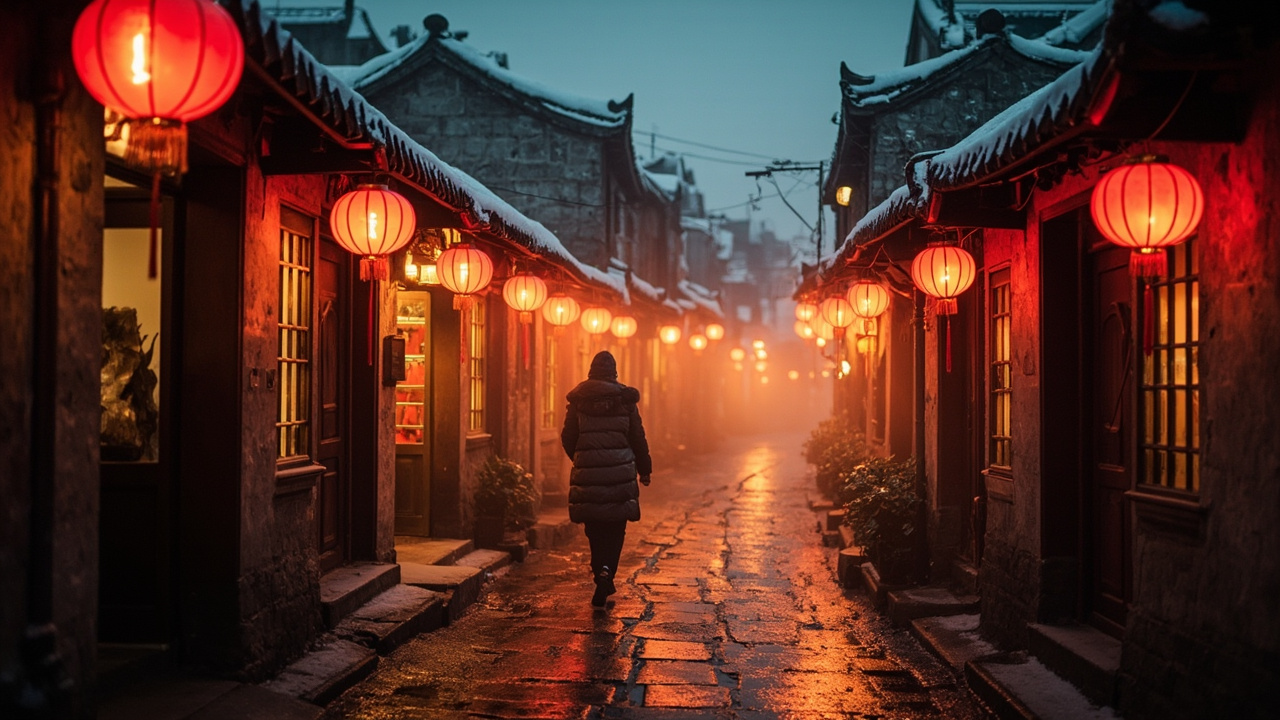
The cab driver in Xi’an looked at me in the rearview mirror and said, in the patient tone you use with a slow child, “Ni shi qu kan ren, haishi kan bing ma yong?” You going to see people, or see兵马俑? I was going to see the Terracotta Warriors, sure, but he knew what I didn’t yet: that my flight landed three days before Chinese New Year, and the entire country was about to press pause. The train stations were already swelling. The supermarkets were stacking gift boxes of baijiu into wobbly towers. Everywhere, people were going home.
That was 2023. I’ve been back for every Spring Festival since.
Traveling in China during Chinese New Year (Spring Festival, or Chunyun) is either the best decision you’ll make or the most frustrating, and the difference comes down to planning. This guide is built from seven years of living in Beijing and over forty trips around the country. It covers the ten best places to experience the holiday, how to actually get there when the whole country is moving, and the practical stuff that will keep you from crying in a train station. I’ll tell you what’s worth the chaos and what to skip, and I’ll be honest about the parts that are hard.
Quick answer
Yes, you can travel to China during Chinese New Year, and with proper planning it’s one of the most spectacular times to visit. For 2027, Spring Festival falls on February 6th (New Year’s Day), with the official Golden Week holiday running from February 6th to 12th. Book all trains and flights at least 30 days in advance, avoid traveling on February 5th and 6th (the peak return-home days), and focus your itinerary on major cities where the crowds are manageable and the fireworks are unforgettable. Most Western passport holders can enter visa-free for up to 30 days through the 2026 visa-free policies, which makes a last-minute decision much easier.
The Short Version
If you only have 90 seconds, here’s the truth. Chinese New Year is the world’s largest annual human migration, and you should not be on a train on February 5th or 6th. Instead, base yourself in a big city like Beijing, Shanghai, or Xi’an, where the locals leave town and the tourists take over. Book everything now. Set up Alipay and WeChat Pay before you land. Bring earplugs for the fireworks. And whatever you do, don’t skip the dumplings at midnight on New Year’s Eve. The food alone is worth the trip.
How I Picked These
I’ve spent seven Spring Festivals in China, and I’ve made the mistakes so you don’t have to. I’ve been stranded in a Chengdu hostel with no hot water on New Year’s Eve. I’ve watched the fireworks over the Forbidden City from a freezing rooftop. I’ve eaten dumplings with a taxi driver’s family in Harbin because I missed the last bus. This list comes from those experiences, plus conversations with friends in Beijing, Shanghai, and Xi’an about where they actually go during the holiday. I’ve prioritized places that stay open, that handle crowds well, and that offer something you genuinely can’t see any other time of year. I’ve also skipped a few famous spots that turn into miserable human sardine cans.
Comparison Table
| Rank | Place | Best For | Approx Cost (USD) | Time Needed | When to Go |
|---|---|---|---|---|---|
| 1 | Beijing | Classic holiday atmosphere, temple fairs | $100-150/day | 3-4 days | Feb 6-10 |
| 2 | Xi’an | History + New Year’s Eve lanterns | $80-120/day | 2-3 days | Feb 6-12 |
| 3 | Harbin | Ice festival, extreme cold, Russian influence | $70-100/day | 2-3 days | Feb 6-10 |
| 4 | Chengdu | Food, pandas, relaxed vibe | $60-90/day | 3-4 days | Feb 7-12 |
| 5 | Shanghai | Modern celebrations, fewer crowds | $100-150/day | 2-3 days | Feb 7-12 |
| 6 | Pingyao | Ancient town, lanterns, time capsule | $50-70/day | 1-2 days | Feb 6-9 |
| 7 | Guangzhou | Flower markets, Cantonese food, warm weather | $70-100/day | 2-3 days | Feb 5-9 |
| 8 | Zhangjiajie | Nature, glass bridge, fewer people than you’d think | $80-110/day | 2-3 days | Feb 7-12 |
| 9 | Luoyang | Longmen Grottoes, quieter history | $50-70/day | 1-2 days | Feb 6-10 |
| 10 | Yunnan (Lijiang/Dali) | Mild weather, ethnic minority New Year traditions | $60-90/day | 4-5 days | Feb 7-15 |
Beijing — The Capital’s Holiday Heart
I remember standing in the Lama Temple on the second day of the New Year, incense smoke so thick it stung my eyes, watching an old woman press her forehead to a prayer mat and murmur something I couldn’t hear. Around us, families in new red jackets took photos. A monk rang a bell. It felt ancient and alive at the same time.
Beijing is the best place to experience Chinese New Year because the city doesn’t shut down. The locals might head home to the provinces, but the city fills with tourists from other parts of China, and the energy is infectious. The temple fairs (miaohui) at Ditan Park and Longtan Park are the main event, with acrobats, sugar-painting artists, and food stalls selling candied hawthorn skewers.
📍 Location: Temple fairs at Ditan Park (Andingmen, Dongcheng District) and Longtan Park (near the Temple of Heaven) 🎟️ Entry fee: Ditan Park fair ~$4 (¥30); Lama Temple ~$3.50 (¥25) 🕒 Opening hours: Temple fairs run roughly 9am-5pm, Feb 6-12; Lama Temple open daily 9am-4:30pm 🚇 How to get there: Ditan Park — take Subway Line 2 to Andingmen Station, Exit B, walk south 5 minutes. Lama Temple — Line 2 or 5 to Yonghegong Station, Exit C, you’re at the gate 🌤️ When to visit: Go to the temple fairs on weekday mornings (Feb 7-9) before 11am. The crowds peak after 2pm 💡 Insider tips: Wear red underwear (it’s good luck, and yes, locals genuinely do this). Bring cash for the fair stalls — some older vendors haven’t set up QR codes. Don’t bother with the Forbidden City on Feb 6-8; it sells out weeks in advance and you’ll be shoulder-to-shoulder
I ate a candied hawthorn stick at Ditan Park and nearly cracked a tooth on the sugar shell. Worth it.
Xi’an — Lanterns Over the Ancient Walls
The first time I saw the Xi’an City Wall lit up for the New Year lantern festival, I actually said “whoa” out loud, alone, to no one. Tens of thousands of handcrafted lanterns in the shapes of dragons, phoenixes, and zodiac animals lined the ramparts, glowing red and gold against the night sky. A child ran past me holding a rabbit lantern, and his grandmother chased after him calling his name.
Xi’an is the best choice for history lovers because you get the Terracotta Warriors (which stay open throughout the holiday) plus the most spectacular lantern display in China. The city wall lantern festival runs from mid-January through early March, but the New Year’s Eve night itself is special — the wall glows, and the old Muslim Quarter fills with the smell of lamb skewers and cumin.
📍 Location: City Wall (south gate entrance), Xi’an city center; Terracotta Warriors are 40km east
🎟️ Entry fee: City Wall ~$7 (¥50), lantern festival ticket ~$10-15 (¥70-100); Terracotta Warriors $22 (¥150)
🕒 Opening hours: City Wall 8am-10pm (later during festival); Terracotta Warriors 8:30am-5pm daily
🚇 How to get there: City Wall — take Subway Line 2 to Yongningmen Station, Exit D, you’re at the South Gate. Terracotta Warriors — take Line 9 to Huaqingchi Station, then bus 602 or a taxi (15 minutes)
🌤️ When to visit: Visit the lantern festival on a weekday evening after 7pm. The wall is stunning at dusk, just before the lights fully come on
💡 Insider tips: Book Terracotta Warrior tickets on the official WeChat mini-program at least 3 days ahead. Hire a guide at the gate ($30/¥200) or you’ll miss the story entirely. The Muslim Quarter is chaotic during the holiday — go at 10am before the lunch rush. Don’t skip the biang biang noodles
I got lost in the Muslim Quarter’s back alleys at midnight and a noodle shop owner pulled me inside, sat me down, and put a bowl of hand-pulled noodles in front of me before I could protest. He wouldn’t take my money.
Harbin — Ice, Snow, and Survival
The cold in Harbin is a physical presence. It bites through your jeans, freezes the inside of your nose, and makes your phone die in minutes. I stood in Ice and Snow World with my friend Li Wei, both of us wearing every layer we owned, watching the ice castle towers glow pink and blue against the black sky. My eyelashes had frost on them. “This is insane,” I said. Li Wei just laughed and handed me a shot of something warm from a flask.
Harbin is for travelers who want an extreme experience. The Ice and Snow World is the main draw, and it’s genuinely unlike anything else on earth — entire buildings carved from ice, lit from within, with ice slides you can ride down. The city’s Russian-influenced architecture (Saint Sophia’s Cathedral, the old Central Street) adds a layer of strangeness. During Chinese New Year, the ice festival is in full swing, and the city puts on extra fireworks.
📍 Location: Ice and Snow World is in the Songbei District, across the Songhua River
🎟️ Entry fee: Ice and Snow World ~$40 (¥290) for daytime, $50 (¥330) for evening
🕒 Opening hours: 11am-9:30pm daily (the ice is best lit after 5pm)
🚇 How to get there: Take Subway Line 2 to Ice and Snow World Station, Exit 3, walk 10 minutes. Or take a taxi from downtown ($5/¥35)
🌤️ When to visit: Go after 5pm when the lights are on. February temperatures range from -10°F to 10°F (-23°C to -12°C)
💡 Insider tips: Buy hand warmers in bulk before you go (¥1 each at any convenience store). Rent a padded coat at the entrance if you didn’t pack properly. Your phone will die fast — keep it in an inner pocket. The ice slides are free but the lines are long; go on a weekday. Don’t skip the Russian bakery on Central Street
I tried frozen yogurt on a stick sold from a street cart at -15°F. It was, predictably, the coldest thing I’ve ever eaten.
Chengdu — Pandas, Hotpot, and the Slow Life
Chengdu has a way of making you forget you’re supposed to be anywhere else. I spent an entire afternoon at the Giant Panda Breeding Research Base watching pandas sleep, eat, and occasionally roll off a platform, and I felt my blood pressure drop about twenty points. The city itself moves at a pace that feels almost rebellious in modern China — people sit in teahouses for hours, play mahjong in parks, and eat hotpot until midnight.
During Chinese New Year, Chengdu is less frantic than Beijing or Xi’an. Many locals travel out of town, and the city feels more relaxed. The panda base stays open, the teahouses are full, and the hotpot restaurants are packed with families celebrating. It’s also the best place to experience a more laid-back version of the holiday.
📍 Location: Panda Base is in the north of the city (Chenghua District); the old town area is around Kuanzhai Alley 🎟️ Entry fee: Panda Base ~$7 (¥55); Kuanzhai Alley is free 🕒 Opening hours: Panda Base 7:30am-6pm (arrive by 8am to see the pandas active); Kuanzhai Alley open all day 🚇 How to get there: Panda Base — take Subway Line 3 to Panda Avenue Station, Exit B, then a free shuttle bus. Kuanzhai Alley — Line 4 to Kuanzhai Alley Station, Exit B 🌤️ When to visit: Go to the panda base at opening time (7:30am) on a weekday. The pandas nap by 10am 💡 Insider tips: Book panda base tickets on the official WeChat mini-program a day ahead. The crowds during New Year are mostly domestic tourists — go early to beat them. For hotpot, avoid the tourist traps on Kuanzhai Alley and walk 10 minutes to the quieter streets. Order the maodu (beef tripe) — it’s the local favorite
I sat in a teahouse in People’s Park for two hours, drinking jasmine tea and watching a man get his ears cleaned with tools that looked terrifying. He didn’t flinch once.
Shanghai — The Modern Celebration
Shanghai during Chinese New Year is a strange hybrid. The old city feels like it’s holding its breath, while the new city — Pudong, the Bund, the malls — carries on with a slightly quieter version of its usual buzz. I walked along the Bund on New Year’s Eve and watched the fireworks light up the skyline, the Oriental Pearl Tower glowing pink and purple. It was beautiful, but it felt more like a light show than a ritual.
Shanghai is the best choice if you want a comfortable, easy version of Chinese New Year. The city has the best English signage in China, the most international food options, and the crowds are thinner than Beijing because many expats and wealthy locals leave town. The Yu Garden Lantern Festival is the highlight, with elaborate displays that are more artistic than Xi’an’s.
📍 Location: Yu Garden and the old city are in Huangpu District; the Bund is a 15-minute walk east 🎟️ Entry fee: Yu Garden ~$4 (¥30); the lantern festival at Yu Garden ~$10 (¥70) 🕒 Opening hours: Yu Garden 9am-4:30pm (lantern festival runs until 9pm during the holiday) 🚇 How to get there: Take Subway Line 10 to Yuyuan Garden Station, Exit 1, walk 5 minutes. For the Bund, take Line 2 to Nanjing East Road Station, Exit 6, walk east 10 minutes 🌤️ When to visit: The lantern festival is best after dark; go on a weekday evening to avoid the weekend crush 💡 Insider tips: The Yu Garden lantern festival requires a separate ticket — book it online in advance. The crowds around the Bund on New Year’s Eve are massive; find a spot early or watch from a rooftop bar. Don’t bother with the Shanghai Tower observation deck during the holiday — the wait is 2+ hours. Instead, try the bar at the top of the Fairmont Peace Hotel
I watched the fireworks from a rooftop bar in the French Concession, surrounded by expats and a few brave tourists. A bartender from Manchester told me he’d been in Shanghai for eight years and still didn’t understand why the whole country shut down for a week.
Pingyao — A Time Capsule in Red
Pingyao is the closest thing to stepping back in time that China offers. The entire old town is a UNESCO World Heritage site, ringed by Ming Dynasty walls, with streets that haven’t changed much in 400 years. When I visited during Chinese New Year, the town was draped in red lanterns, and the ancient banks and courtyard houses were decorated with spring couplets. It felt like a movie set that someone forgot to take down.
Pingyao is best for travelers who want atmosphere over comfort. The town is small, walkable, and utterly charming, but it’s also a tourist town, which means the souvenir shops and “traditional” performances can feel staged. Still, the lantern displays along the main street are genuinely beautiful, and the town is far less crowded than Beijing or Xi’an.
📍 Location: Pingyao Ancient City, Shanxi Province (about 1.5 hours by train from Taiyuan) 🎟️ Entry fee: The old town is free to enter; individual sites cost ~$5-10 (¥35-70) each, or a combined ticket for ~$20 (¥150) 🕒 Opening hours: The town is open 24/7; individual sites typically 8am-6pm 🚇 How to get there: Take the high-speed train from Taiyuan South Station to Pingyao Ancient City Station (~30 minutes, ~$10/¥70), then a taxi or bus to the old town (10 minutes) 🌤️ When to visit: Go during the day for the sites, but stay for the evening when the lanterns come on. The town is coldest in February — bring layers 💡 Insider tips: Stay overnight in one of the courtyard hotels (a siheyuan conversion) — it’s the best way to experience the town after the day-trippers leave. The “traditional” bank performances are cheesy but fun. Don’t miss the city wall walk at sunset. The local specialty is pingyao beef — it’s salty, cured, and perfect with bread
I stayed in a 300-year-old courtyard house that had been converted into a guesthouse. The owner’s grandmother sat in the courtyard all afternoon, shelling peanuts and watching me try to use the wifi.
Guangzhou — Flowers, Food, and Warmth
Guangzhou is the one place on this list where you can celebrate Chinese New Year without a heavy coat. The city’s famous flower markets (huashi) open in the days before New Year, and the streets fill with vendors selling tangerine trees, peach blossoms, and orchids. I wandered through the market near the Temple of the Six Banyan Trees, and the air smelled like jasmine and fried food. A woman handed me a slice of pomelo and smiled. “Good luck,” she said.
Guangzhou is the best choice for food lovers and travelers who want to escape the cold. The Cantonese cuisine is the best in China, and the New Year’s Eve dinner (the nianyefan) is a serious affair — families book restaurant tables months in advance. The city’s flower markets are a uniquely southern tradition, and the weather (60-70°F/15-21°C) is a relief after the north.
📍 Location: Flower markets pop up across the city; the main one is on Binjiang Road, near the Pearl River 🎟️ Entry fee: Free to wander the flower markets; attractions like the Chen Clan Ancestral Hall cost ~$3 (¥20) 🕒 Opening hours: Flower markets run for about 3 days before New Year’s Eve, typically 9am-11pm 🚇 How to get there: Take Subway Line 2 to Haizhu Square Station, Exit D, walk to Binjiang Road. The Chen Clan Ancestral Hall is on Line 1, Chen Clan Academy Station, Exit E 🌤️ When to visit: Go to the flower market on the evening before New Year’s Eve — it’s the most atmospheric. The crowds peak after 8pm 💡 Insider tips: Buy a tangerine plant (a symbol of luck) even if you can’t take it home — it’s part of the experience. The food streets around Shangxiajiu Pedestrian Street are packed but worth it. Try the dim sum at a traditional tea house like Guangzhou Restaurant. Don’t skip the Chen Clan Ancestral Hall — the carvings are extraordinary
I bought a small tangerine tree at the flower market and carried it through the metro, getting strange looks from locals who clearly thought I was a tourist doing tourist things. I was.
Zhangjiajie — The Mountains That Inspired Avatar
Zhangjiajie is the place I recommend to travelers who want to see China’s nature but are worried about the New Year crowds. The towering sandstone pillars that inspired the floating mountains in Avatar are breathtaking, and during the holiday, the park is actually less crowded than in the summer months. I rode the Bailong Elevator (the world’s tallest outdoor elevator) up the cliff face, and when I stepped out onto the viewing platform, the mist was rolling through the valleys below. It was silent. Then a tour group arrived.
Zhangjiajie is best for adventurous travelers who don’t mind cold weather and some fog. The park is huge, and you’ll need at least two days to see the highlights. The glass bridge (Zhangjiajie Grand Canyon) is a separate attraction and worth the extra ticket, though it’s not for anyone with a fear of heights.
📍 Location: Wulingyuan Scenic Area, about 30km from Zhangjiajie city
🎟️ Entry fee: Wulingyuan ~$50 (¥350) for a 4-day pass; Bailong Elevator ~$10 (¥72); Glass Bridge ~$20 (¥138)
🕒 Opening hours: 7am-6pm daily (winter hours may be shorter)
🚇 How to get there: Take a bus from Zhangjiajie city center to Wulingyuan (~45 minutes, $3/¥20). Or take a taxi ($15/¥100)
🌤️ When to visit: Go early (7am) to beat the tour groups. The fog is common in winter — it can be magical or frustrating, depending on your luck
💡 Insider tips: Book tickets on the official WeChat mini-program at least 2 days ahead. The park has several entrances; use the Wulingyuan entrance to avoid the crowds at the main gate. Wear good hiking shoes — the steps are steep and slippery. Don’t bother with the cable car if the fog is thick; you won’t see anything
I stood on the glass bridge looking down at the canyon floor, 300 meters below, and my legs genuinely went weak. A Chinese grandmother walked past me without holding the railing, taking selfies.
Luoyang — The Quiet History
Luoyang is the place I send travelers who want the history of Xi’an without the crowds. The Longmen Grottoes, a UNESCO World Heritage site with over 100,000 Buddhist statues carved into limestone cliffs, are one of China’s most impressive sights. During Chinese New Year, the site is decorated with lanterns, and the evening light show (added in recent years) makes the grottoes glow against the river. I walked the boardwalk at dusk, and the silence was broken only by the sound of the Yi River flowing below.
Luoyang is best for travelers who want depth over spectacle. The city itself is unremarkable, but the grottoes are extraordinary, and the nearby White Horse Temple (China’s first Buddhist temple) is worth a visit. The city is also famous for its water banquets (shuixi), a 24-course meal served in soup bowls.
📍 Location: Longmen Grottoes are 12km south of Luoyang city center
🎟️ Entry fee: Longmen Grottoes ~$12 (¥90); White Horse Temple ~$5 (¥35)
🕒 Opening hours: 8am-6pm daily (winter hours); the night light show runs during the New Year period until 9pm
🚇 How to get there: Take bus 81 or 99 from Luoyang city center to Longmen (40 minutes, $20/¥140) to understand the history. The water banquet is an experience but not for everyone — the dishes are all soup-based and can get repetitive$1/¥7). Or take a taxi ($8/¥55)
🌤️ When to visit: Go at dusk for the light show, or early morning to avoid the tour groups
💡 Insider tips: The grottoes are split into two sides by the river; most tourists only visit the west side, so cross the bridge for a quieter view. Hire a guide at the entrance (
I tried the water banquet in Luoyang and made it through 11 of the 24 courses before tapping out. My waiter looked impressed, which I think was a compliment.
Yunnan — The Mild South
Yunnan is the wild card on this list. The province in southwest China has mild weather (60-70°F/15-21°C in February), stunning landscapes, and a completely different New Year celebration. The Bai people in Dali and the Naxi people in Lijiang have their own traditions, and while they observe Chinese New Year, they add their own flavor. I spent a New Year’s Eve in Lijiang’s old town, watching the Naxi elders perform traditional dances in the square while fireworks exploded overhead. It felt less polished, more authentic.
Yunnan is best for travelers who want a longer trip with variety. The province has everything from the snow-capped Jade Dragon Snow Mountain to the terraced rice fields of Yuanyang. The old towns of Lijiang and Dali are touristy but beautiful, and the food is distinct — think wild mushrooms, yak butter tea, and crossing-the-bridge noodles.
📍 Location: Lijiang Old Town and Dali Old Town, Yunnan Province 🎟️ Entry fee: Lijiang Old Town ~$7 (¥50) maintenance fee; Dali Old Town is free; Jade Dragon Snow Mountain ~$20 (¥140) 🕒 Opening hours: Old towns are open 24/7; attractions typically 8am-6pm 🚇 How to get there: Fly into Lijiang Sanyi Airport or Dali Airport. High-speed rail connects Kunming to both (~2-3 hours) 🌤️ When to visit: February is the dry season — expect clear skies and mild days, cold nights 💡 Insider tips: The old towns are packed during the holiday, but the crowds thin out after 9pm. Take a day trip to the nearby villages (Baisha, Shaxi) for a quieter experience. The Naxi people have their own writing system — look for the pictographic script on signs and buildings. Don’t skip the crossing-the-bridge noodles in Kunming on your way through
I watched a Naxi elder play a traditional instrument I couldn’t name, and when I asked what it was, he just smiled and played it louder.
FAQ summary
The most important things to know for Chinese New Year 2027: the holiday falls on February 6th, with the Golden Week running through February 12th. Book all transport and major attraction tickets at least 30 days in advance. The peak travel days are February 5th and 6th — avoid being on a train or plane those days if possible. Most Western passport holders can enter China visa-free for up to 30 days under the current policies. Set up Alipay or WeChat Pay before you arrive, as cash is rarely accepted. Major cities like Beijing, Shanghai, and Xi’an are the easiest places to celebrate, while smaller towns like Pingyao and Luoyang offer a quieter experience.
FAQ
Q: Do I need a visa to visit China during Chinese New Year 2027? A: Most Western passport holders (US, UK, EU, Australian, Canadian) can enter China visa-free for up to 30 days for tourism under the current 2026 policies. Check the latest visa rules before booking, as policies can change.
Q: How far in advance should I book trains and flights for Chinese New Year? A: Book at least 30 days in advance, and ideally 60 days. Train tickets go on sale 15 days before departure, and popular routes sell out within hours. Flights are more expensive the closer you get to the holiday.
Q: Is everything closed during Chinese New Year? A: No, but many small shops and restaurants close for 3-7 days. Major attractions, hotels, and large restaurants stay open. The main closures happen on New Year’s Eve (February 5th) and New Year’s Day (February 6th).
Q: Will I need to speak Chinese to get around? A: English is limited outside major tourist areas. Download a translation app (Pleco or Google Translate with offline packs) and have your hotel’s name written in Chinese to show taxi drivers.
Q: Do I need a VPN for my phone in China? A: Yes, if you want to use Google, WhatsApp, Instagram, or Facebook. Install a VPN before you arrive and buy a local SIM card or eSIM for data.
Q: What should I wear for Chinese New Year in Beijing or Xi’an? A: February temperatures range from 20-40°F (-5 to 5°C). Bring thermal layers, a warm coat, gloves, and a hat. Harbin is much colder — down to -15°F (-25°C). Guangzhou and Yunnan are milder at 60-70°F (15-21°C).
Q: Is it worth visiting the Great Wall during Chinese New Year? A: Yes, but avoid the Badaling section (the most crowded). Visit Mutianyu or Jinshanling instead — they’re less packed and more beautiful. Book transport in advance, as buses fill up quickly during the holiday.
The Honest Wrap-up
This list is for travelers who want to see China at its most alive, when the whole country stops to celebrate. It’s not for anyone who hates crowds, dislikes cold weather, or expects everything to run on a normal schedule. If you want a comfortable, easy trip, go in April or October instead. But if you’re willing to embrace the chaos, Chinese New Year is the most memorable time to visit — the fireworks, the food, the red lanterns, the sense that you’re witnessing something ancient and powerful. My advice: book your flights now, set up your payment apps, pack warm clothes, and don’t overplan. Leave room for the unexpected. The best moments of my Spring Festivals in China were the ones I never scheduled.
More guides you may like
Top 10 Bridges in China
China's bridges are engineering marvels spanning mountains, rivers, and seas. Here are 10 of the most spectacular, from ancient stone to modern steel.
8 min read

Top 10 Buddhist Sites in China
From the Leshan Giant Buddha to the Dunhuang Caves, these 10 Buddhist sites represent 2,000 years of China's spiritual heritage.
9 min read
Top 10 Day Trips from Beijing You Shouldn't Miss
Beijing is packed with history, but some of China's best experiences are just a few hours away. Here are 10 day trips that will transform your visit.
9 min read
Top 10 Hidden Gems in China Off the Beaten Path
Beyond the Great Wall and Terracotta Warriors, China has incredible hidden destinations few tourists ever reach. Here are 10 underrated gems worth the detour.
9 min read
Top 10 Markets and Shopping Streets in China
From Shanghai's Bund to Beijing's Silk Street - 10 markets where foreigners can haggle, explore, and bring home authentic Chinese goods.
9 min read
Top 10 Museums in China You Shouldn't Miss
China's museums span 5,000 years of civilization. These 10 - from the Palace Museum to Xi'an's terracotta gallery - are unmissable for culture lovers.
9 min read