
China 10 Day Golden Route
TODO: Extract from article (100-160 chars)
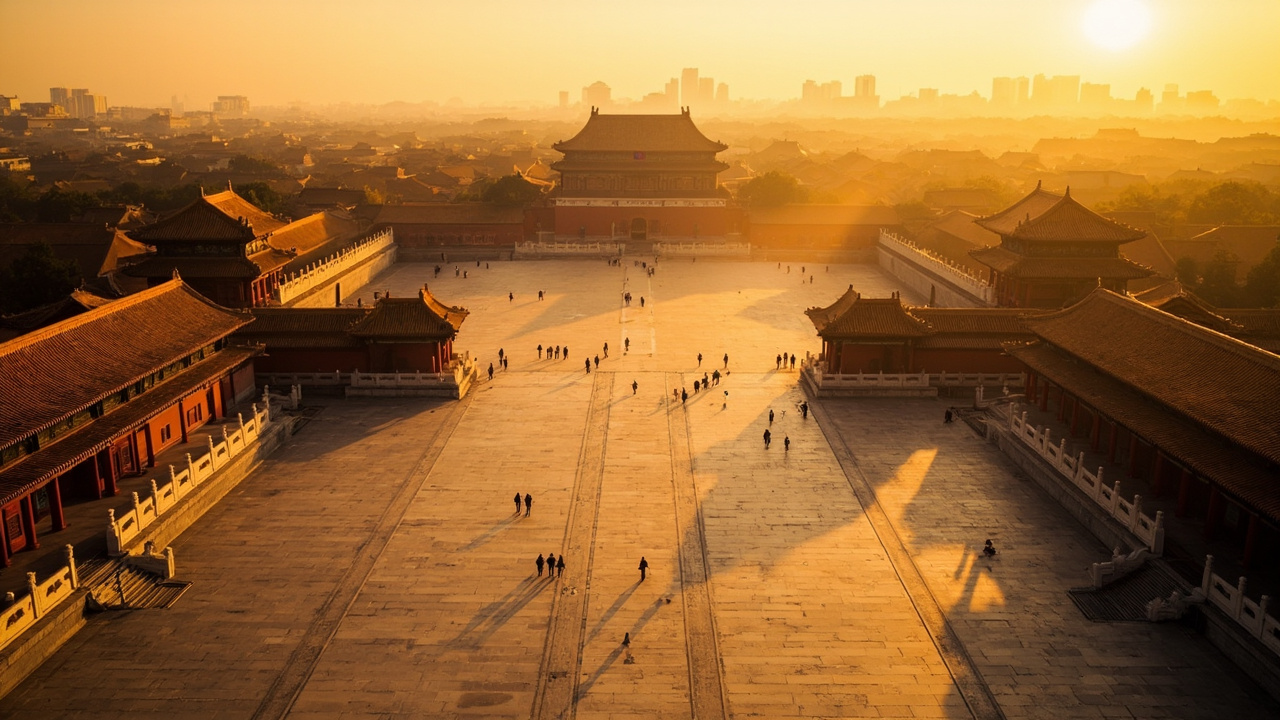
The first time I stood on the Jingshan Park hill overlooking the Forbidden City, a light snow was falling. The roofs below me, thousands of them, faded into a grey haze that could have been any century. A Beijing local next to me, an elderly man doing his morning tai chi, nodded at the scene and said, in broken English, “Very big. Very old.” He wasn’t wrong. But he also wasn’t telling me how to actually plan a trip through this country, which is the part that usually stumps people.
China is overwhelming in scale and logistics. It’s not a place you can wing easily on a first visit. This guide is the route I’ve refined over seven years of living here and more than 40 trips around the country. It’s the itinerary I give friends when they email me saying, “I have ten days, help me.” It covers the essential trio of Beijing, Xi’an, and Shanghai, with a detour into the countryside that most tourists miss. I’ll tell you exactly how to get between cities, what’s worth your money, and what you can skip without feeling guilty.
By the end of this, you’ll have a day-by-day plan that’s actually doable, with specific station exits, honest price estimates, and the kind of details that only come from getting lost a few times yourself.
Quick answer
For a first-time 10-day trip to China, follow the classic route: Beijing (3 days), Xi’an (2 days), and Shanghai (3 days), with a day trip to Suzhou or the water towns in between. You’ll need about $1,200–$1,800 per person (CNY 8,500–13,000) excluding international flights, and you can travel between cities on high-speed trains that take 4.5 to 6 hours. Most Western passport holders can enter visa-free for up to 30 days through 2026, but check the latest visa-free transit policy before booking.
The Short Version
If you only have 90 seconds: fly into Beijing, take the high-speed rail to Xi’an, then fly to Shanghai and fly out from there. Don’t try to add Guilin or Chengdu — you’ll spend your whole trip on transport. Book your trains and the Great Wall day in advance. Download Alipay and set it up before you land, because cash is genuinely awkward here. And pack for walking: you’ll do 20,000 steps a day without noticing.
How I Picked These
I’ve done this route more times than I can count, both alone and with visiting friends and family. I’ve also made the mistakes so you don’t have to: I’ve missed the last train out of a water town, paid triple for a “private” Great Wall tour that wasn’t private, and eaten at tourist-trap restaurants that made me question my life choices. I’ve had long conversations with hostel owners in Xi’an, taxi drivers in Shanghai who wanted to practice English, and tea shop owners in Beijing who refused to let me pay for my first pot. This list reflects what I’d actually do with ten days, not what a guidebook company tells you to do.
Comparison Table
| Rank | Place | Best For | Approx Cost (USD) | Time Needed | When to Go |
|---|---|---|---|---|---|
| 1 | Great Wall (Mutianyu) | Iconic views, fewer crowds | $25–40 (CNY 180–290) | Full day | Apr–Jun, Sep–Oct |
| 2 | Forbidden City | History, architecture | $10 (CNY 70) | 3–4 hours | Weekday mornings |
| 3 | Terracotta Army | Ancient wonders | $20 (CNY 120) | Half day | Early morning |
| 4 | Xi’an City Wall | Cycling, city views | $7 (CNY 54) | 2–3 hours | Sunset |
| 5 | The Bund, Shanghai | Skyline, night views | Free | 1–2 hours | Night |
| 6 | Suzhou Classical Gardens | Chinese garden design | $10–15 (CNY 70–105) | Half day | Spring or autumn |
| 7 | Temple of Heaven | Local life, park culture | $5 (CNY 35) | 2 hours | Morning |
| 8 | Yu Garden, Shanghai | Ming dynasty architecture | $6 (CNY 40) | 1–2 hours | Weekday |
| 9 | Muslim Quarter, Xi’an | Street food | Free (food extra) | 2–3 hours | Evening |
| 10 | Zhujiajiao Water Town | Canal life, day trip | Free entry | Half day | Weekday |
Beijing: The Imperial City
The Great Wall at Mutianyu — the version worth doing
The first time I went to Badaling, the most famous section, I spent more time shuffling behind tour groups than looking at the wall itself. I swore I’d never do it again. Mutianyu, about 90 minutes from central Beijing, is the fix. It’s restored enough to be safe but not so polished it feels like a theme park. The watchtowers stretch over forested hills that turn amber and gold in October, and on a clear day you can see the wall snaking over ridge after ridge until it disappears into the haze.
The cable car drops you near Tower 14, and you can walk west toward Tower 6, where a toboggan ride takes you back down. That toboggan is absurd and I love it every time. It’s a metal slide you control with a brake lever, and you’ll be grinning like a kid. The wall itself is steep in places, so wear shoes with grip, not fashion sneakers.
- 馃搷 Location: Huairou District, about 70 km northeast of central Beijing
- 馃帿 Entry fee: $6 (CNY 40) for the wall, plus $15 (CNY 100) round-trip cable car or $12 (CNY 80) for the toboggan
- 馃晲 Opening hours: 7:30 AM – 6:00 PM (summer), 8:00 AM – 5:00 PM (winter)
- 馃殕 How to get there: Take a direct bus from Dongzhimen Station (Line 2, Exit B) — the 916 express bus to Huairou, then transfer to the H23 or a local taxi. Easier option: book a private car through your hotel or a ride-hailing app; expect to pay $60–80 (CNY 430–580) round trip.
- 鈴?When to visit: Go on a weekday and arrive by 8:30 AM. The crowds arrive around 10 AM.
- 馃挕 Insider tips: Bring cash for the toboggan ticket — the card machine sometimes doesn’t work. The food at the base is overpriced and sad; pack snacks. If you’re fit, skip the cable car up and walk from Tower 6, it’s cheaper and you earn the view.
I once watched a French couple argue for ten minutes about whether to take the cable car or walk. They took the cable car. They were still arguing at the top.
The Forbidden City — book this before your flight
You cannot just show up at the Forbidden City. Tickets are tied to your passport number and sell out days in advance during peak season. I learned this the hard way when a friend visited in October and we had to rearrange our entire week because I’d forgotten to book. The official website and the WeChat mini-program are the only legitimate ways to buy tickets, and they open for booking seven days ahead.
Once you’re inside, the scale is the story. It’s the world’s largest palace complex, with 980 buildings, and walking through the marble courtyards on a clear winter day, when the light hits the golden roofs just right, you understand why the emperors built it this way. Most visitors follow the central axis straight through, which is fine, but the side galleries — especially the ceramics and clock exhibitions — are quieter and often more interesting.
- 馃搷 Location: North of Tiananmen Square, Dongcheng District
- 馃帿 Entry fee: $10 (CNY 70) April–October, $6 (CNY 40) November–March
- 馃晲 Opening hours: 8:30 AM – 5:00 PM (last entry 4:10 PM), closed Mondays
- 馃殕 How to get there: Take Line 1 to Tiananmen East Station, Exit A, and walk north through the security check at Tiananmen Square. Bring your passport — you’ll need it for the security screening.
- 鈴?When to visit: Weekday mornings, ideally right at opening. The light is better before noon.
- 馃挕 Insider tips: The audio guide is worth the $5 (CNY 35) rental. The imperial garden at the north end is where you exit, and it’s the only place with shade, so rest there before leaving. Don’t bother with the “VIP” tours that promise skip-the-line access — there’s no such thing, everyone enters through the same gate.
The queue for the toilet near the entrance is always longer than the one near the exit. Plan accordingly.
Temple of Heaven — where Beijing actually lives
The Temple of Heaven is technically a tourist site, but the park around it is where Beijingers go to do their morning thing. On any given day you’ll see groups practicing tai chi, women with fans doing synchronized dance routines, men playing cards under the cypress trees, and at least one person using the ground as a giant calligraphy canvas with a water brush. It’s the most authentic local scene you’ll find in central Beijing, and it costs almost nothing.
The main hall, the Hall of Prayer for Good Harvests, is the iconic blue-roofed building you’ve seen in photos. It’s genuinely beautiful, but the real magic is the surrounding park. Arrive early, before the tour groups, and just wander. The echo wall is fun if you have kids, but don’t expect to actually hear echoes — the wall is roped off now.
- 馃搷 Location: Tiantan Park, Dongcheng District
- 馃帿 Entry fee: $5 (CNY 35) for the park, $8 (CNY 55) including the main halls
- 馃晲 Opening hours: 6:00 AM – 10:00 PM (park), 8:00 AM – 5:30 PM (halls)
- 馃殕 How to get there: Take Line 5 to Tiantan Dongmen Station, Exit A, and walk 5 minutes to the east gate.
- 鈴?When to visit: Morning, before 9 AM, to catch the local scene and beat the heat.
- 馃挕 Insider tips: The north gate is the most convenient for the main hall. Bring a picnic — there are plenty of benches and it’s a lovely spot for a break. The souvenir shops inside the park are overpriced; buy your trinkets elsewhere.
I once joined a group of retirees doing a slow, meditative dance near the east gate. They laughed at my attempts but let me stay for the whole routine. It was the most peaceful hour of my trip.
Xi’an: The Ancient Capital
The Terracotta Army — go early, leave before the crowds
The Terracotta Army is one of those sites that photos don’t prepare you for. You walk into Pit 1, the main excavation hall, and it’s the size of an airplane hangar, filled with row after row of life-sized soldiers, each with a different face. No two are alike — the craftsmen apparently signed their work by giving each figure individual features. Standing at the railing, looking at thousands of clay faces staring back at you, is genuinely moving.
But the site has a problem: everyone goes at the same time. The tour buses arrive from Xi’an around 10 AM, and by 11 the walkways are shoulder-to-shoulder. The solution is simple: be there when the gates open at 8:30. You’ll have the place nearly to yourself for the first hour, which makes the experience completely different.
- 馃搷 Location: Lintong District, about 40 km east of Xi’an
- 馃帿 Entry fee: $20 (CNY 120), includes access to all three pits and the museum
- 馃晲 Opening hours: 8:30 AM – 5:00 PM (March–November), 8:30 AM – 4:30 PM (December–February)
- 馃殕 How to get there: Take Metro Line 9 to Huaqingchi Station, then transfer to the tourist bus (306/307) or a taxi for the remaining 10 minutes. Alternatively, book a private driver for about $40 (CNY 290) round trip.
- 鈴?When to visit: Weekday mornings, ideally Tuesday through Thursday. Avoid Chinese public holidays at all costs.
- 馃挕 Insider tips: The museum at the back of the site has two bronze chariots that are arguably more impressive than the soldiers — don’t skip them. The souvenir stalls outside are cheaper than the ones inside the complex. Hire a guide at the entrance if you want context; the signage is minimal and the history is complex.
I made the mistake of visiting on a Saturday in July once. I spent more time watching other tourists than looking at the warriors. Never again.
The Xi’an City Wall — best sunset in the city
The city wall is the most complete ancient city wall in China, and it’s a perfect 14 kilometers around the old town. You can walk it, but the real move is renting a bicycle and doing the full loop. It takes about 90 minutes at a leisurely pace, and you get views over both the old city and the modern skyline beyond. The contrast is the point: ancient ramparts on one side, glass towers on the other.
Go in the late afternoon, when the light turns golden and the shadows of the watchtowers stretch across the ramparts. The wall stays open until 10 PM in summer, and the night views, when the old city lights up below, are worth staying for.
- 馃搷 Location: Around the old city center, Xi’an
- 馃帿 Entry fee: $7 (CNY 54), bike rental $5 (CNY 45) for 2 hours
- 馃晲 Opening hours: 8:00 AM – 10:00 PM (summer), 8:00 AM – 8:00 PM (winter)
- 馃殕 How to get there: Take Metro Line 2 to Yongningmen Station, Exit D, which puts you right at the South Gate.
- 鈴?When to visit: Late afternoon, around 4–5 PM, for the best light and cooler temperatures.
- 馃挕 Insider tips: The bike rental requires a deposit (cash or card). The south gate is the most photogenic. If you’re not a confident cyclist, the wall surface is smooth but the crowds can be thick on weekends — go on a weekday.
The first time I cycled the full loop, my legs gave out at the halfway point. I walked the bike the rest of the way and got some of my best photos doing it.
The Muslim Quarter — eat everything, ask questions later
The Muslim Quarter is Xi’an’s street food heart, a maze of alleys off the Drum Tower where the Hui Muslim community has lived for centuries. The main street, Beiyuanmen, is packed with stalls selling everything from lamb skewers to pomegranate juice, and it’s chaotic in the best way. This is where you try the local specialty: roujiamo, a flatbread sandwich stuffed with slow-braised pork, and biangbiang noodles, wide belt-like noodles with chili oil.
The food is the reason to come, but the quarter is also a living neighborhood. Wander off the main drag and you’ll find mosques, courtyards, and shops selling hand-painted snuff bottles. The Great Mosque, hidden behind an unassuming gate, is one of the most beautiful buildings in China — a fusion of Chinese and Islamic architecture that you won’t see anywhere else.
- 馃搷 Location: West of the Drum Tower, Xi’an old city
- 馃帿 Entry fee: Free to wander, food costs $1–5 (CNY 7–35) per item. The Great Mosque is $4 (CNY 25).
- 馃晲 Opening hours: Stalls open around 11 AM and run until late evening
- 馃殕 How to get there: Take Metro Line 2 to Zhonglou Station, Exit C, and walk west toward the Drum Tower.
- 鈴?When to visit: Evening, when the stalls are fully open and the neon signs light up the alleys.
- 馃挕 Insider tips: Look for stalls with long queues of locals — that’s where the good food is. The lamb skewers are best when they’re slightly charred. Don’t be afraid to point at what you want; English menus are rare here, and a translation app will only get you so far.
I once asked a stall owner what was in a particular dish. She laughed, handed me a skewer, and said, “Just eat.” She was right.
Shanghai: The Modern Metropolis
The Bund — the skyline that never gets old
The Bund is Shanghai’s riverside promenade, facing the Pudong skyline across the Huangpu River. The view is the thing: the Oriental Pearl Tower, the Shanghai Tower, and a dozen other skyscrapers lighting up the night sky. It’s free, it’s iconic, and it’s worth doing at least once, even if you’re not usually a fan of tourist landmarks.
The trick is timing. The Bund is packed at sunset and in the evening, when the lights come on. Go instead in the early morning, around 7 AM, when the crowds are gone and the light on the river is soft. You’ll see locals doing tai chi along the promenade, and the whole scene feels more like a city waking up than a tourist attraction. The night view is still worth a return visit, but the morning is the secret.
- 馃搷 Location: Zhongshan East 1st Road, along the Huangpu River
- 馃帿 Entry fee: Free
- 馃晲 Opening hours: Always open
- 馃殕 How to get there: Take Metro Line 2 or 10 to East Nanjing Road Station, Exit 1, and walk east for 10 minutes toward the river.
- 鈴?When to visit: Early morning for peace, or night for the lights. Avoid weekend evenings if you dislike crowds.
- 馃挕 Insider tips: The Peace Hotel at the south end of the Bund has a jazz bar that’s been running since the 1930s — worth a drink if you like history with your cocktails. The ferry across the river to Pudong costs less than $1 (CNY 2) and gives you a different view of the skyline.
I watched a proposal happen on the Bund once, right at sunset. The couple was so wrapped up in each other they didn’t notice the crowd that had gathered to film it.
Yu Garden — a Ming dynasty escape
Yu Garden is a classical Chinese garden hidden in the middle of Shanghai’s old town, surrounded by the bazaar that bears its name. It’s small, especially compared to the imperial gardens in Beijing, but it’s perfectly formed: rockeries, koi ponds, zigzag bridges, and pavilions arranged to create the illusion of endless space. The zigzag bridge at the entrance is designed to confuse evil spirits, who can only travel in straight lines.
The garden itself is lovely, but the surrounding bazaar is where you’ll spend most of your time. It’s a maze of shops selling everything from silk to tea to questionable “antiques.” The food stalls are hit or miss, but the xiaolongbao (soup dumplings) at the famous Nanxiang Steamed Bun Restaurant are worth the queue, even if the original branch is touristy.
- 馃搷 Location: Old Town, Huangpu District
- 馃帿 Entry fee: $6 (CNY 40) in peak season, $4 (CNY 30) in off-season
- 馃晲 Opening hours: 9:00 AM – 4:30 PM (last entry 4:00 PM)
- 馃殕 How to get there: Take Metro Line 10 to Yuyuan Garden Station, Exit 1, and walk 5 minutes through the bazaar.
- 鈴?When to visit: Weekday mornings, before the tour groups arrive. The garden is at its best in spring when the flowers are out.
- 馃挕 Insider tips: The bazaar is a maze — take a photo of the entrance so you can find your way back. The “free” tea tastings in the bazaar are sales pitches; you’ll be expected to buy. The best xiaolongbao are at the original Nanxiang branch, not the newer ones.
I got hopelessly lost in the bazaar on my first visit and ended up buying a jade bracelet I didn’t need. I still wear it sometimes.
Suzhou: The Water Town Day Trip
Suzhou’s Classical Gardens — a day trip that’s worth the train ride
Suzhou is a 30-minute high-speed train ride from Shanghai, and it’s the perfect day trip for a break from the city. The city is famous for its classical gardens, which are UNESCO World Heritage sites and the pinnacle of Chinese garden design. The best one for first-timers is the Humble Administrator’s Garden, the largest and most famous, but the Master of the Nets Garden is smaller and, in my opinion, more atmospheric.
The gardens are designed to be experienced slowly, with views that unfold as you walk. Every window is a frame, every rock placement is deliberate. If you rush through, you’ll miss the point. Give yourself at least two hours for the Humble Administrator’s Garden, and don’t try to see all four major gardens in one day — you’ll be gardened out by lunch.
- 馃搷 Location: Suzhou, about 100 km west of Shanghai
- 馃帿 Entry fee: $10 (CNY 70) for Humble Administrator’s Garden, $6 (CNY 40) for Master of the Nets Garden
- 馃晲 Opening hours: 7:30 AM – 5:30 PM (summer), 7:30 AM – 5:00 PM (winter)
- 馃殕 How to get there: Take the high-speed train from Shanghai Hongqiao Station to Suzhou Station (30 minutes, $8–12 / CNY 55–85). From Suzhou Station, take a taxi to the gardens (10 minutes, $3–4 / CNY 20–30).
- 鈴?When to visit: Spring (March–May) and autumn (September–November) are the best seasons. Weekdays are much quieter.
- 馃挕 Insider tips: The gardens are busiest on weekends, when Shanghai residents flood in. The Master of the Nets Garden offers evening performances in summer, with traditional music and dance in the pavilions. Buy your train ticket in advance — the Shanghai-Suzhou route is one of the busiest in China.
I once spent an hour in the Master of the Nets Garden just watching the koi fish. The garden’s caretaker brought me a cup of tea and we sat in silence. It was the most peaceful hour of my entire trip.
FAQ summary
The classic 10-day China route covers Beijing (3 days), Xi’an (2 days), and Shanghai (3 days), with a day trip to Suzhou or a water town. High-speed trains connect Beijing to Xi’an in about 4.5 hours and Suzhou to Shanghai in 30 minutes, while the Xi’an to Shanghai leg is faster by plane. Budget $1,200–$1,800 per person (CNY 8,500–13,000) excluding international flights, and remember that most Western passport holders can enter visa-free for up to 30 days through 2026. Set up Alipay before you arrive, download a VPN if you need access to Western apps, and book Forbidden City tickets and high-speed rail tickets in advance.
FAQ
Q: Do I need a visa for China in 2026? A: Most Western passport holders (including US, UK, EU, Australian, and Canadian citizens) can enter China visa-free for up to 30 days for tourism through 2026. Check the latest visa-free policy details before booking, as rules can change.
Q: How much does a 10-day trip to China cost? A: Budget about $1,200–$1,800 per person (CNY 8,500–13,000) excluding international flights. This covers mid-range hotels ($60–100/night), high-speed trains between cities, meals ($10–20/day), and entry fees. Add another $500–800 for shopping and nicer hotels.
Q: Is it safe to drink the water in China? A: No. Stick to bottled water, which costs about $0.50 (CNY 3.50) per bottle. Most hotels provide free bottled water daily. Tap water is fine for brushing teeth, but don’t drink it.
Q: Do I need a VPN for my phone in China? A: Yes, if you want to use Google, WhatsApp, Instagram, or Facebook. China blocks these services. Set up a VPN before you arrive, because the app stores are also blocked. Alternatively, get a local SIM card with a data plan that includes VPN access. See the China SIM card guide for details.
Q: Is English widely spoken in China? A: Not really, especially outside major tourist areas. In Beijing, Xi’an, and Shanghai, you’ll find English speakers at hotels and major attractions, but don’t expect it in restaurants or shops. Download a translation app like Pleco or Google Translate (with offline packs) before you go.
Q: How do I pay for things in China? A: Cash is increasingly rare in China. Set up Alipay or WeChat Pay before you arrive — both now accept international credit cards. You’ll use QR codes for everything, from street food to train tickets. See the payment guide for step-by-step setup instructions.
Q: What’s the best time of year for this route? A: April–May and September–October are ideal: mild temperatures, clear skies, and fewer crowds than summer. July and August are hot and humid, especially in Shanghai. December–February is cold but the sites are quieter and the winter light is beautiful.
The Honest Wrap-up
This route is for first-timers who want to see the essential China without losing their minds to logistics. It’s not for people who want to “get off the beaten path” — that’s a different trip, and you’ll need more than ten days for it. If you have a friend who’s been to China before and wants to show you their favorite spots, let them. But if you’re starting from zero, this is the route I’d give my own family.
One piece of advice before you book: don’t try to do too much. The biggest mistake I see travelers make is cramming in four or five cities and spending half their trip in transit. China is enormous, and the best experiences come from being somewhere long enough to let it sink in. Ten days, three cities, one water town. That’s enough. You’ll come back for the rest.
More guides you may like

Top 10 Bridges in China
China's bridges are engineering marvels spanning mountains, rivers, and seas. Here are 10 of the most spectacular, from ancient stone to modern steel.
8 min read

Top 10 Buddhist Sites in China
From the Leshan Giant Buddha to the Dunhuang Caves, these 10 Buddhist sites represent 2,000 years of China's spiritual heritage.
9 min read

Top 10 Day Trips from Beijing You Shouldn't Miss
Beijing is packed with history, but some of China's best experiences are just a few hours away. Here are 10 day trips that will transform your visit.
9 min read

Top 10 Hidden Gems in China Off the Beaten Path
Beyond the Great Wall and Terracotta Warriors, China has incredible hidden destinations few tourists ever reach. Here are 10 underrated gems worth the detour.
9 min read

Top 10 Markets and Shopping Streets in China
From Shanghai's Bund to Beijing's Silk Street - 10 markets where foreigners can haggle, explore, and bring home authentic Chinese goods.
9 min read

Top 10 Museums in China You Shouldn't Miss
China's museums span 5,000 years of civilization. These 10 - from the Palace Museum to Xi'an's terracotta gallery - are unmissable for culture lovers.
9 min read