
China in Autumn Travel Guide
TODO: Extract from article (100-160 chars)
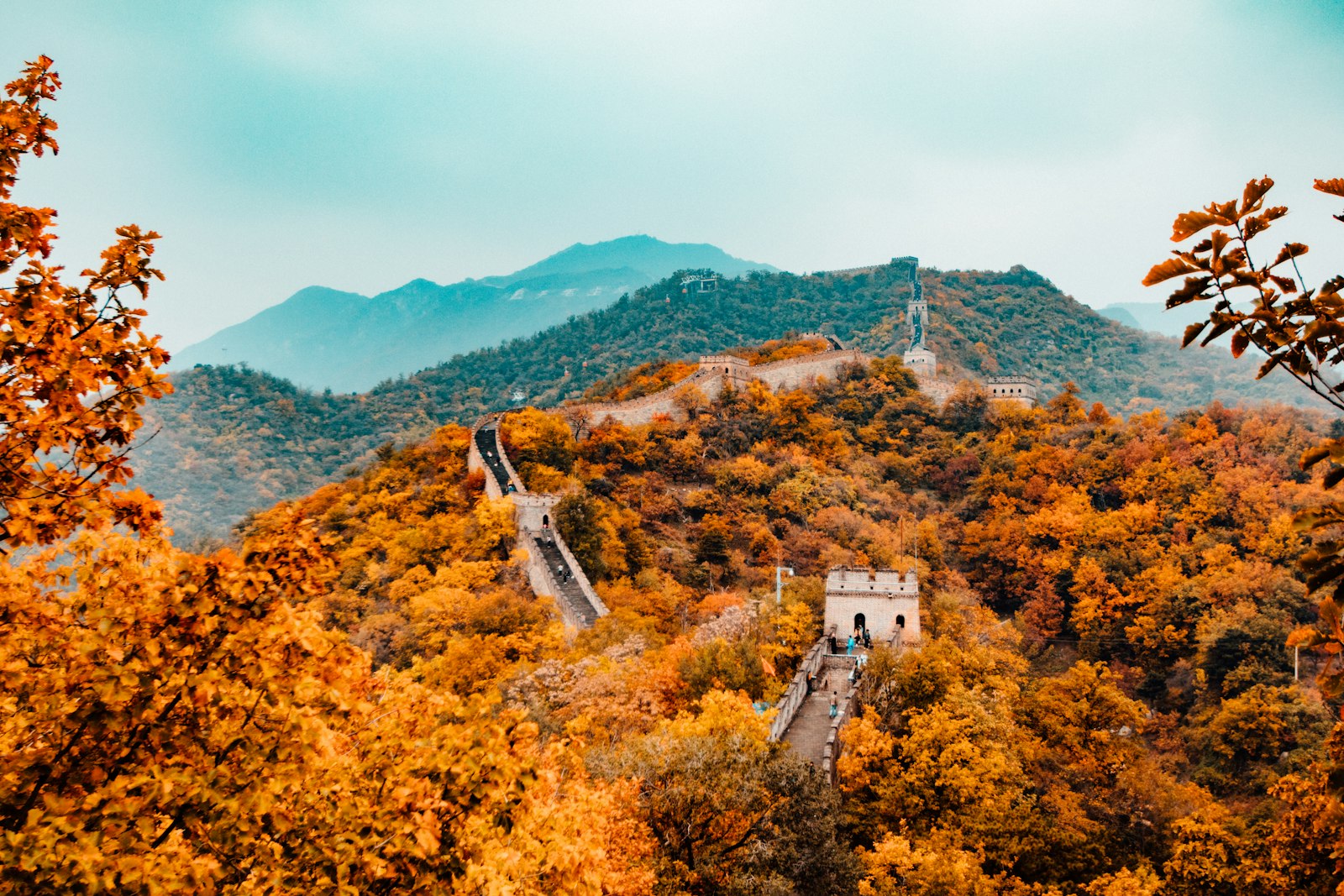
The taxi dropped me at the edge of a village outside Jiuzhaigou, and I remember the exact sound of the cold air hitting my lungs. October in Sichuan’s mountains smells like pine resin and woodsmoke, and the sky was that particular shade of autumn blue you only get above 3,000 meters. I’d been living in Beijing for four years by then, but this was the first time I understood why Chinese poets spent so much ink on fall. The maple leaves weren’t just red. They were on fire, and the lakes below them were so still they looked like mirrors someone had forgotten to clean.
Autumn in China isn’t a season. It’s a window, roughly six weeks long, when the whole country shifts color at different altitudes and latitudes. The Great Wall gets draped in gold. The rice terraces in the south turn to liquid amber. The ginkgo trees in Beijing’s temples drop carpets of yellow so bright they hurt your eyes. And the crowds, mercifully, thin out after the October 1st national holiday rush.
This guide is built from seven autumns of chasing those colors across 30-plus provinces. I’ve missed trains, eaten questionable street food, and stood in freezing dawns waiting for light that never came. Here’s what I’d tell a friend who’s booking their first trip to China this fall.
Quick answer
Yes, autumn (September to November) is the best time to visit China for first-time tourists: temperatures are mild across most of the country, skies are clearer than summer, and prices drop after the October 1st Golden Week holiday. Most Western passport holders can enter visa-free for up to 30 days through 2025-2026 policies, and a two-week trip covering Beijing, Xi’an, and either Guilin or Jiuzhaigou will cost roughly $2,500-$4,000 per person including flights, hotels, trains, and food. Book everything before September for the best prices, and avoid traveling between October 1-7 when 800 million Chinese travelers are on the move domestically.
The Short Version
If you only have 90 seconds: go in mid-to-late October. Skip the Golden Week chaos entirely. Spend 3 days in Beijing (Great Wall at Mutianyu, not Badaling), 2 days in Xi’an (Terracotta Warriors in the morning), then fly south to Guilin or west to Jiuzhaigou for the real color show. Bring layers, download Alipay before you land, and don’t bother with a tour group. China’s high-speed rail and metro systems are world-class, and English signage is better than most guidebooks admit. The fall colors are worth it. The food alone is worth it.
How I Picked These
I’ve spent seven autumns in China, and I’ve made a habit of asking locals where they’d go if they had one free weekend. Taxi drivers in Beijing told me about Fragrant Hills. A hostel owner in Chengdu insisted Jiuzhaigou was “too beautiful for words” and then struggled to find them anyway. A retired teacher in Guilin drew me a map of the Li River’s best viewpoints on a napkin.
I’ve also made plenty of mistakes along the way. I’ve shown up at national parks during Golden Week and stood in lines for three hours. I’ve booked hotels without checking if they accept foreigners (some smaller guesthouses still don’t). I’ve underestimated how cold mountain passes get in late October. This list reflects what survived those errors, plus conversations with other long-term expats and Chinese friends who know their own country’s backroads better than any guidebook.
Comparison Table
| Rank | Place | Best For | Approx Cost (USD) | Time Needed | When to Go |
|---|---|---|---|---|---|
| 1 | Jiuzhaigou Valley | Epic fall colors, alpine lakes | $40 entry + $110 transport | 2 days | Oct 10-25 |
| 2 | The Great Wall at Mutianyu | Iconic views, fewer crowds | $10 entry + $25 cable car | Half day | Late Oct |
| 3 | Guilin & Yangshuo | Karst mountains, Li River | $20-50/day | 3 days | Sep-Nov |
| 4 | Beijing’s Autumn Parks | Ginkgo trees, imperial history | $3-10 per park | 2 days | Late Oct-early Nov |
| 5 | Xi’an & Mount Huashan | History + hiking | $15-40/day | 3 days | Oct |
| 6 | Huangshan (Yellow Mountain) | Sea of clouds, granite peaks | $30 entry + $60 cable car | 2 days | Oct |
| 7 | Chengdu & the Panda Base | Pandas, Sichuan food | $10-30/day | 2 days | Sep-Nov |
| 8 | Zhangjiajie | Avatar mountains, glass bridges | $40 entry + $30 transport | 2-3 days | Sep-Oct |
| 9 | Hangzhou’s West Lake | Classical Chinese gardens | Free entry, $20 boat rides | 1-2 days | Oct-Nov |
| 10 | The Tibetan Plateau (Kham) | High-altitude autumn, monasteries | $50-100/day | 5+ days | Sep-Oct |
1. Jiuzhaigou Valley 鈥?The One That Made Me Cry
I’m not a crier. But standing at Five Flower Lake in mid-October, watching the water shift from turquoise to emerald to something that had no name, I understood why the locals call this place “the valley of nine villages” and treat it as sacred. The fall colors here aren’t subtle. They’re a full-volume symphony of gold, crimson, and orange, layered against snow-dusted peaks and lakes so clear you can count individual pebbles at 10 meters deep.
The valley sits at 2,000-4,500 meters in northern Sichuan, and the altitude gives the air a crispness that makes every color pop harder. The boardwalks are well-maintained, the shuttle bus system is efficient, and the whole place feels like a national park done right, which is rare in China.
馃搷 Location: Jiuzhaigou County, Aba Prefecture, Sichuan Province. The park entrance is about 40 minutes from the nearest town, Zhangzha.
馃帿 Entry fee: $40 (280 CNY) plus $25 (90 CNY) for the mandatory shuttle bus. The park now allows individual visitors, not just tour groups, which was a welcome change from the pre-2020 rules.
馃晲 Opening hours: 7:00 AM to 5:00 PM daily, but the last shuttle leaves at 4:00 PM. Arrive by 7:30 AM to beat the tour buses.
馃殕 How to get there: Fly into Jiuzhai Huanglong Airport (JZH) from Chengdu, Beijing, or Xi’an. The airport is at 3,448 meters, so take it easy for the first few hours. From the airport, it’s a 1.5-hour winding bus ride ($15 / 100 CNY) to the park entrance. Alternatively, take an overnight bus from Chengdu’s Chadianzi Station ($30 / 200 CNY, 8-10 hours).
鈴?When to visit: October 10-25 is the absolute peak for fall colors. Weekdays are dramatically quieter than weekends. Go early, and you’ll have the boardwalks nearly to yourself before 9 AM.
馃挕 Insider tips:
- The park’s highest point, Long Lake, is often windy and cold. Bring a down jacket even if it feels warm at the entrance.
- Pack your own lunch. The park’s food options are overpriced and mediocre.
- The shuttle drops you at the top first, then you walk down. Don’t skip the middle section around Pearl Shoal Waterfall.
- Book your hotel in Zhangzha town, not Jiuzhaigou county’s main area, to be closer to the entrance.
- Altitude sickness is real here. Drink water, avoid alcohol, and consider bringing acetazolamide if you’re prone to it.
I met a retired couple from Guangzhou on the shuttle who had visited every year for a decade. “Every autumn is different,” the husband told me, gesturing at the colors outside the window. “But every autumn is worth it.”
2. The Great Wall at Mutianyu 鈥?The One Tourists Actually Should See
I’ve walked sections of the Great Wall in every season, and I’ll say it plainly: Badaling is a tourist trap, and anyone who tells you otherwise hasn’t been to Mutianyu. The wall here snakes along forested ridges for over 2 kilometers of restored sections, and in late October, the surrounding hills turn into a patchwork of gold and rust. The watchtowers are original Ming Dynasty construction, and the crowds, while present, are a fraction of what Badaling gets.
The cable car ride up gives you a perspective you can’t get from walking alone. You see the wall as a ribbon of stone cutting through the forest, and you understand, viscerally, why this structure took centuries and millions of lives to build.
馃搷 Location: Huairou District, about 70 kilometers northeast of central Beijing.
馃帿 Entry fee: $10 (60 CNY) for the wall itself. The cable car is an additional $25 (180 CNY) round trip, or you can hike up for free and save the money.
馃晲 Opening hours: 7:30 AM to 6:00 PM (May-October), 8:00 AM to 5:00 PM (November-April).
馃殕 How to get there: Take Metro Line 2 to Dongzhimen Station, Exit B, and find the Dongzhimen Transportation Hub. Bus 916快 (Express) goes to Huairou ($3 / 20 CNY, about 1.5 hours). From there, transfer to bus H23 or take a taxi ($15 / 100 CNY) for the final 20 minutes. Alternatively, book a private driver through your hotel for $80-100 round trip, which is worth it if you’re in a group.
鈴?When to visit: Late October for the best colors. Go on a weekday, and arrive by 8 AM to beat the tour groups that roll in around 10.
馃挕 Insider tips:
- The toboggan ride down is kitschy but genuinely fun. Don’t skip it.
- Bring your own water and snacks. The vendors at the base charge triple.
- The section between watchtowers 6 and 14 is the most scenic and least crowded.
- If you’re fit, hike up instead of taking the cable car. The trail takes about 40 minutes and passes through lovely forest.
- Check the air quality index before you go. On smoggy days, the view is disappointing.
I once watched a French couple argue for 10 minutes about whether the wall was “worth it” before the woman finally turned to me and asked, in broken English, “Is it always this beautiful?” It wasn’t, I admitted. But on that October day, with the leaves turning and the light soft through the haze, it was close.
3. Guilin & Yangshuo 鈥?The Karst Mountains That Look Photoshopped
The first time I saw the Li River’s karst peaks, I thought someone had over-saturated a postcard. The limestone towers rise straight out of flat farmland, and in autumn, the rice paddies turn gold while the river runs low and clear. This is the landscape printed on the 20 CNY note, and it genuinely looks like that in person.
Yangshuo, the backpacker town an hour downriver, is the better base. The countryside around it is crisscrossed with cycling paths, and the karst formations catch the morning light in ways that make you want to quit your job and become a landscape photographer.
馃搷 Location: Guilin City and Yangshuo County, Guangxi Province. The best scenery is between the two, along the Li River.
馃帿 Entry fee: Free for the landscape itself. Boat cruises from Guilin to Yangshuo cost $50-100 (350-700 CNY) depending on the boat class. Bicycle rentals in Yangshuo are $5-10 (35-70 CNY) per day.
馃晲 Opening hours: The landscape is open 24/7. Attractions like the Reed Flute Cave ($30 / 200 CNY) are open 8:00 AM to 5:30 PM.
馃殕 How to get there: Fly into Guilin Liangjiang International Airport (KWL) from major Chinese cities. From Guilin, take a high-speed train to Yangshuo Station ($10 / 70 CNY, 30 minutes), then a 20-minute taxi to town. Or take the scenic 4-hour cruise down the Li River.
鈴?When to visit: September through November. October is ideal, with clear skies and comfortable temperatures. Avoid rainy days, as the river can turn muddy and the peaks disappear into cloud.
馃挕 Insider tips:
- The best viewpoint is Xianggong Hill, a 20-minute drive from Yangshuo. Go at sunrise and beat the tour groups.
- Rent an e-bike, not a bicycle, to cover more ground. The countryside roads are gentle and the scenery changes every kilometer.
- The bamboo raft trips on the Yulong River are more peaceful than the big Li River cruises. Negotiate the price before you get on.
- Try the local beer fish (beer yu), a Yangshuo specialty cooked with beer, tomatoes, and peppers.
- English is more widely spoken here than in most of China, thanks to decades of backpacker tourism.
I got hopelessly lost cycling near Moon Hill and ended up at a farmhouse where an elderly woman insisted I stay for lunch. She served river fish, stir-fried greens, and rice wine that tasted like kerosene and went down like honey. I never caught her name, but I’ve never forgotten that meal.
4. Beijing’s Autumn Parks 鈥?Where the City Reveals Its Soul
Beijing in October is the city at its best. The summer smog has cleared, the sky is that deep autumn blue, and the imperial parks turn gold. The Forbidden City is worth visiting, but the real magic is in the lesser-known spots: the Temple of Heaven’s cypress groves, the Summer Palace’s long corridors, and the ginkgo avenues that line the city’s older streets.
My favorite is the Diaoyutai Ginkgo Avenue, a stretch of road near the Diaoyutai State Guesthouse where the ginkgo trees form a golden tunnel every late October. It’s not an official attraction, just a street that happens to be spectacular, and the locals know it. On weekend afternoons, families come to take photos, couples walk hand in hand, and the air smells faintly of roasted chestnuts from nearby vendors.
馃搷 Location: Various parks across Beijing. The ginkgo avenue is on Sanlihe Road, near the Diaoyutai Guesthouse in Haidian District.
馃帿 Entry fee: The Temple of Heaven is $5 (35 CNY) for the main grounds. The Summer Palace is $8 (60 CNY). The ginkgo avenue is free.
馃晲 Opening hours: Most parks open at 6:00 AM and close at 8:00 PM in autumn. The Temple of Heaven’s interior halls close at 5:00 PM.
馃殕 How to get there: The Temple of Heaven is on Metro Line 5, Tiantandongmen Station, Exit A. The Summer Palace is on Line 4, Beigongmen Station, Exit D. For the ginkgo avenue, take Line 10 to Cishousi Station, Exit A, and walk 10 minutes east.
鈴?When to visit: Late October to early November for peak ginkgo color. Go on a weekday morning for the least crowds. The Temple of Heaven is busiest on weekend mornings when locals practice tai chi and play traditional instruments.
馃挕 Insider tips:
- The Temple of Heaven’s Hall of Prayer for Good Harvests is the iconic round building you’ve seen in photos. Go early and photograph it from the east side for the best light.
- The Summer Palace’s Long Corridor is 728 meters of painted wooden beams. Walk the whole thing and look up.
- Jingshan Park, just north of the Forbidden City, offers the best elevated view of the imperial complex. The 10-minute climb is worth it.
- Beijing’s autumn air is dry. Bring lip balm and moisturizer.
- The roasted chestnuts sold on street corners are a seasonal treat. Buy them from a vendor with a long line.
I sat on a bench in the Temple of Heaven one October afternoon, eating a persimmon I’d bought from a street vendor, watching an old man practice calligraphy with water on the stone pavement. The characters evaporated as he wrote them. He didn’t seem to mind.
5. Xi’an & Mount Huashan 鈥?History You Can Touch, Mountains You Can Feel
Xi’an, the ancient capital, is a city that wears its history like a well-tailored coat. The Terracotta Warriors are the headline act, and they deserve the hype, but the city itself, with its Ming Dynasty city walls and Muslim Quarter street food, is worth at least two days. In autumn, the air is crisp and the light is golden, and the city walls, which you can cycle around, are particularly lovely at sunset.
Just two hours east, Mount Huashan is one of China’s five sacred Taoist mountains, famous for its plank walk bolted to a vertical cliff face. It’s not for the faint of heart, but the views from the summit, especially at sunrise, are among the most dramatic in the country.
馃搷 Location: Xi’an City (Shaanxi Province) and Huayin City, about 120 kilometers east.
馃帿 Entry fee: Terracotta Warriors: $25 (180 CNY). City Wall: $8 (60 CNY) plus $10 (70 CNY) for a bicycle rental. Mount Huashan: $25 (180 CNY) entry plus $30-50 (200-350 CNY) for cable cars.
馃晲 Opening hours: Terracotta Warriors: 8:30 AM to 5:30 PM. City Wall: 8:00 AM to 10:00 PM. Mount Huashan: 24/7, but the cable cars run 7:00 AM to 7:00 PM.
馃殕 How to get there: Fly into Xi’an Xianyang International Airport (XIY). The Terracotta Warriors are 40 kilometers east of the city; take Metro Line 9 to Huaqingchi Station, then a 10-minute taxi. Mount Huashan is accessible by high-speed train from Xi’an North Station ($15 / 100 CNY, 30 minutes).
鈴?When to visit: October is ideal. The Terracotta Warriors are busiest between 10 AM and 2 PM, so go early. Mount Huashan is best on clear weekdays; the sunrise view requires an overnight stay at the summit.
馃挕 Insider tips:
- At the Terracotta Warriors, hire a licensed guide at the entrance ($30 / 200 CNY). The history is too rich to experience without context.
- The Muslim Quarter’s street food is legendary. Try the roujiamo (Chinese hamburger), yangrou paomo (lamb soup with bread), and biangbiang noodles.
- The city wall is 14 kilometers around. A full loop by bike takes 1.5-2 hours with stops.
- For Mount Huashan, take the west cable car up and the north cable car down to avoid backtracking.
- The plank walk requires a separate ticket and a safety harness. If you’re afraid of heights, the view from the observation deck is still spectacular.
I watched a Chinese grandmother, probably 70 years old, walk the Huashan plank walk without flinching while a German tourist behind her was visibly shaking. She turned around, smiled, and said something in Mandarin that I later learned translates roughly to “the mountain only takes those who respect it.”
6. Huangshan (Yellow Mountain) 鈥?The Sea of Clouds Is Real
Huangshan is the mountain that inspired generations of Chinese painters, and when you see the granite peaks emerging from a sea of clouds at sunrise, you understand why. The pine trees, twisted by centuries of wind, cling to the rock faces like they’re holding on for dear life. In autumn, the red and gold leaves add a warmth to the otherwise austere landscape.
The mountain is a network of stone staircases, cable cars, and mountaintop hotels. It’s physically demanding, but the reward is a view that feels almost spiritual. The “sea of clouds” phenomenon, where the peaks float above a blanket of white, happens most often in autumn.
馃搷 Location: Huangshan City, Anhui Province. The mountain itself is about 60 kilometers from the city center.
馃帿 Entry fee: $30 (210 CNY) for the mountain entry. Cable cars are $15-25 (100-180 CNY) per ride. Mountaintop hotels start at $100 (700 CNY) per night for a dorm bed.
馃晲 Opening hours: The mountain is open 24/7, but the cable cars run 6:30 AM to 5:30 PM. If you’re not staying overnight, plan to descend by 4 PM.
馃殕 How to get there: Fly into Huangshan Tunxi International Airport (TXN) from major cities. From the airport, take a taxi or bus to the Tangkou town base ($10 / 70 CNY, 40 minutes). From Tangkou, shuttle buses run to the cable car stations.
鈴?When to visit: October is prime time for the sea of clouds. Check the weather forecast before you go; you want clear skies with some moisture in the air. Weekdays are dramatically less crowded.
馃挕 Insider tips:
- Stay overnight at the summit. The sunrise is the single best reason to make the trip.
- The “West Sea Grand Canyon” section is the most spectacular and the least visited. It’s a 5-6 hour hike, so start early.
- Pack light. You’ll be carrying everything you bring up thousands of stone steps.
- The food at the summit hotels is expensive and mediocre. Bring your own snacks.
- The famous “Welcome Pine” is overrated and always surrounded by crowds. The less-famous pines along the back trails are more beautiful.
I woke at 4:30 AM to watch the sunrise from Bright Summit Peak, standing shoulder to shoulder with a hundred other shivering travelers. When the first rays hit the sea of clouds, an elderly Chinese man next to me began to cry. I pretended not to notice, but I understood.
7. Chengdu & the Panda Base 鈥?Where the Food Is the Real Attraction
Chengdu is the city that made me question everything I thought I knew about Chinese food. Before I visited, I thought Sichuan cuisine was just “spicy.” Then I ate mapo tofu at a hole-in-the-wall restaurant and understood that Sichuan food is about layering flavors: numbing Sichuan peppercorns, fermented bean paste, chili oil, and a dozen other ingredients that create a complexity you can’t replicate anywhere else.
The panda base is the obvious tourist draw, and it’s genuinely worth visiting, especially in the morning when the pandas are most active. But the real reason to come to Chengdu is the food, the teahouses, and the laid-back attitude that makes this city feel different from anywhere else in China.
馃搷 Location: Chengdu, Sichuan Province. The panda base is in the northern suburbs, about 30 minutes from the city center.
馃帿 Entry fee: Panda Base: $10 (70 CNY). Food is remarkably cheap; a full meal at a local restaurant costs $5-15 (35-100 CNY).
馃晲 Opening hours: Panda Base: 7:30 AM to 6:00 PM. The pandas are most active in the morning, so arrive at opening.
馃殕 How to get there: Fly into Chengdu Shuangliu International Airport (CTU) or Tianfu International Airport (TFU). The panda base is accessible by Metro Line 3 to Panda Avenue Station, then a 10-minute walk or shuttle bus.
鈴?When to visit: September through November. The weather is mild, and the pandas are more active in cooler temperatures. Go on a weekday to avoid school groups.
馃挕 Insider tips:
- The panda base has a “kitten panda” (red panda) area that most tourists miss. It’s worth the detour.
- Skip the tourist restaurants on Jinli Street. Walk 10 minutes into the residential neighborhoods for the real food.
- Try the hotpot, but order the “micro-spicy” level first. The locals’ “mild” is not mild.
- The People’s Park teahouse is where locals go to relax. Order a cup of jasmine tea and watch the world go by.
- Chengdu’s airport has two terminals. Check which one your flight departs from before you book a taxi.
I asked my hotpot waiter, a young man named Wang, whether he thought the food in Chengdu was better than in Chongqing, the rival Sichuan city 300 kilometers away. He laughed, wiped his hands on his apron, and said, “Chongqing food is like a punch. Chengdu food is like a conversation.”
8. Zhangjiajie 鈥?The Avatar Mountains That Defy Description
Zhangjiajie is the place that makes you question your eyes. The thousands of quartz-sandstone pillars, some over 200 meters tall, rise out of the forest like something from a dream, which is fitting since they inspired the floating mountains in James Cameron’s Avatar. In autumn, the mist and clouds that often shroud the pillars create an atmosphere that’s equal parts beautiful and eerie.
The park is vast, and the glass bridges and elevator rides can feel gimmicky, but the core experience, walking along the cliff-top paths and watching the pillars appear and disappear in the mist, is genuinely awe-inspiring.
馃搷 Location: Zhangjiajie City, Hunan Province. The national park is about 30 kilometers from the city center.
馃帿 Entry fee: $40 (280 CNY) for the national park, valid for 4 days. The glass bridge at the Grand Canyon is an additional $30 (200 CNY). The Bailong Elevator, which rises 326 meters up a cliff face, is $20 (140 CNY).
馃晲 Opening hours: 7:00 AM to 6:00 PM (March-November), 8:00 AM to 5:00 PM (December-February).
馃殕 How to get there: Fly into Zhangjiajie Hehua International Airport (DYG) from major Chinese cities. From the airport, take a taxi to the park entrance ($15 / 100 CNY, 40 minutes). The high-speed train from Changsha takes about 3 hours ($40 / 280 CNY).
鈴?When to visit: September and October offer the clearest skies. The park is busiest during Chinese holidays, so avoid Golden Week. Go early and head to the less-popular Yuanjiajie area first.
馃挕 Insider tips:
- The park is divided into several zones connected by shuttle buses. Plan your route the night before to avoid backtracking.
- The Tianzi Mountain area has the most dramatic pillar views and the fewest crowds.
- The glass bridge is terrifying and crowded. Go at opening time or skip it entirely.
- The weather can change quickly. Bring a rain jacket even on clear days.
- The Bailong Elevator is worth the money for the view, but the queue can be 2 hours long. Go at lunchtime when tour groups are eating.
I stood on a cliff-top platform at Tianzi Mountain, watching the pillars emerge from the mist one by one, and a Chinese tourist next to me said, in perfect English, “My grandfather used to say these mountains were the bones of dragons.” I looked at the pillars again and couldn’t think of a better description.
9. Hangzhou’s West Lake 鈥?The Classical Chinese Dream
Hangzhou’s West Lake is the most famous body of water in China, and for good reason. It’s been celebrated in poetry and painting for over a thousand years, and in autumn, with the willow trees turning gold and the lotus leaves fading to bronze, it lives up to every word. The lake is surrounded by temples, pagodas, and gardens, and the whole area feels like a living museum of classical Chinese aesthetics.
The city itself is also worth exploring. Hangzhou is the capital of Zhejiang Province, one of China’s wealthiest regions, and it has a sophistication that feels different from Beijing or Shanghai. The tea plantations in the nearby hills produce Longjing, China’s most famous green tea.
馃搷 Location: Hangzhou, Zhejiang Province. West Lake is in the city center, about 30 minutes from Hangzhou East Railway Station.
馃帿 Entry fee: The lake itself is free. Boat rides cost $10-30 (70-200 CNY) depending on the route. The Lingyin Temple is $10 (70 CNY).
馃晲 Opening hours: The lake is open 24/7. The temples and gardens are typically open 8:00 AM to 5:00 PM.
馃殕 How to get there: Take the high-speed train from Shanghai Hongqiao Station to Hangzhou East Station ($20 / 140 CNY, 45 minutes). From there, take Metro Line 1 to Longxiangqiao Station, Exit C, and walk 10 minutes to the lake.
鈴?When to visit: October and November offer the clearest skies and the most comfortable temperatures. Go on a weekday to avoid the weekend crowds of domestic tourists.
馃挕 Insider tips:
- Rent a bike and cycle the 10-kilometer loop around the lake. It’s flat and the views change constantly.
- The best sunset view is from the Leifeng Pagoda, which costs $6 (40 CNY) to climb.
- The Longjing tea fields in the nearby hills are free to visit. Go early and you might see the tea pickers at work.
- The “Impression West Lake” evening show is touristy but genuinely spectacular. Tickets start at $40 (280 CNY).
- The local dish, West Lake vinegar fish, is an acquired taste. Try it once.
I sat on a bench by the lake one November afternoon, drinking a cup of Longjing tea I’d bought from a farmer in the hills, watching the light fade over the water. A group of elderly women were practicing tai chi on the shore, and their movements were so slow and deliberate that they seemed to be moving in a different time zone.
10. The Tibetan Plateau (Kham) 鈥?The One for the Truly Adventurous
If you have two weeks and a sense of adventure, the Tibetan Plateau in western Sichuan is the most spectacular place I’ve ever been in China. This is not the Tibet Autonomous Region, which requires special permits, but the Kham region of Sichuan, which is culturally Tibetan but administratively part of Sichuan Province. In September and October, the high-altitude grasslands turn gold, the monasteries glow in the clear light, and the snow-capped peaks of the Yading Nature Reserve rise above it all.
This is not an easy trip. The roads are winding, the altitude is punishing (many passes are above 4,000 meters), and the infrastructure is basic. But the rewards are unmatched: you’ll see yaks and nomads, visit monasteries that have stood for centuries, and experience a side of China that few tourists ever see.
馃搷 Location: Garzê Tibetan Autonomous Prefecture, western Sichuan Province. The main hubs are Kangding, Litang, and Daocheng.
馃帿 Entry fee: Yading Nature Reserve: $40 (280 CNY) plus $25 (180 CNY) for the shuttle bus. Accommodation is basic but cheap, $15-30 (100-200 CNY) per night.
馃晲 Opening hours: Yading is open 7:00 AM to 5:00 PM. The monasteries are typically open during daylight hours.
馃殕 How to get there: Fly into Daocheng Yading Airport (DCY), one of the highest airports in the world at 4,411 meters. Flights from Chengdu take about 1 hour ($80-150 / 550-1000 CNY). Alternatively, take a bus from Chengdu’s Xinnanmen Station ($40 / 280 CNY, 2 days with an overnight stop in Kangding).
鈴?When to visit: September and early October are ideal. By late October, snow can close the high passes. The landscape is most colorful in mid-September when the grasslands are still green-gold.
馃挕 Insider tips:
- Acclimatize in Kangding (2,600 meters) for a day before heading higher. Altitude sickness is no joke.
- The monasteries welcome visitors but ask permission before taking photos of monks.
- Bring cash. ATMs are scarce and card payments are unreliable.
- The local food is Tibetan: yak butter tea, tsampa (roasted barley flour), and momos (dumplings). Try it, even if it’s not your usual taste.
- The night sky at 4,000 meters is the clearest I’ve ever seen. Bring a warm jacket and just look up.
I stayed overnight in a monastery guesthouse near Litang, and the young monk who showed me to my room asked, in halting English, why I had come so far. I struggled to explain. He nodded, pointed at the mountains visible through the window, and said, “The mountains speak. You just have to listen.”
FAQ summary
For most first-time visitors, autumn in China means mid-October to early November, when the fall colors peak and the crowds thin out after Golden Week. The visa-free policy for most Western passport holders (up to 30 days through 2025-2026) makes spontaneous trips easier than ever, but you’ll still need Alipay or WeChat Pay set up before you arrive, since cash and international credit cards are rarely accepted. A two-week itinerary covering Beijing, Xi’an, and one natural destination like Jiuzhaigou or Guilin will cost roughly $2,500-$4,000 per person, and high-speed trains are the best way to cover long distances.
FAQ
Q: Do I need a visa to visit China in autumn 2026? A: Most Western passport holders can enter China visa-free for up to 30 days through the 2025-2026 policy extension. This covers tourism, business, and family visits. Check the latest China visa-free transit policies before booking, as rules can change. If your trip exceeds 30 days, you’ll need to apply for a standard tourist visa.
Q: Is autumn really the best time to visit China? A: Yes, for most travelers. The weather is mild across the country, skies are clearer than summer, and the fall colors are spectacular in the north and the mountains. The only downside is the October 1-7 Golden Week holiday, when domestic tourism peaks. Plan your trip for mid-to-late October to avoid the crowds.
Q: How much does a two-week trip to China cost? A: Budget $2,500-$4,000 per person including international flights, hotels, trains, food, and entry fees. Flights from the US or Europe cost $800-1,500 round trip. Hotels range from $30 per night for budget options to $150+ for mid-range. High-speed train tickets between major cities cost $50-150 per leg.
Q: Do I need to set up Alipay or WeChat Pay before I go? A: Yes. China is essentially cashless, and international credit cards are rarely accepted outside major hotels. Download Alipay or WeChat Pay, link your international card, and test the setup before you leave. See our China payment guide for step-by-step instructions.
Q: Will I need a VPN for internet access in China? A: Yes. Google, Facebook, Instagram, WhatsApp, and many other Western services are blocked. Download a reliable VPN before you arrive and test it. You’ll also need a local SIM card or an eSIM for data. Check our SIM card and internet guide for details.
Q: Is it safe to travel independently in China? A: Yes, China is one of the safest countries I’ve traveled in. Violent crime against tourists is extremely rare. The main risks are practical: getting lost, language barriers, and altitude sickness in
More guides you may like

Top 10 Bridges in China
China's bridges are engineering marvels spanning mountains, rivers, and seas. Here are 10 of the most spectacular, from ancient stone to modern steel.
8 min read

Top 10 Buddhist Sites in China
From the Leshan Giant Buddha to the Dunhuang Caves, these 10 Buddhist sites represent 2,000 years of China's spiritual heritage.
9 min read

Top 10 Day Trips from Beijing You Shouldn't Miss
Beijing is packed with history, but some of China's best experiences are just a few hours away. Here are 10 day trips that will transform your visit.
9 min read

Top 10 Hidden Gems in China Off the Beaten Path
Beyond the Great Wall and Terracotta Warriors, China has incredible hidden destinations few tourists ever reach. Here are 10 underrated gems worth the detour.
9 min read

Top 10 Markets and Shopping Streets in China
From Shanghai's Bund to Beijing's Silk Street - 10 markets where foreigners can haggle, explore, and bring home authentic Chinese goods.
9 min read

Top 10 Museums in China You Shouldn't Miss
China's museums span 5,000 years of civilization. These 10 - from the Palace Museum to Xi'an's terracotta gallery - are unmissable for culture lovers.
9 min read