
China National Day Golden Week 2026
TODO: Extract from article (100-160 chars)
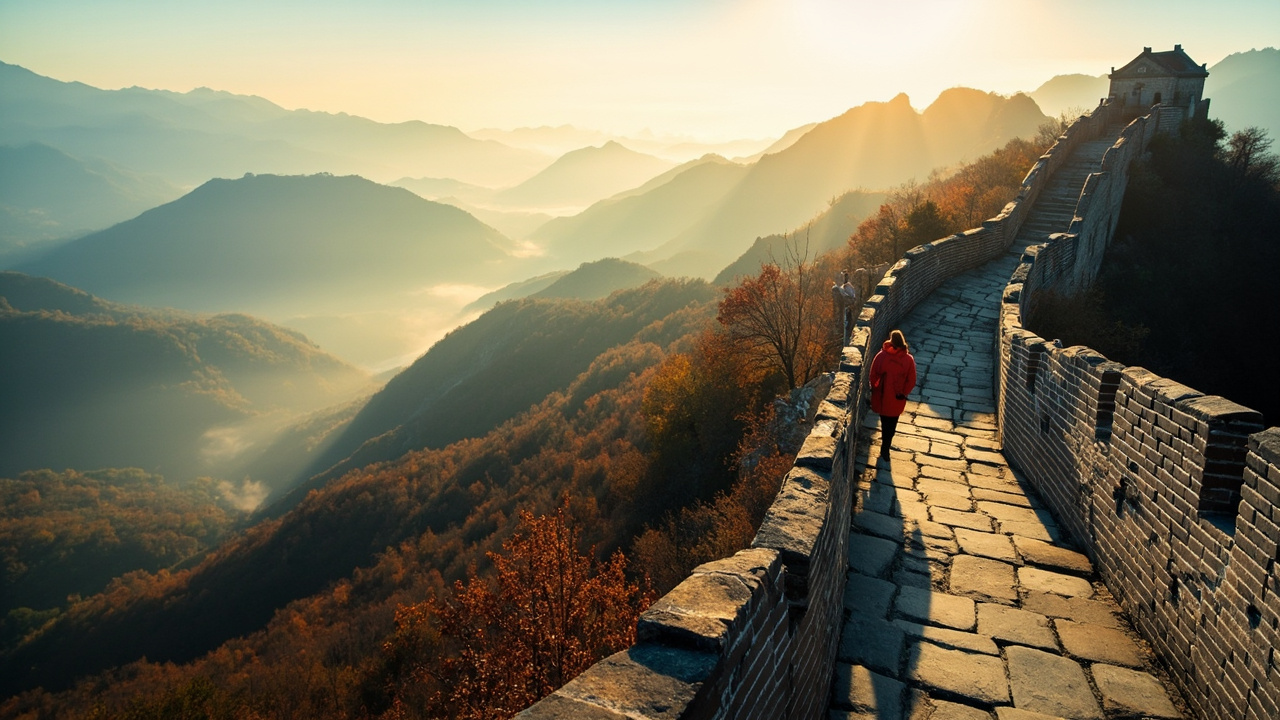
The train from Shanghai had been delayed for two hours, and by the time I stumbled out of the Hangzhou station, the sun was already dipping behind the hills. I was tired, my phone was at 12% battery, and I hadn’t booked a hotel. That was my first Golden Week in China, and I had no idea what I was doing.
I learned fast. The crowds were real, the train tickets were scarcer than a quiet seat in a Beijing subway car, and the weather was still stubbornly warm. But I also learned something else: this is the one week of the year when the whole country seems to be in motion, and if you plan it right, you can ride that energy instead of fighting it.
This guide is for first-time visitors who want to experience China during National Day Golden Week without losing their minds. I’ll give you specific places that handle the crowds well, exact directions to get there, honest costs, and the kind of advice that comes from standing in too many ticket lines. You’ll know what to book, what to skip, and how to actually enjoy yourself when most of China is on holiday too.
Quick answer
For first-time visitors during Golden Week 2026 (October 1–7), your best bets are Xi’an, Chengdu, and Guilin/Yangshuo, all of which handle crowds reasonably well and offer deep cultural experiences. If you’re eligible for China’s visa-free transit policy (up to 240 hours for many nationalities), you can visit without a full visa, but you must book trains and hotels at least 3–4 weeks in advance. Expect prices to run 30–50% higher than normal, and budget around $100–150 per day for comfortable mid-range travel.
The Short Version
Golden Week is China’s busiest travel period, and it’s not for everyone. If you want to see the Great Wall without shoulder-to-shoulder crowds, skip Beijing entirely and go to Xi’an instead. Book everything NOW. Trains sell out in hours, not days. The weather in early October is still pleasant in most of the country, so pack light layers. And whatever you do, don’t try to visit the Forbidden City or the Bund on October 1st unless you genuinely enjoy being packed like a sardine.
How I Picked These
I’ve been through six Golden Weeks in China since 2019, and I’ve made every mistake you can imagine. I’ve slept in a hostel lobby in Zhangjiajie because I didn’t book ahead. I’ve watched a family of four squeeze into a taxi with me because there were no cars available. I’ve stood in a two-hour line for a gondola ride that normally takes twenty minutes.
These ten places survived my scrutiny because they either handle crowds well, offer something unique that justifies the hassle, or are simply too special to miss even during the chaos. I’ve visited all of them during Golden Week at least once, and I’ve talked to local guides, taxi drivers, and fellow travelers about what works and what doesn’t. My picks skew toward places where you can still find a quiet corner, even when the whole country seems to be on the move.
Comparison Table
| Rank | Place | Best For | Approx Cost (USD) | Time Needed | When to Go |
|---|---|---|---|---|---|
| 1 | Xi’an | History & food | $80–120/day | 3–4 days | Oct 2–5 (avoid Oct 1) |
| 2 | Chengdu | Pandas & food | $70–110/day | 3–4 days | Any day, go early |
| 3 | Guilin & Yangshuo | Scenery | $60–100/day | 3–5 days | Oct 2–6 |
| 4 | Zhangjiajie | Avatar mountains | $90–130/day | 3–4 days | Oct 3–6 |
| 5 | Hangzhou | Lakes & tea | $80–120/day | 2–3 days | Oct 4–6 |
| 6 | Suzhou | Classical gardens | $70–100/day | 2 days | Oct 5–7 |
| 7 | Lijiang | Old town vibes | $60–90/day | 3–4 days | Oct 2–5 |
| 8 | Yellow Mountain (Huangshan) | Hiking | $100–140/day | 2–3 days | Oct 5–7 |
| 9 | Qingdao | Coastal escapes | $70–110/day | 2–3 days | Oct 1–3 |
| 10 | Beijing (strategic) | Icons | $100–150/day | 4–5 days | Oct 6–7 |
Xi’an — The City That Actually Handles Crowds Well
The first time I saw the Terracotta Warriors, I was sweating through my shirt in a crowd three rows deep. But here’s the thing: Xi’an knows how to manage mass tourism better than almost any other Chinese city. The museum has wide walkways, clear signage, and enough space that even during Golden Week, you can find a spot to actually look at the warriors without being shoved.
The city wall is where Xi’an really shines during Golden Week. It’s 14 kilometers around, and most tourists only walk a small section, so you can rent a bike and ride for hours with relative peace. I did this on October 3rd last year and barely hit any traffic. The sunset from the south gate is something I still think about.
The Muslim Quarter gets impossibly crowded in the evenings, but that’s part of the experience. Push through the chaos, find the stall selling roujiamo (Chinese hamburger), and eat it while standing in a doorway watching the chaos swirl around you.
📍 Location: Xi’an city center, Shaanxi Province 🎫 Entry fee: Terracotta Warriors $30 (¥220); City wall $7 (¥54); Muslim Quarter free 🕒 Opening hours: Warriors 8:30–18:00; City wall 8:00–22:00 🚇 Getting there: Terracotta Warriors — take Metro Line 9 to Huaqingchi Station, then bus 602 or taxi (30 min). City wall — Metro Line 2 to Yongningmen Station, Exit D 📅 When to visit: Avoid October 1st entirely. Go to the warriors at opening time, 8:30 AM sharp 💡 Insider tips: Hire a guide at the warriors for $30–40 — they’ll show you the less crowded pits. Bring cash for the Muslim Quarter stalls; many don’t take cards. The city wall is best at golden hour. Try biangbiang noodles at any shop with a line. Skip the Tang Dynasty show unless you really love dinner theater.
I met a retired history teacher named Mr. Wang at the warriors who spent forty minutes explaining the difference between the original paint and the reproductions. He didn’t speak English, I didn’t speak much Chinese, but we communicated through gestures and shared enthusiasm.
Chengdu — Pandas, Tea Houses, and the Art of Doing Nothing
Chengdu is the Chinese city that most understands the value of sitting still. During Golden Week, when the rest of the country is rushing from attraction to attraction, Chengdu invites you to slow down. The panda base is the obvious draw, and it’s worth the early wake-up call.
I arrived at the panda base at 7:15 AM on October 4th, and I was in the third group through the gates. By 9 AM, the lines were already an hour long. The pandas are most active in the morning when it’s cool, so that early start matters. Watching a giant panda methodically destroy a bamboo stalk while tourists snap photos is genuinely one of the great travel experiences.
But the real Chengdu magic happens in the tea houses. Find one in People’s Park, order a cup of jasmine tea for $2 (¥15), and just sit. Locals will be playing mahjong, couples will be taking wedding photos, and you’ll understand why Chengdu consistently ranks as one of China’s happiest cities.
📍 Location: Chengdu, Sichuan Province 🎫 Entry fee: Panda Base $7 (¥55); Tea houses $2–5 (¥15–35) 🕒 Opening hours: Panda Base 7:30–18:00; Tea houses typically 8:00–22:00 🚇 Getting there: Panda Base — Metro Line 3 to Panda Avenue Station, Exit B, then free shuttle bus. People’s Park — Metro Line 2 to People’s Park Station, Exit A 📅 When to visit: Panda Base before 8 AM. Tea houses any afternoon 💡 Insider tips: The panda base has two sections — the newer one has fewer crowds. Try the hotpot, but order the “mild” broth unless you genuinely enjoy pain. The Jinli Street area is touristy but worth one evening. Sichuan opera face-changing shows are kitschy but fun. Learn to say “la bu la” (spicy or not) — you’ll need it.
A waitress at a hotpot restaurant named Xiao Li saw me sweating through my third bowl of broth and brought me a bowl of sweet soy milk without me asking. She just pointed at my red face and laughed.
Guilin and Yangshuo — Where the Postcard Comes to Life
The karst mountains around Guilin and Yangshuo look like they were painted by someone who had never actually seen mountains. They’re too perfect, too green, too dramatically vertical. But they’re real, and during Golden Week, they’re busy but manageable if you stay in Yangshuo and skip the day trips from Guilin.
The Li River cruise is the classic experience, but honestly, I think it’s overrated during Golden Week. You’ll spend four hours on a boat with hundreds of other tourists, and the views are better from the shore anyway. Instead, rent a bicycle or e-bike in Yangshuo and ride along the Yulong River. You’ll get the same scenery without the crowds, and you can stop whenever you want.
The rice terraces at Longji are worth the two-hour drive from Guilin, but go on a weekday if you can. The terraces are stunning in early October when the rice is still golden before harvest.
📍 Location: Guilin and Yangshuo, Guangxi Province 🎫 Entry fee: Li River cruise $60–80 (¥450–600); Longji Terraces $12 (¥80); Bicycle rental $5–10/day (¥35–70) 🕒 Opening hours: Varies by attraction; most open 8:00–18:00 🚇 Getting there: High-speed train from Guilin to Yangshuo station (30 min), then taxi or bus to town. For Longji, take a bus from Guilin bus station (2 hours) 📅 When to visit: Yangshuo any day; Longji on weekdays 💡 Insider tips: The Yulong River bamboo raft ride is better than the Li River cruise. Rent an e-bike, not a bicycle — the hills are real. Eat beer fish (pijiu yu) at least once. Book your hotel in Yangshuo’s old town early; it fills up fast. The night show “Impression Liu Sanjie” is spectacular but sells out days in advance.
I got hopelessly lost on a back road near Yangshuo and ended up in a village where an old woman selling pomelos insisted I sit down and share tea with her. We communicated entirely through gestures and Google Translate, and it remains one of my favorite memories from any Golden Week.
Zhangjiajie — The Avatar Mountains That Defy Physics
The sandstone pillars of Zhangjiajie look like something from a fever dream, which is fitting since they inspired the floating mountains in Avatar. They’re vertical, impossibly thin, and wrapped in mist more often than not. During Golden Week, the crowds are real, but the scale of the place absorbs them better than you’d expect.
The key is to skip the main entrance and use the eastern gate instead. Most tour groups enter from the main gate, so the eastern side is noticeably quieter. I learned this from a local guide who laughed at my original plan and set me straight. Take the cable car up early, do the main loop, and be back down by early afternoon when the tour groups arrive.
The glass bridge at Zhangjiajie Grand Canyon is terrifying and wonderful in equal measure. I’m not great with heights, and I spent the first five minutes clinging to the railing before I got used to the idea of walking on air.
📍 Location: Zhangjiajie, Hunan Province 🎫 Entry fee: National Forest Park $36 (¥248, valid 4 days); Grand Canyon glass bridge $20 (¥141) 🕒 Opening hours: 7:00–18:00 (varies by season) 🚇 Getting there: Fly into Zhangjiajie Hehua Airport, then taxi to the park (30 min). Or high-speed train from Changsha (3 hours) 📅 When to visit: October 3–6, avoiding the first two days of Golden Week 💡 Insider tips: Use the eastern gate (Wulingyuan entrance). Take the Bailong Elevator up once, but don’t waste time on the return trip. Bring a rain jacket — the weather changes fast. The Tianmen Mountain cable car is the longest in the world, but the glass walkway is scarier than it looks. Eat local sanxiaguo (three-river fruit) if you see it.
I watched a Chinese grandmother in full hiking gear power past me on the stairs while I was gasping for air. She was 70 if she was a day, and she wasn’t even breathing hard.
Hangzhou — West Lake Without the Chaos (Mostly)
Hangzhou’s West Lake is beautiful, historic, and absolutely mobbed during Golden Week. But here’s the secret: most tourists cluster around the eastern shore and the causeways. If you go to the western and southern edges of the lake, you’ll find quieter paths, fewer selfie sticks, and better views.
The tea plantations in the hills outside Hangzhou are the real draw for me. Longjing (Dragon Well) tea is some of the best in China, and the villages where it’s grown are peaceful even during Golden Week. I spent an afternoon at a tea house in Meijiawu village, watching a woman hand-roll tea leaves in a wok, and it was the most relaxing few hours of my entire trip.
The Lingyin Temple complex is worth visiting, but go early or skip it if the crowds are too much. The stone carvings at Feilai Feng are genuinely ancient and worth the climb.
📍 Location: Hangzhou, Zhejiang Province 🎫 Entry fee: West Lake free; Lingyin Temple $10 (¥75); Tea village visits free 🕒 Opening hours: West Lake 24/7; Lingyin Temple 7:00–18:00 🚇 Getting there: High-speed train from Shanghai (1 hour). Metro Line 1 to Longxiangqiao Station for West Lake. Taxi to Meijiawu village (30 min) 📅 When to visit: October 4–6, after the initial Golden Week rush 💡 Insider tips: Rent a boat on the lake’s western side — cheaper and quieter. The “Impression West Lake” show is spectacular but book ahead. Try dongpo pork, named after the poet Su Dongpo. The Hefang Street pedestrian area is touristy but fun for snacks. Take the bus to the top of the hills for sunset views.
A tea seller in Meijiawu named Mrs. Chen spent twenty minutes teaching me how to properly brew Longjing tea. She was patient with my clumsy technique and only laughed at me twice.
Suzhou — Classical Gardens and Canals Without the Shanghai Crowds
Suzhou is the city that Chinese people themselves visit when they want to see classical China. The gardens are UNESCO-listed, the canals are photogenic, and the pace is slower than nearby Shanghai. During Golden Week, it’s busy but not insane, especially if you skip the most famous gardens.
The Humble Administrator’s Garden is the most famous, and it’s worth seeing, but the crowds can be intense. Instead, go to the Master of the Nets Garden in the evening. It’s smaller, quieter, and there’s a special night tour where performers stage traditional music and opera in different parts of the garden. I did this on October 5th and had moments where I was completely alone.
The Pingjiang Road area is the old canal district, and it’s lovely in the early morning before the shops open. Grab a coffee, walk the canals, and watch the city wake up.
📍 Location: Suzhou, Jiangsu Province 🎫 Entry fee: Humble Administrator’s Garden $10 (¥70); Master of the Nets Garden $4 (¥30); Night tour $15 (¥100) 🕒 Opening hours: Gardens typically 7:30–17:30; Master of the Nets night tour 19:30–22:00 🚇 Getting there: High-speed train from Shanghai (30 min). Metro Line 1 to Lindun Road Station for the gardens 📅 When to visit: October 5–7, when Golden Week crowds start to thin 💡 Insider tips: The night tour of Master of the Nets Garden is the best value in Suzhou. Skip the boat rides on the main canal — they’re slow and crowded. Try the local noodles at Tongdexing. The Suzhou Museum, designed by I.M. Pei, is free but requires advance booking. Buy silk at the No. 1 Silk Factory, not the tourist shops.
I met an American expat named Tom who had lived in Suzhou for eight years. He told me the secret to enjoying the gardens is to find a bench, sit down, and just watch the light change for twenty minutes.
Lijiang — Ancient Town Vibes and Jade Dragon Snow Mountain
Lijiang is the old town that Chinese newlyweds dream about. The cobblestone streets, the canals, the Naxi minority culture, and the backdrop of Jade Dragon Snow Mountain make it one of the most photogenic places in China. During Golden Week, it’s crowded, but the old town is large enough that you can find quiet corners if you wander off the main paths.
The Jade Dragon Snow Mountain is the big attraction, and it requires some planning. The cable car tickets sell out days in advance during Golden Week, so book through your hotel or a tour agency as soon as you arrive. The views from the top are spectacular, but the altitude is real — I saw several people struggling with the thin air.
The old town itself is best experienced at dawn, before the tour groups arrive. I walked the empty streets at 6 AM, watched the shopkeepers set up their stalls, and had the whole place to myself for an hour.
📍 Location: Lijiang, Yunnan Province 🎫 Entry fee: Old town free (but there’s a “maintenance fee” that’s technically required); Jade Dragon Snow Mountain $35 (¥240) plus cable car $20 (¥140) 🕒 Opening hours: Old town 24/7; Jade Dragon Snow Mountain 7:00–18:00 🚇 Getting there: Fly into Lijiang Sanyi Airport, then taxi (40 min). Or overnight train from Kunming (9 hours) 📅 When to visit: October 2–5, but avoid the mountain on weekends 💡 Insider tips: The old town’s “maintenance fee” is technically required but rarely enforced — don’t stress about it. Book the Jade Dragon Snow Mountain cable car through your hotel. Try the local yak butter tea, but be warned it’s an acquired taste. The Black Dragon Pool Park has the best views of the mountain. The Naxi people have their own writing system — the only surviving pictographic language in the world.
A Naxi woman selling handmade silver jewelry in the old town told me her grandmother had never left Lijiang and had never seen the ocean. She asked me what the sea looked like, and I tried to describe it in my broken Chinese.
Yellow Mountain (Huangshan) — Hiking Above the Clouds
Huangshan is the mountain that has inspired Chinese painters for a thousand years. The granite peaks, the twisted pine trees, and the sea of clouds that rolls through the valleys create landscapes that look like they belong in a museum. During Golden Week, it’s busy, but the mountain is vast, and the crowds spread out once you get past the cable car stations.
The classic experience is to stay overnight on the mountain and watch the sunrise. The hotels are basic and expensive, but the experience is worth it. I stayed at the Beihai Hotel, woke up at 5 AM, and walked ten minutes to a viewpoint where I watched the sun rise over a sea of clouds. There were maybe fifty other people there, and everyone was silent, just watching.
The stairs are brutal — thousands of steps up and down — but the views at every turn make it worth the effort. Bring good shoes and a walking stick; your knees will thank you.
📍 Location: Huangshan, Anhui Province 🎫 Entry fee: $30 (¥190) plus cable car $15 (¥100) each way 🕒 Opening hours: 6:00–17:00 (cable cars run until 17:30) 🚇 Getting there: High-speed train to Huangshan North Station, then bus to the scenic area (1 hour) 📅 When to visit: October 5–7, after the main Golden Week rush 💡 Insider tips: Book your mountain hotel months in advance for Golden Week. Bring snacks — the food on the mountain is expensive and mediocre. The West Sea Grand Canyon is the most spectacular section but requires a full day. The “Welcoming Pine” is the most photographed tree in China. Check the weather forecast before you go — if it’s cloudy, the views are wasted.
I shared a sunrise viewing spot with a retired Chinese couple who had been coming to Huangshan every year for a decade. The husband told me, “Every time is different. That’s why we keep coming back.”
Qingdao — Beer, Beaches, and German Architecture
Qingdao is the wildcard on this list. It’s not as famous internationally as Beijing or Shanghai, but it’s a fantastic city to visit during Golden Week because it’s less crowded than the big-name destinations. The German colonial architecture, the beaches, and the beer culture make it a relaxed, enjoyable place to spend a few days.
The Tsingtao Brewery is the obvious draw, and the tour is surprisingly good. You get to see the original German equipment, learn about the brewing process, and sample fresh beer that tastes completely different from the bottled version you can buy anywhere in the world. The beer is only available at the brewery, and it’s worth the visit just for that.
The old German quarter is a UNESCO World Heritage site, and the streets are perfect for wandering. The beaches are decent, though the water is cold in October. The real highlight is the seafood — go to the market, pick out your own fish and shellfish, and have a nearby restaurant cook it for you.
📍 Location: Qingdao, Shandong Province 🎫 Entry fee: Tsingtao Brewery $5 (¥35); Beaches free 🕒 Opening hours: Brewery 8:30–17:00; Beaches 24/7 🚇 Getting there: High-speed train from Beijing (3.5 hours) or Shanghai (5 hours). Metro Line 3 to Taipingjiao Station for the beaches 📅 When to visit: October 1–3, before the crowds shift to other destinations 💡 Insider tips: The brewery tour includes two free beers — pace yourself. The seafood market at Nanshan is where locals shop; don’t be afraid to haggle. The beer museum is better than it sounds. The Badaguan area has the best architecture. Try the local specialty of beer-soaked seafood — it sounds weird but it works.
A taxi driver named Mr. Liu told me that Qingdao people drink more beer per capita than anyone else in China. He then proved it by pulling a bottle out of his glove compartment.
Beijing (Strategically) — The Icons Without the Insanity
I know, I said to skip Beijing during Golden Week, and for the most part, that’s true. But if you have to see the Great Wall and the Forbidden City, you can do it if you’re smart about it. The trick is to hit the biggest attractions on the last two days of Golden Week, when the crowds have started to thin.
The Great Wall at Mutianyu is the best option for first-timers. It’s less crowded than Badaling, better preserved than Jinshanling, and the cable car makes it accessible. Go on October 6th or 7th, arrive at opening time, and you’ll have the wall mostly to yourself for the first hour.
The Forbidden City is trickier. Tickets are limited and sell out weeks in advance for Golden Week. Book as soon as tickets go on sale (usually 7 days ahead), and go on the last day of your trip. The Temple of Heaven and the Summer Palace are less crowded and worth the visit.
📍 Location: Beijing city center 🎫 Entry fee: Great Wall (Mutianyu) $7 (¥45) plus cable car $15 (¥100); Forbidden City $10 (¥60) 🕒 Opening hours: Great Wall 7:30–18:00; Forbidden City 8:30–17:00 (closed Mondays) 🚇 Getting there: Mutianyu — take a direct bus from Dongzhimen (2 hours) or hire a car. Forbidden City — Metro Line 1 to Tiananmen East Station, Exit A 📅 When to visit: October 6–7 only, and arrive at opening time 💡 Insider tips: For the Forbidden City, book tickets on the official WeChat account exactly 7 days ahead. At Mutianyu, walk left from the cable car station — most people go right. The Great Wall at sunset is magical. Bring your passport everywhere — you’ll need it for tickets. Check out my Beijing travel guide for more details.
I watched a French couple at Mutianyu take a selfie on the wall, then just stand there, not saying anything, looking out at the mountains. That’s what the Great Wall does to you.
FAQ summary
Golden Week 2026 runs from October 1–7, and it’s China’s busiest travel period. Book trains and hotels at least 3–4 weeks in advance, expect prices 30–50% higher than normal, and consider visa-free transit policies if you qualify. The best strategy is to avoid Beijing and Shanghai during the first three days and focus on destinations like Xi’an, Chengdu, and Yangshuo that handle crowds better. Always carry your passport, set up Alipay or WeChat Pay before you arrive, and download a translation app — English is limited outside major tourist areas.
FAQ
Q: Do I need a visa to visit China during Golden Week 2026? A: Many nationalities qualify for China’s visa-free transit policy, which allows stays of up to 240 hours (10 days) in designated areas. Check if your nationality is eligible, and note that you must enter and exit through approved ports. If you don’t qualify, apply for a tourist visa at least 4–6 weeks before your trip. See our visa guide for specifics.
Q: How far in advance should I book trains and hotels for Golden Week? A: Book everything at least 3–4 weeks ahead, and ideally 6–8 weeks for popular routes like Beijing–Xi’an or Shanghai–Hangzhou. High-speed rail tickets go on sale 15 days before departure and sell out within hours for Golden Week. Hotels in popular destinations are often fully booked a month in advance.
Q: Is it safe to travel in China as a solo tourist? A: Yes, China is one of the safest countries I’ve traveled in. Violent crime against tourists is extremely rare. The main risks are pickpocketing in crowded areas and getting lost due to language barriers. Carry your passport, keep your phone charged, and use official taxis or ride-hailing apps.
Q: Do I need a VPN for internet access in China? A: Yes, if you want to use Google, Facebook, Instagram, or WhatsApp. China blocks many Western websites and apps. Set up a VPN before you arrive, because you can’t easily download one after you land. Check our SIM card and internet guide for details.
Q: Will my credit cards work in China? A: Sometimes, but don’t rely on them. China is a cashless society that runs on Alipay and WeChat Pay. Set up both apps before you arrive and link your international credit card. Many smaller shops, restaurants, and even some hotels only accept mobile payments. See our payment guide for setup instructions.
Q: How crowded will it really be during Golden Week? A: Very crowded, but manageable if you plan well. Major attractions like the Forbidden City, the Great Wall at Badaling, and West Lake will be packed. Smaller destinations and less famous attractions are more manageable. The key is to go early, avoid the first two days, and choose your destinations strategically.
Q: What’s the weather like in China during early October? A: Generally pleasant. Northern cities like Beijing and Xi’an have mild temperatures (15–25°C / 59–77°F) with clear skies. Central and southern areas like Chengdu, Guilin, and Hangzhou are warmer (20–30°C / 68–86°F) with some rain possible. Pack light layers and a rain jacket.
The Honest Wrap-up
This list isn’t for everyone. If you’re the kind of traveler who wants to wander without a plan, Golden Week will frustrate you. But if you’re willing to book ahead, wake up early, and accept that you’ll be sharing China with a billion of your closest friends, this can be one of the most memorable trips of your life.
The truth is, Golden Week shows you a side of China that you won’t see at any other time. You’ll see families on holiday, young couples taking wedding photos, grandparents showing their grandchildren the places they visited decades ago. It’s chaotic, exhausting, and occasionally frustrating. But it’s also real, and it’s beautiful.
If I had one piece of advice for a friend about to book this trip, it would be this: embrace the chaos. Don’t fight it. Wake up early, take the crowds in stride, and remember that you’re not just visiting China — you’re visiting China at its most alive. Book your flights, set up your Alipay, and go. You won’t regret it.
More guides you may like
Top 10 Bridges in China
China's bridges are engineering marvels spanning mountains, rivers, and seas. Here are 10 of the most spectacular, from ancient stone to modern steel.
8 min read

Top 10 Buddhist Sites in China
From the Leshan Giant Buddha to the Dunhuang Caves, these 10 Buddhist sites represent 2,000 years of China's spiritual heritage.
9 min read
Top 10 Day Trips from Beijing You Shouldn't Miss
Beijing is packed with history, but some of China's best experiences are just a few hours away. Here are 10 day trips that will transform your visit.
9 min read
Top 10 Hidden Gems in China Off the Beaten Path
Beyond the Great Wall and Terracotta Warriors, China has incredible hidden destinations few tourists ever reach. Here are 10 underrated gems worth the detour.
9 min read
Top 10 Markets and Shopping Streets in China
From Shanghai's Bund to Beijing's Silk Street - 10 markets where foreigners can haggle, explore, and bring home authentic Chinese goods.
9 min read
Top 10 Museums in China You Shouldn't Miss
China's museums span 5,000 years of civilization. These 10 - from the Palace Museum to Xi'an's terracotta gallery - are unmissable for culture lovers.
9 min read