
Seafood in China Coastal Cities
TODO: Extract from article (100-160 chars)
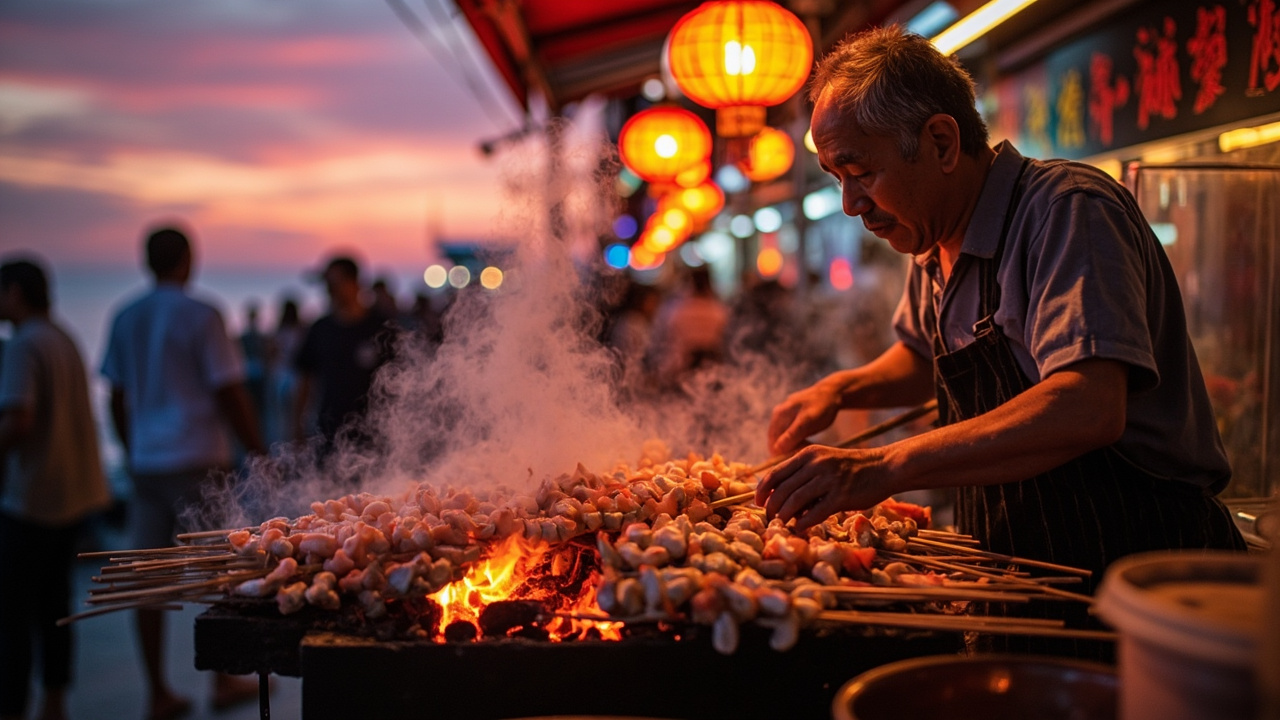
The first time I really understood Chinese seafood was in a tiny, fluorescent-lit restaurant in Qingdao, not a fancy place by the beach. A woman at the next table, a local, was showing her young daughter how to crack open a steamed crab. She did it with this quiet, practiced efficiency, then dipped the meat in a little dish of vinegar and ginger. The girl copied her, and for a moment, the whole room smelled of brine and rice vinegar. I’d been in China for years by then, but I’d mostly stuck to the big-city Cantonese places. That night, I realized I’d been missing the point entirely.
China’s coastline stretches over 18,000 kilometers, from the cold waters of the Bohai Sea down to the tropical South China Sea. That’s not just a geographic fact; it’s a culinary map. Each stretch of coast has its own traditions, its own species, and its own fiercely held opinions about how to cook them. This guide is about the cities where that culture is most alive and most accessible to a first-time visitor.
I’ve lived in Beijing for seven years and traveled the coast dozens of times. This isn’t a list pulled from a travel forum. It’s a collection of places I’ve returned to, argued with locals about, and eaten my way through, sometimes with excellent results and sometimes with a plate of something I couldn’t quite identify. You’ll get specific districts, specific dishes, and the kind of practical details that make the difference between a good meal and a great trip.
Quick answer
The best seafood cities in China for first-time tourists are Qingdao, Xiamen, and Sanya, each offering a distinct regional style, from Shandong’s simple steamed preparations to Fujian’s complex soups and Hainan’s tropical flavors. Expect to pay $15-$40 (CNY 110-290) per person for a solid meal with several dishes, and note that most top seafood destinations are within China’s visa-free transit policy for many nationalities, making a stopover easy to arrange.
The Short Version
If you only have 90 seconds, here’s the truth: skip the generic “seafood street” that your hotel recommends and head for the city’s wholesale market district, where restaurants cook what you buy. Qingdao is the best all-around introduction for its beer culture and German-influenced history. Xiamen is more romantic and refined. Sanya is the most touristy, but the quality of the tropical fish is undeniable. Guangzhou deserves a visit for the sheer variety and Cantonese precision, but it’s a harder city to navigate. Go in the cooler months to avoid the worst crowds, and always, always ask the price per jin (500 grams) before you point at anything.
How I Picked These
I didn’t rank these cities from a spreadsheet. I spent time in each one, usually a week or more, eating multiple meals a day and talking to whoever was willing to talk. I’ve sat with fishmongers in Qingdao at 5 AM, learned to shuck oysters from a woman in Xiamen who’d been doing it for forty years, and argued with a chef in Sanya about whether a particular grouper was better steamed or in a hot pot. I also made mistakes, like ordering a “small” crab that turned out to be the size of a dinner plate, and I paid for that lesson. This list reflects where I found the most consistent quality, the most welcoming atmosphere for foreigners, and the most distinctive local character. It’s a personal list, but it’s an honest one.
Comparison Table
| Rank | Place | Best For | Approx Cost (USD) | Time Needed | When to Go |
|---|---|---|---|---|---|
| 1 | Qingdao | First-timers, beer + seafood | $20-$40 (CNY 145-290) | 2-3 days | May-June, Sept-Oct |
| 2 | Xiamen | Romantic setting, refined flavors | $25-$45 (CNY 180-325) | 2-3 days | Oct-Nov, Mar-Apr |
| 3 | Sanya | Tropical fish, resort vibe | $30-$60 (CNY 215-435) | 3-4 days | Nov-Mar |
| 4 | Guangzhou | Variety, Cantonese precision | $25-$50 (CNY 180-360) | 2-3 days | Oct-Dec |
| 5 | Zhoushan | Authentic, less touristy | $15-$30 (CNY 110-215) | 1-2 days | Sept-Nov |
| 6 | Dalian | Russian/Japanese influence | $20-$35 (CNY 145-250) | 2 days | May-June, Sept |
| 7 | Shantou | Adventurous eating, Chaoshan cuisine | $15-$30 (CNY 110-215) | 1-2 days | Oct-Dec |
| 8 | Ningbo | Simple, coastal Zhejiang cooking | $15-$25 (CNY 110-180) | 1-2 days | Sept-Nov |
| 9 | Beihai | Budget-friendly, local life | $10-$20 (CNY 70-145) | 1-2 days | Oct-Apr |
| 10 | Haikou | Laid-back, cheaper than Sanya | $15-$25 (CNY 110-180) | 2 days | Nov-Mar |
1. Qingdao 鈥?Where the Beer Meets the Sea
I remember standing at the Qingdao Beer Museum, holding a glass of the freshest lager I’ve ever tasted, brewed that very day. The guide, a cheerful guy named Liu, told me the secret wasn’t just the German recipe but the local Laoshan spring water. That combination, beer and the sea, is the soul of this city. It’s a place where a meal isn’t complete without a cold bottle of Tsingtao, and where the seafood is treated with a respect that borders on reverence.
The city’s history as a German concession in the early 1900s left it with a unique character, a sort of Chinese-European beach town that feels different from anywhere else. The seafood here is mostly from the Yellow Sea, which is colder, so the flavors are cleaner and sweeter. The local style is simple: steam it, maybe with a little ginger and scallion, and let the ingredient speak. You’ll find less of the heavy sauces you get further south.
馃搷 Location: The action is around the old city and the pier, particularly near Zhan Qiao Pier and the bustling markets in the Shinan district.
馃帿 Entry fee: Free to wander the streets. The Qingdao Beer Museum is about $7 (CNY 50).
馃晲 Opening hours: Restaurants generally open for lunch from 11 AM to 2 PM and dinner from 5 PM to 10 PM. The beer museum is open daily, usually 8:30 AM to 5 PM.
馃殕 How to get there: Fly into Qingdao Jiaodong International Airport (TAO), then take the metro Line 8 to the city center. The main tourist area is around Line 3, get off at Qingdao Station for the pier.
鈴?When to visit: The best time is late spring (May-June) or early autumn (September-October) when the weather is mild and the summer crowds have thinned.
馃挕 Insider tips:
- Don’t just order “seafood.” Go to a market like Nanshan Market, pick your own live crab, shrimp, and clams, and take them to a nearby restaurant to cook. They’ll charge a small fee per dish.
- Ask for laoshan beer, the local brew, not the standard Tsingtao you find everywhere. It’s a different, smoother taste.
- Try pi jiu ya, beer-soaked duck, a local specialty that’s surprisingly good.
- The local dialect is thick. Use a translation app for menu items, as English menus are rare in the smaller places.
- The best deal is a “set meal” at a busy local spot. You’ll get a few small dishes, a big bowl of soup, and a beer for a set price.
I once ordered a “small” plate of clams that was enough for a family of four. The waitress laughed at my shocked face and kindly packed the rest for me to take away.
2. Xiamen 鈥?The Island of Subtle Flavors
I was sitting on a stool outside a tiny shop on Gulangyu Island, the car-free island just off Xiamen’s coast, watching the ferry lights twinkle across the water. I’d just eaten a bowl of sha cha mian, a noodle soup with a rich, peanutty sauce, and I was trying to figure out how they got the broth so deep and complex. It was a moment of quiet contentment that defines this city for me.
Xiamen’s food is part of the Fujian (Hokkien) tradition, which is all about umami and layering. They use a lot of fermented ingredients, dried seafood, and a distinctive paste made from fermented soybeans. It’s more subtle than the bold flavors of the north or the fiery heat of Sichuan. The setting helps. The city is an island with a laid-back, almost Mediterranean feel, and the seafood is central to its identity.
馃搷 Location: The best areas are around Zhongshan Road for street food and the waterfront promenade. For a more local feel, head to the Eighth Market (Ba Shi) in the old town.
馃帿 Entry fee: Free to wander the city and most markets. The ferry to Gulangyu is about $5 (CNY 35) round trip.
馃晲 Opening hours: The Eighth Market is most alive in the morning. Many small restaurants open for lunch and close by 8 PM. Night markets start around 6 PM.
馃殕 How to get there: Fly into Xiamen Gaoqi International Airport (XMN). Take the airport bus or metro Line 1 to the city center. Get off at Zhongshan Park Station for the main pedestrian street.
鈴?When to visit: Autumn (October-November) and spring (March-April) are perfect. Avoid the summer typhoon season and the sticky heat of July and August.
馃挕 Insider tips:
- At the Eighth Market, you can buy a bag of live shrimp and have a nearby stall cook them for you on the spot for a couple of dollars.
- Try tu sun dong, a jelly made from a sea worm. It sounds odd, but it’s a local delicacy with a great texture.
- Don’t miss the oyster omelet, a classic Hokkien street food. The best ones are crispy on the edges and gooey in the middle.
- The local sweet potato porridge is the perfect palate cleanser between rich dishes.
- Learn the phrase “bu gui,” which means “not expensive,” to use when bargaining at the market.
I watched a woman shuck oysters with a speed that seemed impossible, her knife a blur. She saw me staring and handed me one, still cold from the sea. It was the freshest thing I’ve ever tasted.
3. Sanya 鈥?The Tropical Feast
The first thing that hits you in Sanya is the humidity, a warm blanket that smells of salt and frangipani. The second is the sheer size of the fish. I saw a grouper in the First Market that must have weighed forty pounds, its head bigger than my own. This is the deep south, where the South China Sea provides a cornucopia of tropical species you simply won’t find further north.
Sanya is the most touristy place on this list, and it knows it. Prices are higher, and the quality can be inconsistent if you don’t know where to look. But when you get it right, the experience is unmatched. The local style is often a hot pot, where you cook thin slices of fish and shellfish in a bubbling broth, or a simple steam with a light soy and chili dip that lets the delicate flavor of the reef fish shine.
馃搷 Location: The main hub is the First Market (Di Yi Shi Chang) near the city center. Most of the big resorts are in Yalong Bay or Sanya Bay, which are a taxi ride away.
馃帿 Entry fee: Free to wander the markets. Many of the beaches are technically public, though access through resorts can be restricted.
馃晲 Opening hours: The First Market is busiest in the evening. Restaurants in the tourist areas are open late, often until 11 PM or midnight.
馃殕 How to get there: Fly into Sanya Phoenix International Airport (SYX). Take a taxi or the airport bus to the city center. The First Market is a short walk from the main bus station.
鈴?When to visit: The dry season from November to March is the best time. It’s also the peak tourist season, so book ahead. Avoid the summer months when it’s oppressively hot and humid.
馃挕 Insider tips:
- At the First Market, you buy your seafood from the stalls, then take it to one of the many “processing” restaurants around the perimeter. They’ll cook it for a set fee per person.
- Negotiate hard on the price of the seafood itself. The initial quote is often double what they’ll accept.
- Ask for the local he le crab, a type of mud crab that’s a regional specialty.
- Be wary of restaurants that offer free transport from your hotel. The price is built into your meal.
- If you’re staying at a resort, ask the concierge for their preferred local restaurant. They often have a deal, but it’s usually a better one than you’d get on your own.
I made the mistake of not agreeing on a price before pointing at a lobster. The bill was a shock, a lesson I’ve never repeated. Always ask the total price for the whole dish, not the per-pound price.
4. Guangzhou 鈥?The Cantonese Cathedral of Seafood
Guangzhou is a city that worships food, and seafood is the high priest. I remember walking into a massive restaurant in the Fangcun district, a place that looked more like a convention center than a dining room, with tanks of every conceivable creature lining the walls. It was overwhelming, a bit intimidating, and utterly thrilling. This is where Cantonese cuisine, considered by many to be the finest in China, reaches its peak.
The focus here is on absolute freshness and precise cooking. A fish is either steamed to perfection with a whisper of ginger and scallion, or it’s served as sashimi, sliced so thin it’s almost translucent. The variety is staggering. You’ll find things here you’ve never seen before, and the sheer scale of the dining operations is something to behold.
馃搷 Location: The best seafood restaurants are scattered, but the area around Fangcun and the Pearl River is a good start. For a more local experience, head to the Huangsha Seafood Market.
馃帿 Entry fee: Free to enter the markets. The Huangsha Market is a great place to just wander and look, even if you don’t buy.
馃晲 Opening hours: Dim sum, which often includes seafood, is a morning and early afternoon affair. The big seafood restaurants are open for lunch and dinner, often until late.
馃殕 How to get there: Fly into Guangzhou Baiyun International Airport (CAN). Take the metro Line 3 to Tiyu Xilu, then transfer to Line 1. For Huangsha Market, get off at Huangsha Station on Line 1, Exit D.
鈴?When to visit: Autumn and early winter (October-December) are the most comfortable. The city is also famous for its spring and autumn export fairs, which make hotels expensive and crowded.
馃挕 Insider tips:
- At Huangsha Market, you can buy live seafood and have it cooked at the restaurants on the upper floors. It’s a more local and often cheaper experience than the big tourist spots.
- Don’t be afraid to ask for recommendations. The waiters in the big restaurants are used to foreigners and can be very helpful.
- Try the razor clams with black bean sauce. It’s a simple dish, but when done right, it’s a revelation.
- The local custom is to wash your dishes and utensils with the hot tea provided. It’s a ritual, not just a practical step.
- Be prepared for a noisy, chaotic, and utterly fantastic dining experience. It’s not a quiet, romantic meal.
I asked a waiter what the most popular dish was, and he pointed to a tank of eels. I ordered it, and it arrived in a sizzling clay pot, the most succulent thing I’ve had in China.
5. Zhoushan 鈥?The Real Deal
If you want to see where China’s seafood actually comes from, you go to Zhoushan. It’s an archipelago off the coast of Zhejiang province, home to one of the country’s largest fishing fleets. The main island is connected to the mainland by a series of bridges, making it accessible but still feeling like a world apart. I went there expecting a working port, and I found a city obsessed with the sea in the best possible way.
This isn’t a place for fancy restaurants with white tablecloths. It’s a place for bustling night markets, where the day’s catch is grilled over charcoal right in front of you. The flavor is pure and direct. They don’t need heavy sauces because the fish is so fresh. It’s the most authentic, least touristy seafood experience on this list.
馃搷 Location: The main hub is on Zhoushan Island, in the city of Dinghai. The night market is a key attraction.
馃帿 Entry fee: Free to wander. The night market is pay-as-you-eat.
馃晲 Opening hours: The night market gets going around 6 PM and can stay open until late. The fishing port is active early in the morning.
馃殕 How to get there: You can take a high-speed train from Ningbo to the Zhoushan area, then a bus or taxi across the bridge. Or fly into Ningbo Lishe International Airport (NGB) and take a bus from there.
鈴?When to visit: The fishing season peaks in the autumn (September-November) after the summer moratorium on fishing ends. This is when you’ll get the widest variety and the best quality.
馃挕 Insider tips:
- The night market is where you want to be. Just walk along the stalls and see what looks good. Point, ask the price, and they’ll grill it for you.
- Try the grilled squid, which is a local specialty. It’s chewy, smoky, and delicious.
- Don’t expect any English. Have your translation app ready and a list of what you want to try.
- The local fish balls, made from pounded fish paste, are a must-try. They’re bouncy and full of flavor.
- This is a great place to try xue yu, or blood cockles, which are served barely cooked. They’re an acquired taste, but very local.
I pointed at a fish I didn’t recognize, and the vendor grilled it for me. It was flaky, sweet, and needed nothing but a squeeze of lime. I never did find out what it was.
6. Dalian 鈥?A Northern Port with a Foreign Flavor
Dalian feels different. It’s a city with a history of Russian and Japanese influence, and you can see it in the architecture and, more importantly, in the food. I remember walking through a Russian-style square and then ducking into a tiny Japanese-run sushi bar for lunch. The city is a fascinating mix, and its seafood reflects that. It’s a northern port with a cosmopolitan edge.
The seafood here is from the colder Bohai Sea, which means it’s similar to what you’d find in Qingdao but with its own distinct character. The local style is a blend of Shandong simplicity and a Japanese appreciation for raw fish. You’ll find excellent sashimi here, as well as hearty stews and grilled dishes that are perfect for the cooler climate.
馃搷 Location: The main tourist area is around Zhongshan Square and the Russian Street. The best seafood is often found in the less central neighborhoods.
馃帿 Entry fee: Free to wander the city’s squares and parks.
馃晲 Opening hours: Standard Chinese meal times. Many restaurants close between 2 PM and 5 PM.
馃殕 How to get there: Fly into Dalian Zhoushuizi International Airport (DLC). Take the metro Line 2 to the city center. Get off at Zhongshan Square Station.
鈴?When to visit: The best times are late spring (May-June) and early autumn (September), when the weather is pleasant and the seafood is at its peak.
馃挕 Insider tips:
- Look for restaurants that specialize in sheng hai, or raw sea urchin. It’s a local delicacy.
- Try the local dongbei style of cooking, which often involves heartier sauces and more vegetables than the coastal south.
- The Russian influence means you can find decent Russian food here, a fun change of pace.
- A walk along the Binhai Road offers stunning views of the coast and is a great way to work up an appetite.
- Don’t be afraid to try the sea cucumber, a prized ingredient in northern China. It’s often served in a rich, savory broth.
I sat in a small restaurant and watched the owner prepare a sea urchin with a quiet, almost ceremonial focus. He handed me the shell, and the bright orange roe tasted like the ocean itself.
7. Shantou 鈥?The Adventurer’s Choice
Shantou is not for the faint of heart. It’s the home of Chaoshan cuisine, which is famous for its emphasis on fresh ingredients and a minimalist approach to cooking. But it’s also a place where you’ll encounter things that might challenge you, like raw crab marinated in soy sauce and gong (a type of fermented fish paste). I’ll admit, my first bite of the raw crab was a moment of genuine hesitation. But it was also a moment of revelation. The texture was silky, the flavor was clean and sweet, and I understood why it’s so beloved.
This is a city that doesn’t care much for tourists. It’s a working city, focused on its own traditions. That means the food is authentic, but the experience can be challenging. English is almost non-existent, and you’ll need to be brave with your ordering. But if you’re willing to take the plunge, you’ll have some of the most memorable meals of your life.
馃搷 Location: The best food is in the old city center, around Xiaogongyuan and the various small alleys that radiate from it.
馃帿 Entry fee: Free to wander. The food is pay-as-you-go.
馃晲 Opening hours: Many of the best places are open only at specific times, often for breakfast or a late-night snack. It’s best to go with a local guide or do your research.
馃殕 How to get there: Fly into Jieyang Chaoshan International Airport (SWA), which serves the region. From there, it’s a short taxi or bus ride into Shantou.
鈴?When to visit: The cooler months from October to December are the most comfortable for exploring the city on foot.
馃挕 Insider tips:
- The beef balls here are legendary, but the seafood is the real star. Try the fish balls and the fish paste dishes.
- Sheng di yu, or raw fish salad, is a local specialty. It’s a communal dish, so it’s best to go with a group.
- Don’t be afraid to ask for help. The locals are proud of their food and, despite the language barrier, are often happy to point you in the right direction.
- The local tea culture is a big part of the dining experience. You’ll often be served a small pot of strong oolong tea after a meal.
- This is a place where you should abandon your usual food rules and just try things. You might be surprised.
I was the only foreigner in a bustling night market, and a group of young locals, seeing my confusion, took me under their wing. They ordered a feast of things I couldn’t name and watched my face as I tried each one. It was one of the best nights of my travels.
8. Ningbo 鈥?The Taste of the Coast
Ningbo is a city I often pass through on my way to somewhere else, but I’ve learned to stop. It’s a major port with a long history, and its food reflects a deep connection to the sea. The local style is simple, similar to its neighbor Zhoushan, but with a few distinctive touches. They have a love for pickled and fermented ingredients, which adds a funky, savory depth to their dishes. I remember a bowl of noodles with pickled mustard greens and tiny river shrimp that was so good I went back the next day for the same thing.
It’s not a city that’s on most tourist itineraries, which is a shame. It’s manageable, walkable, and has a genuine, unpretentious food scene. You won’t find many English menus, but you will find a warm welcome and food that tastes like the sea.
馃搷 Location: The old city area, particularly around the Tianyi Square and the nearby streets, is a good place to start.
馃帿 Entry fee: Free to wander. The Tianyi Pavilion library is a paid attraction if you’re interested.
馃晲 Opening hours: Standard meal times. Many small eateries are closed by 8 PM.
馃殕 How to get there: Ningbo is easily reached by high-speed train from Shanghai or Hangzhou. The train station is in the city center, and most attractions are within walking distance or a short taxi ride.
鈴?When to visit: Autumn (September-November) is the best time, with comfortable temperatures and the freshest seafood after the summer fishing ban.
馃挕 Insider tips:
- Try the local specialty of hong gao xie, or drunken crab, which is marinated in rice wine. It’s a delicacy.
- Look for dishes with xue cai, or pickled mustard greens. They add a unique flavor to many local dishes.
- The area around the old city wall is great for a walk and offers some nice views of the river.
- Don’t be afraid to duck into a small, busy restaurant. If it’s full of locals, it’s probably good.
- The local sweet, a kind of fermented rice soup, is a great way to end a meal.
I asked a shopkeeper for a recommendation, and she pointed me to a small, unassuming restaurant across the street. The hong gao xie I had there was the best I’ve ever tasted.
9. Beihai 鈥?The Budget Beach Town
Beihai, in Guangxi province, is the kind of place you go to slow down. It’s a beach town that hasn’t been completely taken over by tourism, at least not yet. I remember sitting on the beach at Silver Beach, watching the sun set over the ocean, and thinking that this was what a vacation should feel like. The seafood is cheap, the people are friendly, and the pace of life is wonderfully relaxed.
The food here is a mix of Cantonese and Southeast Asian influences, given its proximity to Vietnam. You’ll find fresh, simple preparations and a lot of shellfish. It’s not the most sophisticated seafood destination, but it’s one of the most enjoyable. It’s a place to eat well without worrying about your budget.
馃搷 Location: The main tourist area is around Silver Beach (Yintan) and the old town, which has a charming, faded colonial feel.
馃帿 Entry fee: Free to wander. The beach is public.
馃晲 Opening hours: Restaurants are open standard hours. The night market on the beach is a great option for dinner.
馃殕 How to get there: Fly into Beihai Fucheng Airport (BHY). From the airport, take a taxi to your hotel. The city is small and easy to get around.
鈴?When to visit: The best time is from October to April, when it’s warm and dry. Avoid the summer months, which are hot, humid, and prone to typhoons.
馃挕 Insider tips:
- The night market on the beach is the place to go. You can buy skewers of grilled shrimp, squid, and fish for very little money.
- Try the local specialty of sha chong, or sandworm, which is a type of marine worm that’s considered a delicacy here.
- The old town is worth a wander for its architecture, and there are a few good cafes and restaurants tucked away.
- Rent a bicycle or an e-bike to explore the coast. It’s a great way to see the area.
- Don’t expect any English. Be prepared to use your translation app and a lot of pointing.
I sat at a plastic table on the beach, eating a plate of grilled oysters that cost less than a dollar each, and watched the local families play in the surf. It was perfect.
10. Haikou 鈥?The Laid-Back Alternative
Haikou, the capital of Hainan Island, is often overlooked in favor of its flashier cousin, Sanya. But I prefer it. It’s a real city, with a real life, and its food scene is more authentic and much cheaper. I remember walking through the Qilou Old Street, with its arcaded buildings, and stopping for a bowl of Hainan noodles topped with a rich, brown sauce and a variety of toppings. It was a simple, satisfying meal that felt more local than anything I’d had in Sanya.
The seafood here is similar to what you’ll find in Sanya, but the prices are lower and the atmosphere is more relaxed. It’s a great place to base yourself if you want to explore the island without the resort crowds.
馃搷 Location: The Qilou Old Street area is the main historical and culinary hub.
馃帿 Entry fee: Free to wander.
馃晲 Opening hours: Standard meal times. The old street is lively in the evening.
馃殕 How to get there: Fly into Haikou Meilan International Airport (HAK). Take the airport bus or a taxi to the city center.
鈴?When to visit: The cooler months from November to March are the most pleasant.
馃挕 Insider tips:
- The Qilou Old Street is a great place for a food crawl. Just wander and try whatever looks good.
- Try the local Wenchang chicken, which is a famous Hainanese dish, even though it’s not seafood.
- The local coffee culture is strong, thanks to the island’s history of coffee cultivation. Try a cup of local coffee at a traditional coffee house.
- For a great view of the city, head to the Haikou Clock Tower at sunset.
- The seafood market near the port is a great place to see the day’s catch and buy some for a picnic.
I sat in a coffee house on the old street, drinking a strong, sweet cup of local coffee, and watched the world go by. It was a perfect end to my time on Hainan.
FAQ summary
For first-time visitors, the best seafood cities are Qingdao, Xiamen, and Sanya, each offering a different regional style. A typical meal for two with several dishes will cost between $30 and $80 (CNY 215-580), and it’s common to buy live seafood at a market and have a nearby restaurant cook it for a small fee. The best time to travel for seafood is generally in the cooler months of autumn and spring, avoiding the peak summer heat and tourist crowds.
FAQ
Q: Is it safe to eat seafood in China? A: Yes, it’s generally safe, especially if you eat at busy restaurants and markets where the turnover is high. Look for places with live seafood in tanks or on ice. Avoid anything that looks like it’s been sitting out for a while. As a precaution, make sure your China travel insurance covers food-related illness.
Q: How do I order seafood if I don’t speak Chinese? A: The best way is to go to a market, point at the live seafood you want, and then take it to a nearby restaurant to cook. For restaurants, use a translation app like Google Translate or Pleco. You can also look for picture menus, which are common in tourist areas. Learning the characters for “steamed” (清蒸) and “grilled” (烤) is very helpful.
Q: Do I need to worry about the price of seafood? A: Yes, you should always confirm the price before ordering, especially in tourist areas. Ask for the price per jin (500 grams) and the total price for the whole dish. Don’t be afraid to negotiate, especially at markets. It’s also wise to check if there are any service charges or processing fees.
Q: What is the best time of year for seafood in China? A: Generally, the cooler months are better. The summer fishing moratorium in the Yellow and East China Seas ends in August or September, so autumn is a great time for variety and quality. In the south, the winter months are also good. Spring is also a good time, but the weather can be unpredictable.
Q: Do I need a VPN and a SIM card for my trip? A: Yes, you’ll need a VPN to access Google, Facebook, Instagram, and WhatsApp. You’ll also need a local SIM card or an international roaming plan for data. For more details, check out this guide on China SIM cards and internet access.
Q: Can I use my credit card to pay for seafood? A: No, you should not rely on credit cards. China is a cashless society that uses mobile payments like Alipay and WeChat Pay. You’ll need to set these up before your trip and link them to your international card. Many small restaurants and market stalls only accept mobile payments.
Q: Is there a visa-free policy for visiting China? A: Yes, many nationalities are eligible for the 240-hour visa-free transit policy if they are just passing through on their way to a third country. You should also check if your passport is eligible for the general visa-free entry policy. For the most current information, see this guide on China visa-free transit.
The Honest Wrap-up
This list is for the traveler who believes that a place is best understood through its food. It’s for the person who is willing to get a little lost, to point at something they can’t identify, and to trust the process. It’s not for someone who wants a safe, predictable meal in an air-conditioned hotel restaurant. If that’s you, you’ll be missing the point.
My final advice is this: be brave. The best meals I’ve had in China have been the ones I almost didn’t order. The raw crab in Shantou, the unidentified fish in Zhoushan, the sea urchin in Dalian. They were all risks, and they were all worth it. So go to the market, point at something that looks interesting, and ask them to cook it. You won’t regret it. And if you’re planning your broader trip, don’t forget to check out my guide to the top 10 must-visit places in China to help you connect the dots.
More guides you may like

Top 10 Bridges in China
China's bridges are engineering marvels spanning mountains, rivers, and seas. Here are 10 of the most spectacular, from ancient stone to modern steel.
8 min read

Top 10 Buddhist Sites in China
From the Leshan Giant Buddha to the Dunhuang Caves, these 10 Buddhist sites represent 2,000 years of China's spiritual heritage.
9 min read

Top 10 Day Trips from Beijing You Shouldn't Miss
Beijing is packed with history, but some of China's best experiences are just a few hours away. Here are 10 day trips that will transform your visit.
9 min read

Top 10 Hidden Gems in China Off the Beaten Path
Beyond the Great Wall and Terracotta Warriors, China has incredible hidden destinations few tourists ever reach. Here are 10 underrated gems worth the detour.
9 min read

Top 10 Markets and Shopping Streets in China
From Shanghai's Bund to Beijing's Silk Street - 10 markets where foreigners can haggle, explore, and bring home authentic Chinese goods.
9 min read

Top 10 Museums in China You Shouldn't Miss
China's museums span 5,000 years of civilization. These 10 - from the Palace Museum to Xi'an's terracotta gallery - are unmissable for culture lovers.
9 min read