
Sichuan Cuisine Guide for First Timers
TODO: Extract from article (100-160 chars)
The first time I really understood Sichuan food, I was sweating through my shirt in a tiny restaurant in Chengdu called Ming Ting. The place had plastic stools, a menu with pictures of food I couldn’t identify, and a fan that barely moved the humid air. I ordered something that looked safe, a bowl of noodles. The waiter, an older man with a gold tooth, pointed at a red oil slick floating on top and gave me a thumbs up. I nodded back, not knowing I’d just agreed to a level of spice I wasn’t prepared for.
Twenty minutes later, my face was numb, my nose was running, and I was grinning like an idiot. That’s the thing about Sichuan food that no one tells you: it’s not just hot. It’s a physical experience. The heat comes with a tingling, buzzing sensation from Sichuan peppercorns that makes your lips feel like they’re vibrating. It’s addictive in a way that’s hard to explain until you’ve felt it.
This guide is for first-timers who want to eat well in Sichuan without getting burned, literally or figuratively. I’ve spent years eating my way through Chengdu, Chongqing, and the smaller towns in between. I’ve made mistakes, ordered things I couldn’t handle, and learned what’s actually worth your time. Here’s everything I wish someone had told me before my first bowl of mapo tofu.
Quick answer
Sichuan cuisine is defined by the numbing heat of Sichuan peppercorn combined with chili, garlic, and fermented bean paste, not just raw spice. For first-timers, start with milder dishes like dan dan noodles and mapo tofu ordered at “micro-spicy” level, and always carry yogurt or milk to cut the heat. Most restaurants in Chengdu have picture menus, and you can pay with Alipay or WeChat Pay once set up through your China travel payment guide.
The Short Version
If you only have 90 seconds, here’s the deal. Sichuan food is incredible but it will challenge you. The numbing spice is the point, not an accident. Order everything at “wei la” (微辣, micro-spicy) your first day, then work up. Don’t skip the breakfast noodles, they’re better than dinner. And for the love of god, try the mapo tofu at a place that looks like it hasn’t been renovated since 1995. Those are the best ones.
How I Picked These
I’ve been traveling through Sichuan for seven years, which means I’ve eaten at hundreds of restaurants, street stalls, and hole-in-the-wall joints. Some of these picks come from recommendations by local friends, taxi drivers, and noodle shop owners who took pity on my confused face. Others I found by following the smell of chili oil down alleys I had no business walking into. I’ve also made a point to go back to places multiple times, because a restaurant can have a great night and a terrible one. The ones on this list have been consistently good across multiple visits, which is the real test.
Comparison Table
| Rank | Place | Best For | Approx Cost (USD) | Time Needed | When to Go |
|---|---|---|---|---|---|
| 1 | Chen Mapo Tofu (Chengdu) | The iconic dish | $10-15 (¥70-110) | 1 hour | Lunch, weekday |
| 2 | Ming Ting (Chengdu) | Local breakfast noodles | $3-5 (¥20-35) | 30 min | Morning |
| 3 | Shu Jiu Xiang Hotpot (Chengdu) | First hotpot experience | $15-25 (¥110-180) | 2 hours | Dinner, early |
| 4 | Long Chao Shou (Chengdu) | Dumplings and snacks | $5-8 (¥35-55) | 1 hour | Lunch |
| 5 | Qi Mama Noodles (Chengdu) | Dan dan noodles | $4-6 (¥28-42) | 45 min | Anytime |
| 6 | Jiao Cha (Chongqing) | Authentic Chongqing hotpot | $12-20 (¥85-140) | 2 hours | Dinner |
| 7 | Ciqikou Snack Street (Chongqing) | Street food sampling | $5-10 (¥35-70) | 2-3 hours | Late afternoon |
| 8 | Leshan Giant Buddha area | Local street food | $8-15 (¥55-105) | Half day | Morning |
| 9 | Ma Wang Zi (Chengdu) | Rabbit dishes | $8-12 (¥55-85) | 1 hour | Lunch |
| 10 | Zhang Lao Ya (Chengdu) | Roast duck, Sichuan style | $10-15 (¥70-110) | 1 hour | Dinner |
Chen Mapo Tofu — The Original, and Still the Best
I remember standing outside Chen Mapo Tofu on a Tuesday at 11:30 AM, already seeing a line forming. The building is old, the signage is faded, and the interior looks like it hasn’t been updated since the 1980s. That’s exactly why I trusted it. This is where mapo tofu was invented in the 1860s, and while there’s debate about whether the current iteration matches the original, the version here is the benchmark.
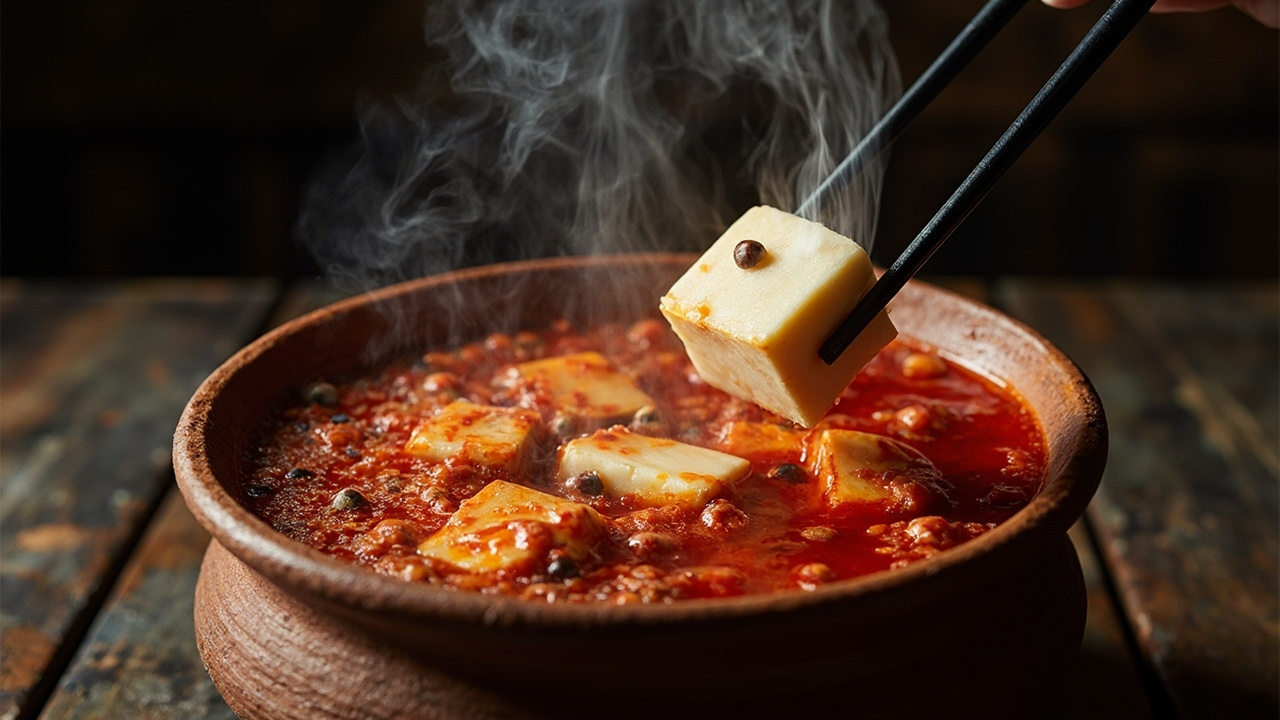
The mapo tofu arrives bubbling in a clay pot, the oil still sizzling. The texture is the thing: silken tofu that somehow holds its shape, ground beef that adds a savory punch, and a sauce that’s numbing, spicy, and deeply savory all at once. It’s not the spiciest version in Chengdu, but it’s the most balanced. I’ve had mapo tofu in a dozen cities, and this one ruined all the others for me.
The rest of the menu is solid too, but honestly, you’re here for one thing. Order the mapo tofu, get a bowl of rice, and let the numbness wash over you. The staff are efficient but not warm, which is fine. They’ve been doing this for decades and they know you’re here for the food, not conversation.
- 馃搷 Location: 197 West Yuhe Road, Qingyang District, Chengdu
- 馃帿 Entry fee: No entry fee, dishes $4-8 (¥28-55) each
- 馃晲 Opening hours: 10:00 AM - 9:00 PM daily
- 馃殕 Getting there: Take Metro Line 2 to Tonghuimen Station, Exit A, walk 10 minutes west on Yuhe Road. The restaurant is on the north side of the street, look for the faded red sign.
- 鈴?When to visit: Go at 11:00 AM on a weekday to beat the lunch rush. By noon, expect a 20-30 minute wait.
- 馃挕 Insider tips: Order the mapo tofu at “medium” spice level, not the default. The default is adjusted for tourists, and the medium is where the balance actually lives. Also, the cold dishes at the front counter are good, just point at what looks interesting. Don’t bother with the English menu, the pictures are enough.
- I once watched a local businessman demolish a bowl of mapo tofu in under three minutes, not breaking a sweat, while I sat across the room fanning my mouth. He winked at me on his way out.
Ming Ting — Where I Learned to Respect the Noodles
Ming Ting is a small noodle shop in the western part of Chengdu that I stumbled into on a rainy morning when my hotel breakfast wasn’t serving yet. The place was packed with locals hunched over steaming bowls, and the air smelled like chili oil and garlic. I ordered the dan dan noodles because I recognized the name, and the waiter asked me something I didn’t understand. I smiled and nodded. He laughed and walked away.
What came out was a bowl of noodles that looked innocent enough, with a few spoonfuls of minced pork and some scallions on top. But the broth underneath was a deep, dangerous red. This was the moment I learned that dan dan noodles in Chengdu are not the peanut-buttery version you get in American restaurants. They’re spicy, numbing, and vinegary, with a complexity that hits you in waves.
The noodles themselves are the star. They’re hand-pulled, chewy, and slightly irregular, which means they catch the sauce differently in every bite. I ate the whole bowl, sweating through my shirt, and when I looked up, the gold-toothed waiter was watching me with approval. He said something to the cook, who nodded. I think I passed a test.
- 馃搷 Location: 88 Qingyun Road, Wuhou District, Chengdu
- 馃帿 Entry fee: No entry fee, noodle bowls $2-4 (¥14-28)
- 馃晲 Opening hours: 6:30 AM - 2:00 PM, closed Sundays
- 馃殕 Getting there: Take Metro Line 3 to Gaoshengqiao Station, Exit B, walk 8 minutes south on Qingyun Road. Look for the blue awning with yellow characters.
- 鈴?When to visit: Go between 8:00-9:30 AM for breakfast. The noodles sell out by early afternoon, and the shop closes when the broth runs out.
- 馃挕 Insider tips: Order the “gan ban” (干拌, dry mixed) version of dan dan noodles if you want less soup. Ask for “wei la” (微辣, micro-spicy) your first time. The pickled vegetables on the counter are free, take a few. Bring cash, this place doesn’t take cards or mobile payments.
- The gold-toothed waiter eventually learned my order and would have it ready before I sat down. I never learned his name, but I think about that noodle shop more than I think about most restaurants in the world.
Shu Jiu Xiang Hotpot — Your First Hotpot Should Be Here
Hotpot is a social event, not just a meal. I learned this the hard way when I showed up alone to a hotpot restaurant in Chongqing and the staff looked at me like I was lost. Hotpot is meant to be shared, with friends, family, or at least a few people who can help you eat the mountain of food you’ll inevitably order.
Shu Jiu Xiang is where I take every first-timer who visits Chengdu. It’s a chain, which usually makes me skeptical, but this one has been around for decades and knows what it’s doing. The broth is the thing: a spicy red oil base that’s fragrant, not just hot, and a mild white broth on the other side for when you need a break. The contrast is what makes hotpot work.
The key to hotpot is the dipping sauce. In the south, it’s a mixture of sesame oil, garlic, and vinegar that cuts through the spice. Don’t load up on the chili-based sauces, you’ll regret it. Dip everything in the sesame oil mixture and let the broth do the work. The ingredients are the other key. Order the tripe, the beef, the lotus root, and the mushrooms. Skip the frozen stuff and go for what’s fresh.
- 馃搷 Location: 8 Kuanzhai Alley, Qingyang District, Chengdu (multiple locations)
- 馃帿 Entry fee: No entry fee, expect to spend $15-25 (¥110-180) per person
- 馃晲 Opening hours: 11:00 AM - 12:00 AM daily
- 馃殕 Getting there: Take Metro Line 4 to Kuanzhai Alley Station, Exit B, walk 3 minutes to the entrance of the alley. The restaurant is on the right side, look for the red lanterns.
- 鈴?When to visit: Go at 5:30 PM on a weekday. By 7:00 PM, the wait can be 45 minutes or more. Weekends are chaos.
- 馃挕 Insider tips: Order the “jiu gong ge” (九宫格, nine-grid) pot if you’re with a group. It keeps different ingredients separate and looks impressive. Ask for the sesame oil dipping sauce, don’t try to make your own from the condiment bar. The tripe only needs 10 seconds in the broth, any longer and it’s rubber. Don’t drink ice water with hotpot, it makes the spice hit harder. Order a cold soy milk instead.
- I once watched a group of locals order enough food for a small army, eat it all, and then order more. I asked my friend how they did it. She shrugged and said, “Hotpot is not a meal, it’s a marathon.”
Long Chao Shou — The Dumpling Place That Doesn’t Mess Around
Long Chao Shou has been serving dumplings in Chengdu since the 1940s, and the place has the institutional confidence that comes with that kind of history. The menu is simple, the service is fast, and the dumplings are consistent. I’ve been here maybe 20 times over the years, and I’ve never had a bad meal.
The signature dish is the chao shou, which are wonton-style dumplings swimming in a spicy chili oil sauce. The dumplings themselves are delicate, with a thin wrapper and a pork filling that’s seasoned just right. The sauce is what makes them special: a blend of chili oil, garlic, and a hint of sugar that balances the heat with sweetness.
But don’t stop at the chao shou. The dan dan noodles here are excellent, and the guo tie (potstickers) have a crispy bottom that’s worth the extra calories. The restaurant also serves a range of Sichuan snacks that are hard to find elsewhere, like the “san da pao” (three big cannonballs, a rice-based dessert) that’s fun to try once.
- 馃搷 Location: 89 Chunxi Road, Jinjiang District, Chengdu
- 馃帿 Entry fee: No entry fee, dumplings $3-6 (¥21-42) per plate
- 馃晲 Opening hours: 8:00 AM - 9:00 PM daily
- 馃殕 Getting there: Take Metro Line 2 to Chunxi Road Station, Exit C, walk 5 minutes east on Chunxi Road. The restaurant is on the second floor of a building with a large red sign.
- 鈴?When to visit: Go for a late lunch around 2:00 PM when the crowds have thinned. The restaurant is popular with tourists, so avoid peak meal times.
- 馃挕 Insider tips: Order the “hong you chao shou” (红油抄手, red oil wontons) and the “guo tie” together. The vinegar on the table is for the dumplings, not just decoration. If you want a milder version, ask for “bai tang” (白汤, white broth) instead of the red oil. The second floor has more seating and shorter lines than the ground floor.
- I once brought a friend who had never had Sichuan food before, and she ordered the spiciest thing on the menu without asking. She spent the next 20 minutes crying, laughing, and eating anyway. She now loves Sichuan food more than I do.
Qi Mama Noodles — The Dan Dan Noodle Standard
There’s a debate in Chengdu about who makes the best dan dan noodles. Some people swear by the old-school places, others prefer the newer spots. I’ve done the research, and Qi Mama is where I land. It’s a small shop with a cult following, and the dan dan noodles here are the ones I measure all others against.
The noodles are served dry, tossed in a sauce of chili oil, Sichuan peppercorn, preserved vegetables, and minced pork. The key is the balance: the heat should be present but not overwhelming, the numbing should tingle but not paralyze, and the vinegar should cut through the richness. Qi Mama gets all of it right.
The shop also does a solid version of “suan la fen” (酸辣粉, sour and spicy sweet potato noodles) that’s worth trying if you want something with more broth. But the dan dan noodles are the reason to come. Order a bowl, add a soft-boiled egg if you’re hungry, and prepare to understand why this dish has become famous around the world.
- 馃搷 Location: 12 Fangqin Street, Jinjiang District, Chengdu
- 馃帿 Entry fee: No entry fee, noodle bowls $3-5 (¥21-35)
- 馃晲 Opening hours: 10:00 AM - 8:00 PM, closed Mondays
- 馃殕 Getting there: Take Metro Line 2 to Dongmen Bridge Station, Exit A, walk 10 minutes south on Fangqin Street. The shop is small, look for the yellow sign with red characters.
- 鈴?When to visit: Go between 11:00 AM and 1:00 PM for lunch. The noodles are made fresh throughout the day, but the morning batch is the best.
- 馃挕 Insider tips: Order the “gan ban” version, it’s the classic. Ask for extra “ya cai” (芽菜, preserved mustard greens) if you like it saltier. The shop has a few seats outside, which are better than the cramped indoor seating. If you’re sensitive to spice, order the “wei la” level and add chili oil yourself from the jar on the table.
- I brought a Sichuan friend here once, and she nodded approvingly after her first bite. That’s the highest compliment a local can give. She said it reminded her of her grandmother’s cooking.
Jiao Cha — The Chongqing Hotpot That Will Ruin You
Chongqing hotpot is different from Chengdu hotpot. It’s rougher, spicier, and uses more beef fat in the broth. The first time I had it, I thought I was going to die. The second time, I understood. The third time, I was hooked. Jiao Cha is where I take people who want the real Chongqing experience.
The broth here is a deep, dark red, almost black, with a layer of chili oil that coats everything. The signature ingredient is beef tripe, which is served fresh and only needs a few seconds in the boiling broth. The texture is crunchy, almost like cartilage, and it absorbs the numbing spice better than anything else.
The restaurant is chaotic, loud, and packed with locals who have been coming here for years. The staff shout orders across the room, the tables are sticky, and the floor is slick with oil. It’s not a place for a romantic dinner. It’s a place for eating until you can’t move.
- 馃搷 Location: 88 Minzu Road, Yuzhong District, Chongqing
- 馃帿 Entry fee: No entry fee, expect to spend $12-20 (¥85-140) per person
- 馃晲 Opening hours: 11:00 AM - 2:00 AM daily
- 馃殕 Getting there: Take Metro Line 1 to Jiaochangkou Station, Exit B, walk 10 minutes south on Minzu Road. The restaurant is in a basement, look for the stairs going down next to a convenience store.
- 鈴?When to visit: Go at 6:00 PM on a weekday. The restaurant gets packed by 7:30 PM, and the wait can be over an hour. Late night, after 10:00 PM, is also good if you want a more relaxed vibe.
- 馃挕 Insider tips: Order the “jiu gong ge” pot if you’re with a group. The beef tripe is the must-order item, don’t skip it. The “ya chang” (鸭肠, duck intestines) are also good if you’re adventurous. Ask for the sesame oil dip, it’s essential. Don’t drink cold beer with the hotpot, it makes the spice hit harder. Order a cold soy milk or a bottle of “wang lao ji” (王老吉, herbal tea) instead.
- I once ate here with a group of locals who insisted I try the “ma du” (毛肚, beef tripe). I was skeptical, but after one bite, I understood why they were all laughing at my hesitation. It’s now one of my favorite foods in the world.
Ciqikou Snack Street — Where to Eat Like a Local Tourist
Ciqikou is a tourist trap, but it’s a delicious one. This ancient town on the outskirts of Chongqing has been turned into a pedestrian street packed with snack vendors, souvenir shops, and tea houses. The crowds are overwhelming, the prices are inflated, and the quality is inconsistent. But if you know what to look for, you can eat very well here.
The key is to skip the places with the big English signs and the laminated picture menus. Those are for tourists who don’t know better. Instead, look for the stalls where locals are lining up. The “ci ba” (糍粑, glutinous rice cakes) are a good start, served hot with a dusting of soybean flour and sugar. The “ma hua” (麻花, twisted fried dough) are another local specialty, and the best ones are sold at a stall near the main entrance.
The real gem here is the “suan la fen” (酸辣粉, sour and spicy sweet potato noodles), which are made fresh at a stall in the middle of the street. The vendor pulls the noodles by hand, drops them into boiling water, and serves them in a broth that’s sour, spicy, and addictive. It’s messy, it’s hot, and it’s exactly what you want after walking around in the heat.
- 馃搷 Location: Ciqikou Ancient Town, Shapingba District, Chongqing
- 馃帿 Entry fee: Free entry, snacks $1-5 (¥7-35) each
- 馃晲 Opening hours: 9:00 AM - 10:00 PM daily
- 馃殕 Getting there: Take Metro Line 1 to Ciqikou Station, Exit A, walk 5 minutes to the main entrance. The snack street is the main pedestrian thoroughfare.
- 鈴?When to visit: Go on a weekday afternoon, between 2:00 PM and 5:00 PM. Weekends are packed with domestic tourists, and the crowds make it hard to move, let alone eat.
- 馃挕 Insider tips: Try the “ma hua” from the stall near the main entrance, it’s the best one. The “suan la fen” is worth the wait, even if the line is long. Don’t buy the “Bobo chicken” from the stalls with the big displays, they’re overpriced and mediocre. The tea houses at the back of the town are a good place to rest, but check the price list before you sit down.
- I once spent an entire afternoon here, eating my way through the street, and ended up at a tea house watching the sun set over the Jialing River. It was one of those moments where you forget you’re a tourist and just exist in a place.
Leshan Giant Buddha Area — The Street Food Worth the Trip
Leshan is a two-hour train ride from Chengdu, and most people go for one reason: the Giant Buddha. But the town has a food scene that’s worth the trip on its own. The area around the Buddha’s entrance is packed with stalls selling local specialties, and the quality is surprisingly good.
The must-try here is the “Leshan bobobobobobo chicken” (钵钵鸡), which is a cold dish of skewered meats and vegetables soaked in a spicy, numbing broth. It’s served at room temperature, which makes it perfect for a hot day. The broth is the key: it should be fragrant, spicy, and slightly sweet, with a deep layer of Sichuan peppercorn that numbs your lips.
You’ll also find “qiao jiao niu rou” (跷脚牛肉, “crossed-leg beef”), a beef soup that’s a local specialty. It’s mild, comforting, and a good break from the spice. The beef is tender, the broth is clear, and it’s served with a dipping sauce that adds a kick if you want it.
- 馃搷 Location: Around the Leshan Giant Buddha scenic area, Leshan City
- 馃帿 Entry fee: Free for the street food area, Buddha entrance is $12 (¥85)
- 馃晲 Opening hours: Street food stalls open from 10:00 AM to 6:00 PM daily
- 馃殕 Getting there: Take a high-speed train from Chengdu East Station to Leshan Station (about 1 hour, $15/¥105). From the station, take a taxi to the Buddha scenic area (about 20 minutes, $5/¥35).
- 鈴?When to visit: Go on a weekday morning. The Buddha is packed with tourists by 11:00 AM, and the food stalls get crowded too. Arrive early, see the Buddha, then eat.
- 馃挕 Insider tips: The bobobobobobo chicken is sold by the skewer, so you can try a few without committing to a big portion. Look for the stalls where the skewers are kept in a big pot of broth, that’s a sign of freshness. The “qiao jiao niu rou” is best at lunch, when the soup has been simmering all morning. Don’t drink the broth from the bobobobobobo chicken, it’s for dipping, not drinking.
- I once ate bobobobobobo chicken at a stall run by a grandmother who didn’t speak a word of English. She watched me eat, nodded approvingly, and gave me an extra skewer for free. I never learned her name, but I’ll never forget that gesture.
Ma Wang Zi — The Rabbit Place That Changed My Mind
I used to think rabbit was a weird thing to eat. Then I went to Ma Wang Zi in Chengdu, and I understood why Sichuanese people love it so much. The meat is lean, tender, and takes on the flavors of the sauce better than chicken or pork. The dish that changed my mind is the “leng chi tu” (冷吃兔, cold-eating rabbit), which is a cold dish of rabbit meat stir-fried with chili and Sichuan peppercorn.
The dish is served at room temperature, which lets the flavors develop. The rabbit is cut into small pieces, each one coated in a spicy, numbing sauce that’s packed with dried chilies and peppercorns. You eat it with your fingers, picking out the meat from the pile of chilies. It’s messy, it’s spicy, and it’s absolutely delicious.
Ma Wang Zi is a small restaurant that’s been around for years, and the menu is mostly rabbit dishes. If you’re not into rabbit, they also do a good version of “la zi ji” (辣子鸡, chili chicken), which is the same concept but with chicken. But honestly, you should try the rabbit. It’s the whole point.
- 馃搷 Location: 45 Yulin West Road, Wuhou District, Chengdu
- 馃帿 Entry fee: No entry fee, rabbit dishes $6-10 (¥42-70)
- 馃晲 Opening hours: 11:00 AM - 9:00 PM, closed Tuesdays
- 馃殕 Getting there: Take Metro Line 1 to Nijiaqiao Station, Exit A, walk 10 minutes west on Yulin West Road. The restaurant is on the south side of the street, look for the red sign with white characters.
- 鈴?When to visit: Go for lunch on a weekday. The restaurant is popular with locals, and the dinner rush can mean a long wait.
- 馃挕 Insider tips: Order the “leng chi tu” and the “la zi ji” together, you can compare the two. The dried chilies in the dish are not meant to be eaten, they’re for flavor. Pick through them carefully to find the meat. Ask for a bowl of rice to balance the spice. The restaurant doesn’t have an English menu, so use your phone to translate or point at what other people are eating.
- I once brought a friend who was skeptical about eating rabbit. She tried one piece, then another, then finished the whole plate. She now orders it at every Sichuan restaurant she visits.
Zhang Lao Ya — The Duck That’s Not Peking Duck
Everyone knows Peking duck, but Sichuan has its own duck tradition, and Zhang Lao Ya is where I go to get it. The signature dish here is “zhang cha ya” (樟茶鸭, camphor and tea smoked duck), which is a duck that’s been marinated, smoked over camphor wood and tea leaves, and then deep-fried. The result is a duck with crispy skin, smoky flavor, and tender meat that falls off the bone.
The smoking process gives the duck a deep, complex flavor that’s completely different from Peking duck. It’s less about the sauce and more about the meat itself. The skin is crispy, the fat is rendered, and the meat is infused with the smoky, slightly sweet aroma of the tea and camphor.
Zhang Lao Ya has been serving this dish for decades, and they’ve perfected it. The restaurant is a bit more upscale than the other places on this list, but the prices are still reasonable. The duck is served with thin pancakes, scallions, and a sweet bean sauce, similar to Peking duck, but the flavor is entirely its own.
- 馃搷 Location: 56 Zongfu Street, Jinjiang District, Chengdu
- 馃帿 Entry fee: No entry fee, duck dishes $10-15 (¥70-110)
- 馃晲 Opening hours: 11:00 AM - 2:00 PM, 5:00 PM - 9:00 PM daily
- 馃殕 Getting there: Take Metro Line 2 to Chunxi Road Station, Exit D, walk 8 minutes north on Zongfu Street. The restaurant is on the east side of the street, look for the traditional Chinese facade.
- 鈴?When to visit: Go for dinner on a weekday. The restaurant is popular with business diners, and the lunch rush can be chaotic.
- 馃挕 Insider tips: Order the “zhang cha ya” as a half portion if you’re not sure you’ll like it. The duck is served cold, which is traditional, but you can ask for it to be warmed up. The “san da pao” (三大炮, three big cannonballs) dessert is a fun way to end the meal. The restaurant has an English menu, which is helpful for first-timers.
- I once ate here with a group of Chinese friends who ordered a feast of dishes I’d never heard of. The duck was the star, but the supporting cast was impressive too. I left with a full stomach and a new appreciation for Sichuan’s culinary range.
FAQ summary
For first-time visitors to Sichuan, the most important things to know are: Sichuan food is numbing and spicy, not just hot, and you should start with “wei la” (micro-spicy) level and work up. Key dishes to try include mapo tofu, dan dan noodles, hotpot, and bobobobobobo chicken. Most restaurants in Chengdu and Chongqing accept Alipay or WeChat Pay, but some small shops are cash-only, so carry some yuan. English is not widely spoken, so download a translation app like Pleco or Google Translate before you go. The best time to visit is spring (March-May) or autumn (September-November) when the weather is mild.
FAQ
Q: Is Sichuan food always extremely spicy? A: Not necessarily. While Sichuan cuisine is known for its heat, many dishes are mild or only slightly spicy. You can always ask for “wei la” (微辣, micro-spicy) or “bu la” (不辣, not spicy) at most restaurants. The numbing sensation from Sichuan peppercorn is the defining characteristic, not just the heat.
Q: How do I handle the spice if I’m not used to it? A: Drink milk or soy milk, not water, to cut the heat. Yogurt also works. Order dishes at “wei la” level your first few days and gradually increase. Don’t eat the dried chilies in dishes like “la zi ji,” they’re for flavor, not consumption. The numbing sensation from Sichuan peppercorn is temporary and will fade within a few minutes.
Q: Do I need to know Chinese to order food in Sichuan? A: No, but it helps. Many restaurants in tourist areas have picture menus or English menus. For smaller, more authentic places, use a translation app like Pleco or Google Translate. You can also point at what other people are eating, which is how I’ve ordered some of my best meals.
Q: How do I pay at restaurants in Sichuan? A: Most restaurants in Chengdu and Chongqing accept Alipay or WeChat Pay. You’ll need to set these up before your trip, which requires a foreign credit card and a Chinese phone number. Check out this guide to setting up Alipay and WeChat Pay. Some small shops and street stalls are cash-only, so carry some yuan as backup.
Q: What’s the difference between Chengdu and Chongqing food? A: Chengdu food is more refined, with a focus on balance and complexity. Chongqing food is rougher, spicier, and uses more beef fat in the broth. Chongqing hotpot is generally spicier than Chengdu hotpot. Both are worth trying, but if you can only do one, start with Chengdu and work your way up.
Q: Are there vegetarian options in Sichuan cuisine? A: Yes, but you need to be careful. Many dishes that appear vegetarian are cooked with meat-based broths or contain hidden meat products. Look for dishes like “gan bian si ji dou” (干煸四季豆, dry-fried green beans), “ma po dou fu” without the meat, or “suan la tu dou si” (酸辣土豆丝, sour and spicy potato shreds). Always ask if the dish contains meat or meat broth.
Q: Do I need a VPN for my phone in China? A: Yes, if you want to access Google, Instagram, Facebook, or other Western websites and apps. China blocks many foreign websites, so you’ll need a VPN installed before you arrive. Check out this guide to SIM cards and internet access in China for more details.
The Honest Wrap-up
This list is for people who want to eat well in Sichuan without getting overwhelmed. It’s not exhaustive, and it’s not trying to be. There are hundreds of incredible restaurants in Chengdu and Chongqing that I haven’t been to, and new ones open all the time. But these are the places I keep coming back to, the ones I recommend to friends and family when they visit.
If you’re a first-timer, start with the milder dishes and work your way up. Don’t try to prove anything by ordering the spiciest thing on the menu. The locals aren’t impressed, and you’ll just end up suffering. Instead, take your time, eat slowly, and let the flavors build. Sichuan food is a marathon, not a sprint.
And one last thing: bring wet wipes. You’re going to need them.
More guides you may like

Top 10 Bridges in China
China's bridges are engineering marvels spanning mountains, rivers, and seas. Here are 10 of the most spectacular, from ancient stone to modern steel.
8 min read

Top 10 Buddhist Sites in China
From the Leshan Giant Buddha to the Dunhuang Caves, these 10 Buddhist sites represent 2,000 years of China's spiritual heritage.
9 min read

Top 10 Day Trips from Beijing You Shouldn't Miss
Beijing is packed with history, but some of China's best experiences are just a few hours away. Here are 10 day trips that will transform your visit.
9 min read

Top 10 Hidden Gems in China Off the Beaten Path
Beyond the Great Wall and Terracotta Warriors, China has incredible hidden destinations few tourists ever reach. Here are 10 underrated gems worth the detour.
9 min read

Top 10 Markets and Shopping Streets in China
From Shanghai's Bund to Beijing's Silk Street - 10 markets where foreigners can haggle, explore, and bring home authentic Chinese goods.
9 min read

Top 10 Museums in China You Shouldn't Miss
China's museums span 5,000 years of civilization. These 10 - from the Palace Museum to Xi'an's terracotta gallery - are unmissable for culture lovers.
9 min read