
China Bullet Train Itinerary
TODO: Extract from article (100-160 chars)
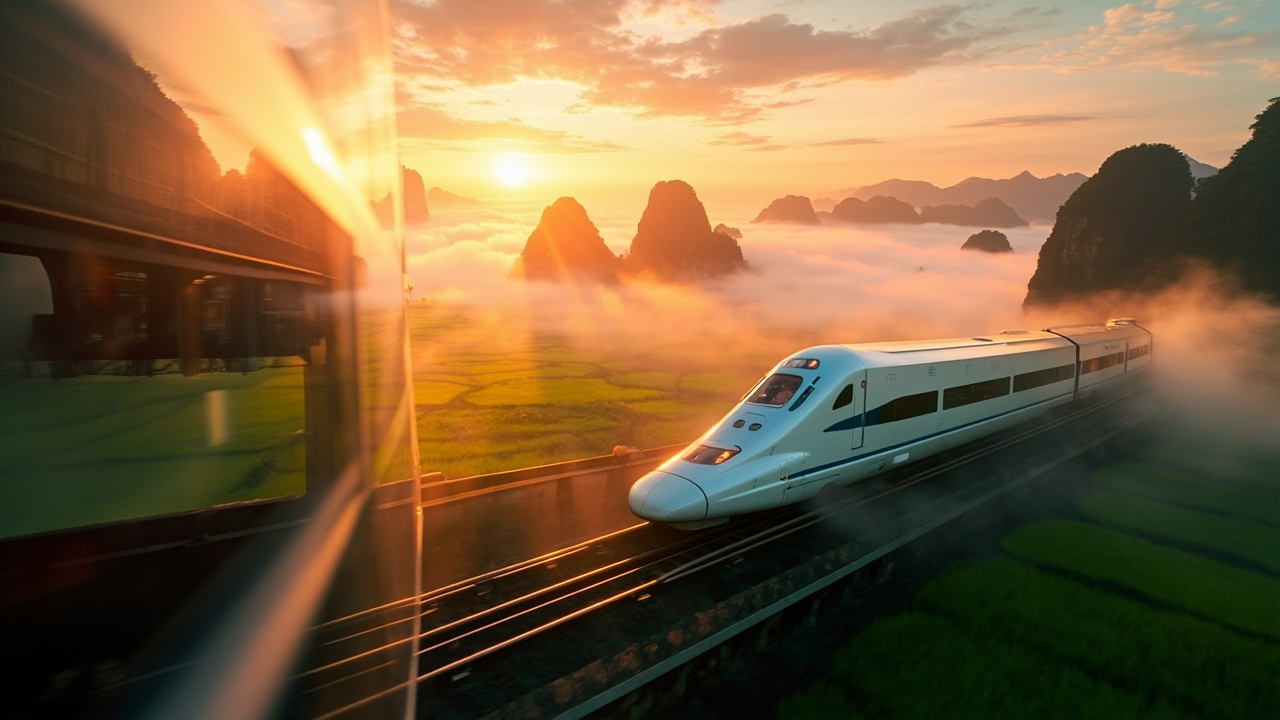
The rain came down sideways off the Yangtze River delta that afternoon, and I watched it from the window of a G-series train doing 300 kilometers an hour past rice paddies and factory towns. I had a cup of jasmine tea in a paper cup that cost me 20 yuan, and I was reading a text from a friend in Shanghai who said, “You know you’re in China when the train is faster than the weather report.” I’d been in the country for six years by then, and it still felt like a magic trick every single time.
That’s the thing about China’s high-speed rail network. It is not just a way to get from A to B. It is the single best way to see a country that is roughly the size of the United States, with a history that goes back five thousand years. You can have breakfast in a hutong in Beijing, lunch in a noodle shop in Xi’an, and dinner on the Bund in Shanghai, all in the same day, without stepping foot on an airplane. The trains are clean, they run on time, and they are absurdly cheap compared to what you’d pay in Europe or Japan.
This guide is the itinerary I wish I’d had when I first landed in Beijing with a backpack and no idea what I was doing. I’ve put together ten stops that show you the classic China, the one you came to see, but I’ve also thrown in a few places that will surprise you. You’ll get specific train times, station directions, prices in dollars and yuan, and the kind of advice that only comes from getting lost a few times.
Quick answer
A classic first-timer’s China bullet train itinerary runs 10 to 14 days and connects Beijing, Xi’an, and Shanghai, with optional add-ons like Chengdu, Guilin, or Suzhou. Most travelers spend roughly $60 to $120 per day including trains, hotels, food, and entry fees, and you can book second-class seats on the high-speed network for as little as $20 to $90 between major cities. If you’re from the US, UK, Australia, or dozens of other countries, you may be eligible for China’s visa-free transit policy, which allows stays of up to 10 days (240 hours) without a visa.
The Short Version
Skip the plane. Take the train. Beijing, Xi’an, and Shanghai form the classic triangle, and you can do all three in seven days without rushing. If you have more time, add Chengdu for the pandas and the food, Guilin for the karst mountains, and Suzhou for the gardens. Book your train tickets as soon as your dates are locked, because popular routes sell out days in advance during holidays. And whatever you do, don’t skip the second-class seats. They’re more comfortable than most airline business class cabins I’ve flown.
How I Picked These
I’ve lived in Beijing for seven years and taken well over a hundred high-speed rail trips across China. I’ve ridden the overnight sleeper trains, the G-series bullet trains, and the slow K-series trains that stop at every village. I’ve missed connections, bought tickets from the wrong window, and once ended up in the wrong city entirely because I didn’t check the station name (there are two in Beijing, and they are not close). I’ve also had locals buy me tea on trains, help me carry luggage down narrow aisles, and explain the difference between the red and blue ticket machines. Every place on this list is somewhere I’ve been more than once, and every recommendation comes from actual experience, not a press release.
Comparison Table
| Rank | Place | Best For | Approx Cost (USD) | Time Needed | When to Go |
|---|---|---|---|---|---|
| 1 | Beijing | First-timers, history, food | $50-100/day | 3-4 days | Apr-May, Sep-Oct |
| 2 | Xi’an | Terracotta Warriors, ancient walls | $40-80/day | 2-3 days | Mar-May, Sep-Nov |
| 3 | Shanghai | Modern China, nightlife, shopping | $60-120/day | 2-3 days | Mar-May, Oct-Nov |
| 4 | Chengdu | Pandas, Sichuan food, teahouses | $35-70/day | 2-3 days | Mar-Jun, Sep-Nov |
| 5 | Guilin & Yangshuo | Karst mountains, river cruises | $30-60/day | 2-3 days | Apr-Oct |
| 6 | Suzhou | Classical gardens, canals | $40-80/day | 1-2 days | Mar-May, Sep-Nov |
| 7 | Hangzhou | West Lake, tea plantations | $40-80/day | 1-2 days | Mar-May, Sep-Oct |
| 8 | Luoyang | Longmen Grottoes, Shaolin Temple | $30-50/day | 1-2 days | Apr-Oct |
| 9 | Zhangjiajie | Avatar mountains, glass bridge | $40-70/day | 2-3 days | Apr-Jun, Sep-Oct |
| 10 | Nanjing | Ming history, Purple Mountain | $35-60/day | 1-2 days | Mar-May, Sep-Nov |
Beijing — Where It All Begins
The first time I stepped out of Beijing South Railway Station, I was hit by a wall of heat and the smell of diesel and dumplings. A man grabbed my bag and tried to put me in a taxi, and I had no idea that the subway was right below me, cleaner and faster than any metro I’d used in New York or London. I’ve been back dozens of times since, and it still feels like the proper starting point for any China trip.
Beijing is the political and cultural heart of the country, and it’s where you’ll find the Forbidden City, the Great Wall, and the Temple of Heaven. It’s also a food city, with everything from Peking duck to street-side lamb skewers. I think three full days is the right amount here: one for the Forbidden City and Tiananmen, one for the Great Wall, and one for the hutongs and the Summer Palace.
📍 Location: Central Beijing, spread across Dongcheng and Xicheng districts 🎟️ Entry fee: Forbidden City $12 (¥85); Great Wall at Mutianyu $6 (¥40) plus shuttle; Temple of Heaven $4 (¥30) 🕒 Opening hours: Forbidden City 8:30-17:00 (closed Mondays); Great Wall 7:30-18:00; Temple of Heaven 6:00-22:00 (park), 8:00-17:30 (buildings) 🚅 How to get there: Fly into Beijing Capital or Daxing Airport. For high-speed rail, use Beijing South Station (Line 4 or 14) for trains to Shanghai, Xi’an, and most southern cities. Beijing West Station (Lines 7 and 9) handles some routes too. ☀️ When to visit: April-May and September-October for mild weather. Avoid the first week of October (National Day) when the city is packed. 💡 Insider tips: Book the Forbidden City tickets online at least a week ahead, they sell out. Go to the Great Wall at Mutianyu instead of Badaling, it’s less crowded and just as impressive. Download the Metro app and use Alipay to scan through the turnstiles. Learn to say “bu yao la” (no spice) if you can’t handle Sichuan pepper. And get a China SIM card before you arrive, because Google Maps and WhatsApp are blocked without a VPN.
I once had a taxi driver named Liu who spent twenty minutes explaining the difference between the old Beijing walls and the new ring roads, using his hands to draw the city’s shape in the air. He’d never left the city, he told me, but he’d driven every street in it.
Xi’an — The Ancient Capital
I got off the train in Xi’an at dusk, and the city wall was lit up gold against a purple sky. I stood there for a while, just watching. This was the eastern terminus of the Silk Road, the capital of thirteen dynasties, and the place where the Terracotta Warriors have been standing guard for over two thousand years.
Xi’an is smaller and more laid-back than Beijing, and it feels older in a way that’s hard to describe. The Muslim Quarter is a maze of narrow streets filled with the smell of lamb skewers and flatbread, and the city wall is the most complete in China, wide enough to ride a bike on. The Terracotta Warriors are the main draw, and they’re worth every minute of the hour-long drive from the city.
📍 Location: Central Xi’an, with the Muslim Quarter just west of the Bell Tower 🎟️ Entry fee: Terracotta Warriors $19 (¥120); City Wall $7 (¥54); Shaanxi History Museum free (but book ahead) 🕒 Opening hours: Terracotta Warriors 8:30-18:00 (Mar-Nov), 8:30-17:30 (Dec-Feb); City Wall 8:00-22:00 🚅 How to get there: Xi’an North Station is the main high-speed hub, about 30 minutes by subway (Line 2 or 4) from the city center. From Beijing, the G-series train takes about 4.5 hours and costs around $80 (¥580) in second class. From Shanghai, it’s about 6 hours and $90 (¥650). ☀️ When to visit: March-May and September-November. Summers are brutally hot, and winters can be cold and dry. 💡 Insider tips: Take the tourist bus (Line 5) from the Xi’an Railway Station to the Terracotta Warriors, it’s cheaper than a taxi and drops you right at the entrance. Hire a guide at the site, they’re licensed and worth the $30 (¥200). Try the biang biang noodles in the Muslim Quarter, the name means the sound of the noodles slapping the counter. The city wall is best at sunset, rent a bike and do the full loop in about two hours. And don’t miss the Tang Dynasty show at the Grand Tang Mall, it’s touristy but genuinely impressive.
I made the mistake of trying to take a photo with one of the warriors in costume outside the site, and he chased me for a block demanding 50 yuan. I gave him 20 and he laughed and gave me a thumbs up.
Shanghai — The Future, Arrived
The first thing I noticed about Shanghai was the humidity. It hits you like a wet blanket the moment you step out of the train station. The second thing I noticed was the skyline, which is somehow even more impressive in person than in every movie you’ve seen it in. The third thing was the speed of everything, the way people move, the way the city never seems to sleep.
Shanghai is the modern face of China, and it’s a completely different experience from Beijing or Xi’an. The Bund is the classic postcard view, with colonial buildings on one side and the Pudong skyscrapers on the other. But the city is also full of hidden gems: the former French Concession with its plane trees and art deco apartments, the old lanes in the Jing’an district, and some of the best food in the country.
📍 Location: Central Shanghai, with the Bund on the Huangpu River and the former French Concession south of Huaihai Road 🎟️ Entry fee: The Bund is free; Shanghai Tower observation deck $25 (¥180); Yu Garden $5 (¥40) 🕒 Opening hours: The Bund is open 24/7; Shanghai Tower 8:30-21:30; Yu Garden 8:45-16:45 (closed Mondays) 🚅 How to get there: Shanghai Hongqiao Station is the main high-speed hub, connected to the metro (Lines 2, 10, and 17) and the airport. From Beijing, the G-series train takes about 4.5 hours and costs around $90 (¥650). From Xi’an, it’s about 6 hours and $90 (¥650). ☀️ When to visit: March-May and October-November. June through August is hot, humid, and rainy. 💡 Insider tips: Skip the Shanghai Tower observation deck and go to the bar at the top of the Jin Mao Tower instead, same view, less money, and you can have a cocktail. Take the ferry across the Huangpu River for $0.30 (¥2), it’s the cheapest way to see the skyline. Walk the French Concession in the morning before it gets crowded. And if you need to set up Alipay or WeChat Pay, do it in Shanghai, where the staff at the service centers speak English.
I met a woman at a noodle shop in the French Concession who had moved to Shanghai from Sichuan twenty years ago. She told me she still missed the mountains, but the city had given her a life she never could have imagined. She gave me an extra dumpling and told me to come back.
Chengdu — The Slow City
Chengdu was the first place in China where I felt like I could breathe. The pace is slower, the people are friendlier, and the food is, in my opinion, the best in the country. The Sichuan pepper numbs your lips and makes you sweat, but you can’t stop eating.
The pandas are the main attraction, and the Chengdu Research Base of Giant Panda Breeding is one of the best wildlife experiences I’ve had anywhere in the world. But Chengdu is also a city of teahouses, where old men play mahjong under bamboo trees and the afternoon stretches out forever. It’s the perfect place to slow down after the intensity of Beijing and Shanghai.
📍 Location: Central Chengdu, with the panda base about 30 minutes north of the city center 🎟️ Entry fee: Panda Base $7 (¥55); Wuhou Shrine $7 (¥50); People’s Park free 🕒 Opening hours: Panda Base 7:30-18:00 (arrive early, pandas are most active in the morning); Wuhou Shrine 8:00-18:00 🚅 How to get there: Chengdu East Station is the main high-speed hub. From Xi’an, the G-series train takes about 3.5 hours and costs around $60 (¥430). From Shanghai, it’s about 11 hours, so consider flying instead. ☀️ When to visit: March-June and September-November. The city is known for its cloudy weather, so don’t expect clear skies. 💡 Insider tips: Arrive at the panda base by 7:30 AM, the pandas are most active in the morning before it gets hot. Take the metro (Line 3) to the base, it’s cheaper and faster than a taxi. Try the hotpot, but order the “yuan yang” (split pot) if you can’t handle the spice. The teahouses in People’s Park are the best place to people-watch, order a cup of jasmine tea and stay as long as you like. And check if you qualify for China’s visa-free transit policy, because Chengdu is a major entry point.
I sat in a teahouse for two hours one afternoon, and an old man at the next table taught me how to play mahjong with hand gestures. I lost every round, but he kept refilling my tea and laughing.
Guilin & Yangshuo — The Landscape That Inspired the Paintings
I remember the first time I saw the karst mountains from the train window, these jagged green peaks rising out of flat farmland like something out of a dream. I pressed my face against the glass like a kid. This is the China you see in the old ink paintings, and it’s real.
Guilin is the base for the Li River cruise, which takes you through the most famous scenery in the country. But the real gem is Yangshuo, a small town an hour south that’s become a backpacker hub. Rent a bike, ride through the rice paddies, and you’ll understand why poets have been writing about this place for a thousand years.
📍 Location: Guilin city center, with Yangshuo about 70 km south 🎟️ Entry fee: Li River cruise $45 (¥320); Yangshuo countryside free; Longji Rice Terraces $15 (¥100) 🕒 Opening hours: Li River cruises run 9:00-14:00; Longji Rice Terraces 7:00-19:00 🚅 How to get there: Guilin North Station is the main high-speed hub. From Guangzhou, the G-series train takes about 2.5 hours and costs around $40 (¥280). From Shanghai, it’s about 10 hours, so consider flying. ☀️ When to visit: April-October. The best time is September-October when the rice terraces turn gold. 💡 Insider tips: Take the bamboo raft from Yangdi to Xingping instead of the big cruise boat, it’s cheaper and more authentic. Rent an e-bike in Yangshuo and ride to the Moon Hill viewpoint. The West Street in Yangshuo is touristy, but the side streets are full of local life. And if you have time, take the bus to the Longji Rice Terraces, the views are worth the bumpy ride.
I got caught in a downpour on a bike ride outside Yangshuo, and a farmer pulled me into his shed and gave me a cup of tea. We didn’t speak the same language, but we watched the rain together for an hour.
Suzhou — The Gardens of Scholars
Suzhou is often called the Venice of the East, and while that’s a lazy comparison, there’s something to it. The city is built on canals, and the classical gardens are UNESCO World Heritage sites that have been inspiring poets and painters for centuries. It’s an easy day trip from Shanghai, but I think it deserves an overnight.
The gardens are the main draw, and each one has its own personality. The Humble Administrator’s Garden is the largest and most famous, but I prefer the Lingering Garden, which is smaller and less crowded. The old town is also worth exploring, with its whitewashed houses and stone bridges.
📍 Location: Central Suzhou, with the gardens in the old town 🎟️ Entry fee: Humble Administrator’s Garden $10 (¥70); Lingering Garden $7 (¥55); Pingjiang Road free 🕒 Opening hours: Gardens typically 7:30-17:30 (varies by season) 🚅 How to get there: Suzhou Station is on the high-speed line between Shanghai and Nanjing. From Shanghai, the G-series train takes about 30 minutes and costs around $10 (¥70). From Beijing, it’s about 4.5 hours and $80 (¥580). ☀️ When to visit: March-May and September-November. The gardens are best in the spring when the flowers are blooming. 💡 Insider tips: Take a boat ride on the Grand Canal at sunset, it’s the best way to see the old town. The Pingjiang Road is the most atmospheric street, but go early before the crowds. Try the Suzhou-style noodles, they’re sweeter than the noodles in the north. And if you’re visiting the Humble Administrator’s Garden, book tickets online in advance, they sell out on weekends.
I met a calligrapher in one of the gardens who offered to write my name in Chinese characters for 20 yuan. He spent ten minutes getting it right, then gave me a brush and let me try. Mine looked like a child’s scribble, but he framed it anyway.
Hangzhou — The Lake That Inspired a Dynasty
The first time I saw West Lake, I understood why the emperors built their pleasure palaces here. The water is calm and green, the hills rise gently in the distance, and the causeways are lined with willows and peach trees. It’s the most romantic place I’ve been in China.
Hangzhou is an easy day trip from Shanghai, but it deserves at least one night. The lake is the main attraction, and you can walk the entire circumference in about four hours. The Longjing tea plantations in the hills above the lake are also worth a visit, especially in the spring when the tea leaves are being picked.
📍 Location: Central Hangzhou, with West Lake at the heart of the city 🎟️ Entry fee: West Lake free; Lingyin Temple $7 (¥45); Longjing tea plantations free 🕒 Opening hours: West Lake is open 24/7; Lingyin Temple 7:00-18:00 🚅 How to get there: Hangzhou East Station is the main high-speed hub. From Shanghai, the G-series train takes about 1 hour and costs around $10 (¥70). From Beijing, it’s about 4.5 hours and $80 (¥580). ☀️ When to visit: March-May and September-October. Spring is the best time for the tea plantations. 💡 Insider tips: Rent a boat on West Lake at sunset, the views of the Leifeng Pagoda are best from the water. Take the bus to Longjing Village and have tea with a local farmer. The Hefang Street is touristy but fun for souvenirs. And if you’re feeling energetic, hike up to the top of Baoshi Hill for the best view of the lake.
I had a cup of Longjing tea with a farmer who showed me how to roll the leaves by hand. She told me her family had been growing tea on the same hillside for four generations.
Luoyang — The Grottoes in the Cliff
Luoyang is not on most first-timer itineraries, and that’s a shame. The Longmen Grottoes, a series of Buddhist cave temples carved into a limestone cliff, are one of the most impressive sights in China. The largest Buddha is 17 meters tall, and it’s been watching over the Yi River since the Tang Dynasty.
The city itself is less polished than the other stops on this list, but that’s part of its charm. The old town has a lively night market, and the Shaolin Temple, the birthplace of kung fu, is an hour away.
📍 Location: Longmen Grottoes are about 12 km south of central Luoyang 🎟️ Entry fee: Longmen Grottoes $15 (¥90); Shaolin Temple $12 (¥80) 🕒 Opening hours: Longmen Grottoes 8:00-18:00 (Apr-Oct), 8:00-17:30 (Nov-Mar); Shaolin Temple 7:30-18:00 🚅 How to get there: Luoyang Longmen Station is on the high-speed line between Xi’an and Zhengzhou. From Xi’an, the G-series train takes about 1.5 hours and costs around $30 (¥220). From Beijing, it’s about 4 hours and $70 (¥500). ☀️ When to visit: April-October. The grottoes are best in the early morning or late afternoon when the light is softer. 💡 Insider tips: Take the bus from the Longmen Grottoes to the Shaolin Temple, it’s about 1.5 hours and costs $5 (¥35). Hire a guide at the grottoes, the history is too complex to understand without one. The night market in the old town has the best street food in Henan province. And if you’re interested in kung fu, stay for the evening show at the Shaolin Temple.
I watched a group of Shaolin monks practice in the courtyard, and one of them, a kid who couldn’t have been more than ten, did a backflip that made me gasp. He grinned at me and went back to his drills.
Zhangjiajie — The Mountains That Inspired Avatar
I’ll be honest: I didn’t believe the photos. The sandstone pillars of Zhangjiajie look like something from a science fiction movie, which is exactly why James Cameron used them as inspiration for the floating mountains in Avatar. But when I saw them in person, I realized the photos didn’t do them justice.
The national park is massive, and you need at least two days to see the highlights. The Bailong Elevator, a glass elevator built into the side of a cliff, takes you up 330 meters in less than two minutes. The glass bridge over the Grand Canyon is not for the faint of heart.
📍 Location: Zhangjiajie National Forest Park, about 30 km from Zhangjiajie city 🎟️ Entry fee: National park $25 (¥180) for a 4-day pass; Bailong Elevator $12 (¥85); Glass bridge $25 (¥180) 🕒 Opening hours: Park 7:00-18:00 (varies by season) 🚅 How to get there: Zhangjiajie West Station is the main high-speed hub. From Changsha, the G-series train takes about 3 hours and costs around $30 (¥220). From Beijing, it’s about 9 hours, so consider flying. ☀️ When to visit: April-June and September-October. The park is often foggy, which can be magical or frustrating depending on your luck. 💡 Insider tips: Take the cable car up to Tianzi Mountain instead of the elevator, the views are better and the line is shorter. Stay in the village of Wulingyuan, which is closer to the park entrance than the city. The glass bridge is less scary than it looks, but go early to avoid the crowds. And bring a rain jacket, the weather changes fast in the mountains.
I spent an hour sitting on a rock at the top of Tianzi Mountain, watching the clouds roll through the pillars. A group of Chinese tourists asked me to take their photo, and then insisted on taking mine. We couldn’t communicate, but we laughed about it.
Nanjing — The Southern Capital
Nanjing has a complicated history, and it’s not afraid to show it. The city was the capital of several dynasties, the site of one of the worst atrocities of World War II, and the place where the Ming Dynasty began. It’s a city that has been through a lot, and it wears its scars with dignity.
The Purple Mountain area is the main attraction, with the Sun Yat-sen Mausoleum, the Ming Xiaoling Tomb, and the Confucius Temple area. The city is also famous for its duck dishes, and the salted duck is some of the best I’ve had in China.
📍 Location: Central Nanjing, with Purple Mountain east of the city center 🎟️ Entry fee: Sun Yat-sen Mausoleum free; Ming Xiaoling Tomb $10 (¥70); Confucius Temple area free 🕒 Opening hours: Sun Yat-sen Mausoleum 8:30-17:00 (closed Mondays); Ming Xiaoling Tomb 8:00-18:00 🚅 How to get there: Nanjing South Station is the main high-speed hub. From Shanghai, the G-series train takes about 1.5 hours and costs around $15 (¥100). From Beijing, it’s about 3.5 hours and $70 (¥500). ☀️ When to visit: March-May and September-November. The city is very hot in the summer. 💡 Insider tips: Take the cable car up Purple Mountain, the views of the city are worth it. The Confucius Temple area is touristy, but the night market is lively. Try the salted duck at a local restaurant, it’s a Nanjing specialty. And if you’re interested in history, the Memorial Hall of the Victims of the Nanjing Massacre is a sobering but important visit.
I visited the Nanjing Massacre Memorial on a rainy day, and I left in silence. It’s not an easy place to visit, but it’s an important one.
FAQ summary
For most first-time visitors, the best China bullet train itinerary combines Beijing, Xi’an, and Shanghai over 7-10 days, with optional extensions to Chengdu, Guilin, or Suzhou. High-speed rail tickets between major cities cost between $20 and $90 in second class, and you can book them through the official China Railway website or apps like Trip.com. Many nationalities qualify for China’s 240-hour visa-free transit policy, so check your eligibility before applying for a full tourist visa, and make sure to set up Alipay or WeChat Pay before you arrive since China is largely cashless.
FAQ
Q: Do I need to book bullet train tickets in advance? A: Yes, especially on popular routes like Beijing-Xi’an and Shanghai-Hangzhou. Tickets go on sale 15 days before departure, and they sell out quickly during holidays and weekends. Book through the official China Railway website or apps like Trip.com, which have English interfaces.
Q: How much does a bullet train ticket cost between major cities? A: Second-class seats on the high-speed network cost between $20 and $90 depending on the route. Beijing to Shanghai is around $90 (¥650), Beijing to Xi’an is about $80 (¥580), and Shanghai to Hangzhou is only $10 (¥70).
Q: Is it better to take the train or fly between cities in China? A: For routes under 5 hours, take the train. The stations are in the city centers, security is faster, and there’s no baggage limit. For longer routes like Shanghai to Chengdu, flying is usually more practical.
Q: Do I need a visa to travel to China? A: Many nationalities qualify for China’s 240-hour visa-free transit policy, which allows stays of up to 10 days in designated cities. If you’re staying longer or your itinerary doesn’t qualify, you’ll need a standard tourist visa, which costs about $140 (¥1000) and takes 4-5 business days to process.
Q: Can I use my credit card or do I need cash? A: China is almost entirely cashless, and most places don’t accept foreign credit cards. You’ll need to set up Alipay or WeChat Pay, which now accept foreign Visa and Mastercard. Some small vendors only accept Chinese payment apps, so it’s essential to set these up before you travel.
Q: What’s the best time of year for a bullet train itinerary in China? A: April-May and September-October are the best months, with mild temperatures and less rain. July and August are hot and humid, and the first week of October is National Day, when the entire country travels.
Q: Do I need a VPN for my phone in China? A: Yes, if you want to use Google, WhatsApp, Instagram, or Facebook. China blocks many foreign websites and apps, so you’ll need a VPN installed before you arrive. You’ll also need a China SIM card or eSIM to get online.
The Honest Wrap-up
This itinerary is for the traveler who wants to see the classic China, the one that’s been drawing visitors for centuries, but also wants to understand the country as it is today. It’s not for the person who wants to see everything in seven days, because that person will end up seeing nothing but train stations and hotel rooms. It’s for the person who’s willing to slow down, sit in a teahouse, and let the country reveal itself.
If you only take one piece of advice from this guide, let it be this: don’t overplan. The best moments in China happen when you least expect them, when you take the wrong turn and end up in a market that’s not in any guidebook, or when you accept an invitation to dinner from a stranger you met on a train. The trains will get you where you need to go, but the memories will come from the detours.
Book the flight. You won’t regret it.
More guides you may like

Top 10 Bridges in China
China's bridges are engineering marvels spanning mountains, rivers, and seas. Here are 10 of the most spectacular, from ancient stone to modern steel.
8 min read

Top 10 Buddhist Sites in China
From the Leshan Giant Buddha to the Dunhuang Caves, these 10 Buddhist sites represent 2,000 years of China's spiritual heritage.
9 min read

Top 10 Day Trips from Beijing You Shouldn't Miss
Beijing is packed with history, but some of China's best experiences are just a few hours away. Here are 10 day trips that will transform your visit.
9 min read

Top 10 Hidden Gems in China Off the Beaten Path
Beyond the Great Wall and Terracotta Warriors, China has incredible hidden destinations few tourists ever reach. Here are 10 underrated gems worth the detour.
9 min read

Top 10 Markets and Shopping Streets in China
From Shanghai's Bund to Beijing's Silk Street - 10 markets where foreigners can haggle, explore, and bring home authentic Chinese goods.
9 min read

Top 10 Museums in China You Shouldn't Miss
China's museums span 5,000 years of civilization. These 10 - from the Palace Museum to Xi'an's terracotta gallery - are unmissable for culture lovers.
9 min read