
Silk Road Kashgar to Xi'an
TODO: Extract from article (100-160 chars)
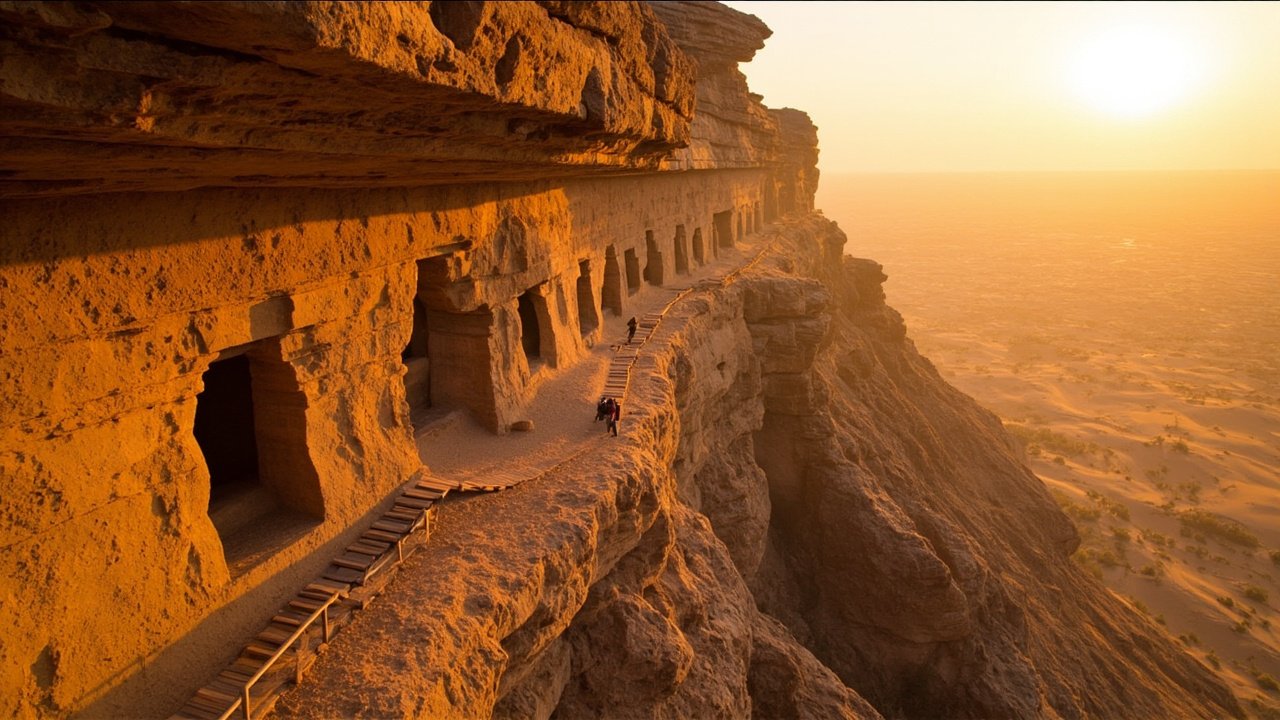
The taxi dropped me at the edge of the old town just as the call to prayer echoed off the mud-brick walls. I had been in China for three weeks, and nothing had prepared me for this. Not the bullet trains, not the glass towers of Shanghai, not the perfectly manicured parks of Beijing. This was Kashgar, and it felt like stepping into a centuries-old story that was still being written.
The Silk Road wasn’t a single road, of course. It was a web of trade routes that connected Xi’an to the Mediterranean, carrying silk, spices, Buddhism, Islam, and ideas across some of the harshest terrain on Earth. The stretch between Kashgar and Xi’an is the backbone of that story, and it cuts through the heart of what makes China so impossibly diverse. Uyghur bazaars, Tibetan plateaus, desert oases, cave temples filled with thousand-year-old murals, and finally the Tang Dynasty capital where the road began.
I’ve traveled this route four times now, in pieces and all the way through. This guide is the one I wish I’d had before my first attempt, when I nearly missed the best cave complex in China because I didn’t know the buses stopped running after 4 PM.
Quick answer
The classic Silk Road route from Kashgar to Xi’an takes 2-3 weeks overland by train and bus, covering roughly 3,500 km through Xinjiang, Gansu, and Shaanxi provinces. Budget $50-80 per day (CNY 360-580) including transport, food, and entry fees, and plan for late April through June or September through October when temperatures are manageable. Most nationalities can now enter China visa-free for up to 30 days through the 2024-2025 policy expansion, but check the latest visa-free transit rules before booking anything.
The Short Version
If you only have 90 seconds, here’s what matters. The train network makes this route easier than it’s ever been, but you still need to plan around the long hauls between Kashgar, Turpan, and Dunhuang. The highlights are Kashgar’s Sunday bazaar, the Taklamakan Desert’s edge at Turpan, the Mogao Caves at Dunhuang, and the Terracotta Army at the finish line. Skip the organized tours. Do it independently with the China Railway app and a good translation tool. You’ll spend less, meet more people, and actually feel the distance between these places instead of watching it blur past a tour bus window.
How I Picked These
I’ve ridden this route four times since 2018, including one trip where I got stuck in Korla for three days waiting for a train that kept getting delayed by sandstorms. I’ve slept in a Uyghur family’s guesthouse in Kashgar, argued with a ticket agent in Turpan who didn’t believe a foreigner could read Chinese train schedules, and spent a full week in Dunhuang just to watch the light change on the dunes at different hours. I talked to hostel owners, cave guardians, and a retired archaeologist who had spent forty years studying the murals. This list reflects what I’d actually recommend to a friend, not what the guidebooks say you should see.
Comparison Table
| Rank | Place | Best For | Approx Cost (USD) | Time Needed | When to Go |
|---|---|---|---|---|---|
| 1 | Mogao Caves, Dunhuang | Buddhist art & history | $35 (CNY 250) | Full day | Apr-Jun, Sep-Oct |
| 2 | Kashgar Old Town | Silk Road atmosphere | Free | 2-3 days | May-Jun, Sep-Oct |
| 3 | Terracotta Army, Xi’an | Iconic history | $30 (CNY 220) | Half day | Year-round, avoid holidays |
| 4 | Turpan | Desert oasis culture | $5-15 per site | 2 days | Apr-May, Sep-Oct |
| 5 | Jiayuguan Fort | Great Wall’s western end | $17 (CNY 120) | Half day | Apr-Oct |
| 6 | Zhangye Danxia | Surreal landscapes | $15 (CNY 110) | Half day | Jun-Sep, sunset |
| 7 | Heavenly Lake, Xinjiang | Mountain scenery | $20 (CNY 145) | Full day | Jun-Sep |
| 8 | Xi’an City Wall | Cycling & city views | $8 (CNY 54) | 2-3 hours | Spring & autumn |
| 9 | Bingling Temple | Hidden grottoes | $20 (CNY 140) | Full day | Apr-Oct |
| 10 | Lanzhou | Yellow River & noodles | Free-$5 | 1 day | Year-round |
Kashgar Old Town — where the road actually begins
The first time I walked into Kashgar’s old town, a group of kids playing soccer stopped mid-game to stare at me like I’d landed from another planet. One boy, maybe eight years old, ran up and asked in broken English if I was from “Amerika.” When I said yes, he grinned and shouted “Welcome!” before sprinting back to his game. That moment, more than any monument, told me what this city is about.
Kashgar is where the Silk Road splits, with routes heading south over the Karakoram Pass toward India and north toward Samarkand. The old town is a maze of mud-brick houses, carved wooden balconies, and alleyways so narrow you can touch both walls at once. The Sunday bazaar is chaos in the best way, with livestock trading, knife sellers, and spice mountains that smell like a thousand journeys compressed into one market.
📍 Location: Old Town district, southwest of People’s Square, Kashgar 🎫 Entry fee: Free for the old town; Id Kah Mosque is $3 (CNY 20) 🕒 Opening hours: Bazaar runs Sunday dawn to dusk; old town always open 🚕 Getting there: Fly into Kashgar Airport (KHG), then take a 20-minute taxi to the old town. The train station is 6 km east, a $4 (CNY 30) taxi ride. 🌤 When to visit: May-June or September-October. July-August is brutally hot; winter is freezing but the bazaar is less crowded. 💡 Insider tips:
- The Sunday bazaar starts early. Get there by 9 AM before the tour groups arrive at 11.
- Learn to say “As-salamu alaykum” (peace be upon you). Locals will warm up immediately.
- The old town has been partially rebuilt, but the western section retains the original layout. Walk past the Id Kah Mosque and into the residential alleys.
- Try the laghman noodles at any place with a long queue. The hand-pulled noodles are worth the wait.
- You’ll need a VPN for Google and WhatsApp here. Set up your SIM and VPN before arriving.
I spent an afternoon drinking tea with an old Uyghur man named Abdu who had been a trader on the Karakoram Highway for thirty years. He showed me photos of his truck buried in snow at the Khunjerab Pass and laughed when I asked if he’d ever been to Xi’an. “Too far,” he said. “The road ends here for me.”
Heavenly Lake (Tianchi) — a detour worth the altitude
If you only have three days in Xinjiang, skip Heavenly Lake and spend them in Kashgar and Turpan. But if you have a spare day and want to see what the Tianshan Mountains look like up close, Tianchi delivers. The lake sits at 1,980 meters, a shock of turquoise water ringed by snow-capped peaks and pine forests that feel more Swiss Alps than Central Asia.
The cable car ride up is worth it alone. I watched the lake shrink below me as the air got thinner, and when I reached the top, a Kazakh family offered me fermented mare’s milk from a thermos. It tasted like sour yogurt with a kick. I drank it to be polite. I don’t recommend it.
📍 Location: Tianshan Tianchi Scenic Area, 110 km east of Urumqi 🎫 Entry fee: $20 (CNY 145) including shuttle bus; cable car extra $15 (CNY 110) 🕒 Opening hours: 8:30 AM-8 PM (summer), shorter in winter 🚕 Getting there: Take a bus from Urumqi’s southern bus station (2 hours, $8/CNY 60) or join a day tour from your hotel 🌤 When to visit: June-September for hiking; the lake freezes solid in winter 💡 Insider tips:
- The shuttle bus drops you at the lake, but the real views are from the cable car summit. Don’t skip it.
- Bring warm layers even in summer. The temperature drops 10掳C with altitude.
- The Kazakh yurts near the lake offer basic homestays if you want to watch sunrise.
- Avoid weekends when Urumqi families flood the area.
I made the mistake of wearing sneakers instead of hiking boots. The trail around the lake is rocky and uneven, and I slipped twice before giving up and sitting on a boulder, watching a Kazakh herder move his sheep along the opposite shore.
Turpan — the oasis that shouldn’t exist
Turpan sits in the second-lowest depression on Earth, 154 meters below sea level, and somehow manages to be one of the most fertile places in China. The secret is the karez system, an ancient network of underground canals that channels snowmelt from the Tianshan Mountains without losing a drop to evaporation. Walking through the vineyards in June, with the grapes hanging heavy and the temperature pushing 40掳C, I couldn’t wrap my head around the engineering.
The Flaming Mountains outside town are exactly what the name suggests, red sandstone ridges that shimmer with heat haze. The Jiaohe Ruins, an abandoned city that dates back 2,000 years, are the real highlight. You walk through the empty streets of a place that once housed 6,500 people, and the silence is overwhelming.
📍 Location: Turpan city center and surrounding areas, Xinjiang 🎫 Entry fee: Jiaohe Ruins $12 (CNY 85); Karez Museum $6 (CNY 40); Flaming Mountains $8 (CNY 60) 🕒 Opening hours: Most sites 8 AM-8 PM (summer), 9 AM-6 PM (winter) 🚕 Getting there: High-speed train from Urumqi (1.5 hours, $12/CNY 85). Taxis within Turpan are cheap, $2-5 per trip. 🌤 When to visit: April-May or September-October. Summer is brutal, regularly hitting 45掳C. 💡 Insider tips:
- Visit Jiaohe Ruins at sunset. The light turns the mud-brick walls golden, and most tour groups have left.
- The Grape Valley is touristy and overpriced. Skip it and buy grapes at the local market instead.
- The Emin Minaret is worth an hour, but the views from the top are better than the structure itself.
- Drink gulab (rose syrup) with ice. It’s the local answer to the heat.
I nearly passed out from heat exhaustion at the Flaming Mountains. A Uyghur vendor selling watermelon slices saw me staggering and refused to let me pay. He just pointed at the shade and said something I didn’t understand, but the message was clear enough.
Jiayuguan Fort — where the Great Wall ends
The Great Wall doesn’t actually end at Jiayuguan, but the Ming Dynasty thought it did. This fort, built in 1372, was the last outpost before the “barbarian” lands beyond. For centuries, anyone leaving China proper had to pass through its gates, and the phrase “beyond Jiayuguan” still means “the middle of nowhere” in Chinese.
The fort itself is impressive, with its trapezoidal walls and watchtowers, but the real magic is the view from the top. On one side, the Gobi Desert stretches to the horizon. On the other, the Qilian Mountains rise snow-capped and impossibly white. I stood there for twenty minutes, trying to imagine what it felt like to be a trader leaving China for the last time.
📍 Location: Jiayuguan city, Gansu Province 🎫 Entry fee: $17 (CNY 120) combined ticket includes fort, overhanging Great Wall, and first beacon tower 🕒 Opening hours: 8:30 AM-6 PM (summer), 9 AM-5:30 PM (winter) 🚕 Getting there: Jiayuguan is a stop on the Lanzhou-Urumqi high-speed rail line. From the station, take a taxi ($3/CNY 20) to the fort. 🌤 When to visit: April-October. The desert wind can be brutal in winter. 💡 Insider tips:
- The “overhanging Great Wall” section, 8 km north of the fort, is worth the extra trip. You can climb it without the crowds of Beijing.
- Combine Jiayuguan with a visit to the Wei-Jin tomb murals, 20 km east. They’re less famous but more intimate.
- The night market near the fort serves excellent lamb skewers. Look for the stalls with the longest queues.
A taxi driver named Zhang told me his grandfather had been a guard at the fort in the 1940s. “He said the desert was quieter then,” Zhang said. “No trains, no tourists. Just wind and sand.”
Mogao Caves, Dunhuang — the greatest art gallery you’ve never heard of
I walked into Cave 96 and forgot how to breathe. The giant Buddha, 35 meters tall, stared down at me with a serenity that made the noise of the world fade away. This is what the Mogao Caves do to you. They’re not just caves with paintings. They’re a thousand years of Buddhist devotion, Silk Road trade, and artistic genius carved into a cliff face.
The caves were sealed in the 11th century and rediscovered in 1900 by a Daoist monk named Wang Yuanlu. What he found was a library of 50,000 manuscripts, paintings, and textiles that rewrote our understanding of Central Asian history. Much of it was sold to foreign explorers, which is why the best collections are now in London, Paris, and Tokyo. The Chinese are still bitter about it, and honestly, they have every right to be.
📍 Location: 25 km southeast of Dunhuang city center 🎫 Entry fee: $35 (CNY 250) for standard tour of 8 caves; special caves cost extra 🕒 Opening hours: 7:30 AM-6 PM (summer), 9 AM-5 PM (winter). Closed Mondays. 🚕 Getting there: Take a taxi from Dunhuang city ($10/CNY 70) or the tourist bus from the Silk Road Hotel ($3/CNY 20) 🌤 When to visit: April-June and September-October. July-August is packed with domestic tourists. 💡 Insider tips:
- Book tickets online at least 3 days in advance through the official WeChat account. Walk-up tickets sell out daily.
- Photography is strictly forbidden inside the caves. Don’t even try. The guardians are vigilant.
- The standard tour shows 8 caves, but you can request specific ones based on your interests. Ask for Cave 158 (the reclining Buddha) if it’s available.
- The digital exhibition center, 15 km away, shows a documentary and has excellent replicas. Worth an hour before visiting the real caves.
- Bring a flashlight if you want to see the murals clearly. The caves are dimly lit to protect the pigments.
My guide, a young woman named Li, had studied art history at university. “My classmates think I’m crazy,” she said, gesturing at the murals. “But where else can you touch a thousand years of history?”
Zhangye Danxia — the mountains that look painted
The Zhangye Danxia landforms look like someone took a paintbrush to the mountains. Stripes of red, orange, yellow, and green sweep across the hills in waves, the result of 24 million years of mineral deposits and erosion. Photos don’t do it justice. The colors shift constantly with the light, and at sunset, the whole landscape seems to glow from within.
The park is huge, with shuttle buses connecting five viewpoints. The crowds can be intense, especially at the famous sunset viewpoint. I learned that the hard way, squeezing between a tour group from Guangzhou and a family from Chengdu while trying to get a photo of the “sunset sea” viewpoint.
📍 Location: 40 km west of Zhangye city center 🎫 Entry fee: $15 (CNY 110) including shuttle bus 🕒 Opening hours: 5:30 AM-9 PM (summer), 7 AM-7 PM (winter) 🚕 Getting there: Take a bus from Zhangye West Station ($3/CNY 20) or taxi ($20/CNY 150). The high-speed train from Lanzhou takes 3 hours. 🌤 When to visit: June-September for the best light. Sunset is the prime time, but expect crowds. 💡 Insider tips:
- Viewpoint 4 is the most famous for sunset, but Viewpoint 2 offers better angles with fewer people.
- The park is exposed with little shade. Bring water and a hat even in spring.
- If you can, visit on a weekday. Weekend crowds are overwhelming.
- The nearby Mati Temple, 60 km south, has cliff-carved grottoes that few tourists visit. Worth a half-day detour.
I met a retired geology professor from Lanzhou who was visiting for the fifth time. “Each visit is different,” he said, pointing at the hills. “The light changes everything. You have to be patient.”
Lanzhou — the city that runs on noodles
Lanzhou is not a destination. It’s a transit point, a place you pass through on the way to somewhere more interesting. But if you skip it entirely, you’ll miss the best bowl of noodles in China. Lanzhou lamian is the original hand-pulled noodle, and the city takes its culinary heritage seriously. Every noodle shop claims to be the best, and the arguments get heated.
The Yellow River runs through the city, wide and brown and powerful. The Zhongshan Bridge, built in 1909, was the first iron bridge across the river and still stands today. I walked across it at sunset, watching the water turn gold, and understood why this city has been a crossroads for two millennia.
📍 Location: Lanzhou city center, Gansu Province 🎫 Entry fee: Free for the riverfront and bridge 🕒 Opening hours: Noodle shops open 6 AM-2 PM. The famous ones close when they run out, usually by 1 PM. 🚕 Getting there: Lanzhou is a major rail hub on the Xi’an-Urumqi line. The high-speed train from Xi’an takes 3 hours. 🌤 When to visit: Year-round, but spring and autumn are most comfortable. 💡 Insider tips:
- Go to the noodle shop at 6:30 AM. The broth is freshest and the queue is shortest.
- The White Pagoda Hill, across the river, offers the best view of the city. Free entry, 20-minute climb.
- The Gansu Provincial Museum has excellent Silk Road artifacts, including the famous “Flying Horse of Gansu.” Free entry with passport.
- Don’t bother with the night market. The real food scene is in the morning.
I ate noodles at a shop that had been running for three generations. The owner’s grandfather had started it in the 1940s, pulling noodles by hand over a coal fire. The recipe hadn’t changed. Neither had the queue.
Bingling Temple — the hidden grottoes
If the Mogao Caves are the famous sibling, Bingling Temple is the quiet one that deserves more attention. This complex of 183 caves and 694 stone statues sits on the Yellow River, 80 km southwest of Lanzhou. The only way to reach it is by boat, which means fewer tourists and a more intimate experience.
The centerpiece is a 27-meter-tall seated Buddha carved into the cliff face, dating back to the Tang Dynasty. Unlike the Mogao Caves, you can photograph the statues here, and the setting, with the river below and the mountains behind, is spectacular.
📍 Location: Yongjing County, 80 km southwest of Lanzhou 🎫 Entry fee: $20 (CNY 140) including boat ride 🕒 Opening hours: Boats depart 8:30 AM-2 PM. Last return boat leaves the temple at 5 PM. 🚕 Getting there: Take a bus from Lanzhou’s West Bus Station to Liujiaxia Dam (2 hours, $5/CNY 35), then a boat to the temple (1 hour) 🌤 When to visit: April-October. The boat ride can be canceled in winter when the river freezes. 💡 Insider tips:
- The boat ride is part of the experience. Sit on the top deck for the best views.
- Bring cash. The temple area has no ATMs and card payment is unreliable.
- The walk from the dock to the main grottoes is 30 minutes uphill. Wear comfortable shoes.
- Hire a guide at the entrance if you want context. The English-language guides are knowledgeable but limited in number.
I shared my boat with a group of Tibetan pilgrims who had traveled from Qinghai to pray at the temple. They chanted softly the entire way, and I felt like I was part of something sacred.
Xi’an City Wall — the best way to see the old capital
After two weeks of deserts and caves, Xi’an feels like a different country. The city wall, built in the Ming Dynasty, encircles the old town and is the most complete city wall in China. At 13.7 km around, it’s perfect for cycling, and the rental bikes make it easy.
I rented a bike at sunset and rode the entire circuit in two hours, stopping at each gate to watch the city change from ancient to modern. On one side, the old town with its pagodas and courtyard houses. On the other, the glass towers and neon signs of modern Xi’an. The contrast is jarring and perfect.
📍 Location: Xi’an city center, Shaanxi Province 🎫 Entry fee: $8 (CNY 54); bike rental extra $5 (CNY 30) 🕒 Opening hours: 8 AM-10 PM (summer), 8 AM-9 PM (winter) 🚕 Getting there: Take Metro Line 2 to Yongningmen Station, Exit D. The south gate is directly above. 🌤 When to visit: Spring and autumn. Summer is hot and the wall has no shade. 💡 Insider tips:
- Rent a bike at the south gate. The rental stations at other gates often run out.
- The wall is lit up at night, and the evening views are worth a second visit.
- The Muslim Quarter, just inside the west gate, has the best street food in Xi’an. Go hungry.
- If you’re not a cyclist, the electric shuttle bus does the full circuit in 90 minutes.
I stopped at the north gate to watch a group of elderly locals practicing tai chi. One woman, probably 70 years old, moved with a grace that made me feel clumsy just watching.
Terracotta Army — the reason everyone comes to Xi’an
You’ve seen the photos. You’ve read the statistics. But nothing prepares you for the sheer scale of the Terracotta Army. Pit 1 alone contains over 6,000 life-sized soldiers, each with a unique face, arranged in battle formation. I stood at the viewing platform and felt my brain struggle to process what I was seeing.
The army was built to accompany Emperor Qin Shi Huang into the afterlife, and it was discovered in 1974 by farmers digging a well. The excavation is ongoing, and you can watch archaeologists working in the pits. It’s a living archaeological site, not just a museum.
📍 Location: 40 km east of Xi’an city center 🎫 Entry fee: $30 (CNY 220) 🕒 Opening hours: 8:30 AM-5 PM (winter), 8:30 AM-6 PM (summer) 🚕 Getting there: Take Metro Line 9 to Huaqingchi Station, then transfer to bus 602 or take a taxi ($5/CNY 35). The direct tourist bus from Xi’an Railway Station costs $4 (CNY 30). 🌤 When to visit: Year-round, but avoid Chinese holidays (May 1-5, October 1-7) when the crowds are unbearable. 💡 Insider tips:
- Visit Pit 3 first. It’s the smallest and least crowded, and it gives you context for the other pits.
- The museum’s bronze chariots are in a separate building. Don’t miss them.
- The souvenir stalls outside are overpriced. Buy your Terracotta miniatures at the Muslim Quarter instead.
- Bring your passport. The ticket office requires it for foreign visitors.
- The site is enormous. Budget at least 3 hours, and wear comfortable shoes.
I watched a farmer who had been part of the original discovery team signing autographs for tourists. He was 80 years old, and his hands, which had once held a shovel, now held a marker. He smiled for every photo, patient as a statue himself.
FAQ summary
The Silk Road route from Kashgar to Xi’an is best done over 2-3 weeks using China’s high-speed rail network, with the longest leg being the Kashgar-Turpan train (approximately 24 hours). Most travelers can now visit China visa-free for up to 30 days, but should verify their eligibility before booking. The total cost for the full route averages $1,000-1,500 (CNY 7,200-10,800) excluding international flights, with the Mogao Caves and Terracotta Army requiring advance online booking during peak season.
FAQ
Q: Do I need a visa to travel the Silk Road route in China? A: Most nationalities can enter China visa-free for up to 30 days under the 2024-2025 policy expansion. Check the latest visa requirements before booking, as the rules differ by nationality and entry point.
Q: How long does it take to travel from Kashgar to Xi’an? A: Plan for 2-3 weeks if you want to see everything properly. The minimum overland time is 5 days of pure travel, but you’ll want 2-3 days in Kashgar, 2 in Turpan, 1 in Jiayuguan, 2 in Dunhuang, and 2 in Xi’an.
Q: Is it safe to travel independently on this route? A: Yes. Xinjiang has a heavy security presence, but it’s safe for tourists. You’ll need to pass through security checkpoints and show your passport at hotels and train stations. The main challenge is language, not safety.
Q: What’s the best time of year to do this trip? A: Late April through June and September through October. Summer is brutally hot in Turpan and Dunhuang, and winter makes the desert sections miserable. Spring brings the risk of sandstorms, so pack a scarf.
Q: How much money should I budget per day? A: $50-80 (CNY 360-580) per day covers budget hotels ($20-30/CNY 145-215), train tickets ($10-20/CNY 70-145), food ($10-15/CNY 70-110), and entry fees. The Mogao Caves and Terracotta Army are the biggest single expenses.
Q: Do I need to book trains and hotels in advance? A: Book the Kashgar-Turpan and Turpan-Dunhuang trains at least a week ahead, especially in summer. Hotels are easier, but Dunhuang and Turpan fill up in peak season. Use the China Railway app or Trip.com for bookings.
Q: Will I need WeChat Pay or Alipay? A: Yes. Many small shops and restaurants don’t accept cash or international cards. Set up Alipay or WeChat Pay before you arrive and link your international card.
The Honest Wrap-up
This route isn’t for everyone. If you want comfort and predictability, take a tour. If you want to feel the distance between civilizations, the sand in your shoes, and the weight of a thousand years of history, go independent. You’ll get lost, you’ll eat things you can’t identify, and you’ll have conversations that exist only through translation apps and hand gestures. That’s the point.
My final advice: don’t rush. The Silk Road was never about speed. The traders who moved goods between Xi’an and Kashgar took months, not days. Even with bullet trains and domestic flights, the route rewards patience. Give yourself time to sit in a tea house in Kashgar, to watch the sunset from the Jiayuguan fort, to walk the empty streets of Jiaohe and wonder who walked them before you. The places will be there. The question is whether you’ll be present enough to see them.
More guides you may like
Top 10 Bridges in China
China's bridges are engineering marvels spanning mountains, rivers, and seas. Here are 10 of the most spectacular, from ancient stone to modern steel.
8 min read

Top 10 Buddhist Sites in China
From the Leshan Giant Buddha to the Dunhuang Caves, these 10 Buddhist sites represent 2,000 years of China's spiritual heritage.
9 min read
Top 10 Day Trips from Beijing You Shouldn't Miss
Beijing is packed with history, but some of China's best experiences are just a few hours away. Here are 10 day trips that will transform your visit.
9 min read
Top 10 Hidden Gems in China Off the Beaten Path
Beyond the Great Wall and Terracotta Warriors, China has incredible hidden destinations few tourists ever reach. Here are 10 underrated gems worth the detour.
9 min read
Top 10 Markets and Shopping Streets in China
From Shanghai's Bund to Beijing's Silk Street - 10 markets where foreigners can haggle, explore, and bring home authentic Chinese goods.
9 min read
Top 10 Museums in China You Shouldn't Miss
China's museums span 5,000 years of civilization. These 10 - from the Palace Museum to Xi'an's terracotta gallery - are unmissable for culture lovers.
9 min read