
China Anniversary Trip Guide
TODO: Extract from article (100-160 chars)
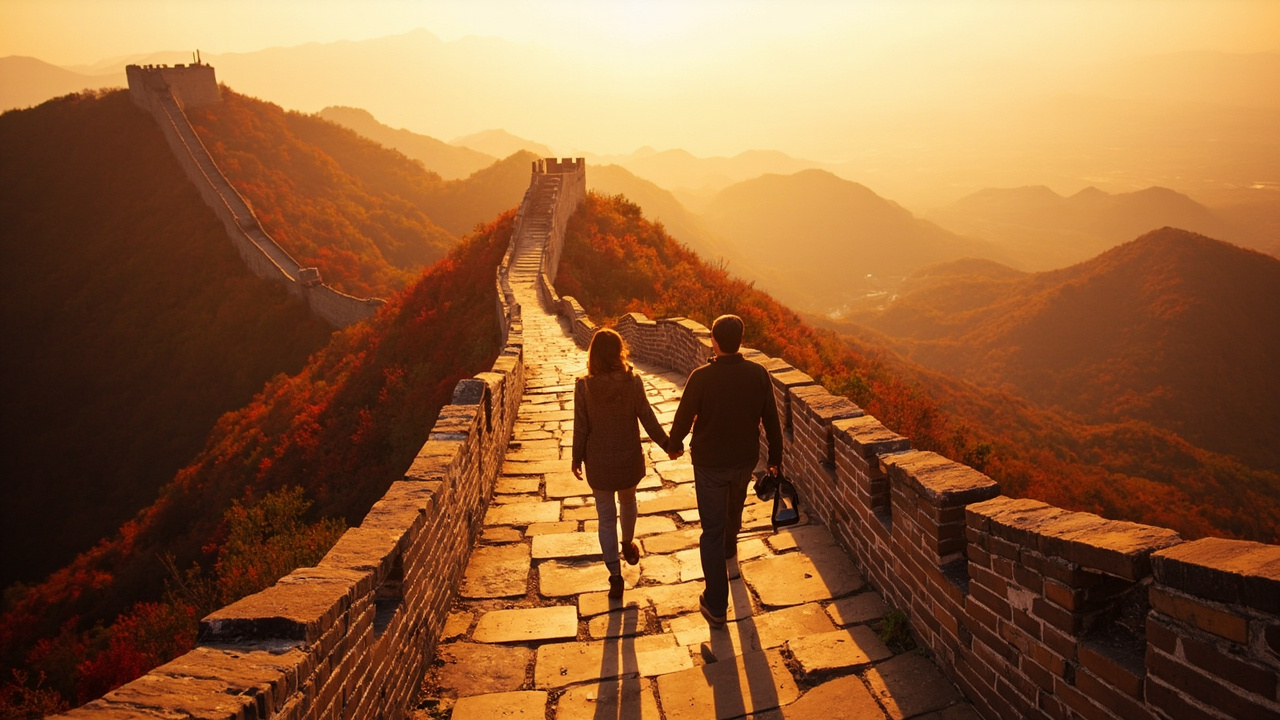
China Anniversary Trip Guide
The woman at the noodle stall in Xi’an’s Muslim Quarter watched me struggle with chopsticks for about ninety seconds before she walked over, took the bowl from my hands, and showed me how to pinch the noodles against my thumb. Then she laughed, said something I didn’t understand, and went back to her pot. That was day four of a three-week trip I’d booked to celebrate ten years with my wife. We’d come for the big stuff — the Wall, the Terracotta Army, the skyline in Shanghai — and we got all of it. But what I remember is that noodle stall, and the tea farmer in Hangzhou who wouldn’t let us pay, and the sleeper train where a kid taught me a card game using a translation app.
An anniversary trip to China is different from a normal vacation. You’re not just ticking off landmarks. You’re trying to make a shared memory that lasts, which means you need places that work for two people — quiet enough to actually talk, interesting enough to keep you both awake, and logistically forgiving enough that you’re not fighting over a map at 9pm on your actual anniversary. I’ve spent seven years living in Beijing and have done this trip more times than I can count, both solo and with my wife. This guide is the version I’d give a friend: ten places that reward couples, with real prices, real directions, and the small stuff nobody tells you.
Quick answer
For most first-time visitors, a 10-14 day anniversary trip to China costs roughly $2,500-$4,500 per couple excluding international flights, covering high-speed rail, mid-range hotels, and food. Citizens of the US, UK, most of the EU, Australia, and dozens of other countries can currently enter visa-free for up to 30 days (check your nationality before booking). The best months are April-May and September-October. Book high-speed rail seats 10-14 days ahead on Trip.com or the official 12306 app, and set up Alipay or WeChat Pay before you land — cash is genuinely awkward now.
The Short Version
If you have 90 seconds: fly into Beijing, spend three days, take the high-speed train to Xi’an for two, then fly or train to Shanghai or Chengdu. Add Hangzhou or Guilin if you have time. Skip the tour buses. Learn to use the metro. Download a VPN before you arrive. Eat where the line is longest. And build in one slow day — you’ll need it.
How I Picked These
I’ve been to every place on this list at least twice, most of them with my wife, a few of them on anniversaries specifically. I’ve also dragged friends and family through these itineraries and watched what worked and what fell apart. The rankings reflect a few things: how well a place works for two people rather than a solo backpacker or a big group, how easy it is to reach without a tour, and whether the experience holds up the second time. I talked to hotel staff, taxi drivers, and a tea shop owner in Hangzhou who’s been running the same stall for 22 years. I’ve also made plenty of mistakes — showing up at the Forbidden City on a Monday, booking a “romantic” boat ride that was actually a ferry, paying triple for a taxi because I didn’t have the app set up. Those are in here too.
Comparison Table
| Rank | Place | Best For | Approx Cost (USD) | Time Needed | When to Go |
|---|---|---|---|---|---|
| 1 | Beijing | The big monuments, first-timers | $120-180/day per couple | 3-4 days | Apr-May, Sep-Oct |
| 2 | Xi’an | History, food, walkability | $90-140/day per couple | 2 days | Apr-May, Sep-Oct |
| 3 | Shanghai | Romance, skyline, nightlife | $150-220/day per couple | 2-3 days | Mar-May, Oct-Nov |
| 4 | Hangzhou | Tea, lakes, slow pace | $100-150/day per couple | 2 days | Apr-May, Sep-Oct |
| 5 | Chengdu | Pandas, food, laid-back vibe | $80-130/day per couple | 2-3 days | Mar-Jun, Sep-Nov |
| 6 | Guilin & Yangshuo | Landscape, river, cycling | $90-150/day per couple | 3 days | Apr-May, Sep-Oct |
| 7 | Suzhou | Gardens, canals, day trip | $80-120/day per couple | 1-2 days | Apr-May, Oct |
| 8 | Zhangjiajie | Dramatic scenery, hiking | $100-160/day per couple | 2-3 days | Apr-Jun, Sep-Nov |
| 9 | Hong Kong | Easy entry, food, harbor | $180-260/day per couple | 3 days | Oct-Dec, Mar-Apr |
| 10 | Lhasa | Spiritual, once-in-a-lifetime | $150-250/day per couple | 3-4 days | May-Oct |
Beijing — Where You Start, Whether You Like It or Not
The first time I took my wife to the Great Wall, we went to Mutianyu instead of Badaling, and we had a whole section of it to ourselves for about twenty minutes before a tour group arrived. That twenty minutes is worth the extra effort.
Beijing is the correct first stop. It’s overwhelming in the way a first city should be, and it has the two things every first-timer needs to see: the Forbidden City and the Wall. But it’s also a city where you can find quiet — the hutong alleys around the Drum Tower, the Temple of Heaven park at 7am where retirees do tai chi and play cards, a tiny dumpling shop in Dongcheng where nobody speaks English and the food is better than anywhere on the tourist trail.
📍 Location: Dongcheng and Xicheng districts for the historic core; Chaoyang for modern hotels and nightlife. 🎫 Entry fee: Forbidden City $8 (¥60), Great Wall at Mutianyu $6 (¥45) plus $21 (¥150) for the cable car, Temple of Heaven $5 (¥35). 🕒 Opening hours: Forbidden City 8:30am-5pm (last entry 3:40pm), closed Mondays. Great Wall 7:30am-5:30pm. 🚕 How to get there: From Beijing Capital or Daxing airport, take the Airport Express to Dongzhimen, then Line 2. For the Forbidden City, take Line 1 to Tian’anmen East, Exit A, walk north 10 minutes. ⏰ When to visit: April-May or September-October. Avoid Chinese New Year and the first week of October (Golden Week). 💡 Insider tips: Book Forbidden City tickets 7 days ahead on the official WeChat mini-program — they sell out. Get a SIM card or eSIM at the airport; Google, WhatsApp, and Instagram are blocked without a VPN. The metro is signed in English and costs about $0.40-$1.40 (¥3-¥10) per ride.
A taxi driver named Liu drove us to Mutianyu and waited four hours without being asked, then refused a tip.
Xi’an — Two Days, and You’ll Wish You Had Three
We arrived on the overnight train from Beijing, exhausted, and the first thing we did was eat. That’s the correct order in Xi’an.
The Terracotta Army is the reason most people come, and it deserves the hype — but go early, hire a guide at the gate for about $28 (¥200), and skip the fake “factory” stops on the way. The real magic of Xi’an is the city itself: the Muslim Quarter at night, the Ming city wall you can rent bikes on, the Big Wild Goose Pagoda, and the food. Biangbiang noodles, roujiamo (Chinese “burger”), yangrou paomo (lamb soup with torn bread). This is the best food city in China for a couple who wants to eat their way through an anniversary.
📍 Location: Beilin District for the wall and Muslim Quarter; Lintong District for the Terracotta Army (40 minutes east). 🎫 Entry fee: Terracotta Army $17 (¥120), city wall $8 (¥54), Big Wild Goose Pagoda $7 (¥50). 🕒 Opening hours: Terracotta Army 8:30am-6pm (Mar-Nov), 8:30am-5:30pm (Dec-Feb). City wall 8am-10pm. 🚕 How to get there: High-speed train from Beijing West to Xi’an North takes 4.5-6 hours, $75-$120 (¥515-¥825). From Xi’an North, take Metro Line 2 to Yongningmen for the wall. ⏰ When to visit: April-May and September-October. Weekdays are noticeably quieter at the Terracotta Army. 💡 Insider tips: Buy Terracotta Army tickets on the official WeChat account 3 days ahead. The Muslim Quarter is best after 6pm. Learn to say “bú yào” (don’t want) for the persistent vendors. The wall bike rental is $6 (¥45) for 90 minutes and worth every cent.
I paid $14 for a “jade” bracelet that turned out to be glass. My wife still wears it.
Shanghai — The Anniversary Dinner City
Shanghai is where you go when you want the trip to feel like a celebration. The Bund at night, the French Concession in the afternoon, a rooftop bar overlooking the Huangpu River — this is the city where you book the nice dinner.
It’s also the most foreigner-friendly city in China. English is widely spoken in hotels and restaurants, the metro is spotless and signed in English, and you can drink decent coffee. That makes it a good place to end a trip, when you’re tired and don’t want to work for it. The downside: it’s the most expensive city on this list, and the tourist sites (Yu Garden, Nanjing Road) are crowded and a bit soulless. Skip those. Go to the Propaganda Poster Art Centre, walk the former French Concession, and eat xiaolongbao at Jia Jia Tang Bao near People’s Square.
📍 Location: Huangpu District for the Bund; Jing’an and Xuhui for the French Concession. 🎫 Entry fee: The Bund is free. Shanghai Museum is free (book ahead). Oriental Pearl Tower $28 (¥199). 🕒 Opening hours: The Bund is open 24 hours. Most museums 9am-5pm, closed Mondays. 🚕 How to get there: From Hongqiao or Pudong airport, take Metro Line 2 to People’s Square. From Beijing, high-speed train is 4.5 hours, $80-$130 (¥553-¥933). ⏰ When to visit: March-May and October-November. Avoid July-August (hot and humid) and the first week of October. 💡 Insider tips: Get a China visa or confirm you qualify for visa-free entry before booking. The Bund is best at 6-7am when it’s just locals doing tai chi. Book the Bund sightseeing tunnel only if you have kids. For a splurge anniversary dinner, Ultraviolet or Fu He Hui — reserve weeks ahead.
A hostel receptionist named Mei circled three restaurants on our map and told us which ones were “for tourists” versus “for Shanghai people.” She was right about all three.
Hangzhou — The Slow Day You’ll Need
By day eight of a two-week trip, you’ll be exhausted. Hangzhou is where you recover.
It’s 45 minutes by high-speed train from Shanghai, and it feels like a different country. West Lake, the tea villages in the hills, the Lingyin Temple, the bamboo forest at Yunqi. The whole city is built around walking slowly and drinking tea. My wife and I spent an entire afternoon at a tea house overlooking Longjing village, doing nothing, and it’s the day we talk about most.
📍 Location: Xihu District around West Lake; Longjing village in the hills southwest. 🎫 Entry fee: West Lake is free. Lingyin Temple $11 (¥75). Longjing tea village free to enter. 🕒 Opening hours: Lingyin Temple 7am-6pm. Tea houses generally 9am-10pm. 🚕 How to get there: High-speed train from Shanghai Hongqiao to Hangzhou East, 45-60 minutes, $11-$18 (¥73-¥120). From Hangzhou East, Metro Line 1 to Longxiangqiao for West Lake. ⏰ When to visit: April-May for tea harvest, September-October for cooler weather. Weekdays are much quieter. 💡 Insider tips: Rent bikes and circle West Lake — it’s about 9 miles and takes 2-3 hours with stops. Buy Longjing tea directly from farmers in the village, not from shops near the lake. The “Impression West Lake” show is worth it if you like spectacle; book the 7:45pm slot.
The tea farmer, Mr. Chen, poured us three rounds and refused payment for the second pot. “You came all this way,” he said through a translation app. “This one is for the marriage.”
Chengdu — Pandas, and Then Everything Else
Everyone comes to Chengdu for the pandas. Go see them — the Chengdu Research Base of Giant Panda Breeding opens at 7:30am and the pandas are actually active before 10am. After that, they sleep, and you’ll be looking at a black-and-white lump.
But Chengdu is more than pandas. It’s the most relaxed big city in China, the food is genuinely spicy and genuinely great, and it’s the gateway to Sichuan’s mountains. The teahouses in People’s Park, the Jinli Ancient Street (touristy but fun), the Sichuan opera with face-changing. This is a good city for a couple who wants to eat well and not rush.
📍 Location: Chenghua District for pandas; Qingyang and Jinjiang for the center. 🎫 Entry fee: Panda Base $8 (¥55). Sichuan opera $21-$35 (¥150-¥250). 🕒 Opening hours: Panda Base 7:30am-6pm (Mar-Oct), 8am-5pm (Nov-Feb). 🚕 How to get there: Fly into Chengdu Tianfu or Shuangliu. From Tianfu, Metro Line 18 to Chengdu South Railway Station, then Line 3 to Panda Avenue for the base. ⏰ When to visit: March-June and September-November. Avoid July-August (hot and crowded). 💡 Insider tips: Book panda tickets online 3 days ahead. Go to the base by 7:30am — by 9am it’s a zoo of tourists. For hotpot, ask your hotel to write down “mild” in Chinese, because “mild” in Chengdu is still very spicy. The teahouse in People’s Park charges about $3 (¥20) for unlimited tea and a chair all afternoon.
I tried “medium” hotpot and spent the next morning regretting it. My wife ordered the mild and was fine.
Guilin & Yangshuo — The Postcard Landscape
The Li River karst scenery is the China you’ve seen on the ¥20 note, and it holds up. The trick is to skip Guilin city itself (it’s a transit hub, nothing more) and go straight to Yangshuo, a small town 90 minutes south where the mountains come right up to the streets.
Take the Li River cruise from Guilin to Yangshuo — about 4 hours, $35-$55 (¥240-¥380) depending on the boat. Then stay in Yangshuo for two nights. Rent bikes and ride the Yulong River loop, take a bamboo raft, climb Moon Hill, and eat beer fish (a local specialty). It’s touristy, but it’s touristy for a reason.
📍 Location: Yangshuo County, about 40 miles south of Guilin. 🎫 Entry fee: Li River cruise $35-$55 (¥240-¥380). Moon Hill $2 (¥15). Bamboo raft $28 (¥200) per person. 🕒 Opening hours: Cruise departs 9am and 1pm daily. Moon Hill 8am-6pm. 🚕 How to get there: Fly to Guilin Liangjiang Airport, then bus or taxi to the pier. High-speed train from Guangzhou or Guiyang also works. ⏰ When to visit: April-May and September-October. Avoid July-August (rainy season) and Chinese holidays. 💡 Insider tips: Book the cruise through your hotel, not a street tout. The upper deck costs more but is worth it. In Yangshuo, rent e-bikes instead of regular bikes if you’re not a cyclist — the hills are real. West Street is the tourist strip; walk one block off it for better food and half the price.
We got caught in a downpour on the bamboo raft and laughed the whole way back. The raftsman gave us his poncho.
Suzhou — The Day Trip That Deserves a Night
Suzhou is 25 minutes from Shanghai by high-speed train, and most people do it as a day trip. Don’t. Stay one night. The gardens are best at opening time, before the tour buses, and the canals at night are the closest thing China has to Venice without the crowds.
The classical gardens — Humble Administrator’s Garden, Lingering Garden, Master of the Nets — are UNESCO sites and genuinely beautiful, but they’re small and get crowded fast. Go at 7:30am. Then spend the afternoon in the Pingjiang Road area, walking the canals and drinking tea.
📍 Location: Gusu District for the gardens and canals. 🎫 Entry fee: Humble Administrator’s Garden $11 (¥80), Lingering Garden $8 (¥55), Master of the Nets $6 (¥40). 🕒 Opening hours: Gardens generally 7:30am-5:30pm. Book ahead on the official WeChat accounts. 🚕 How to get there: High-speed train from Shanghai to Suzhou, 25-30 minutes, $6-$11 (¥40-¥75). From Suzhou Station, Metro Line 4 to Beisita for the gardens. ⏰ When to visit: April-May and October. Weekdays only if you can manage it. 💡 Insider tips: Buy a combined ticket for multiple gardens — it’s cheaper. The night canal boat is $21 (¥150) and worth it. Suzhou-style noodles (with river shrimp and scallions) are the local specialty; try Tong De Xing.
An old man on Pingjiang Road insisted on showing us the way to the garden, walked us ten minutes out of his way, and refused to accept anything in return.
Zhangjiajie — For Couples Who Hike
The sandstone pillars that inspired Avatar are real, and they’re in Hunan province, about 4 hours by high-speed train from Changsha. This is the most physically demanding place on the list — lots of stairs, cable cars, and vertigo — so only come here if you both actually like hiking.
The highlights: the Yuanjiajie area (the Avatar Hallelujah Mountain), Tianzi Mountain, and the Glass Bridge at Zhangjiajie Grand Canyon. Give yourself 2-3 days. The park is huge and the shuttle system is confusing, so plan your route the night before.
📍 Location: Wulingyuan District, about 40 minutes from Zhangjiajie city. 🎫 Entry fee: Zhangjiajie National Forest Park $32 (¥224) for a 4-day pass. Glass Bridge $20 (¥138). 🕒 Opening hours: Park 7am-6pm (Mar-Nov), 8am-5pm (Dec-Feb). 🚕 How to get there: High-speed train from Changsha to Zhangjiajie West, 3.5-4 hours, $28-$45 (¥193-¥310). Then bus or taxi to Wulingyuan. ⏰ When to visit: April-June and September-November. Avoid July-August (rain and crowds) and the first week of October. 💡 Insider tips: Stay in Wulingyuan, not Zhangjiajie city — you’ll save an hour each way. Buy the park ticket online; the queue at the gate is brutal. The Bailong Elevator has a 1-2 hour wait at peak times — go early or skip it. Bring cash for small vendors; not all take Alipay.
I underestimated the stairs and my legs were useless for two days. My wife, who actually trains, was fine.
Hong Kong — The Easy Anniversary
Hong Kong is technically a separate entry system from mainland China, which makes it a good add-on at the start or end of a trip — and the easiest place in the region for a first-timer. English is widely spoken, the metro is world-class, and you can drink a proper cocktail.
The anniversary appeal: Victoria Peak at night, a junk boat in the harbor, dim sum at a proper teahouse, the Star Ferry. It’s expensive, but it’s easy, and for a couple who wants one leg of the trip to be genuinely relaxing, it’s worth it.
📍 Location: Central and Tsim Sha Tsui for hotels; Sheung Wan and Kennedy Town for quieter neighborhoods. 🎫 Entry fee: Peak Tram $11 (HK$88) round trip. Star Ferry $0.50 (HK$4). Most museums free on Wednesdays. 🕒 Opening hours: Peak Tram 7am-midnight. Star Ferry 6:30am-11:30pm. 🚕 How to get there: Fly into Hong Kong International. From the airport, Airport Express to Hong Kong Station, 24 minutes, $14 (HK$115). ⏰ When to visit: October-December and March-April. Avoid summer (hot and typhoon season). 💡 Insider tips: Get an Octopus card at the airport — it works on the metro, ferries, and convenience stores. The Peak is best at 5pm (arrive before sunset, stay for the lights). Book a harbor cruise for your anniversary dinner; the Aqua Luna junk is the classic.
A bartender at a small place in Sheung Wan gave us a free round when he heard it was our anniversary. Then he told us to skip the tourist restaurants on the Peak.
Lhasa — The One You’ll Talk About Forever
Lhasa is not easy. You need a permit, you need to fly or train in slowly to adjust to the altitude (11,975 feet), and you can’t just wander — foreign visitors must be on an organized tour with a guide. That’s the reality. But if you’re willing to do the paperwork, it’s the most memorable place on this list.
The Jokhang Temple at dawn, with pilgrims prostrating on the stone. The Potala Palace, which is bigger and stranger than any photo. The Barkhor circuit, where locals walk clockwise around the temple spinning prayer wheels. This is not a romantic destination in the traditional sense — it’s a spiritual one, and for a couple who wants an anniversary that means something, it delivers.
📍 Location: Chengguan District, central Lhasa. 🎫 Entry fee: Potala Palace $28 (¥200, peak season). Jokhang Temple $12 (¥85). 🕒 Opening hours: Potala Palace 9am-4pm (booking required). Jokhang Temple 7am-6pm. 🚕 How to get there: Fly to Lhasa Gonggar, or take the Qinghai-Tibet Railway from Xining (21 hours, scenic). All foreign visitors need a Tibet Travel Permit arranged through a licensed agency. ⏰ When to visit: May-October. Avoid winter (many sites close) and the Tibetan New Year (crowded). 💡 Insider tips: Book your Tibet tour 2-3 months ahead — permits take time. Acclimatize for at least one full day before doing anything. Potala Palace tickets sell out; your tour agency handles this. Bring cash; ATMs are unreliable.
Our guide, Tenzin, told us the Potala has 1,000 rooms and no one has counted them all. I don’t know if that’s true. I want it to be.
FAQ summary
For a first anniversary trip to China, the safest plan is 10-14 days covering Beijing, Xi’an, and either Shanghai or Chengdu, using high-speed rail between cities. Budget $2,500-$4,500 per couple excluding international flights. Most Western passport holders currently qualify for 30-day visa-free entry, but verify your nationality on the official Chinese embassy site before booking. Set up Alipay or WeChat Pay and a VPN before you land, book train tickets 10-14 days ahead, and travel in April-May or September-October to avoid extreme weather and domestic holiday crowds.
FAQ
Q: Do I need a visa for China in 2026? A: Most travelers from the US, UK, EU, Australia, New Zealand, Japan, and dozens of other countries can currently enter China visa-free for up to 30 days for tourism. Check the official Chinese embassy website for your nationality, because the list changes. If you don’t qualify, a standard tourist visa costs about $140 and takes 4-7 business days.
Q: How much does a 2-week anniversary trip to China cost? A: For a couple, budget $2,500-$4,500 total excluding international flights. That covers mid-range hotels ($60-$120/night), high-speed rail between cities ($30-$120 per leg), food ($30-$60/day for two), and attractions. Add $800-$1,500 per person for round-trip flights from the US or Europe.
Q: Is China safe for a couple traveling alone? A: Violent crime against tourists is rare, and walking around most cities at night is fine. The bigger risks are scams (fake taxis, tea house scams in Beijing and Shanghai) and getting lost without a translation app. Use Didi instead of street taxis, and keep your hotel’s address written in Chinese.
Q: Can I use my phone and apps in China? A: Google, WhatsApp, Instagram, Facebook, and most Western news sites are blocked. Download a VPN before you arrive — you can’t easily get one once you’re there. Get a local SIM or eSIM at the airport, and set up Alipay and WeChat Pay before you fly, because many places no longer take cash.
Q: What’s the best way to get between cities? A: High-speed rail for most routes — Beijing to Xi’an is 4.5-6 hours, Shanghai to Hangzhou is 45 minutes, and it’s comfortable, punctual, and signed in English. Book on Trip.com or the 12306 app 10-14 days ahead. For longer routes like Beijing to Chengdu, flying is faster and often cheaper.
Q: Do I need to speak Mandarin? A: Not fluently, but you’ll need a translation app (Pleco, Baidu Translate, or Google Translate with a downloaded offline pack). English is common in hotels and tourist sites in Beijing, Shanghai, and Hong Kong, but rare elsewhere. Learn a few phrases: nǐ hǎo (hello), xièxie (thank you), duōshǎo qián (how much).
Q: What should we pack for an anniversary trip? A: Comfortable walking shoes (you’ll do 10,000+ steps a day), a universal adapter (China uses Type A/I plugs, 220V), any prescription medication in original packaging, and one nicer outfit for a celebration dinner. Bring a small pack of tissues — many public restrooms don’t supply toilet paper.
The Honest Wrap-up
This list is for couples who want a real trip, not a resort vacation. If you want poolside cocktails and no logistics, this isn’t it — go to Bali. If you want to eat things you can’t pronounce, get lost in a city where you don’t speak the language, and come home with a story you’ll still be telling in ten years, book the flight. My one piece of advice: don’t try to do all ten. Pick three or four, go slow, and leave room for the unplanned afternoon that turns into the best memory. The noodle stall in Xi’an wasn’t on our itinerary. It’s the only thing I’d go back for tomorrow.
More guides you may like

Top 10 Bridges in China
China's bridges are engineering marvels spanning mountains, rivers, and seas. Here are 10 of the most spectacular, from ancient stone to modern steel.
8 min read

Top 10 Buddhist Sites in China
From the Leshan Giant Buddha to the Dunhuang Caves, these 10 Buddhist sites represent 2,000 years of China's spiritual heritage.
9 min read

Top 10 Day Trips from Beijing You Shouldn't Miss
Beijing is packed with history, but some of China's best experiences are just a few hours away. Here are 10 day trips that will transform your visit.
9 min read

Top 10 Hidden Gems in China Off the Beaten Path
Beyond the Great Wall and Terracotta Warriors, China has incredible hidden destinations few tourists ever reach. Here are 10 underrated gems worth the detour.
9 min read

Top 10 Markets and Shopping Streets in China
From Shanghai's Bund to Beijing's Silk Street - 10 markets where foreigners can haggle, explore, and bring home authentic Chinese goods.
9 min read

Top 10 Museums in China You Shouldn't Miss
China's museums span 5,000 years of civilization. These 10 - from the Palace Museum to Xi'an's terracotta gallery - are unmissable for culture lovers.
9 min read