
Best Time to Visit Tibet
TODO: Extract from article (100-160 chars)
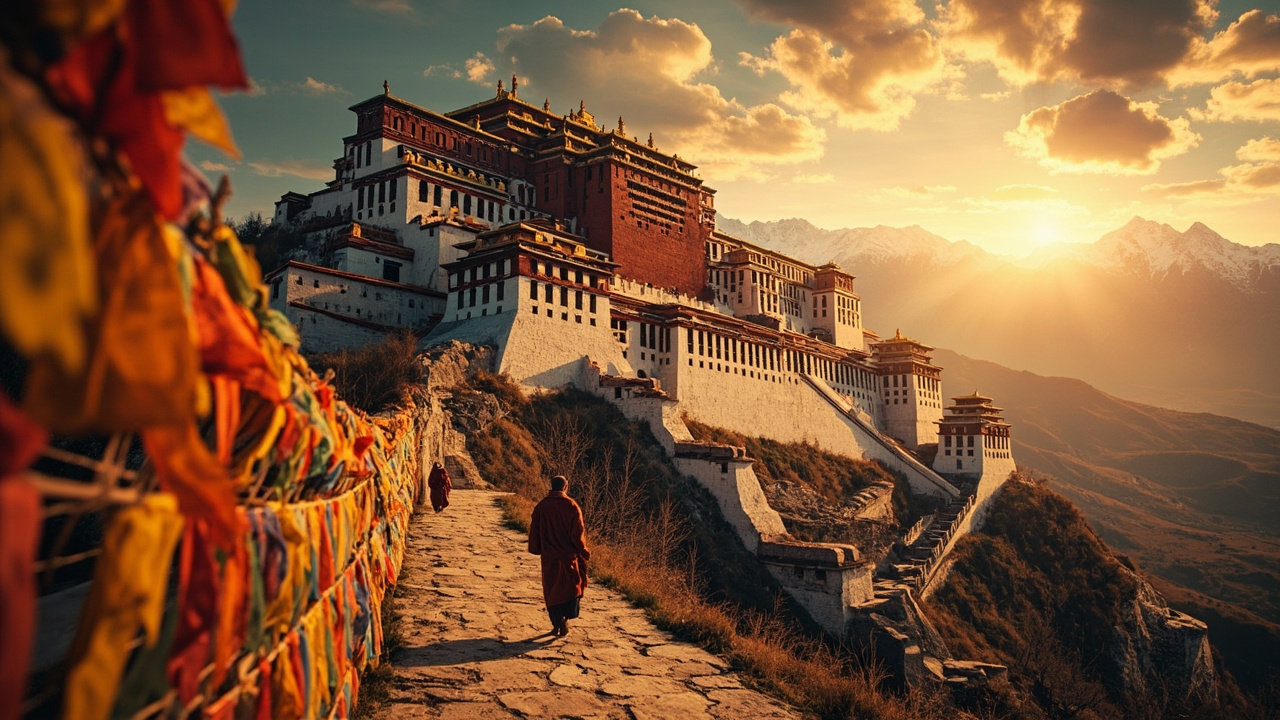
Best Time to Visit Tibet
I landed in Lhasa on a Tuesday afternoon in late October, stepped off the plane, and immediately felt like I’d walked into a freezer someone had left open. The sky was that impossible Tibetan blue, the kind that makes photos look fake. A woman in a maroon chuba was selling prayer beads outside the terminal, and I remember thinking my lungs felt fine. That night, lying in my hotel room at 3,650 meters, I changed my mind. My head pounded like someone was tapping a hammer behind my left eye. I’d read about altitude sickness, of course. Reading about it and experiencing it are two different things.
That trip taught me more about timing than any guidebook could. Tibet isn’t a place you visit whenever you feel like it. The window matters enormously. Come in January and you’ll freeze on the plateau and find half the guesthouses shuttered. Come in July and you’ll share every monastery courtyard with three tour buses of domestic travelers. Come in late October, like I did, and you get clear skies, thinner crowds, and a headache that reminds you you’re very high up.
This guide is about finding that window. I’ve been to Tibet four times now, in spring, summer, autumn, and once in the dead of winter (a mistake I’ll explain later). I’ve talked to Tibetan guides, Chinese tour operators, and a Dutch couple who’d been stuck in Lhasa for eleven days waiting for a permit. What follows is what I actually learned, not what the brochures say.
Quick answer
The best time to visit Tibet is late April to early June or September to mid-October, when temperatures sit between 50-70°F (10-21°C), skies are clearest, and roads to Everest Base Camp and western Tibet are open. July and August are warmest but also the rainy season, with afternoon clouds obscuring mountain views. Winter (November-February) is brutally cold but offers the fewest crowds and cheapest flights. Note that foreign travelers need a Tibet Travel Permit arranged through a licensed agency at least 15-20 days in advance, and you must enter as part of an organized tour — independent travel isn’t allowed.
The Short Version
If you have 90 seconds: go in May or October. May gives you wildflowers on the drive to Shigatse and manageable crowds. October gives you the sharpest mountain visibility of the year and stable weather before the deep cold sets in. Avoid Chinese public holidays (especially the first week of October, when the entire country travels). Book your permit early, budget for a tour, and give yourself two full days in Lhasa to acclimatize before going anywhere higher.
How I Picked These
I’m not ranking destinations here — I’m ranking timing windows for the Tibet trip you’re probably planning. My methodology was simple: I went four times across different seasons, kept a journal of daily weather, crowd levels, and how I felt at altitude, and cross-checked it with three Tibetan guides I’ve stayed in touch with over the years. I also talked to staff at a Lhasa tour agency who’ve been running permits since 2012. Where I wasn’t sure about a specific figure — like exact permit processing times, which shift with policy — I’ve given a range and flagged it. Prices are approximate 2026 figures.
Comparison Table
| Rank | Season / Window | Best For | Approx Cost (USD) | Time Needed | When to Go |
|---|---|---|---|---|---|
| 1 | Late April – Early June | Wildflowers, clear views, moderate crowds | $1,800-2,500 (¥13,000-18,000) | 8-10 days | Spring |
| 2 | September – Mid-October | Sharpest mountain visibility, stable weather | $2,000-2,800 (¥14,500-20,000) | 8-10 days | Autumn |
| 3 | July – August | Warmest temps, green landscapes | $2,200-3,000 (¥16,000-22,000) | 8-10 days | Summer (rainy) |
| 4 | November – February | Fewest crowds, lowest prices | $1,400-2,000 (¥10,000-14,500) | 7-9 days | Winter (cold) |
| 5 | March – Mid-April | Shoulder season, unpredictable weather | $1,600-2,200 (¥11,500-16,000) | 8-10 days | Early spring |
Late April to Early June — The Sweet Spot Nobody Talks About
My first spring visit was in early May, and I still think about the drive from Lhasa to Shigatse. The Brahmaputra River valley was carpeted in yellow wildflowers, and the air had that clean, cold snap you get after a storm. A Tibetan driver named Tashi kept stopping the van to point at distant peaks, grinning. “You see? This is why we say spring is a gift.”
Spring in Tibet is genuinely underrated. The winter snows have melted off most of the lower passes, so roads to places like Gyantse and Shigatse are reliably open. Temperatures in Lhasa hover around 55-65°F (13-18°C) during the day, dropping to near freezing at night. The tourist crowds haven’t fully arrived yet — that happens in July. Hotel prices are still reasonable, maybe 20-30% below peak.
The catch is wind. Spring on the plateau means gusty afternoons, especially around Namtso Lake, which can make the lakeshore feel colder than the thermometer suggests. Bring a windproof layer, not just a warm one.
📍 Location: Lhasa, Shigatse, Gyantse, and the Lhasa-to-Shigatse corridor 🎫 Entry fee: Tibet Travel Permit approximately $50-80 (¥350-580) per person through an agency; individual site fees vary ($5-15 / ¥35-110 each) 🕐 Opening hours: Most monasteries 9am-4pm, with a midday break around noon-2pm 🚕 How to actually get there: Fly into Lhasa Gonggar Airport (LXA) or take the Qinghai-Tibet Railway from Xining (about 21 hours). Foreigners must be met by their tour guide at arrival. ⏰ When to visit: Late April through early June; mornings are clearest, so schedule outdoor sites before noon 💡 Insider tips: Book permits 20+ days ahead — processing slows around the May 1 Labor Day holiday. Carry cash in small bills; many monastery donation boxes don’t take cards. Set up Alipay and WeChat Pay before you arrive, because foreign cards often fail on the plateau. I ate yak butter tea for the first time here and nearly spat it out. It grows on you. Eventually.
September to Mid-October — The Photographer’s Window
A Dutch photographer I met in a Lhasa hostel told me he’d been coming to Tibet every October for nine years. “September is good,” he said, stirring sugar into his coffee. “October is better. The monsoon is gone, the air is dry, and Everest looks like it’s been photoshopped.”
He wasn’t wrong. Autumn on the plateau delivers the clearest mountain views of the year. The summer clouds have cleared out, and the air is so dry that visibility stretches for hundreds of kilometers. If you’re going to Everest Base Camp (the Tibetan side, at 5,200 meters), this is your window. The road from Shigatse to EBC is fully open, and the views of the north face are the best you’ll get.
Temperatures in Lhasa run 60-70°F (15-21°C) during the day, dropping to 30-40°F (-1 to 4°C) at night. Higher elevations get much colder. The downside is crowds — October is peak season, and the first week overlaps with China’s National Day holiday, when domestic tourism explodes. Avoid October 1-7 if you can.
📍 Location: Everest Base Camp (Tibet side), Shigatse, Tingri, Lhasa 🎫 Entry fee: EBC access approximately $25-40 (¥180-290) plus vehicle fees; permit costs same as above 🕐 Opening hours: EBC accessible during daylight; overnight tent stays depend on season 🚕 How to actually get there: 4WD tour from Lhasa via Shigatse, roughly 2-3 days each way. Your agency arranges the vehicle and permits. ⏰ When to visit: September 15 – October 20; skip the National Day week entirely 💡 Insider tips: Bring serious cold-weather gear even in autumn — EBC at night drops below freezing. The altitude at EBC is no joke; spend at least three nights acclimatizing in Lhasa and Shigatse first. Download offline maps, because signal drops on the Friendship Highway. A guide named Penpa told me most tourists underestimate the cold at EBC by about 20 degrees. He was right.
July to August — Warm but Wet
Summer in Tibet is the season I’d recommend last, and I say that as someone who went in July and still had a good time. The problem isn’t the temperature — Lhasa hits a pleasant 70-75°F (21-24°C) — it’s the rain. The Indian monsoon pushes moisture onto the plateau, and afternoon clouds routinely swallow the mountain views you came for.
That said, summer has real advantages. The landscape is green and lush, the nomad grasslands around Namtso are at their best, and the higher passes are all open. It’s also festival season — the Shoton (Yogurt) Festival in late June or August brings traditional opera performances to Lhasa, and the horse-racing festivals in eastern Tibet are worth planning around.
The crowds are heavy, especially in July and August when Chinese school holidays hit. Book hotels and permits well in advance. If you’re flexible on timing, aim for late June, which catches the start of the green season before the rains peak.
📍 Location: Namtso Lake, Lhasa, eastern Tibet (Kham region) 🎫 Entry fee: Namtso approximately $18-25 (¥130-180); festival events vary 🕐 Opening hours: Namtso day visits 8am-6pm; overnight camping available 🚕 How to actually get there: Namtso is a 4-5 hour drive from Lhasa; most tours include it as a day trip or overnight ⏰ When to visit: Late June for green landscapes and fewer crowds; August for festivals 💡 Insider tips: Bring rain gear even if the morning looks clear — afternoon showers are common. Roads to remote areas can wash out; build buffer days into your itinerary. Mosquitoes are rare at altitude, but sunburn is a real risk on cloudy days. I got caught in a hailstorm at Namtso in July. Hail. In summer. That’s the plateau for you.
November to February — For the Brave and the Broke
My winter trip was, in retrospect, a mistake — but an instructive one. I went in early January, tempted by cheap flights and the promise of empty monasteries. The monasteries were empty. So were most of the restaurants, half the guesthouses, and the road to Namtso, which was closed under snow.
Winter in Tibet is genuinely harsh. Lhasa daytime temperatures sit around 40-50°F (4-10°C), but the wind chill makes it feel far colder, and nights drop well below freezing. Many tourist sites operate reduced hours, some hotels shut entirely, and the high passes to western Tibet are often impassable. The upside: prices crater. Flights and hotels can be 40-50% cheaper than peak season, and you’ll have the Potala Palace almost to yourself.
If you do go in winter, stick to Lhasa and the lower-elevation areas. Don’t attempt Everest or western Tibet. And bring more layers than you think you need.
📍 Location: Lhasa, Shigatse (lower elevations only) 🎫 Entry fee: Same site fees, but many hotels and some sites offer winter discounts 🕐 Opening hours: Reduced hours at many sites; check ahead 🚕 How to actually get there: Flights to Lhasa are cheapest in winter; the train from Xining also runs year-round ⏰ When to visit: December-February, but only if you’re cold-tolerant and flexible 💡 Insider tips: Confirm your hotel is actually open before booking — many close for the season. The Potala Palace is gloriously uncrowded. Bring hand warmers; they’re hard to find locally. A guesthouse owner in Lhasa told me winter is when she finally gets to drink tea with her neighbors. “Summer, I am too busy. Winter, I have a life.”
March to Mid-April — The Unpredictable Shoulder
Early spring is a gamble. I’ve had friends visit in March and get perfect weather; I’ve also seen late snowstorms close the road to Shigatse for two days. The plateau is waking up, but it hasn’t committed yet.
What you get in this window is low prices and low crowds, similar to winter, with slightly better temperatures. Lhasa runs 50-60°F (10-15°C) during the day. The wildflowers haven’t arrived, and the high passes may still be snowed in, but the main Lhasa-Shigatse route is usually passable by late March.
If you’re on a tight budget and don’t need Everest views, this is a reasonable compromise. Just build flexibility into your plan and don’t schedule anything you can’t move.
📍 Location: Lhasa, Gyantse, Shigatse 🎫 Entry fee: Standard site fees; some shoulder-season hotel discounts 🕐 Opening hours: Normal hours at most sites, but weather can force closures 🚕 How to actually get there: Fly to Lhasa; road conditions to western Tibet are unreliable ⏰ When to visit: Late March to mid-April, with a backup plan 💡 Insider tips: Check road conditions daily with your guide. Pack for both sun and snow. This is a good window if you mainly want Lhasa and don’t mind skipping the big mountain views. I once spent a March afternoon drinking sweet tea in a Lhasa teahouse while snow fell outside. Not a bad way to spend a day, honestly.
The Permit Question — Why Timing Isn’t Just About Weather
Here’s the thing most guides bury: for foreign travelers, your travel window is also a permit window. Tibet requires a Tibet Travel Permit for all foreign visitors, arranged through a licensed agency, and you cannot enter independently. Processing typically takes 15-20 days, longer around holidays. You also need a Chinese visa first (or visa-free entry eligibility — check the current visa-free transit rules if you’re passing through).
This means your “best time” isn’t just when the weather’s good. It’s when you can actually get the paperwork done. Peak season permits fill up; apply early. And note that some areas — like Everest Base Camp and western Tibet — require additional permits beyond the standard one.
📍 Location: Handled by your agency, not something you do yourself 🎫 Entry fee: Permit approximately $50-80 (¥350-580); additional area permits extra 🕐 Opening hours: Agency business hours; apply at least 20 days ahead 🚕 How to actually get there: Your agency handles the paperwork; you just show up ⏰ When to visit: Apply as soon as your dates are firm 💡 Insider tips: Use a reputable agency — cheap ones sometimes cut corners and leave you stranded. Keep digital and physical copies of your permit. Your guide must accompany you at all times, so build that into your budget. A Dutch couple I met had been stuck in Lhasa for eleven days because their permit hadn’t come through. They’d booked a cut-rate agency. Don’t do that.
Altitude — The Factor Nobody Warns You About Properly
I’ll be blunt: altitude is the single biggest thing that can ruin your Tibet trip, and it has nothing to do with which month you choose. Lhasa sits at 3,650 meters. Everest Base Camp is at 5,200. Your body needs time to adjust, and no season changes that.
The standard advice is to spend two full days in Lhasa doing nothing strenuous before heading higher. I ignored this on my first trip and paid for it. Now I build in three days, drink more water than feels reasonable, and skip alcohol entirely for the first week. Acetazolamide (Diamox) helps some people; talk to your doctor before you go.
📍 Location: Everywhere above 3,000 meters 🎫 Entry fee: N/A — this is about your body, not your wallet 🕐 Opening hours: N/A 🚕 How to actually get there: N/A ⏰ When to visit: Acclimatize regardless of season 💡 Insider tips: Arrive by train rather than plane if you can — the gradual ascent helps. Bring a pulse oximeter. Know the symptoms of HACE and HAPE, and don’t push through severe symptoms. A doctor in Lhasa told me the most common mistake is tourists trying to “power through” altitude sickness. “The mountain always wins,” he said.
Festivals — Timing Your Trip Around Events
Tibet’s festival calendar is a reason to pick one window over another. The biggest are Losar (Tibetan New Year, usually February or March), the Shoton Festival (June or August), and the Saga Dawa Festival (May or June, marking Buddha’s enlightenment). Each brings unique ceremonies and crowds.
Losar is spectacular but logistically tricky — many businesses close, and travel is disrupted. Shoton brings opera performances and thangka unveilings to Lhasa. Saga Dawa draws pilgrims circling sacred sites.
If a festival is your priority, plan around it, but expect higher prices and book everything early.
📍 Location: Lhasa (Shoton, Saga Dawa), varies (Losar) 🎫 Entry fee: Festival events mostly free; some ticketed performances 🕐 Opening hours: Varies by event 🚕 How to actually get there: Standard routes; expect crowds ⏰ When to visit: Check the lunar calendar — dates shift each year 💡 Insider tips: Festival dates follow the Tibetan lunar calendar, so verify exact dates annually. Book accommodation months ahead. Respect local customs around religious ceremonies. I stumbled into a Saga Dawa procession by accident and ended up walking with pilgrims for an hour. Best unplanned afternoon of the trip.
What to Pack — Season by Season
Your packing list shifts dramatically with the season. Spring and autumn: layers, windproof jacket, sun hat, sunscreen (the UV at altitude is brutal). Summer: rain gear, lighter layers, but still a warm jacket for evenings. Winter: serious insulation, thermal base layers, hand warmers, and a hat you won’t lose.
Year-round essentials: a good SIM card or eSIM setup, a VPN if you need Google or WhatsApp (install before you arrive), cash in small bills, and any medication you might need. English is limited outside major hotels, so a translation app is genuinely useful.
📍 Location: Applies everywhere 🎫 Entry fee: N/A 🕐 Opening hours: N/A 🚕 How to actually get there: N/A ⏰ When to visit: Pack for the season you choose 💡 Insider tips: Sunscreen and lip balm are essential year-round. Bring a power bank — charging points are scarce on long drives. A small medical kit with altitude medication saves a pharmacy hunt. I forgot lip balm once and spent a week with cracked lips. Learn from me.
FAQ summary
The best time to visit Tibet is late April to early June or September to mid-October, when weather is stable, mountain views are clearest, and roads to Everest and western Tibet are open. July and August are warm but rainy, while November to February is cold, cheap, and crowd-free. All foreign travelers need a Tibet Travel Permit arranged through a licensed agency at least 15-20 days in advance, must enter as part of an organized tour, and should budget roughly $1,800-2,800 (¥13,000-20,000) for an 8-10 day trip. Altitude acclimatization matters more than season for your comfort, so plan two to three rest days in Lhasa before going higher.
FAQ
Q: What is the single best month to visit Tibet? A: May and October are the two standout months. May offers wildflowers, moderate crowds, and stable weather; October delivers the clearest mountain views of the year. If forced to pick one, I’d choose early October, avoiding the National Day holiday week.
Q: Do I need a visa and a permit to visit Tibet? A: Yes to both. You need a Chinese visa (or visa-free eligibility) plus a separate Tibet Travel Permit arranged through a licensed agency. Apply at least 15-20 days ahead, longer around holidays. You cannot enter Tibet independently as a foreigner.
Q: How much does a Tibet trip cost in 2026? A: Budget roughly $1,800-2,800 (¥13,000-20,000) for an 8-10 day tour including permits, guide, transport, and mid-range hotels. Winter trips can drop to $1,400-2,000 (¥10,000-14,500). Flights and Everest extensions add cost.
Q: Is altitude sickness a problem, and how do I avoid it? A: It affects most visitors to some degree. Spend two to three days resting in Lhasa before going higher, drink plenty of water, avoid alcohol, and consider Diamox after consulting your doctor. Arriving by train instead of plane helps your body adjust.
Q: Can I visit Tibet independently without a tour? A: No. Foreign travelers must travel with a licensed guide and an organized tour. This is a government requirement, not an agency upsell. Your guide must accompany you throughout your stay.
Q: What should I pack for Tibet? A: Layers year-round, plus a windproof jacket, strong sunscreen, lip balm, a hat, and season-specific insulation. Winter needs serious cold gear. Bring cash, a power bank, a translation app, and any medication, including altitude remedies.
Q: Is English widely spoken in Tibet? A: Not outside major hotels and tourist agencies. Your guide will speak English, but restaurants, shops, and taxis generally don’t. A translation app and a few Mandarin phrases go a long way.
The Honest Wrap-up
This guide is for the first-time visitor who wants a real answer, not a brochure. If you’re looking for a beach resort or a spontaneous backpacking adventure, Tibet isn’t it — the permits, the altitude, and the tour requirement make it a trip you plan carefully. If you want some of the most striking landscapes and living Buddhist culture on earth, and you’re willing to do the paperwork, it’s worth every hassle.
My one piece of advice: don’t chase the “perfect” month so hard that you never book. May and October are best, but a well-planned June or September trip beats a perfectly-timed one you never take. Give yourself rest days, respect the altitude, and let the plateau set the pace. It always does anyway.
More guides you may like
Top 10 Bridges in China
China's bridges are engineering marvels spanning mountains, rivers, and seas. Here are 10 of the most spectacular, from ancient stone to modern steel.
8 min read

Top 10 Buddhist Sites in China
From the Leshan Giant Buddha to the Dunhuang Caves, these 10 Buddhist sites represent 2,000 years of China's spiritual heritage.
9 min read
Top 10 Day Trips from Beijing You Shouldn't Miss
Beijing is packed with history, but some of China's best experiences are just a few hours away. Here are 10 day trips that will transform your visit.
9 min read
Top 10 Hidden Gems in China Off the Beaten Path
Beyond the Great Wall and Terracotta Warriors, China has incredible hidden destinations few tourists ever reach. Here are 10 underrated gems worth the detour.
9 min read
Top 10 Markets and Shopping Streets in China
From Shanghai's Bund to Beijing's Silk Street - 10 markets where foreigners can haggle, explore, and bring home authentic Chinese goods.
9 min read
Top 10 Museums in China You Shouldn't Miss
China's museums span 5,000 years of civilization. These 10 - from the Palace Museum to Xi'an's terracotta gallery - are unmissable for culture lovers.
9 min read