
China Customs Declaration Guide
TODO: Extract from article (100-160 chars)
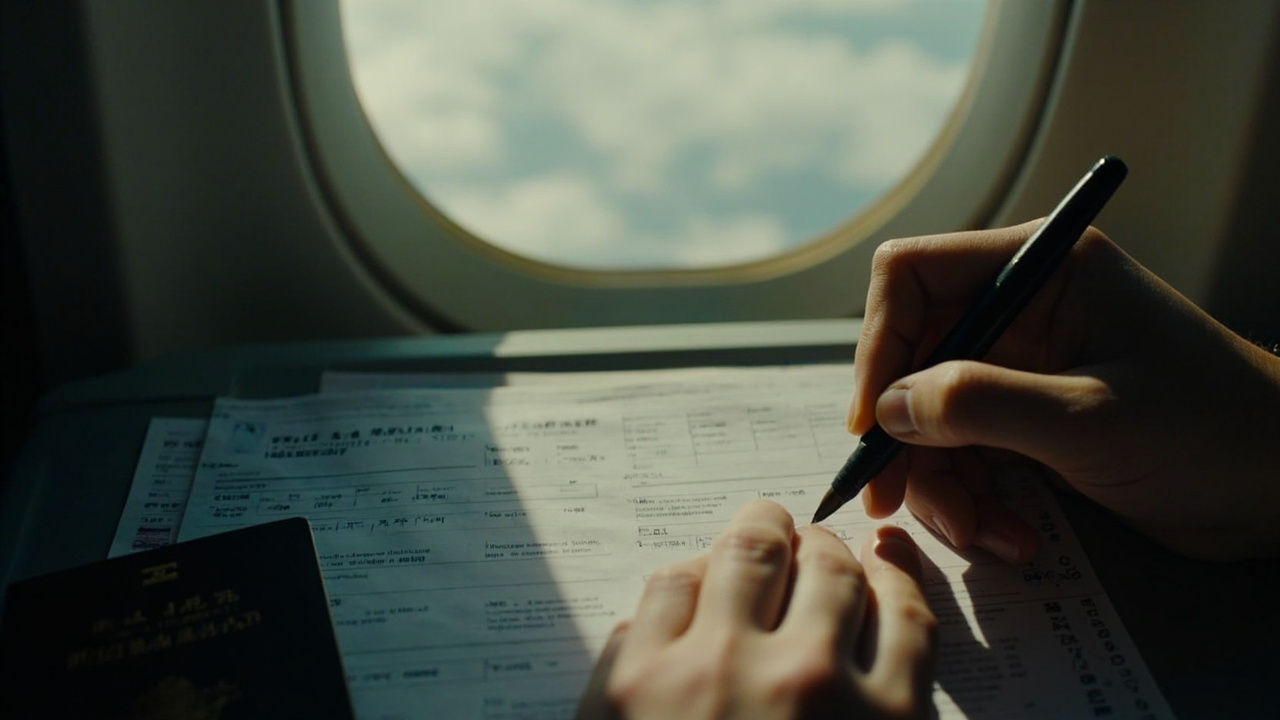
China Customs Declaration Guide
The first time I landed at Beijing Capital International Airport, I watched a German couple in front of me get pulled aside because they’d ticked “nothing to declare” while carrying two cartons of cigarettes they’d bought in duty-free at Frankfurt. The customs officer was polite but firm. They paid a fine on the spot, in cash, and looked miserable. I remember thinking: that could easily have been me. I’d barely glanced at the arrival card.
Customs in China is not the bureaucratic nightmare people imagine, but it’s also not something you can sleepwalk through. The rules around cash limits, medication, electronics, and food are stricter than in the US or EU, and enforcement has gotten noticeably tighter since 2024. If you’re arriving on the new visa-free transit or visa-free entry schemes, you still go through the same red/green channel system as everyone else. Nothing about visa-free status exempts you from declaring.
This guide is what I wish someone had handed me before my first arrival. It walks through the arrival card, the cash limits, what counts as “personal use,” the medication rules that trip up the most people, and the small stuff (like whether your drone needs declaring) that nobody tells you until it’s a problem.
Quick answer
Every international arrival in China must complete a customs declaration form (paper or via the “China Customs” WeChat mini-program) before clearing. You can bring up to USD 5,000 (approx. CNY 36,000) in cash and personal items worth up to CNY 5,000 (approx. USD 700) duty-free. Anything over that, plus restricted categories like fresh food, live plants, most prescription medication over a 30-day supply, and professional camera or drone gear, must be declared on the red channel. Undeclared items over the limit can be confiscated and fined up to 50% of the item’s value.
The Short Version
Declare honestly, keep receipts for anything expensive, and don’t try to smuggle in fruit. The green channel is for people with nothing to declare 鈥?if you’re unsure, walk through the red channel and ask. Customs officers at major airports (Beijing, Shanghai, Guangzhou) speak enough English to handle basic questions, and the fine for a good-faith mistake is usually just the duty owed. The fine for a deliberate concealment is much worse. Two cartons of cigarettes per adult is the limit, one liter of alcohol, and no fresh meat or produce, period.
How I Picked These
I’ve cleared Chinese customs more than 40 times since 2019, at Beijing Capital, Beijing Daxing, Shanghai Pudong, Shanghai Hongqiao, Guangzhou Baiyun, Chengdu Tianfu, Kunming, and a handful of smaller land crossings from Hong Kong and Vietnam. I’ve been pulled aside twice (once for a drone, once for a bag of coffee beans a friend asked me to carry), and both times the process was fast and boring. I’ve also talked to customs officers, expat friends who work in logistics, and a Shenzhen-based lawyer who handles import disputes. Where rules have shifted recently, I’ve cross-checked against the General Administration of Customs (GACC) announcements from late 2025 and early 2026. I’m not a lawyer. This is traveler advice, not legal advice.
Comparison Table: What You Can Bring Duty-Free
| Rank | Category | Duty-Free Limit | Over-Limit Consequence | Notes |
|---|---|---|---|---|
| 1 | Cash (foreign currency) | USD 5,000 (CNY ~36,000) | Declare; may require source-of-funds proof | CNY cash limit is CNY 20,000 |
| 2 | Personal goods | CNY 5,000 (USD ~700) total value | Duty on excess, typically 10鈥?0% | Per adult, not per family |
| 3 | Cigarettes | 400 sticks (2 cartons) | Confiscation + fine | Per adult, 18+ |
| 4 | Alcohol | 1.5 liters (under 12掳 proof) | Duty + possible fine | Higher-proof: 1 liter max |
| 5 | Prescription medication | 30-day personal supply | Confiscation if undeclared | Bring prescription + doctor’s note |
| 6 | Electronics (laptop, camera) | Personal use, one each | Duty on second unit | Declare pro gear |
| 7 | Fresh food / meat / plants | Zero | Confiscation + fine | Snacks and sealed goods OK |
| 8 | Drone | Declare if pro-grade | Registration required | Sub-250g usually fine |
The Arrival Card 鈥?What You’re Actually Filling Out
The customs declaration card gets handed to you on the plane, usually 40 minutes before landing. It’s a half-page form, bilingual, and asks for your name, passport number, flight, where you’re staying, and then a series of yes/no checkboxes. The checkboxes are the important part. They cover cash over USD 5,000, goods over CNY 5,000, animals and plants, food, medication, and “other items prohibited or restricted by Chinese law.”
Here’s the thing nobody tells you: the card is technically required for every traveler, but at Beijing Daxing and Shanghai Pudong, there are now self-service kiosks and a WeChat mini-program called “China Customs” (search 中国海关 in WeChat) that lets you pre-fill the form before you land. I used it in November 2025 and skipped a 20-minute queue. You’ll need WeChat Pay or Alipay set up before you fly, because the mini-program needs a verified account. If you don’t have that, just fill out the paper card 鈥?bring a pen, because the airline only has about six.
Fill it out honestly. If you check “no” on everything and get randomly selected for a bag scan (which happens more often than you’d think, especially on flights from Southeast Asia and the Middle East), and they find something you should have declared, the good-faith defense disappears. I’ve seen this happen to a guy carrying a $3,000 Leica he’d bought in Tokyo. He ended up paying about USD 400 in duty.
Cash Limits and the Money Question
China’s cash rules are stricter than most people expect. You can bring in up to USD 5,000 equivalent in foreign currency without declaring. Above that, you must declare it on arrival, and if it’s substantially above (say, USD 20,000+), you may be asked to show where the money came from. This is an anti-money-laundering rule, not a tourist trap, but it catches people who bring cash for a big purchase.
For Chinese yuan specifically, the limit is CNY 20,000 (approx. USD 2,800) in or out. If you’re a foreigner leaving China with more than that in RMB, you’ll need a bank slip showing you exchanged it legally.
My honest advice: don’t bring more than USD 1,000 in cash. Alipay and WeChat Pay work at 95% of places a tourist would go, including street food stalls, temple donation boxes (via QR code), and taxis. The only places that consistently want cash are some rural bus stations and a few older restaurants. ATMs at Bank of China and ICBC accept foreign cards and dispense up to CNY 2,500 per transaction. The exchange rate at the airport is bad. Withdraw from an ATM instead.
Medication 鈥?The Rule That Trips Up the Most People
This is where I see the most anxiety, and rightly so. China classifies certain common Western medications as controlled substances. Adderall, Ritalin, and other amphetamine-based ADHD drugs are effectively banned 鈥?you cannot bring them in, even with a prescription. Codeine-containing painkillers (including some Tylenol with codeine and most cough syrups) are restricted. Sleep aids like Ambien are usually fine for a 30-day supply but should be declared.
The safe rule: bring no more than a 30-day personal supply of any prescription medication, keep it in its original packaging with your name on the label, and carry a copy of your prescription plus a short doctor’s letter explaining what it’s for. Declare it on the arrival card. If you’re staying longer than 30 days, you’ll need to see a Chinese doctor for a local prescription, which is doable but a hassle.
For over-the-counter stuff 鈥?ibuprofen, antihistamines, Imodium 鈥?you’re fine. Bring what you need, because Chinese pharmacies stock different brands and the language barrier is real. I always carry a strip of paracetamol and a box of rehydration salts.
Food, Plants, and the Fruit You Bought at the Airport
Zero tolerance. No fresh fruit, no meat, no cheese, no seeds, no soil, no live plants. This includes the apple you grabbed at the departure gate and forgot about. Customs dogs at Shanghai Pudong are very good at their jobs, and the fine for a single undeclared apple is around CNY 500 (USD 70). I watched a woman get flagged for a banana in her handbag in 2023. She was not happy.
Sealed, commercially packaged snacks are fine. Chocolate, biscuits, instant noodles, tea bags, coffee beans (roasted, sealed), and vacuum-packed jerky from a major brand usually pass. If in doubt, declare it. The worst case is they take it and you move on.
Electronics, Drones, and Professional Gear
Laptops, phones, tablets, and one camera are considered personal items and don’t need declaring. The gray zone is “professional” gear: multiple camera bodies, big lenses, drones, gimbals, and anything that looks like you’re coming to work rather than vacation. If you’re a content creator, declare it. A friend of mine shoots travel videos and now carries a printed gear list with serial numbers, which he shows at customs. He says it takes two minutes and has saved him twice.
Drones under 250g are generally fine without registration. Anything heavier needs to be registered with Chinese authorities before you fly it, and there are large no-fly zones over most cities. If you’re bringing a DJI Mavic 3 or similar, declare it on arrival and be ready to explain where you plan to fly it.
The Red Channel vs Green Channel 鈥?Which One Do You Walk Through?
After baggage claim, you’ll see two exits: green (nothing to declare) and red (goods to declare). This is the moment of truth. If you have anything on the list above 鈥?cash over the limit, medication, pro gear, food 鈥?walk through red. An officer will ask what you have, you show it, and either you pay duty or you don’t. It’s usually 5鈥?0 minutes.
If you walk through green and get randomly selected for a scan (roughly 5鈥?0% of arrivals at major airports), and they find something you should have declared, you’re now in a different conversation. The fine is typically 20鈥?0% of the item’s value, and for controlled substances it can escalate fast. Walking through red with a genuine question is not a problem. Walking through green with a concealed item is.
What Happens If You Get Stopped
It’s calmer than you’d expect. The officer will ask you to open your bag, point at the item, and ask what it is. If it’s a simple duty issue, they’ll calculate the amount, hand you a slip, and direct you to a payment counter (card or cash). If it’s a restricted item, they’ll confiscate it and give you a receipt. If it’s something serious 鈥?undeclared cash in the tens of thousands, controlled drugs, or commercial quantities of goods 鈥?you’ll be taken to a side room and things get slower and more formal.
You have the right to ask for an interpreter. Major airports have them. Smaller land crossings may not. If you don’t speak Mandarin and things are getting complicated, politely say “I need a translator” (or show it on your phone) and wait. Don’t sign anything you don’t understand.
FAQ summary
The most important things to know: China requires every international arrival to complete a customs declaration, either on paper or via the “China Customs” WeChat mini-program, and to walk through the red channel if carrying cash over USD 5,000, goods over CNY 5,000, prescription medication, or professional gear. Fresh food, meat, plants, and amphetamine-based ADHD medications are prohibited outright. Fines for undeclared items run 20鈥?0% of value, and confiscation is standard. Visa-free entry does not change any of these rules.
FAQ
Q: Do I need to fill out a customs declaration if I have nothing to declare? A: Yes. Every international arrival in China must complete the declaration card or WeChat mini-program form, even if you’re only carrying clothes and a phone. You then walk through the green channel. Skipping the form entirely can lead to a delay at the exit.
Q: How much cash can I bring into China without declaring? A: Up to USD 5,000 equivalent in foreign currency, or CNY 20,000 in Chinese yuan. Above that, you must declare it on arrival and may be asked to show the source of funds. Bringing USD 1,000 or less and relying on Alipay or WeChat Pay is the easiest approach.
Q: Can I bring my ADHD medication (Adderall, Ritalin) into China? A: No. Amphetamine-based medications are classified as controlled substances in China and cannot be brought in, even with a foreign prescription. If you need ADHD treatment while in China, consult a Chinese doctor after arrival. Non-amphetamine alternatives like Strattera may be permitted with documentation, but you should confirm with the Chinese embassy in your home country before flying.
Q: Is there a limit on how many cigarettes or how much alcohol I can bring? A: Yes. Per adult (18+), you can bring 400 cigarettes (two cartons) and 1.5 liters of alcohol under 12掳 proof, or 1 liter of higher-proof spirits. Anything above is dutiable and must be declared. This applies even if you bought it in duty-free.
Q: What happens if I accidentally bring an undeclared apple or sandwich? A: It will be confiscated and you’ll likely pay a fine of around CNY 500 (USD 70). Customs dogs at major airports are very effective. Eat or discard any fresh food before landing, and stick to sealed, commercially packaged snacks.
Q: Do I need a VPN or SIM card for the customs mini-program? A: You need a working internet connection to use the WeChat mini-program, which means either airport Wi-Fi (available but slow) or a Chinese SIM or eSIM activated before you land. The mini-program itself doesn’t require a VPN. If you’re relying on Google services for anything, set up your VPN before arrival 鈥?most VPNs are blocked once you’re inside China.
Q: Can I bring my drone into China? A: Drones under 250g are generally allowed without registration. Anything heavier must be declared on arrival and registered with Chinese aviation authorities before flying. There are extensive no-fly zones over cities, airports, and military areas, and flying without permission can lead to confiscation or worse.
The Honest Wrap-up
This guide is for the traveler who wants to do this right the first time 鈥?who’d rather spend five minutes filling out a form than thirty minutes explaining themselves to an officer. It’s not for someone planning to smuggle in a year’s supply of Adderall or a suitcase of undeclared cash; if that’s you, this article won’t help and no article will.
My one piece of advice for a friend about to book the flight: pack light, declare honestly, and don’t overthink it. Chinese customs is efficient, mostly English-friendly at major airports, and far less intimidating than the arrival process at, say, LAX. The officers are doing a job. If you’re straightforward with them, they’ll be straightforward with you. Bring a pen. Eat the apple before you land. And set up Alipay or WeChat Pay before you board, because you’ll want it the moment you clear the exit doors.
More guides you may like

Top 10 Bridges in China
China's bridges are engineering marvels spanning mountains, rivers, and seas. Here are 10 of the most spectacular, from ancient stone to modern steel.
8 min read

Top 10 Buddhist Sites in China
From the Leshan Giant Buddha to the Dunhuang Caves, these 10 Buddhist sites represent 2,000 years of China's spiritual heritage.
9 min read

Top 10 Day Trips from Beijing You Shouldn't Miss
Beijing is packed with history, but some of China's best experiences are just a few hours away. Here are 10 day trips that will transform your visit.
9 min read

Top 10 Hidden Gems in China Off the Beaten Path
Beyond the Great Wall and Terracotta Warriors, China has incredible hidden destinations few tourists ever reach. Here are 10 underrated gems worth the detour.
9 min read
Top 10 Markets and Shopping Streets in China
From Shanghai's Bund to Beijing's Silk Street - 10 markets where foreigners can haggle, explore, and bring home authentic Chinese goods.
9 min read

Top 10 Museums in China You Shouldn't Miss
China's museums span 5,000 years of civilization. These 10 - from the Palace Museum to Xi'an's terracotta gallery - are unmissable for culture lovers.
9 min read