
Chinese Hot Pot Etiquette
TODO: Extract from article (100-160 chars)
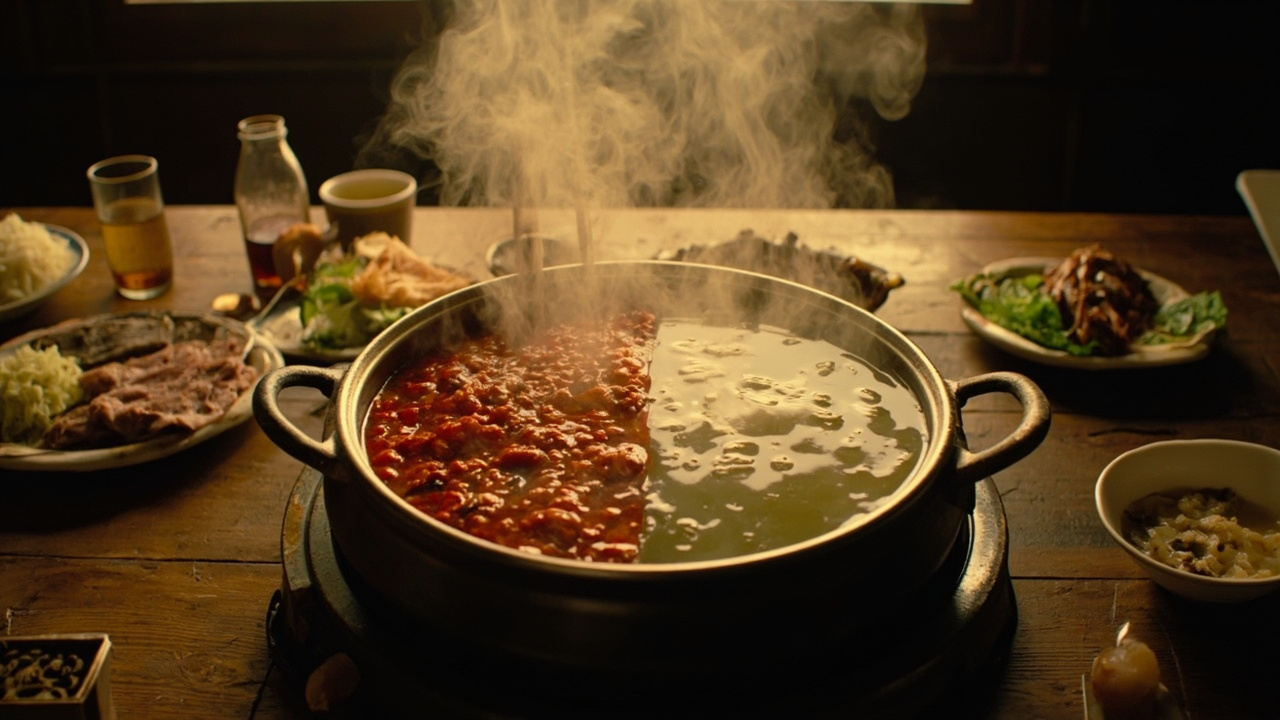
Chinese Hot Pot Etiquette
The first time I ate hot pot in Chengdu, I did everything wrong. I dropped a raw slice of beef into the bubbling broth and fished it out four seconds later, still pink. The woman next to me—a stranger, mid-fifties, wearing a puffer vest—reached over with her chopsticks, plucked the meat out of my bowl, and dropped it back into the pot. She didn’t say anything. She just looked at me, then at the meat, then back at me. I got the message. The meat needed another thirty seconds.
That was seven years ago. I’ve eaten hot pot maybe two hundred times since—in Beijing, Chongqing, Guangzhou, a tiny town in Yunnan where the broth was made from wild mushrooms I couldn’t name. And I still see first-time foreign visitors making the same mistakes I did. Not because they’re rude. Because nobody told them the rules.
Hot pot is China’s most social meal. It’s not a dish you order and eat. It’s a two-hour event where everyone at the table cooks, talks, drinks, and negotiates over the same simmering pot. Get the etiquette right and you’ll be invited back. Get it wrong and you’ll spend the meal watching everyone else have fun while you wonder why your meat tastes like rubber.
This guide covers what you actually need to know: how to order, how to cook, how to dip, how to pay, and the dozen small things that separate a tourist from someone who’s been here before.
Quick answer
Chinese hot pot etiquette comes down to three rules: cook your food fully before eating it, use the serving chopsticks (公筷, gōngkuài) to move raw meat into the pot—never your own—and never put food you’ve already bitten back into the shared broth. A typical hot pot meal costs $15–$30 (¥110–¥220) per person in a mid-range restaurant, and most places in Beijing, Chengdu, and Chongqing have picture menus or QR-code ordering that works with a translation app. If you’re visiting China for the first time, set up Alipay or WeChat Pay before you arrive—many hot pot restaurants no longer accept cash.
The Short Version
Sit down. Order a split pot if anyone at the table can’t handle spice. Wait for the broth to reach a rolling boil before you cook anything. Use the communal chopsticks for raw meat, your own for eating. Cook meat until it’s fully opaque—no pink. Dip in your own bowl, not the pot. Don’t double-dip. Drink the soup only at the end, and only from the non-spicy side. Tip isn’t expected. Fight over the bill, but let the host win.
How I Picked These
I’ve eaten hot pot in 14 Chinese cities over seven years, from a 24-hour chain in Shenzhen to a family-run spot in Chongqing’s Jiulongpo district where the owner’s grandmother still makes the base broth by hand. I’ve been the only foreigner in the room more times than I can count. I’ve also asked a lot of dumb questions—to taxi drivers, hostel receptionists, and one very patient waitress in Xi’an who drew me a diagram of the correct cooking order on a napkin.
The etiquette rules below come from watching what locals actually do, not from what guidebooks say. Some of them are regional. Some are dying out. All of them will make your meal smoother.
Comparison Table
| Rank | Hot Pot Style | Best For | Approx Cost (USD) | Time Needed | When to Go |
|---|---|---|---|---|---|
| 1 | Chongqing (mala) | Spice lovers, groups | $18–$28 (¥130–¥200) | 90–120 min | Oct–Apr |
| 2 | Beijing copper pot | First-timers, winter | $20–$32 (¥145–¥230) | 75–100 min | Nov–Feb |
| 3 | Sichuan (Chengdu) | Balanced spice, tourists | $15–$25 (¥110–¥180) | 90–120 min | Year-round |
| 4 | Chaoshan beef | Meat quality purists | $22–$38 (¥160–¥275) | 60–90 min | Year-round |
| 5 | Yunnan mushroom | Vegetarians, mild palates | $16–$26 (¥115–¥190) | 90–120 min | Jun–Oct |
| 6 | Cantonese seafood | Families, non-spicy | $25–$45 (¥180–¥325) | 90–120 min | Year-round |
| 7 | Individual pot (小火锅) | Solo diners, hygiene | $10–$18 (¥75–¥130) | 45–60 min | Year-round |
| 8 | Tibetan yak butter | Adventurous eaters | $14–$22 (¥100–¥160) | 75–90 min | May–Sep |
| 9 | Northeast (dongbei) | Cold-weather comfort | $12–$20 (¥85–¥145) | 60–90 min | Dec–Feb |
| 10 | Dry pot (干锅) | People who hate broth | $14–$24 (¥100–¥175) | 45–60 min | Year-round |
1. Chongqing Mala Hot Pot — The One That Will Ruin You for Everything Else
I ate my first proper Chongqing hot pot at a place called Zhao Er, in a basement off Jiefangbei. No English menu. No pictures. Just a QR code and a pot of broth so red it looked like lava. I ordered what the table next to me ordered, which turned out to be beef tripe, duck intestine, and something I still can’t identify. It was the best meal of my life.
Chongqing hot pot is not Sichuan hot pot. Locals will correct you if you say otherwise. The broth is beef tallow–based, not water-based, and the spice hits differently—deeper, smokier, with a numbing finish from Sichuan peppercorns. It’s also the most etiquette-heavy style. There’s a right order to cook things, a right way to dip, and a right way to signal you’re done.
📷 Location: Jiulongpo and Yuzhong districts have the highest concentration of old-school spots. Avoid the tourist strip near Hongya Cave.
🎫 Entry fee: No entry fee. Meal cost $18–$28 (¥130–¥200) per person with drinks.
🕒 Opening hours: Most open 11am–2am. Some 24-hour spots near the train station.
🚇 How to actually get there: Take Metro Line 2 to Linjiangmen Station, Exit A, walk 8 minutes uphill toward the residential blocks. The good places don’t have English signs.
⏰ When to visit: October through April. Go on a Tuesday or Wednesday around 6pm—weekends mean a 90-minute wait.
💡 Insider tips: Order the 微辣 (wēi là, mild) broth even if you think you can handle spice. Ask for a bowl of sesame oil and garlic—it’s the traditional dip and it cools the burn. Don’t drink the broth. Locals never do. And if someone offers you a cigarette mid-meal, it’s not rude to decline.
I watched a man at the next table eat an entire plate of beef tripe in under four minutes. He dipped each piece for exactly eight seconds. I counted.
2. Beijing Copper Pot — The Winter Meal That Feels Like a Ritual
The first cold week of November in Beijing, I walked into a hutong restaurant near Nanluoguxiang and found a table of six men in their sixties sharing a copper pot shaped like a chimney. They were drinking baijiu and arguing about something. One of them waved me over and pointed at an empty chair. I sat. Nobody spoke English. We ate for two hours.
Beijing copper pot (铜锅涮肉, tóngguō shuànròu) is the oldest style of hot pot in China, and the most ceremonial. The pot is charcoal-fired, the broth is plain water with a few scallions and ginger, and the meat is sliced paper-thin—lamb, usually, sometimes beef. You dip it for a few seconds, then drag it through a sesame paste sauce. That’s it. No spice, no drama. Just meat and broth.
📷 Location: Dongcheng district, especially the hutongs around Gulou and Andingmen.
🎫 Entry fee: No entry fee. Meal cost $20–$32 (¥145–¥230) per person.
🕒 Opening hours: 11am–10pm. Many close on Mondays.
🚇 How to actually get there: Take Metro Line 8 to Shichahai Station, Exit A2, walk north into the hutong alleys. Look for the copper pots in the window.
⏰ When to visit: November through February. Lunch is quieter than dinner.
💡 Insider tips: The sesame paste (麻酱, májiàng) is the point—ask for extra. Add a raw egg to it if you want the full Beijing experience. The lamb should be pink in the middle when you pull it out. Order a plate of frozen tofu (冻豆腐) to soak up the broth at the end. And if you’re a foreigner, expect someone to toast you with baijiu. You don’t have to finish the glass.
The man who waved me over turned out to be a retired teacher named Liu. He paid for my meal. I never got to return the favor.
3. Sichuan Hot Pot in Chengdu — The Version Tourists Actually Get Right
Chengdu is where hot pot gets friendly. The broth is water-based, the spice is adjustable, and the restaurants are designed for people who don’t know what they’re doing. I’ve taken three separate groups of first-time visitors here, and every one of them left saying it was the best meal of the trip.
The key difference from Chongqing: Chengdu hot pot uses more aromatics—star anise, cardamom, fennel—and less straight chili oil. It’s still spicy, but it’s a spice you can taste through. The dipping sauce bar (调料台) is the other big draw. You build your own bowl from twenty or thirty options: sesame paste, garlic, cilantro, fermented bean curd, oyster sauce, chili flakes. This is where you get to experiment.
📷 Location: Wuhou and Jinjiang districts. Chunxi Road has the tourist-friendly chains.
🎫 Entry fee: No entry fee. Meal cost $15–$25 (¥110–¥180) per person.
🕒 Opening hours: 11am–midnight. Some chains run 24 hours.
🚇 How to actually get there: Take Metro Line 3 to Chunxi Road Station, Exit C, and walk two blocks in any direction. You’ll see ten hot pot places.
⏰ When to visit: Year-round. Go at 5pm to beat the 7pm rush.
💡 Insider tips: The sauce bar is included in the per-person fee—load up. Ask for 鸳鸯锅 (yuānyāng guō, split pot) if anyone can’t handle spice. Order the 冰粉 (bīngfěn, ice jelly) for dessert. It resets your palate. And don’t be shy about asking the waitstaff to cook the first few items for you. They will.
I once watched a waitress in Chengdu spend five minutes teaching a German couple how to peel shrimp with chopsticks. She wasn’t paid extra for it.
4. Chaoshan Beef Hot Pot — For People Who Care About Meat
I’ll be honest: Chaoshan hot pot is my favorite, and I think it’s wasted on most tourists. The broth is nearly clear—just beef bones and a few herbs—and the entire meal is about the quality of the beef. If you don’t care about meat, skip this one. If you do, it will change how you think about hot pot.
The style comes from the Chaoshan region of Guangdong, and it’s built around specific cuts: 吊龙 (diàolóng, sirloin), 匙柄 (chíbǐng, chuck), 五花趾 (wǔhuāzhǐ, shank). Each cut has a recommended cooking time, usually between 8 and 15 seconds. Overcook it and you’ve ruined it. The dipping sauce is light—soy, sesame, a little chili—so the beef flavor comes through.
📷 Location: Shenzhen’s Futian district and Guangzhou’s Tianhe district have the best options.
🎫 Entry fee: No entry fee. Meal cost $22–$38 (¥160–¥275) per person.
🕒 Opening hours: 11am–10pm. Reservations recommended on weekends.
🚇 How to actually get there: In Shenzhen, take Metro Line 1 to Shopping Park Station, Exit B, walk 5 minutes north. Look for the places with hanging beef in the window.
⏰ When to visit: Year-round. Best at lunch when the beef is freshest.
💡 Insider tips: Ask the server to explain the cuts—most Chaoshan places have a diagram. The beef balls (牛肉丸) are hand-beaten and should bounce if you drop them. Cook them for 3 minutes, not 30 seconds. And order the 沙茶酱 (shāchá jiàng, satay sauce) for dipping. It’s the regional standard.
I once paid $60 for two people here and considered it a bargain. My friend paid $15 at a chain and didn’t understand why I was so excited.
5. Yunnan Mushroom Hot Pot — The One That Might Kill You (Slightly)
Yunnan mushroom hot pot is the only meal I’ve eaten where the waiter set a timer and refused to let us touch the pot until it went off. The reason: some of the wild mushrooms are toxic if undercooked. The timer is not a suggestion.
The broth is chicken- or pork-based, and the mushrooms are the star—porcini, chanterelles, and a dozen varieties I can’t name in English. The flavor is earthy and deep, nothing like the spicy styles. It’s also the best option for vegetarians, since you can order a mushroom-only pot. Just don’t eat anything until the timer beeps.
📷 Location: Kunming’s Guandu district has the most authentic spots.
🎫 Entry fee: No entry fee. Meal cost $16–$26 (¥115–¥190) per person.
🕒 Opening hours: 11am–9pm. Mushroom season runs June–October.
🚇 How to actually get there: In Kunming, take Metro Line 1 to Wujiaying Station, Exit B, and walk 10 minutes. Ask your hotel to write the address in Chinese.
⏰ When to visit: June through October, when fresh mushrooms are available. Off-season uses dried mushrooms, which are fine but less exciting.
💡 Insider tips: Respect the timer. Seriously. Ask which mushrooms are which—most servers will point and name them. The broth at the end is the best part; drink it after the mushrooms are gone. And if you feel tingling in your fingers, tell someone. It’s probably nothing, but it’s not worth ignoring.
The waiter at the place I went to was named Xiao Yang. He checked on us every four minutes. I tipped him $5, which confused everyone.
6. Cantonese Seafood Hot Pot — The Family Option
Cantonese hot pot is what you eat when you’re with people who don’t want spice, don’t want drama, and do want to spend three hours talking. The broth is mild—usually a chicken or pork base with goji berries and dates—and the ingredients are whatever’s fresh that day: shrimp, fish balls, crab, sliced abalone if you’re splurging.
I ate this style in Guangzhou with a family I met through a hostel receptionist. The grandmother ran the table. She cooked everything, portioned it out, and handed each person their bowl. Nobody touched the pot without her nod. It was the most organized meal I’ve ever been part of.
📷 Location: Guangzhou’s Liwan district, especially near Shangxiajiu Pedestrian Street.
🎫 Entry fee: No entry fee. Meal cost $25–$45 (¥180–¥325) per person.
🕒 Opening hours: 11am–10pm. Weekend dinners require reservations.
🚇 How to actually get there: Take Metro Line 1 to Changshou Road Station, Exit D, walk 5 minutes west.
⏰ When to visit: Year-round. Best on a Sunday for lunch.
💡 Insider tips: The shrimp come whole—learn to peel them with chopsticks or ask for help. Dip seafood in light soy sauce, not sesame paste. Order a plate of 生菜 (lettuce) at the end to soak up the broth. And if an elder at the table serves you first, accept it. Refusing is rude.
The grandmother’s name was Auntie Chen. She didn’t speak a word of English, but she made sure I got the biggest shrimp.
7. Individual Pot (小火锅) — For Solo Travelers and Germaphobes
Not everyone wants to share a pot with six strangers. The individual hot pot (小火锅, xiǎo huǒguō) solves this. You get your own small pot, your own broth, your own ingredients. It’s common in food courts, chain restaurants, and anywhere that caters to office workers on lunch break.
I ate at a chain called Xiabu Xiabu in Beijing maybe thirty times during my first year here. It’s not the most authentic experience, but it’s fast, cheap, and you don’t have to negotiate with anyone about spice levels. For a solo traveler who wants to try hot pot without the social pressure, this is the move.
📷 Location: Everywhere. Major chains include Xiabu Xiabu, Haidilao (which also has shared pots), and various mall food courts.
🎫 Entry fee: No entry fee. Meal cost $10–$18 (¥75–¥130) per person.
🕒 Opening hours: 10am–10pm, mall hours.
🚇 How to actually get there: Any major mall. In Beijing, try the basement of Joy City (Metro Line 1, Xidan Station, Exit F).
⏰ When to visit: Weekday lunch. Avoid 12–1pm if you don’t like crowds.
💡 Insider tips: The QR-code ordering system works with a translation app—point your phone camera at the code and use Google Translate’s camera mode. Set the pot to the lowest heat once it’s boiling. And don’t feel weird eating alone. Half the room is doing the same thing.
I once sat next to a man in a suit who ate his entire meal in eleven minutes without looking up from his phone. I aspire to that level of efficiency.
8. Tibetan Yak Butter Hot Pot — The One Nobody Tells You About
I found this by accident in a small restaurant in Shangri-La, Yunnan. The menu was in Tibetan and Chinese. I pointed at something. What arrived was a copper pot of broth made with yak butter, barley, and dried chilies. It tasted like nothing else I’ve eaten in China—rich, slightly sour, deeply warming.
This style is rare outside Tibetan areas, and it’s not for everyone. The yak butter is pungent. The ingredients are mostly root vegetables, yak meat, and barley dough. But if you’re traveling through Yunnan or Sichuan’s Tibetan regions, it’s worth trying once. It’s the only hot pot I’ve eaten that feels like it belongs to a specific landscape.
📷 Location: Shangri-La’s old town, or Tibetan neighborhoods in Kangding.
🎫 Entry fee: No entry fee. Meal cost $14–$22 (¥100–¥160) per person.
🕒 Opening hours: 11am–9pm. Some close during winter.
🚇 How to actually get there: In Shangri-La, most guesthouses can point you to a spot. There’s no metro—take a taxi or walk.
⏰ When to visit: May through September. Winter is cold and many places close.
💡 Insider tips: The barley dough (糌粑, zānba) is meant to be eaten with your hands. Ask before you assume. The yak butter tea is served alongside—try it, but don’t feel bad if you don’t finish it. And bring cash. Some of these places don’t take digital payments.
The owner of the restaurant was a woman in her seventies who had lived in Shangri-La her whole life. She laughed when I asked if the broth was spicy.
9. Northeast (Dongbei) Hot Pot — The Cold-Weather Cure
Harbin in January is brutal. I was there for the Ice Festival, and after four hours outside I couldn’t feel my fingers. A taxi driver named Wang took me to a hot pot place near Central Street and ordered for me. The broth was pork-based, the ingredients were cabbage, frozen tofu, and hand-cut noodles. It cost $12. It saved my life.
Dongbei hot pot is simple, cheap, and designed for people who’ve been outside in -20°C weather. The portions are huge. The broth is mild. The dipping sauce is sesame paste with fermented bean curd. It’s not fancy, but it’s exactly what you want when you’re cold.
📷 Location: Harbin’s Daoli district, near Central Street (中央大街).
🎫 Entry fee: No entry fee. Meal cost $12–$20 (¥85–¥145) per person.
🕒 Opening hours: 11am–11pm. Busiest during Ice Festival (January–February).
🚇 How to actually get there: Take Metro Line 2 to Central Street Station, Exit 3, walk 5 minutes north.
⏰ When to visit: December through February. This is the whole point.
💡 Insider tips: Order the frozen tofu—it soaks up broth like a sponge. The hand-cut noodles go in last. And if you’re coming from the Ice Festival, go straight to the restaurant without changing clothes. Everyone else does.
Wang refused to let me pay for the taxi. He said it was his contribution to my trip.
10. Dry Pot (干锅) — For People Who Don’t Actually Want Hot Pot
I’m including dry pot because it’s technically in the hot pot family and because it’s what you order when you want the flavors without the broth. Dry pot is a wok of meat, vegetables, and spices—no liquid—served over a small flame. It’s spicier than most hot pots because there’s nothing to dilute the chili.
The first time I ordered it, I thought I’d made a mistake. The dish arrived looking like a pile of chili peppers with some chicken hiding underneath. It was one of the best things I’ve eaten in China. The technique is different—you eat directly from the wok, no dipping, no cooking—but the social aspect is the same.
📷 Location: Hunan and Sichuan restaurants nationwide. Changsha has the best versions.
🎫 Entry fee: No entry fee. Meal cost $14–$24 (¥100–¥175) per person.
🕒 Opening hours: 11am–10pm.
🚇 How to actually get there: In Changsha, take Metro Line 2 to Wuyi Square Station, Exit 4, and walk toward the food streets.
⏰ When to visit: Year-round. Best for dinner.
💡 Insider tips: Ask for 微辣 (mild) unless you’re confident. The chili peppers are not meant to be eaten—push them to the side. Order rice to cut the heat. And don’t wear a white shirt. The oil splatters.
I ate dry pot in Changsha with a group of university students who adopted me for the evening. They ordered seven dishes. I paid for none of them.
FAQ summary
Chinese hot pot etiquette is simpler than it looks: cook your food fully, use the communal chopsticks for raw ingredients, and never put anything you’ve bitten back into the shared pot. A typical meal costs $15–$30 (¥110–¥220) per person, and most restaurants in major cities accept Alipay or WeChat Pay but not cash. Split pots (鸳鸯锅) are available everywhere and are the safest choice for groups with mixed spice tolerance. If you’re visiting China for the first time, set up a payment app and a working SIM card before you arrive—you’ll need both.
FAQ
Q: Do I need to tip at a hot pot restaurant in China? A: No. Tipping is not expected and can even cause confusion. The service charge, if any, is included in the bill. If you want to show appreciation, a simple “谢谢” (xièxiè) is enough.
Q: What if I can’t handle spicy food? A: Order a split pot (鸳鸯锅, yuānyāng guō). One side is mild, one side is spicy. You cook on whichever side you prefer. Almost every hot pot restaurant offers this, and it costs the same as a single-flavor pot.
Q: Is it rude to use my own chopsticks to cook meat? A: Yes, technically. Use the communal chopsticks (公筷, gōngkuài) provided for raw meat. Your own chopsticks go in your mouth, not the shared pot. If communal chopsticks aren’t provided, ask—most places have them.
Q: How do I pay if I don’t have Alipay or WeChat Pay? A: Some restaurants accept cash, but many in major cities no longer do. Set up Alipay or WeChat Pay before your trip. Both work with foreign credit cards now, though you may need to verify your identity with a passport.
Q: Can I eat hot pot if I’m vegetarian? A: Yes, but choose your restaurant carefully. Yunnan mushroom hot pot and individual pots are the easiest. At regular hot pot places, ask for a vegetable-only broth (清汤, qīngtāng) and order tofu, mushrooms, and greens. Avoid the meat-based broths.
Q: What’s the correct way to dip? A: Dip your cooked food in your own bowl of sauce, not the shared pot. Never double-dip—once the food has touched your mouth, it doesn’t go back in the sauce or the broth. Build your sauce at the sauce bar before you start eating.
Q: Do I need a VPN to use Google Maps or translation apps in China? A: Yes, if you want to use Google services. Set up a VPN before you arrive—most don’t work once you’re inside China. Alternatively, download Baidu Maps, Amap, and a Chinese translation app like Pleco or Youdao before your trip.
The Honest Wrap-up
This guide is for people who want to eat hot pot without feeling like an idiot. It’s not for people who want a curated, English-menu, no-surprises experience—those exist, and they’re fine, but they’re not what I’m writing about. If you’re the kind of traveler who wants to sit down at a table where nobody speaks your language and figure it out, this is for you.
My one piece of advice: go with someone who’s done it before, if you can. A local friend, a hostel roommate, a tour guide. Hot pot is a social meal, and the fastest way to learn the rules is to watch someone else follow them. If you don’t have that option, just remember the three big ones—cook your food, use the communal chopsticks, don’t double-dip—and you’ll be fine.
And if someone reaches over and pulls your meat out of your bowl, don’t take it personally. They’re helping.
More guides you may like

Top 10 Bridges in China
China's bridges are engineering marvels spanning mountains, rivers, and seas. Here are 10 of the most spectacular, from ancient stone to modern steel.
8 min read

Top 10 Buddhist Sites in China
From the Leshan Giant Buddha to the Dunhuang Caves, these 10 Buddhist sites represent 2,000 years of China's spiritual heritage.
9 min read

Top 10 Day Trips from Beijing You Shouldn't Miss
Beijing is packed with history, but some of China's best experiences are just a few hours away. Here are 10 day trips that will transform your visit.
9 min read

Top 10 Hidden Gems in China Off the Beaten Path
Beyond the Great Wall and Terracotta Warriors, China has incredible hidden destinations few tourists ever reach. Here are 10 underrated gems worth the detour.
9 min read

Top 10 Markets and Shopping Streets in China
From Shanghai's Bund to Beijing's Silk Street - 10 markets where foreigners can haggle, explore, and bring home authentic Chinese goods.
9 min read

Top 10 Museums in China You Shouldn't Miss
China's museums span 5,000 years of civilization. These 10 - from the Palace Museum to Xi'an's terracotta gallery - are unmissable for culture lovers.
9 min read