
China High Speed Train Guide
TODO: Extract from article (100-160 chars)
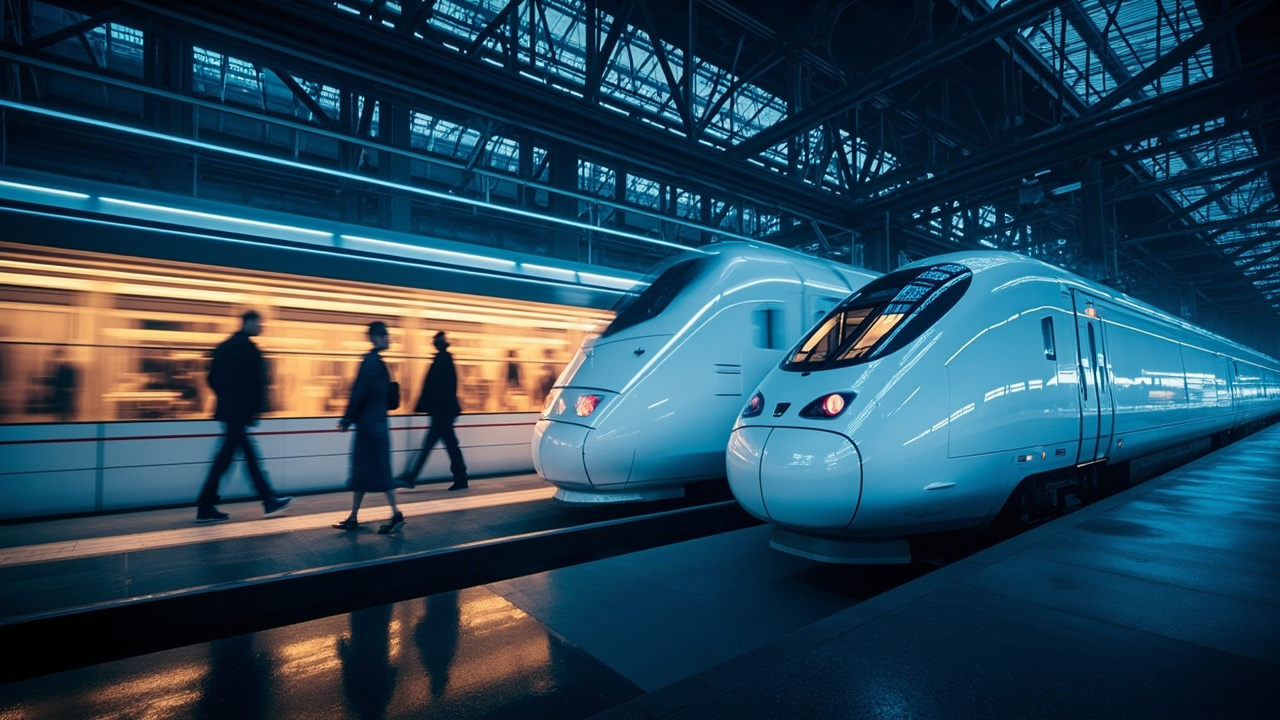
China High Speed Train Guide
The first time I took a Chinese high-speed train, I was standing in Beijing South Railway Station at 6:40 in the morning, holding a paper ticket I’d bought the night before, absolutely certain I was about to miss my train. A station attendant in a blue vest saw me staring at the departure board like it was written in ancient Greek, walked over, pointed at the second line, and said “Shanghai. Platform 12. Go now.” I ran. I made it with four minutes to spare. The train left exactly on time, hit 350 km/h somewhere outside Jinan, and delivered me to Shanghai Hongqiao in 4 hours 28 minutes — about the same time it takes to fly once you factor in security, delays, and the taxi from Pudong.
That morning changed how I travel in China. I’ve now taken maybe 60 high-speed trains across the country, from the 8-hour monster from Beijing to Kunming to the 23-minute hop between Suzhou and Shanghai. I’ve missed trains, bought the wrong class, sat next to a guy eating stinky tofu at 7am, and once accidentally got off at the wrong station in Zhengzhou. All of it taught me something.
This guide is what I wish someone had handed me before my first trip. It’s not a schedule. It’s how the system actually works, what to expect, and the small things that make the difference between a stressful travel day and a genuinely pleasant one.
Quick answer
China’s high-speed rail (called 高铁, gaotie) is the easiest and often fastest way to travel between major cities — Beijing to Shanghai takes about 4.5 hours and costs $80–$130 (CNY 550–900) in second class. Foreigners can book tickets with a passport through Trip.com or the official 12306 app; you don’t need a Chinese phone number, but you do need your passport number exactly as it appears on your document. Trains leave on time, every time, and stations are huge — arrive 45–60 minutes early.
The Short Version
If you only remember three things: book through Trip.com if you don’t read Chinese, bring your physical passport to the station (no passport, no boarding, no exceptions), and don’t cut it close on arrival time. Second class is fine for trips under 5 hours. First class is worth it for anything longer. Business class is a splurge you’ll only do once. The system is genuinely excellent — better than most of Europe’s — and once you’ve done it once, you’ll wonder why anyone flies domestically in China.
How I Picked These
I’ve ridden the network from Harbin in the northeast to Kunming in the southwest, and I’ve done most of the major corridors at least twice. The routes below are the ones I’d recommend to a first-timer, ranked by how useful they are for a typical 10–14 day trip. I’ve also talked to station staff, ticket agents, and about a dozen other travelers — some of whom had horror stories, most of whom didn’t. Where I’m unsure about a current price or schedule, I say so and give a range. Prices shift with demand and season, so treat every number here as approximate for 2026.
Comparison Table
| Rank | Route | Best For | Approx Cost (USD, 2nd class) | Time | When to Go |
|---|---|---|---|---|---|
| 1 | Beijing → Shanghai | First-timers, classic route | $80–$130 | 4h 28m | Mar–May, Sep–Nov |
| 2 | Shanghai → Hangzhou | Day trip, tea country | $10–$18 | 45–60 min | Apr–May, Oct |
| 3 | Beijing → Xi’an | Terracotta Warriors | $75–$120 | 4h 20m | Apr–May, Sep–Oct |
| 4 | Xi’an → Chengdu | Pandas, food | $40–$70 | 3h 30m | Mar–Jun, Sep–Nov |
| 5 | Shanghai → Suzhou | Gardens, silk | $6–$12 | 23–30 min | Year-round |
| 6 | Guangzhou → Guilin | Karst scenery | $25–$45 | 2h 30m | Apr–Oct |
| 7 | Beijing → Harbin | Ice Festival | $90–$140 | 4h 30m | Dec–Feb only |
| 8 | Chengdu → Chongqing | Hotpot, cyberpunk city | $20–$35 | 1h 30m | Year-round |
| 9 | Kunming → Dali | Yunnan loop | $20–$35 | 2h | Mar–May, Sep–Nov |
| 10 | Hong Kong → Guangzhou | Cross-border | $30–$50 | 47 min | Year-round |
1. Beijing → Shanghai — The Line That Started It All
I’ve done this route six times now. The first time, I was nervous. The sixth time, I bought my ticket on Trip.com at 11pm the night before, showed up at Beijing South at 7:15 for an 8:00 departure, and was eating a baozi on the train by 8:10. That’s how routine this line becomes.
It’s the busiest high-speed corridor in the world, and it shows — trains leave every 10–20 minutes during peak hours, which means you basically never have to plan around a specific departure. The G-series trains (G1, G3, G5, etc.) are the fastest, hitting 350 km/h and doing the trip in 4h 28m. The D-series trains are slower and cheaper but stop more.
Why it’s special: this is the line that made me stop flying domestically in China. By the time you get to the airport, clear security, wait at the gate, board, taxi, and get into the city on the other end, you’ve spent 6 hours. The train is 4.5, drops you at Shanghai Hongqiao (which connects directly to Metro Lines 2 and 10), and you can walk around the whole time.
📍 Location: Beijing South Railway Station (北京南站), Fengtai District. Shanghai Hongqiao Railway Station (上海虹桥站), Minhang District.
🎫 Entry fee: $80–$130 (CNY 550–900) second class; $130–$210 (CNY 900–1,450) first class; $250–$400 (CNY 1,750–2,800) business class.
🕒 Opening hours: First departures around 6:00, last around 19:00. Trains run roughly every 10–20 minutes.
🚆 How to actually get there: In Beijing, take Metro Line 4 or 14 to Beijing South Railway Station. Follow signs to the departure hall on the second floor. In Shanghai, Hongqiao Railway Station is on Metro Lines 2, 10, and 17 — Exit B1 or C leads to the arrivals hall.
⏰ When to visit: Book 3–7 days ahead for weekday travel, 10–14 days for weekends and holidays. Spring Festival and Golden Week (first week of October) sell out weeks in advance.
💡 Insider tips: The 12306 app has an English version now, but Trip.com is easier and lets you pay with a foreign card. Your passport IS your ticket — no printout needed, just scan it at the gate. Bring your own snacks; the food cart is overpriced and mediocre. If you’re in second class, aim for a window seat on the left side going Beijing→Shanghai for better views of the Yangtze crossing.
The last time I did this route, I sat next to a woman from Suzhou who insisted I try her homemade zongzi. I’ve never been able to replicate the recipe.
2. Shanghai → Hangzhou — The 45-Minute Escape
I did this as a day trip on a Tuesday in April and it ruined every other day trip for me. Left Shanghai Hongqiao at 8:15, was drinking Longjing tea by West Lake at 10:00, back in Shanghai by 8pm. Total cost: about $30 including tea.
Hangzhou is where Shanghai people go to breathe. The city wraps around West Lake, which is genuinely as pretty as everyone says, and the tea plantations in the hills behind it are even better. It’s also the headquarters of Alibaba, which means the city has a weird mix of ancient temples and drone delivery.
Why it’s special: this is the easiest “get out of the big city” move in China. The train is 45 minutes, the station is on Shanghai’s Metro Line 2, and Hangzhou East Station connects directly to the city’s metro. You can do it as a day trip or stay two nights and really slow down.
📍 Location: Hangzhou East Railway Station (杭州东站), Jianggan District. West Lake is 20 minutes away by Metro Line 1.
🎫 Entry fee: $10–$18 (CNY 70–125) second class. West Lake itself is free; boat rides cost $8–$15 (CNY 55–100).
🕒 Opening hours: Trains run 6:00–22:00, roughly every 15 minutes.
🚆 How to actually get there: From Shanghai Hongqiao, take any G or D train to Hangzhou East. From Hangzhou East, Metro Line 1 goes to Longxiangqiao (near West Lake) in about 15 minutes.
⏰ When to visit: April–May for tea season, October for osmanthus. Avoid weekends — West Lake gets genuinely packed.
💡 Insider tips: Skip the famous “Impression West Lake” show unless you love Zhang Yimou. Instead, walk the Su Causeway at sunrise. The Longjing tea villages (Meijiawu, Longjing Village) are 20 minutes by taxi from the lake and much less touristy. Bring cash for small tea shops — many don’t take foreign cards, though Alipay and WeChat Pay work fine if you’ve set them up.
I once paid $40 for a “premium” tea tin in Hangzhou that turned out to be the same stuff sold at the airport for $12. Buy from the farmer, not the shop.
3. Beijing → Xi’an — Warriors and Noodles
The first time I saw the Terracotta Warriors, I’d been in China for three months and thought I was past being impressed by anything. I was wrong. Pit 1 is the size of an airplane hangar, and the rows of soldiers stretch into the distance like they’ve been standing there forever, which they have.
The train from Beijing to Xi’an is 4h 20m, and it’s the perfect length — long enough to feel like a journey, short enough that you’re not stiff when you arrive. Xi’an North Station is a bit far from the city center (about 30 minutes by Metro Line 2), but it’s well-connected.
Why it’s special: Xi’an is where Chinese history gets real. The city was the capital of 13 dynasties, the eastern end of the Silk Road, and the place where the Terracotta Army was buried for 2,200 years before a farmer digging a well found it in 1974. The Muslim Quarter food scene is also one of the best in the country.
📍 Location: Xi’an North Railway Station (西安北站), Weiyang District. Terracotta Warriors are in Lintong District, about 40 km east.
🎫 Entry fee: $75–$120 (CNY 515–825) second class. Terracotta Warriors entry is $17 (CNY 120).
🕒 Opening hours: Trains 6:00–22:00. Warriors site open 8:30–18:00 (March–November), 8:30–17:30 (December–February).
🚆 How to actually get there: From Beijing West, take any G-train to Xi’an North. From Xi’an North, Metro Line 2 goes to the city center (Bell Tower station). For the Warriors, take Metro Line 9 to Huaqingchi then bus 613, or book a tour.
⏰ When to visit: April–May and September–October. Summer is brutally hot and crowded.
💡 Insider tips: Book Terracotta Warriors tickets online 3 days ahead — they sell out. Go to Pit 3 first (smallest, least crowded), then Pit 2, then Pit 1 last for the big reveal. The Muslim Quarter is best after 6pm. Try yangrou paomo (lamb soup with torn bread) — you tear the bread yourself.
I made the mistake of going to the Warriors on a Saturday in July. Never again. Go on a Tuesday in April.
4. Xi’an → Chengdu — Pandas and Peppercorns
I took this train in November, and it was the first time I understood why people describe Sichuan food as “numbing.” I’d had mapo tofu before. I had not had real mapo tofu, made with freshly ground Sichuan peppercorns that make your lips vibrate for 20 minutes.
Chengdu is the most relaxed major city in China. The pandas are the obvious draw, but the real reason to come is the food and the pace. People sit in teahouses for hours. Nobody rushes. After Beijing and Xi’an, it’s a relief.
Why it’s special: the Chengdu Research Base of Giant Panda Breeding is genuinely worth the hype — go at 7:30am when the pandas are active, not at noon when they’re asleep. The city itself has some of the best street food in Asia, and the teahouse culture in People’s Park is a window into a slower China that’s disappearing elsewhere.
📍 Location: Chengdu East Railway Station (成都东站), Chenghua District. Panda Base is in the northern suburbs, about 30 minutes by taxi.
🎫 Entry fee: $40–$70 (CNY 275–480) second class. Panda Base entry is $8 (CNY 55).
🕒 Opening hours: Trains 6:30–22:00. Panda Base 7:30–18:00 (peak), 8:00–17:00 (off-peak).
🚆 How to actually get there: From Xi’an North, take a G-train to Chengdu East. From Chengdu East, Metro Line 2 or 7 connects to the city. For the Panda Base, take Metro Line 3 to Panda Avenue then a shuttle bus.
⏰ When to visit: March–June and September–November. Avoid July–August (hot, humid, crowded).
💡 Insider tips: Buy panda tickets on the official WeChat account the night before. Take the electric cart to the top of the park and walk down — you’ll see more pandas with less walking. For food, skip the touristy Jinli Street and go to Yu’s Family Kitchen or any hole-in-the-wall in the Yulin neighborhood.
I once ordered “medium spicy” in Chengdu and the waiter laughed at me. Order “wei la” (微辣, mildly spicy) if you’re not sure.
5. Shanghai → Suzhou — The 23-Minute Time Warp
This is the shortest high-speed train ride I’ve ever taken that felt like going to another world. Twenty-three minutes. That’s less time than my commute to work in Beijing. And yet Suzhou has 2,500 years of history, classical gardens that inspired Chinese landscape painting, and a canal district that makes Venice look amateur.
I did this as a half-day trip and regretted not staying overnight. The gardens are best in the early morning before the tour groups arrive, and the Pingjiang Road canal area at dusk is one of the most photogenic places in China.
Why it’s special: Suzhou is the “Venice of the East” cliché, but the cliché undersells it. The classical gardens — especially the Humble Administrator’s Garden and the Master of the Nets Garden — are UNESCO sites that genuinely deserve the designation. The silk industry is still alive here, and you can watch weavers at work.
📍 Location: Suzhou Railway Station (苏州站), Pingjiang District. The old town is a 10-minute walk from the station.
🎫 Entry fee: $6–$12 (CNY 45–85) second class. Humble Administrator’s Garden is $12 (CNY 80), Master of the Nets Garden is $6 (CNY 40).
🕒 Opening hours: Trains 6:00–22:30, every 10–20 minutes. Gardens typically 7:30–17:30.
🚆 How to actually get there: From Shanghai Hongqiao or Shanghai Station, take any G or D train to Suzhou. From Suzhou Station, walk 10 minutes south to the old town, or take Metro Line 4.
⏰ When to visit: March–May and September–November. Weekdays only if you can manage it.
💡 Insider tips: Buy garden tickets on the Suzhou Garden official WeChat. The Humble Administrator’s Garden is the most famous but also the most crowded — go at 7:30am opening. The Master of the Nets Garden is smaller and quieter. Pingjiang Road is best at dusk when the lanterns come on. Try the local noodles (Suzhou-style, slightly sweet) at any small shop.
I once watched a silk weaver in Suzhou work a loom for 20 minutes without stopping. She was making a single panel that would take her three months. I bought a scarf from her for $60 and it’s the best souvenir I own.
6. Guangzhou → Guilin — Into the Karst
I took this train in October, and the moment the karst mountains appeared outside the window, I stopped reading my book and just stared. The landscape around Guilin looks like a Chinese scroll painting come to life — limestone peaks rising out of green fields, rivers winding between them, mist hanging in the valleys.
Guilin itself is a mid-sized city with not much to do, but the surrounding countryside is extraordinary. The Li River cruise from Guilin to Yangshuo is the classic experience, and the rice terraces at Longsheng (2 hours north) are worth an extra day.
Why it’s special: this is the landscape that’s been painted, photographed, and poemed about for a thousand years. It’s also surprisingly accessible — the train from Guangzhou is 2.5 hours, and Yangshuo is another hour by bus or 90 minutes by boat.
📍 Location: Guilin North Railway Station (桂林北站), Diecai District. Yangshuo is 65 km south.
🎫 Entry fee: $25–$45 (CNY 180–325) second class. Li River cruise is $30–$60 (CNY 210–430) depending on boat class.
🕒 Opening hours: Trains 7:00–21:00. Li River cruises depart 9:00–11:00.
🚆 How to actually get there: From Guangzhou South, take a G-train to Guilin North. From Guilin North, buses to Yangshuo leave from the station every 30 minutes.
⏰ When to visit: April–October. Avoid July–August (rainy season, though the mist is beautiful).
💡 Insider tips: Skip the expensive Li River cruise and take the local bus to Yangshuo, then do a bamboo raft on the Yulong River instead — cheaper, quieter, and arguably prettier. Rent a bike in Yangshuo and ride through the countryside. The Longji Rice Terraces are best in May (flooded) or September (golden).
I once got caught in a rainstorm on a bamboo raft near Yangshuo and the raft guy just handed me a plastic poncho and kept going. Best $10 I ever spent.
7. Beijing → Harbin — The Ice City
I went to Harbin in January 2024, when it was -28°C. I want to be clear: that is not a temperature. That is a hostile environment. And yet the Ice and Snow World — a temporary city built entirely of ice blocks, lit from inside with colored LEDs — is one of the most surreal things I’ve ever seen.
The train from Beijing is 4.5 hours, and it’s the only way I’d do it in winter. Flights get cancelled constantly in Harbin in January. The train doesn’t.
Why it’s special: Harbin is a Russian-influenced city in northeast China, and the Ice Festival (January–February) is genuinely world-class. The ice sculptures are 10 stories tall. The Russian Orthodox architecture in the city center is a leftover from the early 20th century. And the food — hearty northeastern Chinese — is perfect for cold weather.
📍 Location: Harbin West Railway Station (哈尔滨西站), Nangang District. Ice and Snow World is on the north bank of the Songhua River.
🎫 Entry fee: $90–$140 (CNY 620–965) second class. Ice and Snow World entry is $45–$60 (CNY 310–430).
🕒 Opening hours: Trains 6:00–20:00. Ice Festival runs late December–late February.
🚆 How to actually get there: From Beijing Chaoyang, take a G-train to Harbin West. From Harbin West, Metro Line 3 or a taxi to the city center.
⏰ When to visit: January–February only. The Ice Festival is weather-dependent.
💡 Insider tips: Bring more layers than you think you need — thermal underwear, down jacket, wool socks, hand warmers. Your phone battery will die in 20 minutes outside; keep it in an inside pocket. The Ice Festival is best after 5pm when the lights come on. Try the local hotpot and the Russian-style bread.
I once took my gloves off for 30 seconds to take a photo and couldn’t feel my fingers for an hour. Don’t do that.
8. Chengdu → Chongqing — The Cyberpunk Hotpot Run
I did this route on a whim in 2023, and it’s now one of my favorite short train rides in China. Ninety minutes from Chengdu to Chongqing, and you go from one food capital to another. Chongqing is the city that inspired Blade Runner — built on steep hills, with elevated highways, monorails through apartment buildings, and fog that hangs over everything.
Why it’s special: Chongqing is the most visually overwhelming city in China. The Hongya Cave complex at night looks like a scene from a sci-fi movie. The hotpot is the spiciest in the country. And the city has a weird, wonderful energy that’s totally different from Chengdu’s relaxed vibe.
📍 Location: Chongqing North Railway Station (重庆北站), Yubei District. Hongya Cave is in Yuzhong District.
🎫 Entry fee: $20–$35 (CNY 140–250) second class.
🕒 Opening hours: Trains 6:30–22:00, every 20–30 minutes.
🚆 How to actually get there: From Chengdu East, take a G-train to Chongqing North. From Chongqing North, Metro Line 3 or 10 to the city center.
⏰ When to visit: Year-round, but spring and autumn are best. Summer is brutally hot.
💡 Insider tips: The Hongya Cave is free to visit but packed at night — go at 5pm for photos before the crowds. The Yangtze River cable car is worth the $4 (CNY 30). For hotpot, go to a local place, not a chain. Order the “nine-grid” pot and start with the mildest section.
I once ate Chongqing hotpot at 2am with a group of strangers who adopted me for the night. I don’t remember their names. I remember the food.
9. Kunming → Dali — Yunnan Slow Travel
I took this train in March, and it was the first time in months I felt genuinely relaxed. Dali is a small city on Erhai Lake, surrounded by mountains, with a laid-back vibe that’s hard to find elsewhere in China. The old town is touristy but charming, and the surrounding villages are full of cafés, guesthouses, and people who came for a week and stayed for a year.
Why it’s special: Yunnan is China’s most diverse province — 25 ethnic minority groups live here, and the culture is genuinely different from the Han-majority east. The food is different too — more herbs, more mushrooms, less soy sauce. Dali is the perfect base for exploring the region.
📍 Location: Dali Railway Station (大理站), Xiaguan District. The old town is 13 km north.
🎫 Entry fee: $20–$35 (CNY 140–250) second class.
🕒 Opening hours: Trains 7:00–21:00.
🚆 How to actually get there: From Kunming, take a D or G train to Dali. From Dali Station, bus 8 goes to the old town.
⏰ When to visit: March–May and September–November. Avoid Chinese New Year.
💡 Insider tips: Rent an electric scooter and circle Erhai Lake — it takes 2 days at a relaxed pace. Stay in a guesthouse in one of the villages around the lake rather than the old town. Try the local cheese (rubing) and the wild mushroom hotpot (careful — some mushrooms are toxic if undercooked).
I once spent a whole afternoon in a Dali café watching the clouds move across Cangshan mountain. I didn’t check my phone once. That’s the point of Dali.
10. Hong Kong → Guangzhou — The Cross-Border Hop
I did this route in 2024, and it’s the smoothest border crossing I’ve ever experienced. Forty-seven minutes from Hong Kong West Kowloon to Guangzhou South, and you clear immigration on both sides before boarding. No airport, no taxi to the border, no hassle.
Why it’s special: this is the easiest way to combine Hong Kong with mainland China. You can have dim sum in Hong Kong in the morning and Cantonese roast goose in Guangzhou for lunch. The train is comfortable, fast, and drops you directly into Guangzhou’s metro system.
📍 Location: Hong Kong West Kowloon Station (香港西九龙站), Kowloon. Guangzhou South Railway Station (广州南站), Panyu District.
🎫 Entry fee: $30–$50 (CNY 210–350) second class.
🕒 Opening hours: Trains 7:00–22:00, roughly every 30 minutes.
🚆 How to actually get there: From Hong Kong, West Kowloon Station is on the MTR (Kowloon Station, Exit M). From Guangzhou South, Metro Lines 2, 7, and 22 connect to the city.
⏰ When to visit: Year-round. Book 5–7 days ahead for weekends.
💡 Insider tips: You need your passport AND your Hong Kong entry document for this route. Book on Trip.com — the 12306 app doesn’t handle cross-border bookings well. Arrive at West Kowloon 90 minutes early for immigration. Guangzhou South is far from the city center — allow 45 minutes to reach Tianhe or Yuexiu.
I once did this route on a Sunday and forgot it was a holiday weekend. The train was packed. Book ahead.
FAQ summary
China’s high-speed rail is fast, reliable, and easy for foreigners to use — book through Trip.com or the 12306 app with your passport, arrive 45–60 minutes before departure, and bring your physical passport to board. Second class is fine for trips under 5 hours; first class is worth the upgrade for longer journeys. Prices range from about $6 (CNY 45) for a 23-minute hop to $140 (CNY 965) for a 4.5-hour cross-country route, and trains leave on time, every time. The main things to know: your passport is your ticket, stations are huge, and you should book 3–14 days ahead depending on the route and season.
FAQ
Q: Do I need a Chinese phone number to book high-speed train tickets? A: No. Trip.com accepts foreign credit cards and lets you book with just your passport number and email. The official 12306 app also has an English version now and accepts international cards, though it’s clunkier. You’ll need your passport number exactly as it appears on your document — no nicknames, no middle name abbreviations.
Q: How early should I arrive at the station? A: 45–60 minutes for major stations like Beijing South or Shanghai Hongqiao, 30 minutes for smaller ones. Stations are enormous and security lines can be long. Your passport is scanned at the gate, so you don’t need a paper ticket. If you’re late, you can usually rebook on the next train for a small fee.
Q: Is first class worth the extra money? A: For trips under 3 hours, no — second class is comfortable and you’ll barely notice the difference. For trips over 5 hours, yes — the wider seats, more legroom, and quieter carriages make a real difference. Business class is a splurge you’ll only do once; it’s nice but not 3x-the-price nice.
Q: Can I bring my own food and drinks on the train? A: Yes, and you should. The food cart is overpriced and mediocre. Bring snacks, fruit, and a thermos of tea. Hot water is available at the end of every carriage. Alcohol is technically allowed but frowned upon; don’t be the guy drinking beer at 9am.
Q: What happens if I miss my train? A: Go to the ticket office or use the 12306 app to rebook on the next available train. There’s usually a small fee (around $2–$5) and you may have to wait a few hours. During peak season, the next train might be full — in that case, you’ll need to buy a new ticket.
Q: Do I need a VPN to use the internet on the train? A: The train has Wi-Fi, but it’s slow and unreliable, and it’s subject to the same restrictions as the rest of China. If you need Google, Gmail, WhatsApp, or Instagram, set up a VPN before you arrive — see our China SIM card and internet guide for details. Download offline maps and translation apps as backup.
Q: Are there luggage restrictions? A: Yes, but they’re generous. Each passenger can bring up to 20 kg (44 lbs) of luggage, with dimensions under 160 cm total. There’s no formal weight check at most stations, but oversized bags may be flagged. Luggage racks are at the end of each carriage; overhead racks fit standard carry-ons.
The Honest Wrap-up
This guide is for the first-timer who’s never set foot in a Chinese train station and wants to know what they’re getting into. It’s not for the seasoned China traveler who already knows the difference between G and D trains, or for someone trying to do a 30-day rail pass (which doesn’t really exist here the way it does in Europe). If you’re planning your first trip, start with the Beijing–Shanghai line. It’s the easiest, the most frequent, and the most forgiving if you make a mistake. Book on Trip.com, arrive early, bring your passport, and don’t overthink it. The system works. Millions of people use it every day. You will too.
One last thing: if you’re also sorting out your entry paperwork, our guides on the China visa process and visa-free transit cover what you need before you even get to the station.
More guides you may like
Top 10 Bridges in China
China's bridges are engineering marvels spanning mountains, rivers, and seas. Here are 10 of the most spectacular, from ancient stone to modern steel.
8 min read

Top 10 Buddhist Sites in China
From the Leshan Giant Buddha to the Dunhuang Caves, these 10 Buddhist sites represent 2,000 years of China's spiritual heritage.
9 min read
Top 10 Day Trips from Beijing You Shouldn't Miss
Beijing is packed with history, but some of China's best experiences are just a few hours away. Here are 10 day trips that will transform your visit.
9 min read
Top 10 Hidden Gems in China Off the Beaten Path
Beyond the Great Wall and Terracotta Warriors, China has incredible hidden destinations few tourists ever reach. Here are 10 underrated gems worth the detour.
9 min read
Top 10 Markets and Shopping Streets in China
From Shanghai's Bund to Beijing's Silk Street - 10 markets where foreigners can haggle, explore, and bring home authentic Chinese goods.
9 min read
Top 10 Museums in China You Shouldn't Miss
China's museums span 5,000 years of civilization. These 10 - from the Palace Museum to Xi'an's terracotta gallery - are unmissable for culture lovers.
9 min read